
Even if you’ve seen a bulldog in the flesh, you probably know what it looks like. These fascinating dogs have been around for a long time, and in all that time, they’ve become famous. Owned by presidents, celebrities, and families alike, bulldogs are loyal, adorable, and prone to a severe set of health problems.
Here, we’ll discover some of the most incredible bulldog facts and find out why some countries have banned the breeding of these beloved pets.

1. Bulldogs Get Their Name from a Surprising Source
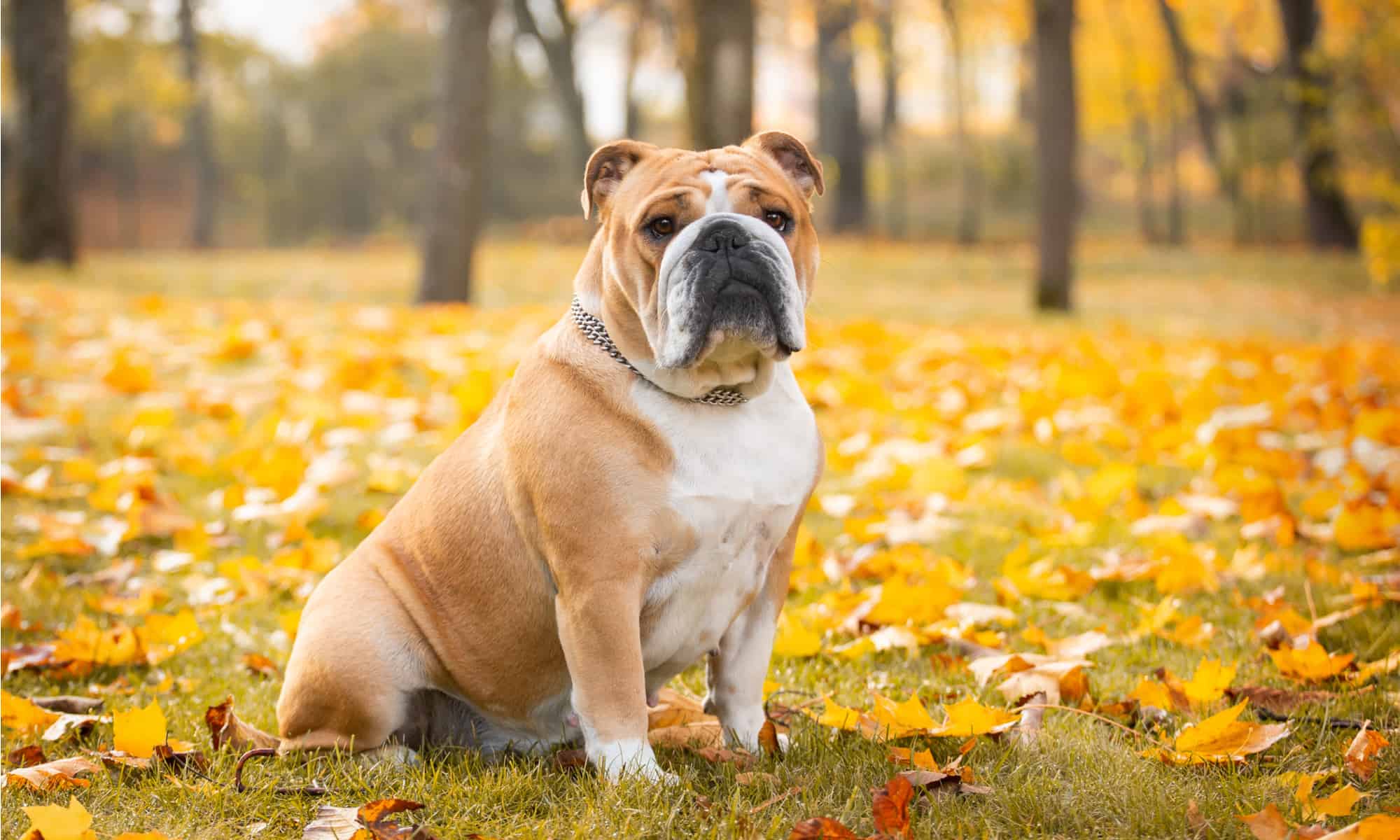
Bulldogs have been around for hundreds of years, but they’ve only been recognized by the American Kennel Club in 1886.
©ltummy/Shutterstock.com
One of the most incredible bulldog facts has to do with their name. Bulldogs get their name from their origin as dogs used to fight bulls. Hundreds of years ago, in Europe, bulldogs were developed as a breed meant to fight bulls in bloody, popular battles. Their thick bodies, short legs, and powerful jaws were all bred into them for a single purpose: to fight bulls. Luckily, animal blood sport is now banned in Europe, leaving these dogs to enjoy long lives with loving families.
2. Bulldogs Come from Britain

Bulldogs come from Britain.
©Ulf Wittrock/Shutterstock.com
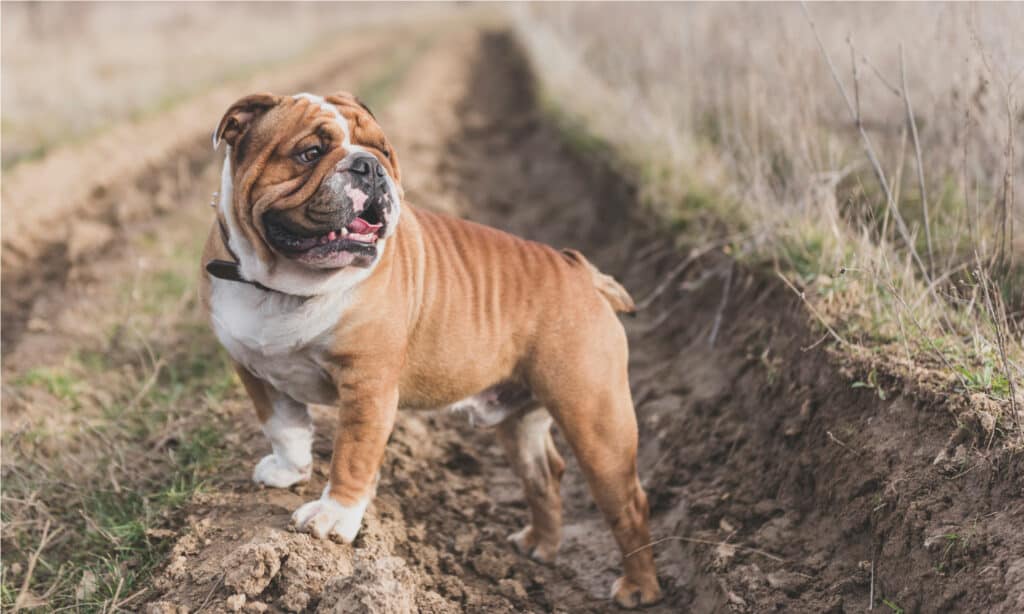
Originally from the British Isles, bulldogs have become popular around the world in the past 130 years. Researchers believe bulldogs were first created as a breed back in the 13th century in England.
3. Bulldogs Are Very Stout
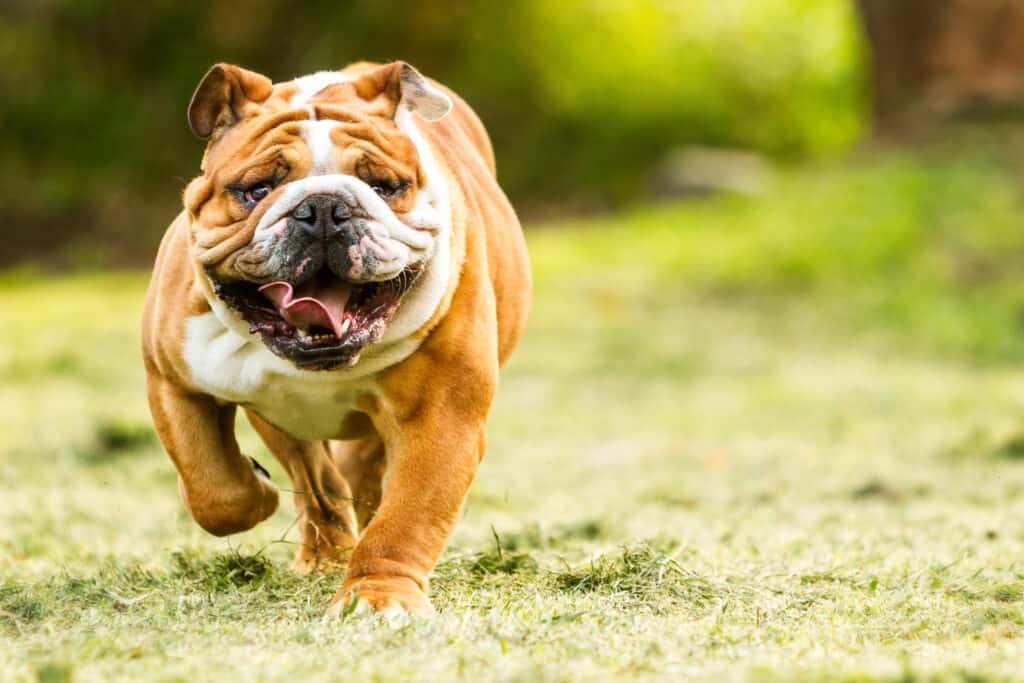
Despite their short stature, healthy bulldogs can weigh up to 50 pounds.
©Ammit Jack/Shutterstock.com
Bulldogs stand under 14 inches tall at the shoulder. Despite this short height, males typically weigh around 50 pounds, while females weigh around 40 pounds. One of the most incredible bulldog facts is that these dogs may be small in stature, but they’re built like tanks. Those stubby legs support a lot of weight, which can sometimes lead to skeletal issues later in life.
4. Two American Presidents have Owned Bulldogs

Calvin Coolidge had a bulldog.
©Everett Collection/Shutterstock.com
One of the most incredible bulldog facts is that not one, but two United States presidents have owned bulldogs. A bulldog named Boston Beans was the personal companion of Calvin Coolidge. And a bulldog named Old Boy kept Warren G. Harding company. More than that, bulldogs are one of the most popular breeds of dogs chosen as a mascot. The bulldog is the mascot of the U.S. Marine Corps, Yale University, and even the University of Georgia.
5. Other Bully Breeds Come from Bulldogs
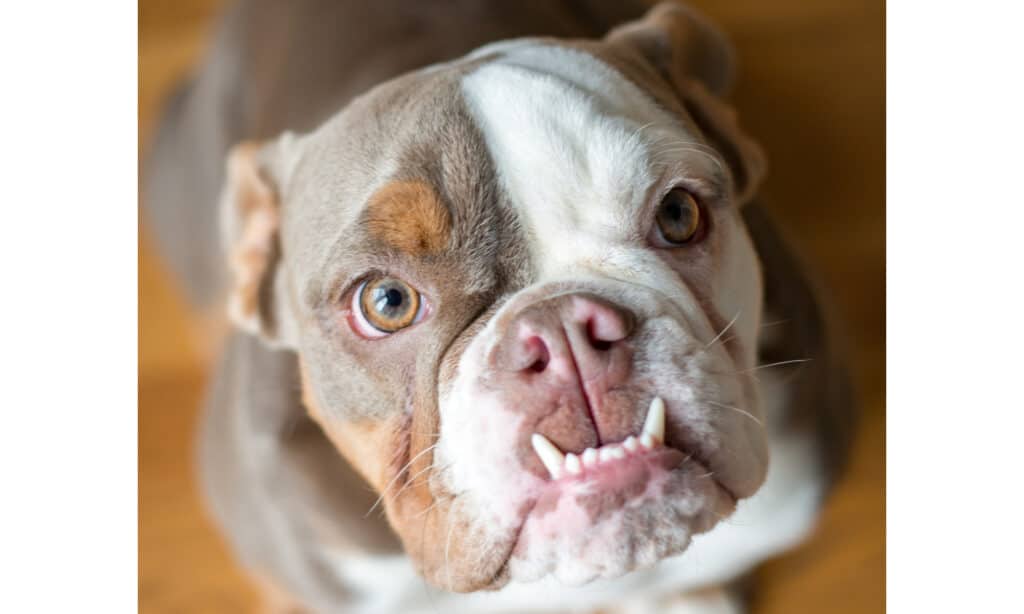
Several of today’s well-known breeds, including the bull terrier and Staffordshire bull terrier, originated with bulldogs crossed with other breeds.
©jadimages/Shutterstock.com
Bulldogs remained a singular breed until after the passage of the Cruelty to Animals Act of 1835. Once that act was passed and bulldogs could no longer legally be used in bullfights, it opened the door for bulldog enthusiasts to create new breeds. These include the Staffordshire bull terrier and bull terrier. Bulldogs as a breed weren’t recognized by the AKC until 1886.
6. Bulldogs have Trouble Breathing
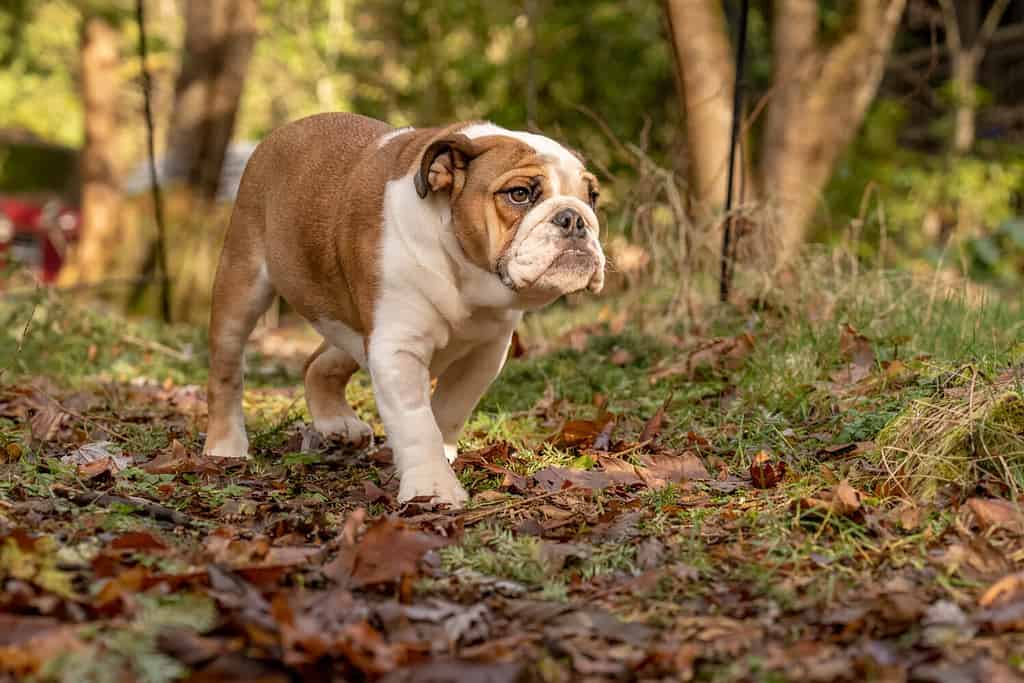
With their flattened faces, bulldogs can often have trouble breathing.
©Danita Delimont/Shutterstock.com
Another incredible bulldog fact has to do with the face of these popular dogs. Bulldogs are brachycephalic; in other words, their faces have been squashed and shortened for the characteristic bulldog look. This shortening of the skull is not without consequences, though. Bulldogs have a difficult time breathing due to their shortened nasal passages. Because of this, they struggle in warm climates and need special consideration when flying or going under general anesthesia.
7. Bulldogs are Popular
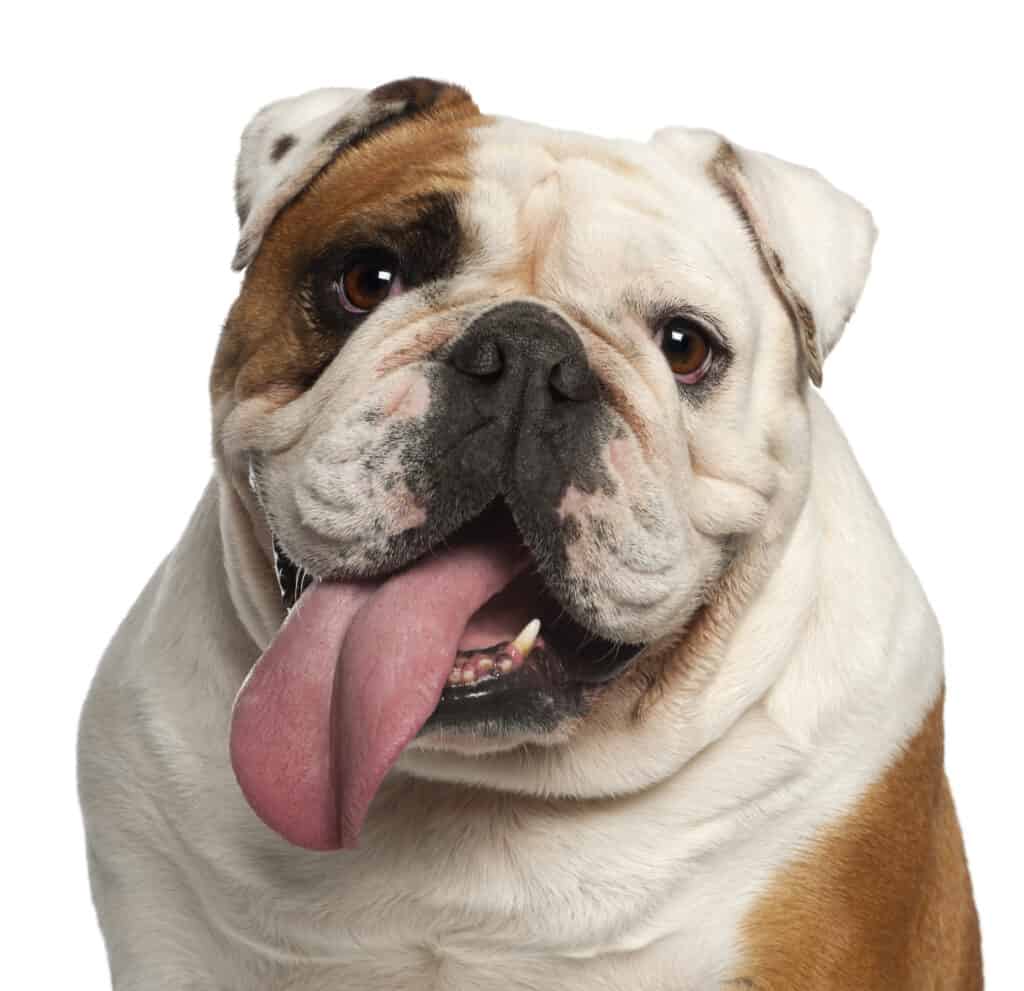
Along with bulldogs, some of the most popular dogs in America today are poodles, french bulldogs, and labrador retrievers.
©Eric Isselee/Shutterstock.com
Today, bulldogs are a widely popular breed of dog in America. Their lifespan ranges from 8 to 10 years, and during that time, they’re almost certain to develop at least one major health problem. But, they’re also considered easy to train and need only moderate exercise, which makes them a great option for urban pet owners. However, be sure to consider the special needs and likely health issues of this breed before adopting a bulldog.
8. Some Countries have Banned Bulldog Breeding

It is illegal to breed bulldogs in Norway.
©Tatohra/Shutterstock.com
Because bulldogs have been bred for a very specific look and not for optimization of their health, these dogs almost always have at least one major health issue. This might include hip dysplasia, inefficient breathing, and tooth and gum disease. Because of the poor health bred into the breed, bulldogs cannot be legally bred in Norway. In fact, the health of this breed is considered so poor that the Norwegian Animal Welfare Act considers their breeding to be a violation of animal welfare.
9. Bulldogs Are Very Loyal
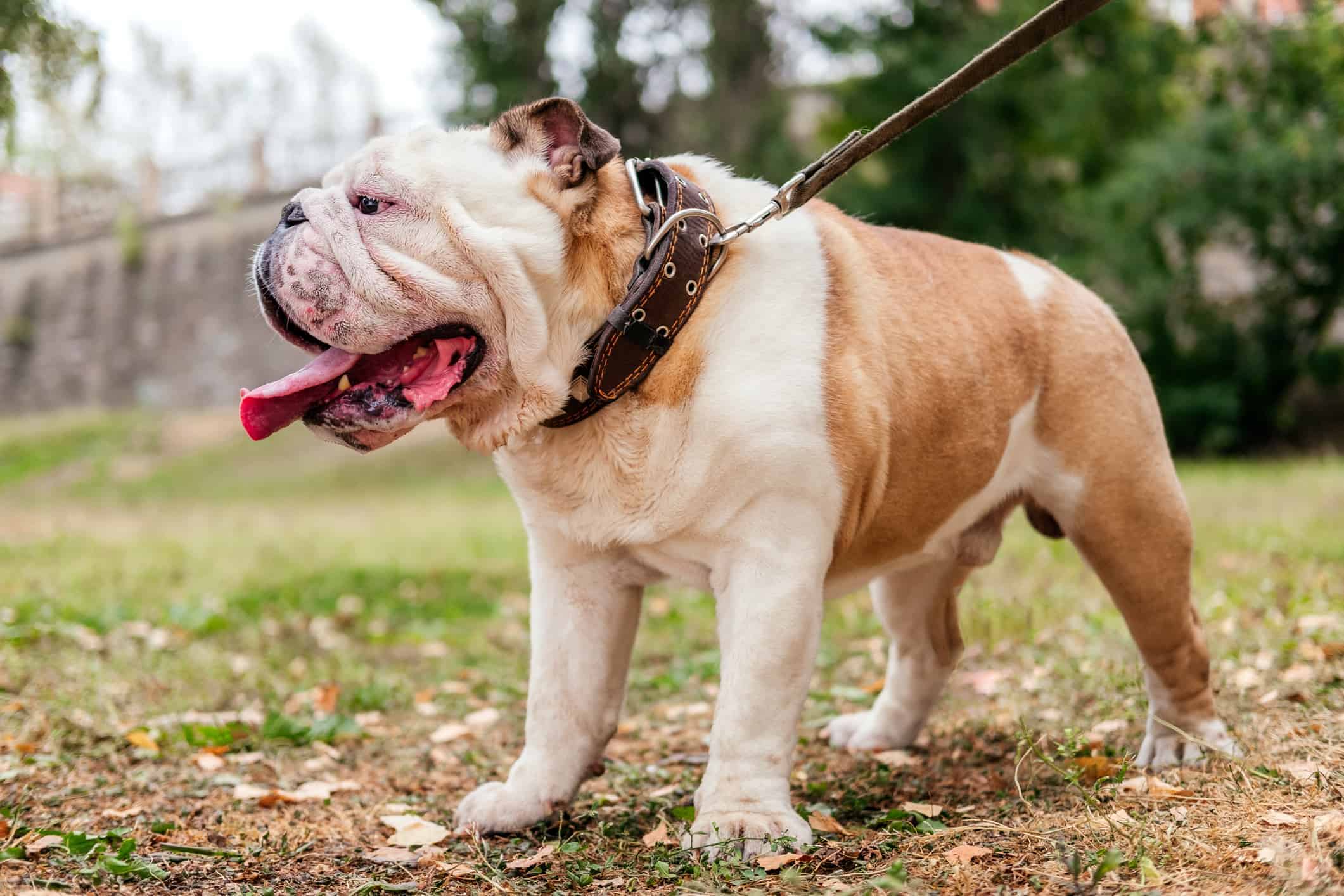
Bulldogs are loyal family dogs.
©iStock.com/Verelly
Although bulldogs might have initially been bred for ferocity, they’re now known as easy-going family dogs. They tend to be very loyal to their family units and do well with other dogs, cats, and children. In fact, bulldogs can be loyal to the point of stubbornness, a trait they’re well known for. If they don’t get what they want, they may even bark or pace until they get their way.
10. Bulldog Wrinkles Need to be Cleaned
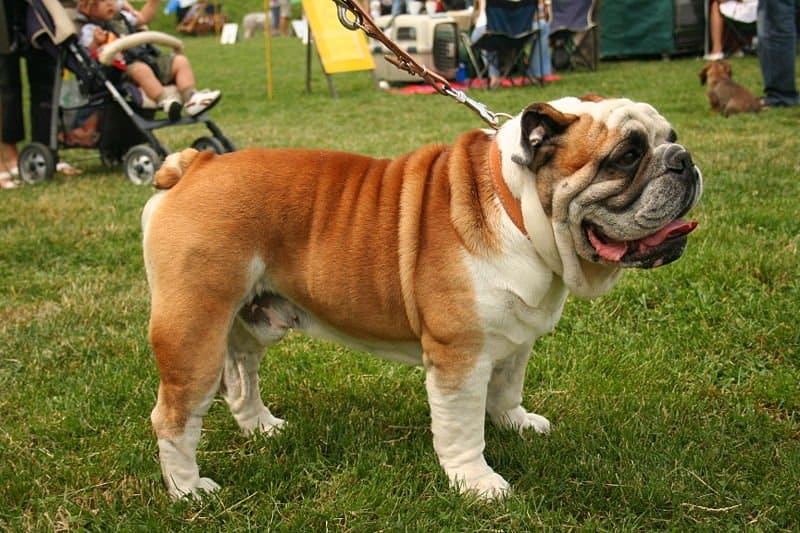
Bulldog’s wrinkles can be susceptible to infection.
©Pleple2000, CC BY-SA 3.0 via Wikimedia Commons – Original / License
If you’re thinking about bringing home a bouncing bulldog puppy, there are a few special needs to consider. One of them has to do with one of the bulldog’s most famous features—its wrinkles. Wrinkles might be endearing, but they’re also prone to infection and need to be cleaned regularly. If you’re not up for the task, consider another great breed of dog.