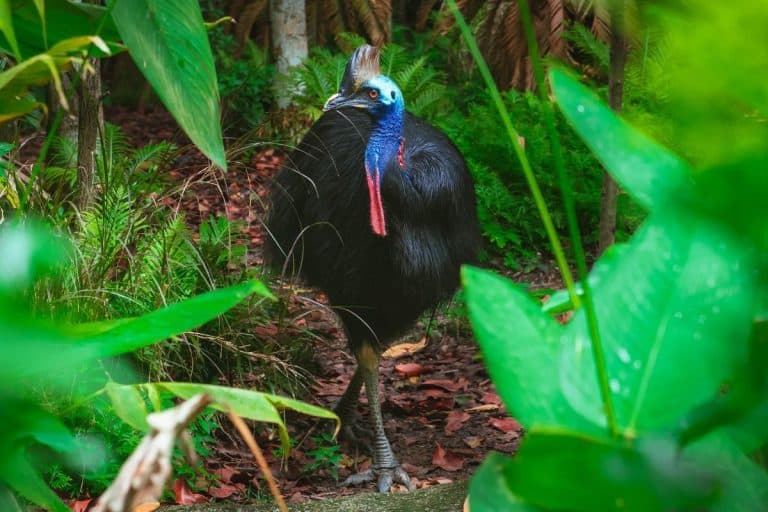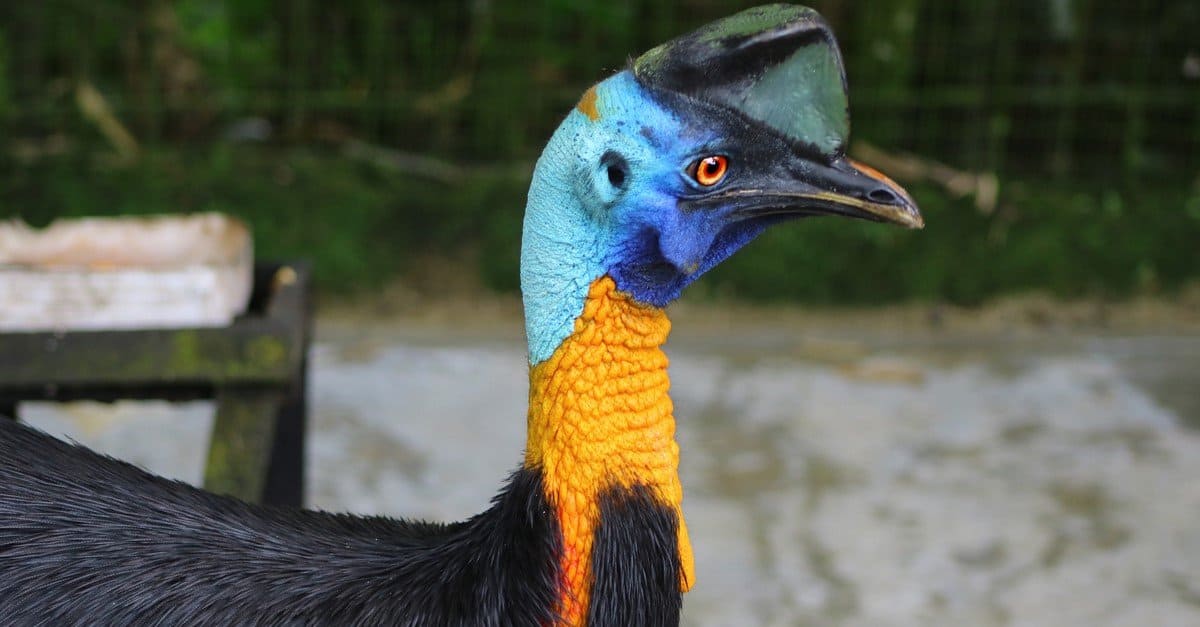

Cassowaries are a genus of large animals from Australia, New Guinea, and Indonesia. While they look like birds, cassowaries also are incredibly large and also flightless. The unique appearance and physiology of the cassowary baffle everyone, from bird lovers to scientists alike.
For many, that raises the question: just what exactly is a cassowary? Is a cassowary a bird, or something else? Let’s dig in and find out.
Is a Cassowary a Bird?
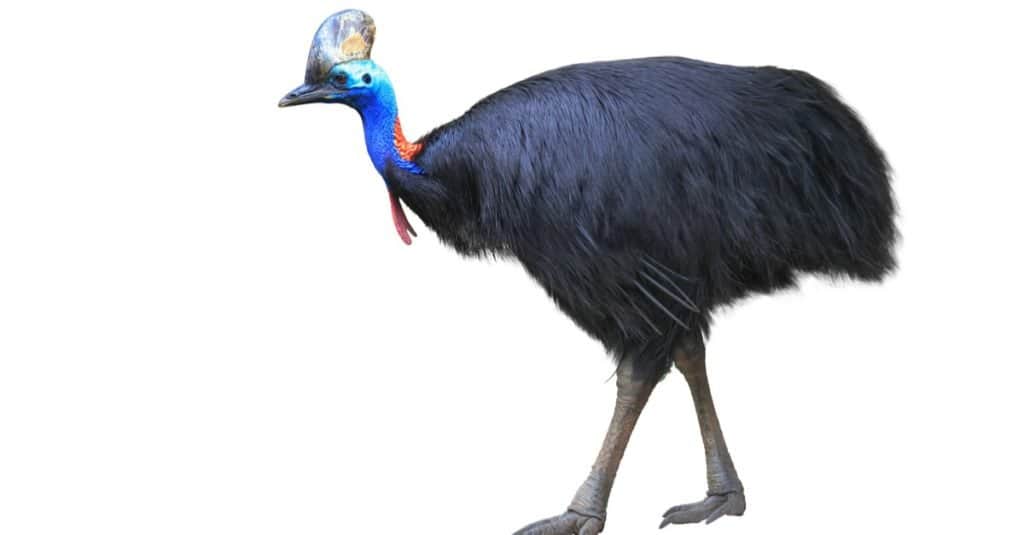
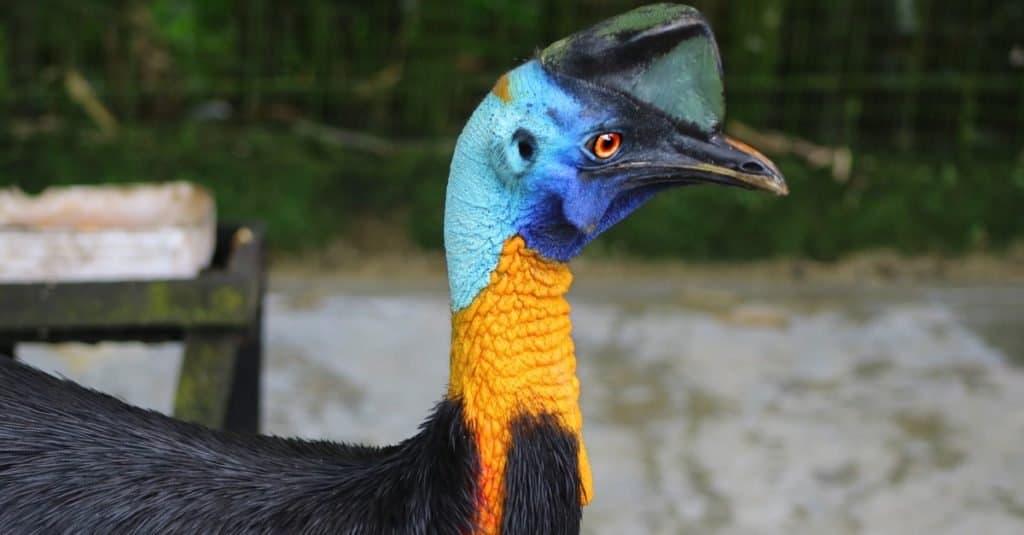
Despite their unusual appearances, cassowaries are birds.
©Sanit Fuangnakhon/Shutterstock.com
Yes, a cassowary is a bird. It belongs to the biological class Aves, which includes all modern birds.
While unique in appearance, cassowaries are still birds. There are some key traits that define birds, traits associated with cassowaries.
First, birds have wings. While most birds fly (more on that below), flying is not a requirement to be a bird. Cassowaries are flightless birds, which makes them rare, but they still have wings. Birds are also feathered. While the cassowary has a “fluffy” appearance, that’s not hair on their body but rather glossy feathers that are fairly unique across birds.
Birds have beaks, a lightweight skeleton (which most species use for flying), and lay hard-shelled eggs. Cassowary eggs are unique; they’re lime-colored green and very large. Cassowaries have beaks that connect to a large casque on their head. It is proposed that this casque is used to help cassowaries cut through trees and brush when running at fast speeds.
The Classification of Cassowaries
While flightless, cassowaries are still considered birds.
©RonnyDesign/Shutterstock.com
Cassowaries are connected to other large, flightless birds, including ostriches, tinamous, rhea, emus, and kiwis. There are 60 species in this group; all other birds belong to the much larger Neognathae group, which contains more than 10,000 species of birds. The closest relative to the cassowary is the emu, which belongs to the same order. There are three species of cassowaries and just a single species of emu.
The cassowary is usually considered to be the world’s most dangerous bird to humans. Although ostriches and emus are dangerous in their own right, cassowaries can cause serious injuries, including broken bones and puncture wounds. Deaths have also been recorded, though they are extremely rare.
It’s believed that cassowaries first evolved shortly after the extinction of the dinosaurs, about 60 million years ago. The cassowary shares an incredibly similar appearance to a recently discovered dinosaur, which points to cassowaries being one of the closest remaining links to a time when dinosaurs roamed the Earth.
Are Cassowaries a Threatened Bird Species?
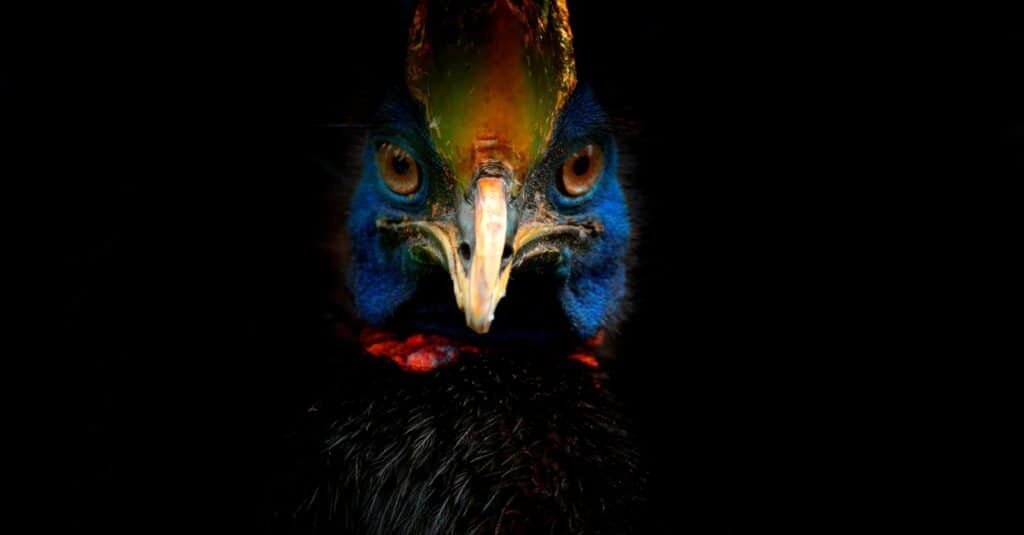
Cassowaries are not currently considered endangered or threatened.
©Ondrej Prosicky/Shutterstock.com
As of 2021, all three cassowary species are listed as Least Concern and are not considered threatened.
That hasn’t always been the case, as the dwarf cassowary was previously listed as Near Threatened by the IUCN until 2013. Both the dwarf and northern cassowaries have relatively smaller geographic ranges that cover only a portion of the island of New Guinea and some smaller surrounding islands. The southern cassowary also lives in Australia, through its range is limited to the Cape York Peninsula in Queensland.