Cockatiels are unique and fascinating parrots. They are native to Australia but can be found all around the world as pets. They are easy to care for and are considered one of the most popular pet birds, after only the budgerigar. If you have a cockatiel or are considering getting one, you’re probably wondering how long they live. In this article, we’ll discuss how long the average cockatiel lives, both in the wild and in captivity. We will also discuss its average life cycle and compare it to another extremely popular pet bird, the parakeet. Let’s get started!
How Long Do Cockatiels Live?
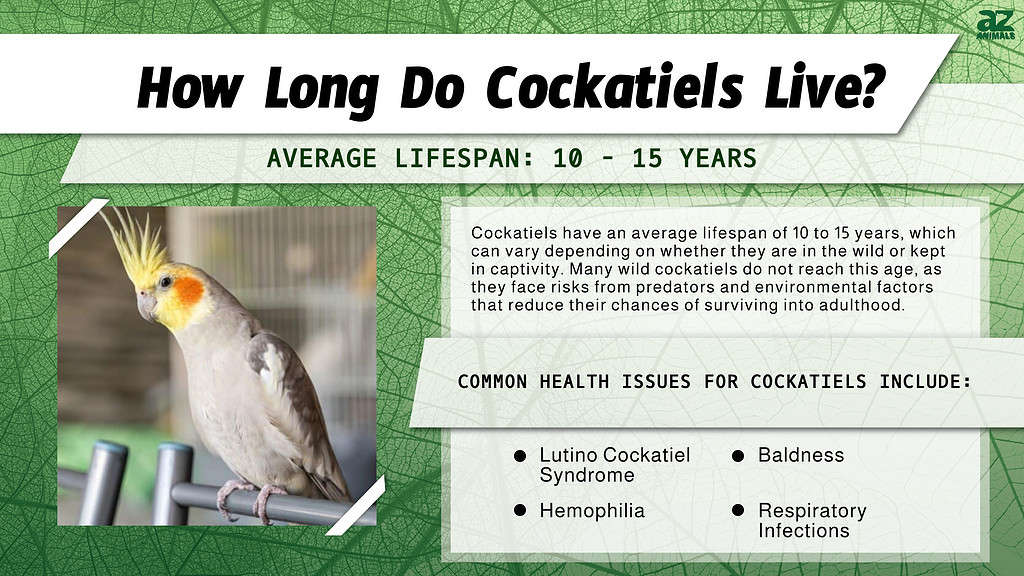
Cockatiels live an average of 10-15 years, depending on whether they are wild or captive. Many wild cockatiels won’t make it to this age, given the threat of predators and environmental factors, but domesticated cockatiels often live long and rich lives. However, there are many factors that affect a cockatiel’s lifespan, including their diet, socialization, the quality of air in your home, and more. Cockatiels are incredibly social birds, and keeping your pet cockatiel in a large enclosure with another cockatiel companion can be one of the best options for your family member. These birds love having a friend, as it helps them fight depression and keeps them from getting bored.
There are many other things you can do to keep your cockatiel happy, but let’s take a look at what a cockatiel’s life cycle is like. This way, you will know how to best take care of your bird, regardless of the age you adopt it.
The Average Cockatiel Life Cycle
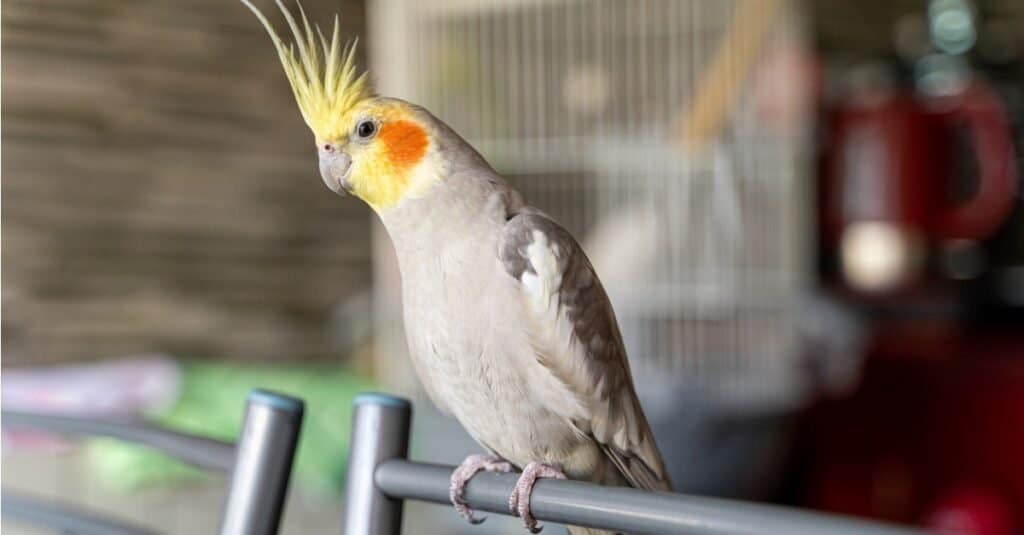
Cockatiels live for an average of 10 to 15 years.
©iStock.com/PaulGulea
Are you a new cockatiel owner? Or perhaps, you are just interested in the life cycle of these talkative birds. Here’s what their life journey is like, from birth to old age.
Hatchlings
Newborn hatchling cockatiels are born without feathers and senses, making them completely reliant on their parents for everything. A mother cockatiel lays anywhere from three to eight eggs, and she often takes turns keeping the eggs and chicks warm with the father cockatiel.
By the end of their first week of life, most baby cockatiels are beginning to see and grow feathers. Additionally, their ear flaps may begin to open, too. They will have full use of all of their senses by the end of their first month of life, as well as some extra feathers to boot.
Young Birds
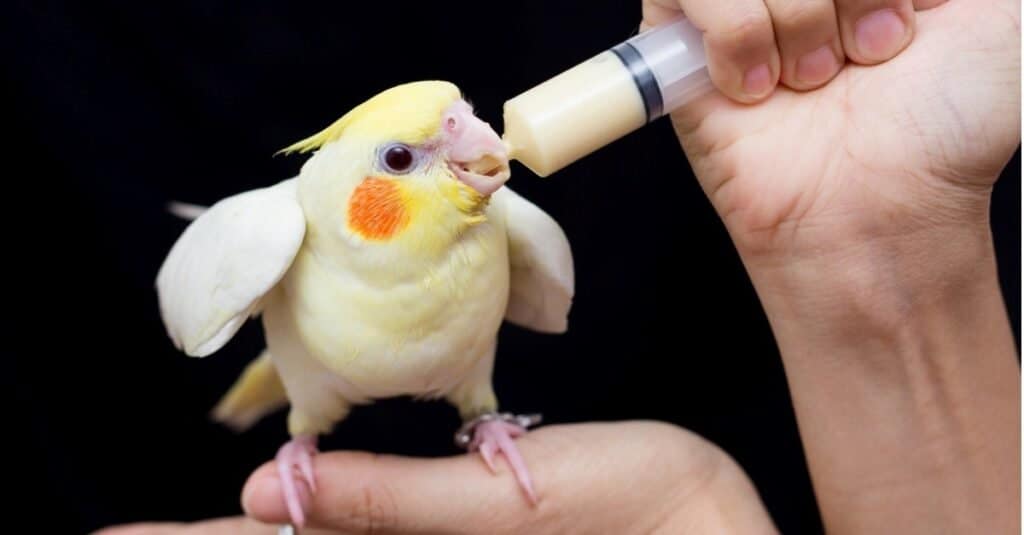
Cockatiels spend the first three months of their lives growing their feathers.
©iStock.com/tatchai
Young cockatiels are extremely curious and endearing. The first three months of their lives involve them growing their feathers and weaning from their mother’s food supply. The process of growing out their feathers is called fledging. This is when a baby cockatiel grows all of the feathers it needs in order to fly.
Once their feathers have grown in and they have learned to forage for food on their own, most young cockatiels exhibit more independence by learning how to fly. Until their six-month mark, young cockatiels are still learning this very important process.
Adult Cockatiels
A cockatiel is considered an adult once it is fully grown and has reached sexual maturity. This can differ from bird to bird, but most cockatiels reach this point at the age of eight to 12 months. By this point, your pet cockatiel will be completely independent, will have its full feathers on display, and can fly with powerful wings.
However, adult cockatiels still enjoy company despite their newly discovered independence. For the rest of their lives, it is important to socialize your cockatiel frequently. This can include socialization with other birds as well as people. Any interaction is usually a positive thing for cockatiels.
Feeding your adult cockatiel a varied and structured diet, as well as giving them plenty of cockatiel-approved toys to play with, is key to extending their lifespan. You should also seek a specialized veterinarian to care for your cockatiel as it ages.
Common Health Issues
As with any pet, cockatiels have a few common health issues which you’ll need to be aware of to ensure that your cockatiel lives a long and healthy life. Let’s take a quick look at them.
Lutino Cockatiel Syndrome
The lutino cockatiel is a popular color mutation, where the bird has white or yellow feathers with red cheek patches. However, as they are the result of a color mutation, they do have some associated health issues, specifically the Lutino cockatiel syndrome. One of the most common symptoms of this issue is baldness on the crown. However, other symptoms can include a nervous disposition, falling off the perch (particularly at night), and a general lack of coordination.
Baldness
Baldness isn’t limited to only Lutino cockatiels, though, as any cockatiel can be susceptible to it. This most often occurs on the back of the head, but other areas of the body can be affected too. The baldness can be caused by genetic mutations, but it is also often caused by the bird or a companion plucking the feathers out.
Respiratory Infections
Respiratory infections are another common health concern that affects cockatiels. Respiratory issues can be caused by various things, but are most often attributed to bacteria, fungi, parasites, or a virus. Symptoms of a respiratory infection in a cockatiel include sneezing, noisy breathing, and a nasal discharge. If you observe any of these symptoms in your cockatiel, then you should take your pet to a vet immediately.
How Does Their Lifespan Compare to Parakeets?
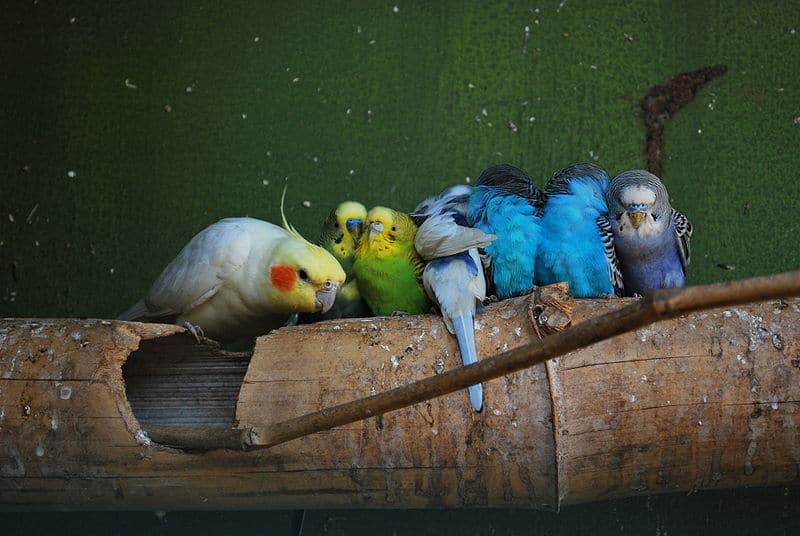
When domesticated, cockatiels have a higher lifespan than parakeets.
©Harsha K R / Creative Commons – Original
Cockatiels are a very popular bird to bring home as a pet, but you may have noticed some parakeets at the pet store too. How does the lifespan of a cockatiel compare to that of a parakeet? Let’s talk more about these two common pets now.
Parakeets have an average lifespan of seven to 15 years in captivity. However, in the wild, they average four to six years, although some have been observed to live for longer. In particular, many studies claim that parakeets thrive in large groups in the wild, both for protection and socialization.
Cockatiels tend to thrive longer in captivity than in the wild. Their domesticated lifespan is higher than a parakeet’s, averaging 12 to 15 years if not more. Parakeets can live a similarly long lifespan if given proper socialization, diet, and the ability to fly.
No matter the bird, both of these species require socialization, preferably with other birds. Both cockatiels and parakeets can suffer from depression and other mood disorders if not properly socialized and exercised. It may surprise you to hear that pet birds can have such emotional awareness, but it’s true. Give your pet cockatiel or parakeet ample socialization, as soon as possible.