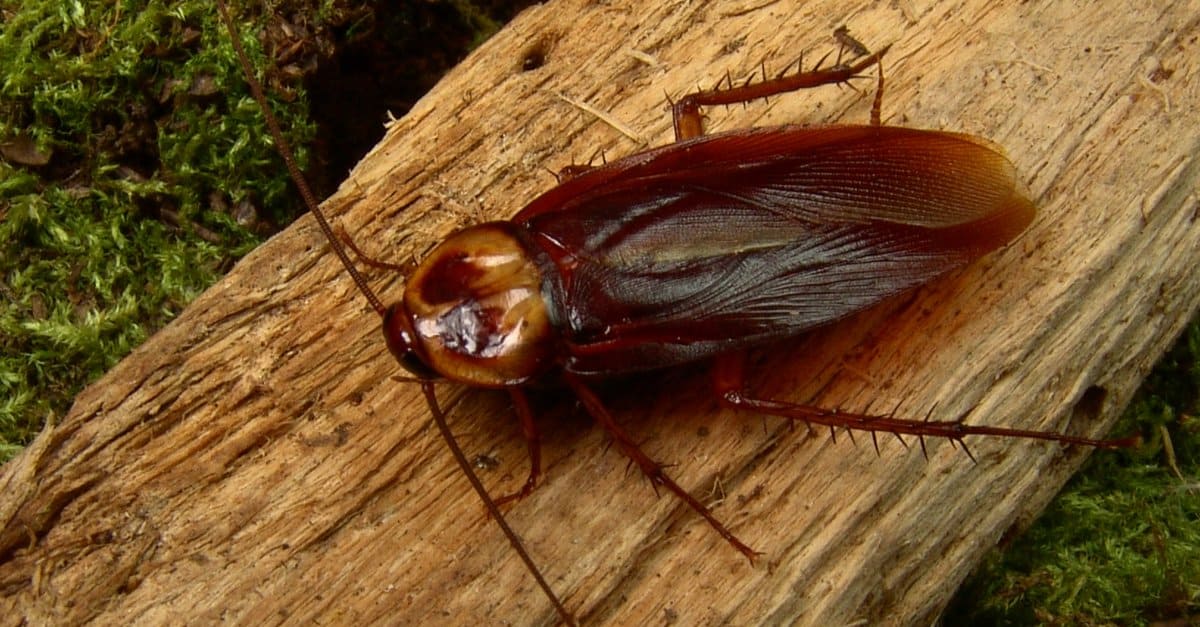

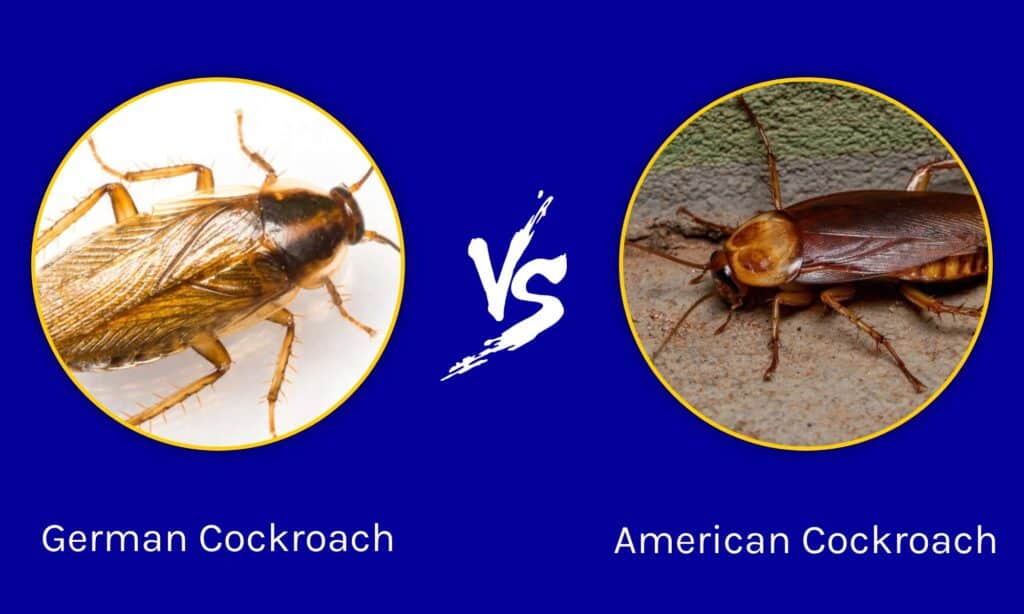
The German cockroach and the American cockroach are both fascinating cockroaches which live in many of the same regions. At first glance, these two cockroaches appear to have a very similar appearance. However, there are actually certain distinctions between these insects that can help tell them apart. In this article, we will be going into details about the differences and peculiarities of both insects.
Comparing a German Cockroach and an American Cockroach
| German Cockroach | American Cockroach | |
|---|---|---|
| Size | Length: 0.5in | Length: 1.1in-2.1in |
| Appearance | Light-brown color | Reddish-brown color |
| Location and Habitat | Location: Africa, Asia, Europe, North America, Eurasia, South America, and Oceania Habitat: Anywhere humans live | Location: Africa, parts of Europe, and North America Habitat: Anywhere humans live |
| Predators and Threat | Lizards, small snakes, frogs, toads, mice | Frogs, lizards, salamanders, rats, and cats, among others. |
| Diet | Omnivorous; just about anything | Omnivorous; just about anything |
| Reproduction | Lays 30-40 eggs, which hatch after 28 days | Lays 16 eggs, which hatch after 6-8 weeks |
The Major Differences Between the German Cockroach vs. American Cockroach
The major differences between German and American cockroaches are in their size and appearance. German cockroaches are smaller than American cockroaches, and while the former has a light-brown color, the latter has a reddish-brown color. Let’s explore these differences in more detail below.
German Cockroach vs. American Cockroach: Size
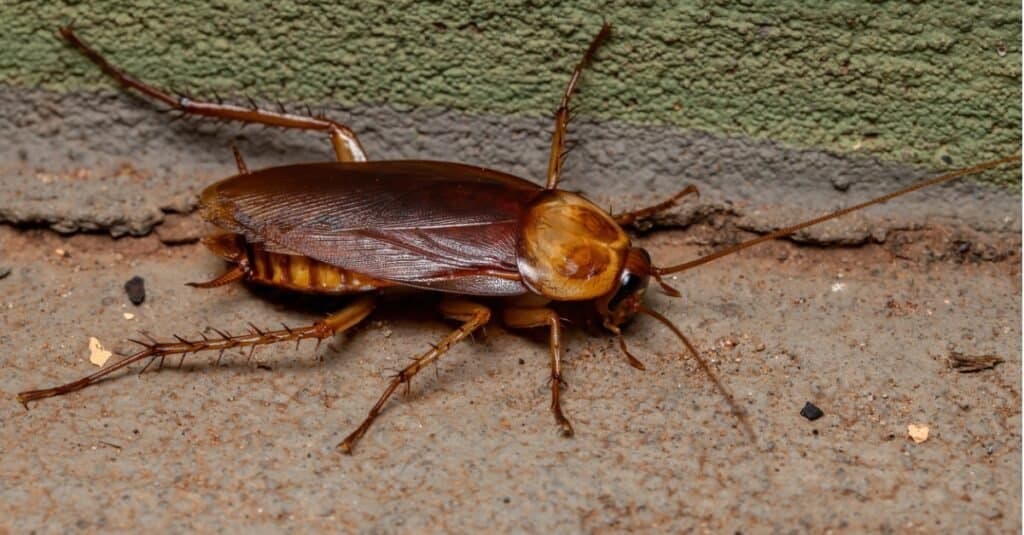
American cockroaches measure between 1.1 and 2.1 inches.
©iStock.com/ViniSouza128
On average, German cockroaches are a little smaller than American cockroaches. The average length of German cockroaches is 0.5 inches, while American cockroaches measure between 1.1 and 2.1 inches. However, to actually tell these cockroaches apart using their size, you would have to look very closely or use advanced measuring devices.
German Cockroach vs. American Cockroach: Appearance
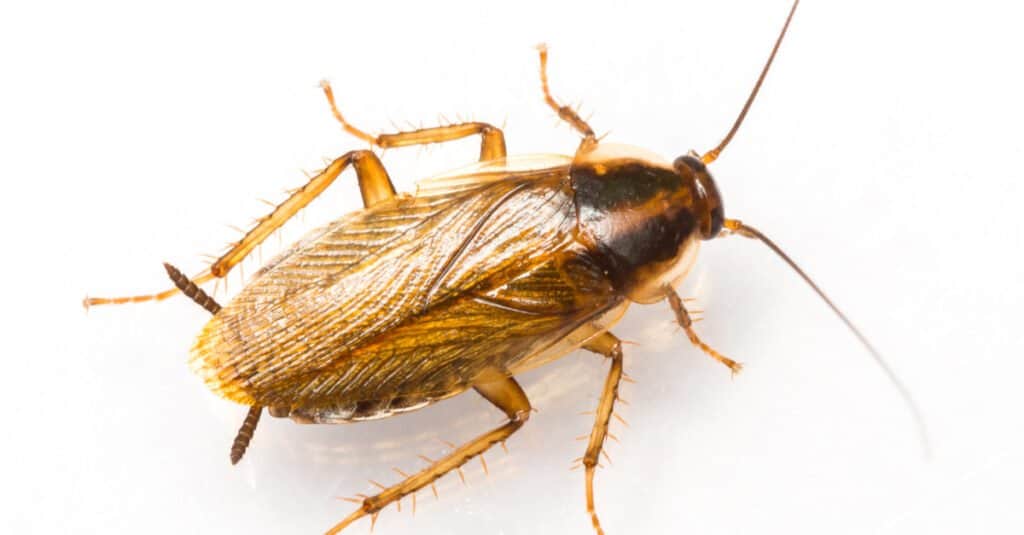
German cockroaches have very slim bodies, with six long legs and spikes on each of the legs to help with climbing.
©7th Son Studio/Shutterstock.com
Although German and American cockroaches look similar when you first see them, if you look closer, you’ll see that they actually differ a bit in terms of appearance. German cockroaches are light brown, and they could even look tan in some light conditions. They have very slim bodies with spikes on each of their legs to help with climbing. They also have long antennae of almost the same length as their entire bodies, as well as two dark-brown bands on the sides of their heads. Their young, also known as nymphs, have a different coloring owing to the extension of the dark brown bands all the way down their bodies.
On the other hand, American cockroaches have a reddish-brown color with some yellow markings behind the head. They also have very long antennae, and two sets of wings, with the strongest wings at the front and delicate ones at the rear. The nymphs look almost like them, except they are wingless and have to molt over a dozen times before they undergo a complete metamorphosis.
German Cockroach vs. American Cockroach: Location and Habitat
German and American cockroaches both have worldwide distribution thanks to global commerce activities. German cockroaches are the more common species and can be found everywhere across the world. American cockroaches also have a worldwide distribution, but their presence is particularly high in some parts of Europe, North America, and Africa.
In terms of habitats, German and American cockroaches are similarly drawn to places with enough warmth and moisture. They both enjoy staying close to and around human homes. However, German cockroaches prefer kitchens and bathrooms, while American cockroaches like basements, sewers, crawl spaces, storage buildings, and porches, among others.
German Cockroach vs. American Cockroach: Predators and Threats
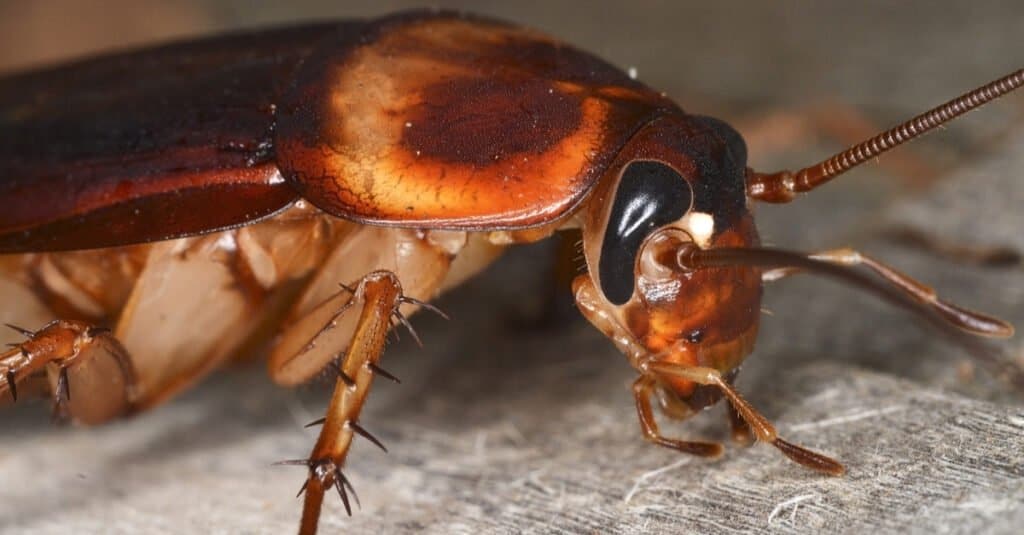
American cockroaches are targeted by many other animals, including frogs, lizards, mice, salamanders, and chickens, among others.
©Guillermo Guerao Serra/Shutterstock.com
German and American cockroaches have similar predators. They are jointly targeted by a range of other animals, including frogs, lizards, mice, salamanders, and chickens, to mention a few. They also have a common enemy in humans who are strongly averse to them because of their propensity to mass infestation and carriage of harmful bacteria, viruses, and fungi. However, German cockroaches fall victim to human attacks more frequently since they prefer to stay in parts of houses that are more often frequented by humans, such as kitchens and bathrooms.
German Cockroach vs. American Cockroach: Diet
German and American cockroaches are both omnivores and, like most other roaches, they can eat a variety of things. We are talking papers, stamps, feces, meat, sweets, and toothpaste, among many other organic matters. As far as diets go, there are no differences between German and American cockroaches.
German Cockroach vs. American Cockroach: Reproduction
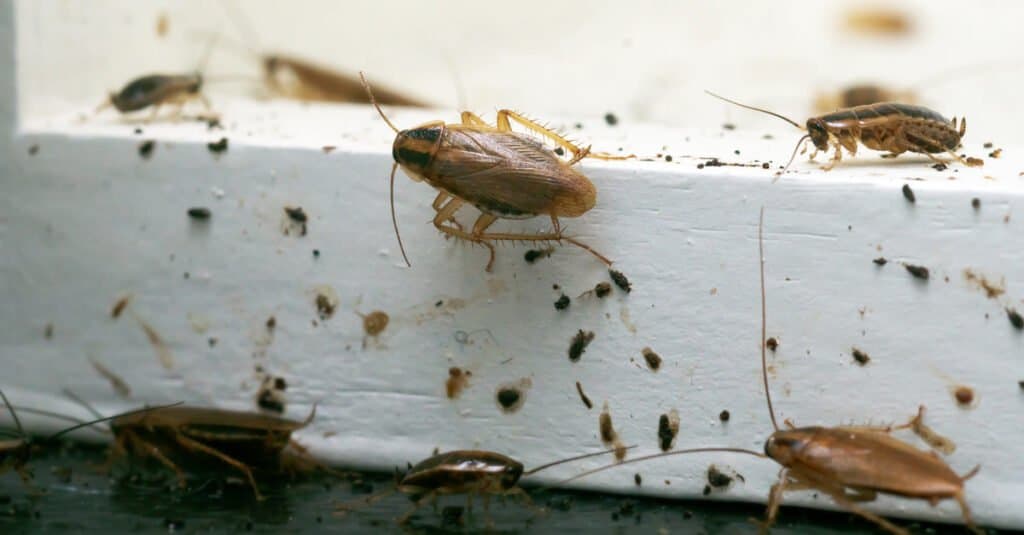
German cockroaches gestate a lot faster than American cockroaches.
©IrinaK/Shutterstock.com
In terms of reproduction, German cockroaches and American cockroaches are quite different. While a female German cockroach lays an average of 30 to 40 eggs at a time, a female American cockroach lays around 16 eggs at a time. Also, while both insects have similar reproductive and growth processes, the length of time that it takes the eggs to hatch is different.
The German cockroach eggs hatch after 28 days, while it takes American cockroaches anywhere from six to eight weeks. In other words, German cockroaches reproduce a lot faster than American cockroaches, and that’s interesting, considering the former lays more eggs.
German Cockroach vs. American Cockroach: Speed
As we mentioned before, German cockroaches and American cockroaches suffer constant attacks from humans. While it’s true they like to live around humans, these roaches are very wary of human presence and would often scurry out of sight upon sighting or perceiving humans. German cockroaches have a top speed of 3 miles per hour, while American cockroaches boast an average speed of 3.4 miles per hour, making the latter a bit faster.