Quick Take
- Four Nile crocodiles turned up in Florida, and DNA tests exposed each one. Where did they come from? See the DNA-confirmed captures →
- One escaped croc vanished into a swamp for years. What it looked like when it resurfaced is startling.
- A grim attack statistic explains why Nile crocodiles worry experts more than any local reptile. Read the attack statistics →
- A Florida herpetologist has a blunt warning about how many more may be out there.
Alligators (Alligator mississippiensis) are very common in Florida waterways and even on some trails and golf courses. American crocodiles (Crocodylus acutus), on the other hand, are quite rare. There are an estimated 1.3-1.5 million alligators in Florida, but there are only up to 2,000 American crocodiles left. They are considered a Vulnerable species by the IUCN.
Crocodiles have a reputation for being more aggressive than alligators. While American crocodiles do not cause many problems, Nile crocodiles (Crocodylus niloticus) are another story. So, are there Nile crocodiles in Florida lakes? Have researchers ever confirmed Nile Crocodiles in Florida? Could the next invasive threat to Florida Lakes be Nile Crocodiles? Read on to find out.
Why Are Nile Crocodiles More Dangerous?
Besides the enormous negative impact the Nile crocodile could have on the delicate ecosystem of the Everglades, Nile crocodiles can be a greater threat to local human populations. Nile crocodiles are very aggressive and won’t hesitate to attack, kill, and eat humans in African countries.
Accurate estimates are difficult due to a lack of data, but experts believe that Nile crocodiles are responsible for at least 200 deaths a year in Africa. Around 63% of Nile crocodile attacks are fatal. If we are unable to contain them, these crocodilians could pose a huge threat to human lives.
How Can You Tell an Alligator from a Crocodile?
Typically you can tell if a large reptile is an alligator or crocodile based on where you are. If you are in Louisiana, Alabama, Georgia, or most of Florida, it is usually an alligator. However, if you are taking a river cruise in Africa, then it is going to be a Nile crocodile.
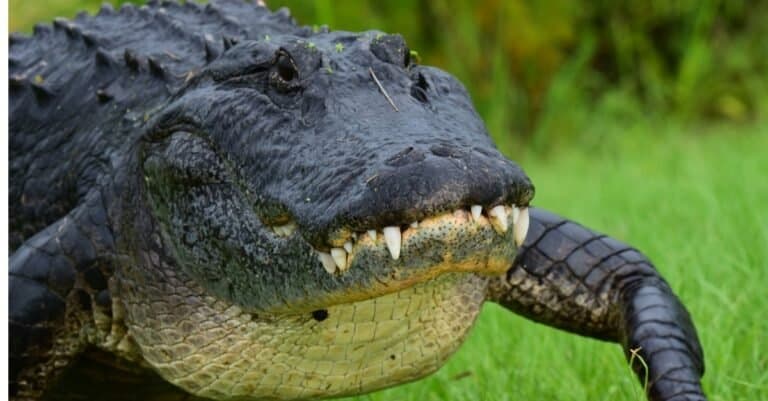
Of course, the U.S. does have American crocodiles, but the southern tip of Florida is the only place in the world where crocodiles and alligators live in the same habitat. Alligators are smaller, darker, and have a rounder, flatter snout, while crocodiles are larger, lighter in color, and have long, narrow, pointed snouts. That may help with the alligator vs. crocodile conundrum, but some people have reported “unusual crocodiles” in Florida. Could these be Nile crocodiles?
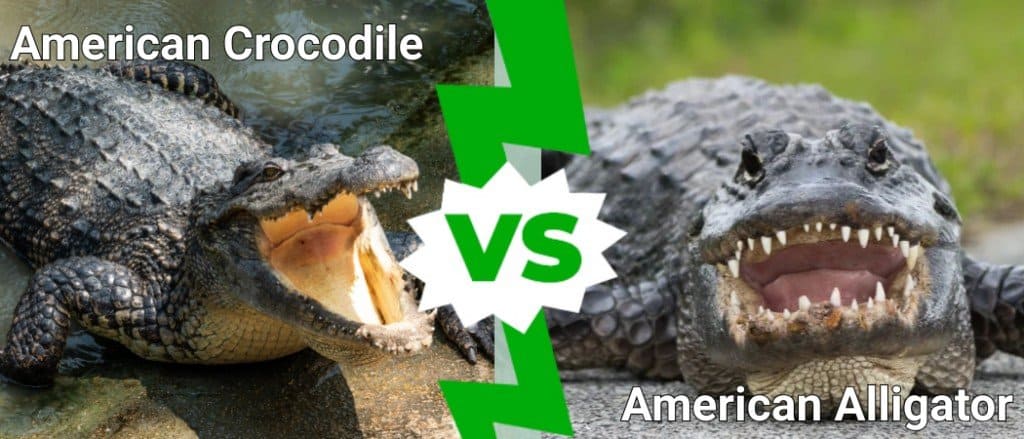
Nile Crocodile, American Crocodile, and Alligator Comparison
| Nile Crocodile | American Crocodile | American Alligator | |
|---|---|---|---|
| Size | Up to 20 feet long | 14-20 feet | 10-15 feet |
| Weight | Up to 2,200 pounds | 300-2,000 pounds | 400-1,000 pounds |
| Coloration | Olive to grayish green with crossbars | Grayish green, lighter than alligators | Blackish in color, darker than crocodile |
| Snout Shape | Narrow, pointed snout, slightly broader than an American crocodile | Narrow, V-shaped snout | Wide, U-shaped, rounded snout |
| Distribution and Habitat | Freshwater and brackish water in sub-Saharan Africa, the Nile River basin, and Madagascar | Coastal and brackish environments from the southern tip of Florida through parts of the Caribbean, Central America, and northern South America | Freshwater habitats in the southeastern United States |
Are There Nile Crocodiles in Florida?
There have been a few confirmed cases of Nile crocodiles in Florida from 2000-2014. DNA results prove that Nile crocodiles were found near Miami in 2009, 2011, and 2014.
- Nile Croc #1: (1996/1997) A Nile crocodile escaped from the Billie Swamp Safari, Seminole Reservation, Hendry County, and slipped away into the swampy 1,012 hectare property. This reservation area was contained, so there was no imminent danger to the public. Four years later, in 2000, the same croc turned up and was recaptured. The staff estimated that it was 4-5 feet long when it escaped, but when they found it in 2000, it measured nearly 10 feet in length.
- Nile Croc #2: (April 14, 2009) The second crocodile that researchers looked at was caught on a homeowner’s porch in Miami by Robert Freer. It was taken to Kliebert’s Turtle and Alligator Farm in Hammond, Louisiana, where researchers were later able to get a tissue sample in 2015.
- Nile Croc #3: (October 27, 2011) A female crocodile was captured at the Preston B. Bird/Mary Heinlein Fruit and Spice Park, Homestead, in Miami-Dade County. It was measured at 3.8 feet and weighed 9.7 pounds.
- Nile Croc #4: (March 13, 2012) Another female crocodile was captured in Homestead, Miami-Dade County in a nearby canal. This one measured 2.8 feet. It was released and then captured again two years later in the Everglades National Park. After two years it measured 5.5 feet and weighed 37 pounds. The researchers examined its stomach contents and found largemouth bass.
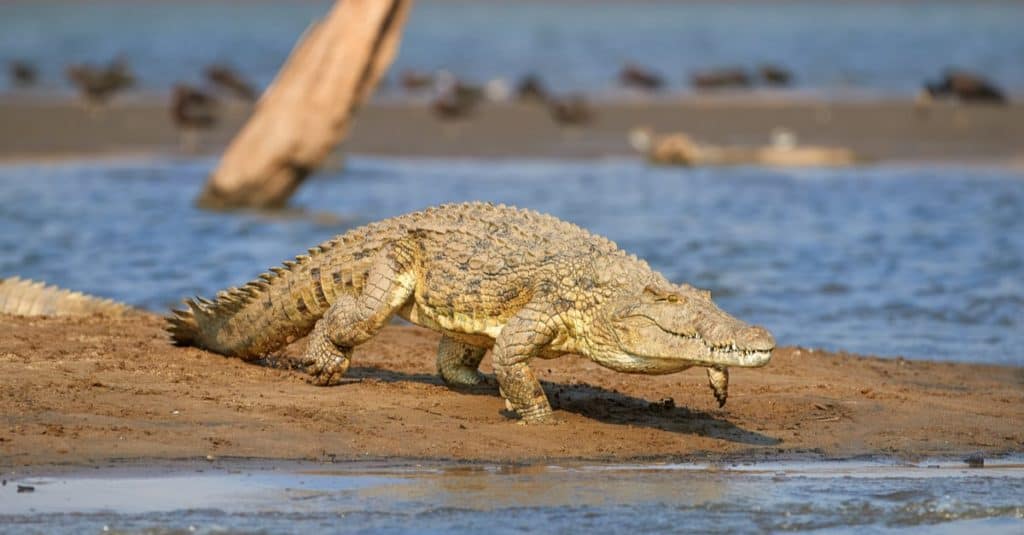
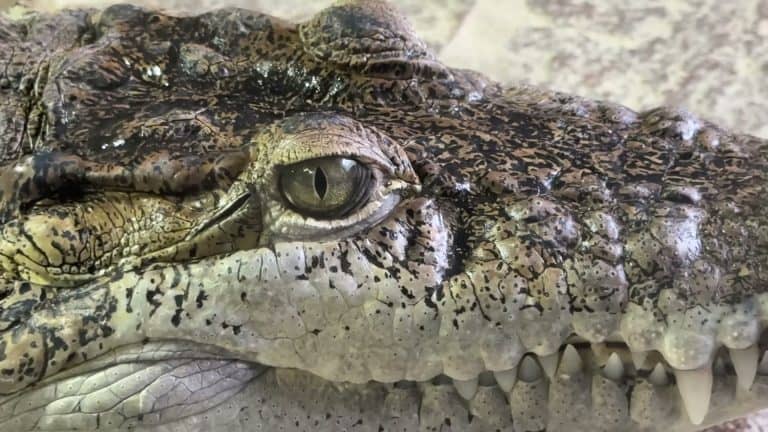
Nile crocodiles can reach up to 20 feet long. They are the second-largest crocodile species.
©Martin Mecnarowski/Shutterstock.com
Does This Mean There Are Nile Crocodiles in Florida Now?
This research helps show that Nile crocodiles could live in Florida and survive quite well. Croc # 1 survived on its own for three to four years, and Croc. #4 was missing for nearly two years before being captured again. A herpetologist from the University of Florida, Kenneth Krysko, reported in an article on the University of Florida’s Florida Museum website that “The odds that the few of us who study Florida reptiles have found all of the Nile crocs out there is probably unlikely.” Krysko went on to state, “We know that they can survive in the Florida wilderness for numerous years, we know that they grow quickly here and we know their behavior in their native range, and there is no reason to suggest that would change here in Florida.”
It’s possible that one day we could see Nile crocodiles in the Everglades in Florida, but it is unlikely. There is currently no evidence of an established population. So far, the four identified Nile crocodiles have proven to be isolated instances, and conservationists have been monitoring the wildlife in the Everglades and across Florida. There haven’t been any confirmed captures of Nile crocodiles since the last one was caught in 2014.
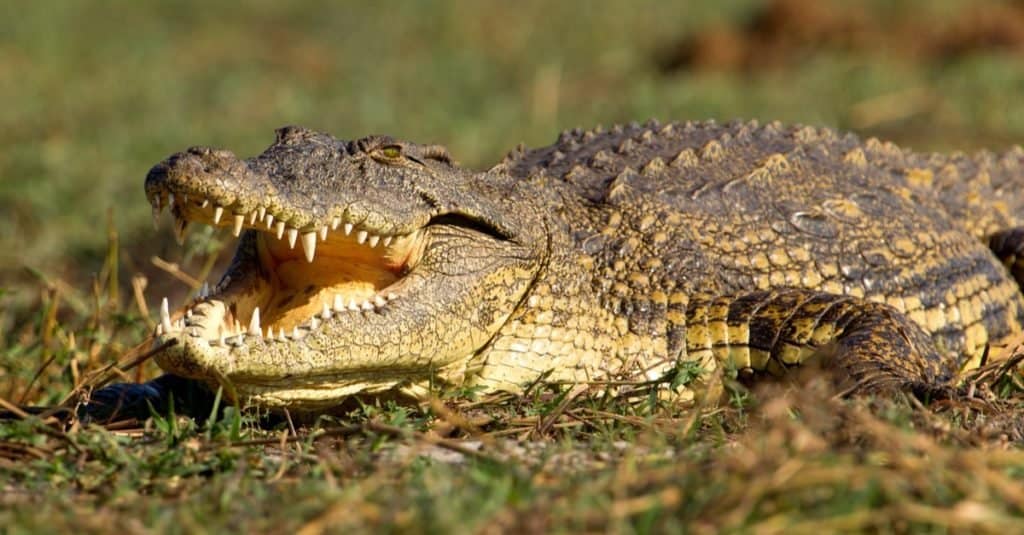
While Nile crocodiles can survive and even thrive in Florida, there are no established populations.
©Gaston Piccinetti/Shutterstock.com