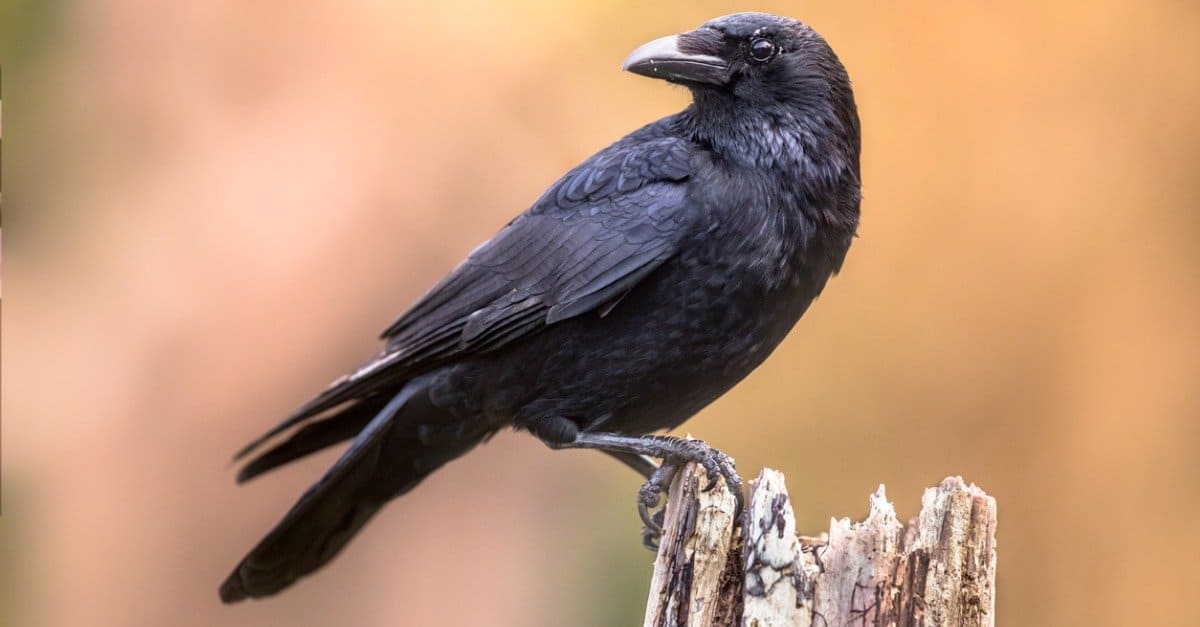

Crows are easily recognized by their jet-black appearance and ominous reputation. As scavengers who eat just about anything, including dead animals, they have become symbolically associated with death. It’s no wonder so many of us get goosebumps when we see a flock of crows nearby, which is incidentally called a murder. Despite being one of the most well-known species of birds, there’s still a lot of mystery surrounding them. So if you’ve been interested in shedding the mystery behind the crow, then let’s dive into the crow’s lifespan!
A Quick Crash Course on Crows
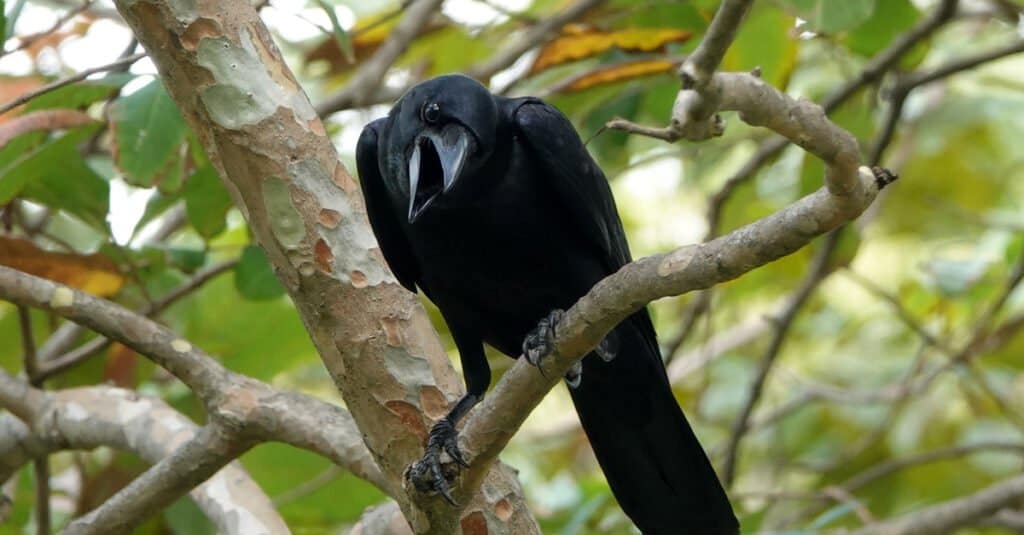
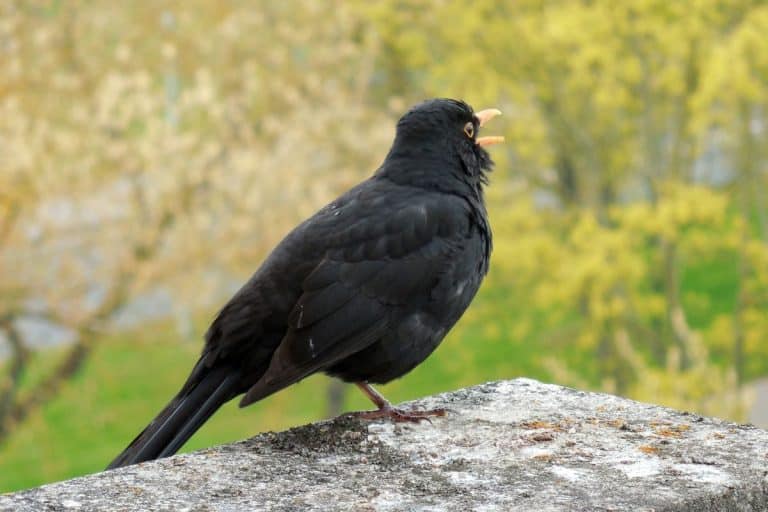
Crows have been known to mimic human voices and sounds.
©Marut Sayannikroth/Shutterstock.com
Crows, ravens, and rooks are all members of the genus Corvus. All of these birds belong to the Corvidae family, which also includes jays, magpies, and nutcrackers. Crows are found on every continent except Antarctica, and can live in a variety of habitats.
Unlike many other bird species, crows are known for their loud and often distinct sounds. Crows have more than 20 calls, but their most notable is their caw. As well as being distinct in both appearance and sound, crows are also surprisingly intelligent.
How Long Do Crows Live?
In the wild, American crows have a life expectancy of around seven to eight years. However, they have been known to live up to 30 years while in captivity.
There are several factors that impact the life expectancy of crows. Adult crows do not have many predators. However, they are susceptible to attacks from eagles, owls, hawks, and primarily humans. Mortality amongst crows typically occurs during the first year of life. Many young crows still living in the nest will die from malnourishment, unfavorable weather changes, and attacks from larger predators.
The Average Crow Life Cycle
The crow’s life cycle is quite similar to other bird species. Here’s a rundown of the crow’s life cycle from hatchling to adult.
Nesting
In crows, both females and males build the nest. This usually happens over a period of eight to 14 days, beginning as early as mid-March and finishing as late as mid-July. Once the nest has been built, the female incubates four to five eggs for the next 18 days. During this time, she may be fed by her mate or sometimes by the children she had from the previous year.
Hatchlings
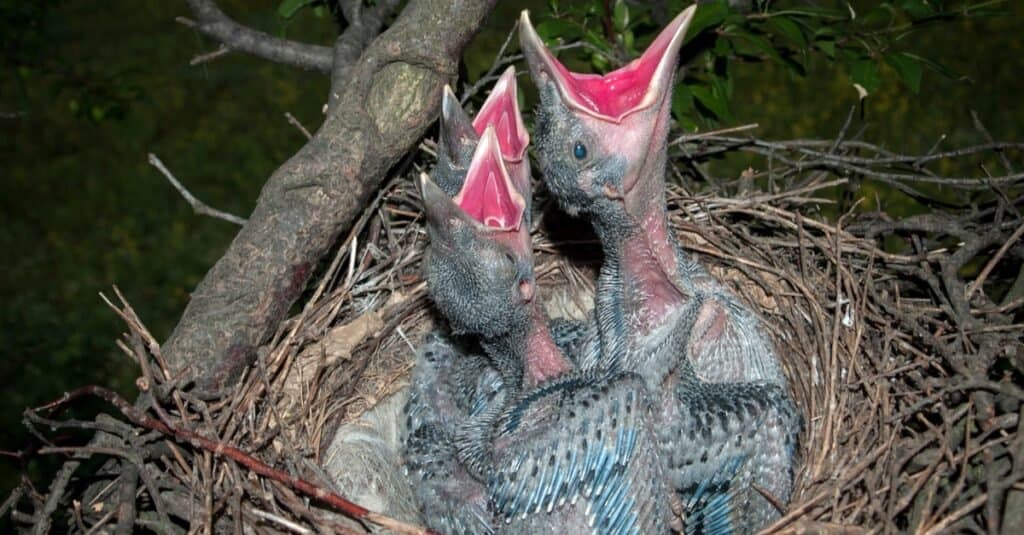
Some crows may stay with their parents for up to five years.
©Moisieiev Igor/Shutterstock.com
Once the 18 days have passed, the eggs will then hatch. Baby crows are called chicks, and they will begin to grow quite quickly. Many of them will begin to fledge at anywhere between 28 and 35 days. Fledging is when a young bird develops wing feathers that are large enough for flying.
Young Adult
Once the chicks have fully fledged, they enter their young adult stage. Although they are often out of the nest at this point, they do not begin to fend for themselves fully just yet. For the next 30 days, they will continue to be fed by the adults.
Crows are incredibly social birds, and it’s not uncommon to see them living in family groups. These family groups will consist of the male and female crow along with their young from the past two years. This is because there are usually one or more crows that choose to stay with the family until the next nesting season.
The crows that stay with the family will then contribute to building the nest and helping to feed the next round of chicks.
Adult Crows
The adult American crows do not begin breeding until they are at least two years old. This is actually earlier than other breeds that don’t begin until they are at least four years of age. When the nesting season is finished, the family group typically joins other crow families in communal night roosts. Crows use communal roosting to exchange information and locate mates. This is because some birds are more effective at obtaining food because of their age or knowledge of the surrounding area.
Some of the Oldest Crows Ever Recorded
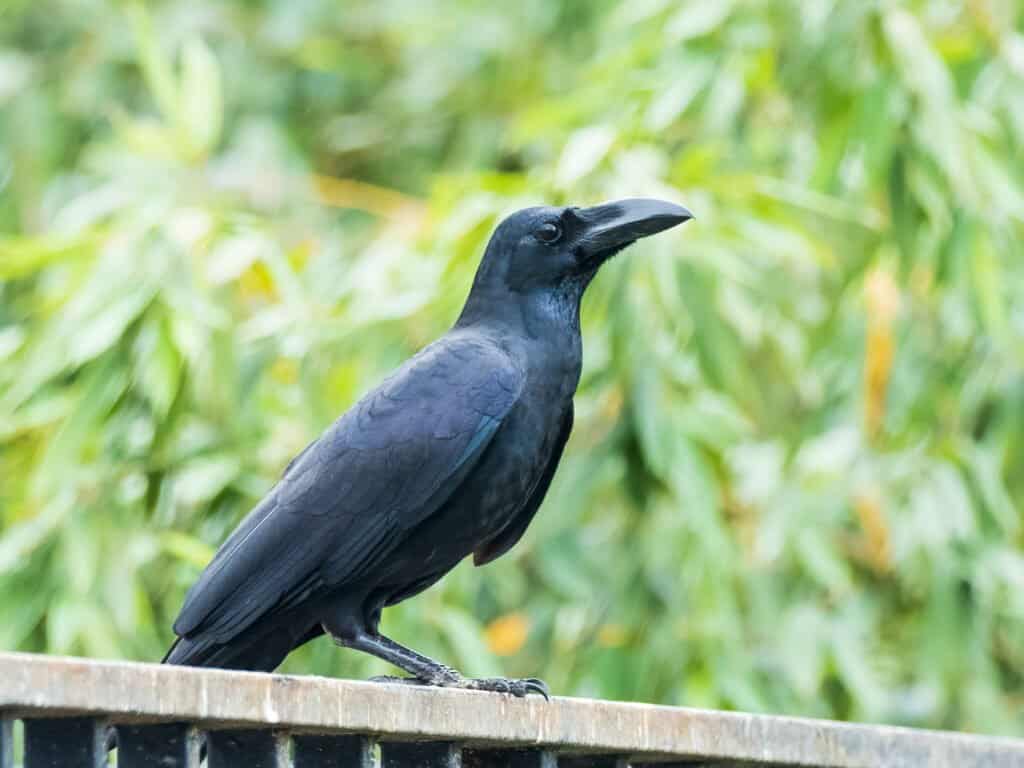
Some crows exceed their typical average lifespan.
©Wright Out There/Shutterstock.com
Crows are wild animals, so the crow’s lifespan greatly depends on food availability and predation levels. However, when kept in captivity, they have been shown to live quite long lives. Here are some of the oldest crows ever recorded.
- Tata, a crow living in the Woodstock hamlet of Bearsville, passed away after his 59th birthday. It is believed that he is one of the oldest known crows and lived through 11 U.S. presidencies. Flones, the owner, explained that the bird was born in 1947 in a Long Island cemetery. The crow was then injured during a storm, and he was then found by a cemetery worker. The worker brought the crow to a local family and lived with them for more than half a century.
- According to Cornell University, the oldest recorded wild American crow was photographed in Washington state. It’s said that the crow was at least 17 years and 5 months old at the time the photograph was taken.
- The Saginaw Children’s Zoo recorded Edgar the crow as having lived to almost 26 years of age. Edgar was one of the oldest crows in captivity on record in a North American zoo. He was incredibly friendly and loved to greet everyone who would come by his area.