


D
Species Profile

Dalmadoodle

Canis lupus familiaris

Spots, smarts, and springy energy

Dalmadoodle Distribution

Click a location to explore more animals from that region

Origin Location

This map shows the native origin of the Dalmadoodle. As a domesticated species, they are now found worldwide.

Loading map...

Found in 1 country

Size Comparison

Human 5'8"
Dalmadoodle 1 ft 10 in

Dalmadoodle stands at 32% of average human height.

At a Glance

Domesticated
Diet Omnivore
Activity Diurnal+
Lifespan 4 years
Weight 30 lbs
Status Not Evaluated
Did You Know?

A Dalmadoodle's traits can swing widely-even littermates may differ in coat curl, shedding, and spotting.

Scientific Classification

A “designer” mixed-breed domestic dog produced by crossing a Dalmatian with a Poodle (often Standard or Miniature). Not a formally standardized zoological taxon; best treated as a dog crossbreed within the domestic dog.

Kingdom
Animalia
Phylum
Chordata
Class
Mammalia
Order
Carnivora
Family
Canidae
Genus
Canis
Species
Canis lupus

Distinguishing Features

  • Combination of Dalmatian-style spotting with Poodle-influenced coat texture (may range from wavy to curly)
  • Size varies strongly with the Poodle variety used in the cross
  • Typical domestic-dog morphology with substantial individual variation (common in first- and second-generation crosses)

Physical Measurements

Males and females differ in size

Height
1 ft 9 in (1 ft 3 in – 2 ft 2 in)
1 ft 8 in (1 ft 2 in – 1 ft 12 in)
Length
2 ft 11 in (2 ft 2 in – 3 ft 3 in)
Weight
51 lbs (24 lbs – 71 lbs)
44 lbs (26 lbs – 60 lbs)
Tail Length
12 in (8 in – 1 ft 4 in)
1 ft 1 in (10 in – 1 ft 4 in)
Top Speed
31 mph

Appearance

Primary Colors
Secondary Colors
Skin Type Skin covered by fur; coat can be short and sleek like a Dalmatian or wavy/curly and keeps growing like a Poodle. Skin and ears can get irritated; regular coat and ear care is important.
Distinctive Features
  • Domestic dog crossbreed (Dalmatian × Poodle) within Canis lupus familiaris; distinguishes from the base domestic dog population primarily by its intentionally mixed lineage and high variability rather than a fixed, universally standardized breed type.
  • Size and build vary with Poodle type used (Standard vs Miniature): from medium to large; typically athletic, longer-legged, and active, often combining Dalmatian endurance with Poodle agility.
  • Head/face may show a longer, narrower muzzle (Dalmatian-like) or a more refined Poodle profile; ears are usually floppy and may carry longer, curlier hair.
  • Coat variability is the hallmark: can be short and shedding (Dalmatian-like), wavy, or curly/'doodle' coat that may shed less but mats more easily; spotting may be bold and distinct or faint/ticked.
  • Wavy or curly coats need brushing several times a week and regular professional grooming to prevent mats. Shorter or straighter coats need less brushing. All need baths suited to skin.
  • Care requirements (exercise/behavior): typically high energy and intelligent; needs daily aerobic exercise and structured training/enrichment (retrieval games, scent work, obedience) to prevent boredom-related behaviors.
  • Care requirements (ears): floppy ears plus hair in/around ear canals (Poodle influence) can increase moisture retention; routine ear checks/cleaning help reduce otitis risk.
  • Common health concerns to watch (breed-relevant risks from both lineages): hip dysplasia and other orthopedic issues (especially in larger individuals), progressive retinal atrophy/eye conditions (Poodle-associated), skin allergies/atopy, and ear infections (in curlier-coated/floppy-eared individuals).
  • Dalmatian-lineage specific consideration: potential risk of hyperuricosuria/uric-acid stone tendency in some lines; owners may be advised by a veterinarian about screening, hydration strategies, and diet management when indicated.
  • Dalmatian-lineage specific consideration: congenital deafness risk can be elevated in lines with extensive white/spotting; hearing screening (e.g., BAER testing) may be recommended for puppies.
  • Dental care: smaller individuals (Miniature Poodle influence) may be more prone to dental crowding/periodontal disease; regular tooth brushing and professional cleanings as needed.

Sexual Dimorphism

As with most domestic dogs, dimorphism is typically modest and mainly size-related; expression varies by whether the cross is Standard- or Miniature-influenced and by individual genetics.

  • On average taller/heavier with a broader chest and more robust head/neck.
  • May develop more pronounced musculature when intact and well-conditioned.
  • On average slightly smaller/lighter with a narrower frame.
  • May appear more refined in head/neck and overall outline, though overlap with males is common.

Did You Know?

A Dalmadoodle's traits can swing widely-even littermates may differ in coat curl, shedding, and spotting.

Dalmatian "spots" are a genetic pattern; puppies are typically born mostly white and develop spots as they grow.

Poodles were originally water retrievers; many Dalmadoodles inherit strong fetch-and-swim enthusiasm.

Some inherit the Dalmatian's historic "coach dog" stamina-built for long, steady runs beside people.

Coat type ranges from short-and-sleek to curly; grooming needs change dramatically with coat texture.

Size is lineage-dependent: Standard Poodle crosses often make large dogs; Miniature Poodle crosses can be medium-sized.

Despite the "doodle" reputation, no Dalmadoodle is truly hypoallergenic; dander and saliva still trigger allergies.

Unique Adaptations

  • Domestic-dog adaptability (Canis lupus familiaris): highly trainable social cognition, reading human cues better than wild canids.
  • Hybrid trait variability: a hallmark "adaptation" of crossbreeds-coat, size, and temperament can vary widely depending on parent lines.
  • Coat diversity: can inherit Dalmatian short coat (easier grooming, more shedding) or Poodle-type curls (more grooming, often less shedding).
  • Athletic build potential: Dalmatian endurance paired with Poodle agility can produce a nimble, sport-suited companion (e.g., agility, canicross).

Interesting Behaviors

  • High endurance "trot mode": many happily keep a steady pace for long walks/jogs (common in Dalmatian-leaning dogs).
  • Retrieving and water play: Poodle heritage often shows up as persistent fetch, carrying toys, or interest in swimming.
  • Velcro tendencies: can become closely bonded and shadow their people, especially with poodle-like sensitivity.
  • Alert announcing: may bark to report movement/sounds; early training helps channel watchdog instincts.
  • Mouthy play and object carrying: a common retriever-style habit-redirect with toys and reward calm holds.
  • Pattern-focused sniffing: many enjoy scent games; nosework can be an excellent outlet for busy minds.

Cultural Significance

The Dalmadoodle (Canis lupus familiaris) is a Dalmatian × Poodle cross, not a true breed. It reflects modern pet trends—family-friendly smarts, an active life, often less shedding—and stresses responsible breeding because traits can vary.

Myths & Legends

In 18th–19th century Britain and Europe, Dalmatians ran beside horse-drawn carriages. This job turned into stories of spotted dogs acting as guards for travelers and stables at night.

Firehouse companions: In the era of horse-drawn fire engines, Dalmatians were kept to run with teams, help clear paths, and steady horses-an enduring historical association that turned into firehouse lore in many cities.

In parts of Europe, Poodles were praised in hunting tales as smart water dogs that braved cold rivers to fetch birds, an idea that still shapes how people picture 'doodle' mixes today.

Naming and novelty folklore of 'doodles': Modern anecdotes often frame doodle crosses as 'the best of both worlds'-a cultural belief that circulates in family and breeder stories, even though outcomes can vary widely.

Spots as good-luck symbolism: In some modern pet-keeping traditions, spotted dogs are treated as lucky or protective household companions-an informal superstition reinforced by the Dalmatian's historic guardian roles.

Conservation Status

NE Not Evaluated

Has not yet been evaluated against the criteria.

Population Stable

Life Cycle

Birth 6 pups
Lifespan 4 years

Lifespan

In the Wild
2–12 years
In Captivity
10–16 years

Reproduction

Mating System Polygynandry
Social Structure Managed Domestic
Breeding Pattern Not Applicable
Fertilization Managed Selective
Birth Type Managed_selective

Dalmadoodle (Dalmatian × Poodle, Canis lupus familiaris) follows typical dog reproduction: human-directed breeding, both sexes may mate with multiple partners, internal fertilization with a temporary mating 'tie', heat about 1–3 weeks, pregnancy about 63 days, maternal care, litters 4–10.

Behavior & Ecology

Social Pack Group: 4
Activity Diurnal, Crepuscular, Cathemeral
Diet Omnivore Lean animal protein (often poultry or fish-based diets)

Temperament

Highly social, people-oriented companion; often seeks frequent interaction and inclusion in household activities (more so than many primitive or livestock-guardian dog types).
Energetic and athletic (Dalmatian heritage) with notable endurance; many require substantial daily exercise plus off-leash-capable outlets in secure areas.
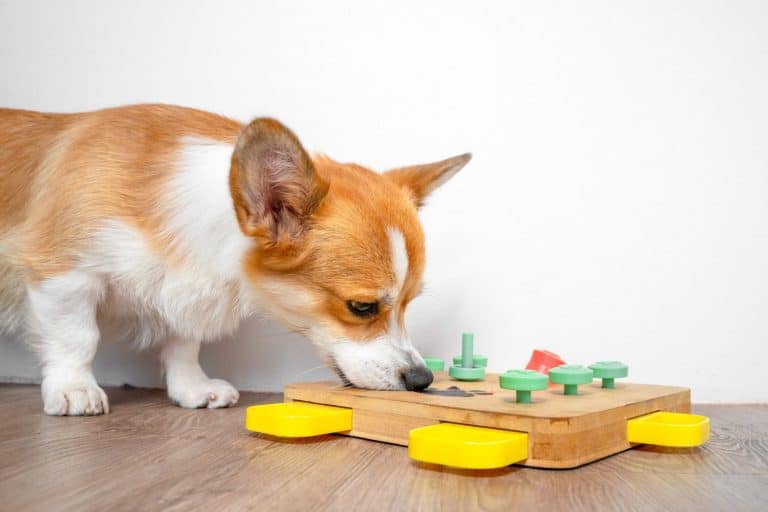
Intelligent and trainable (Poodle influence) with strong reinforcement-learning response; can become bored and develop nuisance behaviors without mental work (nose games, obedience, trick training, puzzle feeding).
Playful, sometimes 'busy' or mouthy when young; benefits from structured impulse-control work (settle, mat training, polite greetings).
Prey/chase drive can be moderate to high (Dalmatian influence): may pursue squirrels/birds; recall reliability varies and typically improves with consistent training.
Sensitivity/handler-attunement is common (Poodle influence): harsh corrections can increase anxiety or avoidance; responds best to predictable routines and reward-based methods.
Friendly, energetic, and intelligent; often people-oriented and responsive to training, but may be somewhat reserved or sensitive if not well socialized (traits can vary widely because this is a crossbreed).
Dalmadoodles may have birth deafness (Dalmatian lines) affecting reaction and startle responses; urate stone risk needs diet and water; watch hip dysplasia, progressive retinal atrophy, allergies, Addison's, and bloat; pain can cause irritability or withdrawal.
Needs daily exercise and training. Regular grooming—often by a groomer for curly coats—prevents matting that causes pain and makes them react. Early socializing and training to be alone help prevent separation problems.

Communication

Barking: alert/attention barking is common; may increase with boredom or under-exercise. Some individuals inherit a more vocal 'watchdog' tendency.
Whining/whimpering: frequently used for attention-seeking, greeting, or frustration; can be prominent in highly attached individuals.
Howling/'talking': occasional howls or roos occur, sometimes triggered by sirens/excitement; varies by individual.
Growls: used in play and boundary-setting; in a well-socialized dog should be heeded as communication, especially if pain or resource tension is present.
Body language: tail carriage/wag patterns, ear set, facial tension/softness; important because some individuals with hearing impairment may rely more on visual cues and may startle if approached abruptly.
Physical contact: pawing, leaning, nudging, and following closely ('velcro' behavior) to solicit interaction.
Scent communication: sniffing, urine marking, and investigative tracking; many enjoy nose-work, reflecting strong olfactory engagement typical of domestic dogs.
Play signals: play bow, bouncy gait, inhibited mouthing; higher-energy individuals may need structured breaks to prevent overarousal.
Learned cueing: strong use of trained behaviors Sit, touch, place) to communicate needs when training is consistent; many respond well to hand signals (useful for dogs with partial/complete hearing loss

Habitat

Biomes:
Temperate Forest Temperate Grassland Boreal Forest (Taiga) Tundra Alpine Mediterranean Savanna Desert Hot Desert Cold Wetland +4
Terrain:
Plains Hilly Mountainous Plateau Valley Coastal Island Riverine +2
Elevation: Up to 16404 ft 3 in

Ecological Role

Domesticated companion omnivore (human-associated canid); minor opportunistic predator/scavenger when roaming

Rodent deterrence/control in household or farm settings Converts human-provided food into companionship/working functions (e.g., activity partner, alerting) Can influence local wildlife interactions if allowed to roam (predation/disturbance), so responsible containment reduces ecological impact

Diet Details

Main Prey:
Human-provided animal proteins Fish Eggs Small mammals
Other Foods:
Cooked grains and starches Vegetables Fruits Dietary fiber sources

Human Interaction

Domestication Status

Domesticated

Domestic dogs (Canis lupus familiaris) are wolves shaped by thousands of years of people choosing for tameness, being easy to train, and for work like hunting, guarding, herding, or companionship. The Dalmadoodle is a modern designer cross of a Dalmatian and a Poodle (Standard or Miniature). It is not a formal breed; looks and temperaments vary by litter.

Danger Level

Low
  • Bite risk typical of domestic dogs if poorly socialized, fearful, in pain, or mishandled (increased risk with high arousal/overstimulation).
  • Jumping/knocking over small children due to athleticism and excitement (especially larger, Standard-Poodle crosses).
  • Prey drive/chase behavior (may pursue runners, cyclists, cats/wildlife), creating collision or bite risk if unmanaged.
  • Mouthiness in adolescents without adequate training and exercise.

As a Pet

Suitable as Pet

Legality: Generally legal anywhere domestic dogs are permitted. Subject to local dog licensing/leash laws, housing/HOA rules, and occasional breed-specific or "large dog" restrictions (not typically targeted as a type, but enforcement varies by jurisdiction).

Care Level: Moderate

Purchase Cost: Up to $2,500
Lifetime Cost: $20,000 - $45,000

Economic Value

Uses:
Companion animal industry Breeding and puppy sales (designer crossbreeds) Veterinary care and preventive health services Grooming and coat maintenance services Training/behavior services Canine sports and recreation Therapy/service-dog prospecting (individual-dependent)
Products:
  • puppies (pet market)
  • stud services (where practiced)
  • grooming services (clipping, brushing, de-matting)
  • training classes (obedience, agility, scentwork)
  • pet supplies (coats, harnesses, enrichment toys)
  • veterinary services (vaccination, dentistry, spay/neuter, screening)

Relationships

Ecological Equivalents 6

Animals that fill a similar ecological role in their ecosystem

Domestic dog
Domestic dog Canis lupus familiaris Dalmadoodle is a Dalmatian × Poodle mix that is often athletic, requiring lots of exercise, training, and grooming for its curly coat. Watch for deafness, urinary stones, hip and eye problems, and Addison's disease.
Dalmatian
Dalmatian Canis lupus familiaris Occupies a similar niche as an energetic, people-oriented companion with historical working roots. Compared to many Dalmatians, Dalmadoodles often show more coat variation (frequently curl or wave) and may have different grooming versus shedding tradeoffs, while retaining a high exercise demand.
Poodle
Poodle Canis lupus familiaris Occupies a similar niche as a highly trainable companion. Compared with many Poodles, Dalmadoodles may trend toward greater stamina and higher outdoor activity needs, and often have more variable coat types and shedding than purebred Poodles.
Labradoodle
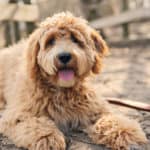
Labradoodle Canis lupus familiaris Comparable designer companion niche: active family dog with emphasis on trainability, variable coat types, and similar grooming and exercise planning considerations.
German Shorthaired Pointer
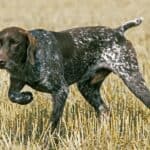
German Shorthaired Pointer Canis lupus familiaris Similar niche due to high daily aerobic exercise requirements, athletic build, and need for structured training and enrichment; differs in coat maintenance and in its typical purpose as a more specialized hunting breed.
Australian Shepherd
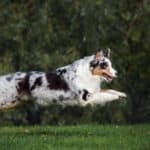
Australian Shepherd Canis lupus familiaris Similar niche: an intelligent, energetic, handler-focused dog that benefits from advanced training and jobs; highlights that Dalmadoodles often need comparable mental stimulation to prevent nuisance behaviors.

Quick Take

  • Owners must commit to 2 hour-long walks every day to prevent anxious or destructive behavior.
  • The Dalmatian-style coat creates a technical shedding limitation not found in other Doodle breeds.
  • These dogs are counterintuitively introverted, requiring restricted social interaction compared to their genetic relatives.
  • A 30-day grooming cycle is mandatory because the breed cannot physically regulate internal heat.

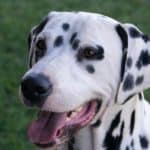
What do you get when you cross a Dalmatian with a poodle? The answer is a Dalmadoodle, one of the most charming and attractive doodle dogs on the market. These puppies are smart, energetic, attentive, and exciting to be around. If you love Dalmatian spots but need a low-shedding alternative, a Dalmadoodle is definitely the right choice.

Dalmadoodles are working dogs that love having something to do. Whether you train your Dalmadoodle to be like its carriage-following Dalmatian ancestors or its rabbit-hunting poodle ancestors, be sure to give your Dalmadoodle plenty of small jobs to make it feel useful and loved.

Like other designer dogs, the Dalmadoodle has only been around since the early 2000s. You can get a Dalmadoodle by contacting a breeder or checking out a rescue. Wherever you find it, your Dalmadoodle pup is about to be your new best friend.

An informative infographic about Dalmadoodle dogs featuring a white curly-haired dog with black spots and various icons illustrating its high-energy needs and introverted temperament.
They look like the perfect family pet, but the Dalmadoodle hides a complex, introverted nature and a physiological inability to handle heat. Mastering this 'technical' crossbreed requires more than just love—it takes a strict 30-day grooming cycle and two hours of daily commitment. © A-Z Animals

3 Pros and Cons of Ownership

ProsCons
Distinctive appearance: With fluffy hair and dalmatian spots, it’s hard not to admire the majestic dalmadoodle. These pups are some of the best-looking Doodles on the market.Moderate shedding: All Doodle dogs are at least somewhat hypoallergenic. However, these dogs often have dalmatian-style coats, which means that they shed more than other crossbreeds.
Active and energetic: They love to run, jump, and play. In fact, they’re almost impossible to tire out. If you’re looking for a sports buddy, these dogs are a great choice.Socially sensitive: Both Dalmatians and poodles are introverted pups that enjoy limited social interaction. Take care of your dalmadoodle, and make sure it doesn’t get overwhelmed when it’s meeting strangers or other dogs.
High intelligence: They are descended from two of the smartest and most trainable dog breeds. Be aware that your dogs may have a stubborn streak; you can solve this with early training and positive reinforcement.Hates the heat: Dalmadoodles don’t handle the heat well at all. Take your pup swimming, groom it regularly, and make sure the air conditioner stays on in the summertime.

Size and Weight

Dalmadoodles are one of the largest poodle hybrid breeds. These dogs have long legs, solid torsos, and thick coats of wavy hair. The average dog of this variety weighs between 40 and 70 pounds and stands about 18 inches tall. Females usually weigh less than their male counterparts; however, because this breed has so much inherent variance, size can’t be used to determine gender. Expect your dog to look different based on the type of poodle that was used for breeding and the random role of genetics.

Height (Male):15 to 19 inches
Height (Female):14 to 18 inches
Weight (Male):40 to 75 pounds
Weight (Female):40 to 65 pounds

Common Health Issues

These dogs are rather prone to the same health issues that plague both their Dalmatian and poodle parents. Ask your vet to check for signs of joint dysplasia, epilepsy, and deafness. In addition, your dog may be susceptible to Addison’s disease, Cushing’s disease, and other breed-specific problems that tend to be found in Dalmatians. Finally, keep an eye out for skin allergies and ear problems, as Dalmadoodles are incredibly sensitive.

Temperament

Dalmadoodles are known for having playful, energetic, and attentive personalities. These pups love to run, jump, fetch, and spend time with the members of their family. Both Dalmatians and poodles are working dogs, so expect you dalmadoodle to always be looking for something to do. If you give it plenty of activities, it should stay happy and entertained. However, if your dalmadoodle gets bored, you can expect to see either anxious or destructive behavior.

Because Dalmadoodles are a relatively new breed, they often have unpredictable personality traits. Some are calm and quiet, while others want to be the life of the party. However, regardless of their differences, nearly all Dalmadoodles are loyal, intelligent, and affectionate towards their owners.

Care

Dalmadoodles are high-energy dogs that need a lot of exercise and attention. If you have an active lifestyle, your pet will love to come along for the ride. However, these dogs are not a good choice for quiet lives or apartment living.

Best Dog Food

Dalmadoodles burn a lot of energy, so they typically need to eat more food than other dogs of a similar size. Choose a high-quality food with plenty of protein and healthy fats. You can also cook homemade dog food with lean meats and green vegetables.

Maintenance and Grooming

Like all doodle dogs, these dogs need to be brushed daily to keep their coats in good shape. Take your dog to the groomer at least once a month to get its fur trimmed; this is especially important in the summer when your dog is likely to overheat. Dalmadoodles also have very sensitive skin, so you may need to use a special shampoo as recommended by your vet.

Training

Dalmadoodles are very intelligent, but they also have strong personalities. Expect your pup to learn commands quickly, especially if you start training at an early age. As it gets older, it may try to express itself through disobedience; you can combat this with patience, persistence, and positive reinforcement.

Exercise

Dalmadoodles are high-energy dogs that need a significant amount of exercise. Expect to take your dog on two hour-long walks every day. You should also try to provide a yard for your dalmadoodle to run around in; these dogs don’t do well in apartment situations.

Puppies

Dalmadoodles puppies are bright, alert, and attentive. As soon as you get your pup from the breeder, take it to the vet to make sure it doesn’t have any underlying health conditions. Then, start training as soon as possible to help feed your dog’s natural curiosity.

Children

Dalmadoodles are loyal, devoted, and hardworking dogs who greatly value their family attachments. If there are children in your family, your dog will probably greatly enjoy spending limited amounts of time with them. However, it’s important to recognize that both Dalmatians and poodles are introverted dogs that do not do well under extended social pressure. For this reason, it’s a bad idea to leave a Dalmadoodle alone with unsupervised children. As a pet parent, you can keep things positive by watching your dog’s temperament and removing it from a situation when it starts to get tired.

Another trait you may notice is that Dalmadoodles are very protective of their family members. If you have kids and your dog is attached to them, it may display guarding tendencies when approached by strangers. This behavior can be great for family safety, but it also makes it difficult to introduce your dog to new people.

Similar Dogs

The main traits that make Dalmadoodles popular are their high levels of energy, attentive personalities, and loyalty to their owners. If you’re looking for a similar dog, you should consider adopting a purebred Dalmatian or another doodle breed.

  • Dalmatian: If you like the personality traits of a dalmadoodle and don’t mind shedding, you might enjoy adopting a purebred Dalmatian. These dogs are incredibly affectionate and have high energy levels, making them great working or companion dogs.
  • Bordoodle: Crossed between a poodle and a border collie, bordoodles are sweet and energetic pups with beautiful coats of luscious fur.
  • Irish Doodle: The Irish Doodle is a playful hybrid between a poodle and an Irish setter. It loves to run around in the backyard. These dogs are slightly calmer than Dalmatians and can be a good fit for families.
View all 450 animals that start with D

Sources

  1. Wag Walking / Accessed March 11, 2021
  2. Doggie Designer / Accessed March 11, 2021
  3. Paw Safe / Accessed March 11, 2021
  4. Dogsnet / Accessed March 11, 2021
  5. Pet Guide / Accessed March 11, 2021
  6. The Happy Puppy Site / Accessed March 11, 2021
  7. Popular Doodle / Accessed March 11, 2021

Thank you for reading! Have some feedback for us?


Dalmadoodle FAQs (Frequently Asked Questions)

A dalmadoodle is a cross between a dalmatian and a poodle. These dogs typically have curly coats, and they may or may not have the trademark spots of a dalmatian.