


D
Species Profile

Dorkie

Canis lupus familiaris

Small body, fearless heart.
Steve Bruckmann/Shutterstock.com

Dorkie Distribution

Click a location to explore more animals from that region

Origin Location

This map shows the native origin of the Dorkie. As a domesticated species, they are now found worldwide.

Loading map...

Size Comparison

Human 5'8"
Dorkie 9 in

Dorkie stands at 13% of average human height.

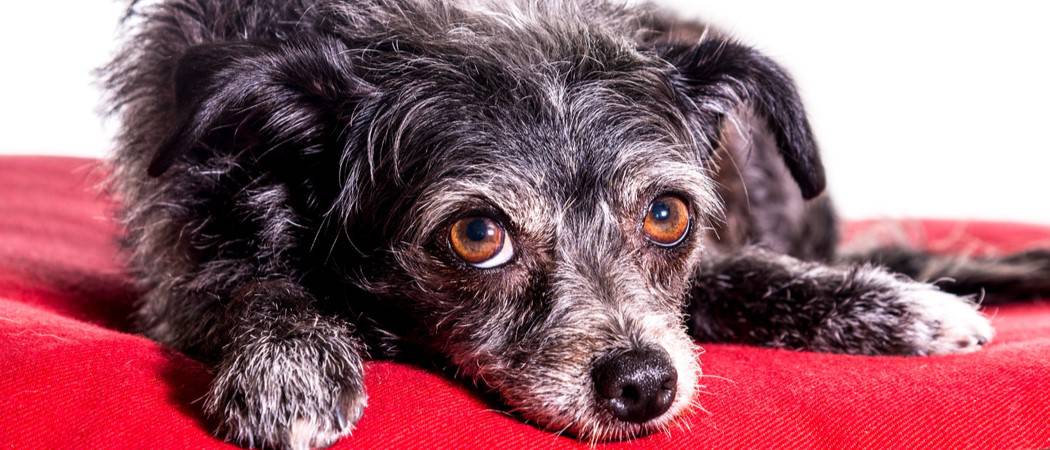
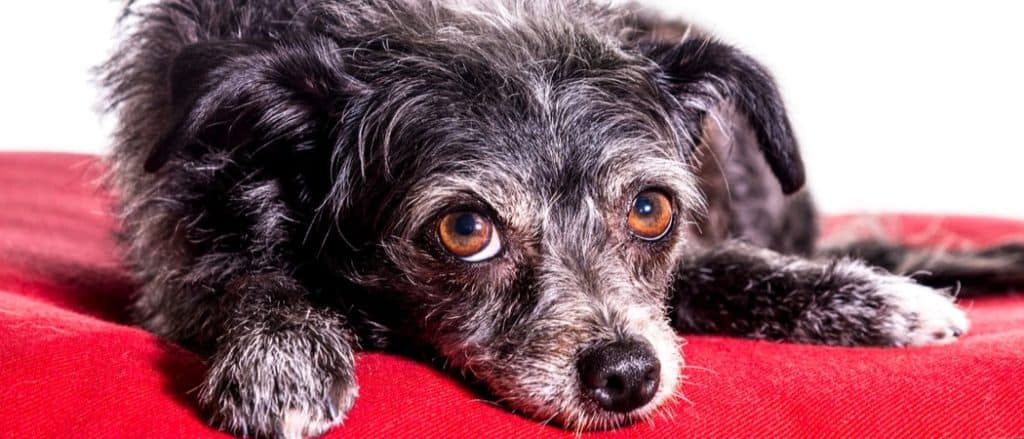
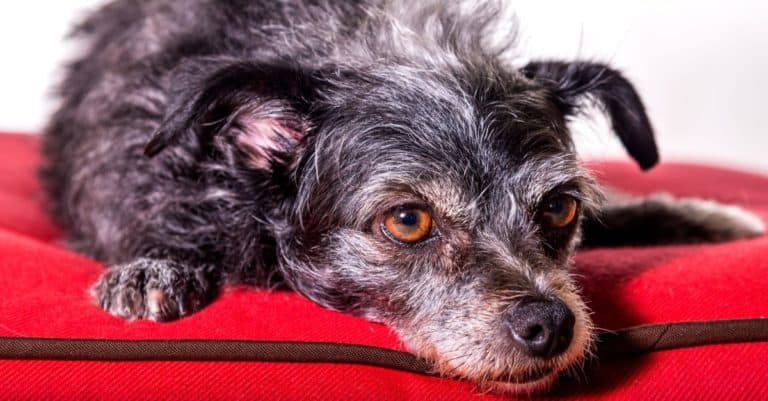
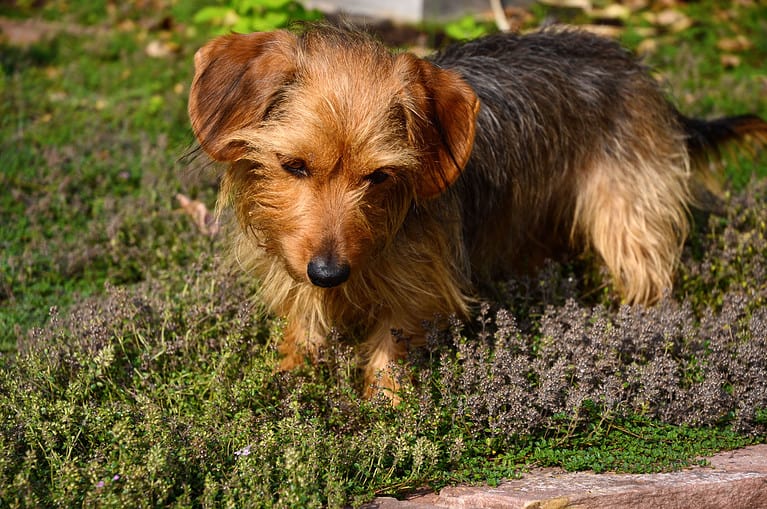
Dorkie close-up

At a Glance

Domesticated
Diet Omnivore
Activity Diurnal+
Lifespan 5 years
Weight 7 lbs
Status Not Evaluated
Did You Know?

"Dorkie" is a modern portmanteau of Dachshund + Yorkie; it's not a formal kennel-club breed.

Scientific Classification

The Dorkie is a small companion dog type produced by crossing a Dachshund with a Yorkshire Terrier. As a mixed/designer dog, appearance and temperament can vary depending on which parent traits dominate.

Kingdom
Animalia
Phylum
Chordata
Class
Mammalia
Order
Carnivora
Family
Canidae
Genus
Canis
Species
lupus

Distinguishing Features

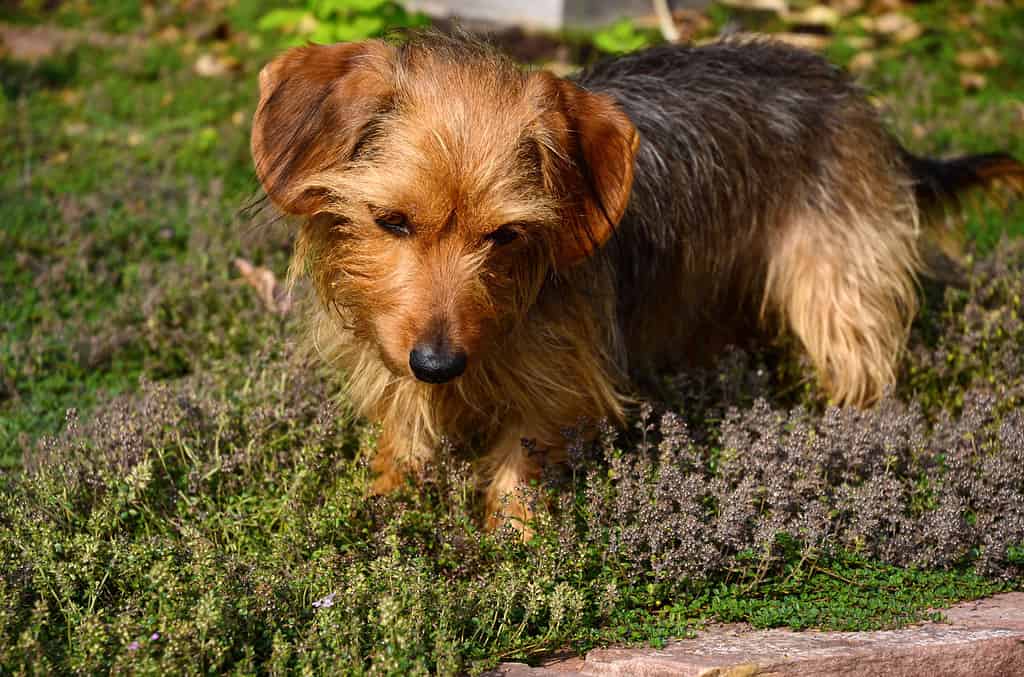
  • Small companion dog with variable coat (often silky to wiry)
  • May have Dachshund-like elongated body/short legs or a more Yorkie-like build
  • Typically alert, lively terrier demeanor with potential scent-hound traits
  • Common coat colors include black/tan, tan, and mixed patterns depending on lineage

Physical Measurements

Males and females differ in size

Height
♂ 9 in (7 in – 10 in)
♀ 9 in (8 in – 11 in)
Length
♀ 1 ft 6 in (1 ft 3 in – 1 ft 10 in)
Weight
♂ 13 lbs (9 lbs – 18 lbs)
♀ 9 lbs (7 lbs – 13 lbs)
Tail Length
♂ 6 in (4 in – 7 in)
♀ 4 in (3 in – 6 in)
Top Speed
17 mph
Lower top speed

Appearance

Primary Colors
Secondary Colors
Skin Type Dorkie (Dachshund × Yorkshire Terrier) skin varies: coats can be silky and long, short, smooth, or wiry. Skin may be sensitive; long coats trap debris and need grooming; short coats may go dry if over-bathed.
Distinctive Features
  • Small companion-dog build compared with the base domestic dog population; typical adult size often ~3-7 kg (varies by parent sizes and litter).
  • Often chondrodystrophic proportions from Dachshund ancestry: elongated back with comparatively shorter legs, increasing back/IVDD risk versus many other domestic dogs.
  • Head and face frequently show Yorkie influence: finer muzzle, prominent facial furnishings/mustache in longer-coated individuals, and expressive eyebrows with tan points.
  • Ears vary widely: floppy (Dachshund-like), semi-erect, or erect (Yorkie-like), reflecting mixed parentage rather than a fixed standard.
  • Tail may be straight and carried level or slightly up; feathering is common in longer-coated individuals.
  • Coat shedding typically low to moderate; longer silky coats mat easily and need frequent brushing and periodic trimming; shorter coats are easier but may be less insulating.
  • Often shows a long, low-slung body with relatively short legs, reflecting Dachshund ancestry.
  • Common health concerns to watch: intervertebral disc disease (back disc injury), patellar luxation (kneecap slipping), crowded teeth/gum disease, tracheal collapse, eye problems (cataracts/PRA), allergies/skin irritation, and obesity.
  • Care requirements tied to body type: use a harness instead of neck collar; minimize jumping/stairs; maintain lean body condition; provide moderate low-impact exercise and core-strengthening play.
  • Preventive care emphasis: routine dental hygiene, regular nail/coat/ear care (especially with drop ears and longer hair), and careful screening when dapple/merle-like spotting is present (higher risk of hearing/vision problems when double-merle occurs in dogs generally).

Sexual Dimorphism

Sexual dimorphism is typically mild in this small domestic dog cross; males are often slightly larger/heavier with a more robust neck/head, while females tend to be slightly smaller and finer-boned. Coat color/pattern is not reliably sex-linked.

♂
  • Often marginally taller/heavier with a broader chest/neck.
  • May have a slightly blockier head depending on Dachshund influence.
♀
  • Often slightly lighter and finer-boned overall.
  • May appear more refined in head shape when Yorkshire Terrier traits dominate.

Did You Know?

"Dorkie" is a modern portmanteau of Dachshund + Yorkie; it's not a formal kennel-club breed.

Most Dorkies land in the toy-to-small range (often about 2.3-5.4 kg), but size can swing with parent type.

They may inherit the Dachshund's long back/short legs or the Yorkie's more square "terrier" outline-sometimes a mix of both.

Coats range from silky Yorkie-like hair to a denser, slightly wiry or double coat; shedding and grooming needs vary widely.

Many have a "big dog" voice in a small body-alert barking is common thanks to terrier watchdog instincts.

Because both parent breeds were historically working dogs (badger-hunting Dachshunds; ratting terriers), Dorkies often love scent games and chase play.

They're often more people-focused than the base species' wild ancestor (the wolf), showing the domestic dog's long selection for human companionship.

Unique Adaptations

  • Domestic-dog sociability: compared with gray wolves, Dorkies typically show stronger human-directed bonding and reduced fear toward people when well-socialized.
  • Compact companion build: small size makes them well-suited to indoor living, but it also increases risk from rough handling and falls.
  • Potential "long-back leverage": if the Dachshund body shape is inherited, it supports low-to-ground maneuvering but can predispose to spinal strain.
  • Terrier alertness: fast reaction to sound/motion functions as a household "early warning system."
  • Variable coat "toolkit": hair-like Yorkie coats may grow continuously (needing trims), while mixed coats may insulate more but mat easily.
  • Efficient heat-seeking behavior: many small dogs, including Dorkies, conserve heat by burrowing and curling tightly when resting.
  • High food motivation: useful for training, but it requires careful portioning to prevent weight gain that stresses joints and spine.

Interesting Behaviors

  • "Shadowing" their person from room to room (a companion-dog trait amplified by terrier attachment).
  • Alarm barking at new sounds or visitors; some will "announce" everything in the hallway.
  • Digging or "nesting" in blankets-common in Dachshunds and many small breeds seeking warmth/security.
  • Scent-tracking on walks with a nose-to-the-ground style reminiscent of Dachshund hound ancestry.
  • Chasing small moving objects (toys, leaves, squirrels), reflecting terrier prey drive.
  • Quick, clever problem-solving (figuring out gates, treat puzzles), sometimes paired with stubborn streaks.
  • Lap-to-zoomie cycles: bursts of energy followed by long cuddle sessions.

Cultural Significance

The Dorkie (Dachshund × Yorkshire Terrier mix) follows the recent designer-dog trend of mixing breeds for small size, friendly nature, and looks. Dachshunds are well-known German dogs; Yorkies moved from ratters to status pets. As a mix, Dorkies show modern pet culture prefers personality over strict breed rules.

Myths & Legends

Yorkshire lore often credits small terriers kept by 19th-century mill workers and miners as the foundation of the Yorkshire Terrier-tiny dogs said to fearlessly clear rats from cramped industrial towns.

A famous historical anecdote in Yorkie circles is "Huddersfield Ben," a 19th-century dog widely celebrated as a key founding sire whose success helped shape the breed's legend and popularity.

Dachshunds are wrapped in German hunting storytelling: the "badger dog" is portrayed as a brave earth-dog willing to follow quarry underground, a reputation that became part of the breed's folk image.

In early-20th-century popular culture, Dachshunds carried shifting symbolism-beloved pets but also entangled in wartime anti-German sentiment, leading to stories of families quietly renaming or hiding their "German dogs."

The Dorkie name itself is a modern naming-origin tale: a playful blend that signals mixed heritage rather than a single ancient lineage, reflecting contemporary companion-dog culture.

Conservation Status

NE Not Evaluated

Has not yet been evaluated against the criteria.

Population Stable

Life Cycle

Birth 3 pups
Lifespan 5 years

Lifespan

In the Wild
2–10 years
In Captivity
11–16 years

Reproduction

Mating System Polygynandry
Social Structure Managed Domestic
Breeding Pattern Transient
Fertilization Managed Selective
Birth Type Managed_selective

Dorkies (Canis lupus familiaris) breed like other dogs: internal fertilization, and multiple mates can occur (polygynandry). In pet settings people plan pairings and timing; no long-term pair bonds or helpers raise pups.

Behavior & Ecology

Social Pack Group: 3
Activity Diurnal, Crepuscular
Diet Omnivore High-protein, meat-based small-breed kibble or wet food (chicken/turkey/beef) with occasional fish-based treats.

Temperament

Companion-focused, affectionate, and proximity-seeking; often prefers being near people rather than independent roaming (more pronounced than many general domestic dogs).
Alert and vocal watchdog tendency; quick to notice novel sounds/visitors (commonly stronger than in many small companion breeds due to Yorkie influence).
Confident but can be 'big-dog' bold; may show reactivity to strangers/dogs without early, frequent positive exposure (HUBS: wide individual variation depending on parent traits and socialization).
Stubborn/persistent problem-solver; responds best to short, high-reward sessions and clear routines (dachshund persistence + terrier tenacity).
Moderate prey/chase drive; may fixate on small moving animals/toys; recall reliability can be variable.
Potential separation distress risk if over-dependent; benefits from alone-time training, enrichment, and predictable departures/returns.
Care requirements (behavioral): daily enrichment (sniffing games, food puzzles), brief training, and controlled social outings to prevent boredom-driven barking and anxiety.
Care requirements (physical/handling): gentle handling and avoidance of high jumps; use ramps/steps where possible to reduce spinal strain risk.
Health issues affecting behavior: Dachshund back disc risk makes rough play hard; kneecap problems limit activity; crowded teeth cause pain and grumpiness; sensitive windpipe dislikes collars, so use a harness.

Communication

Sharp alert barking at novel stimuli/door sounds; can become frequent without training and adequate exercise/enrichment.
Whines/whimpers for attention, separation, or anticipation; some individuals are more 'talkative' Yorkie-leaning
Growls and low grumbles during resource guarding or discomfort; important to treat as communication and address triggers.
Yips/high-pitched barks during play or arousal; can escalate if over-threshold.
Body language: tail carriage, ear set, and posture shifts; may show quick 'on/off' arousal transitions typical of small terrier mixes.
Proximity seeking: leaning, pawing, climbing into laps, following room-to-room as a primary affiliative signal.
Scent investigation and tracking behaviors (dachshund influence): intense sniffing, ground-focus, and 'search' patterns during walks.
Mouthiness and toy-carrying as social engagement; can also use paw taps/nudges to solicit play/attention.
Territorial displays: front-of-home scanning, window watching, and barrier reactivity; improved with management (window film, distance) and counterconditioning.

Habitat

Biomes:
Temperate Forest Temperate Grassland Mediterranean Temperate Rainforest Boreal Forest (Taiga) Tundra Alpine Desert Hot Desert Cold Savanna Tropical Rainforest Tropical Dry Forest Freshwater Wetland Marine +9
Terrain:
Plains Hilly Mountainous Coastal Island Valley
Elevation: Up to 16404 ft 3 in

Ecological Role

Domesticated companion animal and opportunistic small-prey predator/scavenger around human environments; not a wild ecological analog but can influence local urban/suburban microfauna.

companionship and social support to humans deterrence/occasional control of small household/yard pests (rodents, insects) acts as a sentinel species for household environmental health (diet/obesity, allergens)

Diet Details

Main Prey:
Rodents Small rabbits Squirrels and chipmunks Small birds and eggs Insects and other invertebrates
Other Foods:
Berries and other fruits Leafy vegetables Starchy vegetables Grains and cooked starches Grass

Human Interaction

Domestication Status

Domesticated

Domestic dogs (Canis lupus familiaris) came from gray wolves thousands of years ago and were bred by people for looks, behavior, and work. The Dorkie (Dachshund × Yorkshire Terrier) is a modern designer mix made mainly for companionship. People pick for small size, friendly temper, and a cute look, but traits can vary more.

Danger Level

Low
  • Nips/bites if poorly socialized, in pain (notably back/neck pain), or startled; small dogs can still cause puncture wounds
  • Resource guarding or fear-based reactivity toward strangers/children if undersocialized
  • Trip hazard due to small size
  • Zoonotic risks common to domestic dogs (parasites, rabies if unvaccinated)

As a Pet

Suitable as Pet

Legality: Generally legal to own as a companion dog in most jurisdictions; subject to standard dog ownership rules (licensing, leash laws, vaccination/rabies requirements, and housing/breed restrictions that rarely target small companion mixes). Check local HOA/rental policies and municipal ordinances.

Care Level: Moderate

Purchase Cost: $200 - $1,500
Lifetime Cost: $15,000 - $35,000

Economic Value

Uses:
Companion animal market Pet services economy
Products:
  • Sale/adoption fees for puppies or rehoming
  • Veterinary care (vaccines, spay/neuter, dental, treatment for IVDD/luxating patella/allergies)
  • Grooming services (especially if coat is Yorkie-like)
  • Pet insurance plans
  • Training classes (house-training, barking management, separation-related issues)
  • Supplies (crates, harnesses, ramps/steps to protect back, dental chews, specialty diets)

Relationships

Ecological Equivalents 6

Animals that fill a similar ecological role in their ecosystem

Small companion dog Canis lupus familiaris Dorkie (a cross of Dachshund and Yorkshire Terrier, Canis lupus familiaris) is a tiny companion dog occupying the small companion pet niche: alert, bold, and sometimes vocal. As a small-bodied domestic dog, it shares common husbandry and health concerns, including susceptibility to intervertebral disc disease (IVDD), tracheal problems, dental disease, and patellar luxation. Management includes controlling weight, using a harness instead of a collar, and regular grooming.
Chihuahua
Chihuahua Canis lupus familiaris Occupies the niche of a very small companion dog; has comparable needs for dental care, warmth management, and early socialization, and may share tendencies toward vocal alerting and risk of patellar luxation.
Miniature Pinscher
Miniature Pinscher Canis lupus familiaris Small, high-alert companion with a strong prey drive and energetic, busy temperament; requires similar management for training, enrichment, and safe handling due to small size.
Jack Russell Terrier
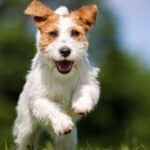
Jack Russell Terrier Canis lupus familiaris Displays terrier-like drive and intensity. Relevant comparison for managing digging and chasing instincts, structured exercise, and impulse-control training, though typically larger and more energetic than many Dorkies.
Papillon
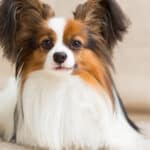
Papillon Canis lupus familiaris Small companion that benefits from frequent mental stimulation and positive-reinforcement training; requires comparable grooming and dental attention, though it is often less prone to long-back (intervertebral disc) concerns.
Domestic cat
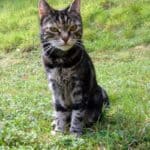
Domestic cat Felis catus In human-dominated environments, both occupy a small mesopredator role, overlap in prey interests (primarily rodents), and require supervision outdoors to avoid conflicts and predation risk.

Breed a Yorkshire Terrier with a Dachshund and you get a Dorkie. Dorkies are hybrid dogs that date back to the 1990s. They have many of the best qualities of their purebred parents.

Dorkies are known for their laid-back temperament. They have a gentle personality and are extremely loyal to their owner. A Dorkie is likely to bark when someone appears at the door or walks onto the property, so they are good watchdogs.

3 Pros And Cons Of Owning A Dorkie

Pros!Cons!
An affectionate pet
Dorkies are gentle pets that love snuggling with their owner on the sofa.
Difficult to train
Though Dorkies are intelligent, they can be stubborn during obedience training.
Suitable for apartment living
Dorkies are small dogs and suitable in size for an owner who lives in an apartment.
Some skin and eye issues
This small dog is especially prone to skin and eye health issues that need to be monitored.
Good watchdogs
This hybrid has a loud bark that can alert the members of a household of someone at the door.
Prey driven
Dorkies are related to dogs bred to hunt small animals. So, they need to be watched around pets such as hamsters and rabbits.

History Of The Breed

Dorkie playing with a ball

The Dorkie originated in the 1990s and is a cross between a Dachshund and a Yorkshire Terrier.

The dorkie is a mixed breed that was originally started in the 1990s, a cross between a dachshund and a Yorkshire terrier, or Yorkie, and is more commonly found in the United States and England. Like most mixed breeds, they don’t have a long history, but their parent breeds do. The Dachshund originates in Germany, dating back to the 1500s, and was used as a small game hunting dog. They became popular in the 1800s as house pets.

The Yorkie comes from Yorkshire, England, around the mid-1800s, and was originally bred from a variety of terriers brought to the area by Scottish weavers. The Yorkie was intended as a hunting dog, or a ratter, to catch small vermin, but due to its beauty became popular as a family pet among the wealthy.

Types Of

As a mixed breed, there is only one type of dorkie, but they can come in many different varieties, depending on which parent breed it was mixed with. The dachshund comes in three varieties or types — smooth, wired, and long-coated, and while there is only one official yorkie type, they come in seven different sizes and color variations — parti, teacup, Biewer, teddy bear, mismarked, black, and designer.

Size And Weight

Male Dorkies grow to a height of 8 to 10 inches, while a female reaches 5 to 8 inches tall fully grown. Males weigh from 7 to 12 pounds, whereas females weigh 5 to 10 pounds, full-grown. A Dorkie at 9 weeks old weighs around 2 pounds. These dogs are full-grown at around 10 months old.

Common Health Issues

Dorkies have a few common health issues, including Patellar luxation. This condition occurs when a dog’s kneecap moves out of its proper position. A dog may be running along and suddenly start limping or hopping. Physical therapy is one treatment for Patellar luxation. A dog with severe Patellar luxation may need surgery.

A second common health issue is Retinal dysplasia. Retinal dysplasia is when the retina doesn’t develop correctly. Retinal dysplasia is diagnosed by a veterinary ophthalmologist through an eye examination. Retinal dysplasia can cause blindness. Unfortunately, there’s no treatment for this health issue. Dorkies are also prone to allergies, which can cause red or dry skin and even bald spots in their coat (due to the dog scratching). This dog can be allergic to a number of things, including certain foods, pollen, shampoo, and dust.

Temperament And Behavior
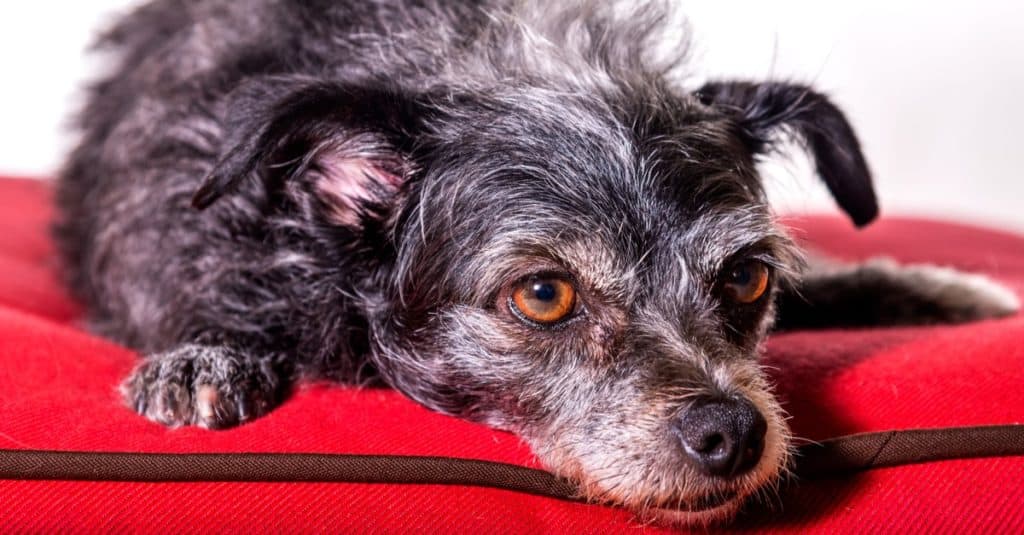
Cute Dorkie dog mixed breed of Dachshund and Yorkie

The Dorkie has a laid-back personality.

Dorkies have a sweet, affectionate temperament. This hybrid dog loves to relax on the sofa next to its owner. In fact, loyalty to its owner is one of this dog’s most notable traits. A Dorkie has a laid-back personality, which means it sometimes has to be encouraged to go out for a walk in the neighborhood!

Normally, a socialized Dorkie will do well interacting with children. However, parents must keep in mind that younger kids may try to pick up and hold this small dog. After all, it kind of looks like a toy. If the dog feels unsafe or threatened, it could act out. The best path is to teach all the children in a family to treat this little pooch with respect at all times.

How To Take Care Of A Dorkie

The best way to take care of a pet Dorkie is to learn as much as possible about this hybrid dog. A Dorkie puppy and an adult dog need different types of care. Learn some specifics about the care of a Dorkie.

The Best Dog Food For Dorkies

Dorkie puppies and adult dogs are at different stages of life. Naturally, they need different types of nutrients to maintain good health. Fortunately, there is a wide range of dog foods specialized to minimize dogs’ allergies. Check out some considerations for this dog’s diet:

Dorkie puppy food: Protein helps in the development of healthy muscles, tissues, and ligaments in a puppy’s body. Omega-3 fatty acids contribute to healthy skin, which is important for a hybrid dog prone to allergies. Calcium builds strong teeth and bones. Vitamin C and E are important antioxidants in a Dorkie puppy’s diet.

Dorkie adult dog food: Lean protein is essential in an adult Dorkie’s diet to support healthy muscles and tissue. A limited portion of fat in an adult Dorkie’s diet gives it the energy it needs to move around without adding excess weight to its small frame. Omega-3 and 6 fatty acids support healthy skin and hair. Calcium contributes to strong teeth, nails, and bones. Vitamin A is important for a dog’s eye health. This is valuable for a dog prone to Retinal dysplasia. Be sure to include fiber in an adult dog’s diet to support healthy digestion.

Maintenance And Grooming
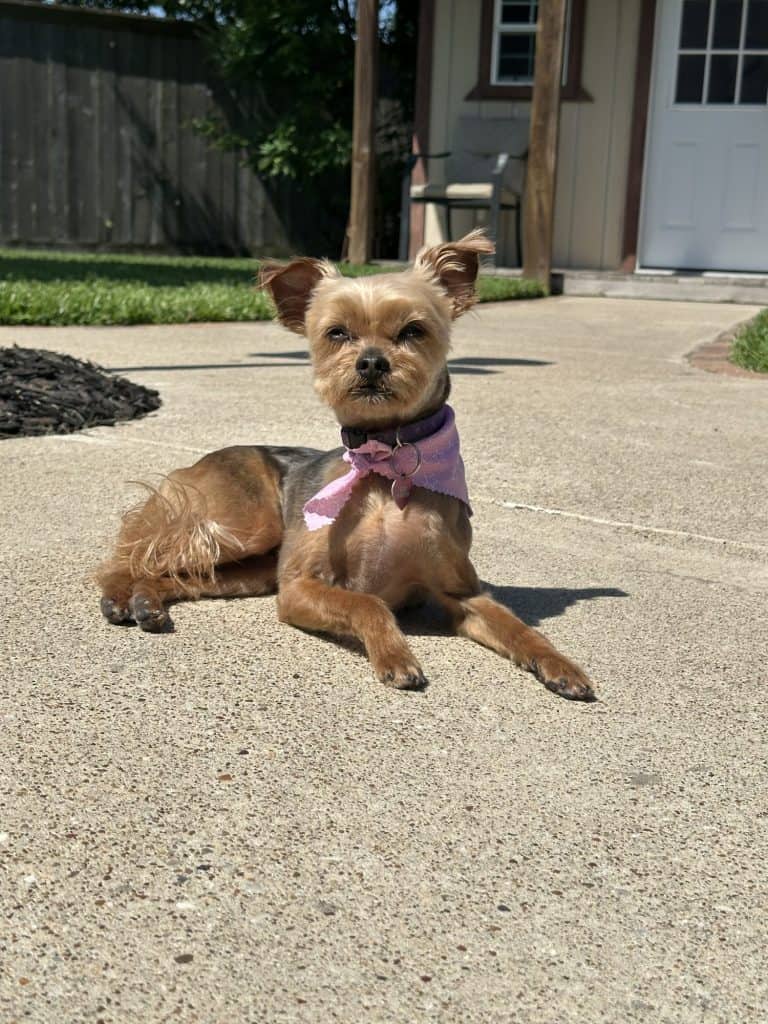
7 year old dorkie enjoying sunshine

Dorkies’ amount of shedding depends on which parent breed it takes after.

How much does a Dorkie shed? Dorkies shed a low to moderate amount of hair. A Dachshund sheds more than the Yorkshire Terrier breed. So, the amount a Dorkie sheds depends on which parent it takes after.

It’s a good idea to brush a Dorkie’s coat two or three times a week. A simple pin brush can loosen and remove tangles from this dog’s coat. Be sure there are plastic covers on the tips of the bristles, so the dog’s skin is not harmed as it’s being brushed.

Sometimes an owner can remove a small tangle from a Dorkie’s coat by gently loosening it with their fingers. Keep in mind it’s never a good idea to roughly pull at a tangle.

Red or dry skin, as well as bald patches in a Dorkie’s coat, are all signs of allergies. A veterinarian can help diagnose food or environmental allergies and provide a treatment plan for the dog.

Training

A Dorkie’s laid-back personality mixed with a stubborn streak can make obedience training a little challenging. It’s a smart idea for an owner to have plenty of desirable treats ready to offer when a Dorkie has success during a training session. Words of praise are also effective in training this mixed breed. Plus, limiting a training session to about 15 minutes is a simple way to keep this dog’s attention.

Exercise

Dorkies need at least 30 minutes of exercise each day. Playing fetch in the backyard, walking a trail at a local park, or taking a walk around the neighborhood are all fun ways to give this hybrid dog exercise. They get along well with other dogs, so a trip to the dog park would be a nice treat for this canine.

The small size of a Dorkie makes it a good companion for someone who lives in an apartment.

Puppies

A full-grown Dorkie is still categorized as mini in size. So, it’s no surprise that Dorkie puppies are especially small! Owners have to keep this in mind when handling and working with a Dorkie puppy. They are mini or small, so they can be hurt easily. Taking extra care with these mini puppies is essential.

Dorkie And Children

Socialized Dorkies are known to get along with children. They like to cuddle with kids and adults! It’s important that younger children understand the need to handle these little dogs with care. Accidentally dropping this dog or stepping on a paw can cause serious injury.

Dogs Similar To Dorkies

Other dogs similar to Dorkies include Rat Terriers, Border Terriers, and Doxiepoos.

  • Rat Terrier: Like Dorkies, Rat Terriers are known for being loyal to their owners. Also, both dogs are easy to groom. However, Rat Terriers have a lot more energy than Dorkies.
  • Border Terrier: Border Terriers and Dorkies can have a coat that’s a combination of brown/tan and black hair. Also, they both are known to be prey-driven. However, Border Terriers are taller and weigh more than Dorkies.
  • Doxiepoo: This Dachshund mix is similar to the Dorkie in that they both can have separation anxiety when left alone for long periods. One difference is that a Dorkie gets along better with other dogs in a household.
View all 450 animals that start with D

Sources

  1. The Happy Puppy Site / Accessed April 15, 2021
A-Z Animals Staff

About the Author

A-Z Animals Staff

AZ Animals is a growing team of animals experts, researchers, farmers, conservationists, writers, editors, and -- of course -- pet owners who have come together to help you better understand the animal kingdom and how we interact.
Connect:

Thank you for reading! Have some feedback for us?


Dorkie FAQs (Frequently Asked Questions)

A Dorkie is a mix between a Yorkshire Terrier and a Dachshund. It is a mini breed of dog weighing no more than 12 pounds. These canines are loyal, even-tempered, and affectionate companions.