
Quick Take
- One Wisconsin species schools so tightly that a single bite can unlock dozens more, provided you know the right cover to target. Explore crappie cover tips →
- Wisconsin's state fish has a record catch so massive that most anglers assume it's a myth, and it came from a single, well-known waterway. See the record muskellunge →
- Targeting walleye during daylight is the most common mistake Wisconsin anglers make, but the fix is simpler than you'd expect. Learn walleye feeding habits →
- The biggest catfish hotspot in Wisconsin is not a river at all. It is a single lake that regularly produces fish well beyond what most anglers chase. Discover the catfish hotspot →
With over 15,000 lakes and more than 12,600 rivers and streams, Wisconsin is home to world-class freshwater fishing opportunities throughout the state. Anglers of all skill levels have wide variety of popular sport fish to target. However, which fish should you start with, and where do you find them? Read on to discover some of the best fish to catch in Wisconsin.
1. Crappie
Crappie are a top game fish in Wisconsin. While both white and black crappie can be found in Wisconsin’s lakes and other waterways, the black crappie is more widely distributed. White crappies have vertical bars on their sides and are longer and slimmer than the black ones. Black crappies are darker with rounder bodies and dark splotches. The average adult crappie in Wisconsin measures 8 to 12 inches and does not exceed 1 pound, but note that some bodies of water enforce a 10-inch minimum.
You’ll find the most black crappie in Wisconsin’s lakes and backwater pools. They like clear, shallow waters with aquatic vegetation and plenty of cover. If you find a lake with downed trees or rock piles, you’ll be able to find crappie. Since they swim in large schools, finding one means you’ve probably found many. Try fishing for black crappie in Lake Wisconsin, Petenwell Lake, or Castle Rock Lake. White crappie are less common and are more likely to be found in warmer, murkier rivers such as the Mississippi River or the Wisconsin River. The best time to fish for crappie in Wisconsin is during the spring spawn in May and June.
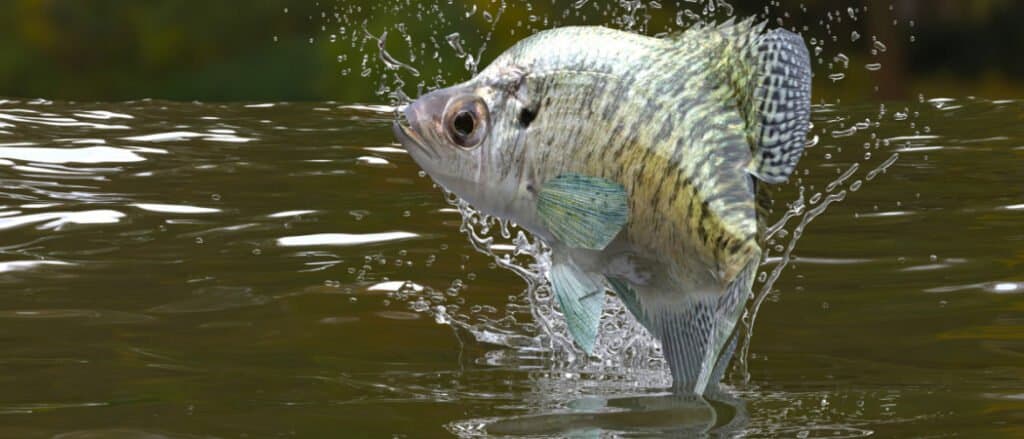
Crappie tend to swim in large schools.
©iStock.com/bbevren
2. Walleye
When you’re ready to target a larger fish, walleye is one of the best fish to catch in Wisconsin. They’re long, thin fish with olive-colored backs, golden sides, and white bellies. Walleyes also have long, pointed canines and a reflective layer in their eyes that allows them to see exceptionally well in low light. Most catches measure 15–17 inches (the legal minimum size is usually 15 inches on most inland waters) and weigh up to 2 pounds, but they can grow much larger.
Walleyes like cold, deep waters. They usually sleep during the day, and can be found by tree roots, aquatic vegetation, and downed logs. During the night, walleye move to shallow waters to feed. The best times of year to fish for walleye are spring from April to May (during spawning and recovery), and fall from September to November when they feed heavily to prepare for winter. Some of the top destinations for walleye include Lake Winnebago, Green Bay, and the Chippewa Flowage.
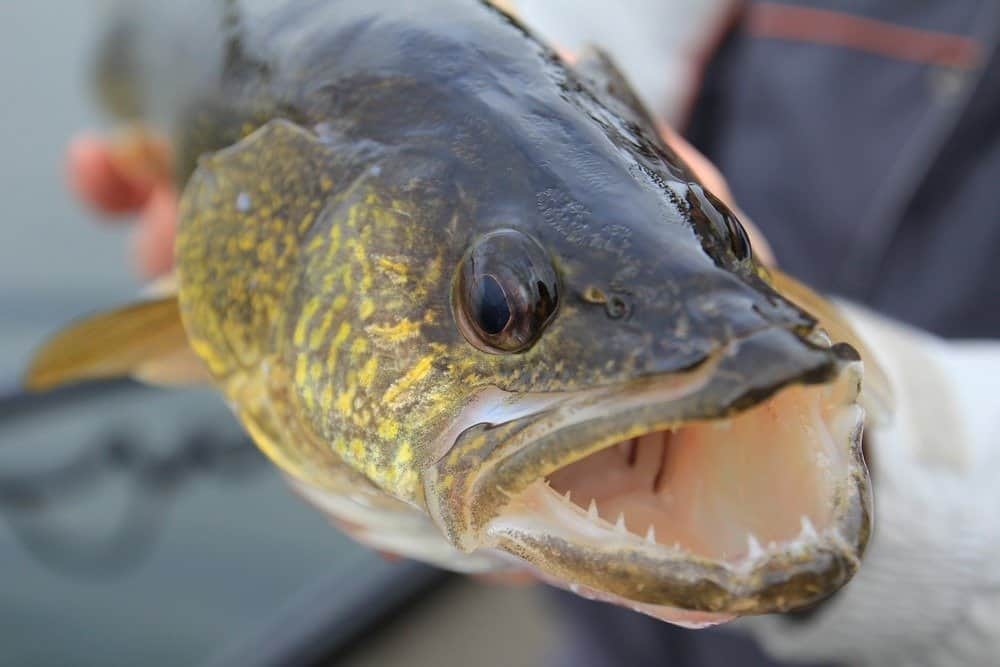
Green Bay is a popular destination to fish for trophy walleye.
©ElvK/Shutterstock.com
3. Catfish
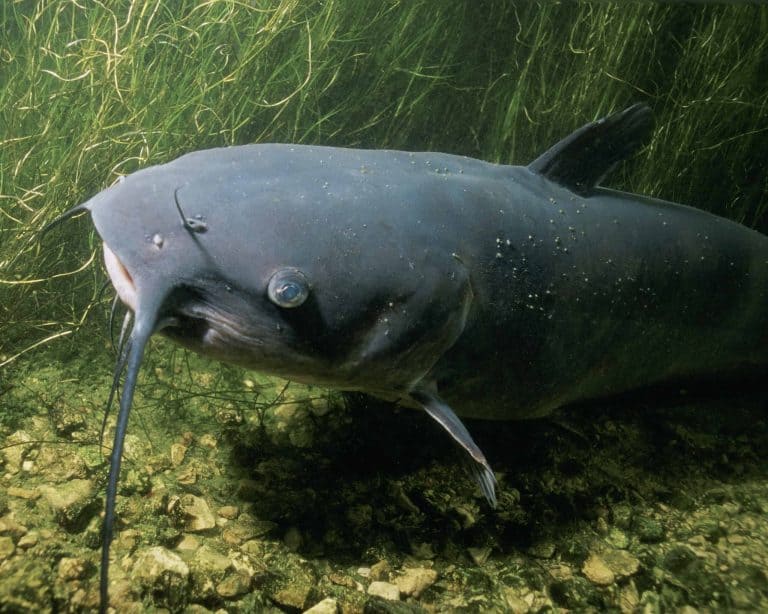
Try targeting catfish for some of the most fun fish to catch in Wisconsin. The flathead catfish is one of the most popular species since they typically weigh from 10 to 30 pounds and measure about 30 to 40 inches in length. However, some flatheads can grow much larger. Channel catfish are widespread and abundant, and they are prized as hard fighters. These fish are generally 12 to 20 inches long and weigh between 2 and 4 pounds.
You’ll want to fish the Wolf and Fox Rivers, as well as the Mississippi and Wisconsin Rivers for a few top destinations to target catfish. You’ll also want to fish Lake Winnebago. The roughly 137,700-acre lake is a catfish hot spot. There’s a huge population of catfish, many growing past the 30-pound mark. Summer, specifically July and August, is the peak fishing period for catfish. Late evening into nighttime is the best time of day to fish, as catfish move into shallower water to feed.
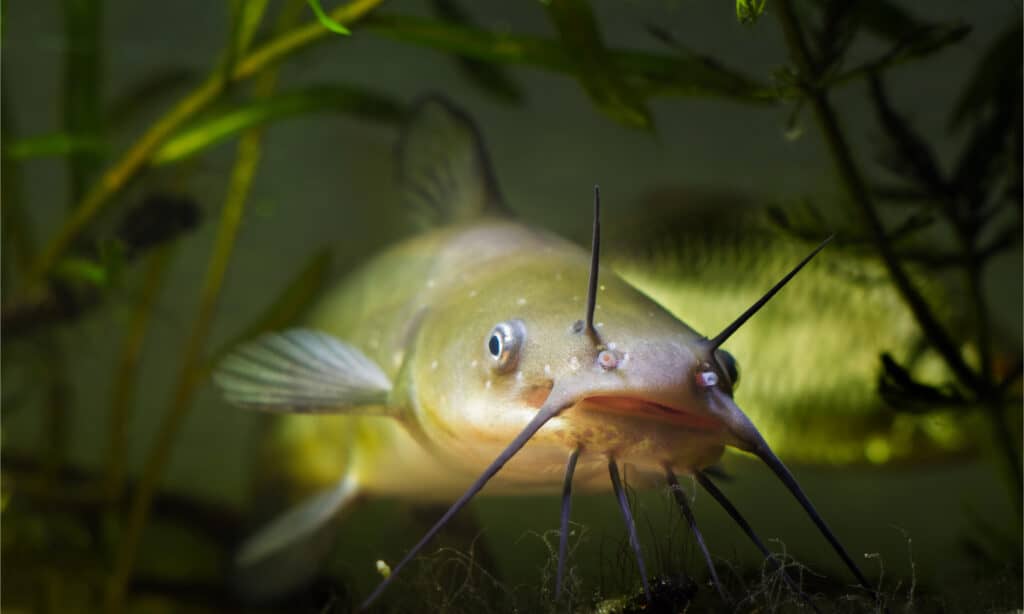
Channel catfish are the most widespread and abundant catfish species in Wisconsin.
©Aleron Val/Shutterstock.com
4. Northern Pike
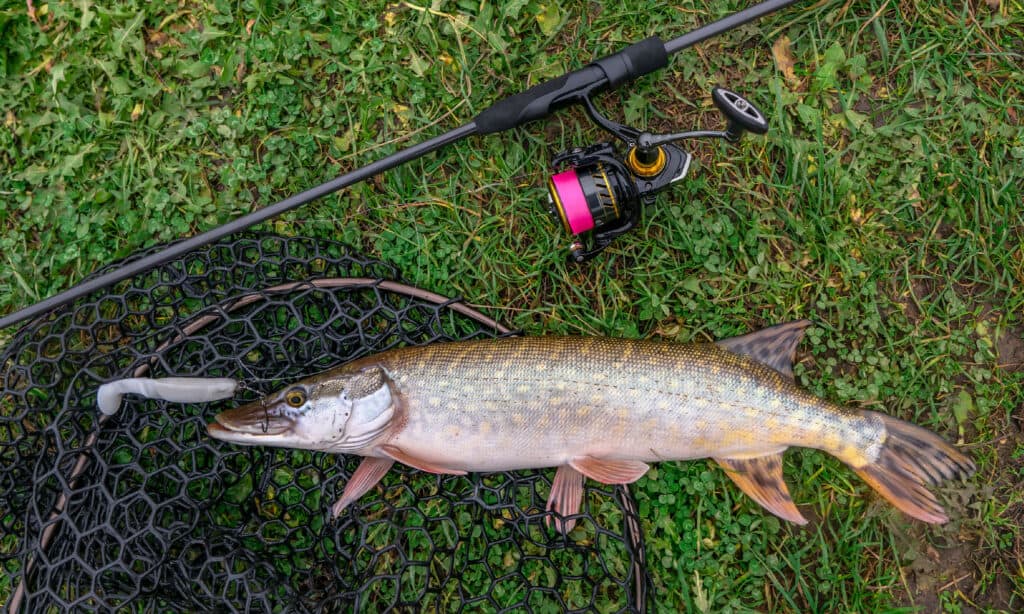
Northern pike fishing is very popular in Wisconsin. These fish are prized as aggressive predators, and they are abundant in the state’s rivers and lakes. Northern pike have long, olive-green, torpedo-shaped bodies with light spots. They have duck-bill snouts, a single dorsal fin near the tail, and rows of sharp teeth. Typical catch sizes measure 18–24 inches and weigh 2–4 pounds, but trophy fish can grow 40 or more inches and exceed 20 pounds.
The best time to fish for northern pike in open waters is during spawning, which can occur from late March to early April. These fish are more active when the water is cooler, and they bite best during the daytime. The Madison Chain of Lakes is considered one of the premier pike fisheries, with Lake Monona and Lake Mendota being the top destinations. Green Bay and Lake Onalaska are also popular spots. Anglers also target northern pike through the ice during the winter. Puckaway Lake and the Minocqua Chain of Lakes are popular locations for ice fishing.
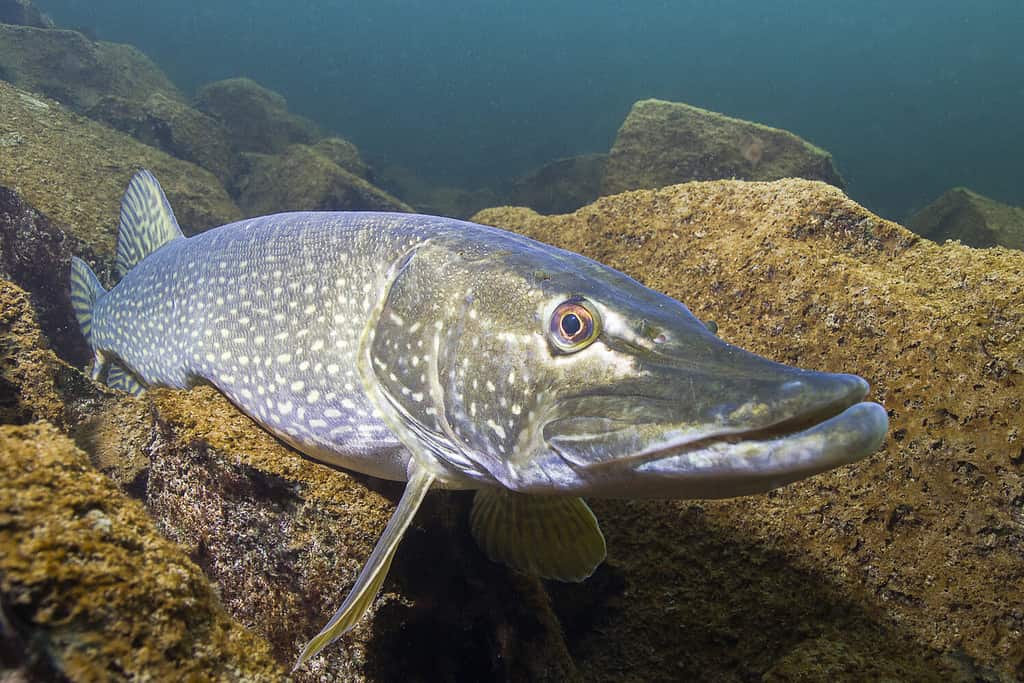
Both open water fishing and ice fishing for northern pike are popular pastimes in Wisconsin.
©Rostislav Stefanek/Shutterstock.com
5. Muskellunge
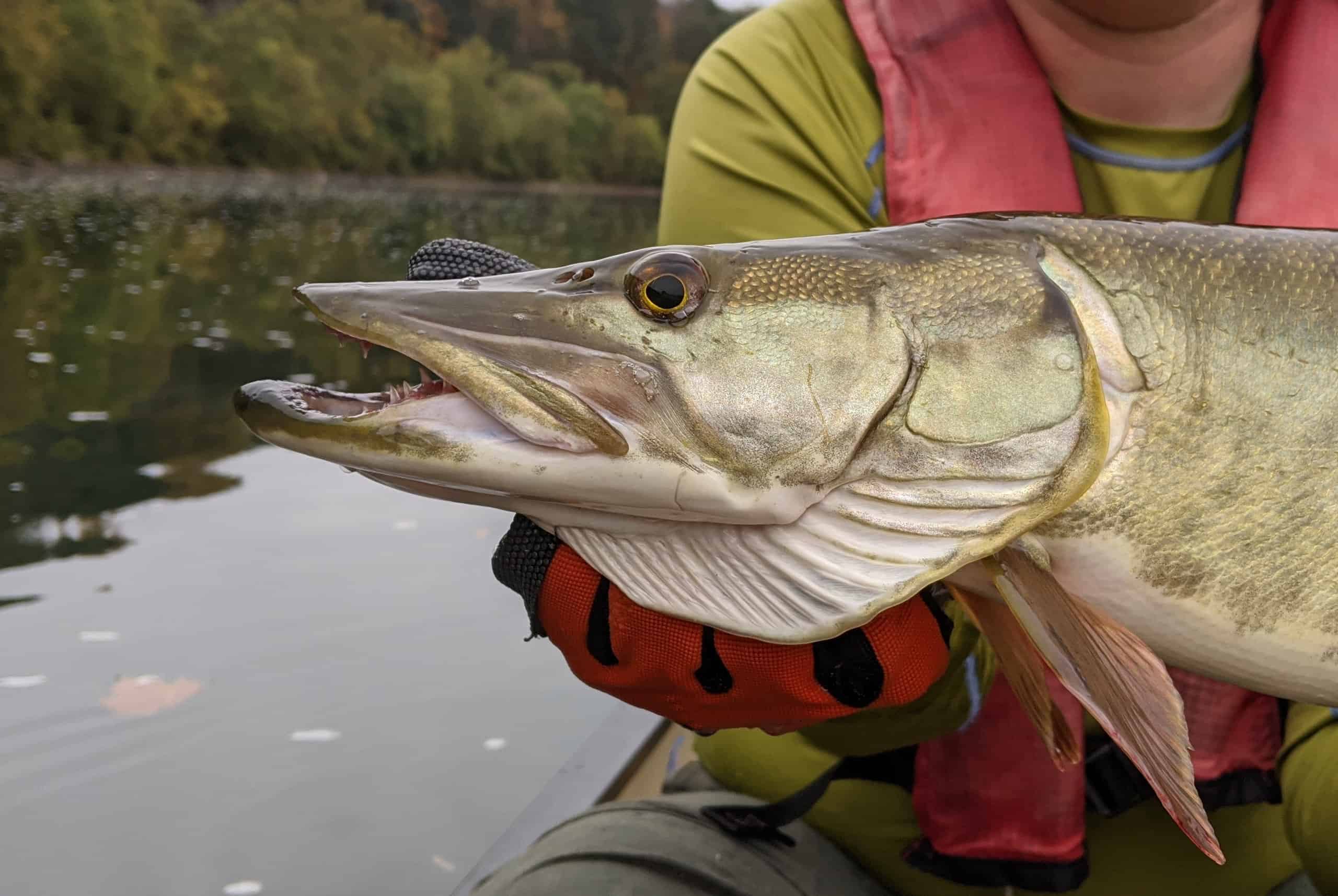
The muskellunge, or muskie, is Wisconsin’s state fish. These fish have thin, elongated bodies, flat duck-bill mouths, and sharp teeth. They are silver, greenish-grey, or yellowish-brown with paler bellies and dark vertical bars and blotches on the sides. Adult muskies caught by Wisconsin anglers typically measure 34–45 inches in length and weigh 10–25 pounds. However, larger fish are regularly documented. A record-breaking 69-pound, 11-ounce muskie was caught in the Chippewa Flowage.
According to the Wisconsin Department of Natural Resources (WDNR), some of the highest catch rates for muskies occur during the summer when water temperatures are warmer and the fish are more active. However, early fall from late August through October is also productive, as water temperatures drop and muskies feed heavily to prepare for winter. Some of the top destinations for muskie fishing include the Chippewa Flowage, Green Bay, Big Saint Germain Lake, Pewaukee Lake, and the Wisconsin River system. Be sure to check the regulations, limits, and season dates on the WDNR website.
The muskellunge is Wisconsin’s official state fish.
©iStock.com/FedBul