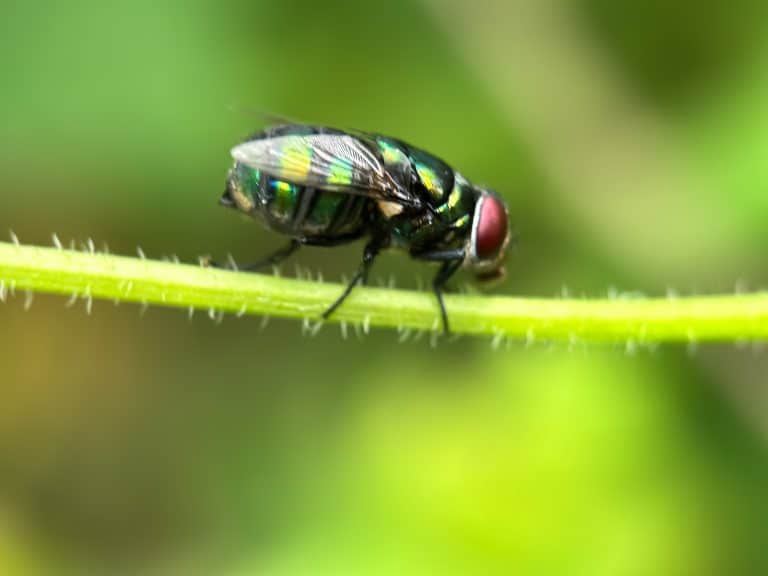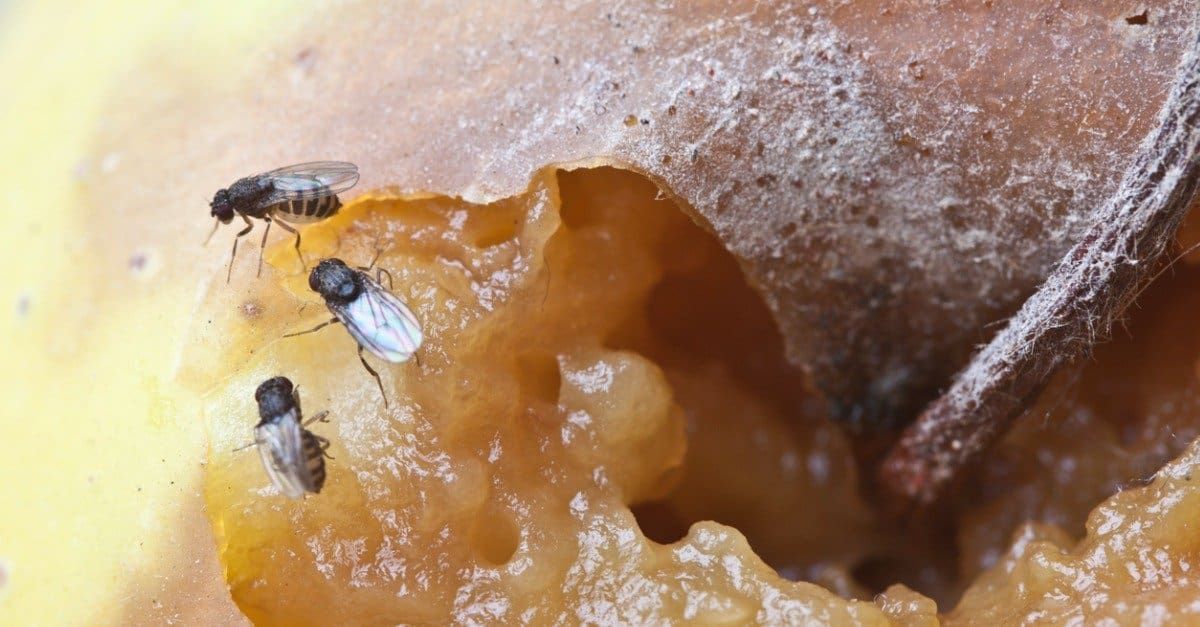

We’ve all come into our kitchen to see a cloud of tiny flies seemingly come out of nowhere to cover our bowl of fruit. Fruit flies are extremely small bugs that look like gnats and feast on perishable produce like bananas, potatoes, melons, or even mushrooms. With these fruit flies appearing on your rapidly ageing fruit, you might wonder how long these animals live or how to prevent them. Keep reading to discover the lifespan of fruit flies, their lifecycle, and what types of food they enjoy!
How Long Do Fruit Flies Live?
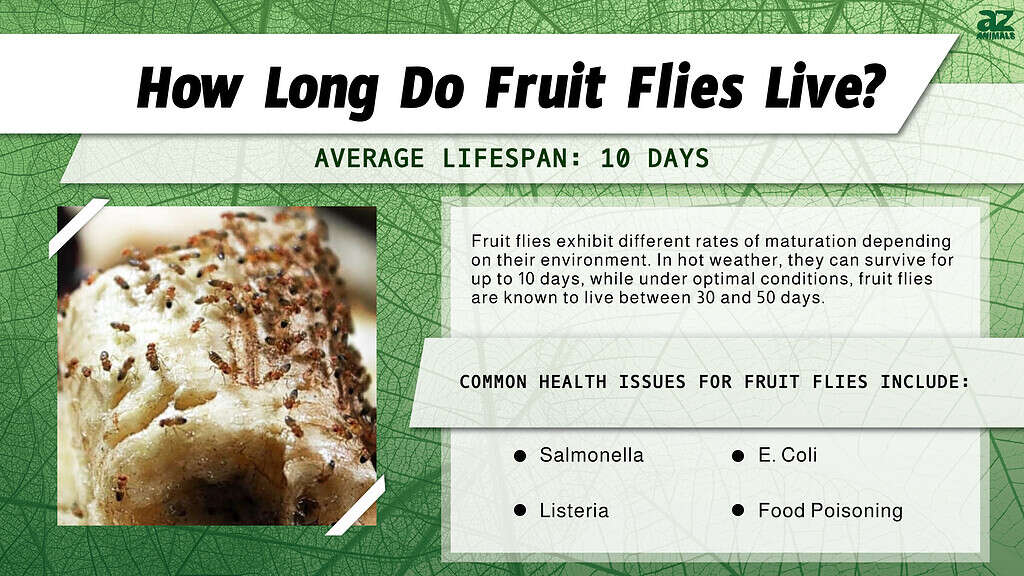
Fruit flies mature at varying rates based on their environment. They can survive for up to 10 days in hot weather, but are known to live between 30 and 50 days in optimum conditions. Minimum and maximum temperatures of 73- and 82-degrees Fahrenheit are deemed optimum. Fruit flies can live up to a 50-day lifespan with temperatures kept at these levels.
Female fruit flies can lay hundreds of eggs in the little time they have to live. Some of these pests can cause major damage to your home if they are present in large numbers.
Lifecycle of a Fruit Fly
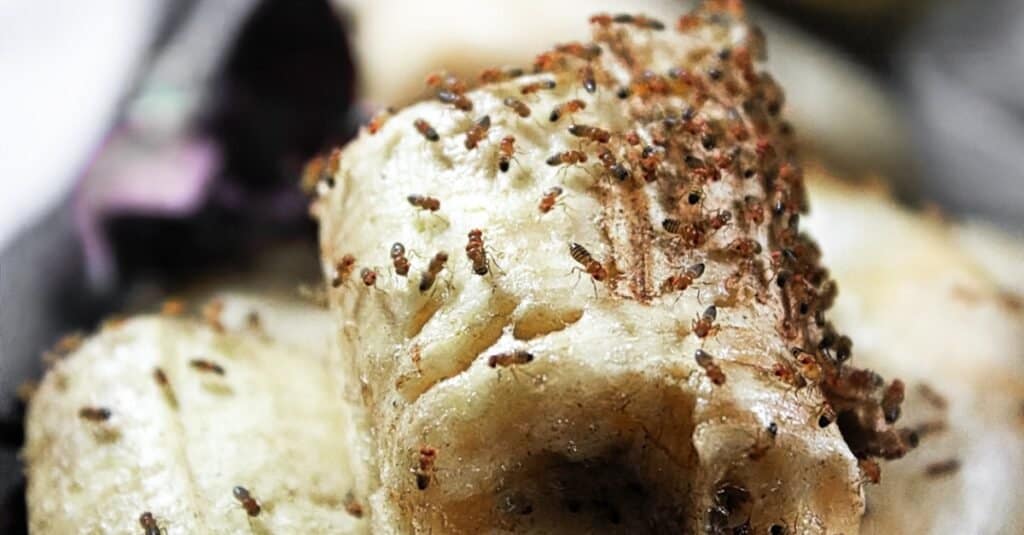
Fruit flies, as their name suggests, love fruit of all kinds, including bananas.
©iStock.com/Akchamczuk
Fruit flies are small nuisances that feed on fruits and decaying food that can be found in and around homes, schools, supermarkets, and other establishments. This insect’s life cycle is like that of most other insects. Let’s take a closer look at it.
Eggs
A fruit fly’s life cycle begins with an egg. Females lay eggs on rotting surfaces like drains, sinks, trash cans, and food.
Larvae & Pupae
Fruit fly eggs hatch into cream-colored larvae in a few days. These maggots begin feasting on the decomposing substances promptly. When the larvae are ready to pupate, they attach to a dry surface near a food supply.
Adults
Pupae evolve into wingless flies after four to six days and are then able to reproduce. The fruit fly’s complete life cycle is quick, including transformation from egg to adult.
How Food Affects Fruit Fly Lifecycles
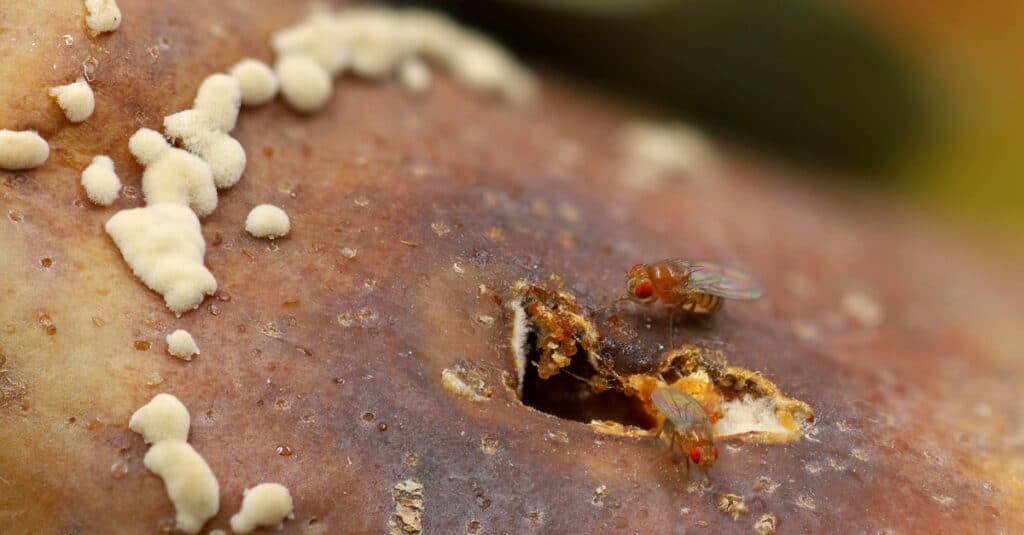
Fruit flies don’t mind eating rotten fruit; in fact, they often prefer it.
©iStock.com/Andreas Häuslbetz
Fruit flies are attracted to foods that are rotting and fermenting. They not only feed on these foods but also lay eggs and breed in them. Female fruit flies can produce up to five hundred eggs if fermenting organic matter like bananas or other plants are available, making it difficult to regulate the population.
Fruit flies can survive for three to four days without eating. After this period of starvation, they begin to succumb and will die. So, food availability is a major determinant in determining a fruit fly’s lifespan.
What Types of Food Do Fruit Flies Like?
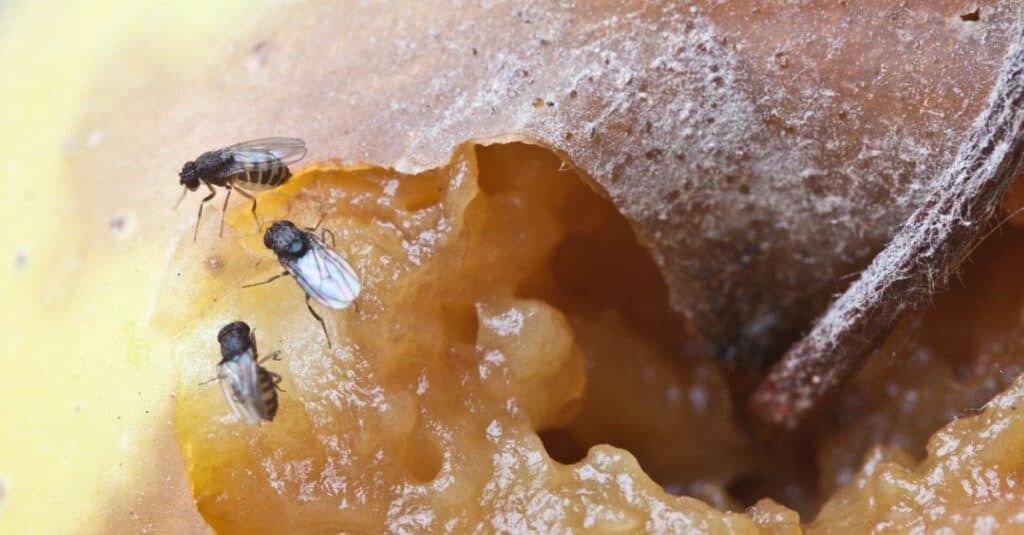
Fruit flies love sugary foods such as rotting fruit or produce.
©iStock.com/hoja_viva
Fruit flies are attracted to sugary foods in your kitchen as well as produce. For example, in a bakery, flavorings and water that have been spilt and are fermenting may attract them.
When a female deposits her eggs, she usually does so on fermented or decaying fruit or vegetables. The larvae, which eventually become adult fruit flies, feast on these as ideal sources of sugar and bacteria. You can even bring home fruits from the market that already have fruit fly eggs on them, which will hatch into adult fruit flies.
Alcoholic beverages include fermenting sugars that attract fruit flies. For example, a glass of dirty wine in your kitchen could attract them. In addition to everything listed above, fruit flies prefer to feast on and breed in over-ripened bananas, apples, and other fruits. In addition to fruits, these flies will also eat vegetables and fungi. Infestations can come from remnants in drainpipes or in sponges, so ridding a house of fruit flies can prove more challenging than simply throwing away ripened fruit.
How to Get Rid of Fruit Flies?
There are a few ways that you can get rid of fruit flies from your home. Let’s take a quick look at them below.
Natural Remedy
Fruit flies are a widespread problem in many homes, and an apple cider vinegar trap is one of the best ways to deal with them. The scent of fermenting attracts fruit flies. Apple cider vinegar is ideal for them because it is made from fermented apples.
Food Control
Be prepared to be disappointed if you decide to starve out any fruit flies. If there’s any food in the kitchen, it’s difficult to keep fruit flies under control. Decaying material in trash cans and other dirty areas can attract them. Keep these areas as clean as possible while attempting to get rid of them.
Temperature Control
Fruit flies are most active in warm, damp conditions, which is why they are so prominent in the summertime. Lowering your air conditioner temperature can slow their activity and reproduction, although it won’t kill them directly unless the temperature is extremely low. However, it will give you a greater chance at removing them.