
Quick Take
- Some frogs let their hearts stop completely in winter, which is actually part of their survival strategy. How hearts stop and restart →
- Terrestrial and aquatic frogs take opposite approaches to hibernation, and one method is far riskier than most people assume. Compare the two strategies →
- The same chemical process frogs use to survive brutal cold also helps them endure extreme heat, though the delivery system looks nothing like you'd expect. See how heat survival works →
- Frogs can't store enough fat to last a full winter, so how do they avoid starving? The answer involves a loophole in how brumation actually works. Explore how brumation differs →
Frogs are ectothermic, which means their body temperature depends on the temperature in their environment. But what do frogs do during the winter? Like many animals, frogs hibernate to survive when temperatures drop too low. Keep reading to learn more about frog hibernation, what the process looks like for different species, and where exactly frogs go in the winter.
Frog Hibernation
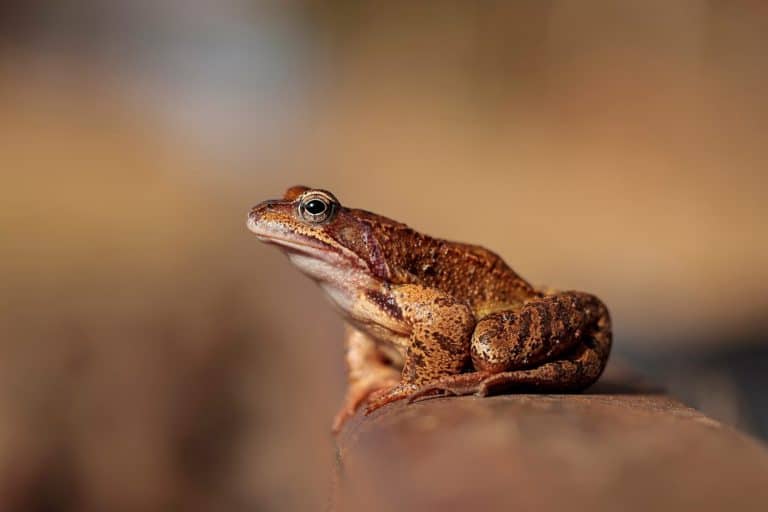
Amphibians and reptiles enter a state of inactivity called brumation that is similar to hibernation in mammals. When days get shorter and temperatures begin to drop in late fall, many frogs begin to brumate, although some frog species can tolerate cold temperatures better than others.
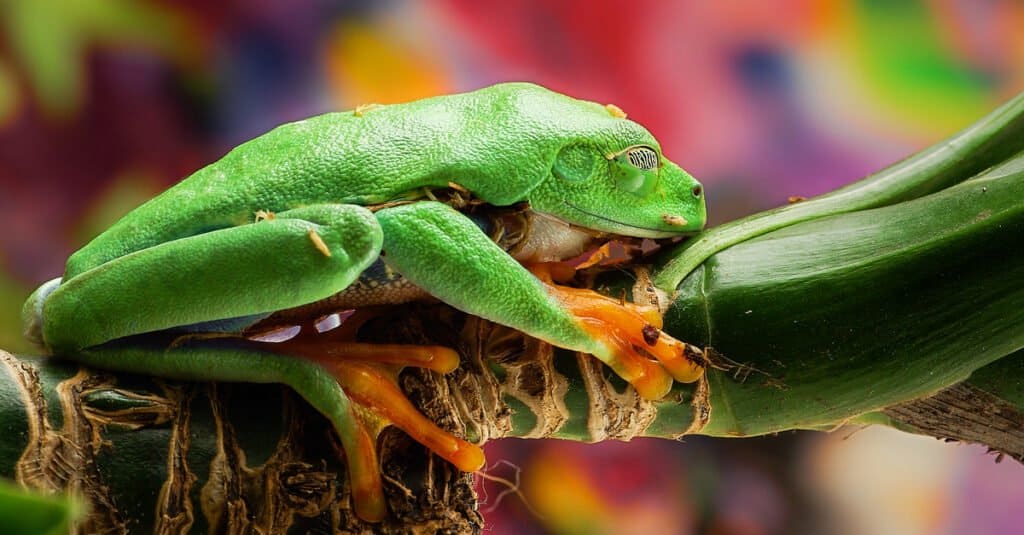
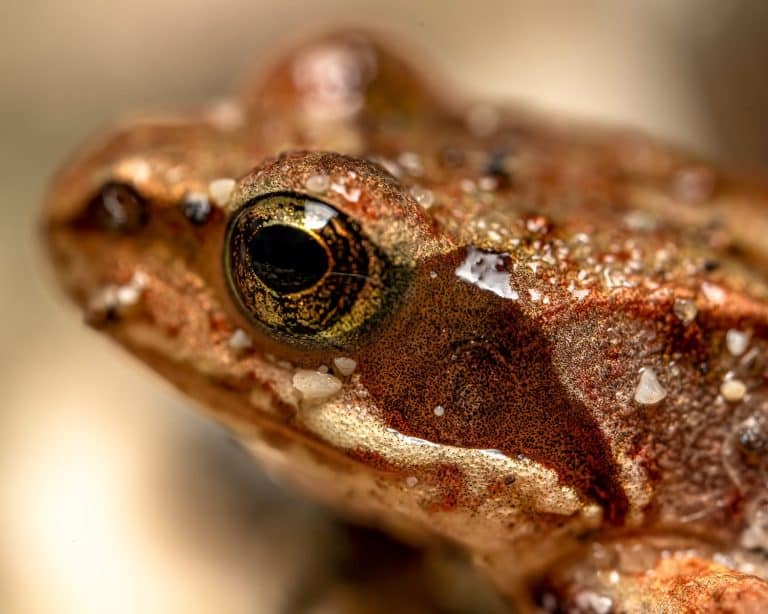
When frogs hibernate, their metabolism slows to conserve energy.
©Irina Kozorog/Shutterstock.com
During brumation, a frog’s metabolic rate drops, and only small amounts of energy are required to stay alive. Although mammals can build up enough fat reserves to last the entire winter, frogs cannot. During periods when the weather briefly warms up, they can come out of brumation to forage for food until temperatures drop again.
Terrestrial vs. Aquatic Hibernation
Not all frogs are fully aquatic. Terrestrial frogs and aquatic frogs have different strategies to survive the winter. Terrestrial frogs often burrow deep underground below the freeze line where they can access moisture in the ground. They may also hide under logs and leaf litter, in rodent burrows, or in compost heaps.
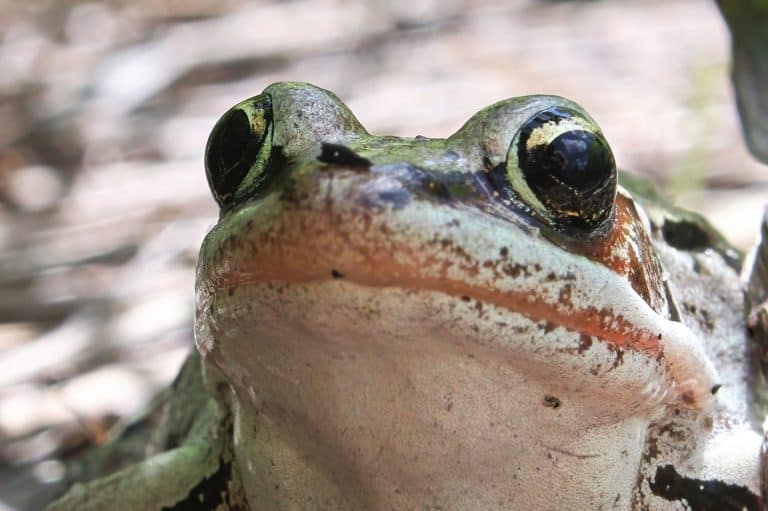
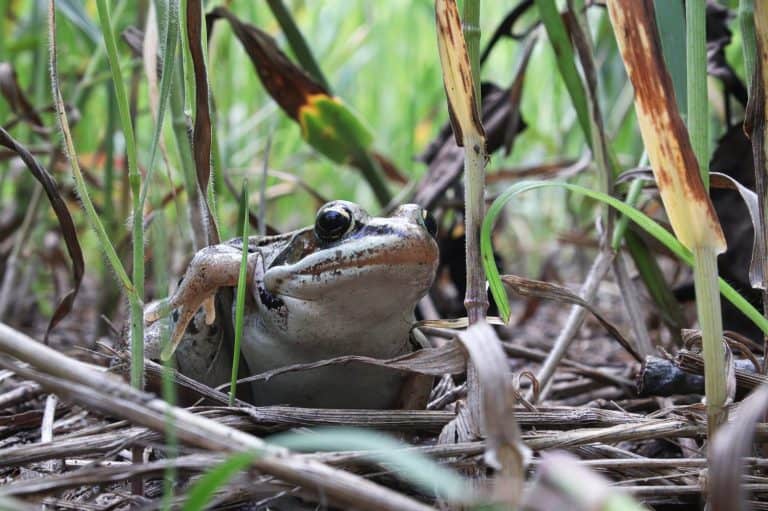
Some species, including wood frogs (Rana sylvatica), grey tree frogs (Hyla versicolor), midland chorus frogs (Pseudacris triseriata), and more, dig shallow burrows or take refuge in trees, allowing up to 70% of the water in their bodies to freeze, depending on the species. These frogs naturally convert high concentrations of glycogen stored in the liver to glucose and/or glycerol. These cryoprotectants act as antifreeze to keep ice from forming inside their cells. A study on moor frogs (Rana arvalis) in Europe found that they can tolerate temperatures as low as approximately 3.2°F, while wood frogs may be able to tolerate temperatures as cold as -7.6°F. These frogs may appear dead, as they will stop breathing and their hearts stop beating, but they will thaw when the weather warms.
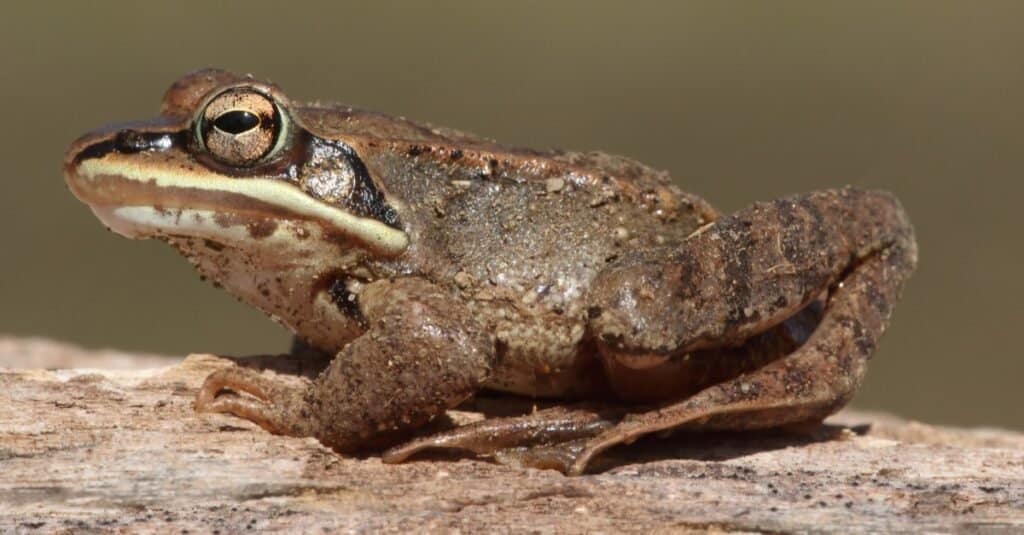
Glucose in the wood frog’s cells protects its body from damage caused by freezing.
©Steve Byland/Shutterstock.com
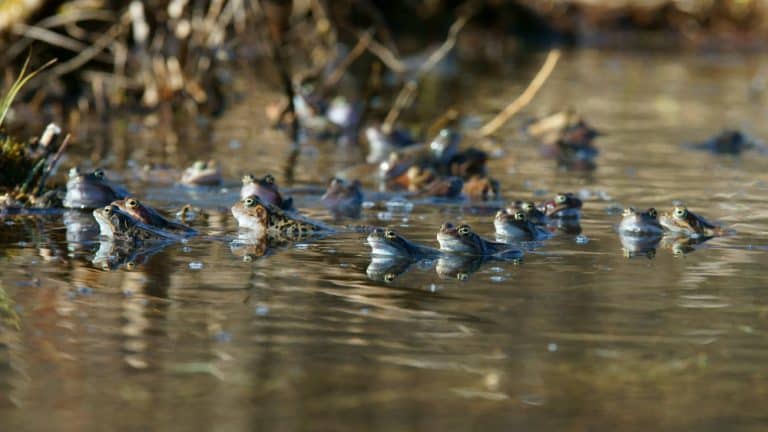
Aquatic frogs such as American bullfrogs (Lithobates catesbeianus) and southern leopard frogs (Lithobates sphenocephalus) hibernate underwater. However, unlike turtles, hibernating aquatic frogs cannot slow their metabolism too much, so they must remain in well-oxygenated water to absorb oxygen through their skin rather than burrowing under the mud at the bottom of ponds and streams. So they typically lie on top of the mud or sediment, or remain only partially buried.
What Happens During Extreme Heat?
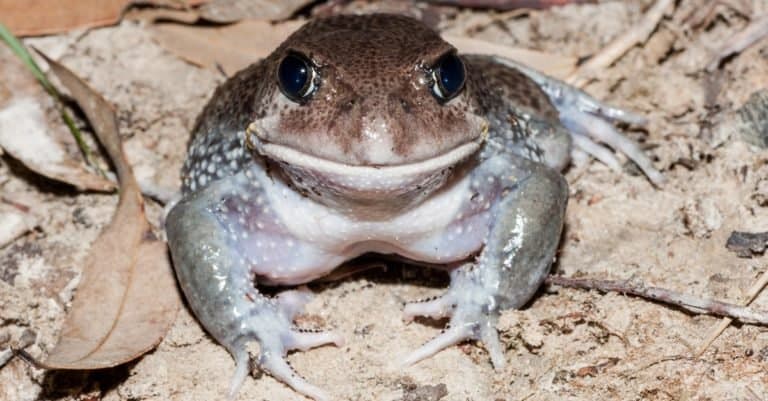
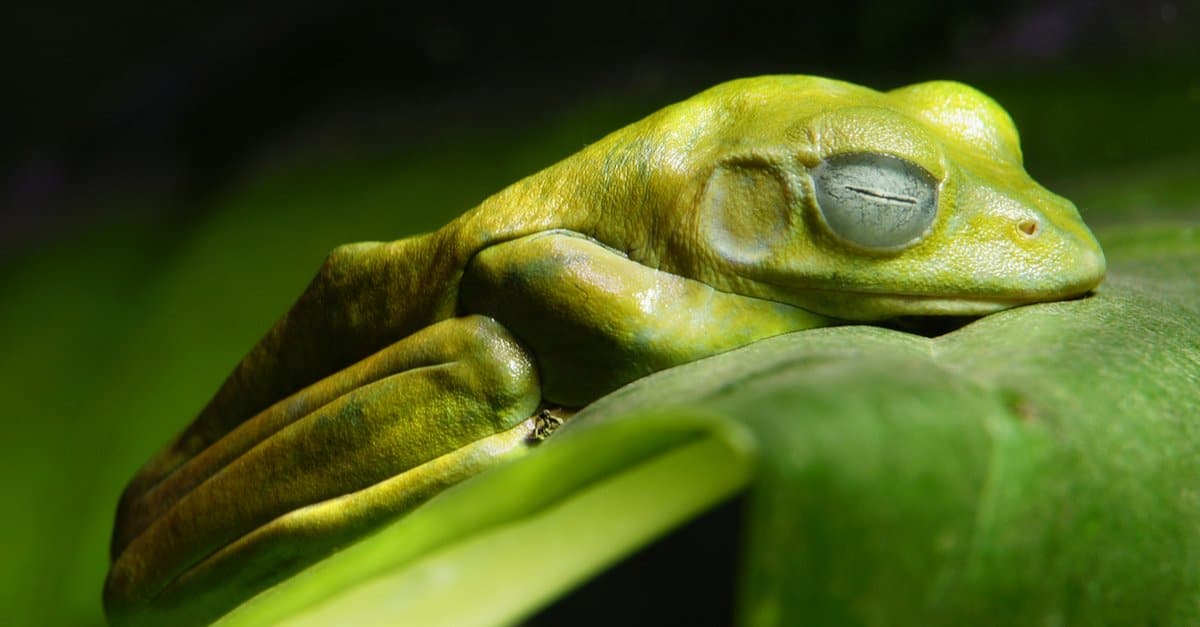
Frogs do not hibernate in the summer, but they may aestivate to deal with the challenges of extreme heat and limited food and water. Similar to brumation, frogs decrease their metabolic rates to conserve energy. Species such as green-striped burrowing frogs (Cyclorana alboguttata) in Australia and African bullfrogs (Pyxicephalus adspersus) may experience aestivation for 8–10 months during a normal dry season, or even a few years during severe droughts or in extremely arid regions like the Kalahari Desert.
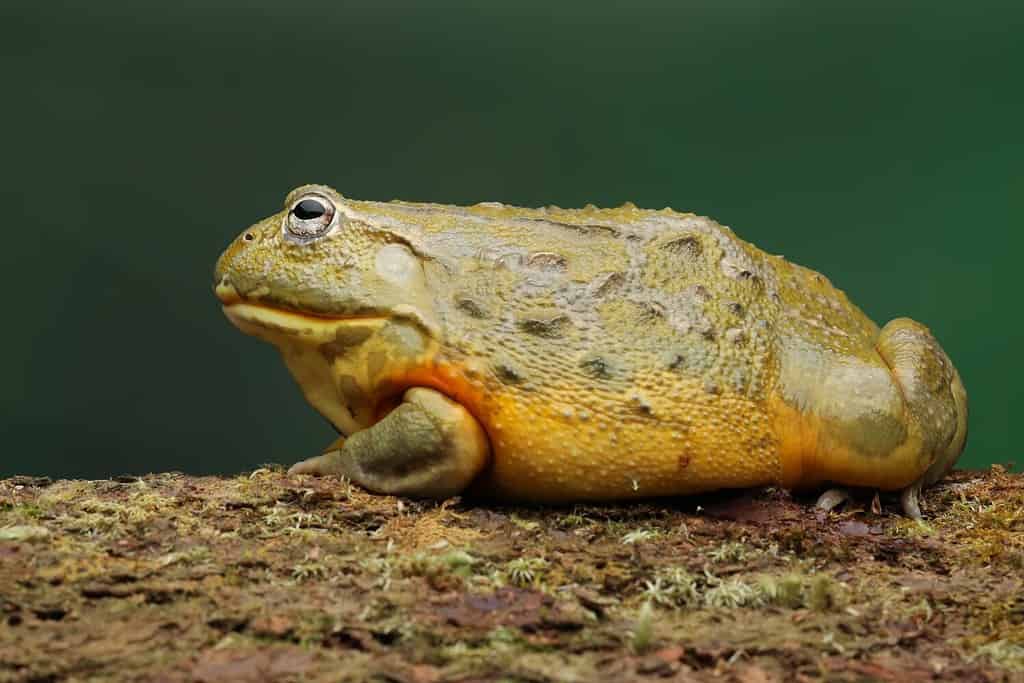
African bullfrogs aestivate to avoid intense heat and reduce water loss.
©Lauren Suryanata/Shutterstock.com
During aestivation, these frogs burrow underground and encase themselves in hardened cocoons of shed skin and mucus. They continue breathing, but only just enough to stay alive. The cocoons help them retain moisture, reducing water loss by up to 80% or more, depending on the species. Heavy rains moisten the cocoons so the frogs can emerge from their burrows to feed and mate.