










Quick Take
- Goldadors are famous for their friendliness, and yet that exact trait makes them a liability in one common situation most dog owners overlook. See the guard dog drawback →
- Hybrid breeds like the Goldador can actually outlive and outlast many purebreds, and the science behind why turns out to be more interesting than you might expect. Explore the hybrid health benefits →
- Skip one specific part of the daily routine and your Goldador's personality can flip. The article spells out exactly what's at stake. See what's at stake →
- The Goldador's origin story involves an extinct breed and a British nobleman, and that story explains everything about why this dog acts the way it does. Discover the origin story →
Goldadors are a mix between golden retrievers and labradors, two of the most popular breeds in the world. They are more commonly known as a Golden Lab. They are loving and loyal dogs, making them among the most popular breeds of “designer dogs”. These are new breeds intentionally crossbred between two popular established breeds.
Golden Labs are prized for their intelligence and their friendly nature. These dogs are used as seeing-eye dogs, hunting companions, and even bomb-sniffing dogs. They’re very smart and make great working companions in addition to great family dogs!

3 Pros and Cons of Owning Goldadors
| Pros! | Cons! |
|---|---|
| Goldadors are some of the best dogs for families: Because they are a mix of two of the most popular breeds for families, Goldadors are extremely friendly pets to have around the house. They get along great with children and are seamless incorporations into a busy household. | They are large dogs: Goldadors are on the larger side, making them less than ideal for small living spaces such as an apartment or condo. If you don’t have a large yard for them to run around in, then you will need to take your Goldador out on frequent walks and trips to the park in order for them to get enough exercise. |
| Great for people with an active lifestyle: If you enjoy running, hiking, hunting, or swimming, your Goldador companion will surely join you. These dogs will happily tag along on any adventure with their human companion, and the exercise is very good for their health. | They are not hypoallergenic: You will not be able to own a Goldador if someone in your household has a dog hair allergy. |
| Generally have better health than purebred dogs: Goldadors and other hybrid breeds will generally have better health and a longer lifespan than purebred or even some rescue dogs. This is because breeders are able to select beyond the shallow gene pool of breeding purebred dogs, leading to fewer inheritable health problems being passed down from parent to puppy. | They are too friendly to be good guard dogs: This breed is known as the ideal family companion. Unfortunately, this means that Goldadors think everyone is a member of the family. If you’re looking for the ideal guard dog, you may need to choose a different breed. |
Origins
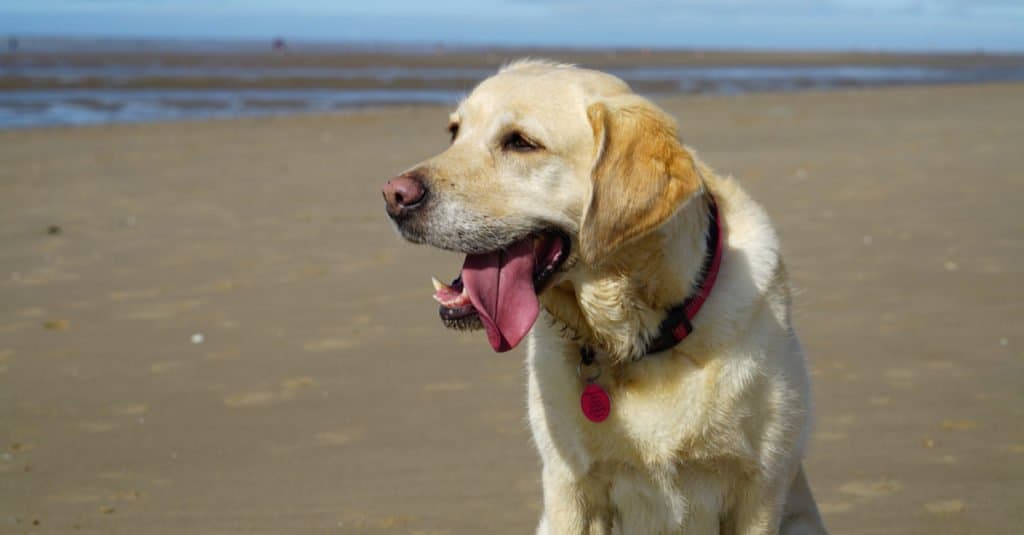
Goldadors are a relatively recent breed, although their parent breeds both originated in the 1800s.
©Nathan.Jones.Camera/Shutterstock.com
Goldadors are a relatively recent breed, with intentional breeding beginning in the 1990s. However, we can take a peek at its parent breeds and understand where it gets its unique qualities from.
Starting with the Golden Retriever, the first of these was bred in 1868 when a British noble, Lord Tweedmouth, bred two dogs, Nous and Belle. The former was a yellow Wavy-Coated Retriever while the latter was a Tweed Water-Spaniel (a now extinct breed). Four yellow puppies were born and were named Ada, Cowslip, Crocus, and Primrose.
Like golden retrievers, the tale of Labradors also begins in 19th-century Britain, albeit nearly four decades earlier. During the early part of the 1800s — the 1830s, to be precise — St John’s water dogs were brought from Newfoundland to Britain. They were bred with hunting dogs, resulting in the Labrador that was considered a wonderful hunting companion.
Given the friendly disposition of both its parent breeds and their intelligence, it’s hardly any surprise that the goldador is also considered an excellent choice of family pet.
Size and Weight
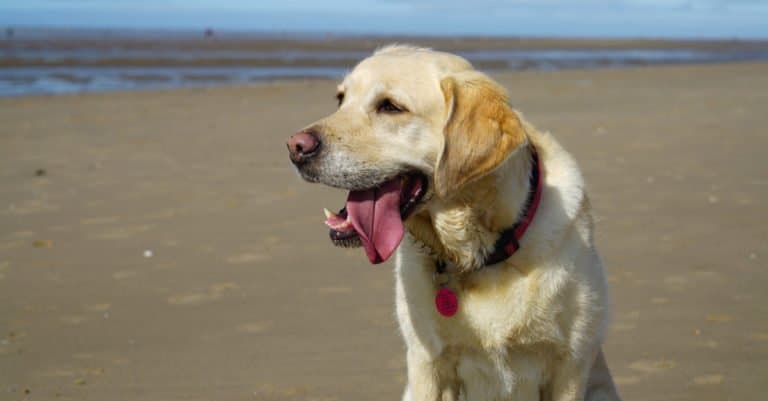
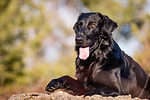
Because Golden Retrievers and Labradors are very compatible in size, weight, and features, their traits blend fairly seamlessly into the Goldador hybrid breed. They are generally 21 to 23 inches tall and weigh between 60 and 80 pounds on average. Their coat is dense and is either of short or medium length. They come in black, chocolate, yellow, golden, and cream colors, depending on whether their parent was a black, chocolate, or cream lab.
Health Issues
Elbow and hip dysplasia can be inherited from the Golden Retriever parent. This affects the dog’s hip and leg movement as the dog ages, which can be painful and limit mobility. Another limiting injury is called cruciate ligament rupture, which can occur rapidly during exercise and cause the dog to limp.
These dogs are also prone to eye problems as they age, such as blindness and cataracts. This hybrid breed is also prone to diseases like diabetes, hypothyroidism, and obesity. Finally, Goldadors can develop ear and skin infections if they are not groomed properly and their ears are not cleaned out at least once every two weeks.
Temperament and Behavior
Goldadors tend to take after Golden Retrievers when it comes to their temperament. They are extremely friendly and loving, likely to greet any human with affection. They make great family dogs and bad guard dogs because of this personality.
Young Goldadors tend to demonstrate more excitable behavior than older dogs, and care must be taken around juveniles to make sure they get the appropriate amount of exercise and enrichment. Exercise is key at any age to make sure the dog isn’t restless when it’s time to relax at home.
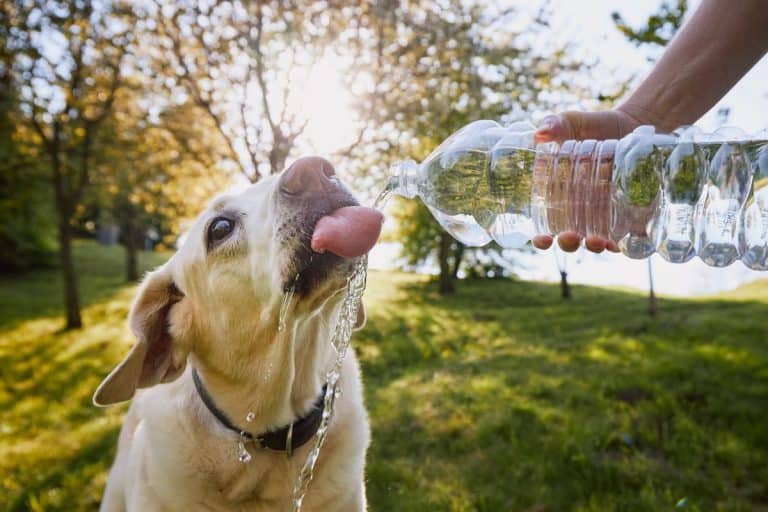
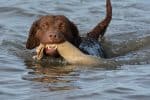
Goldadors love water and are wonderful outdoor dogs. They have a loyal and determined temperament and get excited to go on new adventures. They are always willing to exercise, making them a great companion for owners with an active lifestyle. Their affectionate behavior extends to other dogs as well, as they are generally very sociable with other dogs.
How To Take Care of Goldadors
Goldadors have some specific health and grooming problems that need to be addressed. However, because they are well-behaved and loving dogs that are easy to train, they are highly recommended as first-time pets.
The Best Dog Food for Goldadors
Goldador puppy food: To make sure that your puppy is getting the most out of its diet, avoid foods with fillers or plant-based additives. Consult a veterinarian for the best choice in Goldador puppy food, and be sure to follow the instructions on the food label to make sure you aren’t feeding too much or too little to your puppy.
Goldador adult food: Goldadors are best fed with a high-protein kibble. Dry food aimed at athletic dogs will be an ideal fit for this breed. It’s important to make sure that the food is appropriate for the dog’s point in their lifespan, as different foods are formulated for adult and senior dogs. Serving size will also vary based on the dog’s size and activity level. Generally, they will need 3.5 – 4.5 cups a day over the course of two meals.
Maintenance And Grooming
Goldador grooming will vary depending on the length of their coat, which they inherit from their parents. Short-haired Goldadors will need to be brushed 1-2 times a week, and long-haired Goldadors will need to be brushed 3-4 times a week. They will shed in the spring, so you may have to groom more then. Their ears should be regularly cleaned once a week with a damp cloth. Their nails should be clipped once or twice a month. They should have their teeth brushed two to three times a week to prevent tartar. Goldadors should also receive baths as needed, such as when they roll in the mud or swim in a body of water.
Training
Goldadors are intelligent dogs and are prized for how easy they are to train! Like most breeds, training them early is essential to help Goldadors learn good habits. Some habits, such as mouthiness, will develop early in the dog’s lifespan. It is best to address this as early as possible to prevent them from occurring once the dog has grown. When training, use positive reinforcement, such as praise, treats, or play. Goldadors also learn best in a quiet, distraction-free space.
Exercise
Goldadors need 30 minutes to two hours of exercise a day. Regularly exercising Goldadors is incredibly important, as they can become destructive when bored. Because of this, Goldadors are happy when they have a lot of space in which to play. If you have an apartment or condo without a yard, you will need to be diligent in making sure you provide this breed of dog with an adequate amount of exercise. This breed loves hikes, swims, walks, and jogs, so it’s possible to get creative when looking for ways to exercise a Goldador.
Puppies
Goldadors are friendly and very rambunctious as puppies. Socialize puppies and encourage them to play with other dogs early on. Early training with positive reinforcement will also be important to help puppies break bad habits as soon as possible.
Children

Goldador puppies are best supervised when playing with young children.
©Cinda-lu/Shutterstock.com
Goldadors make a great family dog, as they are very friendly and good with children. However, training will be essential if you adopt a puppy. Puppies tend to be more rambunctious and can accidentally knock over or bite young children when playing.
Dogs similar to Goldadors
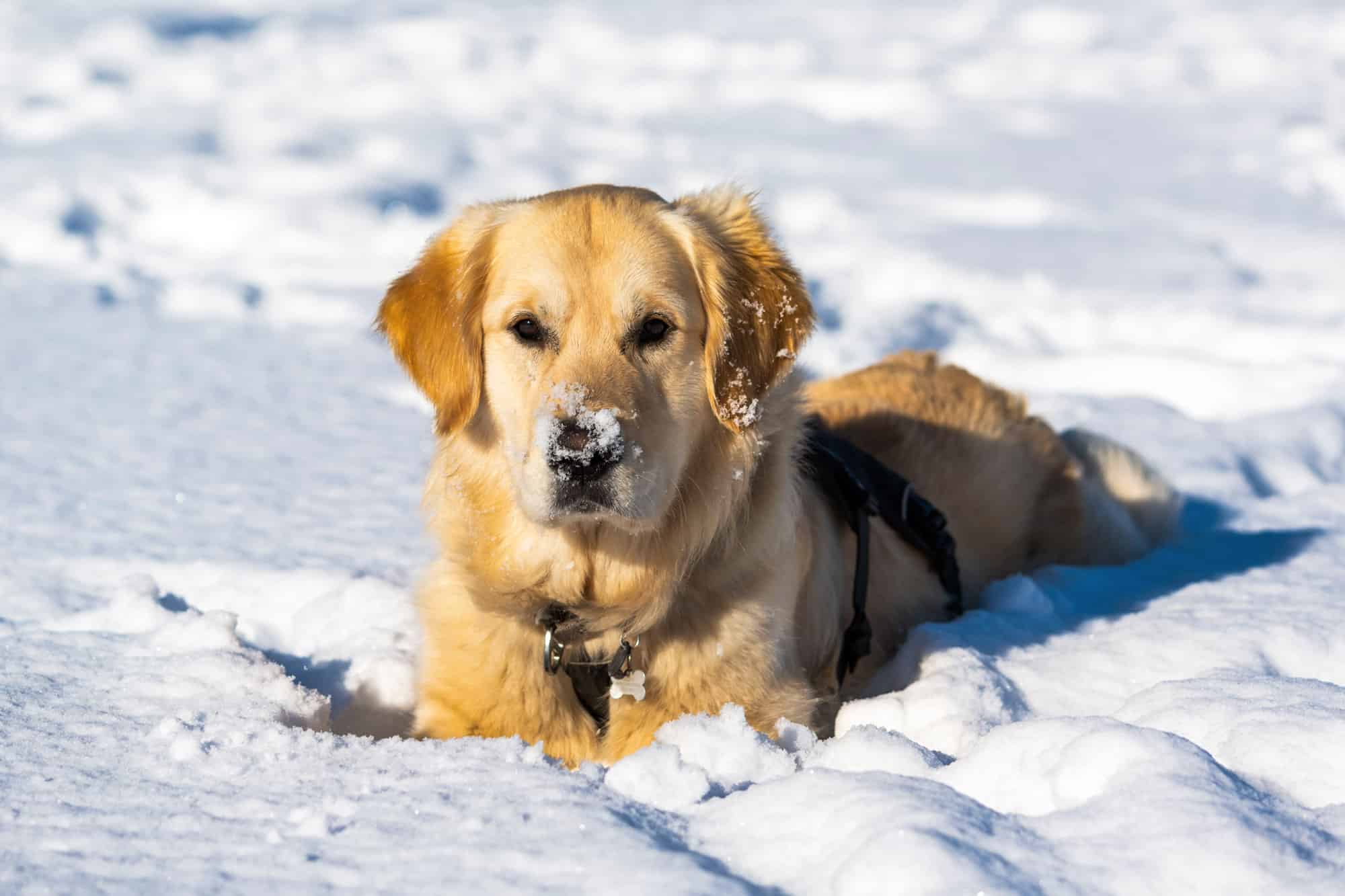
Golden Retrievers share the laidback nature of Goldadors
©iStock.com/Wirestock
Breeds similar to Goldadors include Golden Retrievers, Labradors, and Labradoodles.
- Golden Retrievers: One of the two breeds used to create Goldadors, this popular breed is known for its easygoing temperament and trainability. These are loving dogs that also make good companions for the family.
- Labradors: The other breed used to create Goldadors. This breed sheds less than Golden Retrievers and Goldadors do, but also shares many of the same characteristics and personality traits.
- Labradoodles: Another popular hybrid breed, Labradoodles are another smart designer dog breed that is also loyal, loving, and tolerant of children. Some Labradoodles have low-shedding coats, especially if they inherit more of the Poodle’s coat type, but shedding levels can vary.
Goldador Pictures
View all of our Goldador pictures in the gallery.

CreativePlant/Shutterstock.com
Sources
- Youtube / Accessed March 25, 2021
- Petpress / Accessed March 25, 2021
- Dogbreeds911 / Accessed March 25, 2021
- Animalso / Accessed March 25, 2021
- Doglovers Digest / Accessed March 25, 2021
- Petguide / Accessed March 25, 2021
- IAMS / Accessed March 25, 2021
- Dogzone / Accessed March 25, 2021
- CNBC / Accessed March 25, 2021
- Dogtime / Accessed March 25, 2021
- Woof Bark Growl / Accessed March 25, 2021
- The Labradorsite / Accessed March 25, 2021