

L
Species Profile

Labahoula

Canis lupus familiaris

Two working legends, one powerhouse pup
Kamren Gilreath/Shutterstock.com

Labahoula Distribution

Click a location to explore more animals from that region

Origin Location

This map shows the native origin of the Labahoula. As a domesticated species, they are now found worldwide.

Loading map...

Found in 1 country

Size Comparison

Human 5'8"
Labahoula 2 ft

Labahoula stands at 35% of average human height.

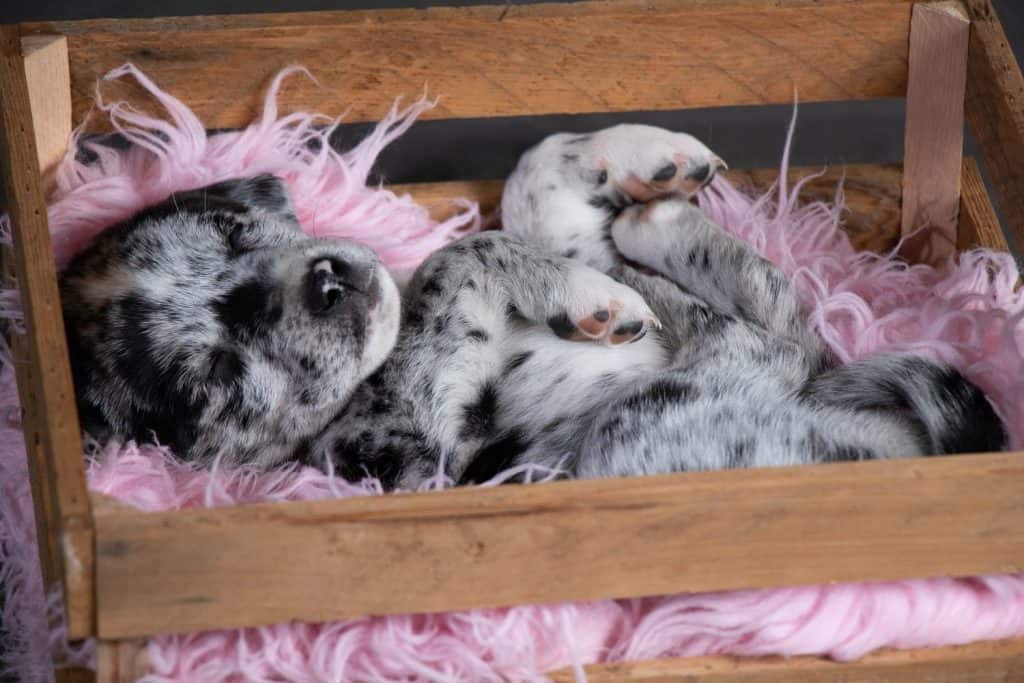
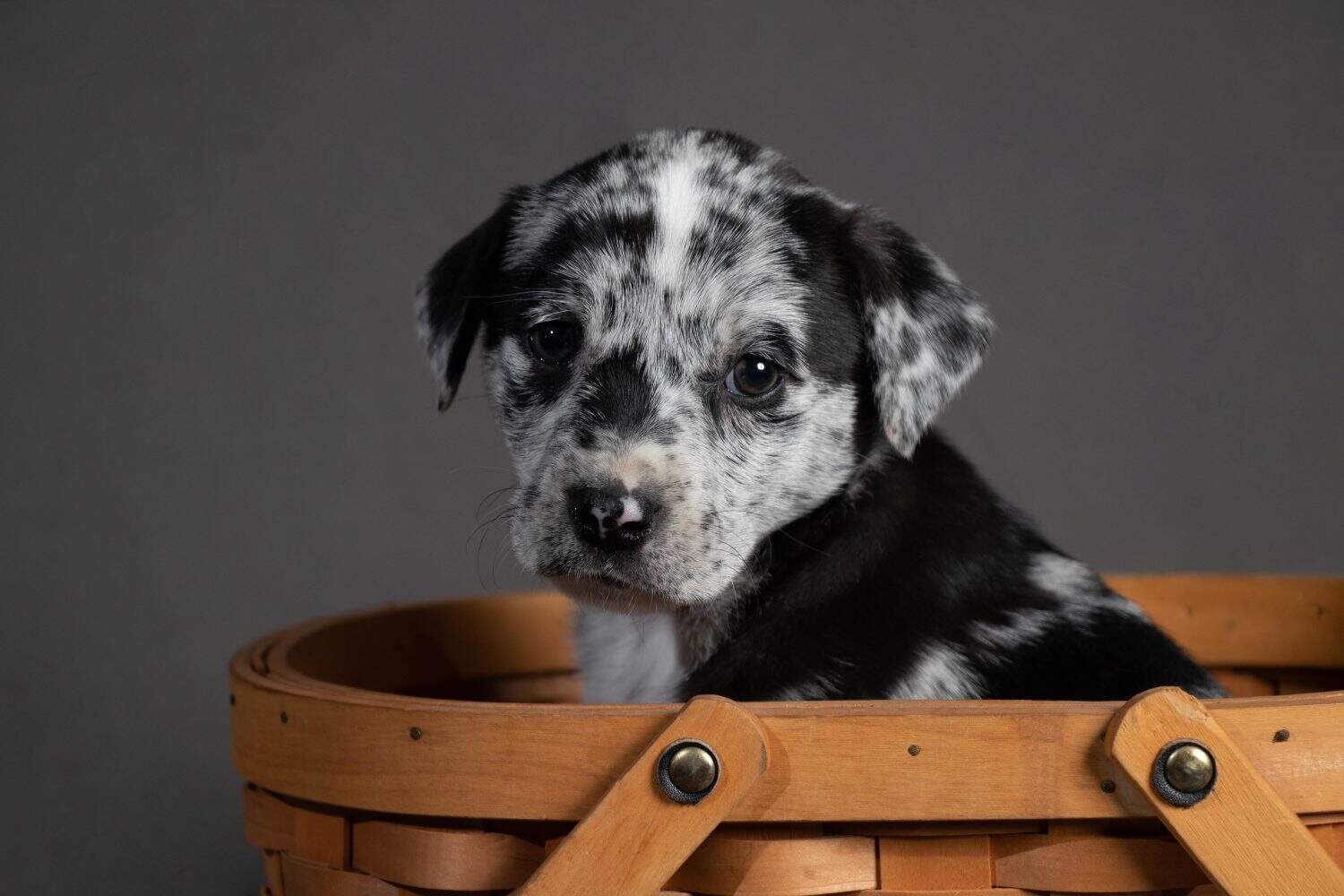
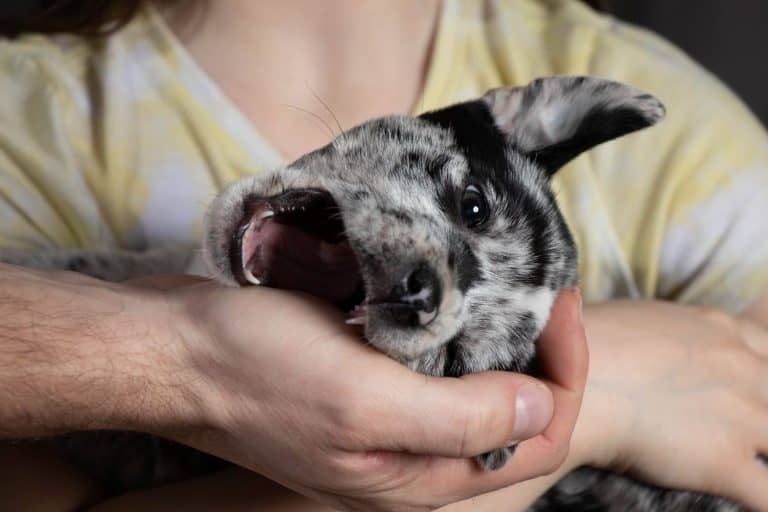
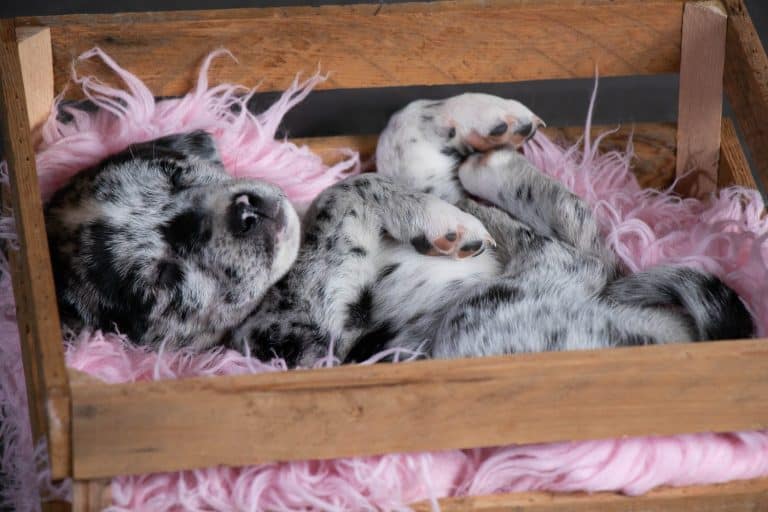
Newborn photo session of a beautiful Catahoula LeopardLab mix.

At a Glance

Domesticated
Diet Omnivore
Activity Cathemeral+
Lifespan 5 years
Weight 40 lbs
Status Not Evaluated
Did You Know?

A Labahoula's coat can range from solid Lab-like colors to Catahoula-style merle/"leopard" patterns-littermates may look very different.

Scientific Classification

A mixed-breed domestic dog typically produced by crossing a Labrador Retriever with a Louisiana Catahoula Leopard Dog. Often described as an athletic, intelligent, high-energy companion/working-type dog with variable coat patterns (sometimes mottled/‘leopard’), and strong trainability needs.

Kingdom
Animalia
Phylum
Chordata
Class
Mammalia
Order
Carnivora
Family
Canidae
Genus
Canis
Species
Canis lupus

Distinguishing Features

  • Mixed-breed dog; not a formally standardized breed
  • Often medium–large, athletic build
  • Coat can vary widely; may show merle/leopard patterning from Catahoula lineage
  • Typically high energy and benefits from structured training and exercise

Physical Measurements

Males and females differ in size

Height
2 ft (1 ft 10 in – 2 ft 2 in)
1 ft 10 in (1 ft 8 in – 1 ft 12 in)
Length
3 ft 8 in (3 ft 3 in – 4 ft 1 in)
3 ft 3 in (2 ft 9 in – 3 ft 9 in)
Weight
77 lbs (66 lbs – 90 lbs)
60 lbs (44 lbs – 71 lbs)
Tail Length
1 ft 2 in (12 in – 1 ft 5 in)
1 ft 2 in (10 in – 1 ft 6 in)
Top Speed
28 mph
running

Appearance

Primary Colors
Secondary Colors
Skin Type Domestic dog skin with short-to-medium coat; often dense, water-resistant undercoat from Labrador influence, with occasional single-coat individuals; moderate natural oiliness and pigmentation variability.
Distinctive Features
  • Designer crossbreed (Labrador Retriever × Louisiana Catahoula Leopard Dog) with no fixed kennel-club standard; appearance varies litter-to-litter.
  • Medium-large, athletic build with strong chest and hindquarters; suited to active companion or working-style roles.
  • Coat may be short and sleek or slightly thicker; shedding typically moderate to heavy seasonally.
  • Catahoula-influenced 'leopard' mottling/ticking and occasional marbling; can include striking facial masks and patchwork markings.
  • Eye traits may include light eyes or heterochromia; some lines carry higher risk of congenital deafness when strong merle-pattern genetics are present.
  • Ears usually drop (Lab-like) which can increase moisture trapping; routine ear cleaning reduces otitis risk.
  • Common health concerns seen in parent breeds: hip/elbow dysplasia, cruciate ligament injury risk in high-activity dogs, obesity tendency (Lab), and skin/allergy issues.
  • Care requirements: high daily exercise plus structured training/mental work; early socialization and consistent handling reduce reactivity and boredom behaviors.

Sexual Dimorphism

Males are typically larger with broader heads, thicker necks, and heavier bone. Females are usually slightly smaller and leaner, often appearing more refined while retaining an athletic, working-capable build.

  • Broader skull and muzzle; more pronounced stop in some individuals
  • Heavier chest and forequarters; more visible musculature
  • Often larger overall body mass and height within the same litter
  • Slightly narrower head and lighter bone structure
  • More streamlined waist and lighter forequarters
  • Often smaller frame while maintaining high athleticism

Did You Know?

A Labahoula's coat can range from solid Lab-like colors to Catahoula-style merle/"leopard" patterns-littermates may look very different.

Many inherit strong "job drive": retrieving instincts from Labradors and tracking/herding-bay instincts from Catahoulas.

Catahoulas are Louisiana's state dog; the cross often appeals to people wanting a versatile outdoors companion.

Eye color can be strikingly variable (including light eyes or heterochromia) when Catahoula traits are expressed.

Both parent breeds were developed for work-waterfowl retrieving (Lab) and stock/wild hog handling (Catahoula)-so the mix often thrives with purposeful training.

Because it's a crossbreed, there is no single official breed standard; temperament and size can vary widely even within the same line.

Many Labahoulas excel in dog sports (agility, scent work, dock diving) when their energy is channeled consistently.

Unique Adaptations

  • Domestic-dog flexibility: compared with the gray wolf, this breed mix is selected for human-directed cooperation, trainability, and life in homes.
  • High stamina and heat tolerance potential: short-to-medium coats and athletic builds can suit active work, but hydration and heat management remain essential.
  • Variable coat/eye genetics: Catahoula-linked merle/leopard patterning can create camouflage-like mottling; expression varies widely in mixes.
  • Strong aquatic aptitude may appear via Labrador ancestry (many enjoy water), though not all inherit dense, water-resistant coats.
  • Behavioral adaptability: can switch between "all-day worker" and "family companion" when given adequate exercise and enrichment.

Interesting Behaviors

  • "Velcro" tendencies: many bond closely and follow their person room-to-room, especially when under-stimulated.
  • Patterned problem-solving: may test boundaries, open doors, or invent games-common in intelligent, working-line dogs.
  • Retrieval + chase combo: some will fetch endlessly, then switch to fast pursuit of squirrels/birds; impulse control training helps.
  • Vocal/expressive communication: may "talk," bay, or use varied barks depending on which parent traits dominate.
  • Strong environmental scanning: can pause to watch and assess new people/animals-socialization helps prevent wariness.
  • Mouthiness in youth: Labs are often soft-mouthed but both lines can be grabby as adolescents; structured tug/fetch rules help.
  • Scent-driven "nose down" mode: may suddenly lock onto trails; reliability with recall is a key safety goal.

Cultural Significance

The Labahoula is a cross of the Labrador Retriever and the Louisiana Catahoula Leopard Dog (Canis lupus familiaris). It joins North American gundog and Gulf South ranching traditions, does many jobs as an outdoors companion but varies in looks and needs careful choice, training, and kind care.

Myths & Legends

Louisiana tradition holds that the Catahoula Leopard Dog descends from Native American dogs crossed with dogs brought by Spanish explorers, later shaped by frontier ranching and hunting needs along bayous and pinewoods.

Regional hunting lore in the Gulf South tells of "leopard dogs" that could find, surround, and hold wild hogs at bay-dogs valued as much for savvy teamwork as for courage.

Naming lore links "Catahoula" to local place-name origins associated with the Catahoula region and lake; the breed's identity is woven into stories of backwoods settlers and stockmen relying on tough, versatile dogs.

Folkloric "odd-eyed dog" superstitions in parts of the American South and beyond sometimes treat light or mismatched eyes as a sign of uncanny perception or special luck-an association occasionally applied to Catahoula-type dogs.

Anecdotes from retriever history celebrate the Labrador as the steadfast boat-and-marsh companion, with stories of dogs repeatedly returning through cold water to bring back game-cementing the retriever as a symbol of reliability and devotion.

Modern crossbreed origin stories often frame the Labahoula as the 'best of both worlds'-a contemporary working-companion legend that motivates the intentional pairing, even though outcomes remain variable.

Conservation Status

NE Not Evaluated

Has not yet been evaluated against the criteria.

Population Stable

Life Cycle

Birth 6 pups
Lifespan 5 years

Lifespan

In the Wild
2–10 years
In Captivity
8–15 years

Reproduction

Mating System Polygynandry
Social Structure Managed Domestic
Breeding Pattern Serial
Fertilization Managed Selective
Birth Type Internal_fertilization

As a domestic-dog cross, Labahoulas are usually produced through human-managed breeding rather than stable pair bonds. Reproduction uses internal fertilization, with selected males and females paired for a heat cycle; repeated matings across seasons create serial, multi-partner lineages.

Behavior & Ecology

Social Pack Group: 4
Activity Cathemeral, Diurnal
Diet Omnivore Meat-forward diet (e.g., chicken or fish-based kibble; many individuals show strong preference for high-protein, animal-based foods).

Temperament

Distinguishing vs base species: human-directed bonding and cooperative work drive exceed wild canids' independence.
Breed blend hallmark: athletic, high-stamina, task-oriented; may inherit Catahoula intensity and Lab friendliness.
HUBS (group-wide): energetic, intelligent, trainable; variation in protectiveness, independence, and dog sociability.
Often confident and curious; can be reserved with strangers without early, ongoing socialization.
May show strong prey/chase instincts and environmental alertness; reliable recall requires consistent training.
Typically affectionate with family; can become pushy or mouthy when under-exercised or under-stimulated.
Working-style focus: thrives with structured roles (retrieving, tracking, obedience, agility, hiking companion).
Health concerns seen in parent lines: hip/elbow dysplasia and obesity tendency (Lab influence).
Possible merle-associated risks if present: hearing/vision issues, especially with double-merle ancestry.
Other concerns: bloat risk in deep-chested individuals, ear infections, allergies/skin irritation.
Care requirements: high daily exercise plus mental enrichment; secure fencing and leash management are important.
Training needs: early socialization, impulse control, positive reinforcement; avoid harsh methods that increase reactivity.
Grooming: short-to-medium coat usually low-maintenance; regular brushing and ear checks/cleaning recommended.

Communication

barking Alerting, demand, play
whining Attention, frustration, arousal
growling Warning, resource guarding, rough play
howling Rare; group cohesion or response to stimuli
growling/grumbling Social engagement
body posture changes (stiffening, crouching) to signal confidence, uncertainty, or intent
tail carriage and wag patterns to indicate arousal level and social intent
ear and facial expressions to communicate focus, curiosity, or stress
scent marking and sniffing for social information gathering and territory cues
eye contact and gaze aversion to negotiate space and reduce conflict
play bows and exaggerated movement to invite play and prevent misinterpretation
pawing, nudging, and retrieving objects to solicit interaction or start work/play
mouthing and tug behavior, often intensified by high arousal without outlets

Habitat

Biomes:
Temperate Forest Boreal Forest (Taiga) Tundra Alpine Temperate Grassland Mediterranean Desert Hot Desert Cold Savanna Tropical Dry Forest Tropical Rainforest Temperate Rainforest Freshwater Wetland Marine +9
Terrain:
Plains Hilly Valley Coastal Riverine Mountainous Plateau Island +2
Elevation: Up to 16404 ft 3 in

Ecological Role

Domestic companion/working canid and human-subsidized mesopredator (opportunistic hunter/scavenger) whose diet is primarily provided by humans; may exert local predation pressure on small wildlife if free-ranging.

companionship and human social support working roles (hunting/retrieving, property/stock work) search-and-rescue/scent work potential (trainability and stamina) deterrence of some pest wildlife around homesteads (when managed responsibly)

Diet Details

Main Prey:
Rodents Rabbits and hares Ground-nesting birds and poultry fish Wild boar
Other Foods:
Fallen fruit Vegetables Grasses Human-provided starches

Human Interaction

Domestication Status

Domesticated

Canis lupus familiaris (domestic dog) is a domesticated gray wolf subspecies. The Labahoula (Labrador Retriever × Louisiana Catahoula Leopard Dog) is a recent mixed-breed made as an athletic, eager companion/working dog. It mixes Labrador retrieving, food drive, and friendliness with Catahoula grit, independence, high energy, and possible guarding, plus variable coat and eye patterns.

Danger Level

Moderate
  • Bite risk exists like any medium-large, powerful dog; increases with inadequate socialization, fear, pain, or poor handling
  • High prey drive in some individuals may lead to chasing/nipping (especially toward running children or small animals)
  • Potential territorial/guarding behavior (more likely if Catahoula traits dominate) can produce reactivity toward strangers at home
  • Overexuberant jumping/knocking over people due to high energy and size
  • Dog-dog conflict risk in some lines if same-sex intolerance or assertiveness is present

As a Pet

Suitable as Pet

Legality: Generally legal as a domestic dog in most jurisdictions. Restrictions usually only apply where general dog laws exist (licensing, leash laws, nuisance ordinances) or where specific appearance-based or breed-restriction policies affect mixed breeds; verify local rules and housing/insurance policies.

Care Level: Experienced

Purchase Cost: Up to $1,200
Lifetime Cost: $15,000 - $35,000

Economic Value

Uses:
Companion animal Working dog (farm/ranch utility, hog/bay work influence from Catahoula lines) Hunting companion (tracking, flushing/retrieving depending on individual) Sport dog (agility, dock diving, canicross, obedience, rally) Service/assistance and therapy prospects (case-by-case; temperament varies) Search-and-rescue prospects (case-by-case; depends on nerves and trainability) Animal services economy (training, boarding/daycare, veterinary care, grooming, equipment)
Products:
  • Adoption fees/rescue placement and private rehoming
  • Breeding or planned-cross puppies (variable pricing; not a standardized kennel-club breed)
  • Professional training/behavior support (often higher need due to energy/drive)
  • Sport/working gear (long lines, harnesses, chew/toy enrichment, crates, GPS collars for field work)
  • Veterinary screening and preventive care (hips/elbows, eyes; parasite prevention)
  • Boarding/daycare (often used to meet exercise needs)

Labahoula is a mixed breed of a Labrador retriever and a Louisiana Catahoula leopard dog. It is believed the breed was first developed in the late 1990s or early 2000s. The two origin species provide Labahoula puppies with the Labrador’s gentle disposition and the Catahoula’s physical agility. They are sweet, loyal, and loving dogs perfect for active families. But these designer dogs require lots of exercise, training, and socialization under experienced owners who can invest some time to ensure puppies grow into well-behaved adults.

Because of their protective and loyal nature, these dogs do well as both companion and guard dogs. Its parent breeds, both Labrador Retrievers and Louisiana Catahoula leopard dogs, are used in hunting. The Labrador is called a retriever for its birding capabilities. Louisiana Catahoula leopard dogs are also called “hog dogs” because they are effective in tracking and hunting wild boar in Louisiana’s swampy conditions. With these instincts, puppies can be trained for hunting, but they are more often companion dogs and watchdogs.

With experienced owners, the Labahoula is an excellent addition to active, outdoor-loving families. They are great with kids and enjoy playing with people of all ages. Because the dog is so gentle yet fearless, they are the perfect mix of behaviors as guard dogs and protective companions for families.

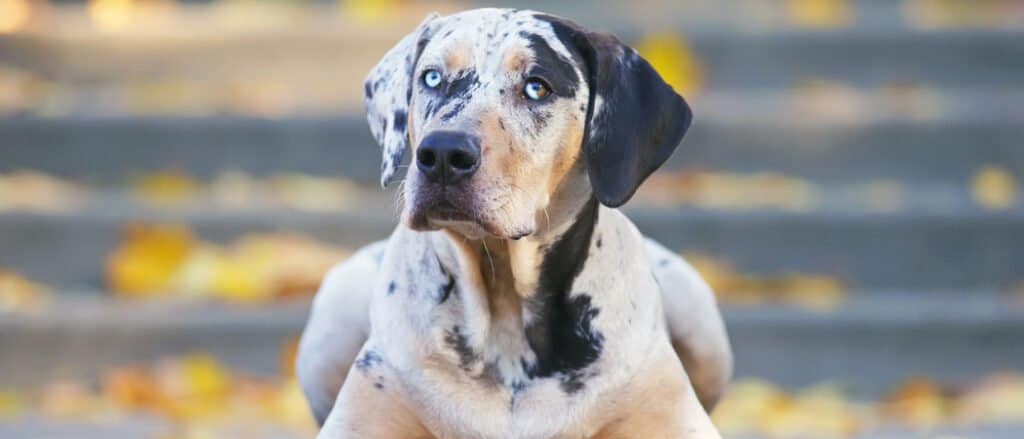
Catahoula leopard laying in leaves on steps

Young Louisiana Catahoula Leopard dog lying down on the stairs at the park.

3 Pros and Cons of Owning a Labahoula

Pros!Cons!
Excellent with kids and families: Because the mixed breed is a loving, protective, playful, and energetic dog, they make great companions for kids of all ages. They also provide great companionship for runners, hikers, and walkers who want a protective animal by their side during these activities.Not a lap dog: Labahoula is bred for its active spirits and constant desire to play, track, retrieve, and herd. This means they are less often sleeping than they are up and moving. Their activity level means they are not good companions for less active households.
Life span of 10 to 14 years: With an average life span of 10 to 14 years, your pet will be by your side for many years.Not good with other animals: The breed is not good with other pets like cats or smaller dogs, as they are constantly up for a chase. They can also be aggressive with other dogs.
Minimal shedding: They have a short, coarse coat that sheds very little compared to other breeds. They do not require professional grooming and can be bathed as needed.Requires a lot of attention: These active dogs want to shadow their humans everywhere they go. They are eager to play throughout their day and have lots of energy to burn. For these reasons, they need a lot of time spent running around outdoors and playing fetch. They also beg to jump in the passenger’s seat anytime their owners pick up their car keys.

Labahoula Size and Weight

The Labrador-Catahoula mix is a medium-sized dog with short, coarse hair that sheds little. Males of this breed average 25″ tall and females average 23″. Male weight is typically 80lbs as a fully grown adult. Females weigh an average of 65lbs at full maturity.

Labahoula Common Health Issues

Labahoula dogs are usually healthy. They are not a breed known for specific health issues. But they can inherit the common hip and elbow dysplasia of their parent breeds, the Labrador retriever and the Louisiana Catahoula leopard dog. Catahoulas frequently also have genetic hip joint malformation for which a Labahoula puppy may have a genetic predisposition. Catahoulas with heavily spotted and white-marked coats also tend to have deafness that a Labahoula may experience.

Other issues these dogs sometimes experience in old age are progressive retinal atrophy and cataracts.

A summary of the Labahoula’s most common health issues includes:

  • Canine hip dysplasia
  • Deafness
  • Progressive retinal atrophy
  • Cataracts

Labahoula Temperament and Behavior

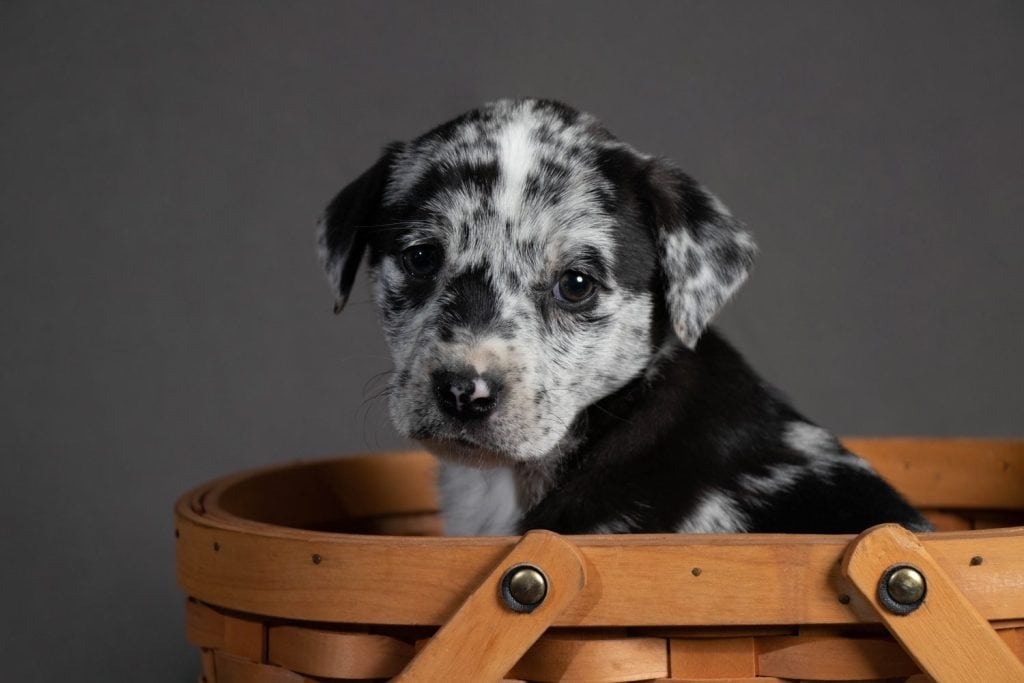
Newborn photo session of a beautiful Catahoula LeopardLab mix.

The Labahoula is a sweet-tempered dog who fits well into family life.

The Labahoula is known as being well-tempered, loyal, and gentle, yet protective. They are excellent companions for families with young children and have sweet and loving personalities. However, they do require patience during early training. Owners also must pay close attention to these dogs when other people or animals are around, particularly dogs of the same size or larger. They can be intimidating to visiting strangers and may bully, herd, or track other animals.

The Labahoula’s behavior is shaped by its early training in puppyhood. For the best results, it is important to use treat-based reinforcement and start both training and socialization early. Many owners describe their puppy’s behavior as stubborn during early training. But these are smart dogs capable of learning obedience for a happy and healthy life both inside and outside of the home.

It is also important not to leave a Labahoula alone for extended periods. They can get wild and destructive if left to their own devices. Many of their pet parents describe them as “naughty” when not monitored. Obedience training largely focuses on curbing the wilder tendencies and traits in the Labrador-Catahoula mix.

Being so energetic and healthy means a Labrador-Catahoula mix is an outgoing, personality-driven companion throughout their lives. They need activity and exercise for at least 90 minutes each day. Due to their high activity level, they are not good pets for apartments or city dwellers. They need their own space, typically being best suited for suburban or rural homes with ample lawns or land.

How To Take Care of Labahoulas

Labahoulas are easy to groom and have few major health issues beyond hip dysplasia. But people interested in owning a Labrador-Catahoula puppy must consider the breed’s need for daily activity and companionship. These pets also require training from an early age.
The Best Dog Food for Labahoulas

Labahoula puppy food: With their tendency toward hip dysplasia, it is important to find a specially formulated pet food with high calcium content for good bone and joint formation as they grow.

Labahoula adult dog food: An average-sized adult Labrador-Catahoula mix dog eats about 3.5 cups of dry kibble or other pet food each day. As with a puppy of this mixed breed, an adult dog needs more calcium than some other breeds to prevent hip dysplasia problems. For this reason, they likely need a calcium supplement to take in enough of this important mineral. Because they are highly active pets, their food must contain a healthy balance of carbohydrates with proteins, and fats.

Maintenance And Grooming

Labahoula dogs are extremely easy to groom and maintain. They have short, coarse coats of hair that shed very little and require only a light brushing every week to two weeks. Besides an occasional bath as needed, there are no real professional grooming needs. Of course, it is important to brush their teeth about twice weekly to prevent dental disease. You should check your dog’s ears and clean them every one to three months. Look for signs of wax build-up, debris, or infection. If your dog remains active outside, it may not need regular nail clipping, but you should trim their nails as needed every two to three weeks.

Training

Training a Labahoula is not always easy. They are smart dogs, but can be stubborn in both the puppy phase and as adults. Obedience, socialization, and potty training should start as soon as possible. However, general obedience requires some reinforcement throughout their lifetime. They do very well with treat-based positive reinforcement. The mixed breed’s main issues tend to be misbehavior when left alone, when around other animals, or among people they do not know.

Exercise

Labahoula dogs need at least 90 minutes per day of physical activity. This playtime can include games like fetch, fieldwork, swimming, or just free time to run and socialize around an open space. They are active dogs and do not live well in apartments or small settings. They make excellent companions for runners, hikers, and other people who love to be outdoors and active daily. Among other breeds of dogs, these are some of the most active pets. Pet owners can expect to walk or run their pet an equivalent of at least 15 miles per week.

Puppies
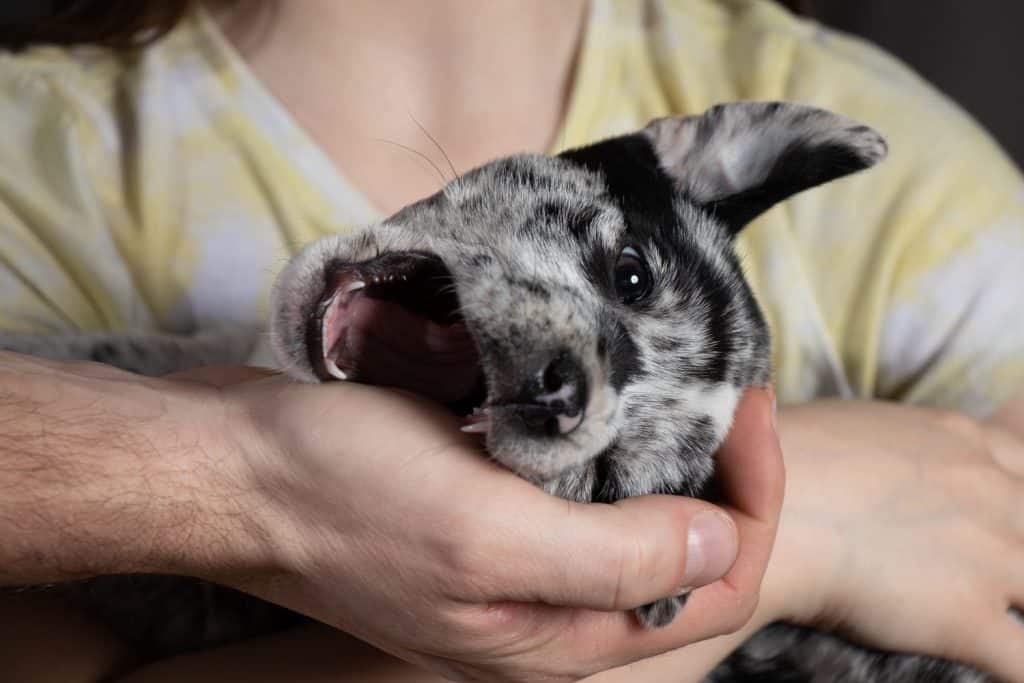
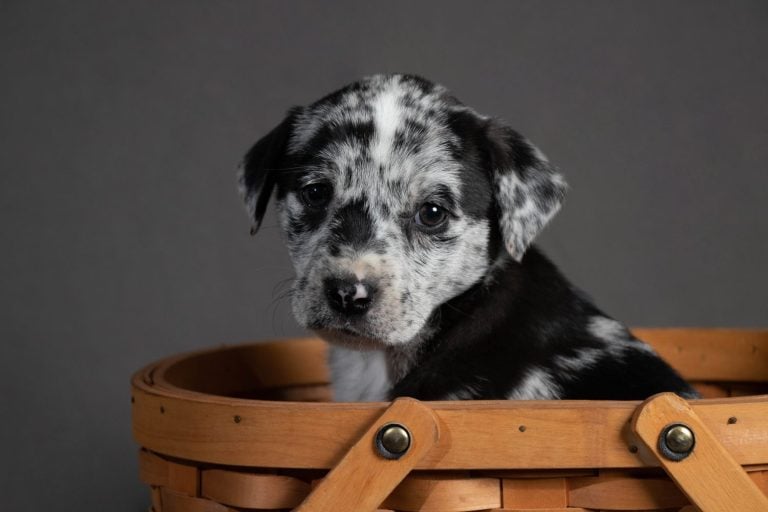
6 week old beautiful Catahoula Leopard and Labrador mix.

6-week-old beautiful Catahoula Leopard and Labrador mix.

These mixed-breed puppies need to be socialized and trained from a very young age. They need regular exposure to people of all ages and other pets from the start. At the same time, they must go through rigorous training to curb some of their tendency toward protection and stubbornness. Otherwise, the dog becomes difficult to manage within a household and around other people or animals.

The mixed-breed also misbehaves when left alone for too long and will require crate training to manage this streak. They can also irritate other pets because of their tracking, herding, and chasing behaviors.

Labahoulas and Children

These puppies are playful, loving, and lively around children from the start of their lives. They eagerly want to participate in family activities and make loyal and protective family companions. Because they have a high need for activity, they make great pets for households with multiple children. At the same time, they provide the family with protection.

Dogs similar to Labahoulas

There are multiple dog breeds similar to Labahoulas. These include the Labraheeler, collie, and Bouvier des Flandres.

  • Labraheeler: The labraheeler is similar to the labahoula in intelligence and energy. They share many of the common traits of their Labrador retriever origin. Both require active households, tend to “watchdog” and need early training and socialization. These dogs also have a similar color variety to the labahoula’s coat.
  • Collie: The adult collie is similar in size to the labahoula. Both breeds are very good with children and share a tendency to herd people and animals. They enjoy similar life spans and also dislike being separated from their humans.
  • Bouvier des Flandres: These dogs also require lots of exercise due to their active nature. They are herding dogs, sharing the tendency to herd people and other animals around the household and outdoors. Both breeds share moderate separation anxiety when away from their humans or left alone for lengthy periods.
View all 130 animals that start with L

Sources

  1. PetGuide.com / Accessed September 27, 2021
  2. Wag! / Accessed September 27, 2021
  3. Doggie desginer / Accessed September 27, 2021
  4. the labradorsite / Accessed September 27, 2021
  5. alpha paw. / Accessed September 27, 2021
  6. Dog Breed Info / Accessed September 27, 2021
  7. DOGLIME / Accessed September 27, 2021
  8. Dog ProductPicker / Accessed September 27, 2021
  9. Dog Registry of America / Accessed September 27, 2021
  10. The Dog People / Accessed September 27, 2021
  11. American Kennel Club / Accessed September 27, 2021
A-Z Animals Staff

About the Author

A-Z Animals Staff

AZ Animals is a growing team of animals experts, researchers, farmers, conservationists, writers, editors, and -- of course -- pet owners who have come together to help you better understand the animal kingdom and how we interact.
Connect:

Thank you for reading! Have some feedback for us?


Labahoula FAQs (Frequently Asked Questions)

They are a mixed breed not yet recognized by the AKC. This means they are relatively inexpensive as puppies, typically costing about $500 to $900. Because they are a mixed breed, they are also often available in animal shelters. Their food costs between $50 and $60 per month. Between vet bills and general upkeep, you can expect the annual cost of your Labrador-Cahoula mix to be about $900.