
Quick Take
- This powerful herding breed nearly vanished from existence twice, and the story of how it survived involves trench warfare and a single dog. Explore the breed's survival story →
- The Bouvier's thick double coat looks high-maintenance, but the grooming routine surprises most new owners. See the grooming routine →
- This breed's friendly, gentle temperament has a hidden flip side that catches casual owners completely off guard. Discover the hidden flip side →
- A U.S. president kept one of these dogs in the White House, and the name chosen for it holds an unexpected personal story. Meet the White House Bouvier →
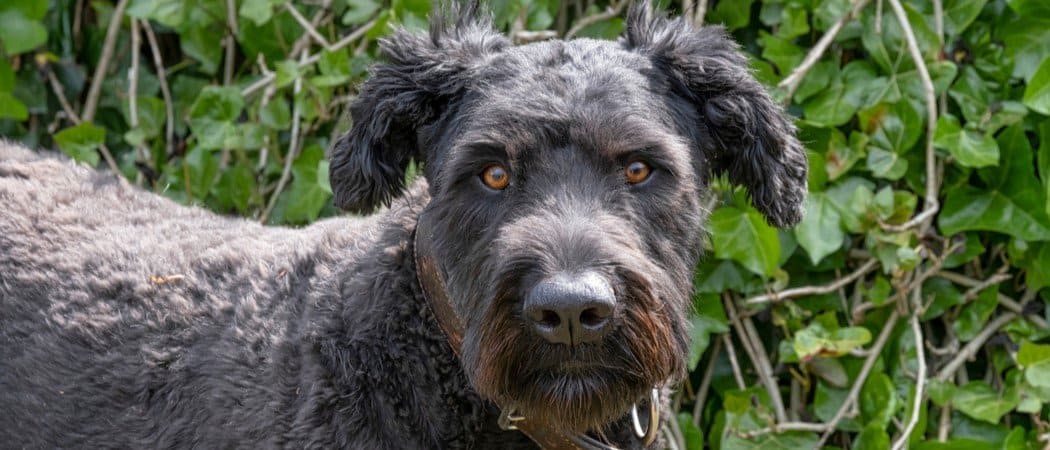
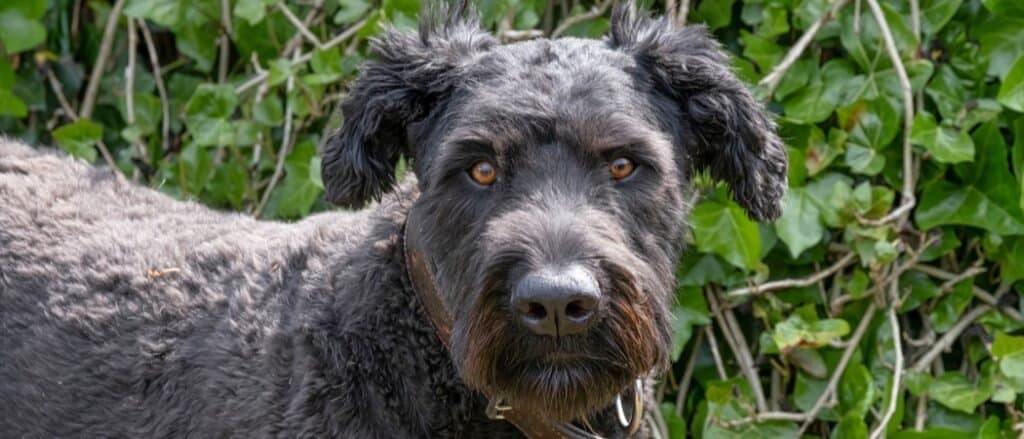
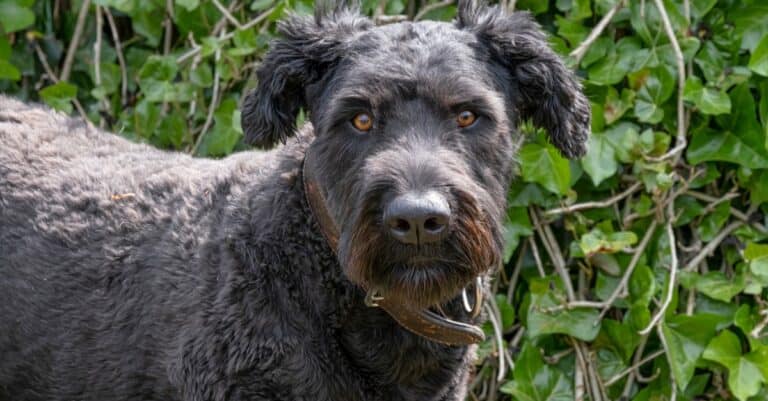
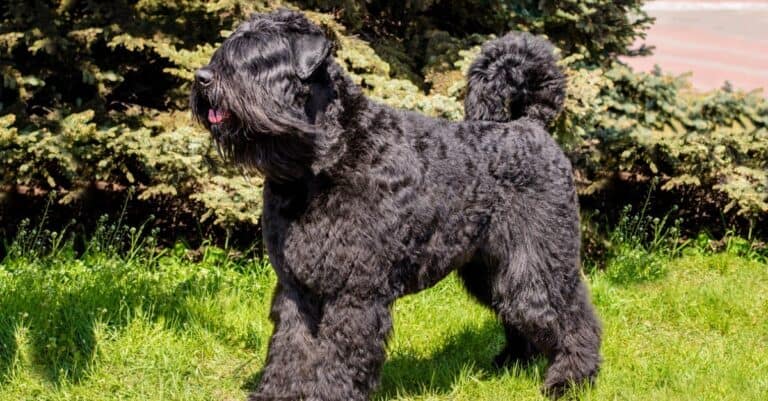
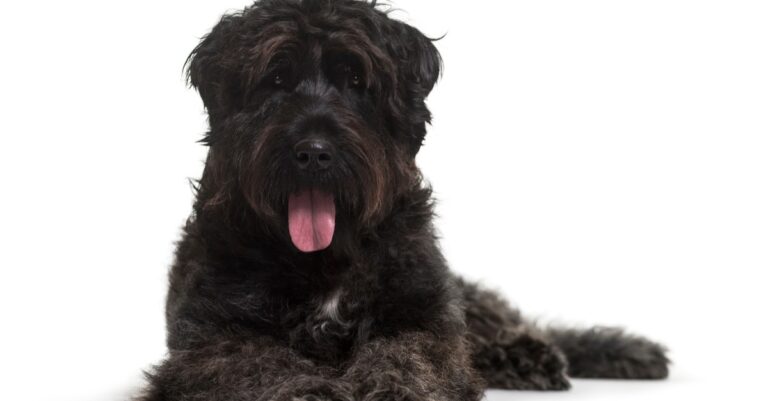
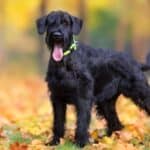
The Bouvier des Flandres (pronounced “boo-vee-ay duh Flan-derz”) is a Flemish herding dog characterized by a powerful, compact body, a huge head, drooping ears, and a short tail. The long, shaggy double coat, which consists of a very rough outer coat and a softer undercoat, can be fawn, brindle, black, gray, or blonde. A particularly prominent beard and mustache complete the look.

3 Pros and Cons of Owning a Bouvier des Flandres
| Pros! | Cons! |
|---|---|
| Friendly and Loyal The Bouvier is a gentle, people-oriented dog. | High Physical Needs The Bouvier can be a whirlwind of activity. |
| Hard-working and Relentless This breed has a strong working drive. | Strong Herding Instincts This breed will herd anything and everything if you let it. |
| Versatile The Bouvier des Flandres is able to learn lots of different tasks. | May Require Clipping The long coat may need to be trimmed on occasion. |
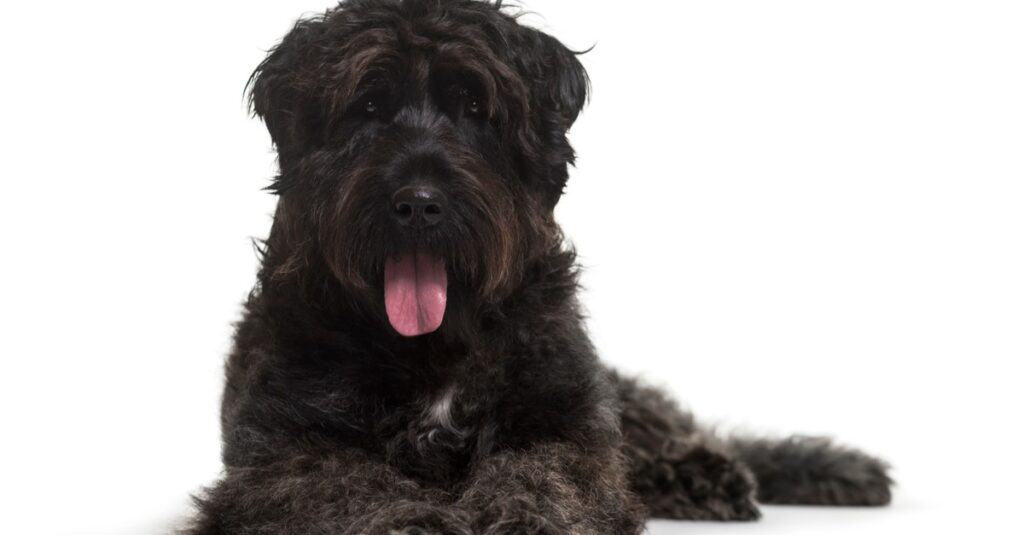
The Bouvier des Flandres is a gentle, friendly, and loyal breed.
©Eric Isselee/Shutterstock.com
Evolutions and Origins
This breed may have arisen in medieval times from crosses between European hounds and local farm dogs. Today, Flanders refers to the Dutch-speaking part of northern Belgium, but at the time of the dog’s development in the Middle Ages, the region straddled the border between France and the Holy Roman Empire. Because of this tangled history, both France and Belgium can claim it as a native breed.
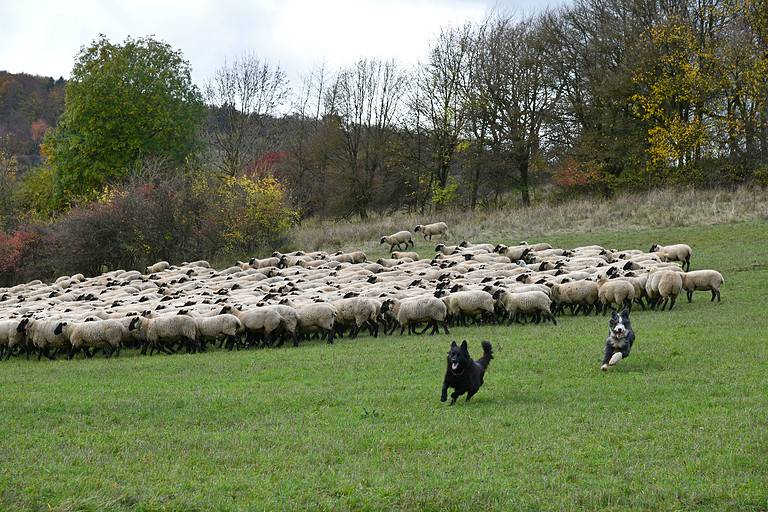
This versatile dog has historically played many different roles. It was originally developed to help farmers herd sheep, drive cattle, pull carts, and act as a watchdog to guard the property. It was later adopted for police work, search and rescue operations, guiding the disabled, and as an overall household companion.
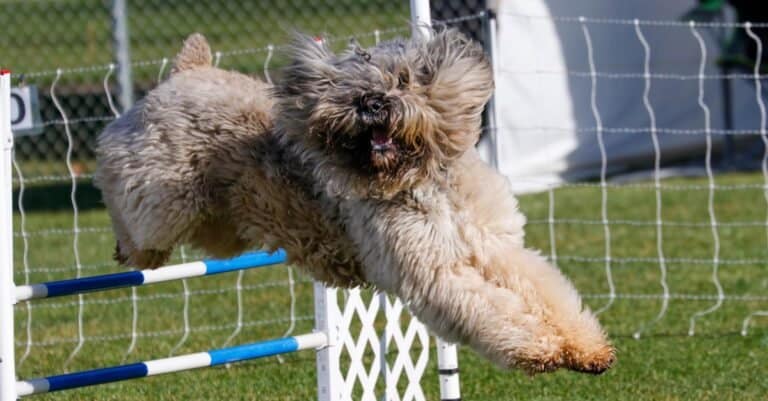
During World War I, when the fields of Flanders became a scarred and bloody battlefield, this breed earned a distinguished record as a trench dog, carrying messages and pulling ambulance carts. Unfortunately, the combat took its toll and nearly drove the breed to extinction. In 1936, a joint French-Belgian committee created the first unified Bouvier des Flandres standard, and that standard can be traced to a trench dog known for being an ideal type named Nic de Sottegen. He did well in many dog shows after the war. The breed again fell on hard times during World War II, but its fortunes improved greatly after the war, thanks to the efforts of dedicated breeders. Although it took awhile, the Fédération Cynologique Internationale (FCI) adopted the current breed standard in 1965. It is now a popular breed in dog sports, particularly in agility, obedience, and herding trials.
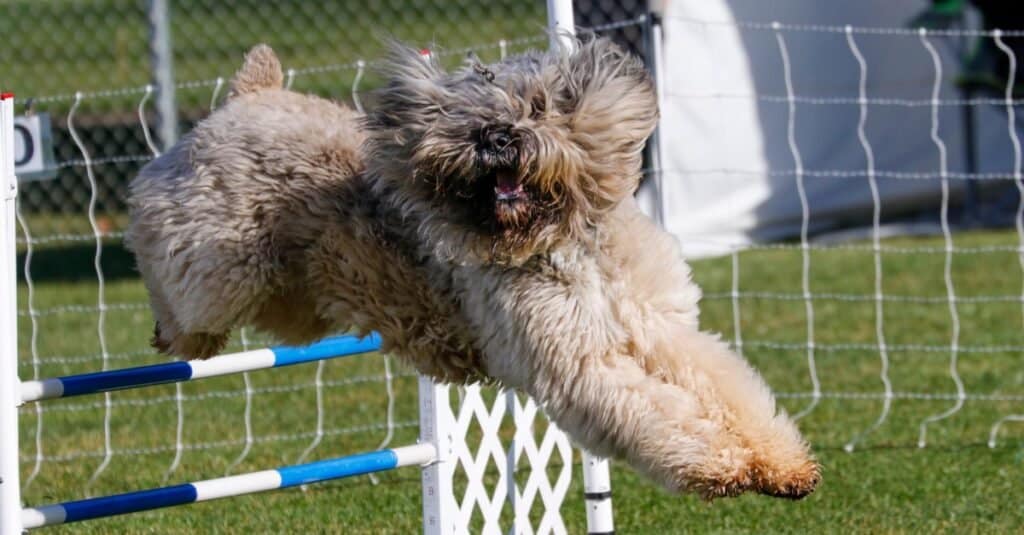
Bouvier des Flandres dogs perform well in agility trials.
©GoDog Photo/Shutterstock.com
Size and Weight
The Bouvier des Flandres is a large dog; while it isn’t very long, it’s certainly tall and muscular. Unfortunately, the accepted standard does not allow for miniature Bouviers, but it may be possible to produce a miniature version through crossbreeding. The Beagle and the miniature Poodle are both good candidates for crosses.
| Height (Male) | 24.5 to 27.5 inches |
| Height (Female) | 23.5 to 26.5 inches |
| Weight (Male) | 70 to 110 pounds |
| Weight (Female) | 70 to 110 pounds |
Common Health Issues
The Bouvier has a decent lifespan of around 10 to 12 years, but it is particularly susceptible to a list of different health conditions, including deafness, glaucoma, myopathy (muscle weakness), cataracts, hypothyroidism, and cancer. There is also a chance it may inherit some rarer disorders. Laryngeal paralysis is an upper respiratory problem caused by the degeneration of muscles and nerves. Subaortic stenosis is an obstruction in the blood flow caused by the narrowing of a heart valve. Hip and elbow dysplasia result in the joints slipping loose from the socket.
Bloating, which affects many deep-chested dog breeds, is caused by a buildup of gas in the stomach; this potentially life-threatening condition twists and expands the stomach to dangerous degrees. Symptoms include abdominal swelling, excessive salivation, and vomiting or retching. If this occurs, seek medical attention immediately. It is possible to improve your dog’s chances at a happy, healthy life by making sure the breeder has done the necessary tests to ensure that their stock is free of known heritable issues.
Regular checkups at the vet are also necessary to catch health problems early.
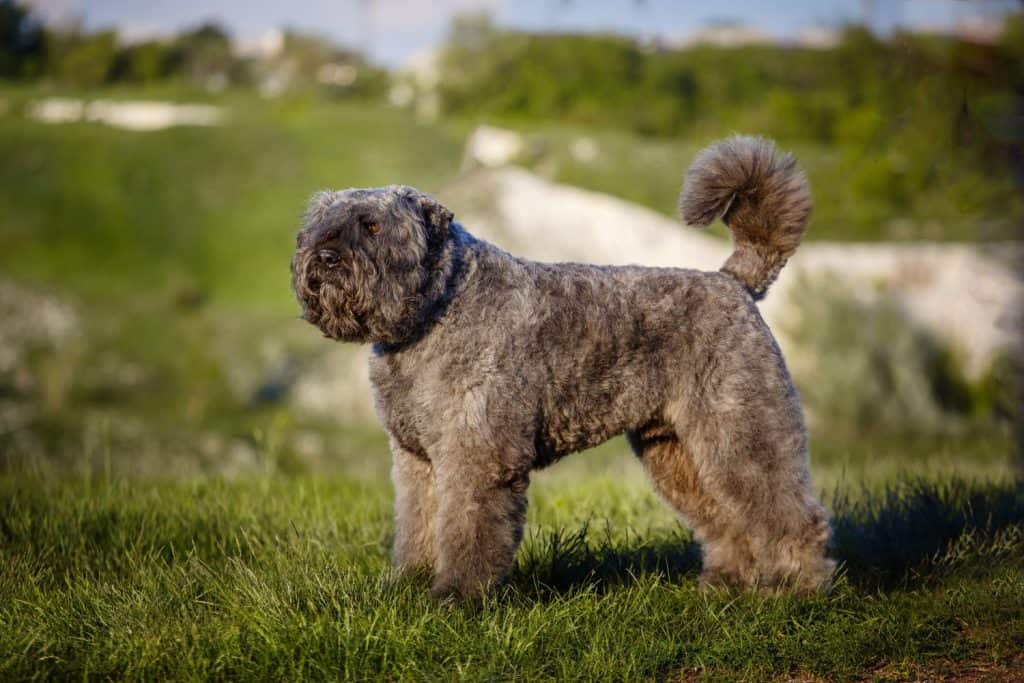
The Bouvier is susceptible to common health issues as well as some rarer ones.
©Tatyana Kuznetsova/Shutterstock.com
Temperament
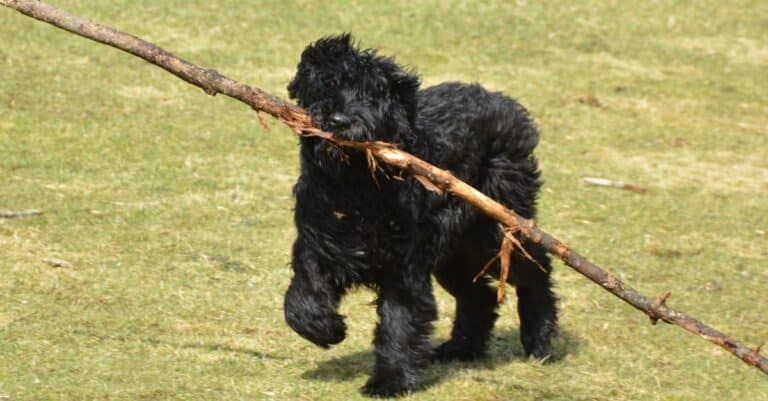
The Bouvier has an all-around good temperament; it is fairly affectionate, playful, gentle, loyal, and devoted to the family. But despite its friendly personality, this breed is most satisfied when it has a job to do. It loves games, problem-solving activities, and physically challenging tasks. You will need to be particularly creative in the kinds of activities you do with your dog. If left alone for too long without any sense of direction, there is a chance it could turn into destructive behavior.
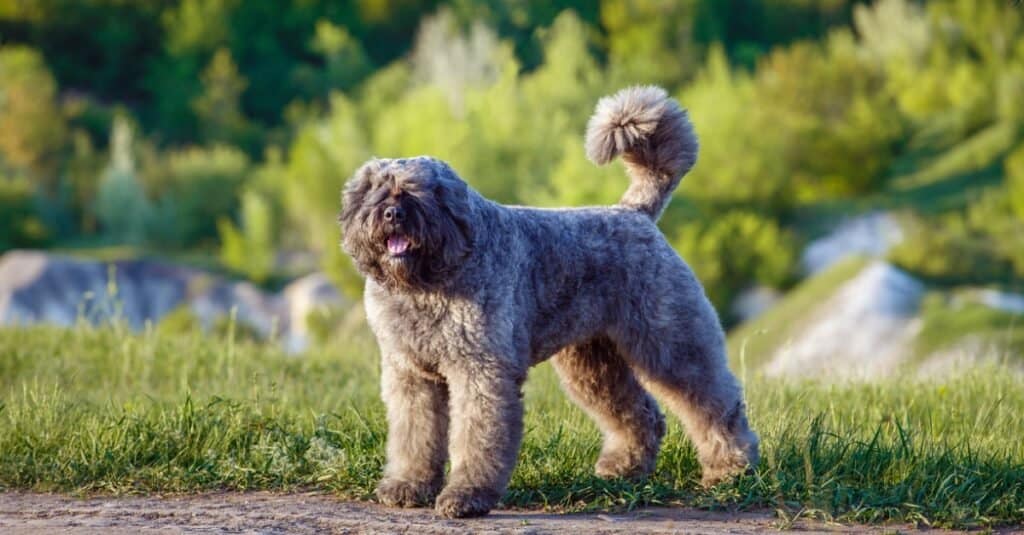
This breed loves games and physically challenging tasks.
©iStock.com/~User7565abab_575
How to Take Care of the Bouvier des Flandres
Despite its pleasant, even-tempered personality, the Bouvier probably isn’t a good choice for casual dog owners. This breed requires someone who can keep up with its frenetic whirlwind of activity and exercise. While it can adapt to smaller homes and apartments, this breed will need plenty of outdoor space to run and play.
The Best Dog Food for the Bouvier des Flandres
The Bouvier will need a few cups of high-quality dog food every day, preferably lower in protein than the typical dog food. The exact amount of food will depend on the dog’s age, activity level, and size. Since this breed is unfortunately prone to bloating, you should divide up the meals into a few per day. Both commercially made and homemade meals are acceptable.
Maintenance and Grooming
Despite the very thick coat of fur, the Bouvier needs to be brushed probably no more than once or twice a week with a simple brush and comb; special attention should be paid to the beard. This breed does shed a moderate amount (it is not hypoallergenic), but most of the hair will be caught up within the double coat, causing it to mat. The Bouvier should be ideally trimmed once every month or two, especially if you intend to exhibit it on the dog show circuit.
Owners may also need to trim the nails on occasion to prevent them from cracking or clicking on the floor. Brush the teeth on a regular basis to prevent gum and tooth disease. Finally, check the ears for signs of infection and then clean them out.
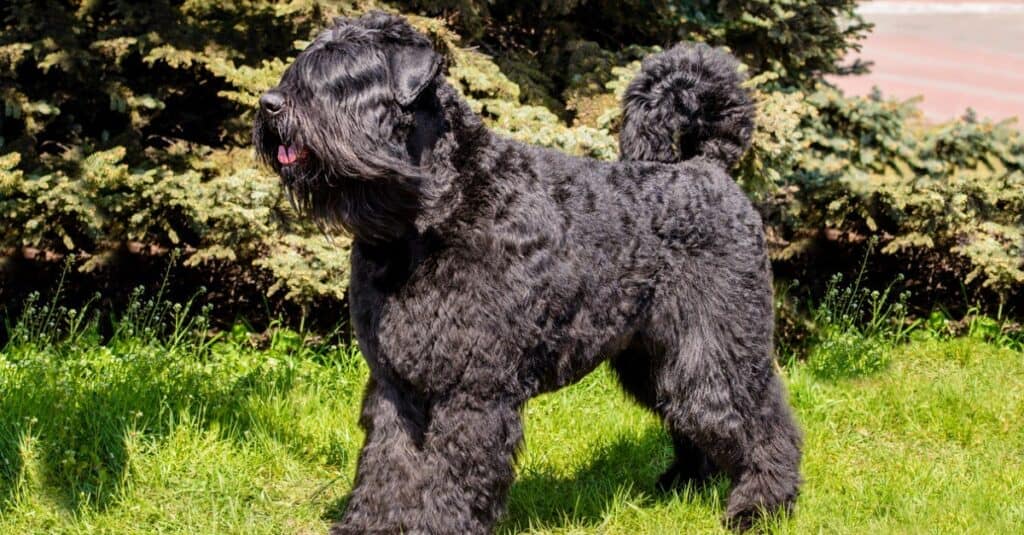
Even though Bouvier des Flandres dogs have thick coats, they only need to be brushed 1-2 times per week.
©iStock.com/volofin
Training
The Bouvier is extremely eager to please its owner and follow commands. Its strong-willed and relentless nature is easily channeled into positive directions. Some gentle guidance and patience are all that’s required to get the most out of it.
Exercise
The Bouvier probably needs at least an hour of exercise per day in the form of long walks, vigorous hiking, jogging, and even accompanying a biking owner. This breed also excels at agility trials, tracking, herding events, obedience challenges, and general showmanship. It might be a good idea to have a large and enclosed yard where the dog can run around freely for a time. Since it does have a strong herding drive, you should be careful about letting it off the leash.
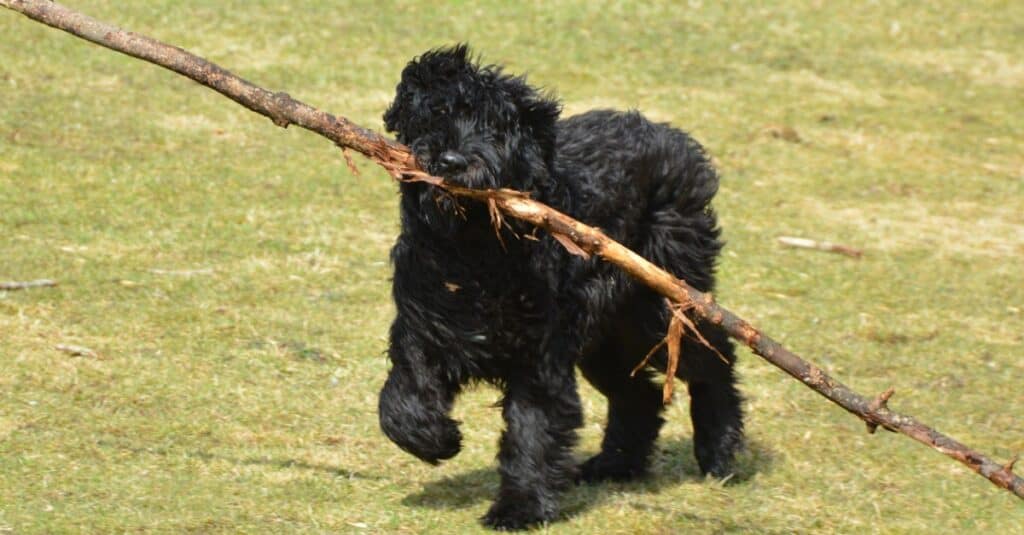
Bouvier des Flandres dogs need at least an hour of exercise daily.
©iStock.com/Carol Hamilton
Puppies
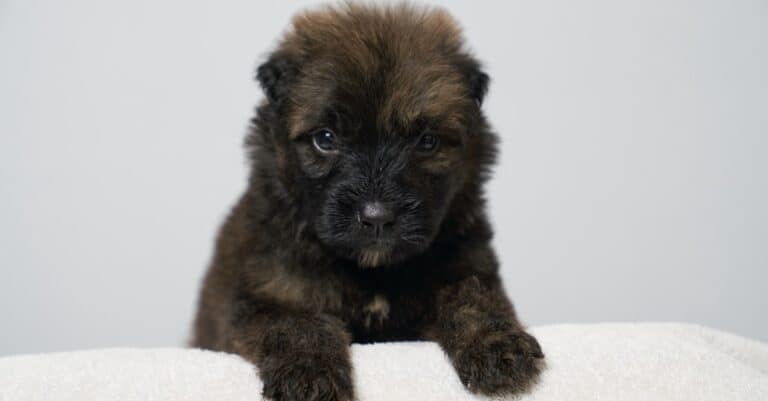
Bouvier puppies need to be trained and socialized from the earliest possible age. Doggie daycare/kindergarten, dog parks, play dates, and training classes can all help to shape puppies into well-behaved adults. Some of their herding instincts are endemic and built in, but they can be controlled with enough careful training and guidance. If you’re not careful, you might find the dog herding people as well as animals.
Crate training, while not strictly necessary, can help with housebreaking and behavioral issues, both as a puppy and throughout the dog’s entire life. Another important thing to keep in mind is that exercise should be limited in duration and intensity until the puppy matures at around two years of age.
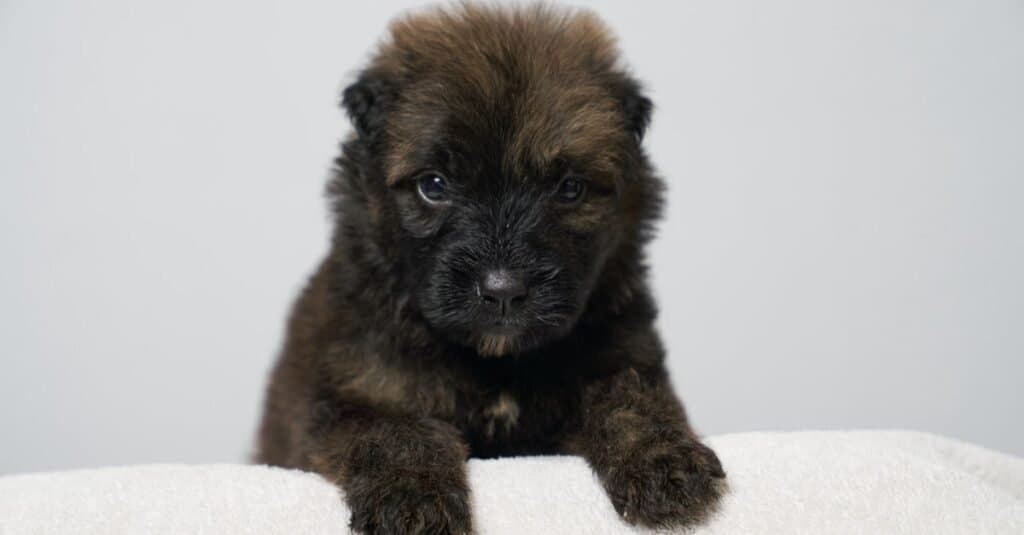
Bouvier puppies should be socialized and trained from an early age.
©Bridgemont Photography/Shutterstock.com
The Bouvier des Flandres and Children
The Bouvier will get along fairly well with children of all ages. It is loyal, protective, and gentle with them. But you should never leave your dog alone with children unless there’s an adult present, just in case you need to intervene.
Dogs Similar to the Bouvier des Flandres
The Bouvier most closely resembles herding dogs from the same region.
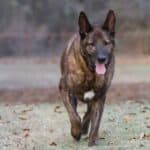
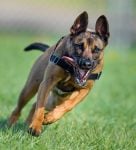
- Belgian Shepherd: This medium-sized herding dog is found in four varieties based on its coat length and color: the long-haired black Groenendael, long-haired fawn Tervuren, rough-haired fawn Laekenois, and short-haired fawn Malinois. These dogs are very intelligent, alert, hard-working, loyal, and protective.
- Berger Picard: Also known as the Picardy Shepherd, this medium-sized French herding dog has a rough coat with fawn or brindle hair. The breed is very easy-going and good-natured, but can be somewhat reserved around strangers.
- Bearded Collie: This Scottish herding dog has a kind and gentle temperament and is known for its long, flowing double coat of black, blue, brown, fawn, or white fur.
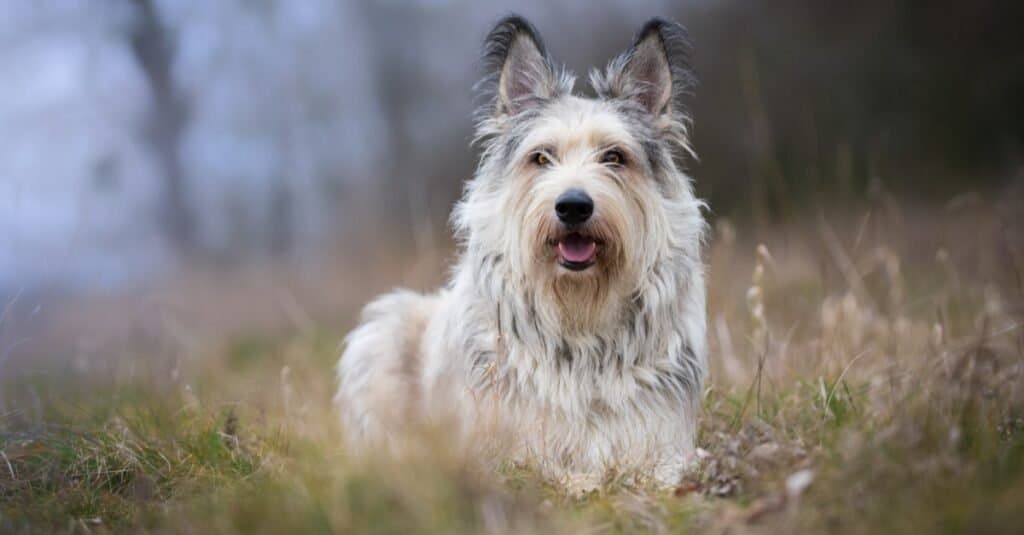
The Berger Picard is a herding dog like the Bouvier Des Flandres.
©TMArt/Shutterstock.com
Famous Bouvier des Flandres Dogs
Perhaps the most famous Bouvier ever was Lucky, the pet of President Ronald Reagan and Nancy Reagan when they were in the White House during his second term. Nancy Reagan named the dog after her mother, Edith Luckett Davis. This breed has also made minor appearances in films and TV shows.
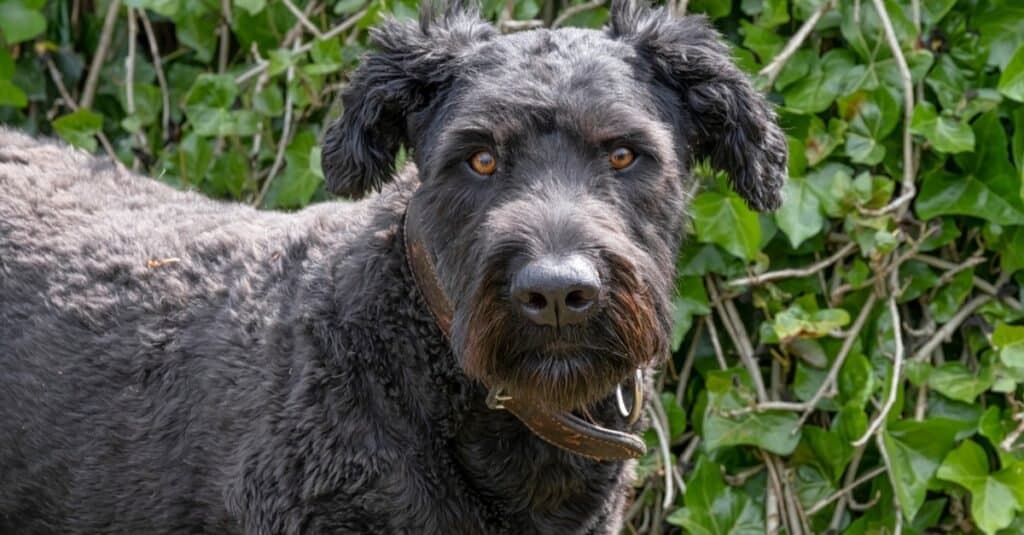
The Bouvier des Flandres has appeared on TV series and in movies.
©DasyaDasya/Shutterstock.com
Bouvier Des Flandres Pictures
View all of our Bouvier Des Flandres pictures in the gallery.

DasyaDasya/Shutterstock.com
Sources
- American Kennel Club / Accessed September 24, 2021
- American Kennel Club / Accessed September 24, 2021