
M
Species Profile

Maltese Shih Tzu

Canis lupus familiaris

Tiny friend, big heart.
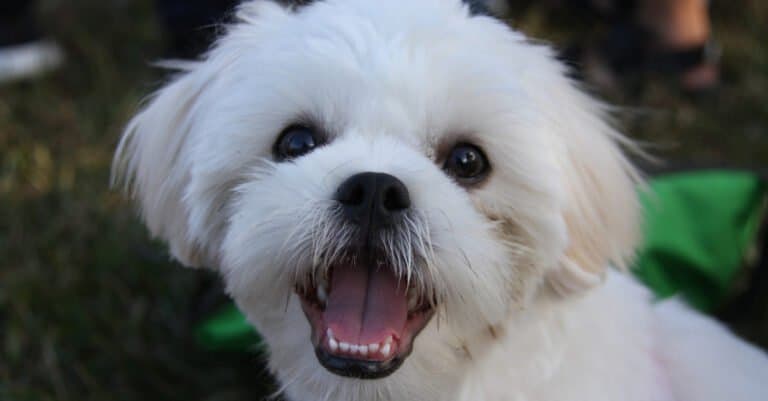
Ashley Swanson/Shutterstock.com

Maltese Shih Tzu Distribution

Click a location to explore more animals from that region

Origin Location

This map shows the native origin of the Maltese Shih Tzu. As a domesticated species, they are now found worldwide.

Loading map...

Found in 1 state/province

Size Comparison

Human 5'8"
Maltese Shih Tzu 10 in

Maltese Shih Tzu stands at 14% of average human height.

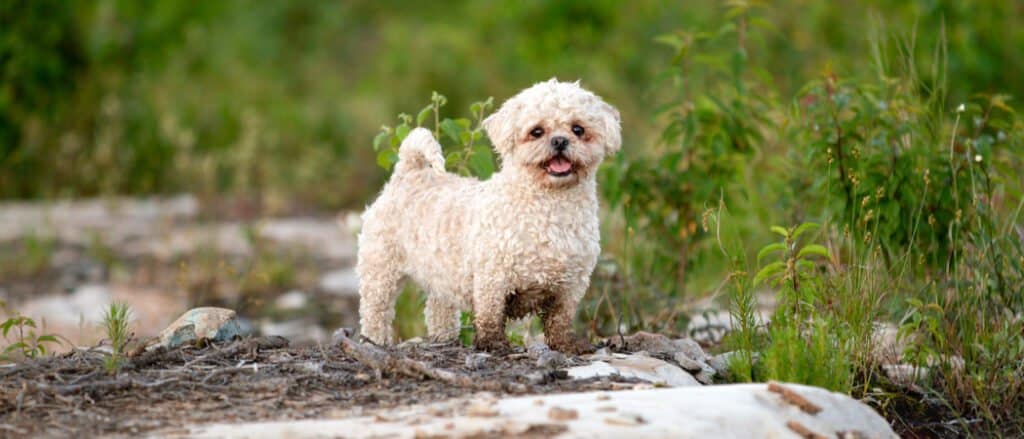
Maltese Shih Tsu mix

At a Glance

Domesticated
Also Known As Mal-Shi, Mal Shi, Maltese Shih Tzu mix, Maltese Shih Tzu cross, Maltese Shih Tzu hybrid
Diet Omnivore
Activity Diurnal+
Lifespan 13 years
Weight 8 lbs
Status Not Evaluated
Did You Know?

"Malshi" is a portmanteau: Maltese + Shih Tzu; it's a crossbreed, not a standardized kennel-club breed.

Scientific Classification

A small companion dog commonly produced by crossing a Maltese with a Shih Tzu; typically kept as a pet rather than for working roles. Often described as a “designer dog” mix rather than a formally standardized pure breed.

Kingdom
Animalia
Phylum
Chordata
Class
Mammalia
Order
Carnivora
Family
Canidae
Genus
Canis
Species
Canis lupus

Distinguishing Features

  • Small toy-sized companion dog
  • Coat often long, silky to wavy; may be low-shedding but requires regular grooming
  • Facial features can include a shortened muzzle (more Shih Tzu-like) with potential brachycephalic tendencies
  • Common colors include white/cream, tan, black, or mixed patterns depending on parentage

Physical Measurements

Males and females differ in size

Height
11 in (10 in – 12 in)
10 in (8 in – 12 in)
Length
1 ft 7 in (1 ft 4 in – 1 ft 9 in)
1 ft 5 in (1 ft 1 in – 1 ft 9 in)
Weight
12 lbs (9 lbs – 15 lbs)
10 lbs (6 lbs – 14 lbs)
Tail Length
5 in (4 in – 6 in)
5 in (3 in – 6 in)
Top Speed
14 mph
running

Appearance

Primary Colors
Secondary Colors
Skin Type Thin, sensitive canine skin beneath a long, low-shedding coat; prone to dryness and irritation if over-bathed.
Distinctive Features
  • Domestic dog crossbreed (Maltese × Shih Tzu) within Canis lupus familiaris; selectively bred for companion size and temperament rather than survival traits.
  • Toy companion size with compact body, short-to-moderate muzzle, and large round eyes; less wolf-like proportions than the base species.
  • Coat is long and silky to wavy; lower-shedding but not hypoallergenic for everyone; matting is common without routine brushing.
  • Color and coat texture vary widely between individuals due to mixed parentage; frequent tear staining visible on light coats.
  • Face may trend brachycephalic (Shih Tzu influence): potential noisy breathing, heat intolerance, and exercise limits in hot/humid weather.
  • Common health concerns: dental crowding/periodontal disease, patellar luxation, eye irritation/ulcers, ear infections (hairy canals), and skin allergies.
  • Care needs: daily brushing or a short "puppy cut," regular eye/tear cleaning, routine dental care, and frequent ear checks/grooming.
  • Typically people-oriented with "lap dog" posture and carried tail; suited to indoor living with moderate daily activity.

Sexual Dimorphism

Sexual dimorphism is mild. Males are usually slightly larger and more robust in head/neck, while females often appear a bit finer-boned; coat length and coloration are not consistently sex-linked.

  • Slightly larger average weight and shoulder height
  • Broader chest/neck in some individuals
  • May show more pronounced facial furnishings in a few lines
  • Slightly smaller, finer-boned build
  • Narrower head and chest on average
  • Often appears more lightly framed at the waist

Did You Know?

"Malshi" is a portmanteau: Maltese + Shih Tzu; it's a crossbreed, not a standardized kennel-club breed.

Many Malshis inherit a soft, continuously growing coat-more like human hair-so haircuts are common.

Coat and face shape vary widely even within one litter, reflecting mixed parental traits.

They're typically bred for companionship, not a working job-an example of how domestication shaped dogs for human social roles.

Small size makes them popular apartment dogs, but they still benefit from daily play and short walks.

Some individuals inherit the Shih Tzu's shorter muzzle, which can affect breathing and heat tolerance.

They can be "people shadows": strongly bonded to their family and often happiest near a person.

Unique Adaptations

  • Companion-selected temperament: generations of toy breeds selected for sociability and tolerance of close human contact.
  • Coat traits that reduce loose shedding in many individuals (though not hypoallergenic); hair can trap dander until brushed.
  • Toy-dog energy economy: relatively low exercise requirement compared with many working-line dogs, yet still needs daily activity for health.
  • Small body size suited to indoor living; can get adequate enrichment through short walks, training games, and scent play.
  • Potential brachycephalic tendency (from Shih Tzu) in some dogs-shorter skull can change airflow and heat exchange, requiring climate-aware care.
  • Highly responsive to positive reinforcement and attention-based rewards, reflecting human-directed social cognition typical of domestic dogs (Canis lupus familiaris).

Interesting Behaviors

  • Velcro-dog behavior: following favorite people from room to room and seeking lap time.
  • Alert "watchdog" barking at door sounds despite toy size; can improve with calm greetings training.
  • Play bursts ("zoomies") indoors, then quick relaxation-common in toy companion dogs.
  • Face-licking and "snuggling into crooks of elbows/blankets," reflecting strong affiliative bonding.
  • Potential separation-related behaviors (whining, pacing) if left alone for long periods; benefits from gradual alone-time training.
  • Digging or "nesting" in bedding-common comfort behavior in small companion dogs.
  • Preference for routine (meal times, bedtime), which can reduce anxiety and nuisance barking.

Cultural Significance

Malshis are a modern "designer dog" mix of Maltese and Shih Tzu. They show dogs moving from working roles to pets for company, popular in cities and apartments, often seen as small, groomed indoor family dogs on social media.

Myths & Legends

In Chinese palace stories, small "lion dogs" like the Shih Tzu link to Buddhist lion symbols and were palace companions, seen as tiny guardians with lion-like hair and bold, protective spirit.

A long-told Maltese tradition links the breed to Mediterranean seafaring-kept as beloved shipboard companions and ratters-feeding romantic tales of tiny white dogs traveling with merchants across ancient ports.

In Europe, lapdogs were called 'comforter dogs' and thought to warm the body and lift sadness; small toy dogs in noble homes were treated like living charms that gave comfort and showed status.

Old stories often mixed 'Maltese' with other small white lapdogs. In old accounts, the name hinted at a Mediterranean origin as much as a true breed identity, adding mystery to the little white companion.

Modern anecdotal "origin stories" for Malshis often frame them as intentionally bred to blend Maltese sweetness with Shih Tzu sturdiness and charm-part of contemporary pet-world storytelling around designer mixes.

Conservation Status

NE Not Evaluated

Has not yet been evaluated against the criteria.

Population Stable

Life Cycle

Birth 3 pups
Lifespan 13 years

Lifespan

In the Wild
12–14 years
In Captivity
10–18 years

Reproduction

Mating System Polygyny
Social Structure Managed Domestic
Breeding Pattern Serial
Fertilization Managed Selective
Birth Type Managed_selective

In Malshi, reproduction is typically human-managed: owners/breeders pair selected adults during the female's heat, often using popular studs across multiple females. Pair bonds are brief; maternal care is primary, with humans providing support.

Behavior & Ecology

Social Family Group: 3
Activity Diurnal, Crepuscular, Cathemeral
Diet Omnivore High-protein, highly palatable small-breed formulations (e.g., chicken or turkey-based kibble/wet food)

Temperament

Affectionate, people-oriented companion; more dependent on humans than the base species (wolf).
Playful and social; generally friendly with visitors, but can be reserved without early socialization.
Alert and vocal; may bark at noises/strangers (small-dog watchdog tendency).
Many show strong attachment and lap-dog behavior; variation from confident/outgoing to timid/clingy.
Can develop separation distress if under-stimulated; benefits from routine, enrichment, and gradual alone-time training.
Moderate exercise needs; short bursts of play plus walks suit their small size and endurance.
Possible stubbornness; responds best to gentle, reward-based training and consistent boundaries.
Handling-sensitive around face/eyes; positive grooming conditioning reduces stress and nipping risk.
Breed-mix health tendencies affecting behavior/care: dental crowding, patellar luxation, allergies/skin itchiness.
Care requirements: daily coat brushing (often low-shedding), regular eye/ear cleaning, frequent dental care.
Heat sensitivity in shorter-muzzled individuals; avoid strenuous activity in hot/humid conditions.
May be prone to tear staining/eye irritation (Shih Tzu influence); comfort-seeking and pawing at face may increase.

Communication

High-pitched alert barking for door/noise stimuli
Whining/whimpering to solicit attention or when anxious
Play yips during rough-and-tumble games
Low growl when resource-guarding or uncomfortable with handling
Soft grunts/snorts in shorter-muzzled individuals, especially at rest
Intense eye contact and following/"velcro" shadowing to maintain proximity
Pawing, licking, and leaning to solicit contact High tactile affiliation
Tail wagging with whole-body wiggle when greeting trusted people
Play bows and bouncy approach/retreat during play initiation
Lip-licking, head turns, and freezing as subtle stress signals during grooming or restraint
Scent marking and sniffing routines on walks, though typically less extensive than working breeds
Rubbing face on furniture/paws at eyes if irritated; can signal grooming/eye-care needs

Habitat

Biomes:
Temperate Forest Temperate Rainforest Temperate Grassland Mediterranean Tropical Rainforest Tropical Dry Forest Savanna Desert Hot Desert Cold Boreal Forest (Taiga) Tundra Alpine Freshwater Wetland Marine +9
Terrain:
Plains Hilly Coastal Valley Mountainous
Elevation: Up to 16404 ft 3 in

Ecological Role

Domesticated companion omnivore; minimal wild predation, primarily human-supported consumer in household ecosystems.

companionship and social support to humans limited pest deterrence/pest control (alerting/chasing small rodents) nutrient cycling via waste in managed urban/suburban environments (requires responsible disposal)

Diet Details

Main Prey:
Small rodents Small birds Insects and other small invertebrates
Other Foods:
Starchy plant foods Vegetables Fruit Grasses and plant matter

Human Interaction

Domestication Status

Domesticated

Canis lupus familiaris (domestic dog) comes from the gray wolf and was shaped by humans for tameness, ease of training, and roles. The Malshi (Maltese × Shih Tzu) is a modern companion mix, bred small, friendly, often with a low-shedding coat. Malshis are indoor pets that get lots of handling, grooming, walks and vet care.

Danger Level

Low
  • minor bite risk if fearful, poorly socialized, or handled roughly (small jaw but still capable of injury)
  • tripping/fall hazard due to small size underfoot
  • allergies/asthma triggers from dander/saliva (often marketed as "hypoallergenic," but no dog is truly hypoallergenic)
  • zoonotic/parasite risks typical of pet dogs without proper preventive care (e.g., fleas/ticks, intestinal parasites, ringworm)
  • behavioral issues that affect human interaction if unmet needs occur (separation anxiety, nuisance barking)

As a Pet

Suitable as Pet

Legality: Generally legal to own as a pet in most jurisdictions; typically subject only to standard dog regulations (licensing, vaccination, leash laws, housing rules). Restrictions are usually not breed-specific for Malshis, but local ordinances, landlord/HOA policies, and import/quarantine rules can apply.

Care Level: Moderate

Purchase Cost: $100 - $2,500
Lifetime Cost: $15,000 - $40,000

Economic Value

Uses:
Companion animal/pet trade (designer cross puppies) Veterinary care (routine + breed-typical issues: dental, eyes, joints, airway) Professional grooming (high frequency for longer coats) Pet supplies (diet, crates, carriers, toys, hygiene products) Training/behavior services (house-training, separation-related behaviors) Pet insurance and preventive care plans
Products:
  • puppies (breeder sales) and adoptions/rehoming
  • grooming services (haircuts, bathing, dematting, sanitary trims)
  • preventive veterinary services (vaccines, parasite control, spay/neuter)
  • dental cleanings and home dental care products
  • specialty diets and treats (weight management, sensitive stomach/skin)
  • travel/portable gear (small-dog carriers, strollers in some cases)

Relationships

Ecological Equivalents 8

Animals that fill a similar ecological role in their ecosystem

Maltese
Maltese Canis lupus familiaris One parent breed; occupies the small companion/toy niche and often has a low-shedding coat. Compared with the wild-type canid baseline, selective breeding emphasizes companionship, reduced body size, and reduced predatory and territorial behaviors.
Shih Tzu
Shih Tzu Canis lupus familiaris One parent breed; a brachycephalic-leaning toy companion. In Malshi mixes, this influence can increase the risk of airway and eye issues relative to the broader domestic dog population.
Havanese
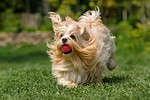
Havanese Canis lupus familiaris Similar size and primary role as an indoor companion. Often compared for friendly temperament and coat-care needs; both typically require routine grooming and dental hygiene.
Bichon Frise
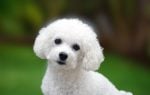
Bichon Frise Canis lupus familiaris Comparable companion niche and grooming requirements. Both can be prone to tear staining and require frequent coat maintenance to prevent matting.
Lhasa Apso
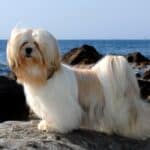
Lhasa Apso Canis lupus familiaris Small companion/dwelling-dog niche with long-coat grooming demands; may share tendencies toward alert barking and sensitivity to separation.
Toy Poodle
Toy Poodle Canis lupus familiaris Overlapping niche as a small companion and often sought for low-shedding coats. Like the Malshi, may require consistent grooming, training for house manners, and proactive dental care.
Cavapoo
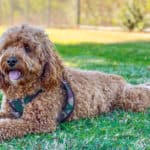
Cavapoo Canis lupus familiaris Another popular companion designer mix with similar owner expectations (affectionate pet, moderate exercise). Highlights the same mix-specific variability in size, coat type, and health risks compared with standardized purebred lines.
Domestic cat
Domestic cat Felis catus Shares the human-household companion niche in many environments and ecologically overlaps as a small, indoor-associated predator of pests, but differs in having an obligate carnivorous diet and different typical activity patterns.

The origins of the Maltese Shih Tzu date back to the 1990s. Most of these dogs are the result of first-generation crosses, but there are second and third-generation crosses as well. The Maltese Shih Tzu (also known as the Mal-shi) is a mix of two popular toy breeds: the Maltese and the Shih Tzu. Together, these two breeds synergize well with each other, creating a unique composite dog.

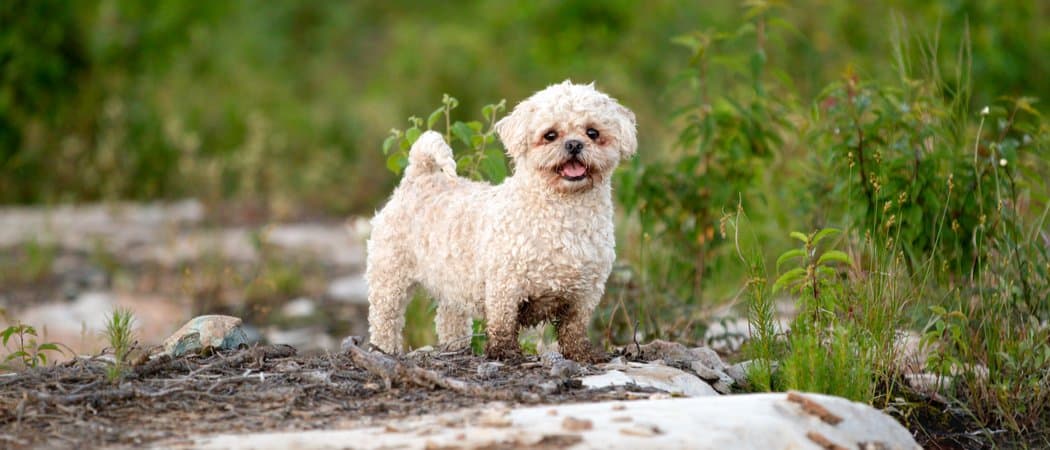
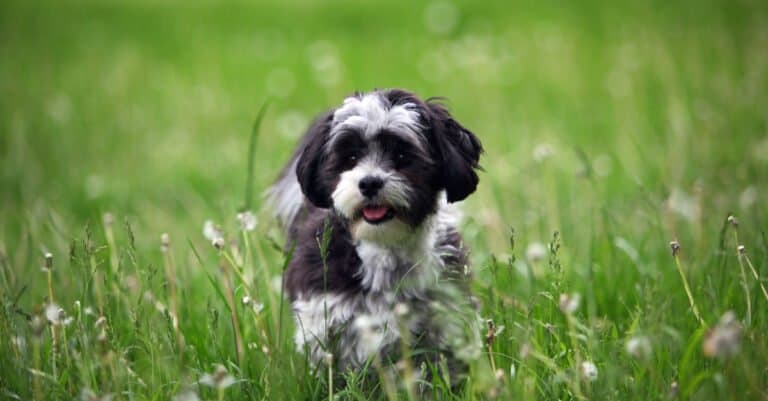
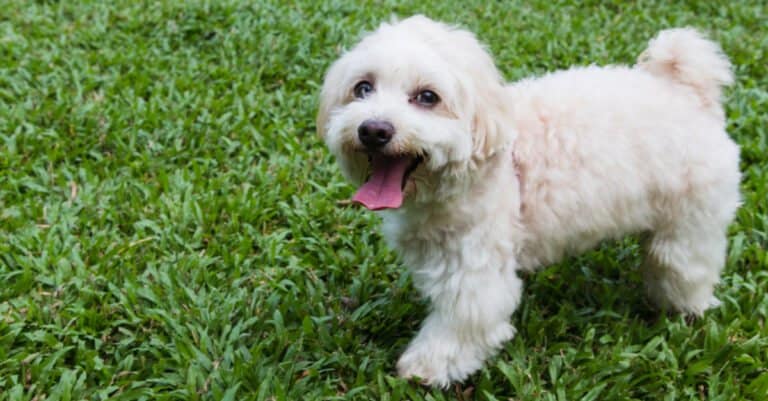
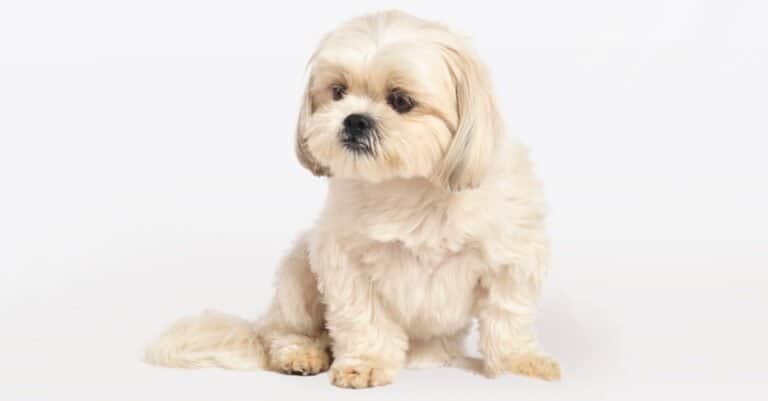
This interesting fusion is also reflected in its physical characteristics. The hybrid breed is characterized by rounded eyes, drooping ears, a triangular nose, a curled tail, and a very thin frame. It has a long, straight, silky white coat, sometimes punctuated with tan, black, or brown markings. The coat is often described as very pleasant to the touch. Because of their small size and excellent manners, they are considered to be exceptional companions for the entire family.

3 Pros and Cons of Owning a Maltese Shih Tzu

Pros!Cons!
Calm and Friendly: An excellent family dog for just about any living situation.Fragile: The Maltese Shih Tzu has a tiny, fragile body and should be treated with care.
Light Shedder: Despite its long coat of hair, this crossbreed dog doesn’t shed very much.Poor Strength and Endurance: If you desire a strong exercise companion or work dog, this probably isn’t the right breed for you.
Easy to Train: This breed is very eager to please its owner.Coat Care: Owners should expect to spend a lot of time grooming their luxurious coats.
Mal Shi

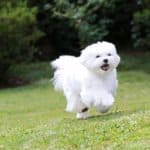
The Maltese Shih Tzu is an adorable breed that is eager to please.

Evolution and History

The Maltese Shih Tzu was introduced in the 1990s by breeders motivated to develop a toy dog that did not shed too much, had a friendly temperament, and would make a good companion. The Maltese and Shih Tzu were suitable choices as parent breeds because both are the same small size, and therefore, which breed was the sire or the dam was not an issue.

The Maltese is a graceful, long-haired breed whose origins date back thousands of years to the ancient world. While some believe that these dogs could have originally been from Sicily, southern Europe, or Egypt, many consider Malta to be where they were first developed. It’s thought that they could have been present following the colonization of Malta by the Phoenicians circa 1,000 BCE, and used to assist in keeping food on Phoenician ships free of rodents or even traded, while Maltese women used the dogs as companions or “comforters.” By the mid-1800s, the breed was popular as a pet in the U.K. and U.S. and a frequent competitor at dog shows.

Originating in Tibet and revered by Buddhists, the Shih Tzu’s lineage can be traced back at least 1,000 years. It is thought to have been developed from breeding the Pekingese with the Lhasa Apso, and was once exclusively owned by Chinese royalty, who prized them as pets and to warm their beds and feet. Anyone caught with one outside of the royal courts during the Ming and Manchu dynasties could have been sentenced to death. Shih Tzu means “little lion” in Mandarin, and it was also referred to as the “chrysanthemum dog” after being brought to England in the 1930s. These dogs came to the U.S. after World War II ended, when U.S. soldiers returned home with them from Europe and Asia.
Emotional Support Animals

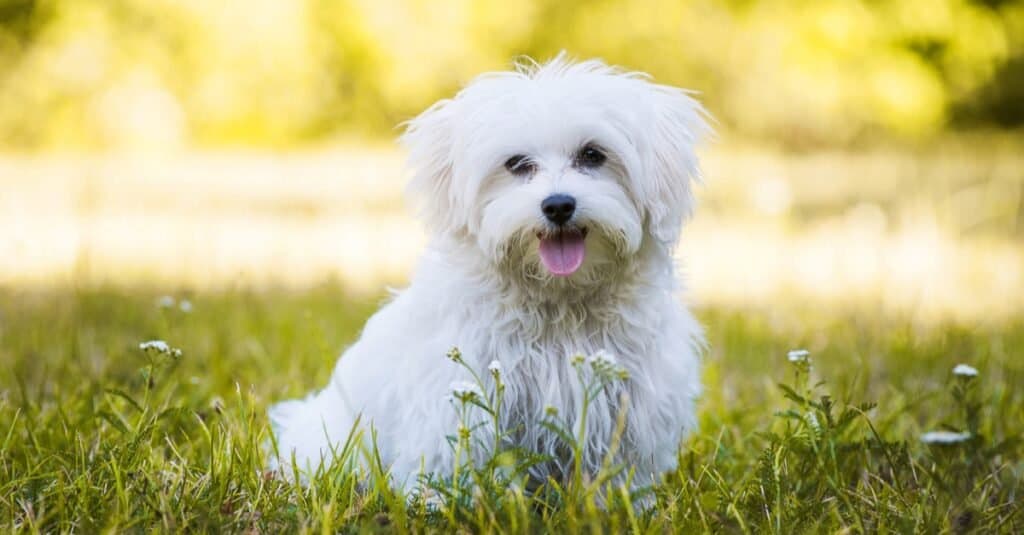
The Maltese, parent breed of the Maltese Shih Tzu, is graceful and long-haired.

Size and Weight

The Maltese Shih Tzu is a small toy dog with a very thin frame. Some of them are so small that they almost qualify for teacup status (literally a dog that can fit inside of a teacup). Males and females weigh about the same.

Height (Male):8 to 14 inches
Height (Female):8 to 14 inches
Weight (Male):6 to 15 pounds
Weight (Female):6 to 15 pounds
Maltese Shih Tsu mix

Maltese Shih Tzu dogs have a thin frame and weigh only 15 pounds at most.

Common Health Issues

This breed may be at risk of inheriting the most common health conditions from its parent breeds, including hypothyroidism, glaucoma, and other eye disorders, white shaker syndrome (which results in episodes of uncontrollable shaking), and patellar luxation (in which the kneecap occasionally slips out of place). Cancer may also be a leading cause of death in this hybrid. Fortunately, it has a healthy lifespan of around 12 to 14 years.

Good breeders should ideally screen their dogs for common health issues, including bone/joint disorders and eye problems. ‘If you ask a reputable breeder for proof, they should be able to provide documentation of health testing for common issues. In summation, these are the most common health issues of the Maltese Shih Tzu:
  • Eye disorders
  • Hypothyroidism
  • Cancer
  • Bone and joint disorders.
Maltese Shih Tzu - Isolated

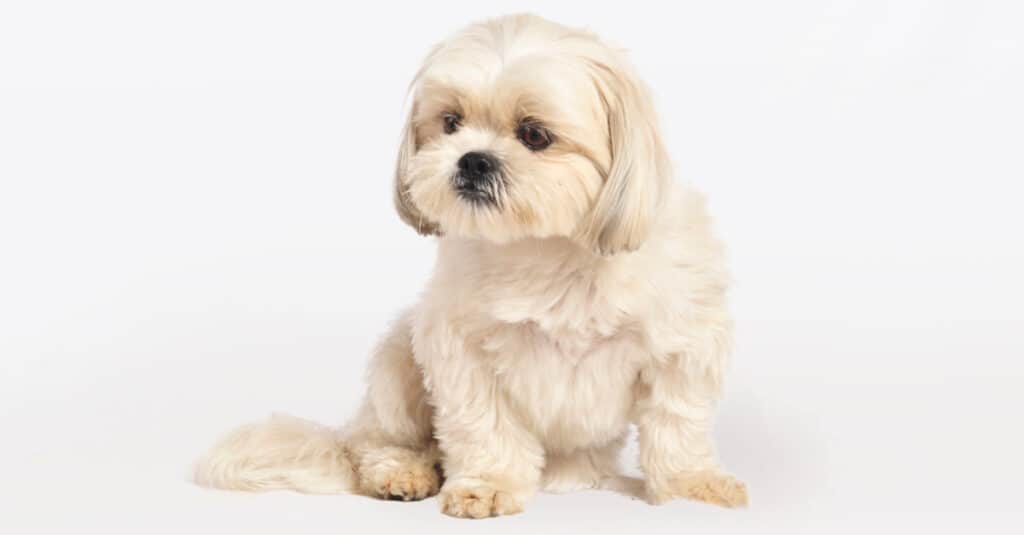
Health issues that the Maltese Shih Tzu can suffer from include hypothyroidism, glaucoma, and other eye disorders.

Temperament

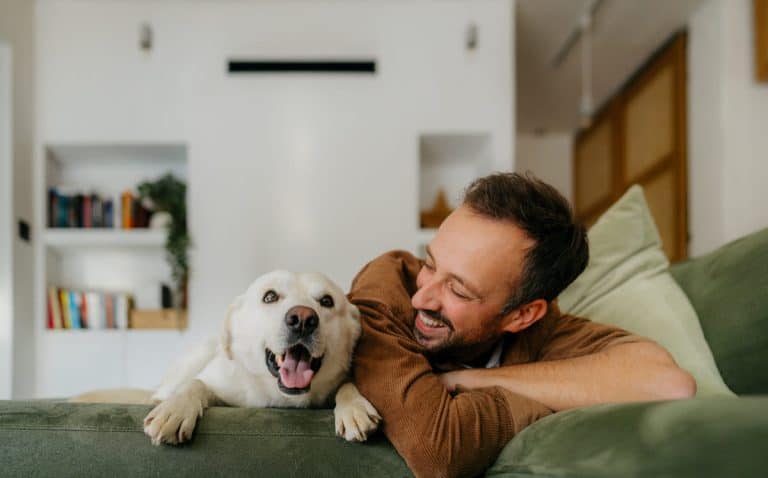
The Maltese Shih Tzu is the very definition of a lap dog. With its sweet, calm, and trusting personality, this dog follows its owner almost everywhere and enjoys being handled by people. These are also adaptable dogs that can grow accustomed to almost any living arrangement.

Because they easily suffer from separation anxiety, however, they will probably need regular companionship throughout the day, or else they might engage in some anxious and destructive behavior. Ideally, a family member should be present to keep the dog company. If you need to leave the dog alone for hours at a time, then it’s a good idea to have a neighbor, friend, or extended family member check in on the dog.
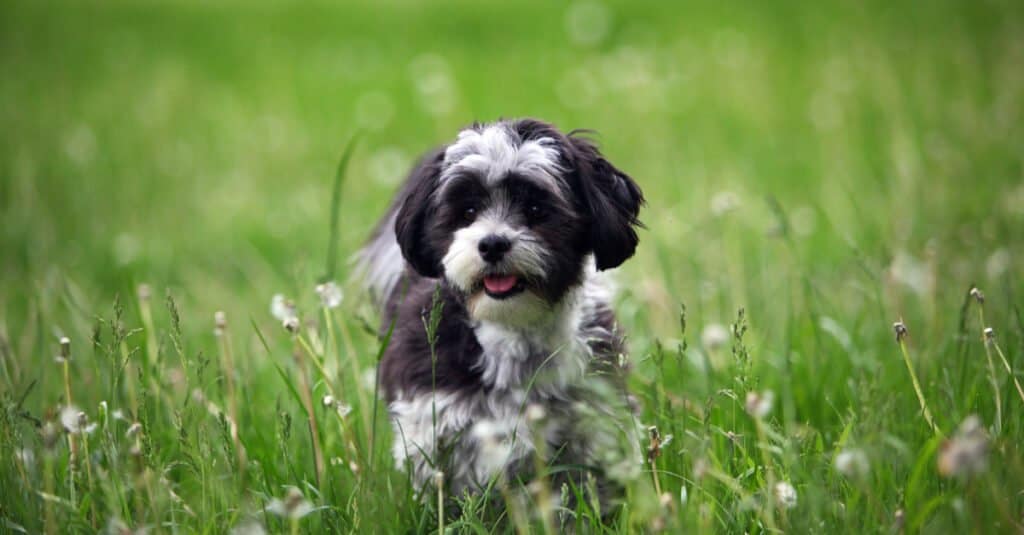
The Maltese Shih Tzu has a sweet, calm, and trusting personality.

How to Take Care of the Maltese Shih Tzu

This breed is an excellent choice for owners with almost any kind of experience level, from first-time owners to veterans. While the coat maintenance involves quite a bit of time and effort, just about everything else should be a relative breeze. If you need personal help with dog care, then you should consult a professional.

The Best Dog Food for Maltese Shih Tzus

A full-grown Maltese Shih Tzu needs about a quarter to half a cup of high-quality dry food per day, preferably divided into about two meals. The exact amount of food will depend on the size, age, and activity level of your dog. In order to prevent weight gain, owners should limit the number of treats the dog receives.

Because Maltese Shih Tzus can be prone to eye, bone, and joint issues, owners should feed a high-quality, balanced diet formulated for small breeds and consult their veterinarian for any special dietary needs.

Maintenance and Grooming

In order to keep the coat clean and nice-looking, the Maltese Shih Tzu has many special grooming requirements. Brushing will need to take place almost daily with the combination of a simple pin brush and a slicker brush, followed by a comb. Clipping should occur every six to nine weeks, while bathing is also necessary at regular intervals to maintain the natural softness and silkiness of the coat.

Another important aspect of grooming is ear care. The ears should be checked about once a week for signs of an infection. Clean the outer ear with a cotton ball and cleaner to prevent infection. Owners will also need to trim the nails once or twice a month; if the nails are clicking loudly on the floor, then they need to be trimmed immediately. The teeth should be cleaned a few times a week with vet-approved toothpaste.
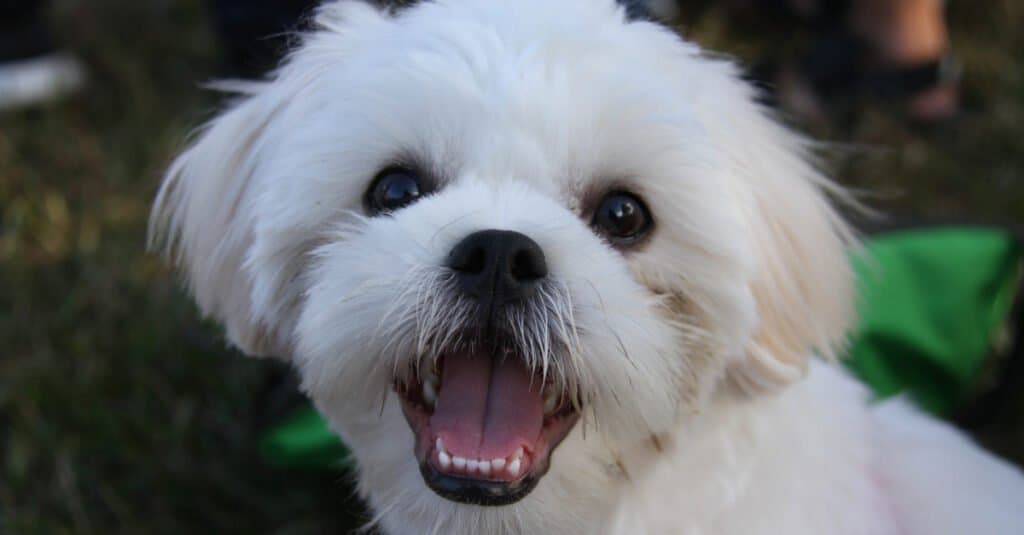
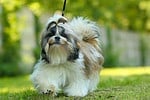
Close-up of a Maltese Shih Tzu

A Maltese Shih Tzu’s ears should be checked once a week to avoid infections.

Training

The Maltese Shih Tzu should make training relatively easy. These cheerful, intelligent crossbreed dogs are eager to please and learn human commands relatively quickly. They should respond very well to positive reinforcement methods, but otherwise need few other inducements. If you want to save time and effort, then you can take your dog to a professional trainer.

Exercise

This type of dog only needs about 10 to 15 minutes of exercise per day. This can come in the form of a leisurely walk or more vigorous games of fetch. Because this particular hybrid can suffer from bouts of respiratory issues in humidity and hot weather, outdoor exercise sessions should be limited in the summer.
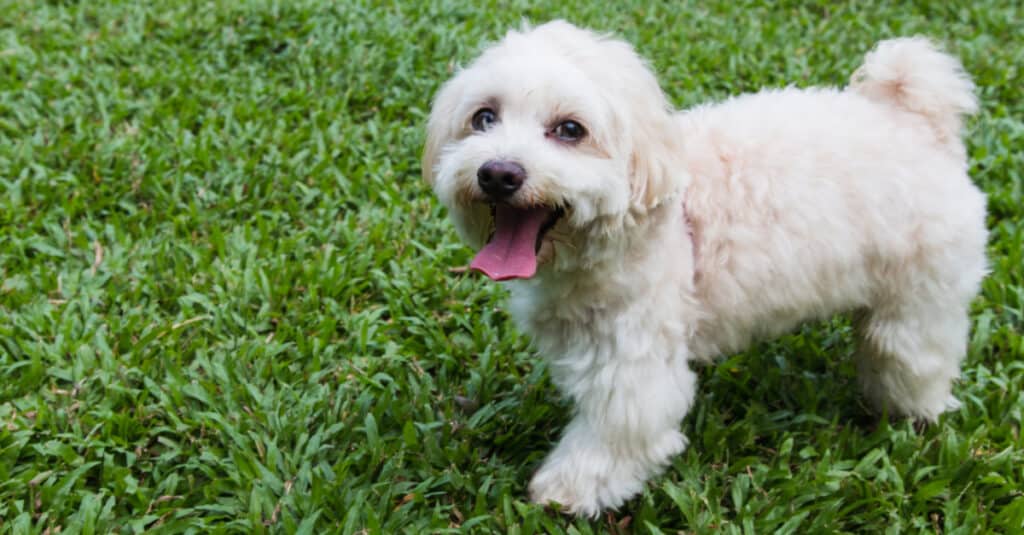
Adult Maltese Shih Tzu Mix

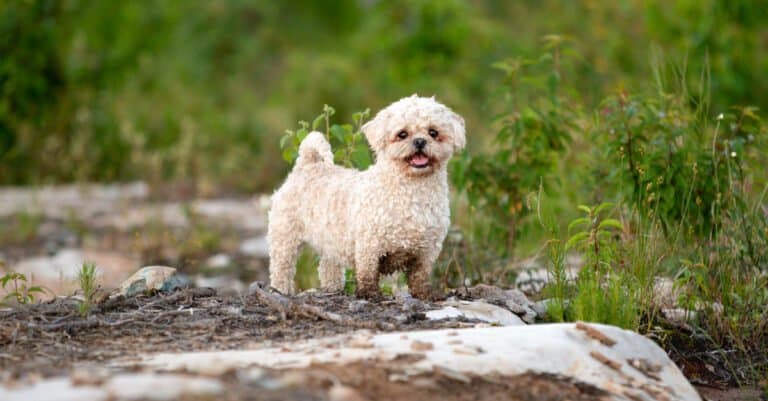
The Maltese Shih Tzu only needs around 10-15 minutes of exercise each day.

Puppies

Because of this dog’s naturally friendly disposition, owners may be tempted to neglect early training and socialization. This is generally not advised. Full-grown dogs will always behave better when they’ve had early training as puppies. Crate training is recommended (but not necessarily required) to offer puppies a safe space and assist with house training. If you plan to have your dog spayed or neutered, then this should be done around the first year of age. Unless you plan to breed your dog, spaying and neutering are usually recommended. It has many health and behavioral benefits.
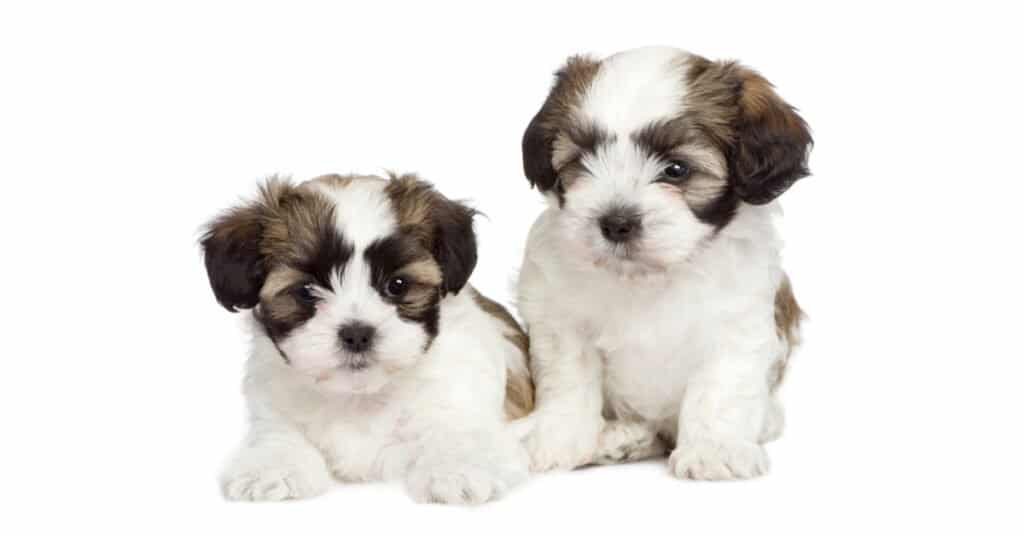
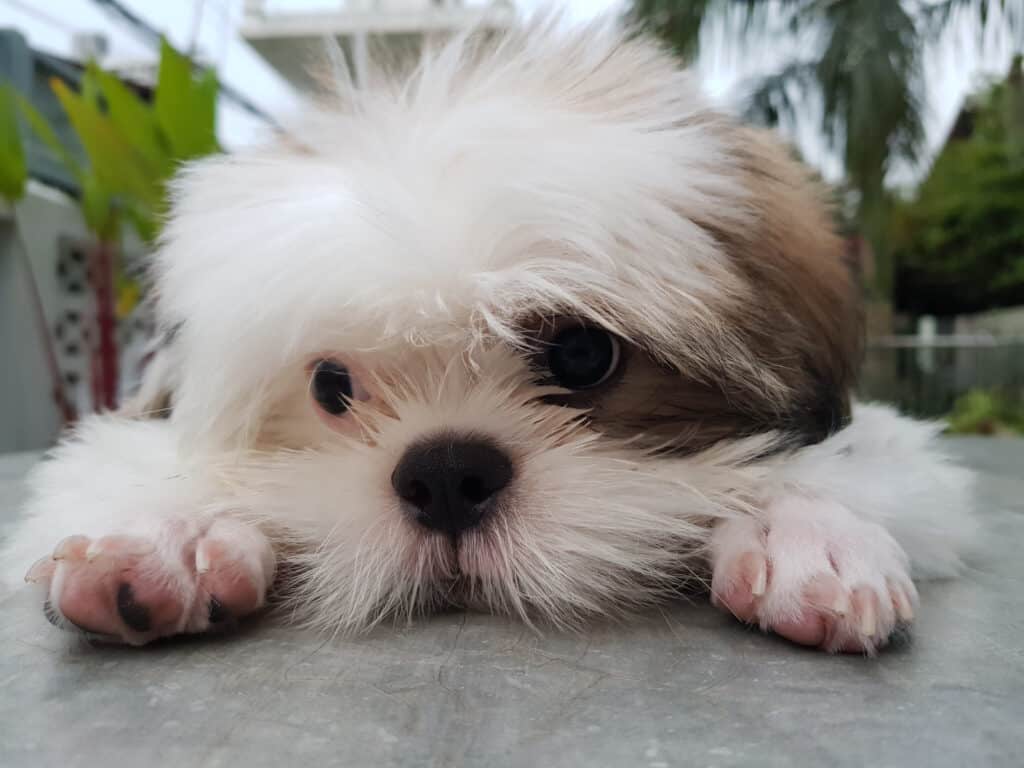
Maltese Shih Tzu puppies

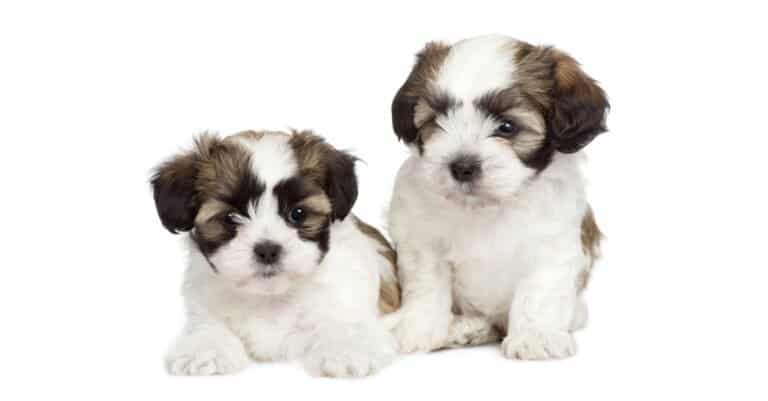
Maltese Shih Tzu puppies should be socialized from an early age.

The Maltese Shih Tzu and Children

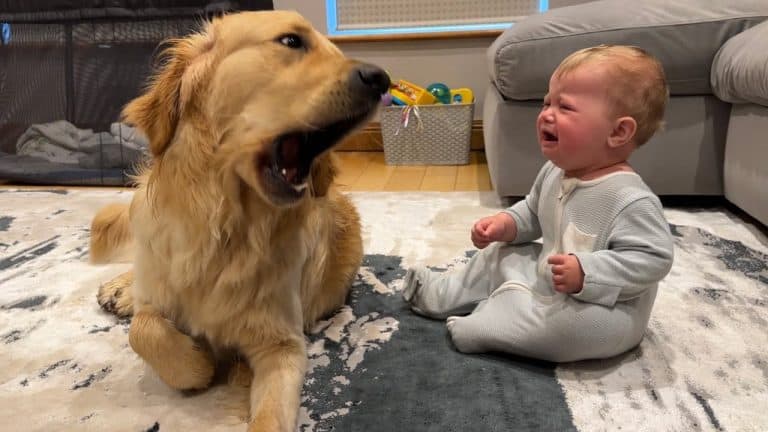
The Maltese Shih Tzu is an affectionate and trusting friend for children of all ages. Thanks to its calm demeanor and small size, no child will ever be intimidated by it. With that said, the Maltese Shih Tzu will probably do best with children who are at least old enough to understand how to handle these fragile little dogs. They don’t normally like rough behavior.

Dogs Similar to the Maltese Shih Tzu

If small toy dogs appeal to you, then you should check out one of the following breeds:

  • Havanese: This small, outgoing, and cheerful dog is the only breed entirely native to Cuba. It is characterized by a curled tail and a long, silky coat with a variety of different colors, including chocolate, cream, fawn, red, and brindle.
  • Chinese Crested Dog: Few other breeds are quite as distinctive as the Chinese Crested Dog. It has long hair around the neck and head, furry “boots,” and a feathery tail. The rest of the pink spotted skin is almost completely bare. For owners who want a bit more hair on their dogs, the powderpuff variation has long hair around the body as well.
  • Poodle: The Poodle is perhaps the quintessential small dog. Affectionate, dignified, and intelligent, this breed is a great family companion for almost everyone. The Poodle has a variety of coat colors to choose from. It also comes in four different sizes: standard, miniature, toy, and teacup.
Standard poodle - poodle teeth

The Maltese Shih Tzu is similar in size to the poodle.

View all 329 animals that start with M

Sources

  1. Dog Time / Accessed August 1, 2021
  2. 101 Dog Breeds / Accessed August 1, 2021
Catherine Gin

About the Author

Catherine Gin

Catherine Gin has more than 15 years of experience working as an editor for digital, print and social media. She grew up in Australia with an alphabet of interesting animals, from echidnas and funnel-web spiders to kookaburras and quokkas, as well as beautiful native plants including bottlebrushes and gum trees. Being based in the U.S. for a decade has expanded Catherine's knowledge of flora and fauna, and she and her husband hope to have a hobby farm and vegetable garden in future.

Thank you for reading! Have some feedback for us?


Maltese Shih Tzu FAQs (Frequently Asked Questions)

The Maltese Shih Tzu is a fusion between two of the friendliest breeds you can find: the Maltese and Shih Tzu. Their sweet and affectionate temperament will endear them to all kinds of owners looking for a simple canine companion. On the other hand, they do not make for good working dogs or exercise buddies, so keep that in mind as you make your decision.