





M
Species Profile

Morkie

Canis lupus familiaris

Tiny dog, huge personality.
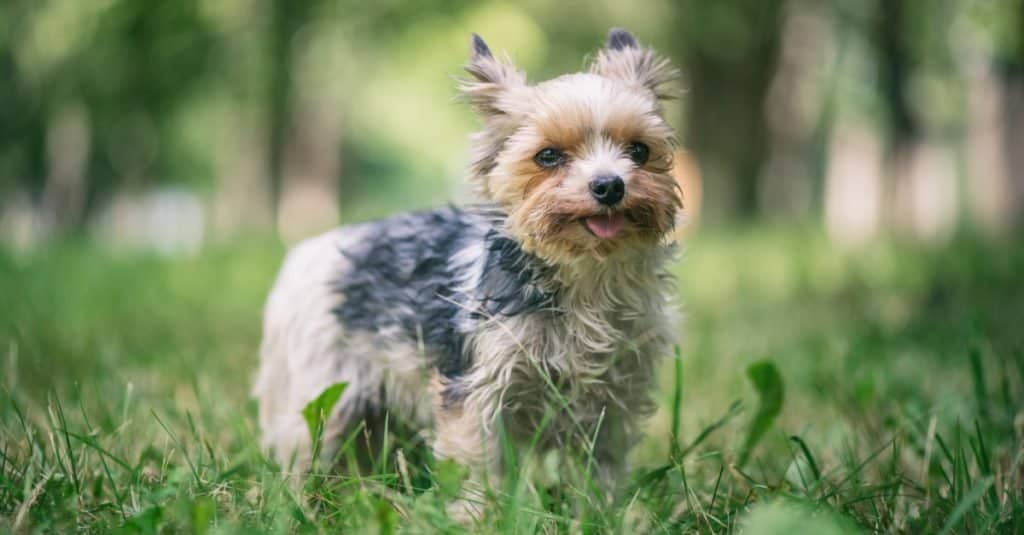
BGSmith/Shutterstock.com

Morkie Distribution

Click a location to explore more animals from that region

Origin Location

This map shows the native origin of the Morkie. As a domesticated species, they are now found worldwide.

Loading map...

Size Comparison

Human 5'8"
Morkie 8 in

Morkie stands at 12% of average human height.

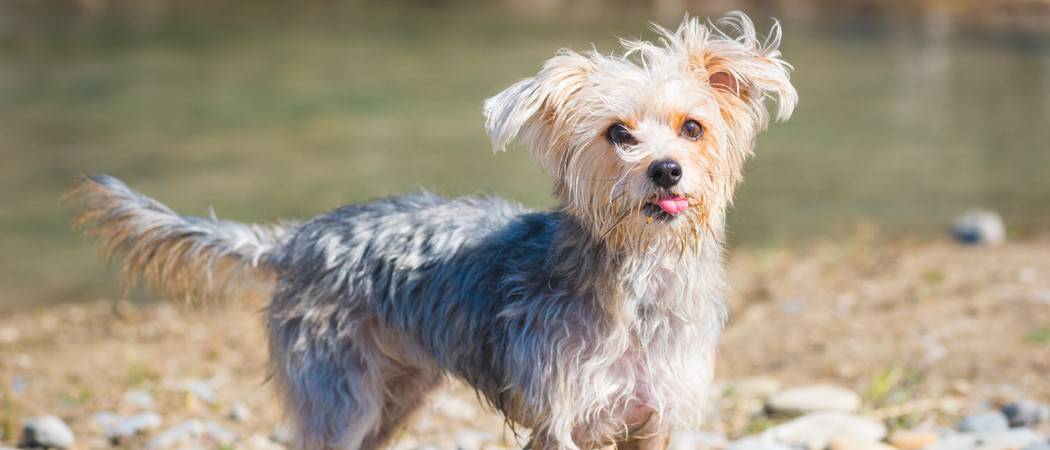
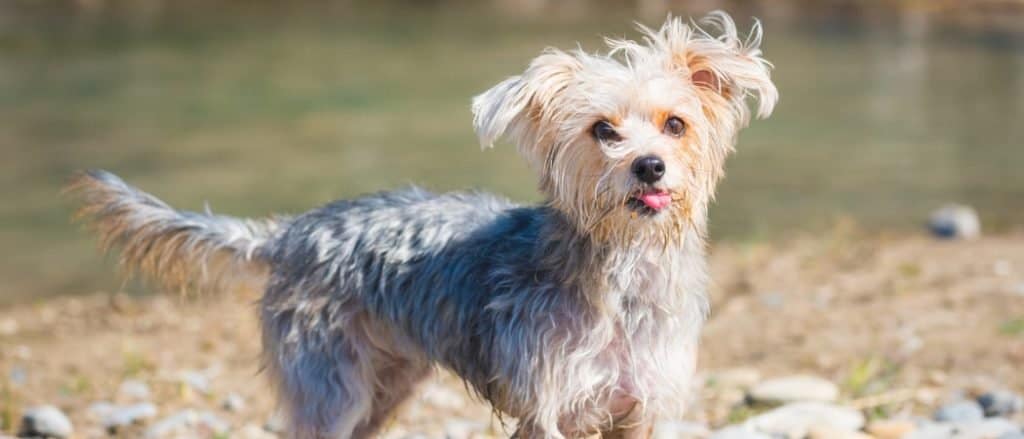
Morkie dog playing at a river beach

At a Glance

Domesticated
Also Known As Dog, Domestic dog, Domestic canine, Canine, Pooch, Pup, Puppy, Man's best friend
Diet Omnivore
Activity Diurnal+
Lifespan 12 years
Weight 6 lbs
Status Not Evaluated
Did You Know?

A Morkie isn't a formal "breed" in kennel-club standards; it's a designer cross of Maltese × Yorkshire Terrier within the domestic dog (Canis lupus familiaris).

Scientific Classification

The Morkie is a small companion dog type (a “designer” cross) typically produced by breeding a Maltese with a Yorkshire Terrier. It is not a standardized taxonomic unit beyond being a domestic dog (subspecies/form of Canis lupus).

Kingdom
Animalia
Phylum
Chordata
Class
Mammalia
Order
Carnivora
Family
Canidae
Genus
Canis
Species
lupus

Distinguishing Features

  • Very small/toy size; companion-dog build
  • Coat often silky and fine; may be straight to slightly wavy
  • Color commonly influenced by Yorkshire Terrier patterning (black/tan/steel) and/or lighter Maltese tones
  • Typical terrier-alert demeanor combined with lap-dog companion traits

Physical Measurements

Height
1 ft 8 in (6 in – 3 ft 8 in)
Length
1 ft 4 in (12 in – 1 ft 8 in)
Weight
44 lbs (2 lbs – 220 lbs)
Tail Length
6 in (4 in – 7 in)
Top Speed
15 mph
running

Appearance

Primary Colors
Secondary Colors
Skin Type Typical domestic canine skin with variable pigmentation and thickness; skin and coat condition vary widely by breed, environment, parasites, and grooming practices.
Distinctive Features
  • Domesticated canid descended from gray wolf lineages; extremely diverse due to artificial selection.
  • Wide range of body sizes, skull shapes, and limb proportions across breeds.
  • Coat type varies greatly (short to long; straight, wavy, or curly; single or double coat) with many colors and patterns.
  • Ears may be erect, semi-erect, or drop; tail carriage and shape vary widely.
  • Strong social bond with humans; roles include companionship, herding, guarding, hunting, and service work.

Sexual Dimorphism

Sexual dimorphism is mild: males are often slightly larger and more muscular with a broader head/neck, while females tend to be a bit smaller and finer-boned. Coat length and color vary more by lineage than sex.

  • Slightly heavier body and broader chest/neck on average
  • May have more robust head and jawline
  • Slightly smaller, finer-boned frame on average
  • May have a narrower head and lighter overall build

Did You Know?

A Morkie isn't a formal "breed" in kennel-club standards; it's a designer cross of Maltese × Yorkshire Terrier within the domestic dog (Canis lupus familiaris).

Because it's a cross, adult size, coat texture, and ear set can vary more than in standardized pure breeds-even within the same litter.

Many Morkies inherit a low-shedding, hair-like coat, but they still require regular grooming to prevent mats.

Their terrier side often shows up as boldness and alert barking, despite their small stature.

Toy dogs like Morkies can be prone to dental crowding; daily tooth care matters more than in many larger dogs.

Small body mass means they can chill quickly and may need sweaters in cold weather, especially after grooming.

They tend to bond tightly with one or two people, which can make them excellent companions but also prone to separation anxiety if not trained gradually.

Unique Adaptations

  • Extreme size reduction compared with the base species (gray wolf, Canis lupus): a human-directed result of domestication and selective breeding for companionship.
  • Silky, continuously growing "hair" coat (common in Maltese/Yorkie types) that benefits from human grooming rather than seasonal shedding patterns typical of wild canids.
  • High social attunement to human cues-domestic dogs, including Morkies, are notably skilled at following human pointing and reading attention.
  • Compact build and low exercise needs suit indoor living, a niche unlike the hunting/territorial ecology of wild wolves.
  • Neotenic (juvenile-like) facial and behavioral traits-selected in many toy dogs-promote caregiving responses in humans.

Interesting Behaviors

  • "Velcro dog" attachment: following their person from room to room and seeking lap contact.
  • Alert barking at doors/sounds-more "watchdog" behavior than their size suggests.
  • Terrier-style chase bursts: quick sprints after toys or moving objects, sometimes paired with vigorous shaking of small plush toys.
  • Face-licking and close social contact behaviors common in toy companion dogs bred for human proximity.
  • Selective digging or "nesting" in blankets, especially in cooler homes (comfort-seeking behavior).
  • Play-bowing and rapid play toggling (zoomies), reflecting domestic-dog social play signals inherited from canid ancestors.

Cultural Significance

Morkies are a modern "designer dog" cross of companion breeds, part of Canis lupus familiaris. Bred for small size, affection, and low shedding, they show how people changed wolves into pets. Maltese and Yorkshire Terrier bring long history as companions.

Myths & Legends

Maltese lapdog lore in the classical world: small white "Melitaean" dogs were celebrated in ancient Mediterranean writings and art as cherished companion animals of the wealthy, becoming symbols of refinement and devotion.

Yorkshire Terrier stories from Victorian Britain say early Yorkies were prized by workers for killing rats in mills and mines. Tales of fearless tiny ratters built the breed's bold reputation as a popular companion.

Seafarers' and travelers' "lucky little dog" tradition: across Europe, small companion dogs (including Maltese-type lapdogs) were often kept as treasured comforts on journeys, with anecdotes of their presence tied to good fortune and safe passage.

Late 20th and 21st century popular culture promoted 'designer dogs' like the Morkie as bred-to-be pets, using name blends (Maltese + Yorkie) and the idea of choosing behavior and coat for families.

Conservation Status

NE Not Evaluated

Has not yet been evaluated against the criteria.

Population Stable

Life Cycle

Birth 6 pups
Lifespan 12 years

Lifespan

In the Wild
10–13 years
In Captivity
10–13 years

Reproduction

Mating System Polygyny
Social Structure Managed Domestic
Breeding Pattern Serial
Fertilization Managed Selective
Birth Type Managed_selective

Domestic dogs reproduce by copulation with internal fertilization; they can mate freely or under human-managed breeding. A male may sire litters with multiple females. In toy crosses, assisted mating and veterinary oversight are sometimes needed because dystocia is more common.

Behavior & Ecology

Social Pack Group: 3
Activity Diurnal, Crepuscular, Cathemeral
Diet Omnivore Highly palatable animal-protein-rich foods (e.g., chicken or turkey-based diets) served in small-breed kibble/wet formats

Temperament

Breed context: Morkie is a Maltese x Yorkshire Terrier companion type within domestic dog (Canis lupus familiaris).
Distinguishes from base wolf species: far more human-bonded, reduced territorial roaming, minimal cooperative hunting behavior.
Highly social with people; seeks lap contact, follows household members, and prefers constant companionship.
Temperament varies widely by breed and individual; domestic dogs are generally social with humans and other dogs and may use vocal communication (including barking).
Friendly with familiar people; may be cautious with strangers without early, positive socialization.
Playful, curious, and quick to learn; responds well to reward-based training and short sessions.
Can show separation anxiety or frustration barking if under-stimulated or left alone too long.
Small-dog confidence can present as reactivity to larger dogs; benefits from controlled introductions.
HUBS (common patterns): strong caregiver attachment, high responsiveness to routine, vocal alerting; variation by Terrier-vs-Maltese influence.
Temperament varies widely by breed and individual; domestication has generally selected for increased sociability and reduced fear or aggression toward humans.
Care requirements: daily mental stimulation and short play/walk bouts; avoid rough handling and high jumps.
Care requirements: consistent grooming (coat type varies), regular nail/ear care, and proactive dental hygiene.
Health concerns affecting behavior: dental disease pain may increase irritability; hypoglycemia in toy puppies may cause lethargy/weakness.
Other common concerns: patellar luxation, tracheal collapse sensitivity (avoid neck pressure), allergies/skin itchiness, occasional eye issues.

Communication

sharp alarm barking
high-pitched yaps
whining for attention or anxiety
growling when resource-guarding or threatened
soft "talking" grumbles
rare, short howls in response to sounds
tail position and wag speed signaling arousal and friendliness
ear carriage changes indicating attention, uncertainty, or fear
lip licking, yawning, head turns as calming/stress signals
pawing, nudging, climbing into laps to solicit contact
play bows and bouncy gait to initiate play
stiff posture, freezing, or side-eye as discomfort warnings
urine marking and sniffing as social information gathering Less than wolves

Habitat

Biomes:
Temperate Forest Boreal Forest (Taiga) Tundra Alpine Temperate Grassland Mediterranean Desert Hot Desert Cold Savanna Tropical Dry Forest Temperate Rainforest Wetland +6
Terrain:
Plains Valley Coastal Island Hilly Plateau Mountainous Riverine +2
Elevation: Up to 18044 ft 8 in

Ecological Role

Human-associated omnivorous mesopredator/scavenger analogue (companion animal). Compared with wolves that can structure ecosystems via ungulate predation, domestic dogs' ecological impacts are primarily mediated through humans (provisioned feeding, waste streams) with occasional localized predation on small animals.

localized rodent/pest deterrence (opportunistic) nutrient cycling via consumption of human-provided foods and waste streams (indirect) social/therapeutic services to humans that influence human-environment interactions (indirect)

Diet Details

Main Prey:
Small rodents Rabbits and hares Small birds Insects and other small invertebrates
Other Foods:
Berries and other soft fruits Grasses and plant matter Starchy plant foods Vegetables

Human Interaction

Domestication Status

Domesticated

Domestic dog (Canis lupus familiaris) came from gray wolves (Canis lupus) after long domestication and careful breeding for tameness and human tasks. People made many breeds and mixed types with wide differences in size, coat, and behavior. Dogs are companions and helpers (service, therapy), do sports, and need vet care, vaccines, parasite control, and community rules.

Danger Level

Low
  • bites/scratches (often fear- or handling-related in toy breeds; higher risk to children if mishandled)
  • zoonotic parasites or infections if not on preventives (e.g., fleas/ticks, intestinal parasites)
  • allergen exposure (dander/saliva can trigger allergies despite low-shedding coats)
  • fall/trip risk in the home due to very small size underfoot
  • behavioral nuisance risks (excess barking, separation distress) that can affect households/community if unmanaged

As a Pet

Suitable as Pet

Legality: Canis lupus familiaris, domestic dog, is usually legal where dogs are allowed but must follow local rules: licensing, rabies shots, leash and animal control laws, housing or HOA limits, and import or quarantine rules when traveling.

Care Level: Moderate

Purchase Cost: $500 - $2,500
Lifetime Cost: $15,000 - $35,000

Economic Value

Uses:
Companion animal industry Breeding and sales Veterinary services Grooming services Training and behavior services Pet retail (food, supplies, apparel) Boarding/daycare and pet sitting Pet insurance
Products:
  • puppy sales/adoption fees
  • stud services (where practiced)
  • routine veterinary care (vaccines, spay/neuter, dental cleanings)
  • preventives (flea/tick/heartworm)
  • professional grooming (trims, bathing, nail care)
  • specialty small-breed diets and treats
  • crates/carriers, leashes/harnesses, and winter apparel
  • training classes and private consults
  • boarding/daycare and travel services
  • pet insurance policies

Relationships

Cuteness must be exponential because when you cross an adorable Yorkshire terrier with a loveable Maltese, you get a Morkie, which is ten times cuter than either of its parents. With its tiny size, its big, soulful eyes, and its long, silky coat, a Morkie resembles a stuffed animal magically come to life. Other names for this hybrid breed include Morkshire terrier, Yortese, Maltiyork, Malkie, Malki, and Yorkiemalt. Morkies are recognized by the American Canine Hybrid Club and the Designer Dogs Kennel Club.

Despite their small size, Morkies have big personalities. They’re fiercely loyal to the humans they love to the point of suffering severe separation anxiety when they’re parted from you. They’re so easy to fit into a purse, though, that there’s practically no reason not to take them with you everywhere you go. Morkies don’t shed a lot, so they’re considered hypoallergenic. If you or a family member suffers from allergies, this may be the hybrid dog for you.

Morkies are a separate hybrid breed from the Morkie poo. The Morkie poo is a hybrid dog descended from the Yorkie, Maltese, and Poodle breeds. The Morkie poo tends to be a bit smaller than the traditional Morkie, and the breed often exhibits a curly, frizzy coat like its poodle forbearer.

3 Pros And Cons Of Owning A Morkie

Pros!Cons!
They’re loving: Morkies are absolutely devoted to their human guardians, and this makes them the perfect companion dog for an elderly person living in a confined space who might otherwise be predisposed to feel lonely.They get separation anxiety: Morkies can get quite stressed out when they’re separated from those they love. This stress can take the form of chewing, scratching, yipping, peeing, and pooping where they’re not supposed to. You won’t be able to leave your Morkie alone for an extended period of time.
They’re good watchdogs: Morkies are territorial, and they’re not shy about barking. They’re surprisingly aggressive toward strangers, but they settle down fast if they see that the stranger is on good terms with their pet human.They’re sensitive to cold: All small dogs run a higher risk of frostbite than larger dogs do. Morkies are particularly sensitive, though, because they have hair, not fur. A waterproof sweater and booties can help winterize your pet.
They’re carry-on luggage: Morkies are so tiny that it’s easy to take them with you, no matter where you go.They’re yippers: Morkies are the classic yip dog. They bark at strangers; they bark when they’re bored; they bark when they think you’re not paying enough attention to them. It can be challenging to train a Morkie to stop vocalizing its feelings.
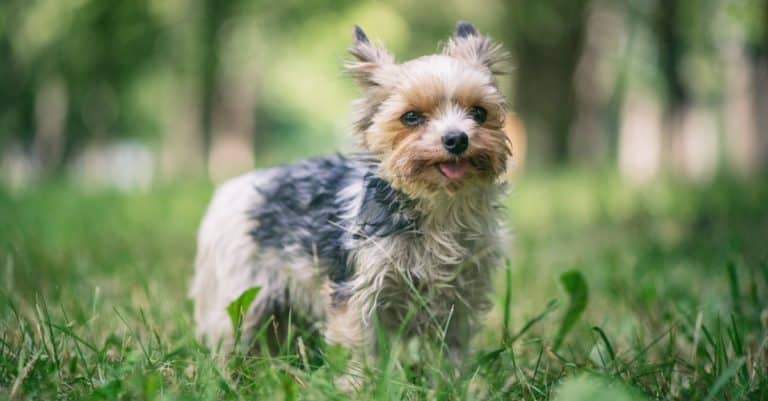
Young handsome Morkie playing in the park

Morkies are devoted to their humans.

History Of The Breed

The morkie is a hybrid dog, crossed with the Yorkshire Terrier and the Maltese. It was first bred in the United States during the 1990s to be a companion dog, specifically a lapdog, and has become one of the most popular crossbreeds of today. The history of its parent breeds goes back a little further.

The Yorkshire terrier is the smallest of the terrier breeds and dates back to the mid-1800s in England. It wasn’t given its official name until 1874; it previously had been known as the Broken Hair Scotch Terrier and then the Toy Terrier. This breed was commonly used as a ratter dog, taken into mills and mines to control the rat population.

The Maltese has somewhat more of a mysterious origin. This breed is most commonly recognized as having come from Italy and, more specifically, the island of Malta. Although there is no evidence that the Maltese originated on the island, it is believed that it was brought there from southern Europe as an article of exotic trade 8000 years ago.

Size And Weight

Morkie puppies can weigh as little as 4 ounces when they are firstborn. Full-grown toy Morkies grow to a height between 6 and 8 inches and a weight between 4 to 8 pounds. Full-grown teacup Morkies are even smaller than that. In both the toy and the teacup variety of Morkie, males are slightly larger than females.

Common Health Issues
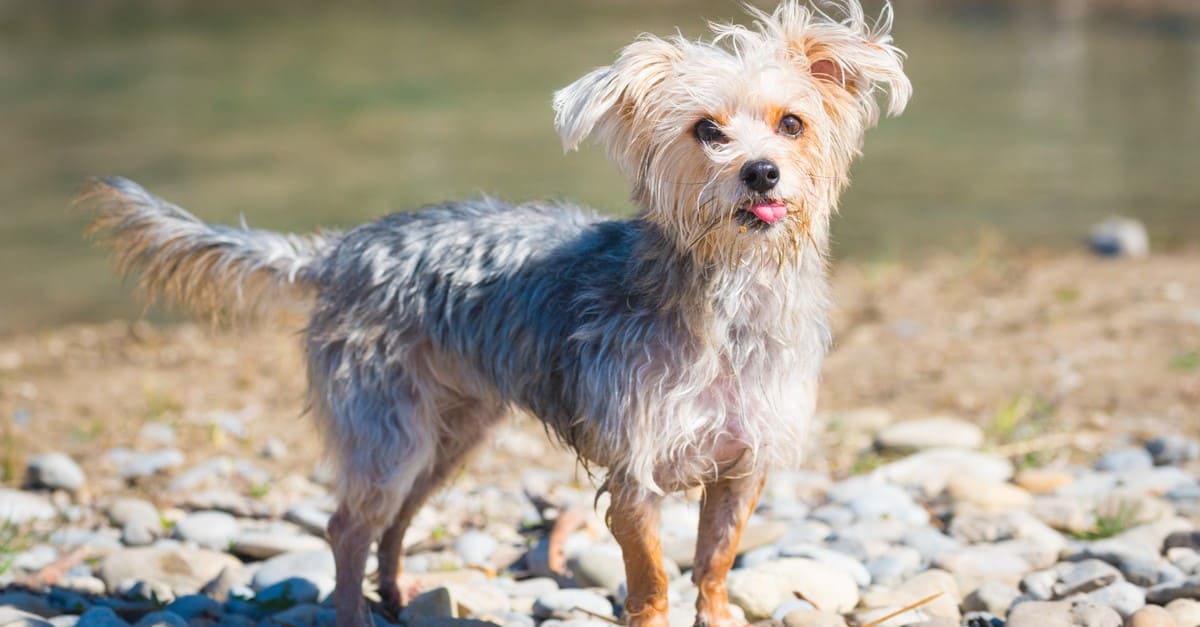
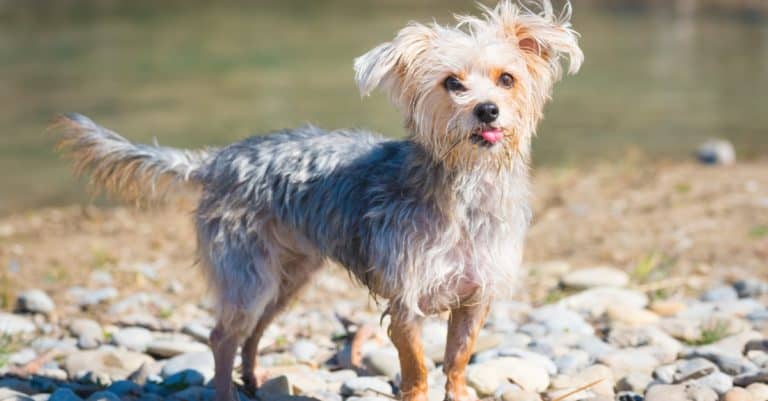
Morkie dog playing at a river beach

Morkies are prone to collapsed trachea which may make them susceptible to respiratory allergies.

A healthy Morkie will typically live between 10 and 16 years. These adorable dogs are associated with a number of well-known health problems, though. Yorkshire terriers are particularly prone to collapsed trachea, and your Morkie may inherit this issue from its Yorkie parent. Symptoms of a collapsed trachea include chronic, intermittent bouts of coughing that exacerbate with activity or any type of stress. This condition may make your hybrid dog susceptible to respiratory allergies.

Small breeds like Yorkies and Maltese are also at higher risk than the general canine population for a condition called congenital portosystemic shunt, which is an abnormal connection between systemic circulation and circulation to the liver. Other health issues confronting Morkies include hypoglycemia and slipped knee joints (patella luxation). Teacup Morkies are affected more by adverse health conditions than toy Morkies because teacups are more inbred. Reputable breeders will invest in genetic testing for all the hybrid breeds they work with, so if you’re shopping for Morkie puppies, this is one more reason to confine your search to breeders you can trust.

Temperament
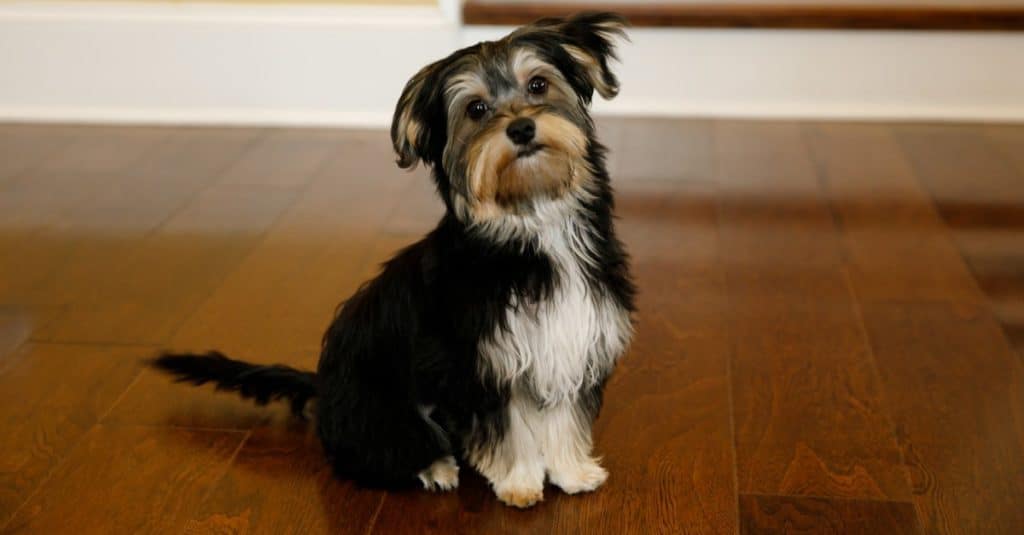
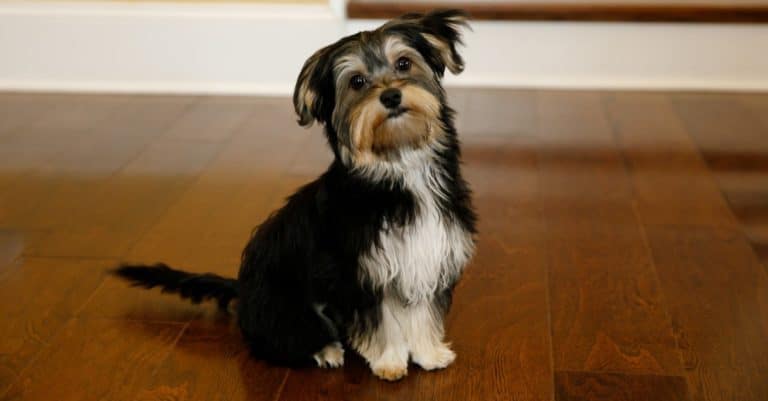
Morkie sitting on the floor.

Morkies are extremely playful and stubborn, and will benefit from consistent training.

What Morkies lack in size, they make up for in energy. These dogs have an extremely playful temperament and will dash around your house or yard like mad every time you throw a ball. Their personality can be a bit feisty at times, and stubbornness is a behavior you have to watch out for. Consistent training is the best remedy for any willful character traits your dog may manifest.

Morkies want to be with the one they love. You can count on your Morkie to crawl up into your lap every time you sit down. Overly dependent behavior can be a personality issue with both parent breeds, which is a trait your Morkie may inherit. It may be tough to draw the line with your Morkie. He or she is so adorable! Indulging your pet completely, though, can lead to serious behavioral issues like separation anxiety down the line.

How To Take Care Of Morkies

Morkies are known to be smart but willful, and this means that training is likely to require a lot of time and patience. Other factors Morkie owners need to be aware of include the hybrid breed’s specific dietary, grooming, and exercise needs.

The Best Dog Food For Morkies
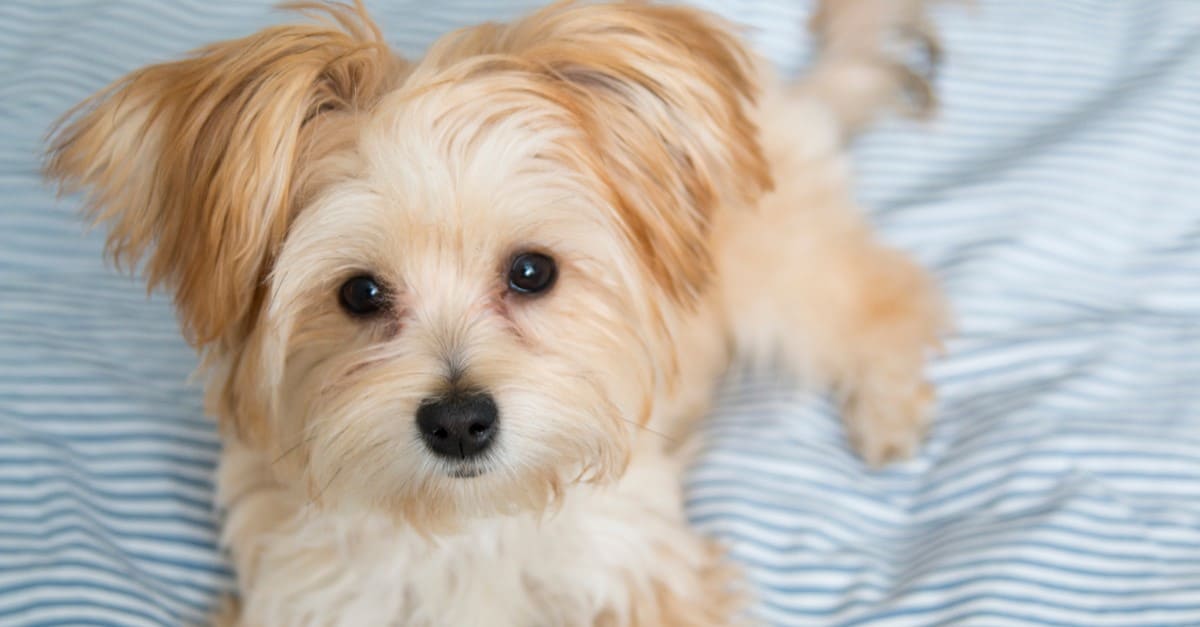
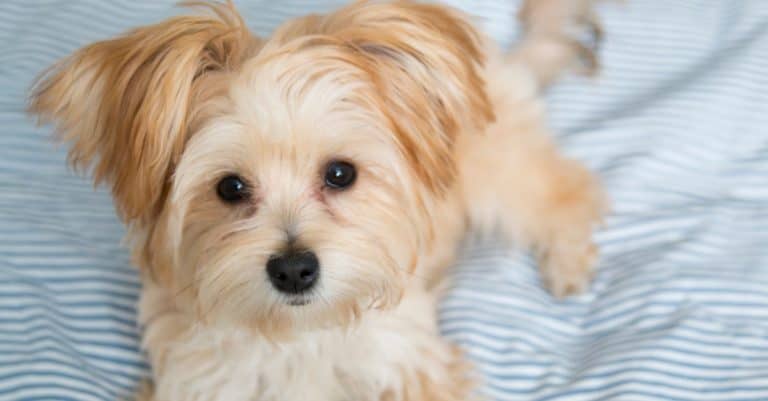
Sweet Morkie Puppy looking directly at the camera

The morkie can gain weight easily and should be fed high-quality kibble with a low protein content.

Because they are such tiny dogs, Morkies can put on weight quickly if they’re overfed. They should be fed high-quality kibble with a minimum protein content of 18% that’s specifically formulated for small dog breeds. The exact amount you feed your dog will depend upon your Morkie’s age, size, and activity levels, but divide feedings up into at least two meals a day to prevent hypoglycemia. Also, make sure your Morkie eats a meal ninety minutes or more before exercising so it doesn’t lose steam due to low blood sugar.

Morkie puppies need to be fed three or four times a day. The optimal food for these puppies is a kibble specially formulated for puppies with a minimum protein content of at least 22% that contains omega fatty acids to help keep his or her coat gorgeous and silky.

Maintenance And Grooming

Both Yorkshire terriers and Maltese are considered hypoallergenic breeds, so Morkies are considered hypoallergenic, too. Morkies have hair instead of fur, so they don’t shed a lot. They require a lot of grooming, though, because their hair can grow very long, and without regular brushing, it will develop gnarly knots and tangles.

Morkies should be bathed once a week with high-quality shampoo and conditioner. Special attention must be given to keeping your Morkie warm while his or her coat is drying, since these dogs dislike feeling cold. You’ll need to brush your pet’s teeth daily and trim his or her nails as necessary.

Once your Morkie is full-grown, you may want to initiate monthly visits to a groomer.

Training
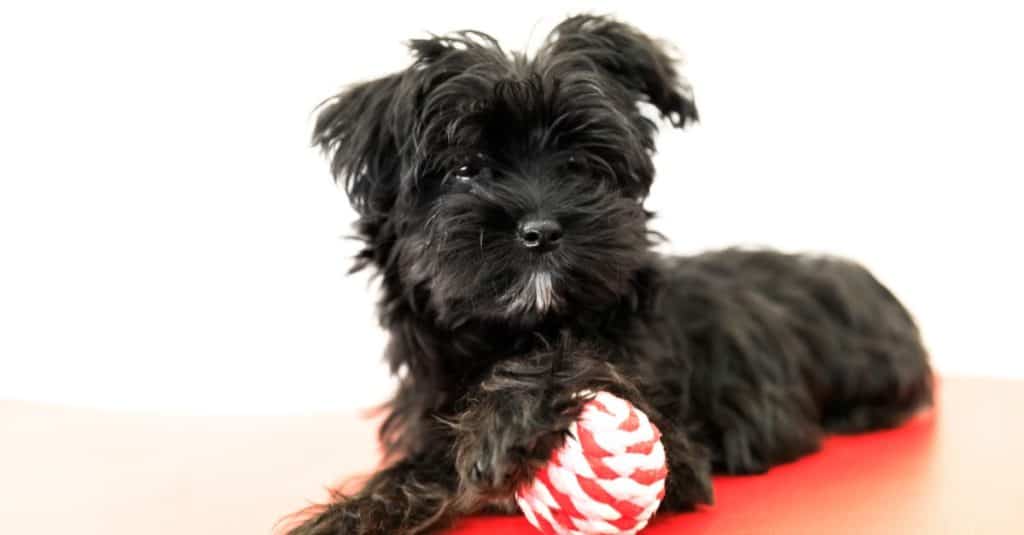
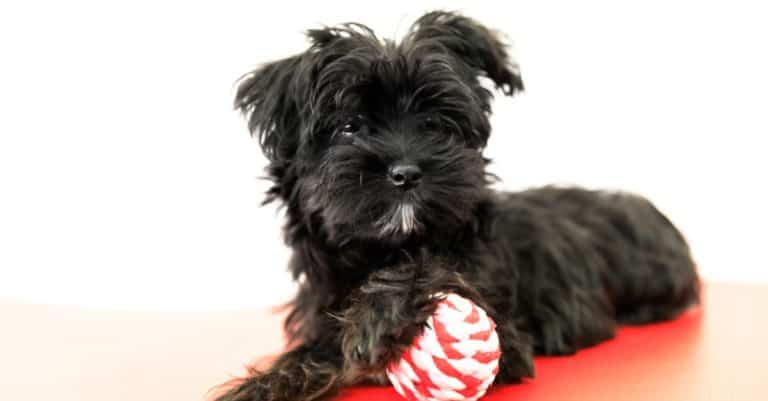
Black Morkie dog waiting to play on the sofa, Isolated on white background

Consistent positive training is important with this breed.

Patient, consistent training is extremely important with Morkies. They’re intelligent enough to learn commands and tricks easily, but just hardheaded enough to insist upon learning on their own terms. Additionally, some Morkies inherit aggressiveness from their parent Yorkie line. Yorkshire terriers, you may remember, were originally bred to hunt rodents.

It’s important to start training your Morkie puppy as soon as you get him or her home. Like all dogs, Morkies respond best to positive reinforcement; in fact, if you try to use harsh training methods with them, they are likely to balk and become completely uncooperative.

Exercise

Morkies are very energetic, but their tiny size means that their activity needs can often be satisfied with a brisk trot around the block twice a day. Morkies also like to play, so make some time to join your pet in a spirited romp at least once a day.

Puppies
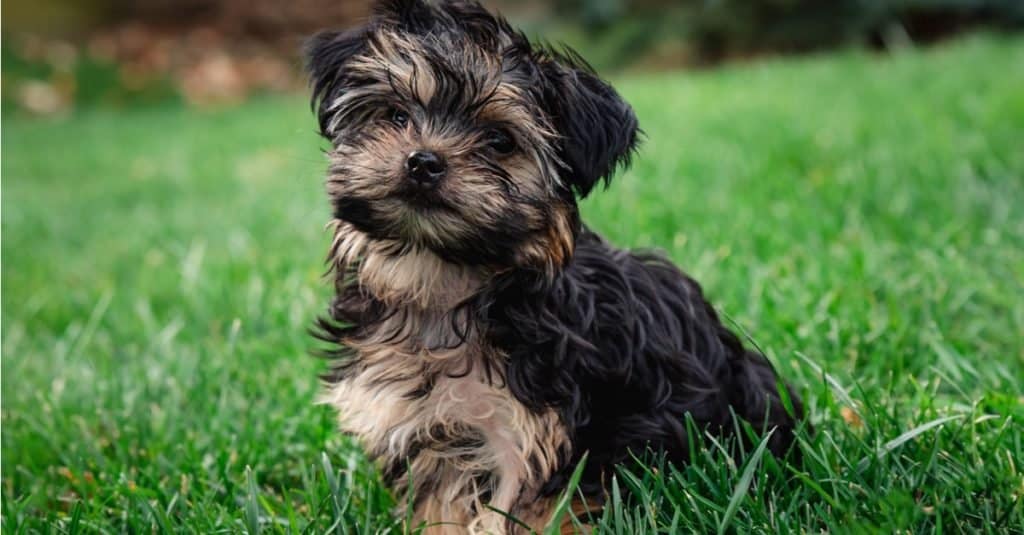
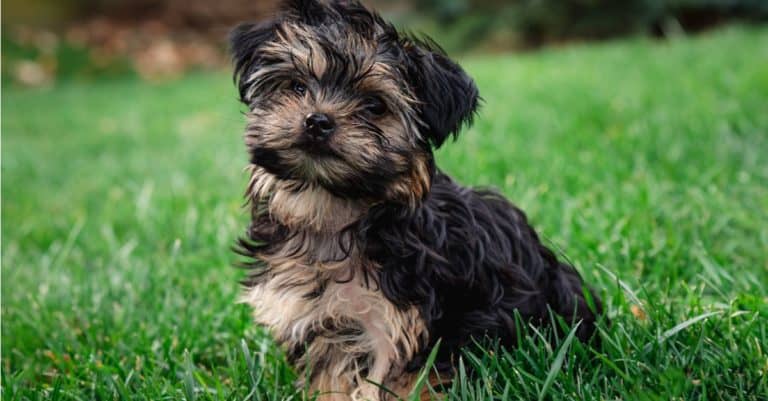
Close up of a cute teacup Morkie puppy outside on the grass

Morkies are a very fragile breed and should be handled carefully.

The look of first-generation Morkie puppies can be completely unpredictable since it’s impossible to predict whether Yorkshire terrier or Maltese genetics will dominate. Some breeders have begun mating Morkies to other Morkies to standardize the look of this breed. Litter sizes range between two and five pups. Morkie puppies are quite tiny when they’re born, only weighing a few ounces. Great care must be taken in handling these tiny, adorable creatures since they’re so fragile.

If you don’t want to go through the hassle of training a Morkie puppy, you may also be able to find a Morkie through one of the many Yorkie and Maltese rescue organizations nationwide. Adult Morkie rescue dogs make excellent pets.

Morkies And Children

Morkies and kids love each other. Nevertheless, it’s probably smart not to introduce a Morkie into a household where there are children younger than 10. Younger children, even when they’re on their best behavior, may play too roughly for a fragile Morkie and hurt the dog without intending to.

Dogs Similar To The Morkie

Maltipoos, Shih Tzus, and Bichons Frises share many traits in common with the Morkie.

  • Maltipoos: Maltipoos and Morkies share a common Maltese ancestor. Maltipoos are larger than Morkies, though: They typically grow to be 8 to 14 inches tall and can weigh up to 20 pounds. Maltipoos also have silky, curly, or wavy coats that are very unlike a Morkie’s coat.
  • Shih Tzus: Shi Tzus are also larger than Morkies. They were bred to be companion dogs, so like Morkies, they have a hard time being separated from the human they love.
  • Bichon Frises: Like the Morkie, the Bichon Frise has hair instead of fur. This adorable puffball of a dog is very easy to train and was frequently found performing tricks in European circuses throughout the 18th and 19th centuries.

Famous Morkies

Famous celebrities love their Morkies! Emmy Rossum, Hilary Duff, and even Drake are all proud Morkie owners and document their pets’ adventures on Instagram. Miley Cyrus was a Morkie owner, too, once upon a time, but sadly, Miley’s Lila came to a tragic end when Miley’s bigger dog, Ziggy, accidentally stepped on her.

View all 329 animals that start with M

Sources

  1. About Morkies / Accessed April 20, 2021
  2. The Happy Puppy Site / Accessed April 20, 2021
  3. K9 Web / Accessed April 20, 2021
  4. Animalso / Accessed April 20, 2021
  5. Dog Time / Accessed April 20, 2021
  6. Pet Guide / Accessed April 20, 2021
  7. Love Your Dog / Accessed April 20, 2021
  8. WikiHow / Accessed April 20, 2021
  9. PetKeen / Accessed April 20, 2021
Melissa Bauernfeind

About the Author

Melissa Bauernfeind

Melissa Bauernfeind was born in NYC and got her degree in Journalism from Boston University. She lived in San Diego for 10 years and is now back in NYC. She loves adventure and traveling the world with her husband but always misses her favorite little man, "P", half Chihuahua/half Jack Russell, all trouble. She got dive-certified so she could dive with the Great White Sharks someday and is hoping to swim with the Orcas as well.
Connect:

Thank you for reading! Have some feedback for us?


Morkie FAQs (Frequently Asked Questions)

The price of a Morkie puppy will range between $850 to $3,700, depending upon the breeder you purchase from. Morkies are among the most popular of the designer hybrid breeds, and the high price tag per puppy reflects that. You can defer that cost by adopting an adult Morkie from a dog rescue organization.

Other costs you are likely to incur when you first get your dog include microchipping, neutering, vaccinations, crates, collars, bedding, bowls, and toys, which will add up to $500 or so. Thereafter, you can expect to spend around $1,000 a year on your Morkie’s food, medications, training, grooming, and treats.