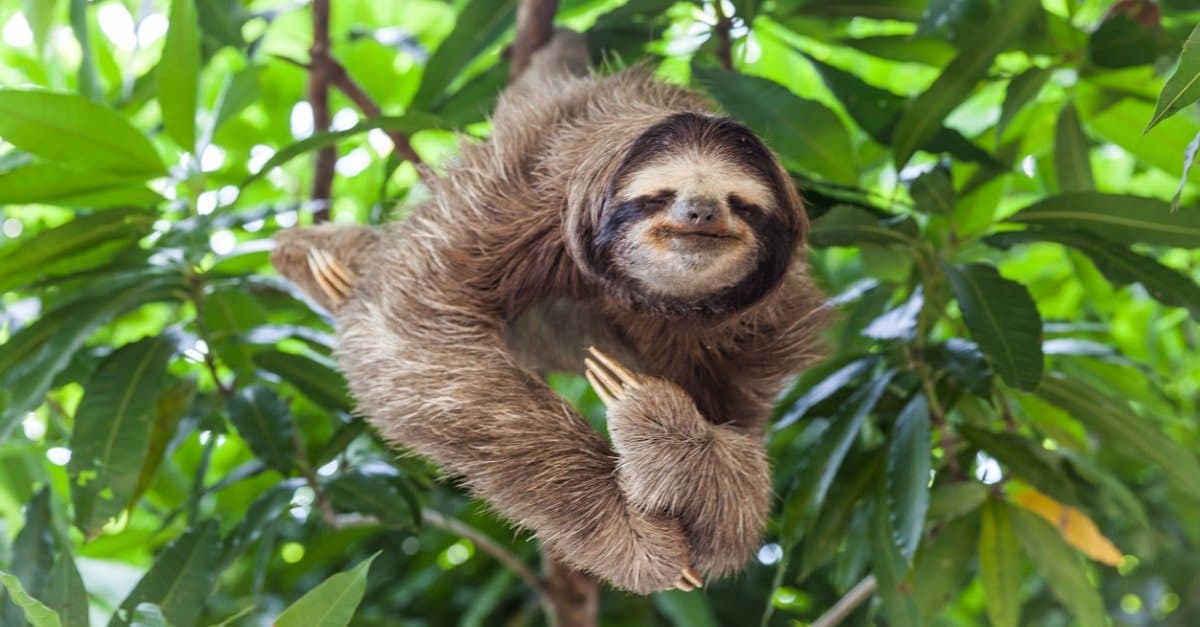

Sloths have changed quite a bit in the last ten thousand years. The slow-moving, sleepy, leaf-eating creature we see hanging from tree branches is a far cry from the sloth of the past. Today, these animals are small and live in Central and South America. However, ten to twenty thousand years ago, the Mylodon, an enormous ground sloth, ruled the Americas. Though early research suggested that this ground sloth was an herbivore, specifically a folivore, primarily subsisting on leaves, a new study (Tejada et al., 2021) from the American Museum of Natural History indicates that this might not be the case.
The Mylodon
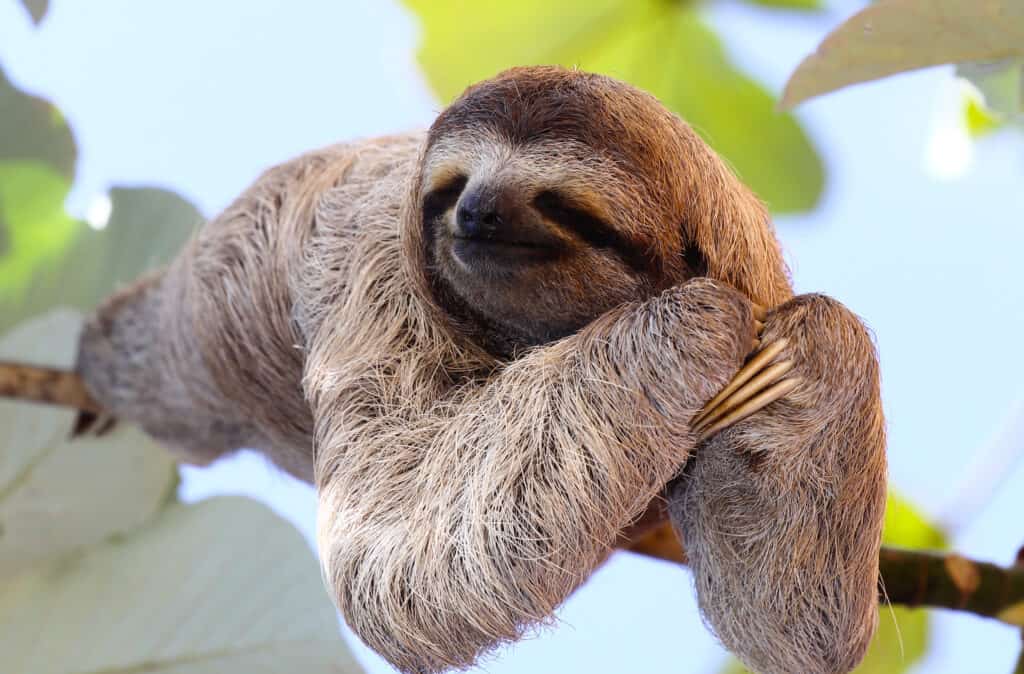
Modern sloths are cousins to the extinct Mylodon.
©Janossy Gergely/Shutterstock.com
Though now extinct, the Mylodon is one of history’s more interesting animals. Estimated to weigh between 2,000 and 4,000 pounds and growing nearly ten feet tall, these sloths looked and behaved very differently from their modern cousins.
The Mylodon roamed South America, with most fossil discoveries occurring in regions such as Patagonia. Some of these remains suggest the existence of even larger varieties of Mylodons. One skeleton was measured to be the size of an elephant.
Based on previous research of the Mylodon’s dental characteristics, preserved excrement, jaw biomechanics, and the diet of present-day sloths, researchers assumed the Mylodon was also a herbivore. However, using new methods, scientists were able to analyze the biochemical compounds within keratinous body tissues, such as hair and fingernails, to determine the Mylodon’s and other extinct sloths’ diets.
Findings
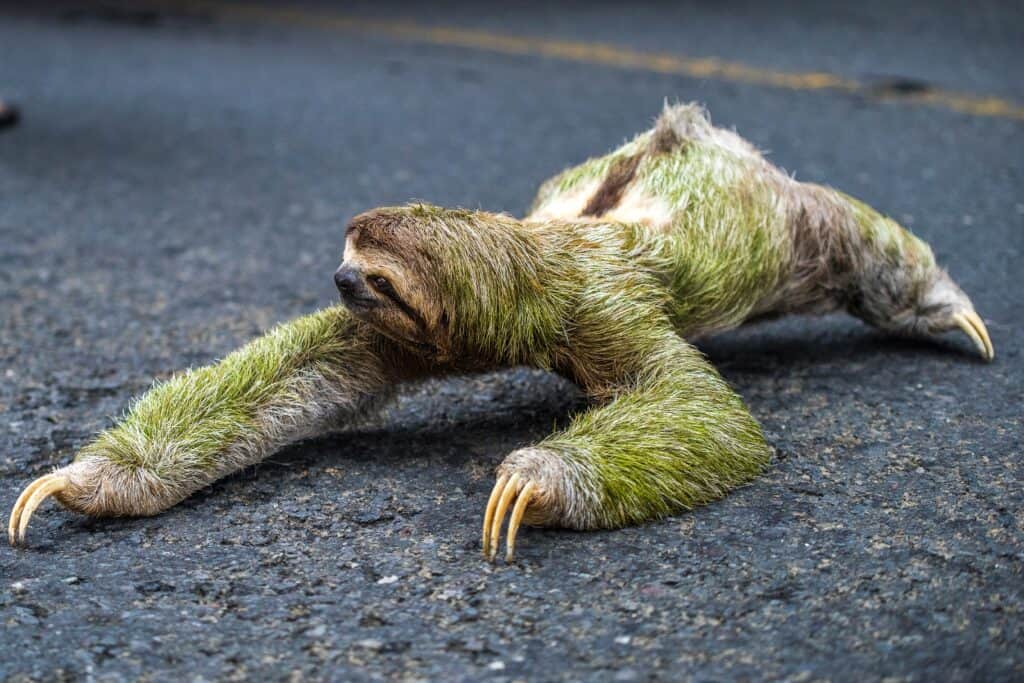
Preserved tissue from the ancient mylodon’s hair and nails was used to determine their diet, which was vastly different from their much smaller modern cousins.
©Ozba/Shutterstock.com
Researchers used the preserved keratinous tissues of seven extinct sloth and anteater species, as well as some from living species with known diets, to compare the biochemical makeup — specifically nitrogen isotopes — and determine the contents of the animals’ diets.
Looking at the amino-acid nitrogen values within these chemical compounds, researchers were able to compare present-day sloths’ diets with those of their extinct ancestors. This comparison shows irregularities or other chemicals within the body tissues that are consistent with carnivorous dietary behaviors. They can also determine which species were solely herbivores, mixed omnivores, exclusively meat-eating carnivores, or fish and marine animal consumers.
When comparing the extinct sloth species with the living species, researchers found inconsistencies that suggested the Mylodon was not, in fact, a herbivore as previously believed. The study suggests that the Mylodon was an omnivore, eating a diet of plants and animals.
Moving Forward
By discovering new information about the diet of the Mylodon, researchers can begin to reexamine the current beliefs regarding South America’s ecosystem. Scientists have long wondered how the habitat could have supported these monstrous herbivores, but determining that one of the system’s major players, the Mylodon, was not strictly herbivorous, opens the door to additional research in the diets of other species in the region.
This research also raises questions about evolution and how the Mylodon and the modern sloths share a common ancestor but evolved along separate branches. Continuing to research ancient diets and gather more data on the chemical makeup of extinct South American species, researchers may eventually be able to paint a clearer picture of the region’s past.