
Nurse sharks are the big, slow, bottom feeders of the shark world. They belong to a family of sharks known as Ginglymostomatidae, which, in Greek, means hinged mouth. There are actually several sharks in the nurse shark family, including the Atlantic nurse shark, the tawny nurse, and the shorttail nurse shark.
Sharks may inspire fear in the hearts of many. But here we’ll learn why nurse sharks are some of the gentlest, most interesting sharks in the world. Read on to discover ten incredible nurse shark facts!
1. Nurse Sharks Don’t Attack Humans — Usually
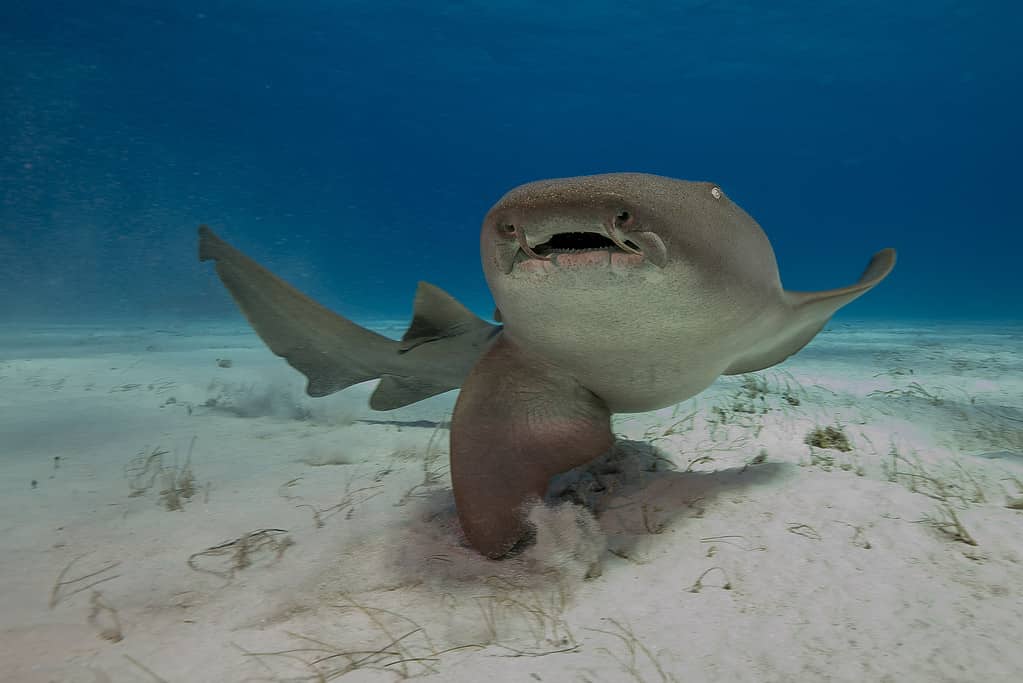
Nurse sharks can grow to a maximum length of 14 feet.
Nurse sharks are large; the biggest grow up to 14 feet long, although most are nine to 12 feet long. But, unlike other sharks, like great whites and tiger sharks, they don’t prey on large fish or mammals. Because of this, there are not many cases of ‘mistaken identity’ when it comes to nurse sharks biting humans, compared to other species. In fact, unprovoked bites from these placid bottom feeders are pretty uncommon. However, too many people mistake the nurse shark’s calm for an invitation to pet, ride on, or even step on. Like all other wild animals, nurse sharks will bite when threatened, though there are no recorded fatalities.
2. Their Name has a Cool Origin
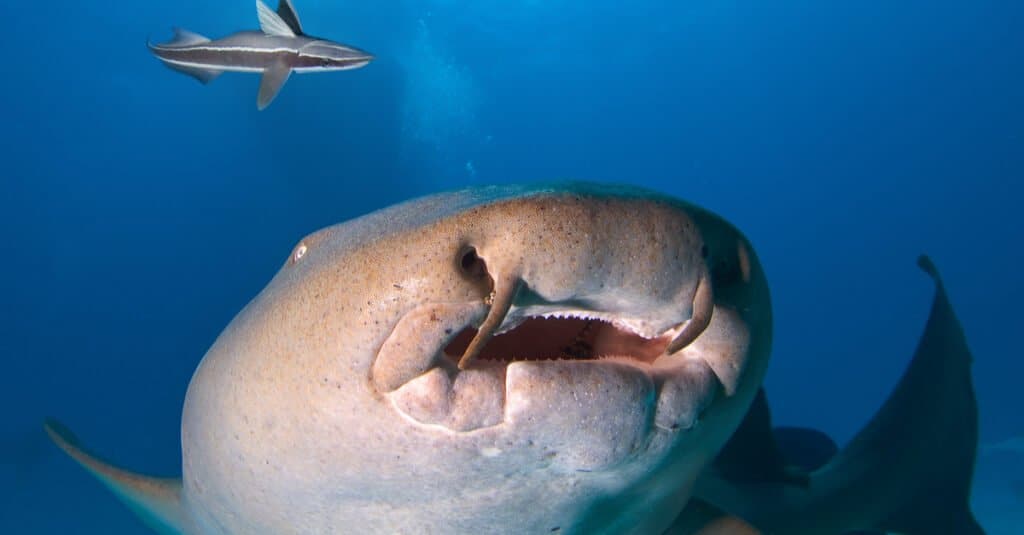
One hypothesis says that they get their name from the sucking motion they make with their jaws when they feed, which resembles a baby nursing.
©frantisekhojdysz/Shutterstock.com
One incredible nurse shark fact has to do with the origin of their name. Unbelievably, it has nothing to do with hospital staff or bedside manner. There are two prevailing hypotheses explaining where the name ‘nurse’ shark came from. The first is that they get their name from the sucking motion they make with their jaws when they feed, which resembles a baby nursing. The second is that the name actually comes from either the Old English word for sea-floor shark, ‘hurse,’ or the Middle English word ‘nusse’, which means cat shark.
3. Nurse Sharks are Friendly
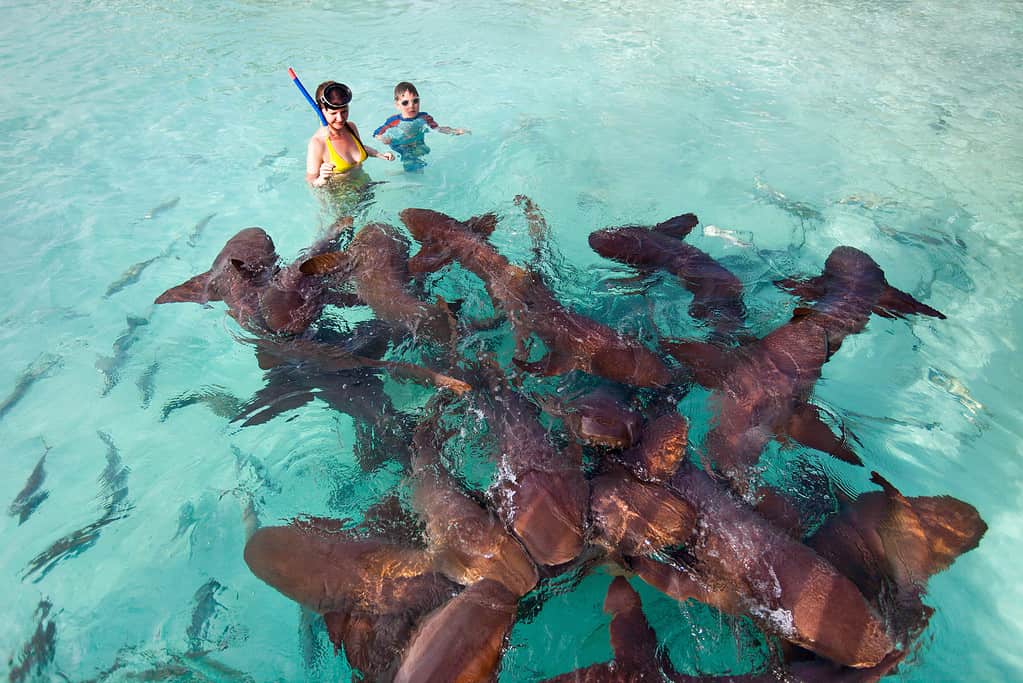
Nurse sharks are some of the most tolerant sharks of humans in the water.
©shalamov/ via Getty Images
Out of all the sharks out there, nurse sharks are some of the most tolerant of humans in the water. They feed strictly on smaller creatures, so humans aren’t on the menu. Also, since nurse sharks sleep on the ocean floor all day, scuba divers and snorkelers usually observe them sleeping. They only bite when stepped on or otherwise provoked.
4. They Like to Stay in One Place
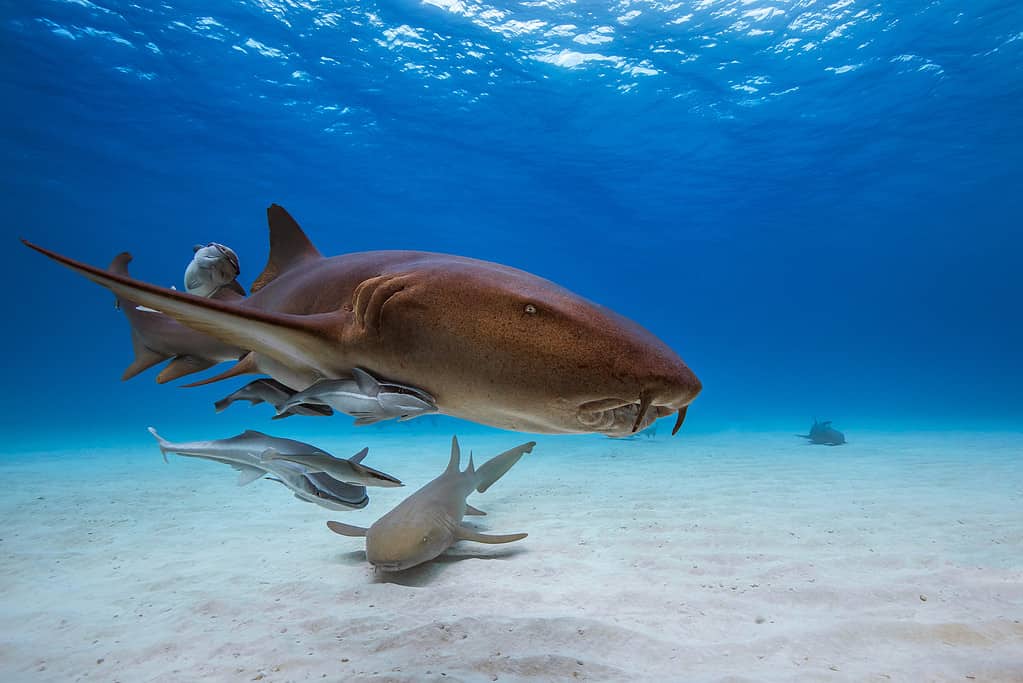
Nurse sharks are slow swimmers and spend hours every day lying on the ocean floor, asleep.
©Carlos Grillo/ via Getty Images
Most sharks spend their lives in continual motion. They have to swim to breathe, so for them, inactivity means death. Not so for the nurse shark. Nurse sharks are slow swimmers and spend hours every day lying on the ocean floor, asleep. To facilitate this inactivity, they have a special pump called a buccal pump, which actually pulls the water over their gills. This essentially simulates movement and allows the nurse shark to rest motionless.
5. Nurse Sharks are Nocturnal
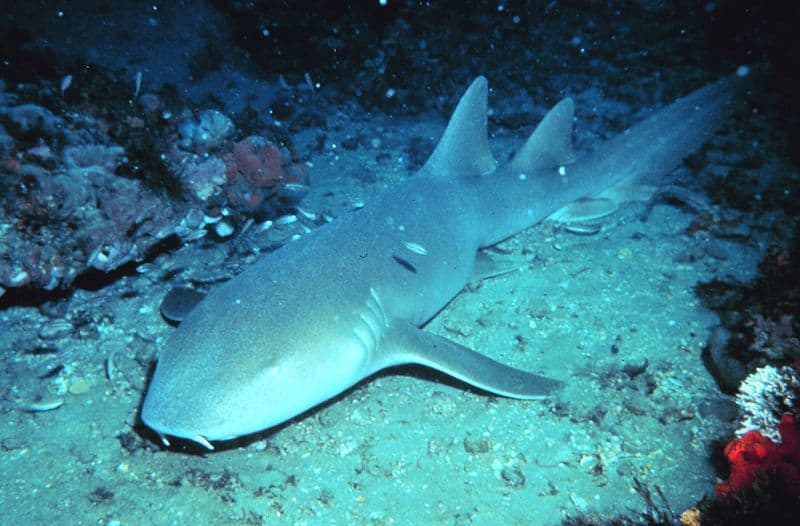
Nurse sharks spend their evenings swimming slowly along coral reefs and sandy ocean floors in search of food.
©Dr. Mathew Gilligan – Public Domain by U.S. National Oceanic and Atmospheric Administration – Original / License
Another fascinating nurse shark fact is that nurse sharks are primarily nocturnal. That means that once the seas get dark, nurse sharks come out. They spend their evenings swimming slowly along coral reefs and sandy ocean floors in search of food. During the day, they sleep, sometimes in huge groups.
6. They’re in Danger of Going Extinct
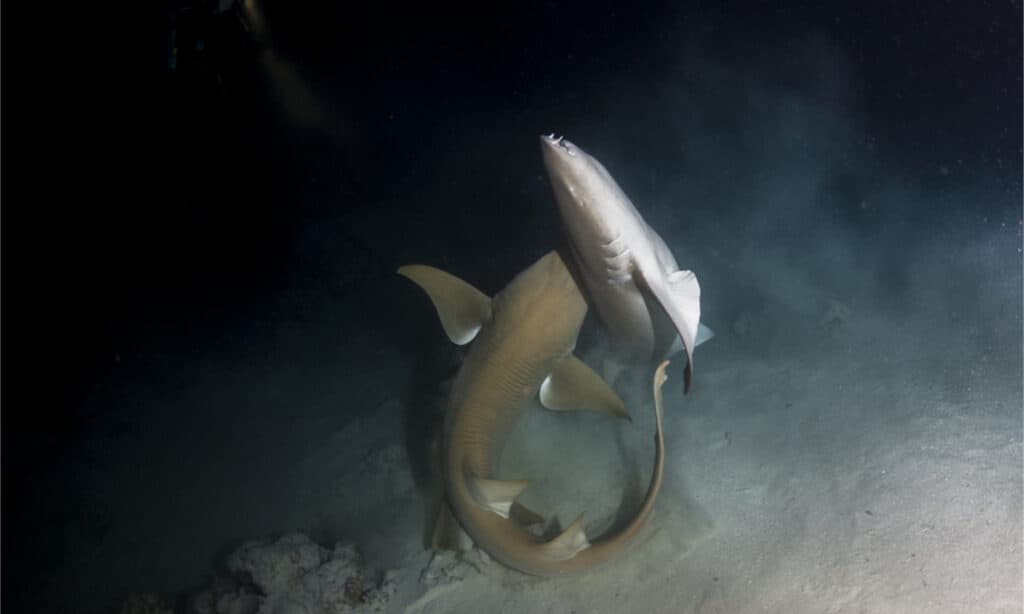
Nurse sharks are classified as a vulnerable species.
©nicolasvoisin44/Shutterstock.com
Like just about every species of shark currently swimming in our oceans, nurse sharks are in danger of extinction. They’re currently listed as vulnerable by the IUCN, with their primary threats being death as bycatch (unintentionally netted or fished), overfishing, and pollution. As a group, sharks are severely threatened and need our help more than ever.
7. Nurse Sharks have Teeth — A Lot of Them
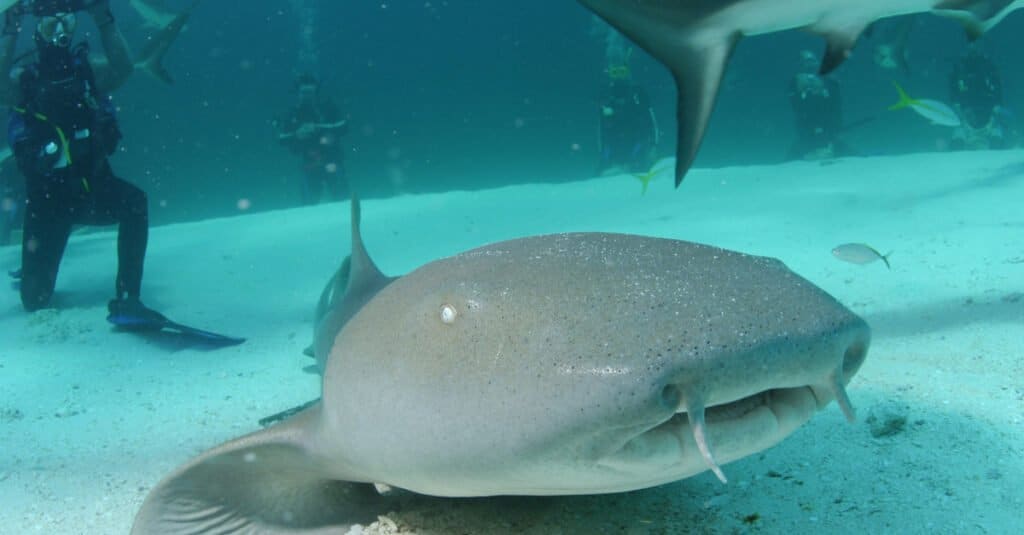
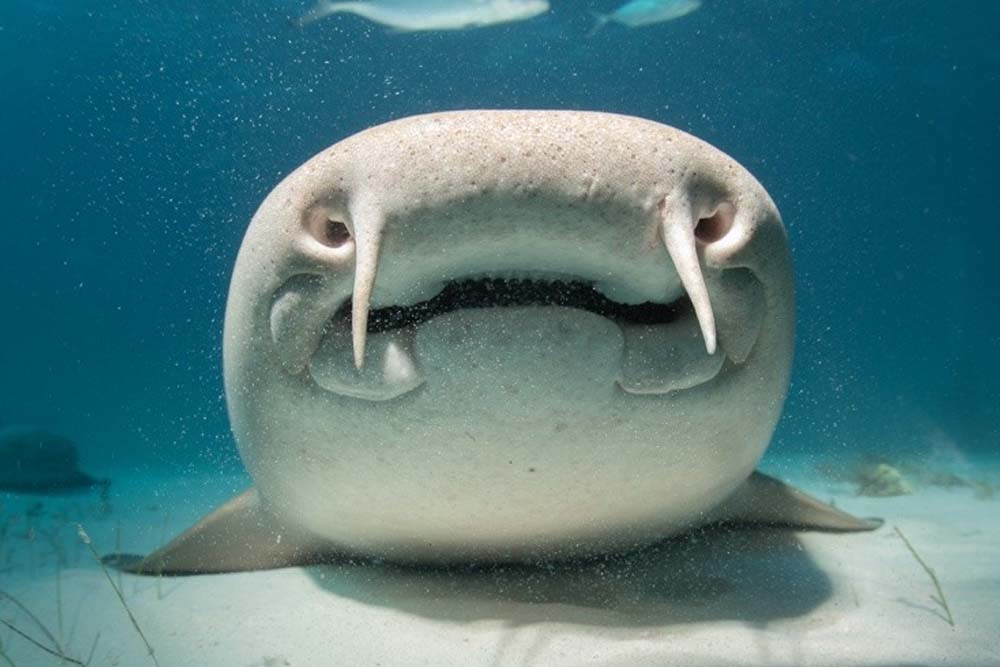
Their mouths are relatively small, with barbels on either side.
©tali de pablos/Shutterstock.com
You’re not likely to come into contact with a nurse shark’s teeth unless you pull on their tail or otherwise provoke them. But, a nurse shark’s mouth is about the last place you want your hand or foot ending up. Nurse sharks have row after row of pointed, highly serrated teeth. As they age, old teeth fall away, and new teeth replace them.
8. They Live in Coastal Waters
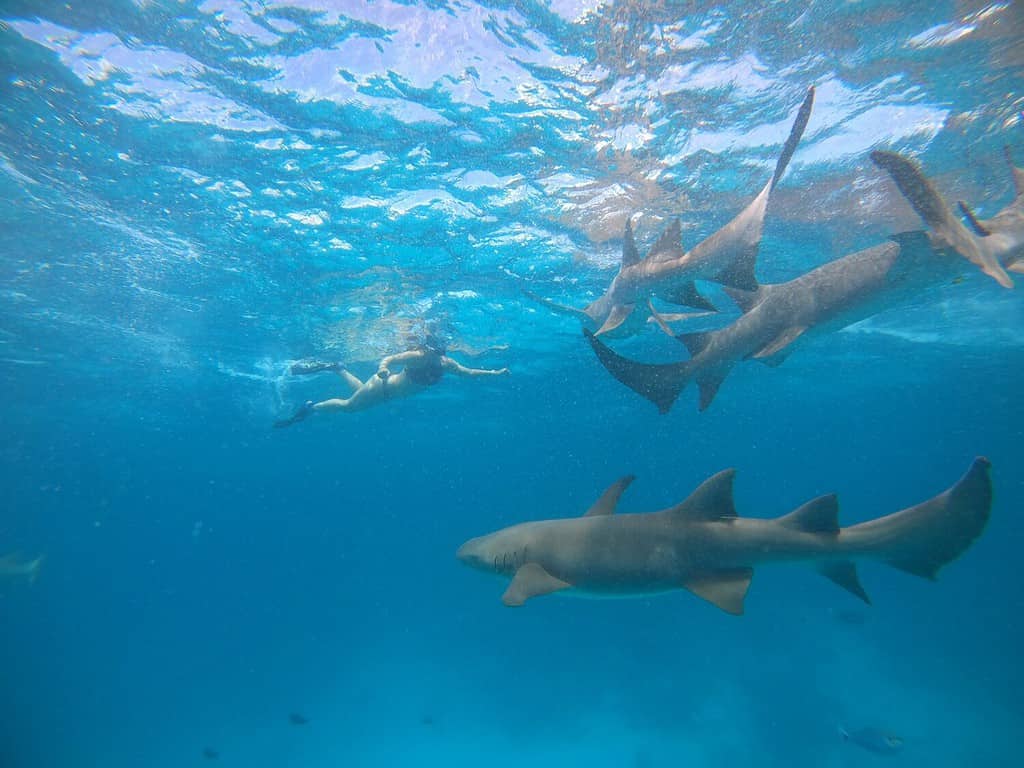
Nurse sharks live exclusively in warm coastal waters; you won’t find them in the open ocean.
©MD Nakib/Shutterstock.com
Like hammerhead sharks, nurse sharks live exclusively in warm coastal waters; you won’t find them in the open ocean. Specifically, they live in the Atlantic and Pacific Oceans. They’re found off the west coast of northern Africa, the east and west coasts of northern South America, and in the coastal waters of much of Central America. Additionally, they’re found along the east coast of the United States and in the Gulf of Mexico.
9. Nurse Sharks are Bottom Feeders
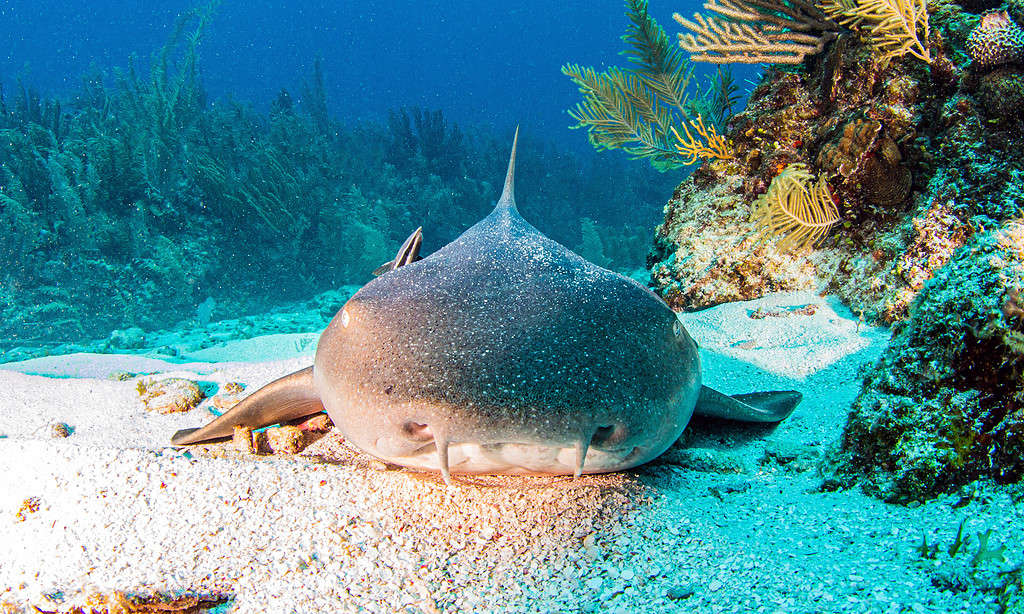
These sharks eat just about everything they find on the ocean floor, including lobster, crab, shrimp, and slow-moving fish.
©Divepic/ via Getty Images
Like stingrays, nurse sharks suck food into their mouth to kill it. They eat just about everything they find on the ocean floor, including lobster, crab, shrimp, and slow-moving fish. They also eat some coral and mollusks. To feed, nurse sharks swim along the ocean floor or among coral reefs, using their powerful mouths to suck prey into their teeth. In fact, their hoovering abilities are so strong that they can even rip mollusks from their shells.
10. They Start Small But Become Huge
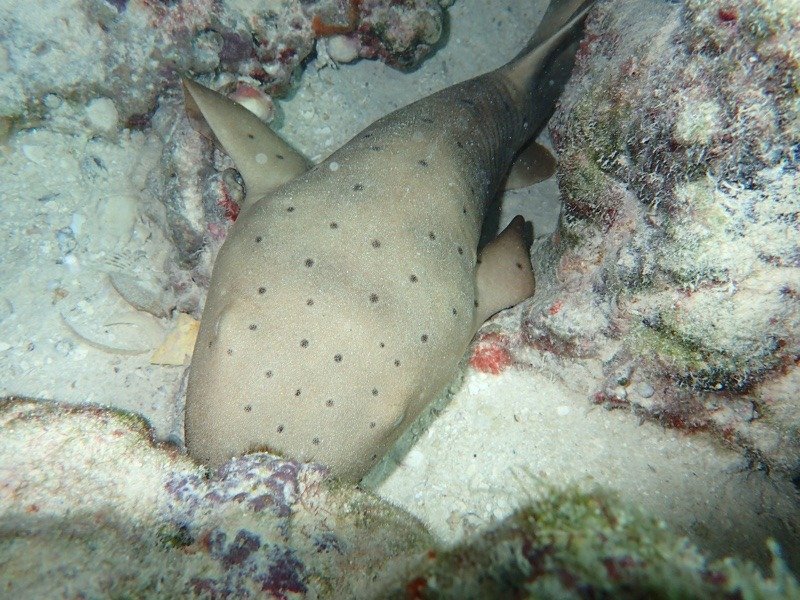
Young nurse sharks double in size by the time they’re one year old and grow about six inches a year thereafter.
©George P Gross/Shutterstock.com
Another interesting nurse shark fact is that nurse sharks start out life as foot-long pups. Females are ovoviviparous, which means they actually keep their eggs inside their wombs. There, the eggs hatch, and females give birth to the live young. Young nurse sharks double in size by the time they’re one year old and grow about six inches a year thereafter. They’re not ready to have their own pups until they reach at least seven feet long. That means that nurse sharks don’t make baby nurse sharks until they’re around 18 to 20 years old. They can grow up to 14 feet long as adults.