
O
Species Profile

Orange-Crowned Warbler

Leiothlypis celata

The warbler with the hidden crown
Hayley Crews/Shutterstock.com

Orange-Crowned Warbler Distribution

Click a location to explore more animals from that region

Loading map...
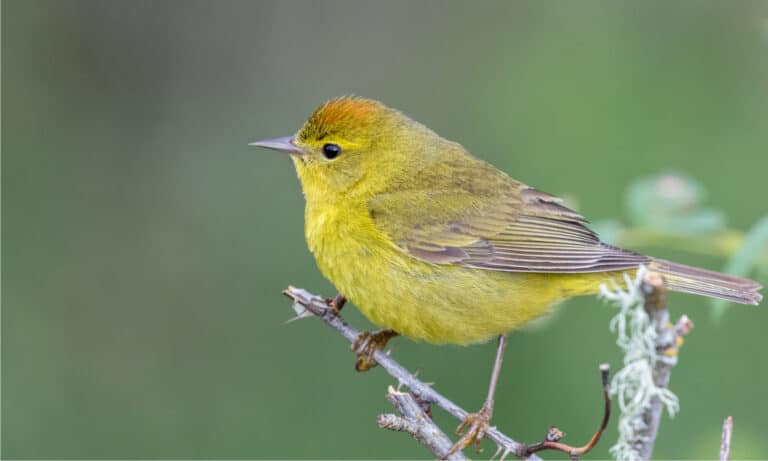
The songbird is usually a muted gray to olive-green

At a Glance

Wild Species
Activity Diurnal+
Lifespan 2.5 years
Weight 0.01 lbs
Status Least Concern
Did You Know?

Scientific name: Leiothlypis celata; long placed in Vermivora before DNA-based reclassification (AOU/NACC decisions; molecular phylogenies).

Scientific Classification

A small North American wood-warbler (New World warbler) with generally olive-gray upperparts and yellowish underparts; the orange crown patch is often hidden and may be difficult to see in the field.

Kingdom
Animalia
Phylum
Chordata
Class
Aves
Order
Passeriformes
Family
Parulidae
Genus
Leiothlypis
Species
celata

Distinguishing Features

  • Olive to gray-olive upperparts with yellowish underparts (often brightest on the undertail coverts)
  • Thin, pointed bill typical of insectivorous warblers
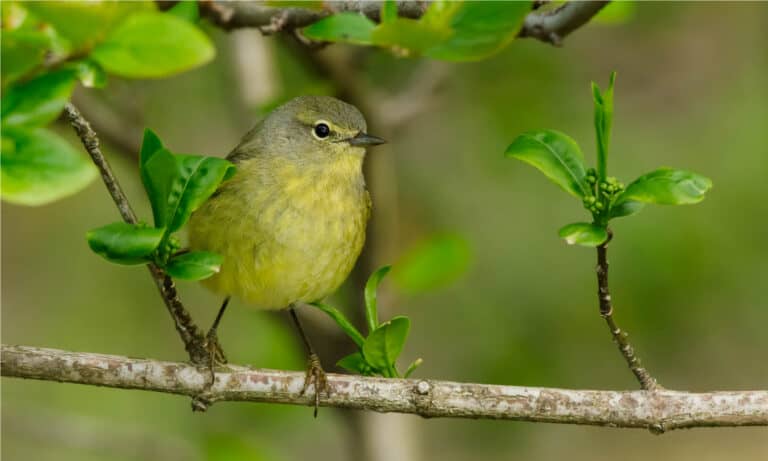
  • Faint or broken eye arc/eyeline; overall fairly plain face compared with many warblers
  • Orange crown patch present but frequently concealed (often not visible unless feathers are raised)
  • Often forages low in shrubs and can appear skulky compared with more canopy-focused warblers

Physical Measurements

Length
5 in (5 in – 5 in)
Weight
0 lbs (0 lbs – 0 lbs)
Top Speed
22 mph
flying

Appearance

Primary Colors
Secondary Colors
Skin Type Feathered body plumage; keratinous bill; legs/feet with scaly skin typical of passerines.
Distinctive Features
  • Scientific name: Leiothlypis celata (historically placed in Vermivora).
  • Length 11-13 cm; wingspan 18-20 cm; mass 0.0057-0.0113 kg (Cornell Lab of Ornithology, All About Birds).
  • Orange crown patch is often not visible because it is covered by olive feather tips and shown mainly when crown feathers are raised.
  • Plain, understated facial pattern: weak/broken pale eye-arc and minimal contrast between lores and auriculars.
  • Typical behavior: forages low in brush and dense shrubs, gleaning insects from leaves and twigs (Birds of the World).
  • Diet primarily insects and other arthropods; also takes some berries/nectar opportunistically (Birds of the World).
  • Breeding habitats: shrubby openings, willow/alder thickets, and edges in boreal or montane forests; wintering habitats: chaparral, coastal scrub, oak woodland, and weedy thickets (Birds of the World).
  • Maximum recorded longevity is at least 8 years based on banding recoveries (USGS Bird Banding Laboratory longevity records).

Sexual Dimorphism

Sexes are very similar overall. Males average slightly brighter yellow underparts and may show the orange crown patch more often when displaying; females are typically duller olive-gray with less frequent crown exposure.

  • Slightly brighter yellow wash on underparts on average.
  • Orange crown patch may be revealed more during song/display postures.
  • On average duller olive-gray above and paler yellow below.
  • Orange crown patch often smaller/less frequently exposed in the field.

Did You Know?

Scientific name: Leiothlypis celata; long placed in Vermivora before DNA-based reclassification (AOU/NACC decisions; molecular phylogenies).

Size: 12-13 cm long, 18-20 cm wingspan, 0.008-0.011 kg mass (Cornell Lab of Ornithology, All About Birds).

The orange crown is often invisible because the orange feathers are overlain by olive-gray tips; it shows most when the bird raises its crown feathers during agitation/courtship.

Nesting is typically very low: the cup nest is usually on or near the ground, hidden under grasses, shrubs, or leaf litter.

Clutch size is commonly 3-6 eggs (often 4-5); incubation about 12-13 days; young typically fledge about 10-12 days after hatching (species accounts such as Birds of the World).

Oldest documented individuals reach about 8 years (banding longevity summaries reported in major references such as Cornell's species account; exact record updates can change as new banding recoveries are added).

Unlike many warblers, it frequently takes advantage of winter foods beyond insects-nectar, berries, and sugary sap wells can be used when available (reported in North American species accounts).

Unique Adaptations

  • Concealable crown patch: orange crown feathers are naturally "veiled" by duller feather tips, providing a cryptic head pattern most of the time but allowing a sudden signal when erected.
  • Cryptic olive-gray/yellow palette: subdued tones match leaf and shrub backgrounds, especially in the dense understory where it spends much of its time.
  • Flexible winter diet: ability to supplement insect prey with nectar/fruit/sap-associated resources helps it persist in cooler seasons and coastal habitats where insects can be patchy.
  • Thicket specialization: short, rounded wings and active gleaning behavior suit maneuvering through tight brush and understory rather than extended canopy hawking.
  • Ground/low nesting strategy: placing nests under cover near the ground reduces visibility from above and may buffer temperature/wind in exposed early-season breeding sites.
  • Subspecies-level ecological breadth: recognized subspecies (commonly cited include lutescens, celata, orestera, and the island form sordida) span habitats from Pacific coastal scrub to boreal and montane shrublands, reflecting broad ecological tolerance.

Interesting Behaviors

  • Low, brushy foraging: commonly gleans insects and spiders from leaves and twigs in dense shrubs and understory, often staying below head height in thickets (a classic field trait).
  • Crown-flash display: when alarmed or excited it can raise the crown feathers to reveal orange, a brief signal used in agitation and social interactions.
  • Tail and wing flicking: frequent quick posture shifts while moving through foliage, likely aiding balance and flushing small arthropods.
  • Mixed-species flocking (nonbreeding season): often joins chickadees, kinglets, and other warblers in winter foraging flocks, which can improve predator detection and feeding efficiency.
  • Ground-adjacent nesting secrecy: adults approach nests by slipping through cover rather than flying directly, reducing nest detection by predators.
  • Seasonal habitat shift: breeds in northern/ montane shrubby edges (willow/alder/aspen, riparian thickets, young forests) and winters in milder lowlands-chaparral, coastal scrub, hedgerows, gardens, and brushy woodland edges.

Cultural Significance

The Orange-crowned Warbler (Leiothlypis celata) is a small, plain warbler that helps birders learn to identify birds carefully: faint eyeline, olive tones, and a hard-to-see crown. It also shows how DNA changed its name from Vermivora to Leiothlypis (sometimes Oreothlypis).

Myths & Legends

Orange-crowned Warbler (Leiothlypis celata): the species name celata is Latin for "hidden," about its orange crown often hidden by olive feather tips — a name legend in field guides.

19th-century naturalists wrote a story about the Orange-crowned Warbler (Leiothlypis celata): its orange crown is rarely seen, so writers said it 'wears its crown in secret'—a theme in bird writing, not folk stories.

For decades the Orange-crowned Warbler (Leiothlypis celata) was taught as Vermivora celata; genetic studies moved it to a new genus, a warning about hidden evolutionary links like its hidden crown.

Conservation Status

LC Least Concern

Widespread and abundant in the wild.

Population Stable

Protected Under

  • United States: Migratory Bird Treaty Act (MBTA)
  • Canada: Migratory Birds Convention Act, 1994
  • Mexico: protected under migratory bird frameworks associated with the U.S.-Canada-Mexico migratory bird treaties

Life Cycle

Birth 4 chicks
Lifespan 3 years

Lifespan

In the Wild
1–8 years
In Captivity
1–10 years

Reproduction

Mating System Monogamy
Social Structure Socially Monogamous
Breeding Pattern Seasonal
Fertilization Internal Fertilization
Birth Type Internal_fertilization

Breeds in seasonal pairs; the male defends a territory and typically mates with one female, though extra-pair fertilizations are suspected but not quantified. Female incubates 3-6 eggs for ~11-13 days; both parents feed young until fledging (~10-12 days).

Behavior & Ecology

Social Flock Group: 2
Activity Diurnal, Matutinal
Diet Insectivore Caterpillars (foliage-gleaned Lepidoptera larvae are repeatedly documented as a primary prey item in breeding-season diets; e.g., Birds of the World/Cornell Lab of Ornithology species account for Orange-crowned Warbler).
Seasonal Migratory 2,796 mi

Temperament

Breeding-season territoriality typical of Parulidae; males aggressively repel conspecific intruders.
Generally inconspicuous and non-gregarious while feeding; tolerates nearby heterospecifics in mixed flocks.
Winter behavior often less territorial than breeding; spacing maintained by soft calls and short chases.
Skulking, cover-oriented forager; risk-averse posture with quick movements through low vegetation.

Communication

Primary song: rapid, variable trill Male advertisement and territory defense
Contact call: sharp single-note 'chip'/'tsp' used to maintain spacing while foraging.
Alarm notes: repeated chips and scolding notes, especially near nest or when mobbing predators.
Visual display: crown feathers raised to expose orange patch during close-range aggression/courtship.
Postural signaling: wing flicks, tail movements, and short chase flights during territorial disputes.
Spatial communication: territory placement and repeated song posts structure male-male interactions.

Habitat

Terrain:
Mountainous Hilly Plateau Plains Valley Coastal Island Riverine +2
Elevation: Up to 11482 ft 11 in

Ecological Role

Small insectivorous songbird functioning mainly as an arthropod predator with seasonal plant-resource use.

Suppresses populations of herbivorous insects (including caterpillars and other foliage-feeders) through predation, potentially reducing leaf damage in shrubs/trees. Contributes to food-web energy transfer as prey for raptors and larger predators while converting arthropod biomass into avian biomass. Incidental pollination when visiting flowers for nectar (especially during migration), and limited seed dispersal when consuming small fruits/berries in the nonbreeding season (as described broadly for the species in Birds of the World/Cornell Lab of Ornithology and other standard North American ornithological summaries).

Diet Details

Other Foods:
Nectar Small berries and soft fruits

Human Interaction

Domestication Status

Wild

Orange-crowned Warbler (Leiothlypis celata) has no domestication history. It is a wild native songbird and is not bred or kept as a domesticated animal; any captivity is typically limited to permitted activities such as wildlife rehabilitation, scientific research/banding, or educational display.

Danger Level

Low
  • Minimal direct physical risk; a handled bird may peck or scratch lightly.
  • As with wild birds generally, there is a low but non-zero hygiene/zoonotic risk from contact with feces/feathers (mitigated by handwashing and standard wildlife-handling PPE).

As a Pet

Not Suitable as Pet

Legality: Orange-crowned Warbler (Leiothlypis celata) is usually illegal to keep as a pet in the U.S. under the Migratory Bird Treaty Act. Canada and Mexico have similar laws; only permits for care, research, or education allow possession.

Care Level: Expert Only

Purchase Cost:
Lifetime Cost:

Economic Value

Uses:
Birdwatching/ecotourism value (non-consumptive wildlife recreation) Ecosystem services (insect consumption) Scientific research/monitoring (migration ecology, population trends)
Products:
  • No commercial products; value is primarily non-market (recreation/ecosystem services) rather than harvest.

Relationships

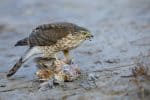
Predators 10

Sharp-shinned Hawk
Sharp-shinned Hawk Accipiter striatus
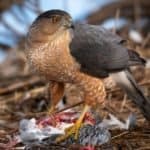
Cooper's Hawk
Cooper's Hawk Accipiter cooperii
Merlin Falco columbarius
American Kestrel Falco sparverius
Eastern Screech-Owl Megascops asio
Western Screech-Owl Megascops kennicottii
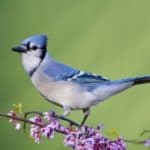
Blue Jay
Blue Jay Cyanocitta cristata
American Crow Corvus brachyrhynchos
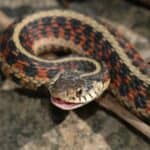
Garter Snake
Garter Snake Thamnophis sirtalis
Domestic cat
Domestic cat Felis catus

Related Species 9

Tennessee Warbler Leiothlypis peregrina Shared Genus
Nashville Warbler Leiothlypis ruficapilla Shared Genus
Virginia's Warbler Leiothlypis virginiae Shared Genus
Lucy's Warbler Leiothlypis luciae Shared Genus
Colima Warbler Leiothlypis crissalis Shared Genus
Yellow Warbler Setophaga petechia Shared Family
Common Yellowthroat
Common Yellowthroat Geothlypis trichas Shared Family
Wilson's Warbler Cardellina pusilla Shared Family
Northern Parula
Northern Parula Setophaga americana Shared Family

Ecological Equivalents 4

Animals that fill a similar ecological role in their ecosystem

Yellow Warbler Setophaga petechia Overlapping niche as a small insectivorous New World warbler that forages by gleaning and hover-gleaning in shrubs and tree canopies, especially during migration and on wintering grounds. Its frequent use of riparian scrub and early-successional woody vegetation overlaps with Orange-crowned Warbler stopover habitat.
Palm Warbler Setophaga palmarum Similar migration ecology and diet (primarily arthropods), with frequent use of low vegetation and ground- and edge-foraging in open or disturbed habitats. Both species can be common in weedy fields and coastal scrub during migration and winter.
Common Yellowthroat
Common Yellowthroat Geothlypis trichas Shares an understory-foraging niche in dense shrubs and wet thickets; both are small insectivores that often feed close to the ground in tangles and brushy edges.
Ruby-crowned Kinglet
Ruby-crowned Kinglet Corthylio calendula Similar-sized migratory insectivore that frequently uses hover-gleaning and rapid foliage-searching in woodland edges and conifers. Often co-occurs with Orange-crowned Warblers in mixed-species migrant flocks and exploits similar prey (small insects and spiders).

The Orange-crowned warbler has a high-pitched trill as its song, and males even have different songs to differentiate themselves. Both parents take care of the young, though only the mother incubates the eggs for just under 2 weeks.

Orange-Crowned Warbler Amazing Facts

  • A group of warblers is called a wrench, a fall, a confusion, or a bouquet.
  • Even though their name includes the word “orange,” it is nearly impossible to see this color unless they are excited.
  • They will stay on their breeding ground for longer if they have enough food and warmth.

Where to Find Orange-Crowned Warblers

If you want to spot an orange-crowned warbler for yourself, you’ll need to look down. Typically, these birds forage in shrubs, but they aren’t often found in the western United States. Most commonly, if you look for them in late spring and late fall (October), you might catch a glimpse in the southeastern region, but they become more abundant during the winter.

Most often, they are seen in a range of areas in Arizona, New Mexico, and California, hiding within the edge of forests. They like habitats with thickets, rivers, and shrubs, leading them to live in a range of locations between North to South America. They can be found in other countries the Bahamas, Belize, Canada, Costa Rica, El Salvador, Guatemala, Mexico, Saint Pierre and Miquelon, and the Turks and Caicos Islands as well.

If you can’t see them, you might still hear them. Their call is high-pitched and sharp, and they use it often. Some people describe their call as a trill, starting high and loud as it descends towards the end of each note.

Nests

To avoid the threat of other birds that may rob their nests, the majority of the orange-crowned warblers will build their nest on the ground, in tall shrubs, or in low trees. The only exception to this nesting location is the sordida subspecies. Without these predators to worry about, the only other threat is the Island Scrub-Jay, which is endemic to Santa Cruz Island in California.

Females protect their nests by finding a location that has nearby vegetation that can conceal them. The nest is typically made of leaves, twigs, grass, and moss. They line it with animal fur and dry grass for their eggs. Building the nest is a task that only the female takes on, but the male will stay nearby to stand guard.

Classification and Scientific Name

The orange-crowned warbler is primarily referred to as the Leiothlypis celata, but that hasn’t always been the name. Originally, this songbird was named Sylvia celatus by Thomas Say, an American zoologist, in 1822. The name was changed in 2008 by George Sangster, a Dutch ornithologist. It covers a total of four subspecies, which vary in size, molt pattern, and plumage color.

The subspecies include:

  • L. c. celata
  • L. c. lutescens
  • L. c. orestera
  • L. c. sordida

The word “celata” comes from the Latin “celatus,” which means “secret” or “hidden.”
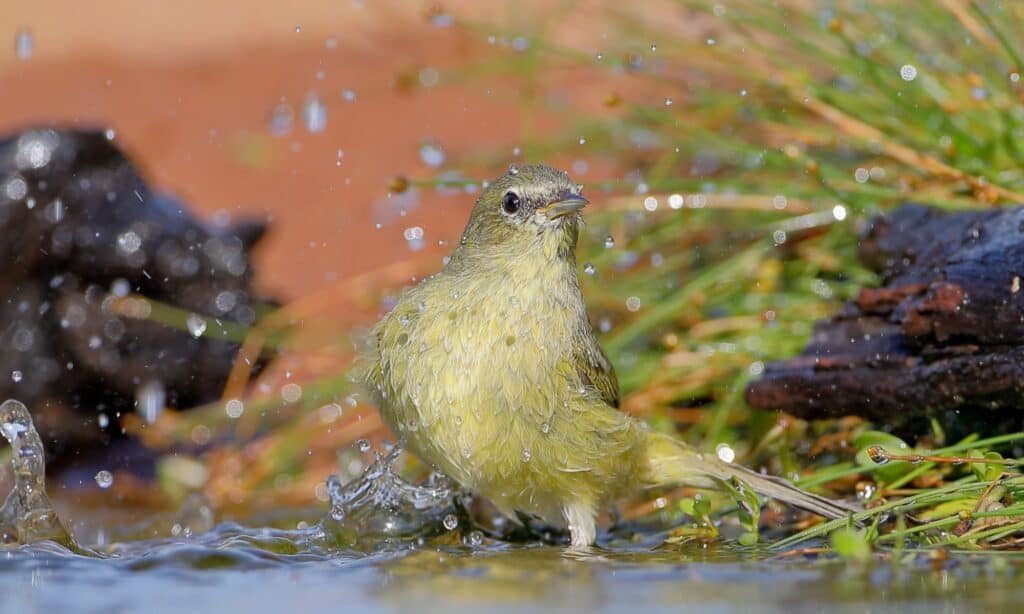
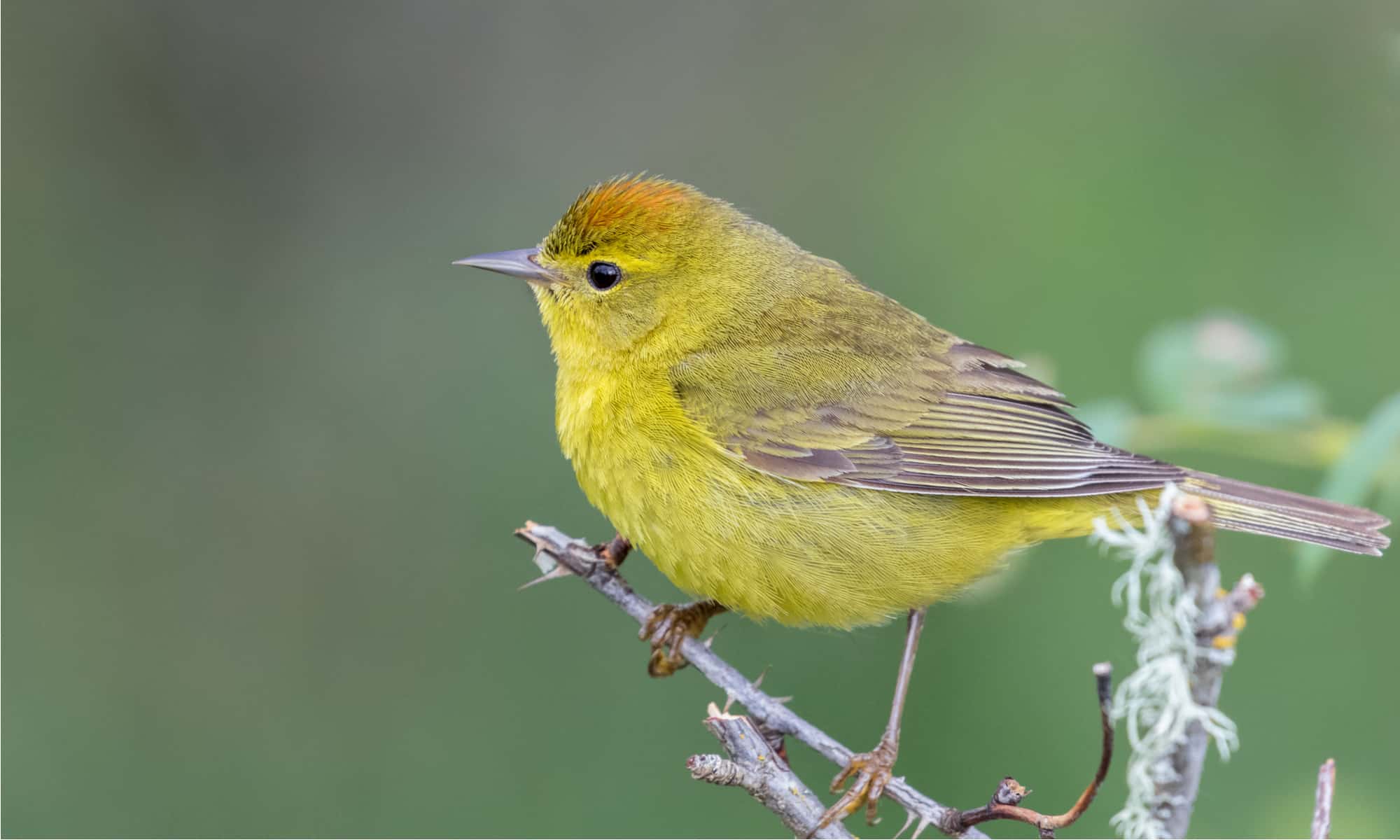
Orange-crowned warbler (Leiothlypis celata), Texas, USA. The typical habitat of this warbler is shrubby thickets or thick woodlands.

Orange-crowned Warbler (Leiothlypis celata), Texas, USA. The typical habitat of this warbler is shrubby thickets or thick woodlands.

Appearance

While many birds have beautiful colors that help them stand out to their partners, the warbler is quite plain. Despite the color orange being in their name, you won’t likely see any streaks of the vivid hue across the sky; they only show off their orange crown when they get excited because the head feathers raise.

The songbird is usually a muted gray to olive-green, though the contrast varies among the different subspecies. The dullest is the one classified as L. c. celata, which is a pale grey, while the brightest yellow is seen on the Pacific Coast orange-crowned warbler. Dark green feathers adorn the L. c. sordida subspecies. Typically, the birds that remain further west tend to have more yellow.

The rest of the body of the warbler is rather slim at just 9 grams in weight and just over 5 inches in length. They have a sleek bill and warm yellow feathers beneath the tail. The telltale sign that you see an orange-crowned warbler is the lack of wing bars across its 7.25-inch wingspan.

Behavior

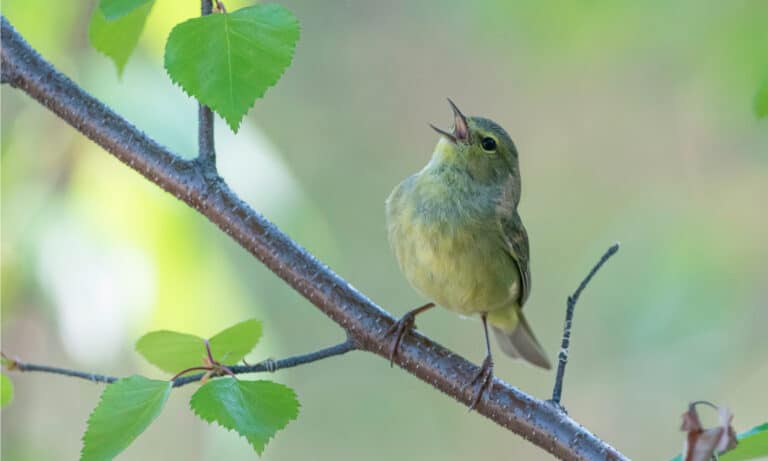
The most notable part of the orange-crowned warbler is its song because it is so varied. Other wood warblers stick to just a small melody, but the call of this warbler even changes from one male to another, making it their signature among potential mates. Some of these songbirds will collect in “song neighborhoods” made of two to six males who mimic the songs of each other. These groups will stay together for years.

The flight of the orange-crowned warbler is quite fast, allowing it to catch prey quickly.

Migration Pattern and Timing

These warblers are migratory birds, starting in the spring at an earlier time than other species. They tend to stay longer on the breeding ground, and they will go a higher range into northern Canada than most other warblers are willing to go. Their migration is solely based on the amount of food available to them and the amount of time they can stay warm. Once the temperature becomes too cold and food becomes scarce, they journey down to Mexico and further south again.

Diet

The orange-crowned warbler bases its main habitat on where it can source food. They’ll forage from perch to perch, though they stay fairly close to the ground.

What Does the Orange-Crowned Warbler Eat?

This songbird eats many different insects and their larvae within their available habitat. They will also consume nectar, berries, flowers, and other nutrients. If you want to spot one in your yard, they are attracted to bird feeders with sugar water, suet, and peanut butter.

Predators and Threats

Due to the small size of the orange-crowned warbler, they are easy prey for birds of prey, like hawks and eagles. Domestic and wild cats alike can also catch and eat them.

The biggest threat to this type of bird has to do with the changing weather. In the spring, heatwaves can be detrimental to chicks who haven’t left the nest yet. Commercial development is also a threat as the construction of new builds takes away from their natural habitat.

What Eats Orange-Crowned Warblers?

The orange-crowned warbler is at risk of being hunted primarily by birds of prey and cats.

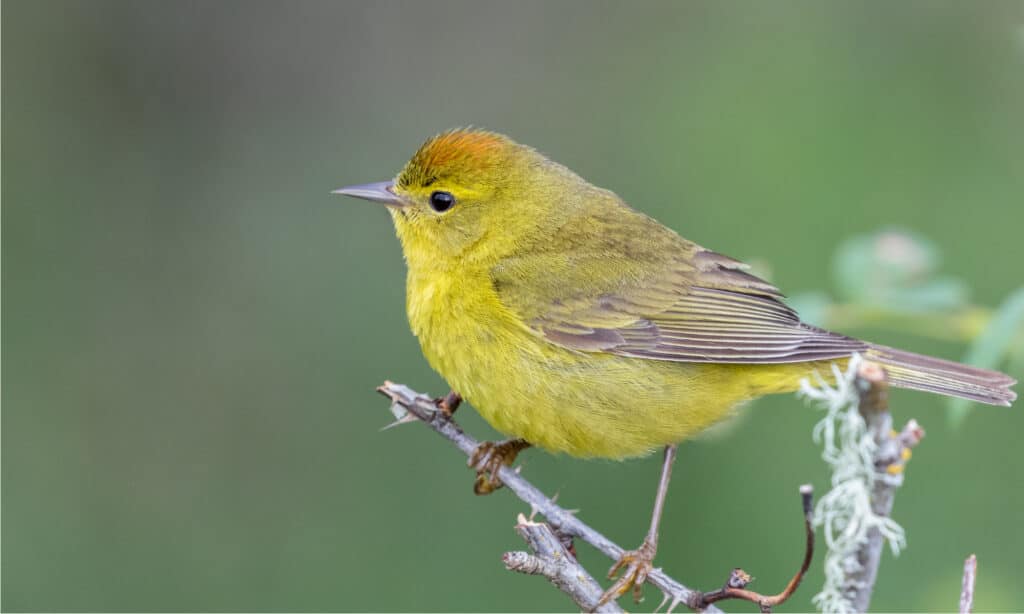
Orange-crowned Warbler sitting on a branch, singing. Some of these songbirds will collect in “song neighborhoods” made of two to six males who mimic the songs of each other.

Orange-crowned Warbler sitting on a branch, singing. Some of these songbirds will collect in “song neighborhoods” made of two to six males who mimic the songs of each other.

Reproduction, Babies, and Lifespan

When a male warbler wants to court a female, he’ll follow her around as he droops his wings, spreads his tail, and points his bill up. This pattern will continue until she mates with him, though he will not sing his song until after she’s made a nest. He will even show his crown feathers if another male attempts to interrupt this pairing. While he won’t allow other male orange-crowned warblers near his mate or his nest, other species are tolerated easily.

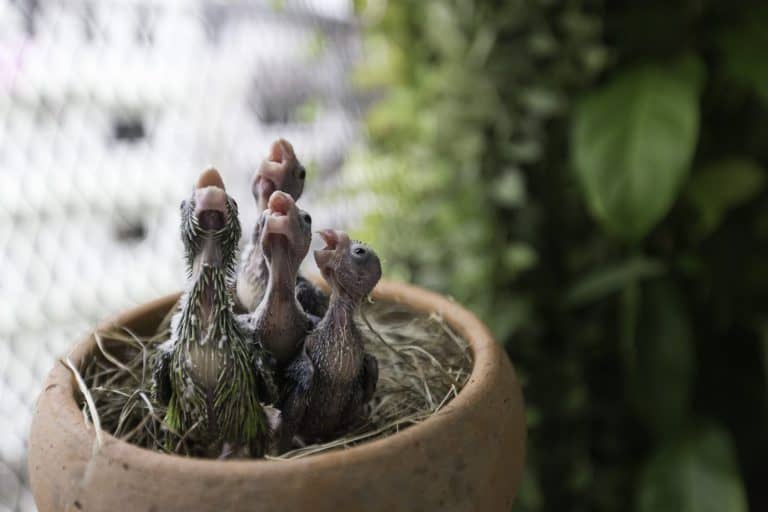
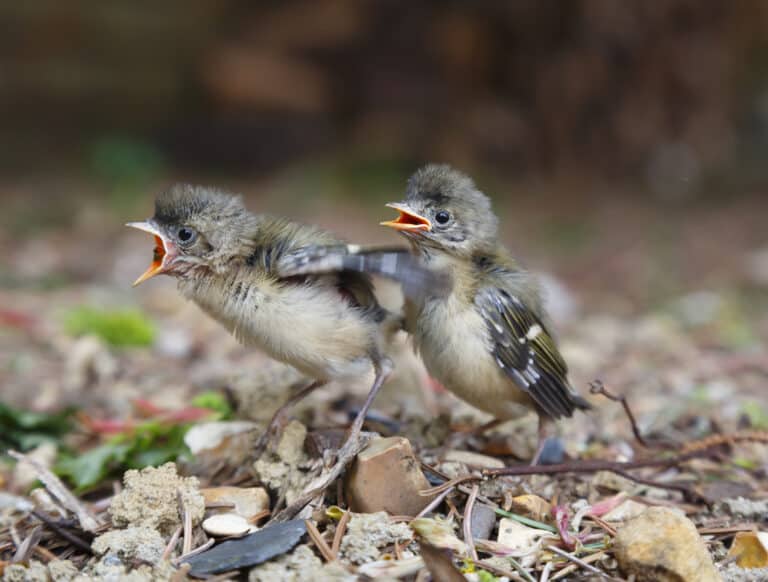
The orange-crowned warbler typically lays 3 to 6 eggs in her nest annually, with just one brood each year. These eggs are white or cream in color, featuring reddish-brown speckles on the side that is larger. Incubation is relatively short, only lasting about 11-13 days. Upon hatching, they are covered in dark gray down feathers that are sparse along their bodies. Their eyes are closed, but they are able to gape for food and raise their heads.

When the young chicks are born, they receive regular care from both parents, including their feeding. Between 10 and 13 days old, they are ready to leave the nest, though they will continue to improve their flight. Even though the chicks won’t continue to live in the nest, the parents will still feed them for a few days.

Orange-Crowned Warbler Population

Currently, the estimated population of orange-crowned warblers is about 82 million individual birds, spread across North and Central America. Considering that the numbers are steady, the IUCN sees this bird as of “least concern” for conservation efforts.

Still, that doesn’t mean that they’ve always been safe. From 1966 to 2014, the North American Breeding Bird Survey estimated that the population declined by about 34%, threatened by the change in suitable habitat. The biggest threat to this population is the steady change of global warming, which changes where they can migrate and when they breed. Even with a lifespan of several years, crashing into towers and wind turbines can lead to an untimely death.

View all 88 animals that start with O

Sources

  1. All About Birds / Accessed March 1, 2022
  2. Bird Web / Accessed March 1, 2022
  3. Wikipedia / Accessed March 1, 2022
  4. What Bird / Accessed March 1, 2022
  5. Audubon / Accessed March 1, 2022
Thank you for reading! Have some feedback for us?


Orange-Crowned Warbler FAQs (Frequently Asked Questions)

Yes. They only live in the East during late spring and late fall. In a few low habitats, they are found in the southeastern US as well. The telltale sign that they are nearby is their song, which has a high and sharp sound to it.