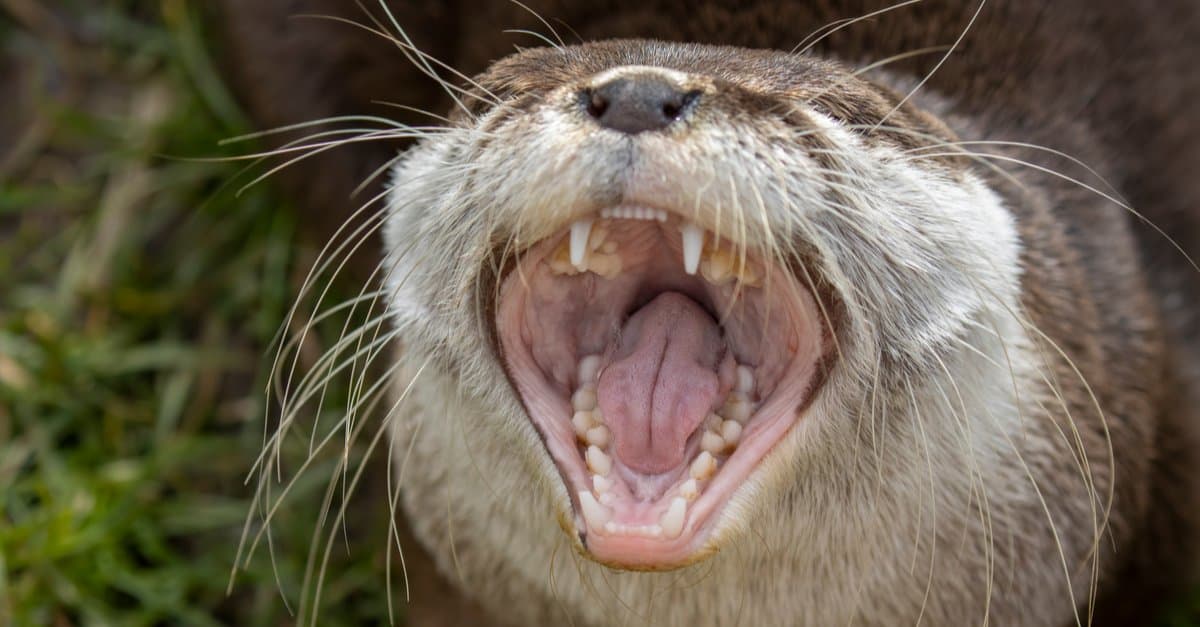

Otters are carnivorous mammals in the Mustelidae family, which includes weasels, wolverines, badgers, stoats, and ferrets, among others. There are 14 living otter species inhabiting aquatic habitats all over the globe, with the exceptions of Australia and Antarctica. They range widely in size, from the domestic cat-sized Asian small-clawed otters to the human-sized giant otters of South America that can reach up to 6 feet long.
Otters have high metabolisms and high energy requirements. They spend 5 to 8 hours per day foraging or eating. Their prey often includes hard-shelled aquatic animals such as crabs, clams, and crustaceans. But what kind of teeth do otters have that allow them to eat hard-shelled prey? Keep reading to learn everything you need to know about otter teeth.
What Kind of Teeth Do Otters Have?
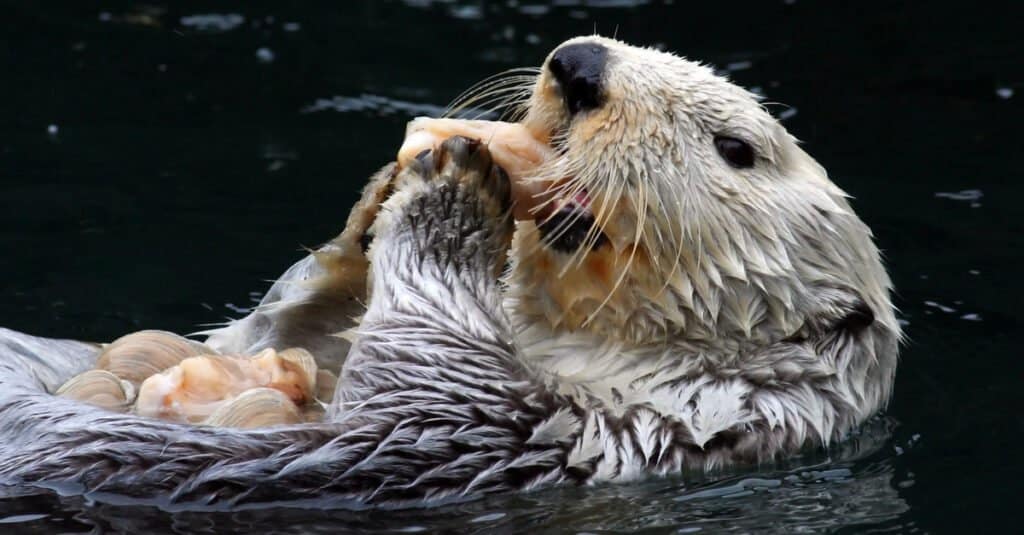
Sea otters primarily eat hard-shelled prey.
©Kirsten Wahlquist/Shutterstock.com
Otters’ teeth differ depending on their species and habitat, which in turn determine their diet and how they capture prey. Twelve of the fourteen otter species are semi-aquatic and live in freshwater environments. Two species, the sea otter and the marine otter, live in the ocean, but only the sea otter is fully aquatic.
River otters primarily have a diet of bony fish, but they also consume crustaceans, reptiles, amphibians, small mammals, and birds. They have sharper and more pointed teeth than sea otters, so they can catch and grip slippery prey with their mouths. River otters also have a strong bite to secure prey until they can take it back to land.
Sea otters, on the other hand, feed on mainly shellfish. They do not have as many incisors as river otters do and their teeth tend to be flatter and broader. Sea otters do not catch prey with their mouths as river otters do. Instead, they use their forelimbs. Most of a sea otter’s teeth are used for crushing the shells of invertebrates instead of grasping and shearing like a river otter’s teeth.
River Otter Teeth

Adult river otters have large carnassial teeth to shear through meat, hide, and bone.
©iStock.com/DanielLacy
River otters, sometimes called land otters, have the usual set of mammalian teeth, which include incisors, canines, premolars, and molars. Adult river otters have a total of 36 teeth, composed of 12 incisors, 4 canines, 14 premolars, and 6 molars. The typical dental formula of a river otter is: incisors 3/3, canines 1/1, premolars 4/3, molars 1/2. However, the number of teeth and the formula can vary slightly by species. For example, Asian small-clawed otters typically only have 34 teeth, as they often lack the first upper premolar.
River otters have sharp incisors and long, pointed canine teeth for grasping slippery prey and delivering a killing bite. Their lower canines curve slightly backwards to keep prey from escaping. They have multicusped, or serrated, molars and premolars that crush hard-shelled prey such as crayfish. Otters have large carnassial teeth, specifically the fourth premolar on the upper jaw and the first molar on the lower jaw, which are adapted for slicing through meat, hide, and bone. River otters are said to have a moderately strong bite force among mustelids, being strongest at the carnassials.
Sea Otter Teeth
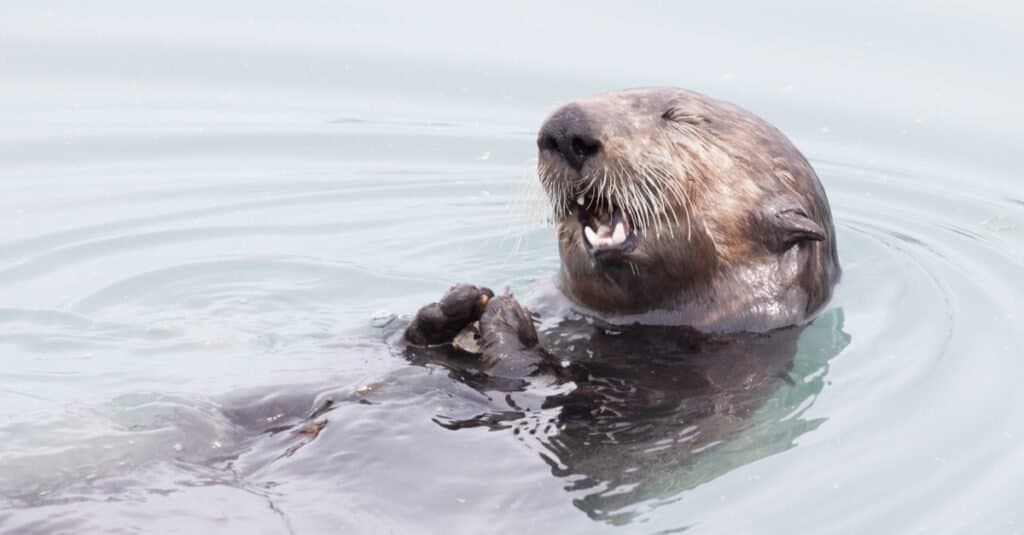
To protect against breakage, sea otters have fracture-resistant tooth enamel.
©Dai Mar Tamarack/Shutterstock.com
Sea otters have fewer teeth compared to freshwater otters. Adult sea otters have 32 teeth, which include 10 incisors, 4 canines, 12 premolars, and 6 molars. The typical dental formula of a sea otter is: incisors 3/2, canines 1/1, premolars 3/3, molars 1/2.
Sea otter dentition differs from that of river otters and most other carnivores. They have only two incisors on their lower jaw and lack the first premolar teeth in both their upper and lower jaws. Additionally, they do not have the carnassial premolar and molar teeth typical of most carnivores. Since a sea otter’s diet consists mainly of shelled invertebrates, they have strong, bunodont molars with low, rounded cusps to enable them to crush and grind prey. The enamel on their teeth is also fracture-resistant, protecting against breakage. Their incisor teeth are not used for tearing flesh; instead, they are used to scrape prey from inside shells. Sea otters are said to have a formidable bite of up to 615PSI, but this is not definitively established in scientific literature.
Teething Milestones

Baby river otters begin to get their teeth at around 3 weeks old.
©Ondrej Chvatal/Shutterstock.com
Baby river otters are born without teeth. Their permanent teeth begin to come in at around 3 weeks old. At around three months, their canines begin erupting. They are believed to have a full set of teeth by the time they reach 1 year.
In contrast, a baby sea otter already has around 6 to 10 teeth at birth. These teeth include four canines and only a pair of incisors. They will have their full set of permanent teeth by about 9 months of age.