
Parakeets are small or medium-sized birds with long tails. Parakeets originated in Australia, where they are known as budgerigars or budgies. However, they are popular birds that make excellent pets and are now found all across the world. There are around 115 species of parakeet, and they can be seen in a wide variety of colors. Let’s take a look at some more interesting facts about parakeets!
1. Parakeets Can Talk
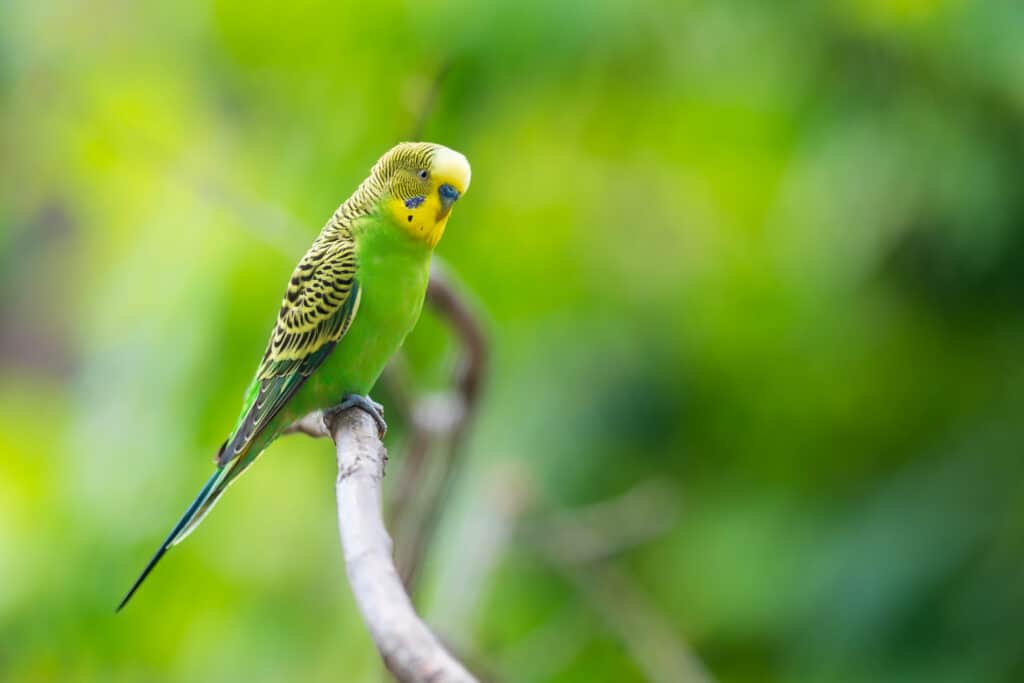
Surprisingly, parakeets are incredibly good talkers.
©Ondrej_Novotny_92/Shutterstock.com
Parakeets are one of the most vocal birds in the parrot family. They are known for their ability to talk back by mimicking sounds they hear. Although they don’t have vocal cords, they have a highly developed system of sounds, shrills, and squawks that are employed in warning others of predators or the availability of food in a particular vicinity.
2. The Parakeet is a Flock Bird
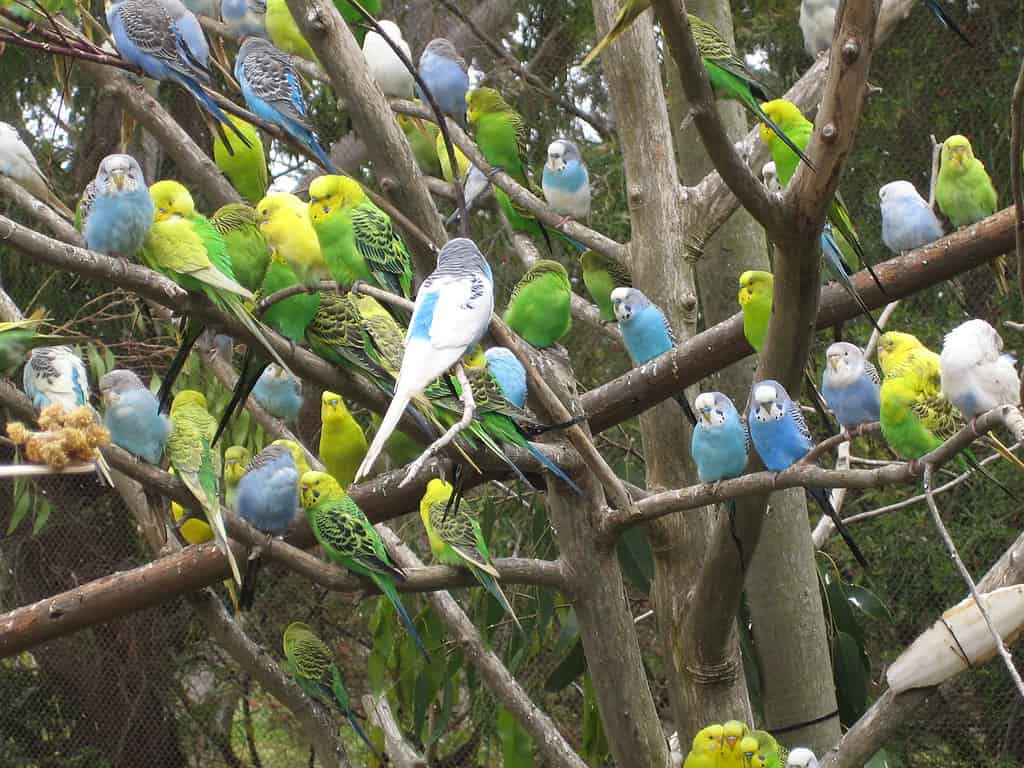
Parakeets are flock creatures, preferring to congregate with others.
Parakeets are flock creatures, and their entire world is their flock. A parakeet without a flock is incomplete and lonely; as such, they should be kept in pairs, at least when in captivity. A pair of parakeets will generally be happier than a single parakeet. Single parakeets can become extraordinarily devoted pets. Because they are instinctively driven to seek out social relationships, a lone parakeet may tame itself and bond with you. In this case, you will become your parakeet’s flock.
3. The Cere Above a Parakeet’s Beak Reveals Its Gender
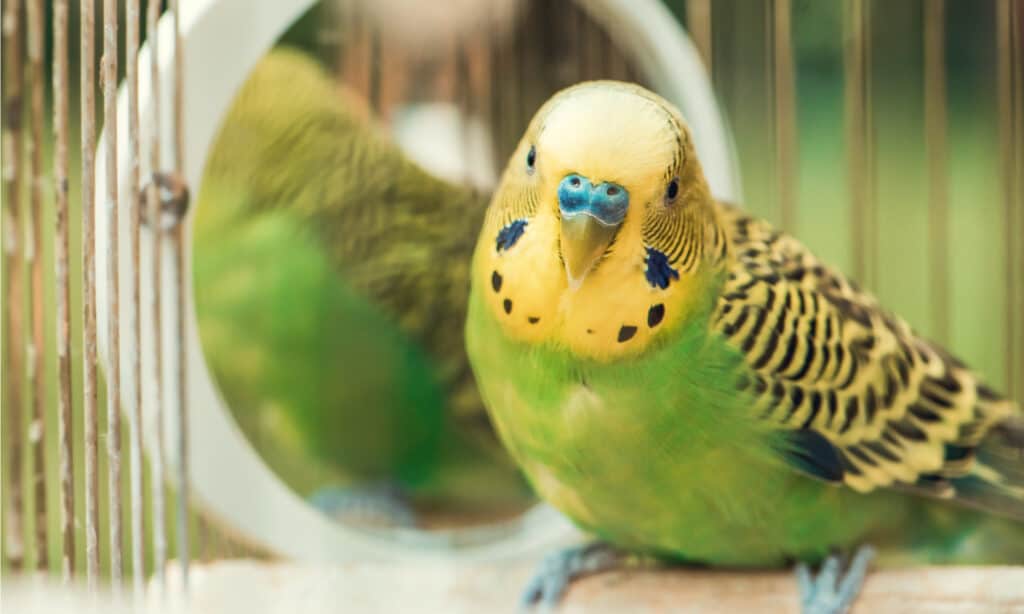
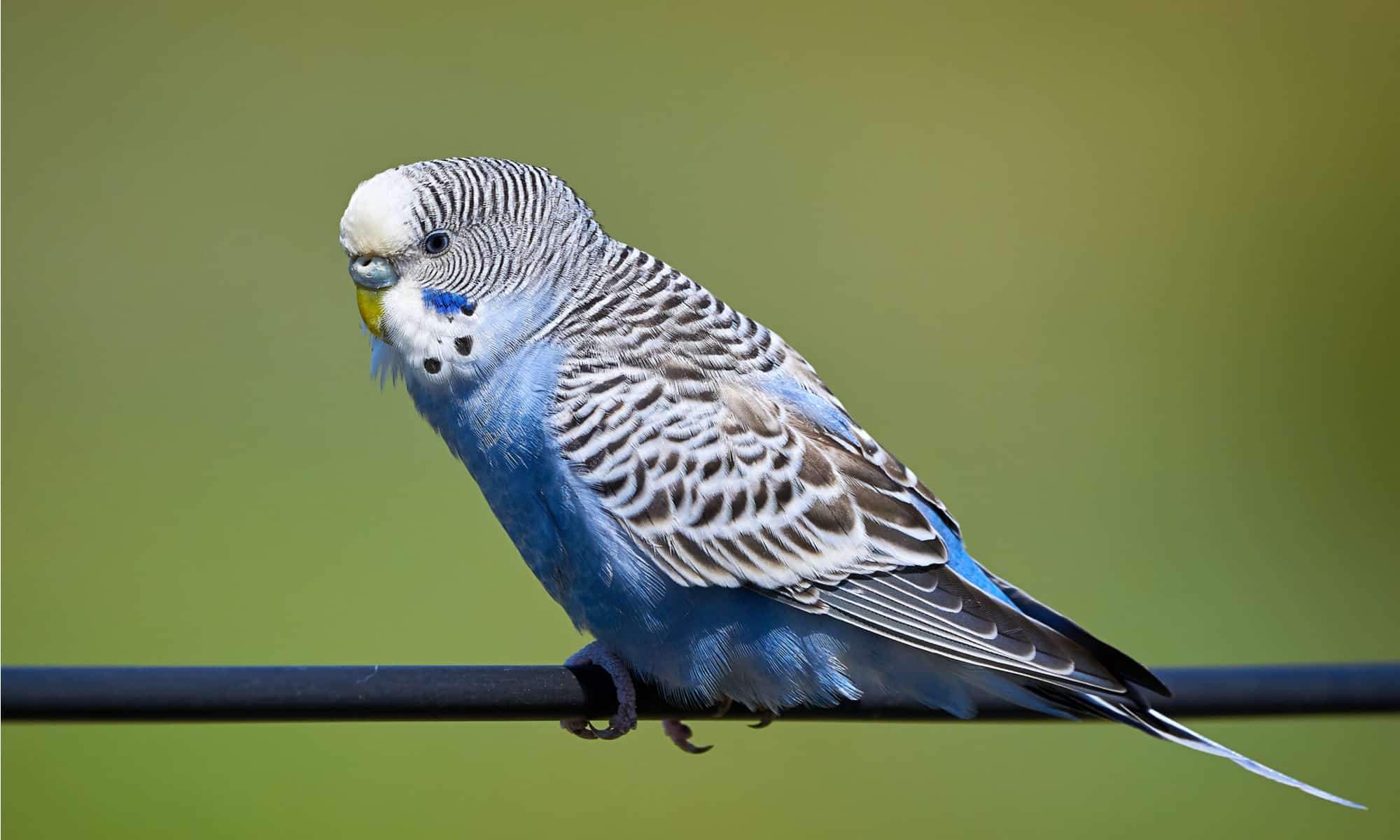
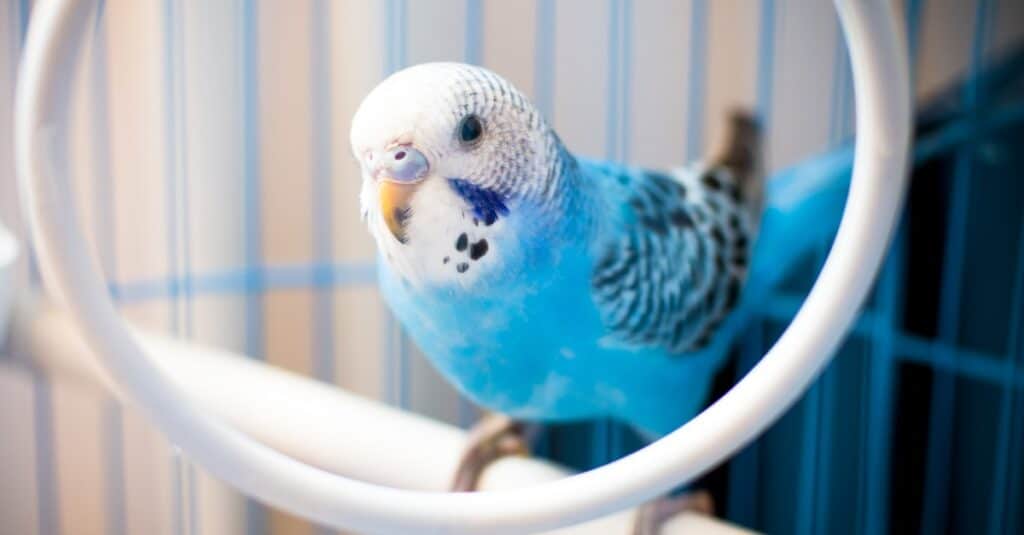
The sex of a parakeet can be deciphered by the color of the cere just above its beak. The male’s cere is blue while the female’s is brown.
©Vyaseleva Elena/Shutterstock.com
The sexes look alike but can be told apart during the breeding season by the cere’s color. The cere is a fleshy covering located directly above a parakeet’s beak. The cere is a certain color depending on the bird’s sex. Most mature male parakeets in the breeding season have a bright or royal blue cere, while the female may be brown. Juveniles appear duller in color than adults.
4. Parakeets Do Not Create Their Nest
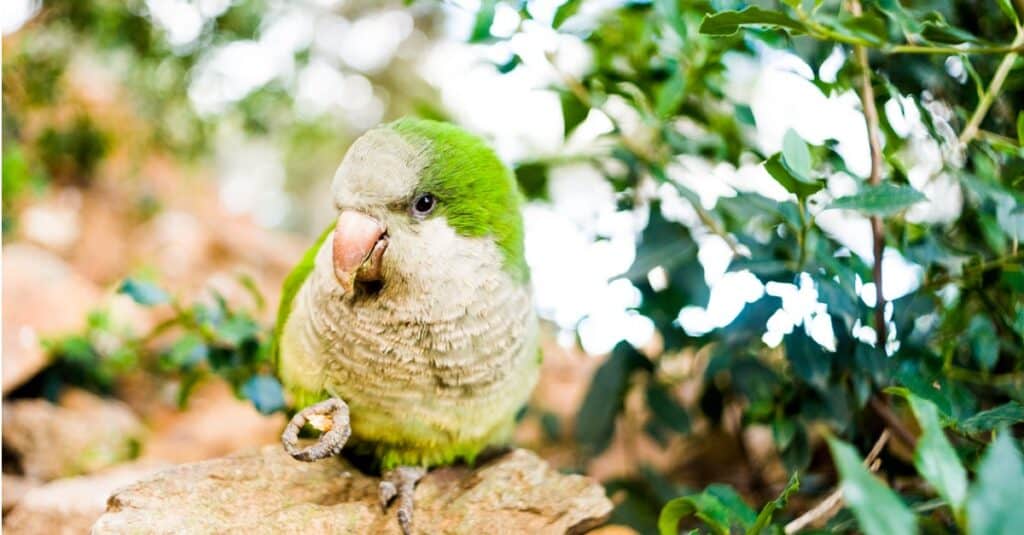
Parakeets inhabit the mainland, where they like to nest in cavities along fences, logs, eucalyptus trees, or hollow trees.
©iStock.com/beingbonny
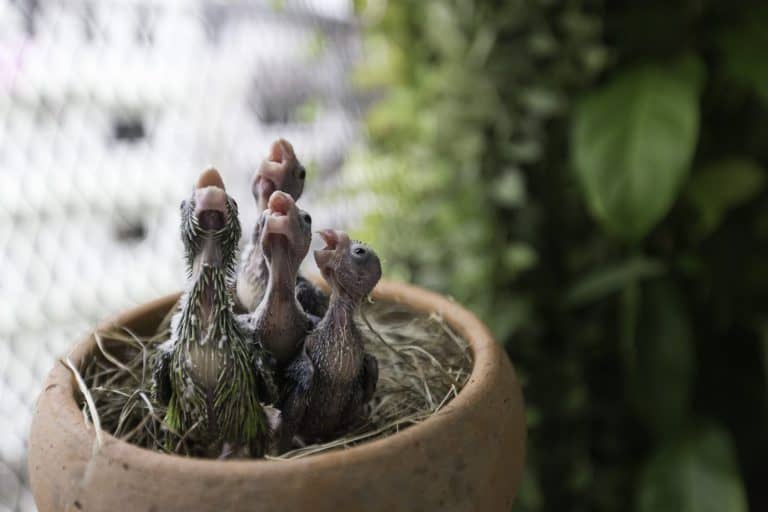
Instead of making nests, parakeets typically nest in holes and cavities in trees or walls, which they will line with feathers and bark. The females tend to lay four to eight eggs over a few days. These eggs are incubated for 18 days, and the chicks leave the nest about a month after hatching.
5. Parakeets Have Four Toes
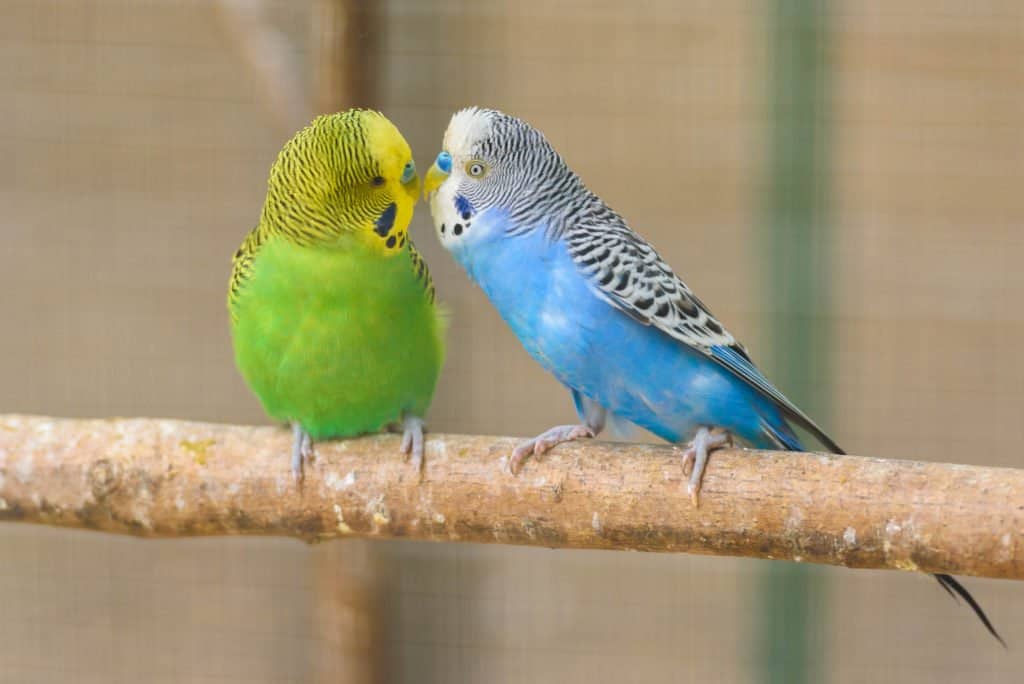
Parakeets are zygodactyl, meaning they have four toes on each foot — two facing forward and two facing backwards.
©Uliya Krakos/Shutterstock.com
One fascinating fact about a parakeet is the presence of four toes on each foot, two facing forward and two facing backward. This arrangement is called zygodactyl. These toes allow for grabbing toys, holding objects, and climbing. However, unlike parrots, they do not use their feet to eat. Instead, they make good use of their beaks to eat.
6. Parakeets Love Attention and Can Make Great Companions

Parakeets make wonderful pets, given their social nature.
©Lordn/Shutterstock.com
Parakeets are very active and social birds, so they need adequate attention to be happy. They can become very nervous and can be seen pacing around the cage when they feel they are not getting enough attention. They are content with interacting with their pet parents, conversing, and having enough room to fly and play. Parakeets are affectionate, intelligent, and make amazing companions.
7. Parakeets Are Omnivores
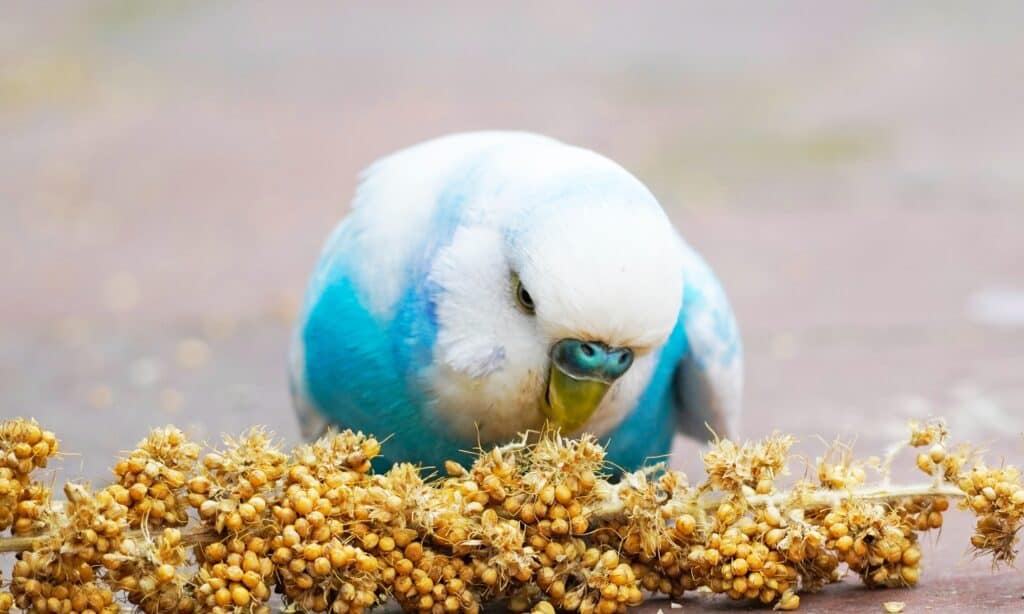
Parakeets are omnivores that mostly eat seeds, but will also consume fruits and vegetables.
©iStock.com/EllyMiller
Although parakeets are omnivores, they mostly eat seeds. Their diets are broad, consisting of many nuts, fruits, insects, and plants. They often form large flocks that can become serious pests in grain fields and crops such as corn and wheat. To provide a more nutritionally balanced diet, fruits and vegetables should make up 20-40% of your parakeet’s diet, while a 50/50 mixture of pellet and seed should be given.
8. Adult Parakeets Have Few Predators
©iStock.com/emranashraf
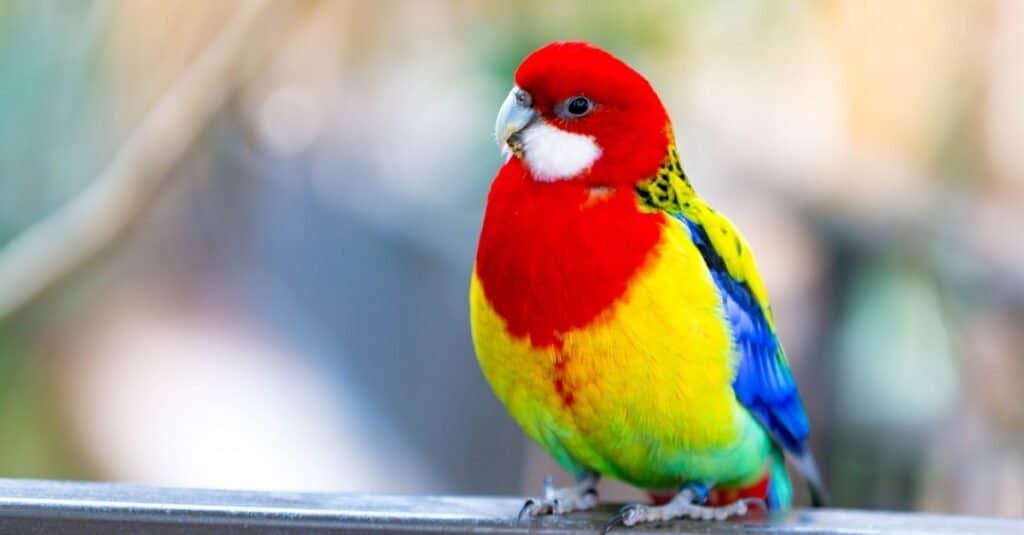
Interestingly, adult parakeets have few predators. Scientists believe that the reason for this is that these birds flock in groups from a dozen to over a hundred, and that predators are often confused when they see them.
9. Parakeets Regurgitate Food
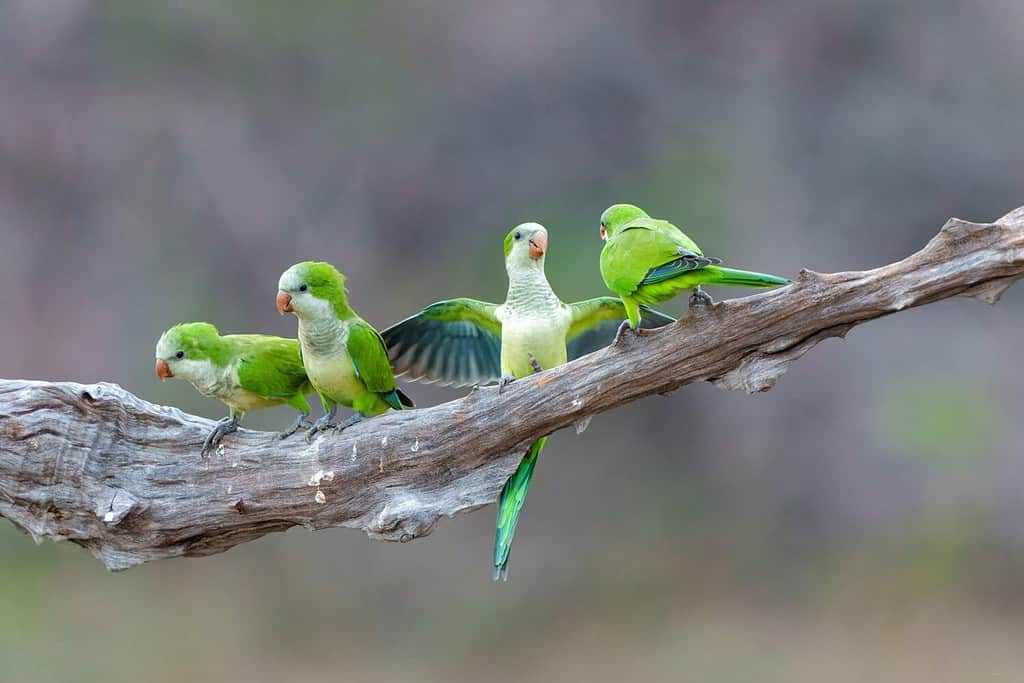
Parakeets regurgitate food to feed their chicks.
©Henk Bogaard/Shutterstock.com
While their chicks are in the nest, parakeets feed them by regurgitating food for them. The food is usually partially digested and consists of seeds and grains. The mother continues to feed them until they fledge at approximately five weeks old.
10. Parakeets Can Live for 20 Years
Parakeets can live for 15 years in captivity.
©iStock.com/averess
The lifespan of a parakeet changes, depending on whether it is in the wild or not. Parakeets can live for five to 10 years in the wild, but they may live seven to 15 years in captivity, with some even reaching 20 years. This is possible if they are managed properly and on a healthy diet.