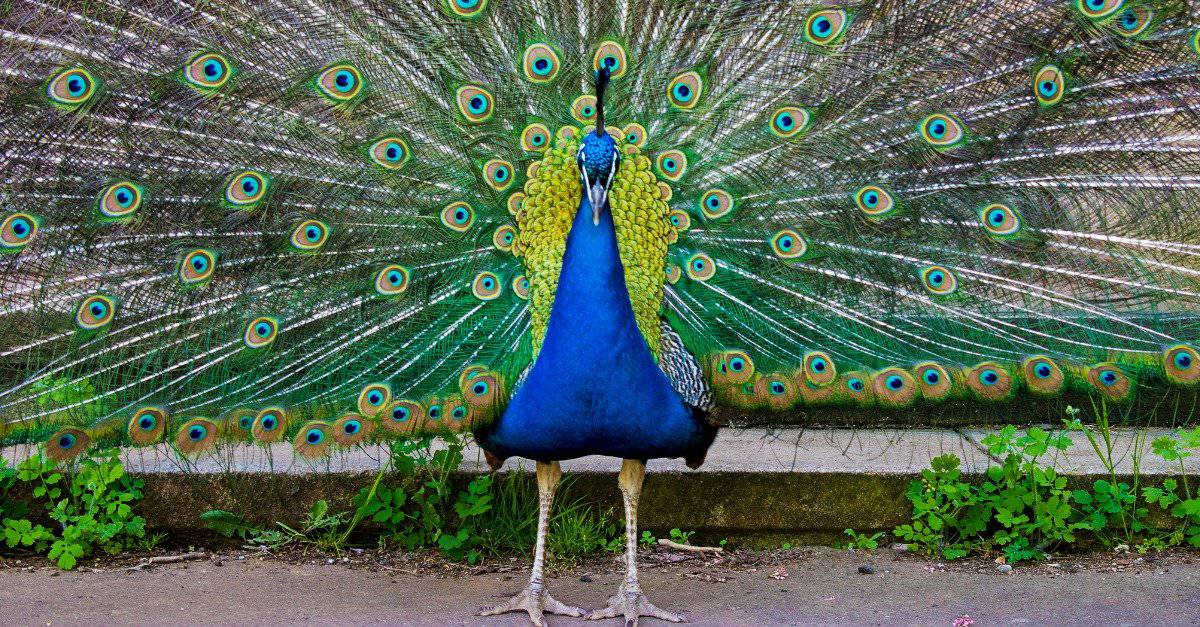

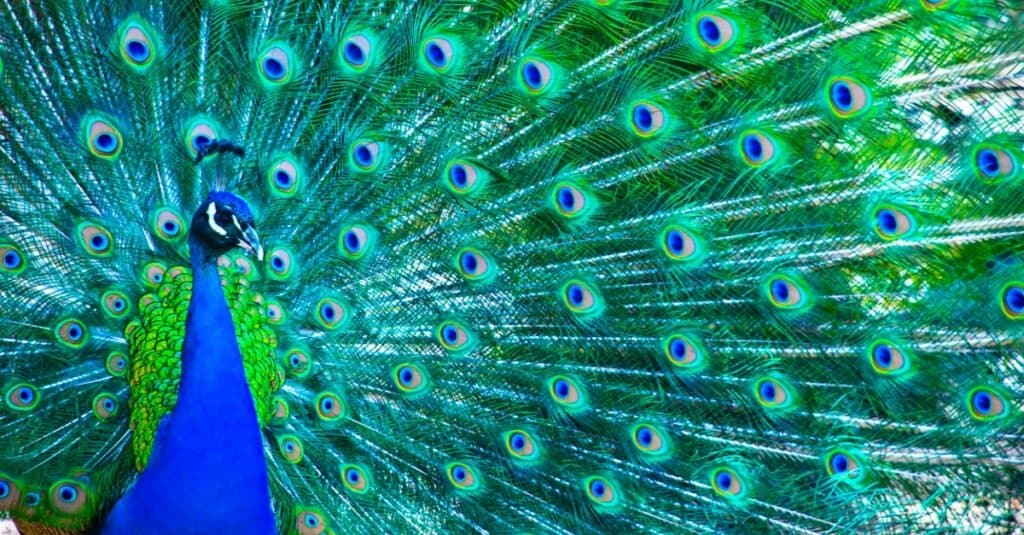
Male peacocks are among the showiest birds in the world. They like to strut around, displaying their bright iridescent colors and ornate tail plumage shimmering in the sun for all to see. Their elaborate tail plumage is believed to play a crucial role in courtship displays. The physical characteristics of the tail feathers, including their length, their symmetry, and even the number of “eyespots” on the ends, are thought to convey important information about the male’s health and vitality to potential mates. This is because maintaining their tail feathers requires a lot of energy and therefore, a lot of nutrients. So what do peacocks eat? Keep reading to find out.
Different Peacock Species
The peacock is a member of the pheasant family. There are two Asian species: the Indian peafowl of the Indian subcontinent and the green peafowl of Southeast Asia. There is also one African species, the Congo peafowl. All three have a generally similar omnivorous diet, but their diets vary by the resources available in each environment.
It should be noted that the male bird is a peacock, while the female is called a peahen. The group as a whole is called peafowl. However, for the sake of this article, we use the word “peacock” to include both male and female birds.
The Peacock Diet
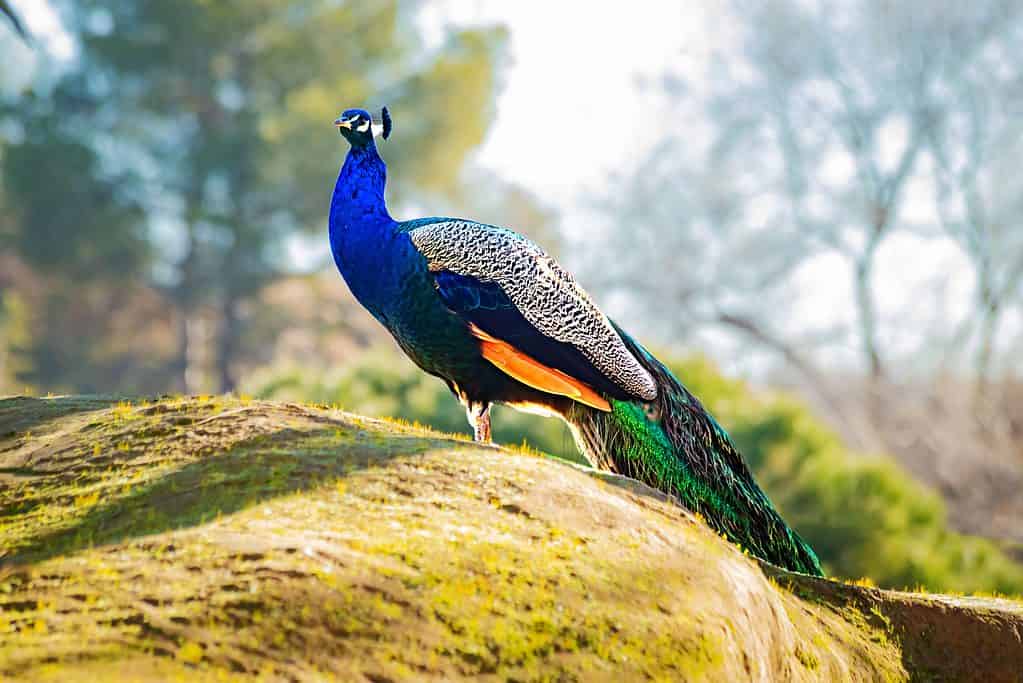
Peacocks are omnivores, but their diet is more plant matter than animal matter.
©Perpis/Shutterstock.com
Peacocks are best described as opportunistic omnivores. They eat a wide variety of foods, including grains, grasses, berries, leaves, fruit, seeds, flowers, insects, worms, and small reptiles and mammals. They will also sometimes raid cultivated crops such as tomatoes and peppers. Their diet depends on what is available based on the season and location. For instance, the diet of the Congo peafowl is more likely to consist of oil palm and African breadfruit. In the Indian state of Gujarat, peacocks like to eat the berries of certain buckthorn plants. Peacocks also require a great deal of water.
Although there is some variation between species, peacocks typically eat the following foods:
- Grains
- Grasses
- Berries
- Leaves
- Fruit
- Vegetables
- Seeds
- Flowers
- Insects and other invertebrates
- Small rodents
- Small reptiles (snakes, lizards)
Peacocks, like many birds, are specially adapted to a plant-heavy diet. To break down food, they have a specialized organ called a gizzard, which is part of their digestive system. This organ helps them grind up tough food such as grains and other plant material. Peacocks swallow pebbles and store them in the gizzard to assist with the grinding process.
How Do Peacocks Forage for Food?
In the wild, peacocks are daytime foragers. They sleep in large groups at night, usually concealed in tall, open trees. They break up into smaller groups in the morning to forage for food. They normally take a midday break to preen their feathers while resting comfortably in the shade, and then they return to foraging one last time before the darkness sets in.
In the non-breeding season, peafowl foraging groups usually consist of both males and females in equal numbers. However, once the breeding season arrives, the foraging group consists of a harem with a single dominant male and multiple breeding females. The other males are left to forage together in bachelor groups.
What Do Peacocks Eat in Captivity?
©iStock.com/AlexeyVis
Peafowl have been kept in captivity for hundreds of years. They are often kept in zoos and as pets. In captivity, peacocks are usually fed a combination of pellets, chopped greens, chopped fruits, bread, cooked rice, corn, and other food items meant to replicate their naturally omnivorous diet.
Captive peacocks have long lifespans, with some reports suggesting they can live up to 40 years, though most captive peacocks live 20 to 25 years. This is because they have less to fear from starvation, predation, and disease. However, problems can arise if they become too sedentary. Wild peacocks must move around constantly in search of food, but in captivity, they often expect food to come to them. As a result, they may develop gout and kidney problems that can shorten their lives.