
Scientifically, African penguins are known as Spheniscus demersus. They’ve also been given the monikers South African penguin, jackass penguin (because they sometimes bray like a donkey), black-footed penguin, and Cape penguin. But, no matter what you call them, African penguins are some of the cutest birds on the planet — and some of the most endangered. Here, we’ll learn ten great African penguin facts and find out exactly why these wonderful birds are so close to extinction.
1. African Penguins Can’t Fly
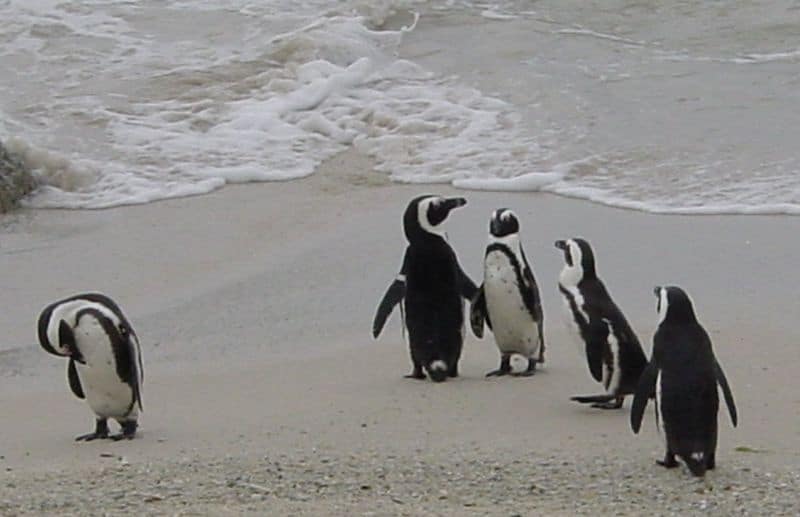
Unlike other seabirds, African penguins do not, and cannot, fly.
©tato grasso, CC BY-SA 2.5, via Wikimedia Commons – Original / License
All penguins are flightless; their bodies are adapted for swimming through cold marine waters like avian torpedoes. One of the most interesting African penguin facts is that these birds may not fly, but they’re excellent swimmers. They can dive up to 400 feet deep and hold their breath for over two minutes!
2. They’re Only Two Feet Tall
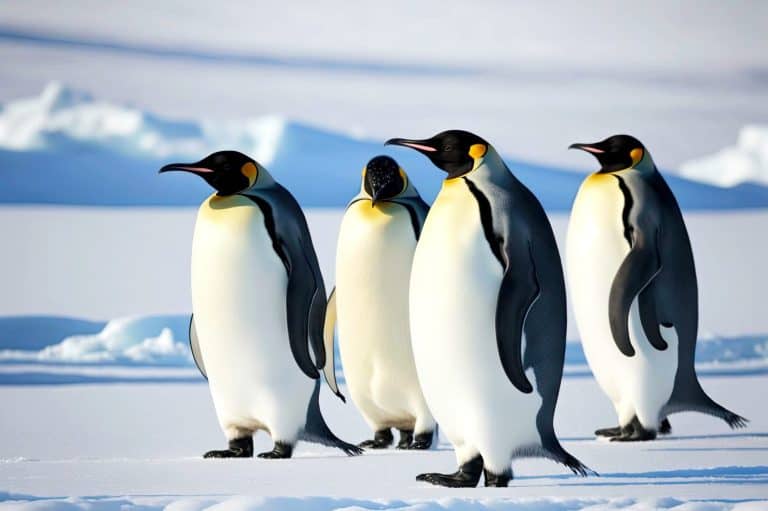
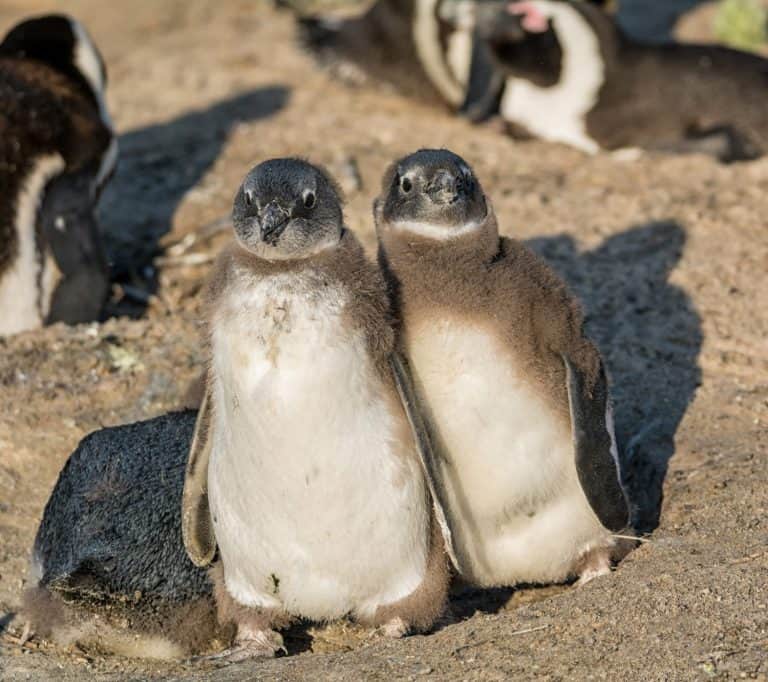
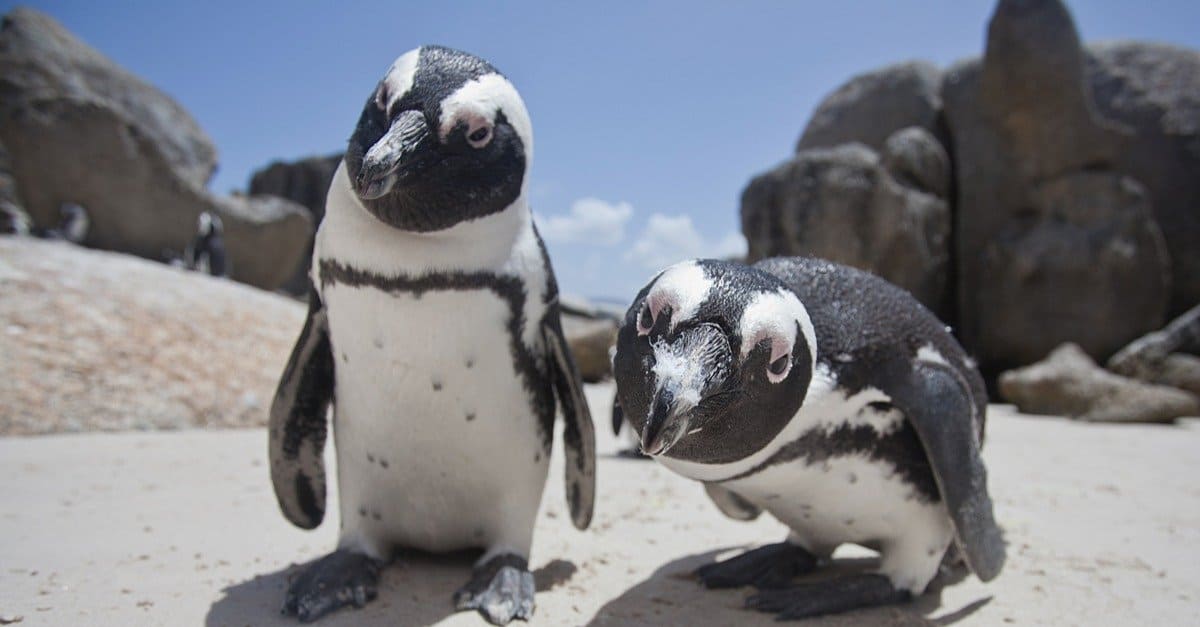
Another fact about African penguins is that they weigh between 5 and 10 pounds and stand between 24 and 28 inches tall. Their bodies are covered in sleek feathers that lay flat against the skin, and they’ve got webbed black feet. Their wings are long and narrow, with short feathers that more closely resemble the fins of a seal than the wings of a bird.
African penguins have graceful, curved necks with dinosaur-like heads that culminate in robust beaks. They have intelligent, appraising eyes with pink eye patches. Their backs are entirely black, as are their ‘flippers.’ Their sides and bellies are characterized by irregularly edged bands of black and white that run roughly from head to foot.
3. They Dive for Fish
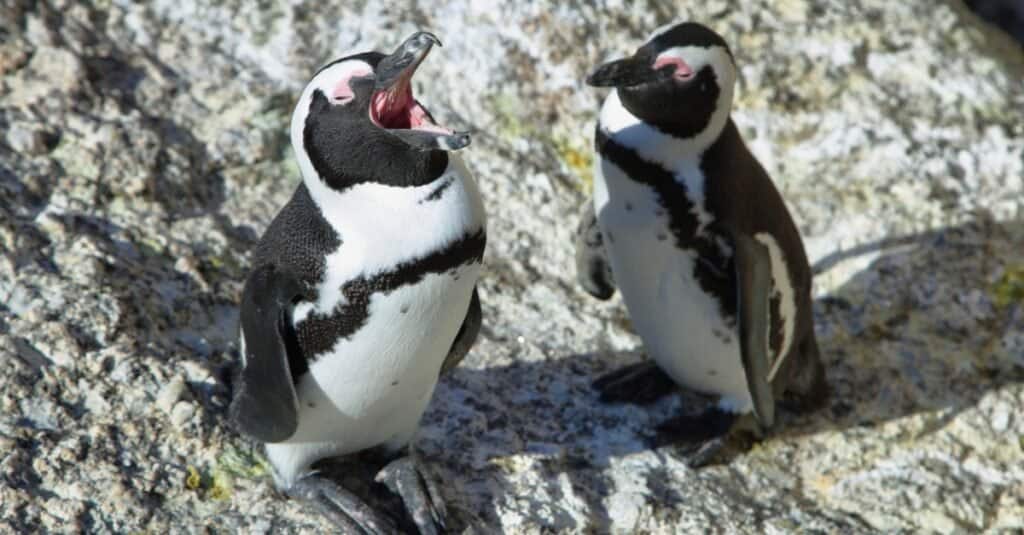
African penguins position food in their beak and swallow it whole.
©iStock.com/estivillml
African penguins are pretty cool birds. They are so cool that they actually use their streamlined bodies to hunt squid and fish. One of the coolest African penguin facts is that these birds are fantastic swimmers. They’ve been known to dive hundreds of feet below the water’s surface in search of prey. On land, they’re slow and awkward and walk with a distinct waddling movement that we’re all familiar with.
4. African Penguins are Endangered
African penguins are currently classified as an endangered species. Since 1900, when they were first counted, their population has declined, and they could face extinction in the near future.
African penguins are particularly important because they are known as an indicator species. In scientific terms, that means that scientists can make confident extrapolations about the overall health of our marine ecosystems based on how well African penguins are, or aren’t doing. Today, African penguins are endangered, and ongoing conservation efforts, including Biodiversity Management Plans, are critical to their survival.
5. They Only Live Off the Coast of Africa
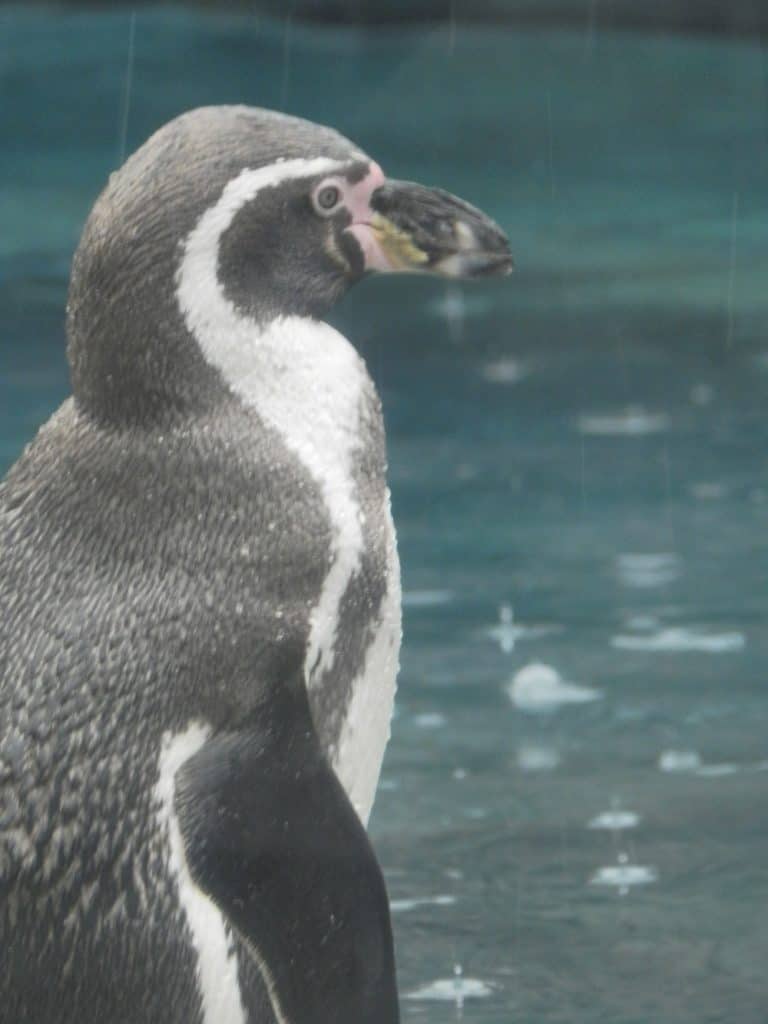
African penguins are native only to Africa.
©Millie Bond – Copyright A-Z Animals
African penguins are found in only one place on Earth: the coast of Africa. Specifically, these flightless birds are resident only in the coastal lands and waters of South Africa and Namibia. They’re also present on many offshore islands along the coast. Because of declining numbers, many of the beaches and islands that were once home to tens of thousands of penguins now have few, if any, African penguins left.
6. They’re the Only Penguins that Breed in Africa
Another incredible African penguin fact is that African penguins are the only penguins that breed in Africa. They don’t migrate when it comes time to raise their chicks. Instead, African penguins build nests right there in Africa to raise their chicks.
7. African Penguins are Often Seen in Zoos
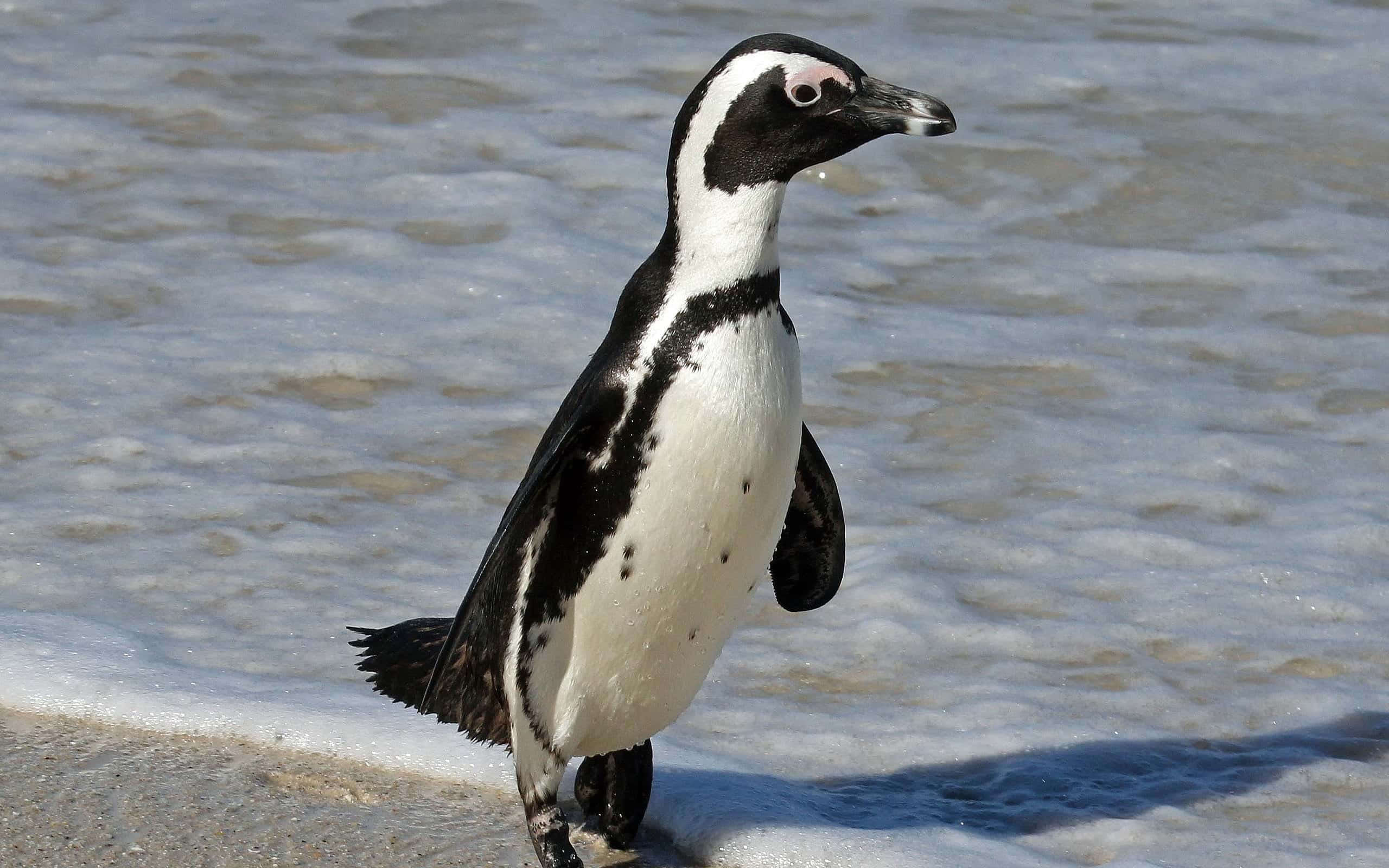
Captive African penguins will be the only members of the species left if drastic measures aren’t taken soon.
©Dick Daniels (http://theworldbirds.org/), CC BY-SA 3.0, via Wikimedia Commons – Original / License
Because they don’t need cold temperatures to thrive, African penguins are a popular choice for zoo penguins. There are also multiple zoos, like the Monterey Bay Aquarium, that house captive breeding populations. These captive populations become increasingly important as wild African penguin numbers dwindle.
8. They Can Talk to Each Other
African penguins use a combination of noise and body language to get the message across. In fact, African penguins have very unique and purposeful vocalizations. When looking for a mate, they bray like a donkey. When they’re trying to figure out where their mate is, they haw. And, when they’re defending themselves, they yell at would-be attackers. A defensive penguin will also bend down low, point its sharp beak at the would-be attacker, and feign fierce pecking.
9. African Penguins’ Eyes Help Them Stay Cool
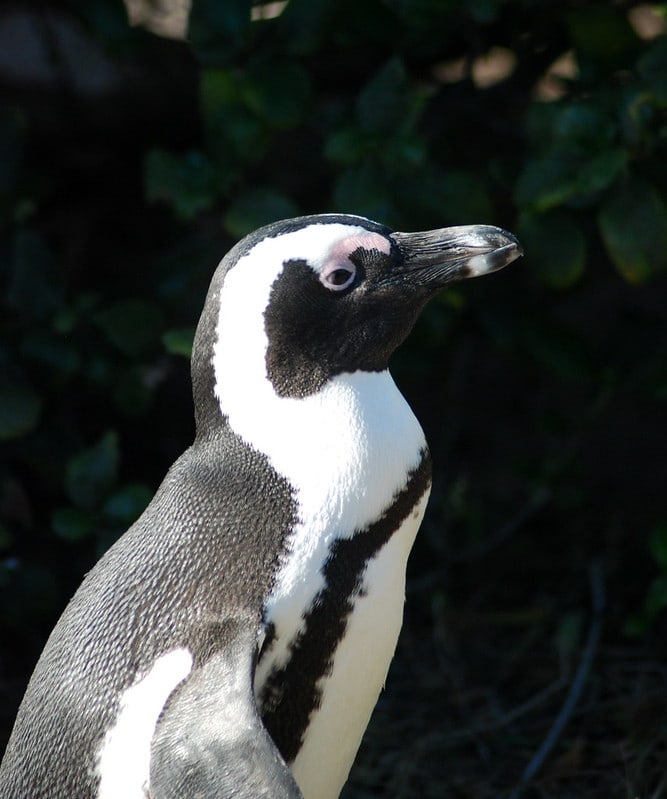
African penguins use their pink eye patches to chill out in hot weather.
It might look like a cute attempt at eyeshadow, but the pink patches around African penguins’ eyes actually serve an important purpose. The pink color doesn’t come from pink feathers; when you see the pink around an African penguin’s eye, you’re actually seeing its bare skin. This bare skin serves as a thermoregulator. When it’s hot out, the penguin’s body actually sends more blood to the pink patches. There, the blood is cooled by the air and recirculates back into the penguin’s body, thereby cooling it down. So, if you’re wondering just how hot it is out, check out the pink around an African penguin’s eyes. The hotter it is, the brighter the pink will be.
10. African Penguins are Extroverts
African penguins live in huge colonies. Penguins are extremely social birds and rely on their mates and the rest of the birds in their colony to survive. As their numbers continue to drop, more and more African penguin colonies are disappearing from African beaches. If we want to preserve these important birds for future generations, we have to act now.