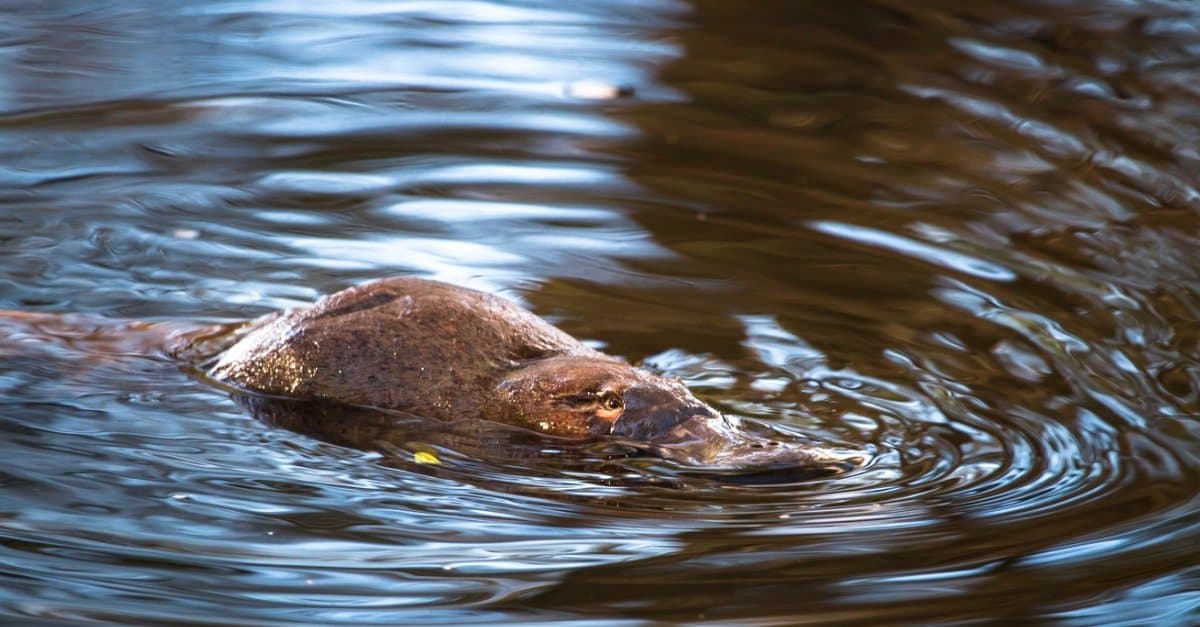

What on earth is a platypus? Even its name seems strange. When Europeans first heard the startling news of a newly discovered creature called the “platypus,” most of them thought it was just a joke. Even when a taxidermy platypus was physically displayed in front of them, many well-respected scientists wondered if someone had just stitched various pieces of different animals together as a hoax.
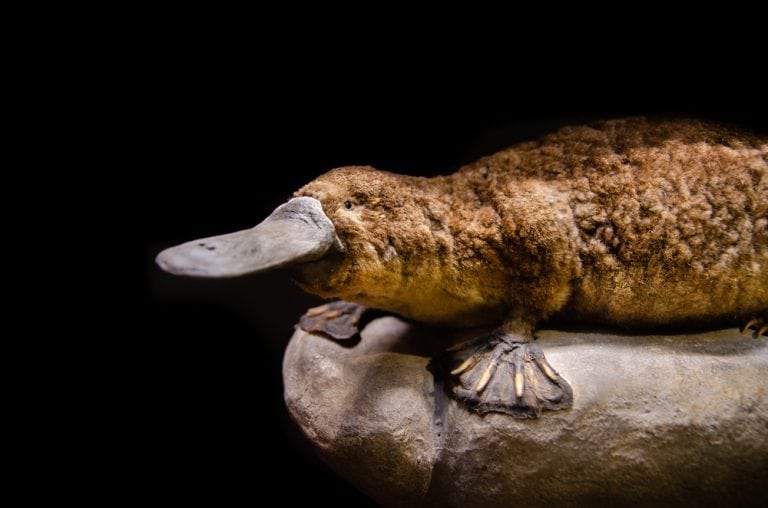
It’s hard to blame their initial scepticism. With a bill like a duck, a tail like a beaver, fur like an otter, reptilian-like stingers, and webbed feet with sharp claws, the platypus certainly does resemble a mythological chimera. As bizarre as it may look, however, this unique animal is definitely real. Unless you live in Australia, though, chances are, you have probably never seen a platypus before.
So, what is this extraordinary creature from down under? Here are some incredible facts about the platypus!
1. Platypuses Are Mammals that Lay Eggs
The mammalian platypus actually lays eggs.
©iStock.com/Michel VIARD
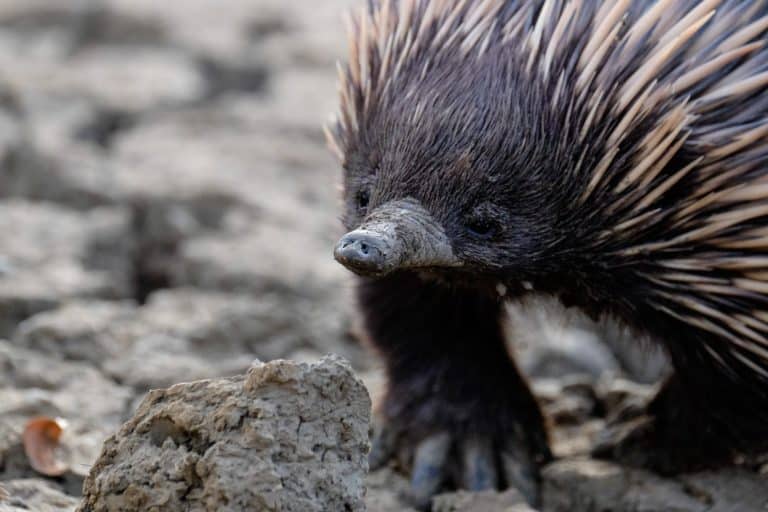
Our first incredible platypus fact is that the platypus is one of the only living species of mammals that lays eggs. That’s right: it’s a mammal, but it lays eggs. Along with echidnas, platypuses are monotremes, a peculiar type of mammal that lays eggs. They are still warm-blooded, but their core body temperature is slightly colder than other mammals.
After mating, a female platypus digs a burrow in the ground and lines it with leaves and packed soil. A female typically lays only 1 to 3 eggs at a time and incubates them herself. She holds her eggs close to her stomach with her large tail to keep them warm. When the baby platypuses hatch, they are much smaller than their mother. Platypus babies are completely helpless and must depend on their mother for several months until they can safely swim on their own.
2. Platypuses Don’t Have Nipples
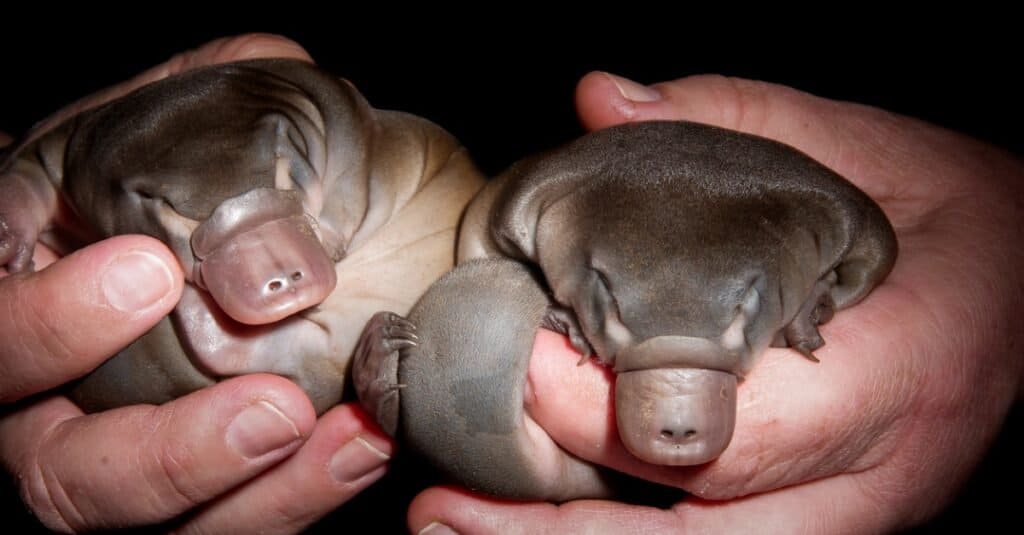
Platypus babies drink milk directly from their mother’s hair and skin.
©iStock.com/IainStych
I know, we just said that the platypus is a mammal, so it must have nipples or teats, right? Nope — even though they are mammals, platypuses do not have nipples. They still produce and secrete milk from mammary glands like other mammals, though, just without the nipples. Instead, female platypuses secrete milk from the surface of their skin. Essentially, a female platypus “sweats” out milk for her babies to drink. Platypus babies suck the milk directly from their mother’s skin or her fur.
It might sound a bit gross, drinking your mother’s sweat, but platypus milk is surprisingly nutritious and filled with many powerful antibacterial proteins.
3. A Platypus Doesn’t Have a Stomach
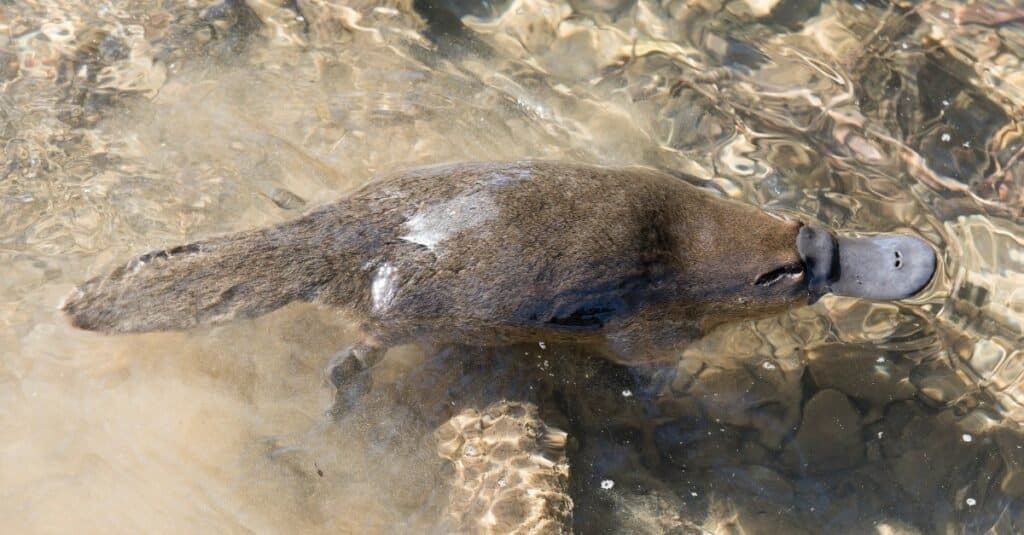
A platypus does not have a traditional stomach.
©iStock.com/JohnCarnemolla
If you thought sweating milk was strange, what about eating without a stomach? Most animals have stomachs to break down the food they eat and make it easier to digest. The platypus, however, eats food that breaks down easily enough on its own, so it doesn’t really need a stomach for complex digestion.
The only problem with not having a stomach is that a platypus doesn’t have anywhere to store food, so it eats all day long. A platypus must consume nearly 30% of its own body weight, and often eats for 12 hours a day.
4. Platypuses Don’t Have Teeth
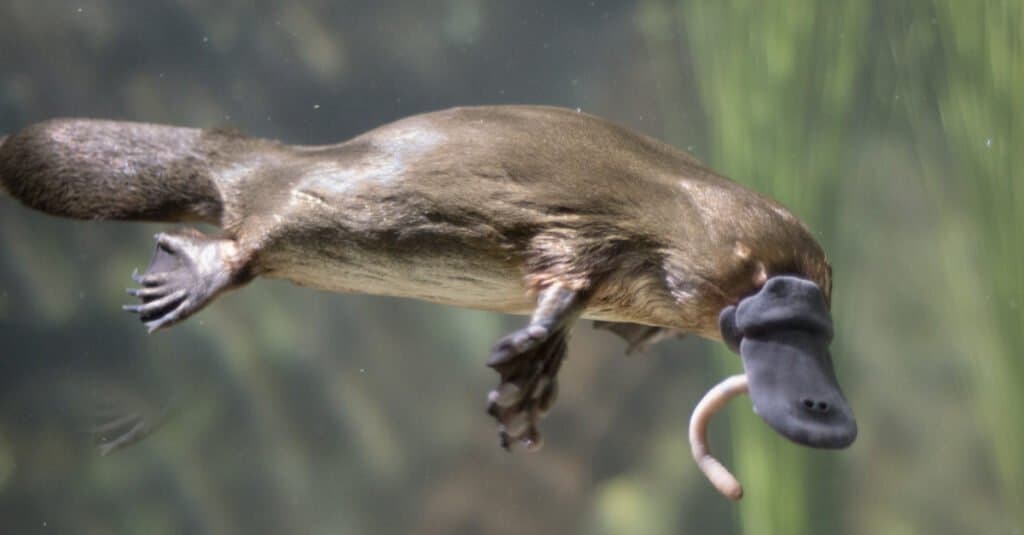
Baby platypuses are born with teeth, but this is probably a leftover trait from their ancient ancestors.
©John Carnemolla/Shutterstock.com
Well, that’s not exactly true. More accurately, adult platypuses do not have any teeth. Baby platypuses, on the other hand, are actually born with teeth. As they age and grow into adulthood, platypuses lose their baby teeth. But without teeth, how do adult platypuses eat?
Platypuses are carnivores and bottom feeders that actually do eat crunchy things like shellfish and freshwater crustaceans, as well as worms and larvae. However, they have tough pads in their bills made of keratin that they use to grind up their food. Platypuses scoop up food from the bottom of rivers and streams, along with bits of gravel and mud. They store all of this in their cheek pouches, where the gravel and their keratinized pads help to mash it up.
5. Platypuses Swim Underwater – With Their Eyes Closed
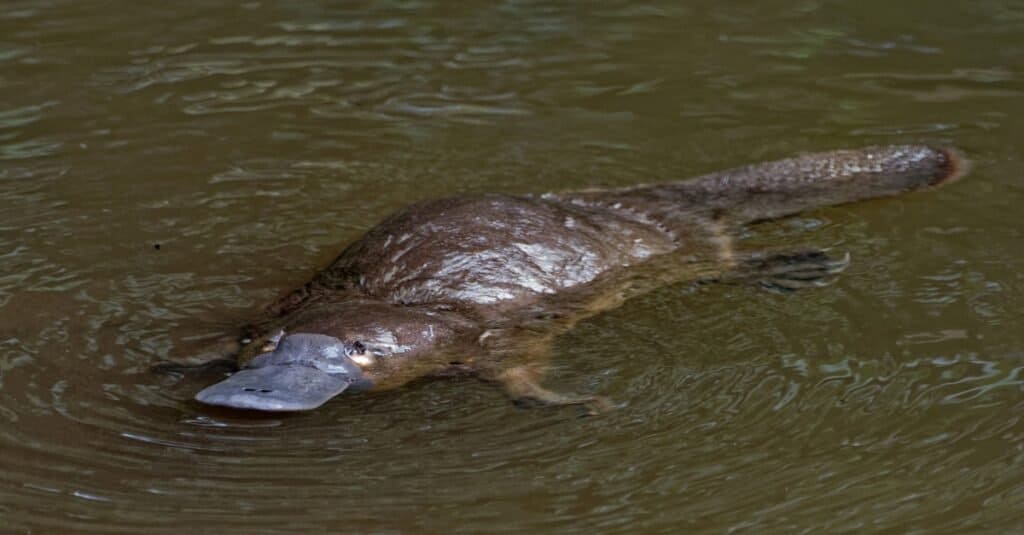
The platypus uses its bill to help it navigate underwater.
©Martin Pelanek/Shutterstock.com
The platypus is a semi-marine animal, which means it spends nearly half of its life swimming and hunting in freshwater rivers, streams, and lakes. However, when a platypus submerges its body underwater, it closes its eyes, its mouth, its nose, and even its ears. So, how does a platypus navigate underwater without these traditional senses?
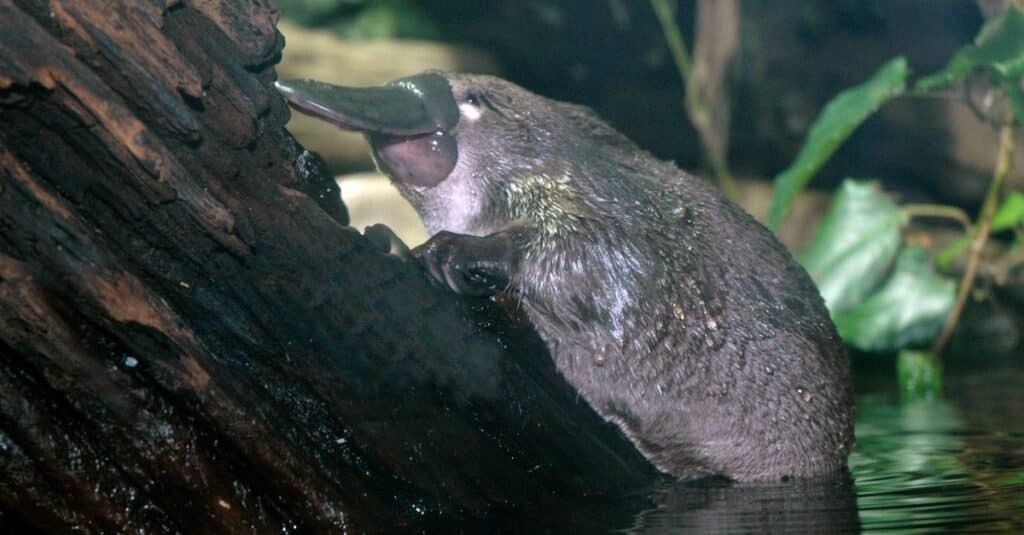
That is where the platypus’ unusual bill comes in. Many people call this animal the “duck-billed platypus” because it has a bill that looks like a duck’s. However, the bill of a platypus is nothing like the bill of a duck. Instead, a platypus’ bill is rubbery and covered in skin, almost like soft leather. A platypus’ bill has electroreceptors, similar to sharks and rays. These electroreceptors allow the platypus to detect the electrical pulses that animals produce in the water. Its unique bill helps the platypus to “see” using electrolocation while underwater.
6. Platypuses Swim with Their Front Feet
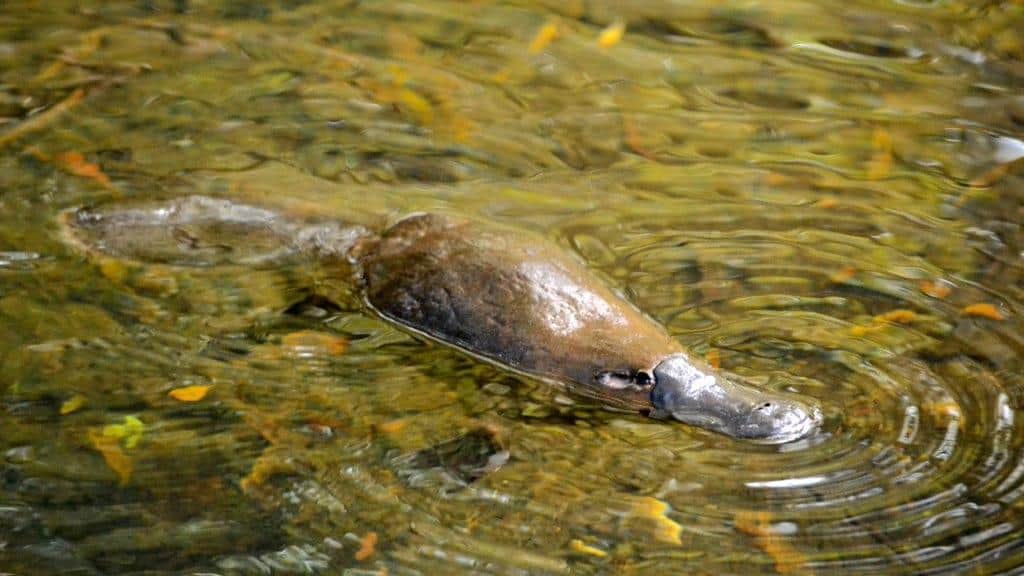
Platypuses have webbed feet for swimming, as well as sturdy claws for digging.
©Klaus / Flickr – Original
Platypuses have four unusually webbed feet that help them to quickly swim through the water. However, unlike many other animals, a platypus uses its front legs instead of its hind legs to propel its body through the water. Its back feet are not as webbed as the front, so these are used as rudders to help the platypus steer. When a platypus is on dry land, it can even retract the webbing on its front paws to reveal large claws for digging.
The tail of a platypus is wide and flat, almost like that of a beaver. This also helps it steer and direct its body while swimming underwater. However, unlike a beaver’s tail, a platypus’ tail is more furry than scaly. In addition, because platypuses do not have stomachs, they store fat in their tail. In fact, you can often determine the relative health of a platypus simply by looking at its tail.
7. Platypuses Are Waterproof
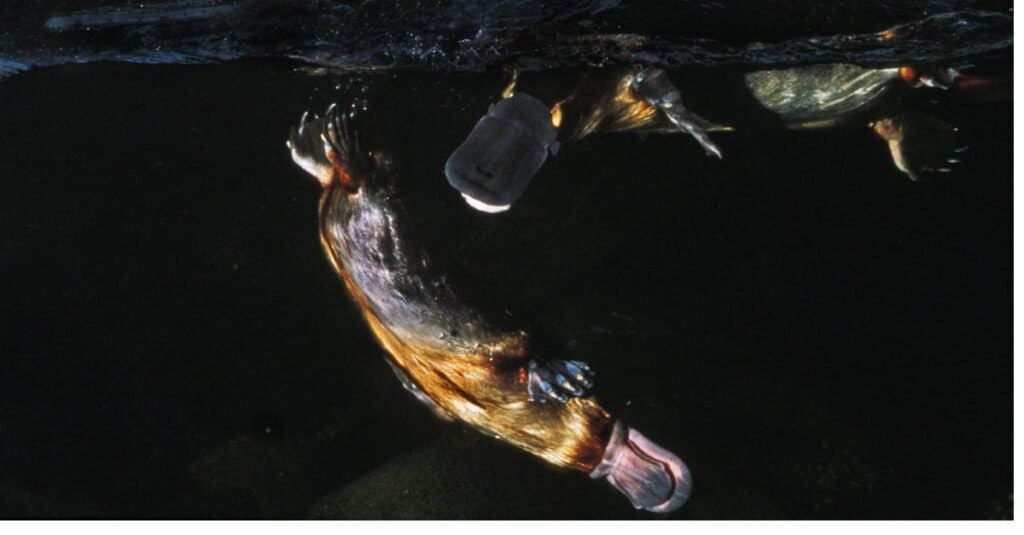
Platypus fur is waterproof, with layers that trap air to keep the animals warm.
©iStock.com/slowmotiongli
Another incredible fact is that a platypus has thick fur with multiple layers that trap air to keep the platypus warm and dry, even when it is underwater. Unfortunately, for many years, platypuses were hunted for their unique waterproof fur. In fact, the platypus was nearly hunted to extinction. Today, however, it is illegal to hunt platypuses. They are protected by the Australian government. As of 2025, the platypus is listed as a threatened species in Victoria and as endangered in South Australia.
8. The Platypus Only Lives in Australia
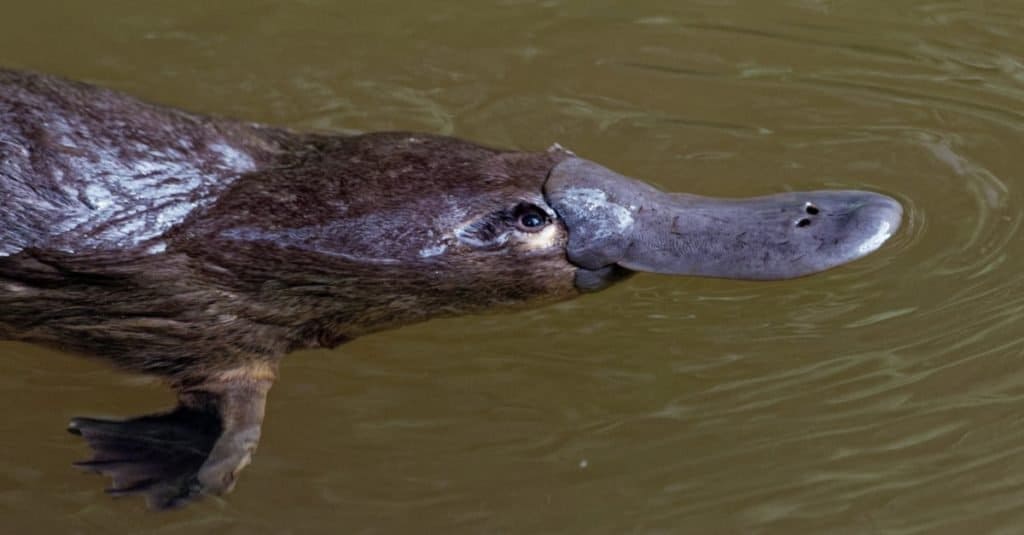
You will not be able to find platypuses anywhere but in Australia and Tasmania.
©Martin Pelanek/Shutterstock.com
Platypuses are unique animals that only live in Eastern Australia, including Tasmania, an island state located 200 miles south of the Australian mainland. They are shy creatures that hunt at night and hide in burrows along riverbanks during the day. A platypus builds its burrow with a small entrance that helps to squeeze any extra water off its fur coat when it enters its home. Depending on the season, sometimes platypuses are also active during the daytime.
9. A Platypus Can Hurt You
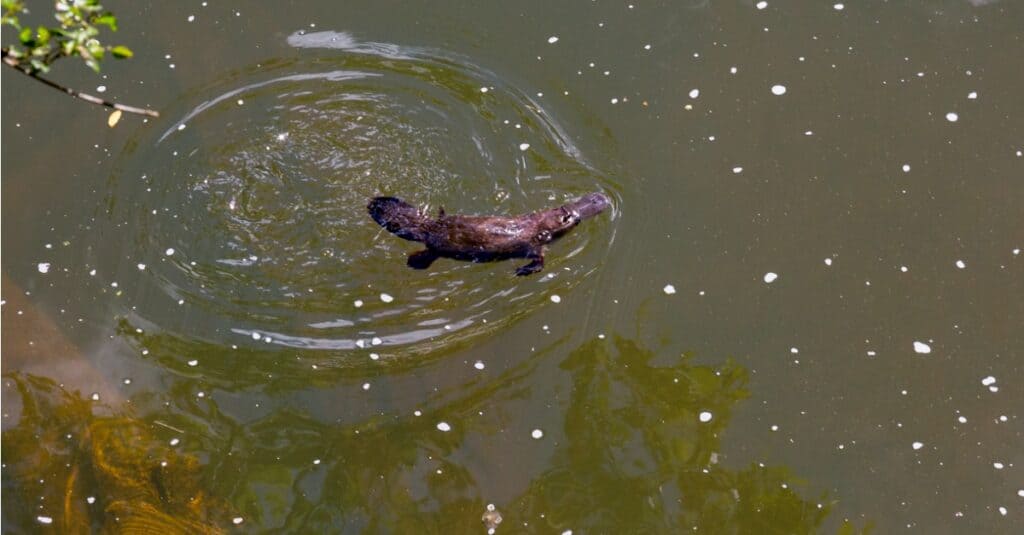
No humans have ever been killed by a platypus, but its sting is incredibly painful.
©iStock.com/markrhiggins
Another incredible platypus fact is that they are venomous. The platypus is relatively small, measuring up to 1.5 feet in length and weighing 3 pounds. However, despite its small size, this adorable animal can be dangerous. The platypus has venomous spurs on the back of its legs and is one of the very few venomous mammals on Earth. Both males and female platypuses are born with spurs, but females lose theirs by the time they are 1 year old. Male platypuses keep their venomous spurs, however, which mostly produce venom during the mating season.
The venom produced by a platypus is powerful enough to paralyze and kill animals up to the size of a dog. Fortunately, it is not deadly to humans. However, being stung by a platypus is extremely painful. An honored and decorated Australian Army veteran, Keith Payne, was stung by a platypus in 1991. Payne explained that the pain lasted for over a month and that it hurt even worse than being hit with shrapnel.
10. Platypuses Glow in the Dark
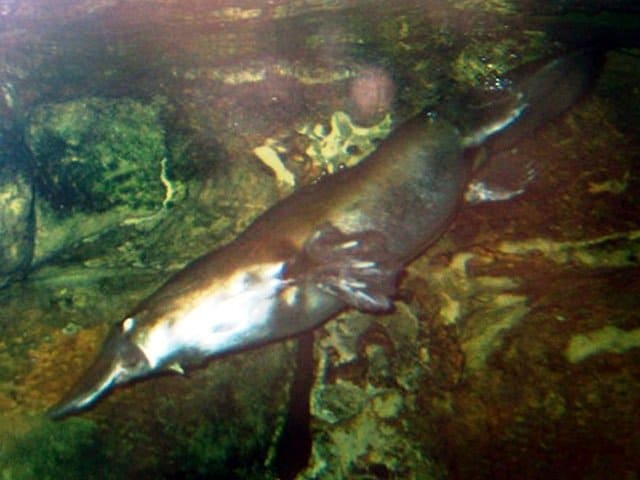
Its biofluorescent fur might help protect a platypus from predators that can see ultraviolet light.
©Ester Inbar – Public Domain
One of the most incredible platypus facts we know about the platypus is that this crazy animal can glow. That’s right, just when you thought the platypus couldn’t get any stranger, it turns out that this amazing animal glows in the dark. In 2020, scientists discovered that platypuses’ fur is biofluorescent. This means that when you shine an ultraviolet or blacklight on a platypus, its fur glows a bluish-green color.
Researchers are still not sure why a platypus needs glow-in-the-dark fur. Platypuses are nocturnal, so it could possibly help them to locate one another in the dark. However, they keep their eyes closed when they swim, so it wouldn’t be much help underwater. Its biofluorescent fur might help protect a platypus from predators that can see ultraviolet light. It could also just be a trait leftover from the platypus’ distant ancestors. Whatever the case, one thing is for certain: this ability just adds to the infinite reasons that platypuses are both uniquely weird and absolutely incredible.