
There are more than 500 recognized shark species living today. Sharks can be found in all of the world’s oceans, and even in some rivers. Their notorious and often undeserved reputations have caused sharks to be greatly feared. While it might seem like sharks are abundant, far too many species are under threat, and some are even on the brink of extinction. One shark on this list is so rare, it was actually considered extinct for many years. Keep reading to discover 10 endangered sharks and their threats.
Ganges Shark
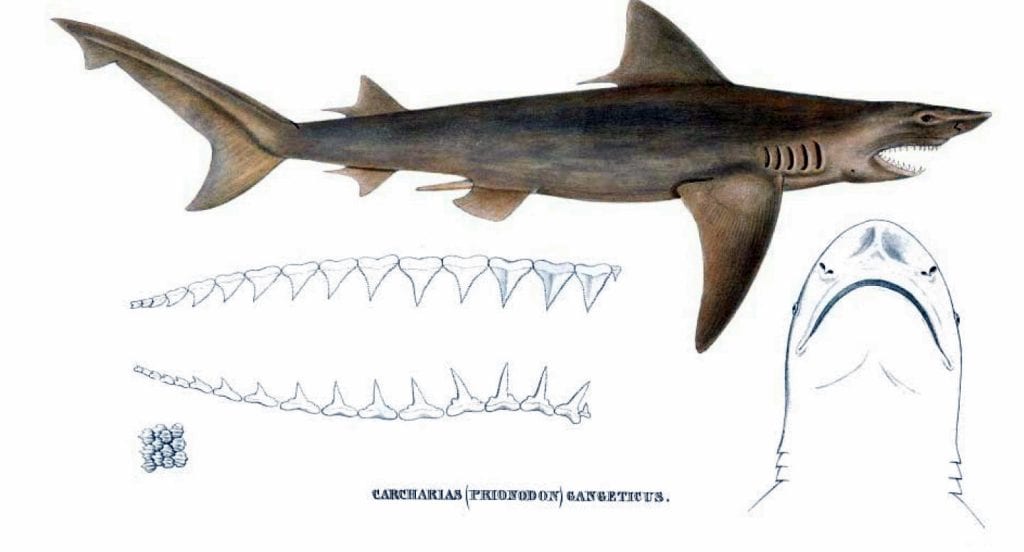
The Ganges shark is found in the rivers of Bangladesh and India.
One of the rarest sharks in the world is the Ganges shark (Glyphis gangeticus). The Ganges shark is critically endangered, with less than 250 mature sharks estimated to be living in the wild. Primary threats include habitat loss due to dam construction, overfishing, and pollution. These sharks can be found in tropical freshwater rivers and brackish estuaries in India and possibly Bangladesh.
Ganges sharks are brownish-gray and have stocky bodies with broad snouts and small eyes. They reach a maximum of 9 feet long. Their eyes are oriented dorsally, which suggests Ganges sharks hunt by swimming along the bottom of the rivers, scanning the water above for their prey. Little is known about their feeding habits, but their long, slender teeth indicate they primarily eat fish.
Daggernose Shark
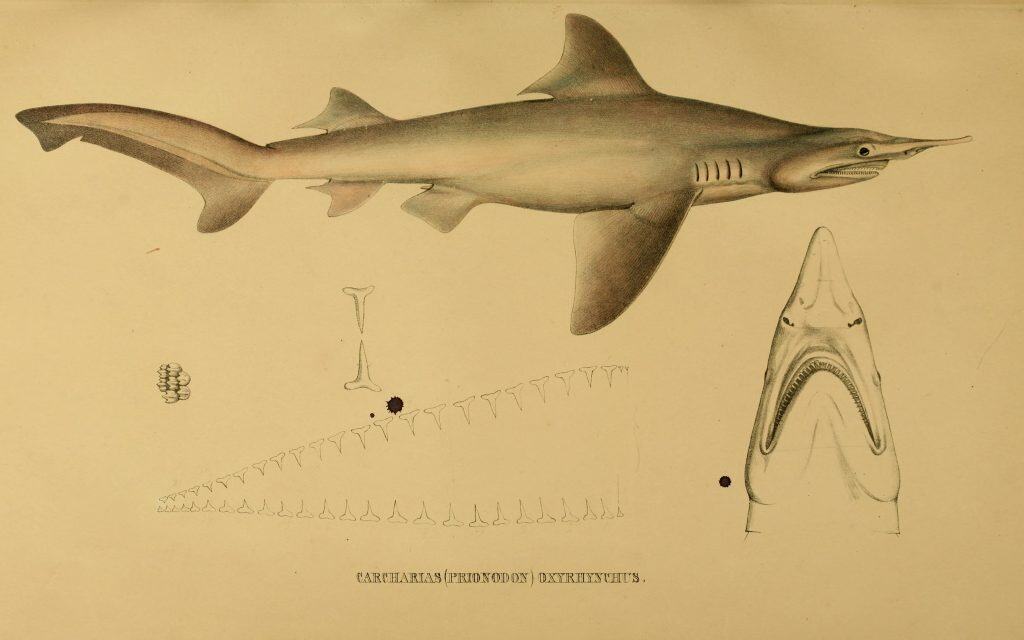
The daggernose shark can be identified by its long, narrow snout.
Daggernose sharks (Isogomphodon oxyrhynchus) are found in shallow tropical rivers and estuaries along the northeastern coast of South America and near the islands of the Caribbean Sea. The daggernose shark is now critically endangered, primarily due to overfishing and bycatch in unregulated fisheries. Current populations are unknown, but research indicates there have been severe population declines of up to 99% over the last decade.
The daggernose shark is gray or grayish-brown with a paler underbelly and large pectoral fins. Its characteristic snout is long and flat with a pointed tip. These sharks only grow to a length of about 5 feet. There is only limited information on their diet, but research suggests they prey on schooling fish.
Oceanic Whitetip
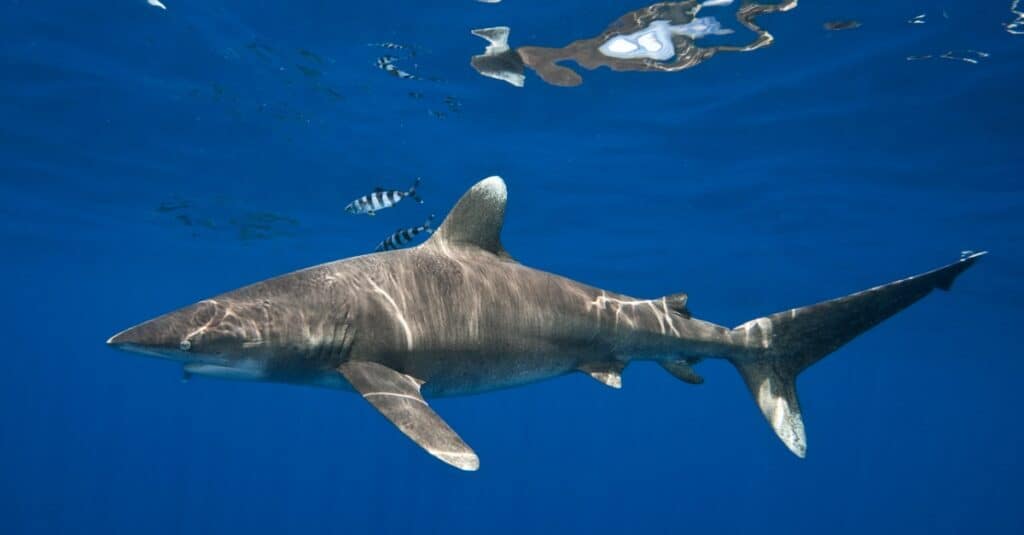
Oceanic whitetips are considered to be potentially dangerous to humans.
©iStock.com/NaluPhoto
The oceanic whitetip (Carcharhinus longimanus) can be found in tropical and subtropical waters all over the world. These sharks are critically endangered due to bycatch in commercial fisheries and the shark fin trade. Population numbers are unknown, but scientists estimate an 80%-95% decline in Pacific populations and up to an 88% decline in the Gulf of Mexico.
Oceanic whitetips are large, stocky sharks with blunt noses. They have mottled white tips on their fins, including their long, wide pectoral fins. These sharks typically grow to around 11 to 13 feet in length. They are opportunistic apex predators, primarily feeding on fish and squid. However, they have also been documented eating sea birds, marine mammals, and other sharks. Due to their size, feeding behavior, and unpredictability, oceanic whitetips are considered potentially dangerous to humans.
Pondicherry Shark
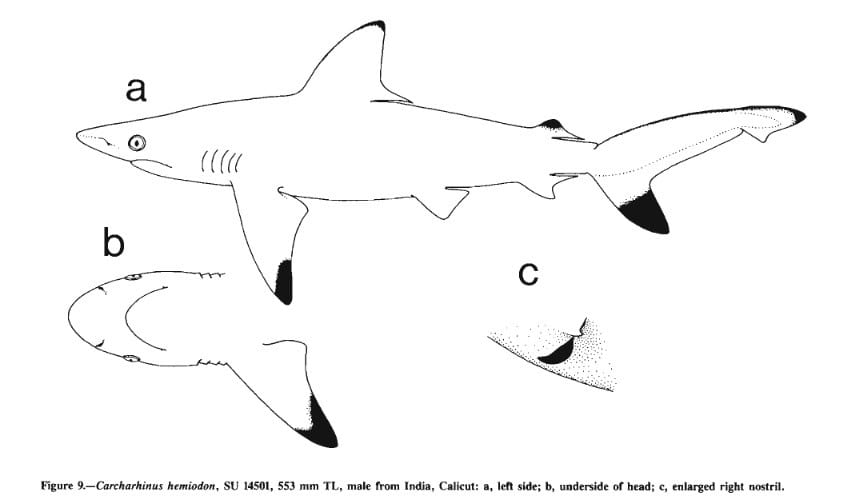
The pondicherry shark is a very rare shark with a historical range from Oman to southern China.
Pondicherry sharks (Carcharhinus hemiodon) are extremely rare sharks with fewer than 250 mature individuals estimated to be left in the wild. The shark’s primary threat is believed to be unregulated fishing. The last documented sighting of a Pondicherry shark was in India in 1979. Wildlife biologists claim to have observed one in Sri Lanka in 2019, but the identification has not yet been officially confirmed. Pondicherry sharks are thought to prefer coastal waters and have a historical range from Oman to southern China.
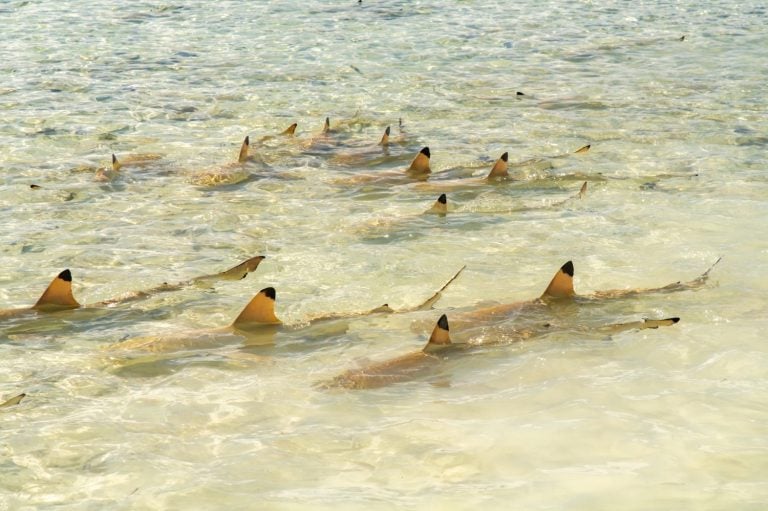
These sharks have stocky, gray bodies with lighter underbellies. They have long snouts, noticeable black tips on their fins, and light-colored stripes on their flanks. Pondicherry sharks are small, reaching no more than 3 feet and 3 inches in length. Due to their rarity, little is known about their biology or feeding habits, but they are believed to feed on small, bony fish species, crustaceans, and cephalopods.
Sand Tiger Shark
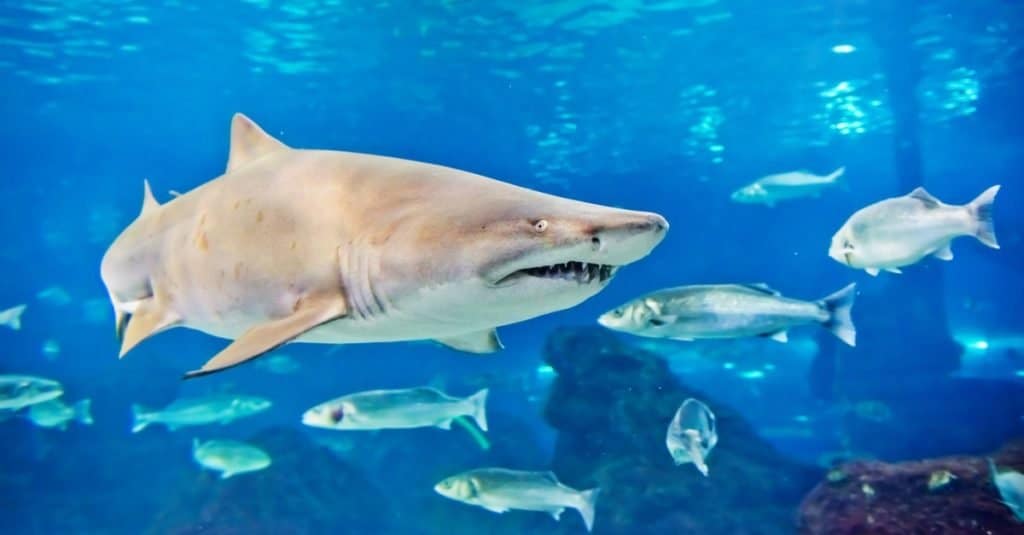
The sand tiger shark has the lowest reproductive rate of any shark.
©Valeri Potapova/Shutterstock.com
Sand tiger sharks (Carcharias taurus) live in sandy, coastal waters in temperate and tropical regions worldwide. They are critically endangered due to overfishing and low reproductive rates — the lowest among all sharks. Every two years, they only have one pup from each of their two uteri, because the largest embryo preys on its smaller siblings and any remaining eggs during gestation. Populations are believed to have declined by more than 80% over the last three generations, which is about 74 years.
Sand tiger sharks have stout, light-brown to gray bodies, wide fins, and a flat, pointed snout. They can grow to around 10.5 feet in length. Sand tiger sharks surface periodically to swallow air, allowing them to remain buoyant and still near the seafloor. They spend most of their time floating motionless as they hunt for bony fishes, smaller sharks, rays, crustaceans, and cephalopods.
Great Hammerhead Shark
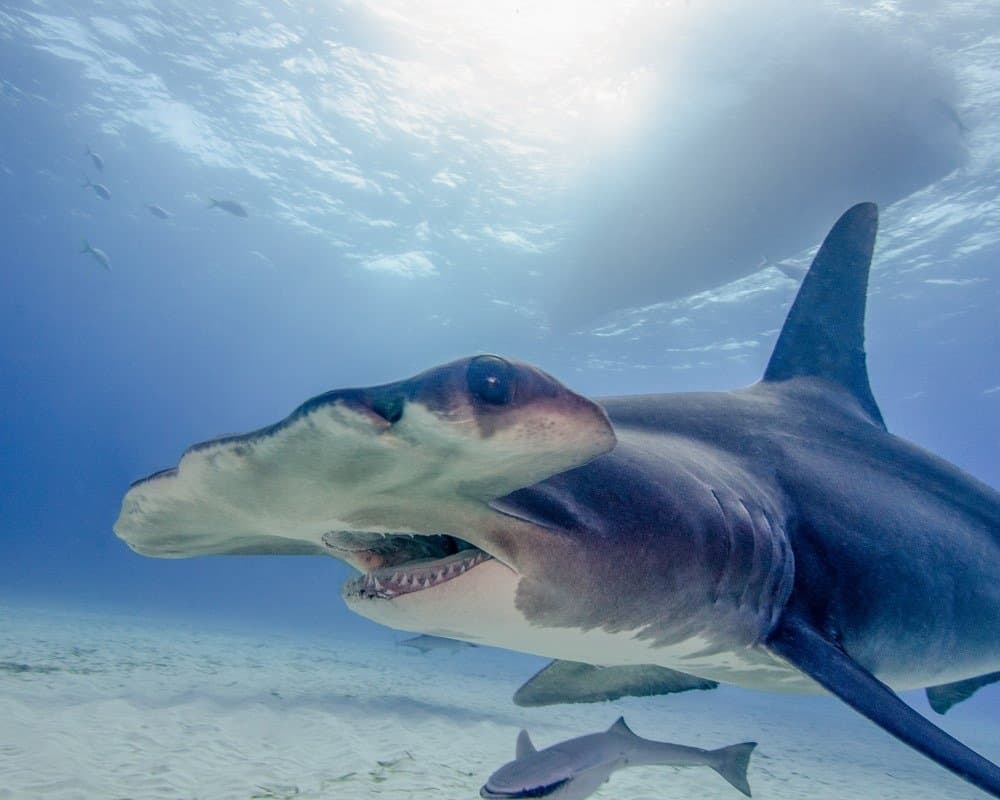
Hammerhead sharks are one of the most recognizable species due to their hammer-shaped snouts.
©Brent Barnes/Shutterstock.com
Great hammerhead sharks (Sphyrna mokarran) live in tropical waters around the world. Great hammerheads are now critically endangered sharks in many regions due to overfishing, bycatch, and the shark fin trade. These sharks have late sexual maturity, and the females only have pups every two years, which increases the risk of extinction. Researchers estimate their population has declined by up to 80% in the last 70 years.
As the largest hammerhead shark, great hammerheads can reach 15 to 20 feet in length. They are one of the most unique and distinctive sharks in the world with their flat, hammer-shaped snouts and wide-set eyes. They feed on a wide range of prey, including bony fishes, crustaceans, cephalopods, and smaller sharks.
Whale Shark
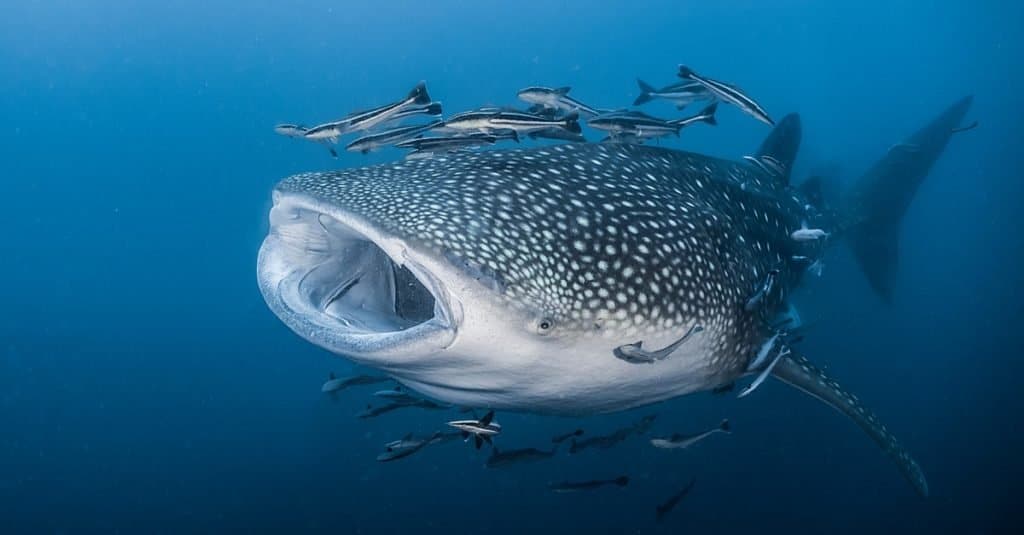
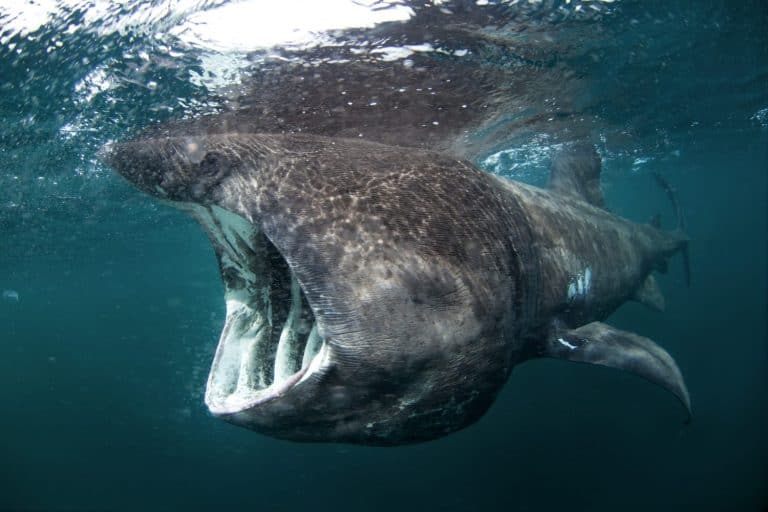
The whale shark is the largest shark in the world.
©Onusa Putapitak/Shutterstock.com
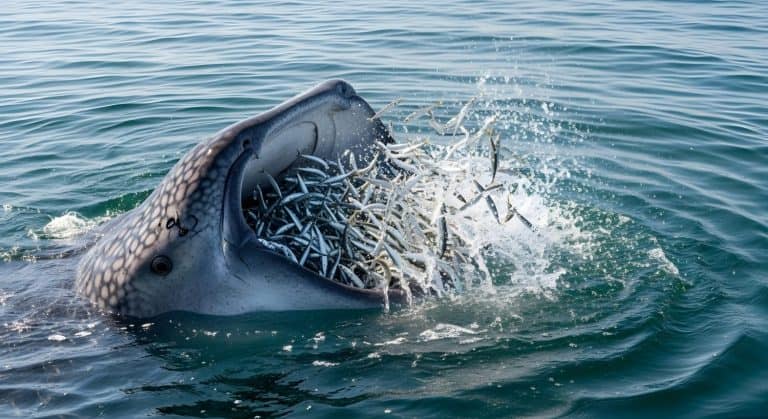
Whale sharks (Rhincodon typus) live in tropical and warm temperate seas all around the world, both offshore and in coastal areas. Whale sharks are now endangered due to vessel strikes, overfishing, bycatch, the shark fin trade, and the fact that they are slow to mature and reproduce. Researchers estimate that the species has experienced a decline of 50% over the last three generations.
Whale sharks are the largest sharks, and therefore the largest fish, in the world, reaching lengths of around 60 feet. They have dark gray skin and white bellies with a range of spots and stripes individual to each shark. Whale sharks got their name partially due to their size, but also because they are filter feeders like baleen whales. These sharks suck in large amounts of water to strain plankton, which catches on their gill rakers as the water is forced back out through their gills.
Dusky Shark
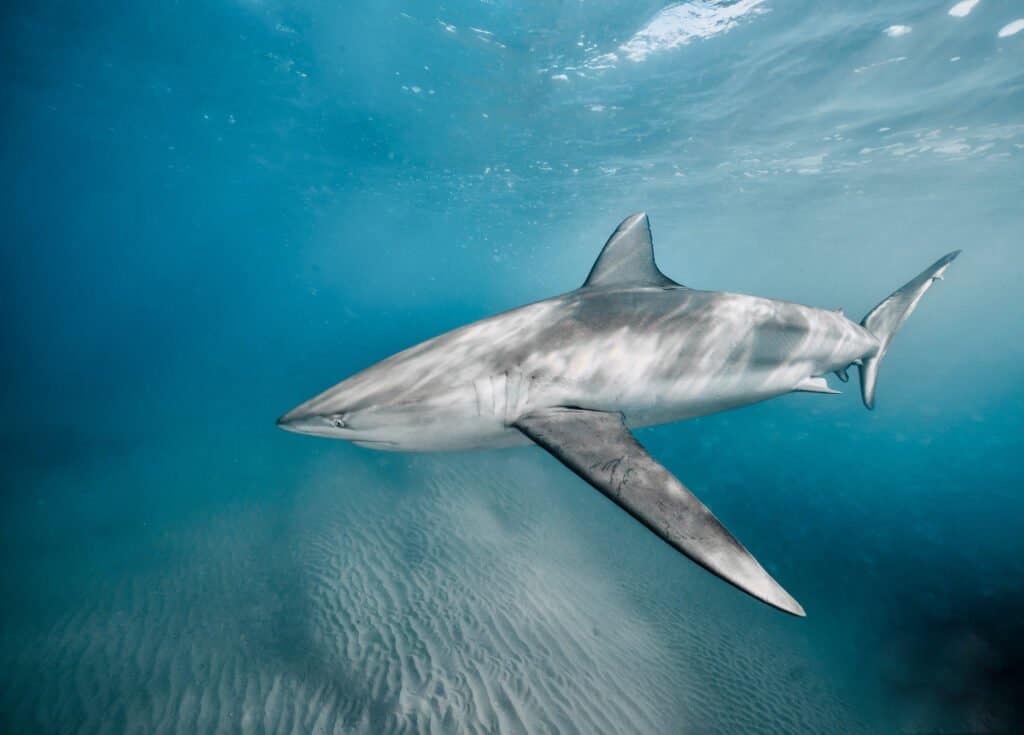
The dusky shark can reach up to 14 feet in length.
©sirtravelalot/Shutterstock.com
The dusky shark is an endangered shark with a global range, preferring shallow, tropical, and subtropical waters. They face multiple threats, including overfishing, bycatch, and a slow reproductive rate. Dusky sharks are also highly sought after for the shark fin trade. Populations are believed to have declined between 80% and 85% since the mid-1970s.
Dusky sharks have a gray or beige streamlined body and fins with dark-colored edges. They can reach up to 14 feet in length. These sharks are apex predators in their ecosystems and generally hunt near the bottom of the ocean. They have a varied diet, including bony fishes, smaller sharks, rays, crustaceans, and cephalopods.
Great White Shark
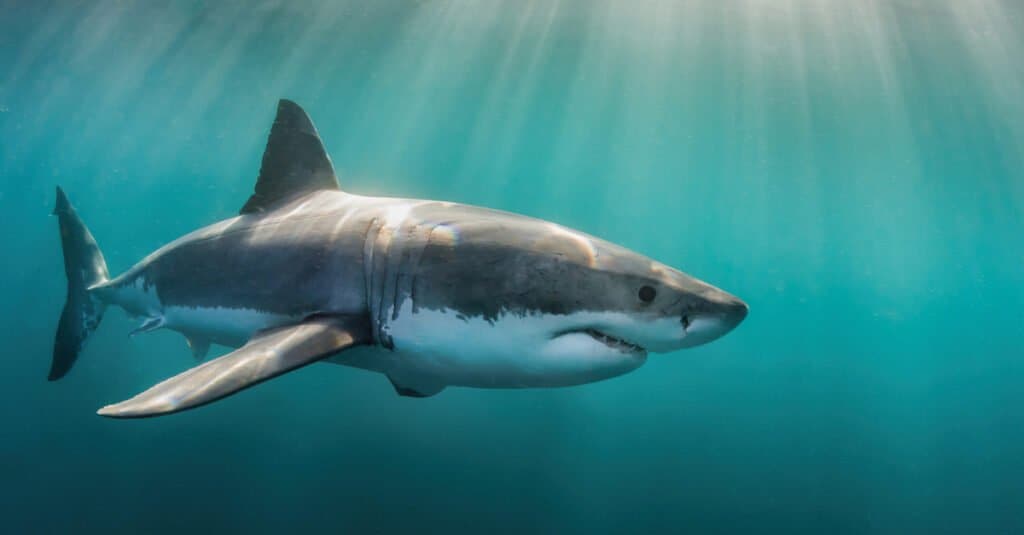
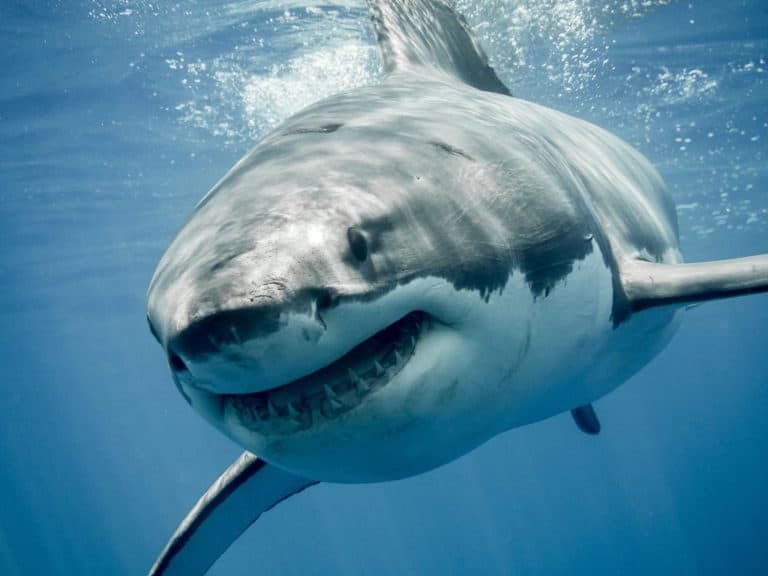
Great white sharks have around 300 teeth in up to seven rows.
©Fiona Ayerst/Shutterstock.com
Easily the best-known of all sharks is the great white shark (Carcharodon carcharias). Great white sharks have been made famous by films and documentaries depicting them as killers. Although they are one of the most dangerous sharks to humans, they have plenty to fear from us. Great white sharks are currently a vulnerable species, primarily because of bycatch, illegal fishing for their teeth and fins, and habitat loss. Their population has declined significantly in recent years, and some sources estimate that there are fewer than 3,500 remaining.
These large, apex predators can be found in temperate and subtropical waters all over the world. They have gray or brown bodies with light undersides, a pointed snout, long fins, and a large, powerful tail. Great white sharks can reach up to 20 feet long. These sharks are opportunistic carnivores, with around 300 serrated teeth in up to seven rows to grip and tear their prey. They primarily feed on marine mammals such as seals, dolphins, and sea lions, as well as fish, crustaceans, and cephalopods.
Common Thresher Shark
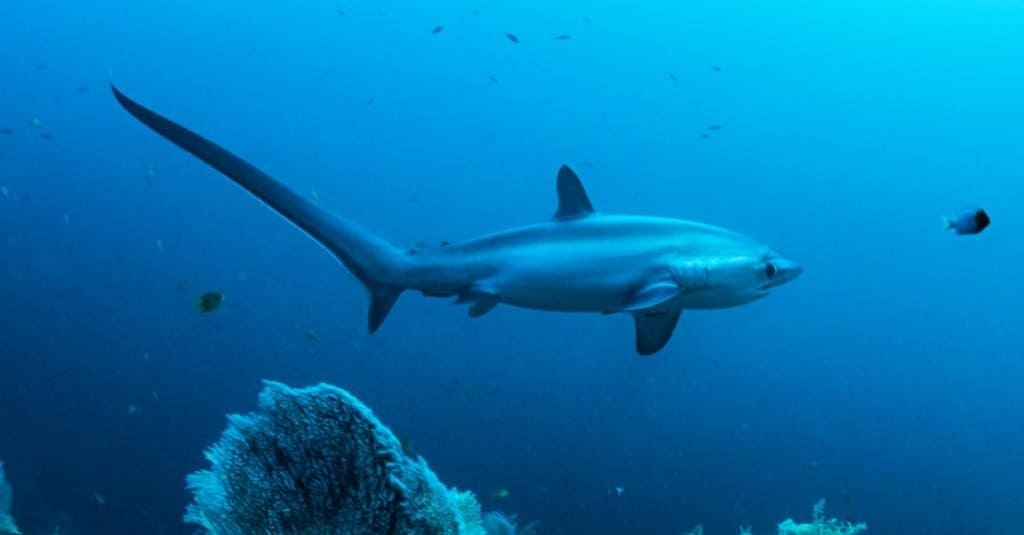
The most notable feature of the thresher shark is the long, whip-like upper lobe of its tail, which is known as the caudal fin.
©Shane Gross/Shutterstock.com
The common thresher shark (Alopias vulpinus) lives in tropical and temperate waters all over the world. However, this species is highly migratory and has been documented crossing entire ocean basins. They are classified as vulnerable due to threats such as overfishing, bycatch, and a slow reproductive rate. Researchers estimate there has been a decline of 30% to 49% over the last three generations.
Common thresher sharks are easily distinguished by their extra-long upper tail fins. These sharks can reach lengths up to 20 feet, with their tail making up around half of their body length. Common thresher sharks can be gray, blue-gray, brown, or blackish in coloration with lighter undersides. They are strong, fast swimmers and eat mainly bony, schooling fish. These sharks use their long tails to strike and incapacitate their prey.