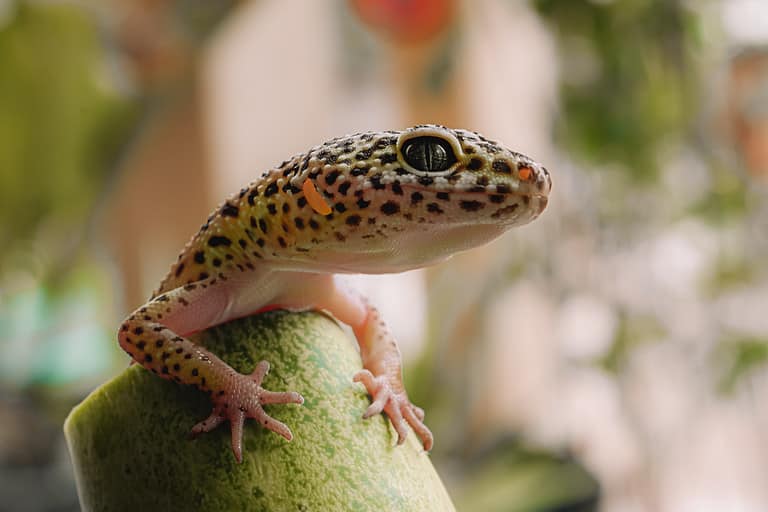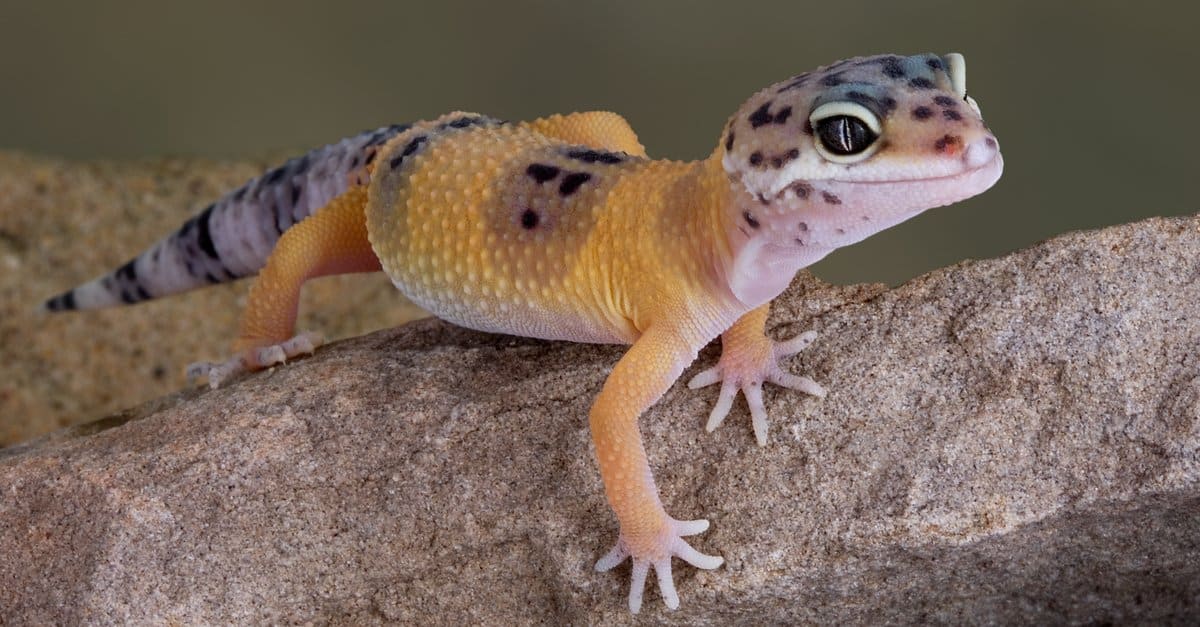

When adopting any new pet, it helps to know how large they will eventually become. This is especially true with reptiles. Many species of lizards, including leopard geckos, start out as very tiny hatchlings, yet grow to more than triple their size within a few short months. To properly care for and accommodate your new scaly friend, you’ll need to understand healthy leopard gecko size ranges and learn how quickly these lizards grow during each stage of life.
After all, the size of any pet reptile will determine how large their enclosure should be and how much food they need. Read on to learn more about the average leopard gecko’s growth rate and how big you can expect yours to become once it reaches full size.
How Big Are Baby Leopard Geckos?
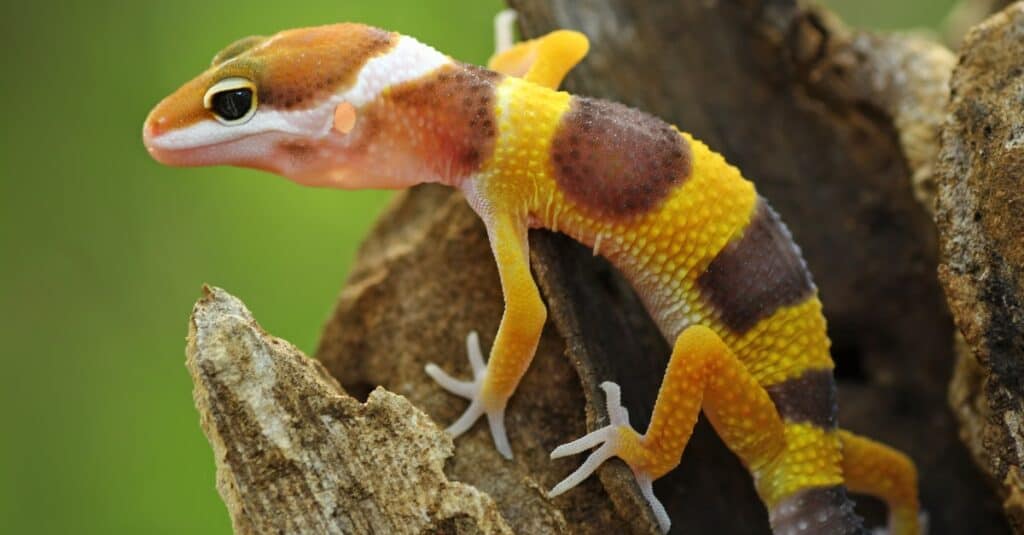
Baby leopard geckos are only a few inches long and weigh less than 0.18 ounces.
©iStock.com/agus fitriyanto
Baby leopard geckos are known as hatchlings from roughly 0 to 2 months old. They hatch from small, fragile, soft-shelled eggs that are only around 1.5 to 2 inches long. Immediately after hatching, the average baby leopard gecko is usually approximately 3 to 4 inches long and weighs around 0.07 to 0.18 ounces.
Fortunately, these adorable reptiles are only this small and fragile for a few months. They grow very rapidly during their first few months of life. After reaching two months old, they are officially considered juveniles. At this point, most juvenile geckos are around 5 inches long and 0.5 to 0.8 ounces in weight. They will remain in the juvenile growth stage from 2 months to around 7 months of age.
Leopard geckos have four loosely defined growth stages: hatchling, juvenile, sub-adult, and adult. Now that we’ve covered how big your baby gecko will be during their first 6 months, let’s discuss their size as a subadult and adult.
How Big Are Adult Leopard Geckos?
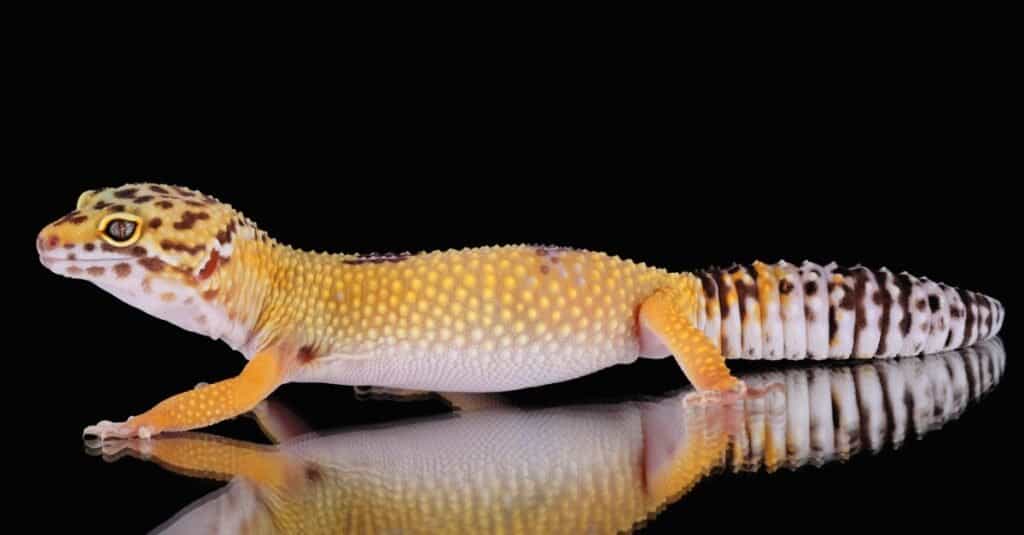
Leopard geckos are considered adults at around 12 months of age.
©iStock.com/erllre
After the juvenile stage of life ends, most leopard geckos’ growth rates begin to slow down drastically. However, your scaly friend isn’t done growing just yet. The sub-adult stage starts when a gecko is roughly 7 to 8 months old. At this point, your gecko should be about 6 to 7 inches in length and anywhere from 1.05 to 1.41 ounces in weight. This is also around when geckos start to outgrow their initial enclosures.
While a baby gecko can be safely housed in a 10-gallon enclosure, sub-adults and adults need a minimum of at least 20 gallons of space to feel comfortable. However, 40 gallons is the recommended size for adult geckos. If you purchased a starter enclosure for your gecko, this is probably when you’ll need to buy them a larger, more permanent tank.
Leopard geckos are considered adults at around 12 months old. At this point, your female should be around 7 to 8 inches long and weigh at least 1.8 ounces. Your male gecko should be about 8 to 11 inches long and weigh at least 2 ounces. For their safety, you shouldn’t rush to breed your gecko until they’re at least 18 months old and weigh at least 2 ounces.
When Do Leopard Geckos Stop Growing?
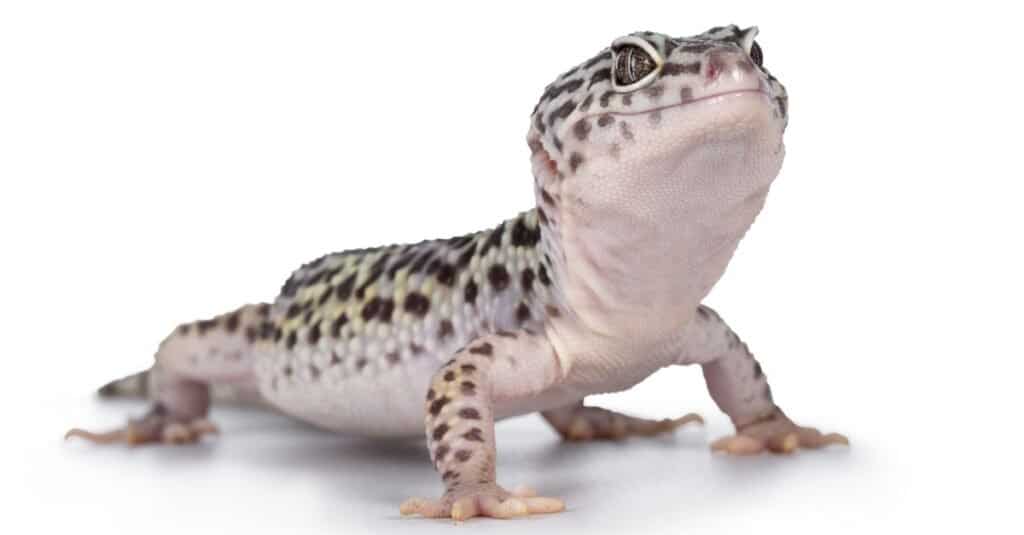
A healthy, fully grown adult leopard gecko can weigh between 1.8 and 2.8 ounces.
©iStock.com/Nynke van Holten
Leopard geckos typically continue growing until they are around 12 to 18 months old. Most adults reach 7 to 11 inches in length and weigh between 1.8 and 2.8 ounces, though some larger males may exceed these averages.
The bulk of a typical leopard gecko’s growth occurs during the first 6 months of life. This is when their growth rate is the most rapid. They will put on around 0.18 to 0.35 ounces each month until they hit roughly 7 to 8 months old.
Most geckos’ growth rates begin to slow down considerably once they approach their sub-adult age and size. At this point, you can expect your gecko to only put on a few grams per month until they are fully grown at around 18 months old.
Encouraging Healthy Leopard Gecko Growth
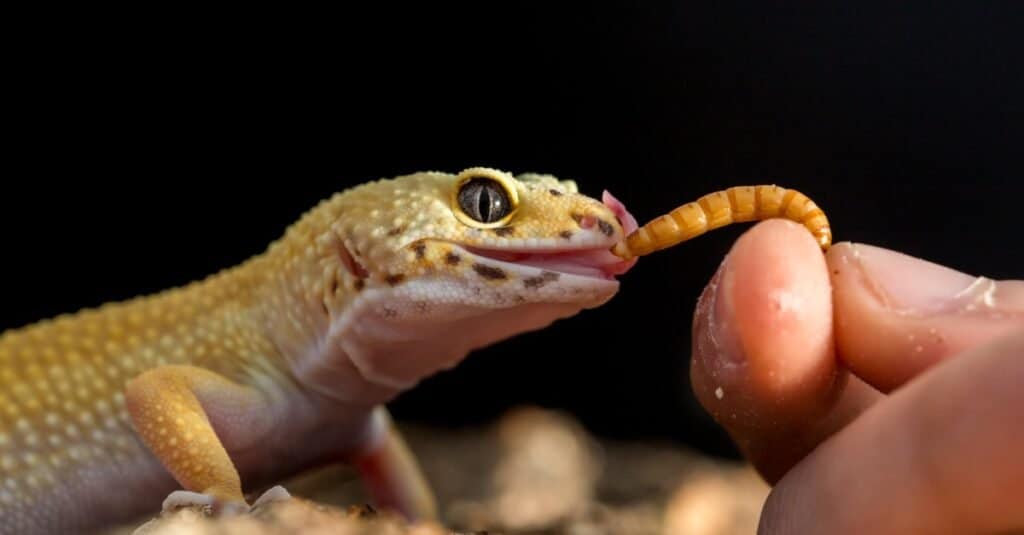
A nutritious diet is essential to facilitating healthy growth for leopard geckos of all ages and sizes.
©iStock.com/MattiaATH
Aside from a properly sized enclosure, there are a few key tips to keep in mind as a reptile owner to ensure your gecko grows properly. First, a captive leopard gecko needs to have a varied, nutritious diet and a regular calcium supplement regardless of their growth stage. A diverse diet of insects is the best way to encourage your gecko to grow at a normal rate.
Don’t feed your leopard the same thing every single day. There are many great feeder insects to choose from, from crickets and mealworms to dubia roaches and waxworms. All of these insects have their own specific protein, moisture, fat, and nutrient contents. Be sure to coat feeder insects generously with calcium powder before each meal. Captive geckos require lots of additional calcium to prevent muscle and bone issues, especially at a young age.
In addition, carefully monitor the temperature and humidity within their enclosure and adjust them as needed. Improper temperature or humidity settings will stunt your pet’s growth in the long term and leave them prone to numerous health issues and illnesses, from respiratory infections and metabolic bone disease to simply being incapable of digesting their food properly.
Finally, weigh and measure your gecko weekly as it grows, and compare its size to a growth chart to ensure everything is progressing normally. If they seem very small for their age, it’s probably time for a check-up with your reptile vet to make sure nothing is amiss health-wise.