Quick Take
- Not all live-bearing snakes reproduce the same way, and the three methods differ in ways that are stranger than you'd expect. Explore the three strategies →
- One snake on this list can birth up to 80 offspring in a single litter, which is probably not the giant you would guess. Meet the prolific garter snake →
- Some of the world's most venomous snakes skip egg-laying entirely, and their reason for doing so changes how you think about predator survival. See how sea snakes survive →
- One species on this list forms a structure so close to a human placenta that it blurs the line between reptile and mammal reproduction. See the placenta-like connection →
Many of us know snakes are ectothermic reptiles that rely on external heat to regulate their body temperature. However, not everyone is aware that certain species of snakes give birth to live young. Why do some snakes lay eggs, but others give birth to baby snakes? Today we’ll explore the different ways snakes reproduce, then take a closer look at seven species of snake known for giving birth to live young.
Wait, Don’t Snakes Lay Eggs?
There are three basic ways to make baby snakes. The first is called oviparity. In oviparous reproduction, male snakes fertilize the eggs inside female snakes. These eggs then develop inside the female until they’re reasonably sized and have the leathery shells you expect from snakes. She then lays the eggs, usually in a nest or an abandoned burrow. Depending on the species, she will either leave them or guard them and keep them warm until the snakelets hatch.
The second form of snake reproduction is viviparity. Fertilization takes place internally. The mother gives birth to fully formed live young that develop entirely inside her body, nourished by a placenta-like structure. Boa constrictors, garter snakes, and water snakes in the genus Nerodia are some of the rare viviparous snakes.
The majority of snakes that give birth to live young do so via ovoviviparity. It is somewhat of a combination of the above two. Males fertilize eggs, which then develop inside the female. The female incubates them internally, with each of the babies surrounded by a thin membrane and having its own yolk. The mother provides some, but not all, nourishment until the young are born.
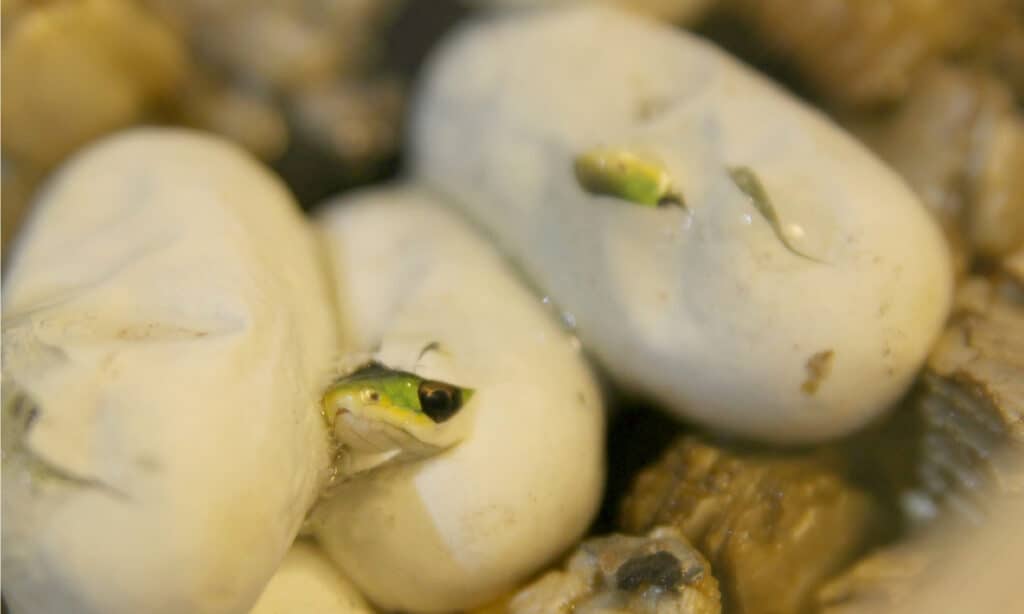
Around 70% of snakes lay eggs.
©Stuart Hamilton/Shutterstock.com
What Kind of Snakes Give Birth to Live Young?
Among them are most vipers, boas, anacondas, most water snakes, and all sea snakes except for a single genus. Let’s take a closer look at seven snakes that give birth to live young.
1. Death Adder (Acanthophis antarcticus)
These snakes live across much of Australia, including Queensland, New South Wales, South Australia, Western Australia, and the Northern Territory. Death adders reside in both the coastal areas and inland areas of southern and eastern Australia but also live in Papua New Guinea. They’re highly venomous yet non-aggressive. They have among the longest fangs relative to body size of any snake in Australia. Death adders are ovoviviparous. The average litter size is 10-20 snakelets after a gestation period of 6-9 months.
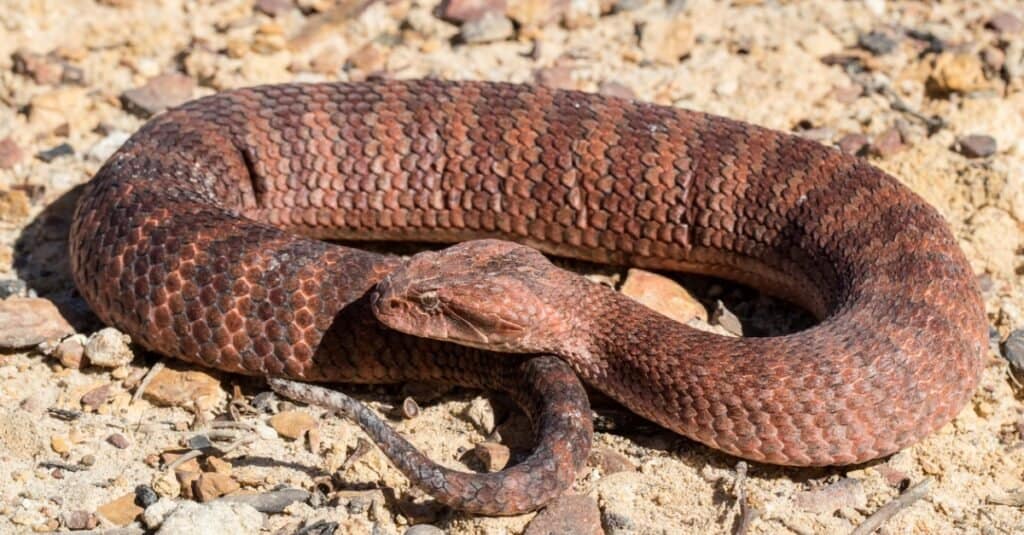
Death adders give birth to an average litter of 10-20 young.
©iStock.com/Ken Griffiths
2. Western Diamondback Rattlesnake (Crotalus atrox)
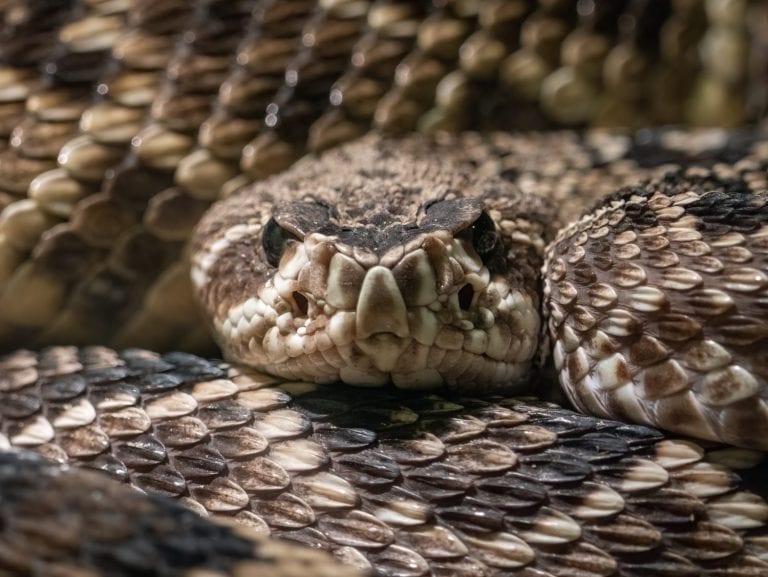
One of the largest rattlesnakes in the world, the western diamondback lives throughout the desert southwest regions of the United States and Mexico. It is highly recognizable both by the brown and tan diamond markings along its back and its warning rattles. Western diamondbacks are ovoviviparous. They typically carry their young for 5-7 months before giving birth to 10-20 live snakelets. Baby western diamondbacks remain with their mothers a day at the most before going in search of food and shelter.
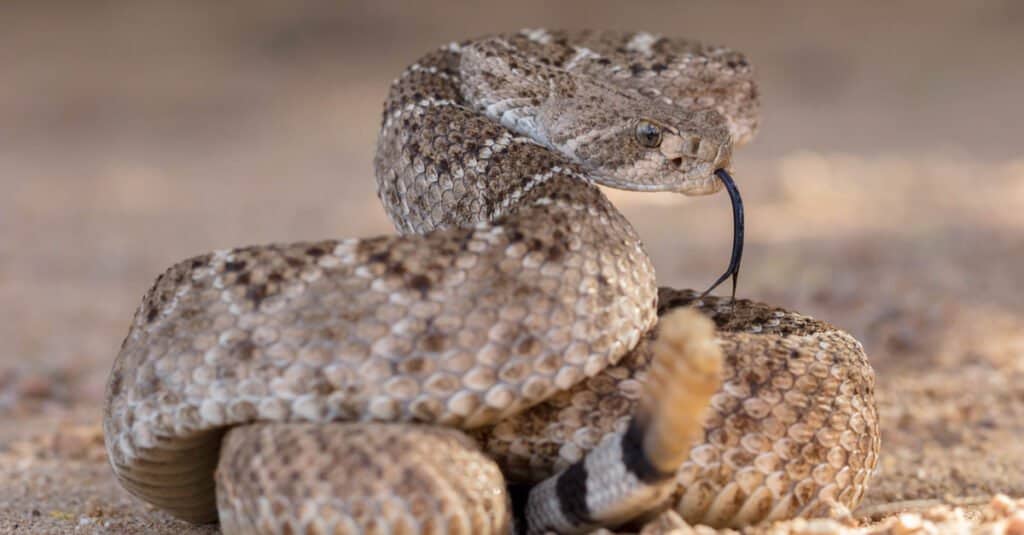
The western diamondback rattlesnake has a gestation period of approximately 5-7 months.
©Alexander Wong/Shutterstock.com
3. Green Anaconda (Eunectes murinus)
The green anaconda is one of the biggest snakes in the world. Green anacondas can grow to 20–30 feet long and can weigh up to 550 pounds. Despite their huge size, they’re not venomous, relying instead on constricting their prey to death. Green anacondas are found only in South America. They’re semi-aquatic and spend most of their lives in the warm waters of rivers, swamps, and wetlands. These snakes are ovoviviparous, carrying their eggs inside their bodies for around 7 months before giving birth to 20-40 young.
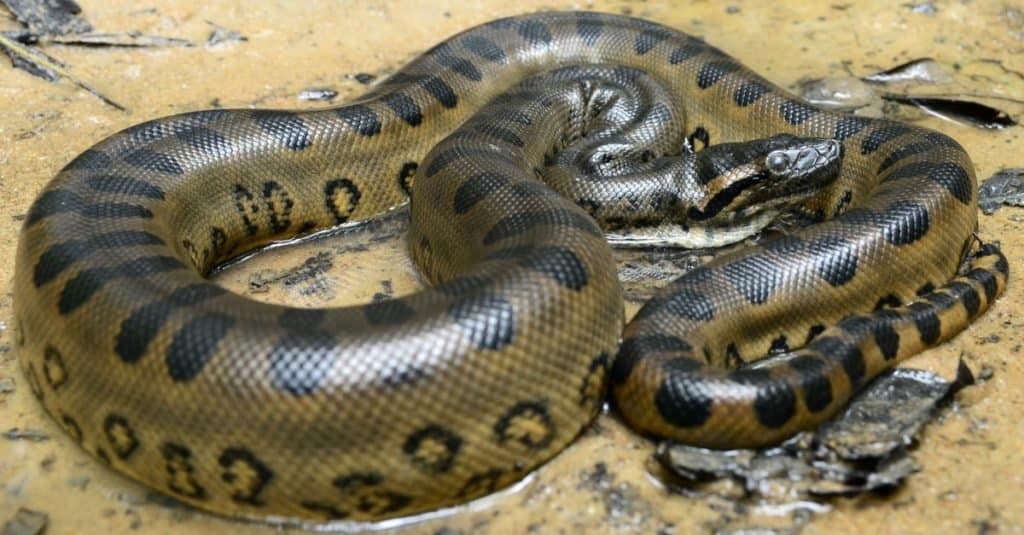
Green anacondas give birth to 20-40 young.
©Patrick K. Campbell/Shutterstock.com
4. Eastern Garter Snake (Thamnophis sirtalis sirtalis)
The eastern garter snake is one of the most common nonvenomous snakes in North America. Most have brown, yellow, or pale green sides and backs, with yellow stripes running from head to tail. Garter snakes are viviparous, developing placental structures during the gestation of their young, which lasts from 2 to 3 months. A single litter usually ranges from 10 to 40 young, but some large mothers may give birth to as many as 80 offspring. Newborn snakes are independent as soon as they are born and require no parental care.
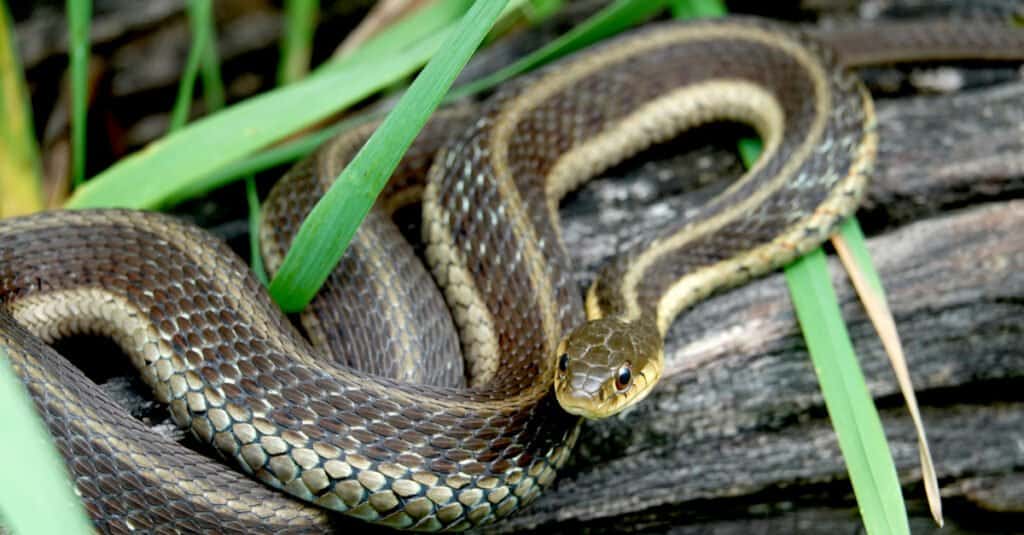
Eastern garter snakes develop placental structures during their gestation period.
©Erik Agar/Shutterstock.com
5. Eyelash Viper (Bothriechis schlegelii)
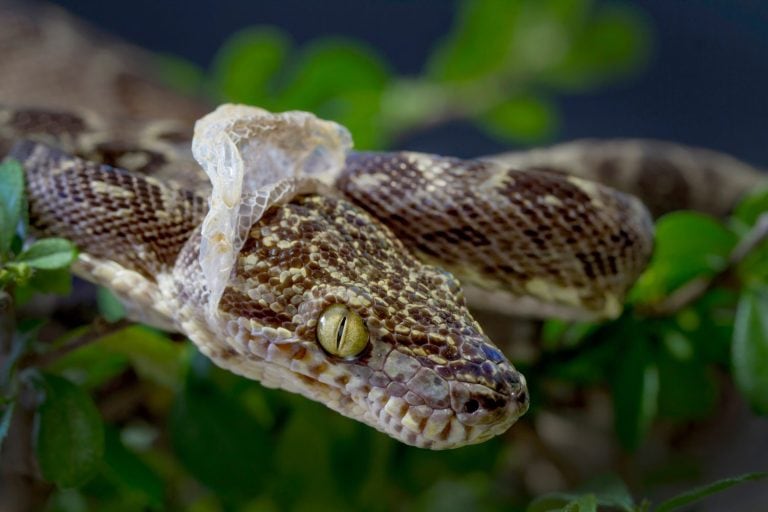
One of the prettier species of viper, the eyelash viper lives in South and Central America. It is a highly venomous member of the pit viper family characterized by a set of scales above the eyes, resembling eyelashes. These slender snakes come in an endless number of colors and patterns, including gray, yellow, tan, red, green, and brown. They are ovoviviparous, carrying eggs for around six months. Eyelash vipers give birth to between 6 and 20 live young.
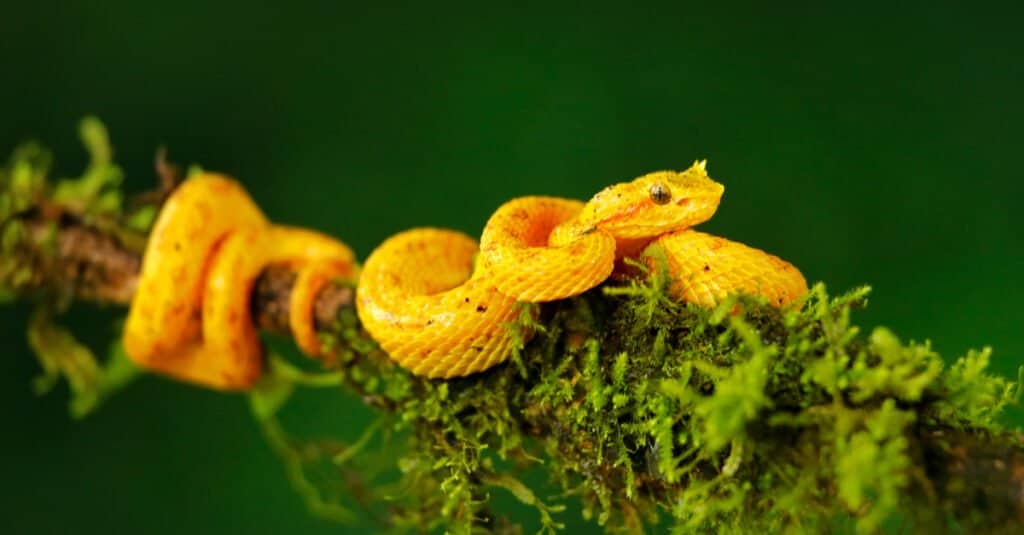
The eyelash viper female carries her eggs for around six months.
©Ondrej Prosicky/Shutterstock.com
6. Yellow-Bellied Sea Snake (Hydrophis platurus)
Yes, all snakes can swim. However, there are some snakes, like the yellow-bellied sea snake, that spend most of their lives in the water. Though these snakes are generally found in the Indo-Pacific and eastern Pacific oceans. Yellow-bellied sea snakes are two-toned, with black backs and yellow bellies. They have flattened tails that help them swim, as well as potent venom used to incapacitate fish. They don’t grow very big, with the biggest females reaching around three feet, but their bite certainly packs a punch. Like all sea snakes, these snakes are ovoviviparous and give birth to live young. Females carry the eggs for about six months before heading to shallow tidal pools to give birth.
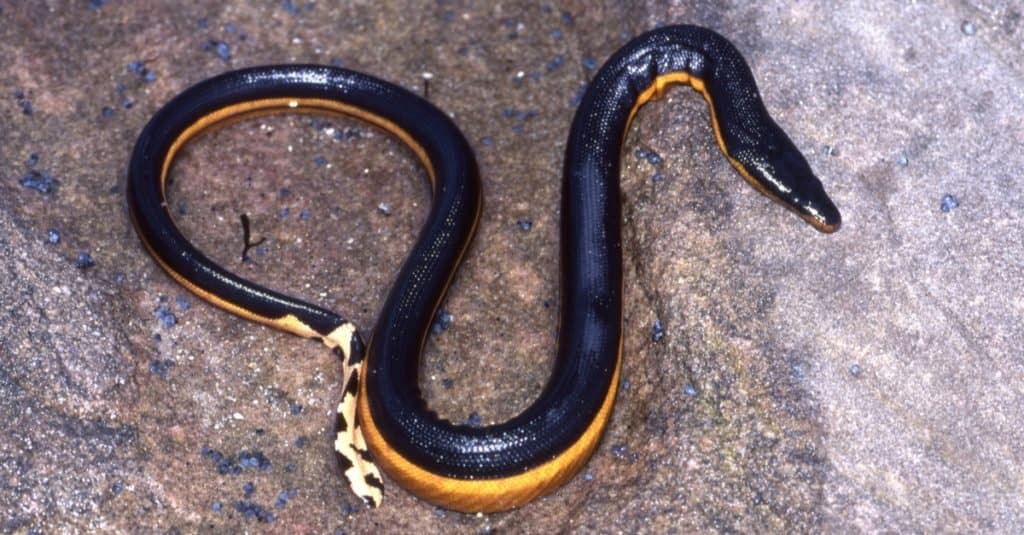
Yellow-bellied sea snakes give birth to live young while at sea.
©Ken Griffiths/Shutterstock.com
7. Common Boa Constrictor
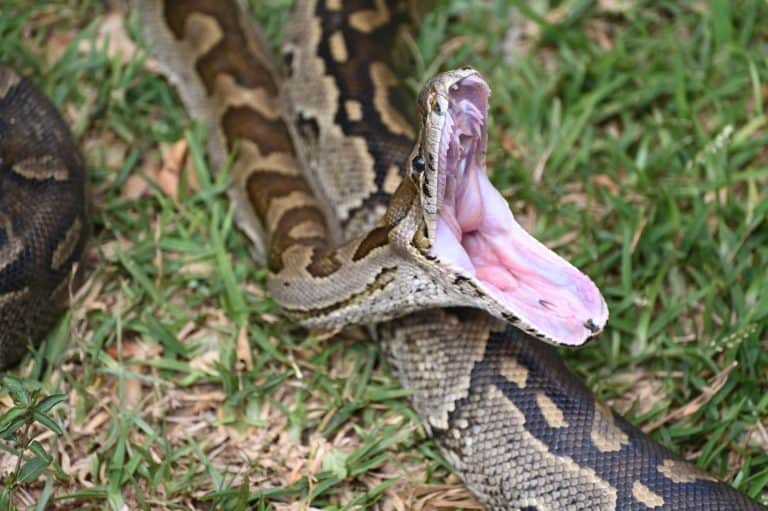
Native to the tropical forests of South America, the boa constrictor is one of the largest snakes in the world. It can grow to nearly 13 feet long and weigh over 100 pounds. Boa constrictors are viviparous. There are vascular connections between the mother and the membrane that covers the embryonic structures that function like a placenta. Female boas carry their young for 5-8 months before giving birth to an average of around 25 offspring. There is no parental care after birth, as young snakes are independent at birth.
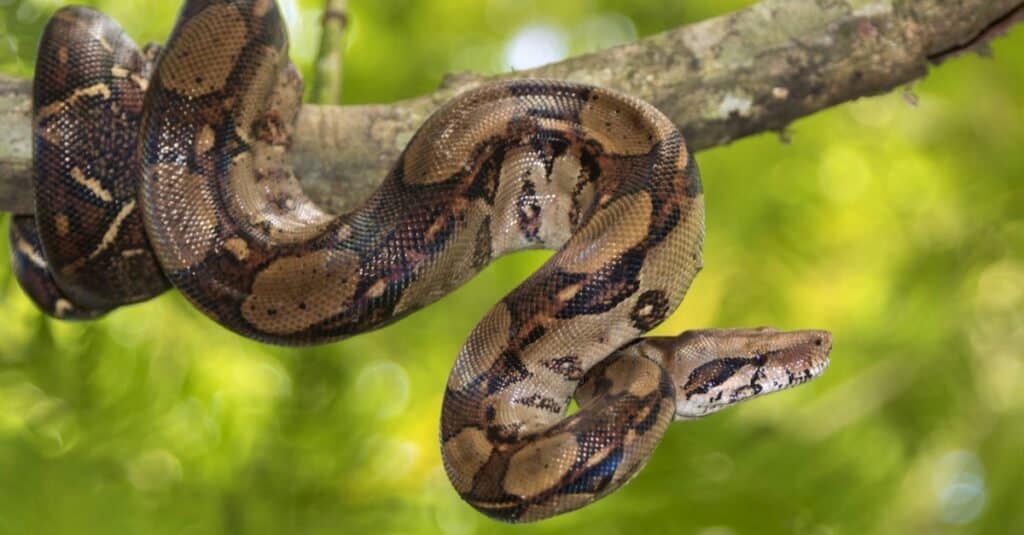
Boa constrictors give birth to an average of 25 young.
©Natalia Kuzmina/Shutterstock.com