Quick Take
- One black snake in Texas shares the same watery habitat as a deadly pit viper, and most people are unable to tell them apart on sight. Meet the lookalike watersnake →
- Texas has a black snake that is partially immune to rattlesnake venom, and it uses that immunity in a surprisingly bold way. See the venom-immune snake →
- The one venomous black snake in Texas delivers a bite that demands an immediate decision most people don't know they need to make. Learn about the venomous bite →
- The 'black' rat snake in Texas often isn't actually black, a regional quirk that surprises even experienced snake watchers. Explore the color variation →
Snakes are often portrayed as aggressive, but almost all snakes only attack if they’re cornered or surprised. While snakes seem scary, they play a valuable role in local ecosystems. They keep rodent populations down, which in turn keeps the rates of disease in check. That’s because rodents are known vectors for disease in humans, and snakes are vital in the natural eradication of these pests. That doesn’t mean that all snakes are harmless or that all bites can be avoided. As such, it’s best to know about the black snakes you might encounter in Texas.
Black Rat Snake
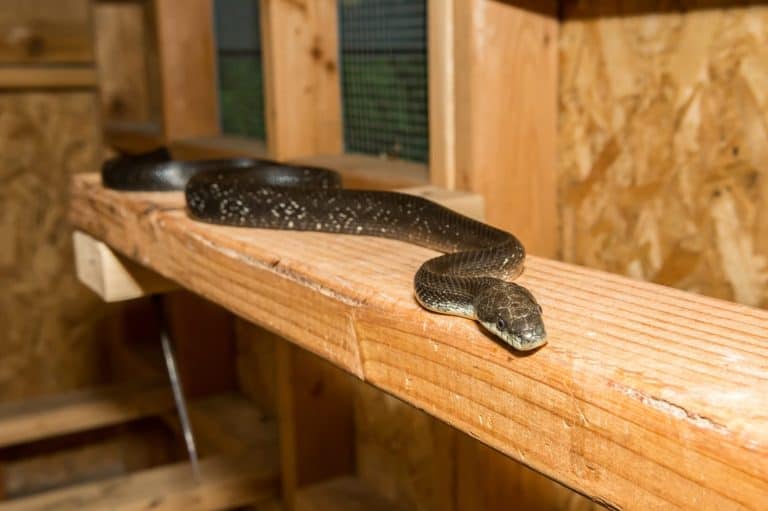
The black rat snake (Pantherophis obsoletus), also called the Western rat snake, is a large, nonvenomous constrictor capable of reaching lengths of between 3 and 6 feet, though exceptional specimens can grow up to 8 feet.
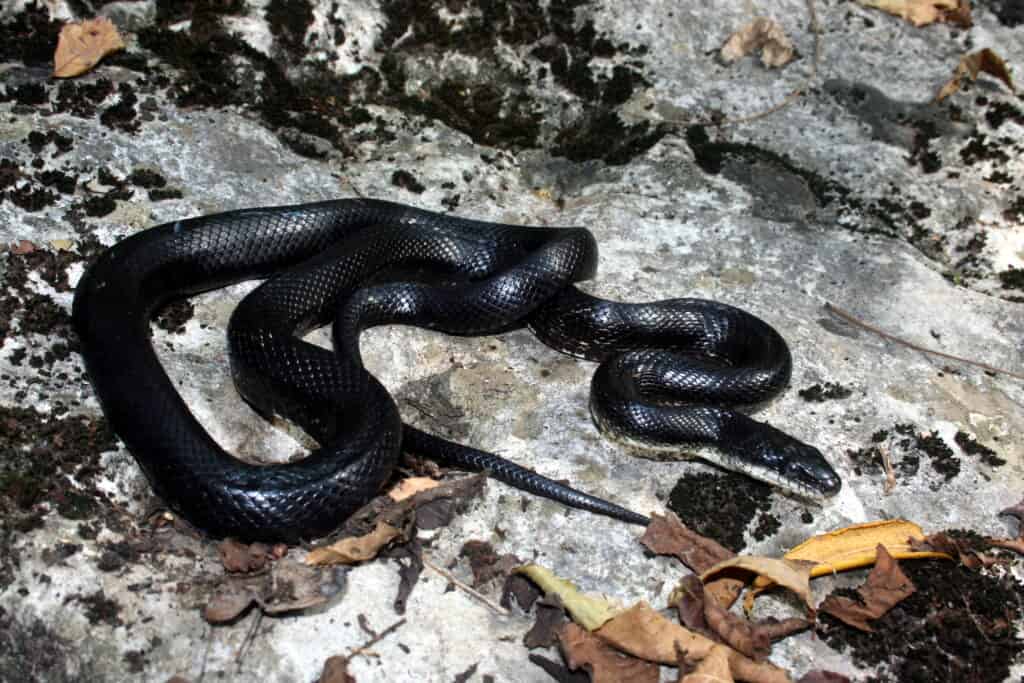
Black rat sBlack rat snakes found in Texas may not always appear black
©Psychotic Nature/Shutterstock.com
While Northern populations of this species feature a glossy, jet-black dorsal color with a white underside and chin, the regional variation found in Texas, traditionally known as the Texas rat snake, has a lighter base pattern that is heavily marked with dark brown or olive-green blotches and a distinguished solid gray head. The black rat snake is found statewide across Texas, with large populations found in Central and Eastern Texas.
Western Cottonmouth
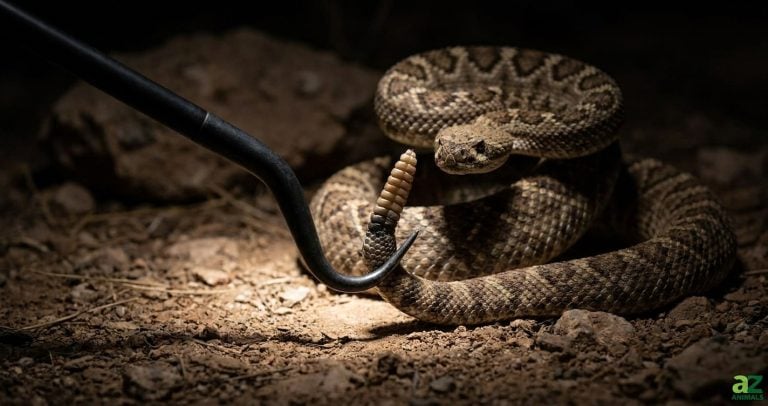
Western cottonmouths (Agkistrodon piscivorus leucostoma), also called water mocassins, are highly venomous pit vipers. These semi-aquatic snakes are typically found in slow-moving water like lakes.
Their mouths, which they bare when threatened, are as white as cotton, which is how they earned their most common name. They are thick snakes that are generally 2 to 4 feet in length, although the longest cottonmouth on record was over 6 feet long.
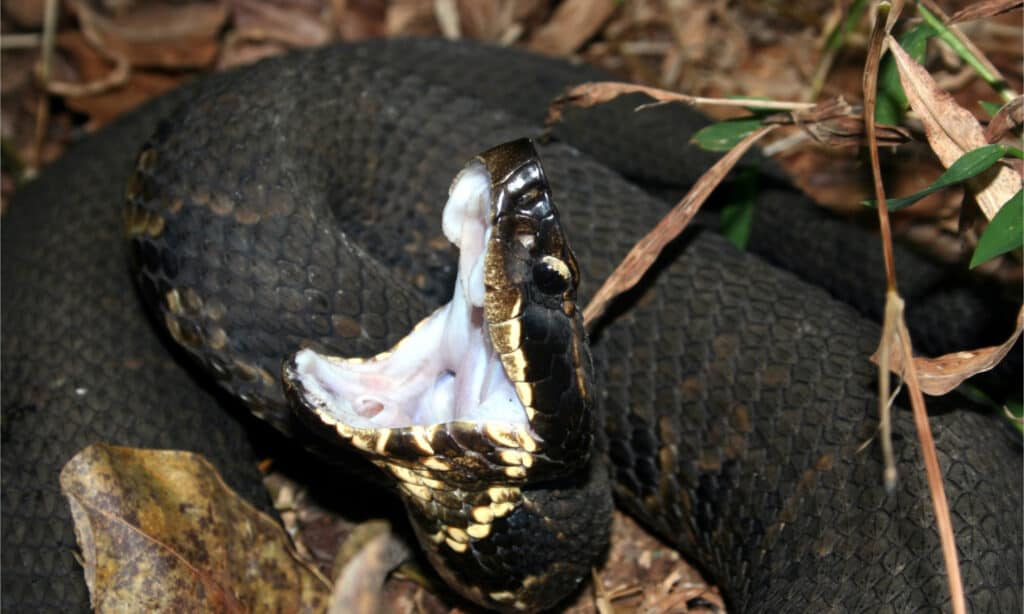
Western cottonmouths are among the venomous snakes in Texas.
©Psychotic Nature/Shutterstock.com
Male cottonmouths have a larger home range than females, although both stick close to water no matter where they travel. Western cottonmouths have a diet that consists of fish, other snakes, frogs, small mammals, and birds.
Cottonmouths are venomous, and a cottonmouth bite is a critical medical emergency that requires immediate treatment at a hospital emergency room.
Plain-bellied Watersnake
While plain-bellied watersnakes (Nerodia erythrogaster) live in the same habitats as cottonmouths, they are distinctly different snakes. These black snakes get their name from their bellies, which are typically yellow, beige, orange, or reddish-orange with absolutely no spots, lines, or markings. Plain-bellied watersnakes feed on salamanders, fish, and frogs.
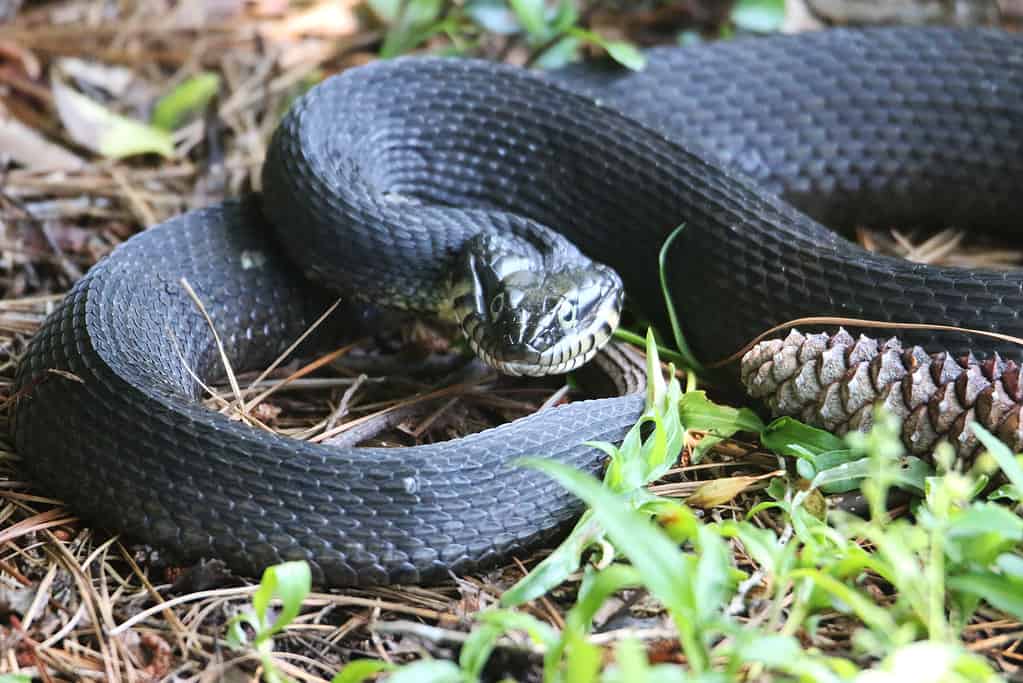
A plain-bellied water snake sunning itself on a rock beside a lake.
©iStock.com/lbolton09
Plain-bellied water snakes grow to a bit over 3 feet long. They’re thick-bodied, and their colors vary, although one of their more common colors is black.
These snakes are found in permanent water sources like rivers, streams, swamps, and ponds.
Broad-Banded Watersnake
As their name implies, broad-banded water snakes (Nerodia fasciata confluens) are found near the water. Their diet consists of insects, salamanders, crayfish, fish, toads, frogs, mice, and mammals.
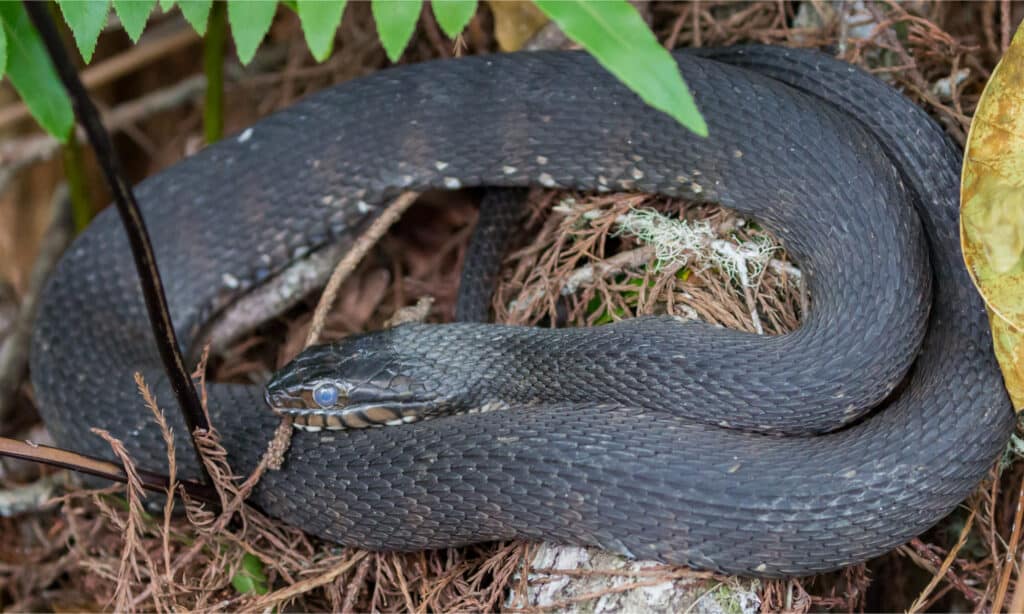
Southern/Banded Water Snake
©EdwinWilke/Shutterstock.com
Their vision is terrible, so they tend to be active in the dark of night, when keen vision is not as critical. Although broad-banded water snakes are non-venomous, they will repeatedly bite if handled or cornered.
Texas Indigo Snake
The Texas indigo snake (Drymarchon melanurus erebennus) is technically dark blue, but they are so dark that they appear black.
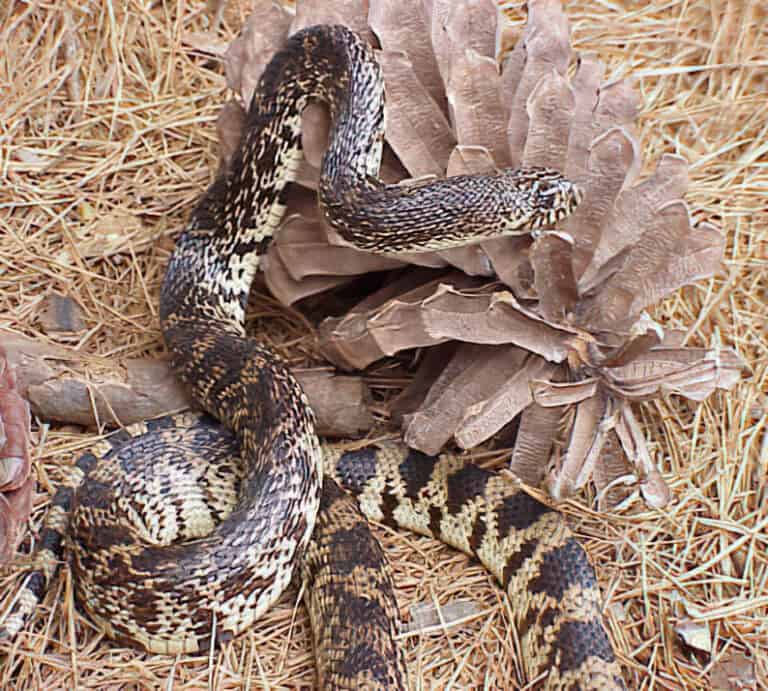
They grow to an average of 6 feet long, and they’re able to eat rattlesnakes. They can take on rattlesnakes because they’re partially immune to their venom.
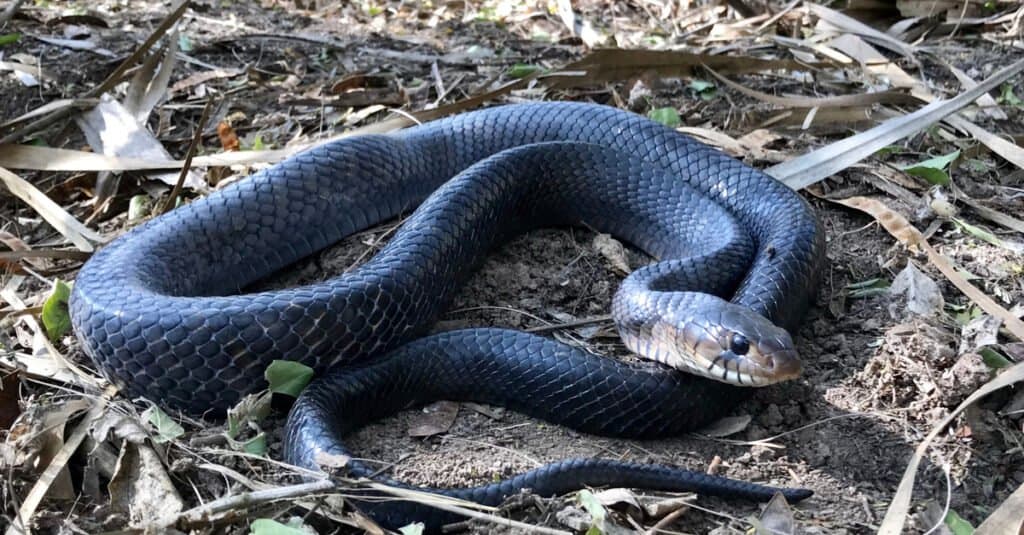
The Texas indigo snake was previously listed as a protected species in Texas, but as of 2026 it is not currently protected under state or federal law.
©Joe Farah/Shutterstock.com
Texas indigo snakes subdue their prey by force and will eat anything they can capture. They typically hunt during the day.
They’re found in Central and South Texas.
Texas indigo snakes are not commonly kept as pets in Texas, as collecting or possessing them requires special permits due to state regulations.