
Quick Take
- One of Michigan's water snakes looks nearly identical to the venomous cottonmouth, so it's no surprise that most people can't tell them apart. See the cottonmouth lookalike →
- Michigan's only venomous wetland snake almost never attacks, though there is a specific behavior that signals it is about to. Learn about the rattlesnake's behavior →
- One of these snakes has such a specialized diet that even lifelong Michigan fishermen may never spot it. Discover the crayfish specialist →
- A snake found near Michigan swimmers and hikers is listed as endangered, yet most people have no idea it exists. Meet the endangered water snake →
Michigan is known for having a huge variety of wildlife. If you’re out hiking, camping, hunting, or enjoying other outdoor activities, you could see rabbits, deer, squirrels, foxes, coyotes, or even wolves. You may also come across some snakes. Michigan is home to 18 different species of snakes, but only 8 of these snakes are aquatic, semi-aquatic, or heavily favor moist environments. Read on to identify Michigan’s wetland and water snakes, including one snake that is venomous.
Queen Snake (Regina septemvittata)
The queen snake is a non-venomous water snake that prefers small rivers with rocky bottoms where they find their highly specialized diet of recently molted, soft-shelled crayfish. The queen snake has unique coloring of dull browns and yellows that allow it to blend in with its surroundings. They tend to be small and usually only grow to a length of 15-24 inches, although some individuals can reach up to 36 inches. You may see a queen snake if you are fishing in a river, but because they prefer small rivers, even avid Michigan fishermen may never see one. They are primarily found in the southern half of Michigan’s Lower Peninsula.
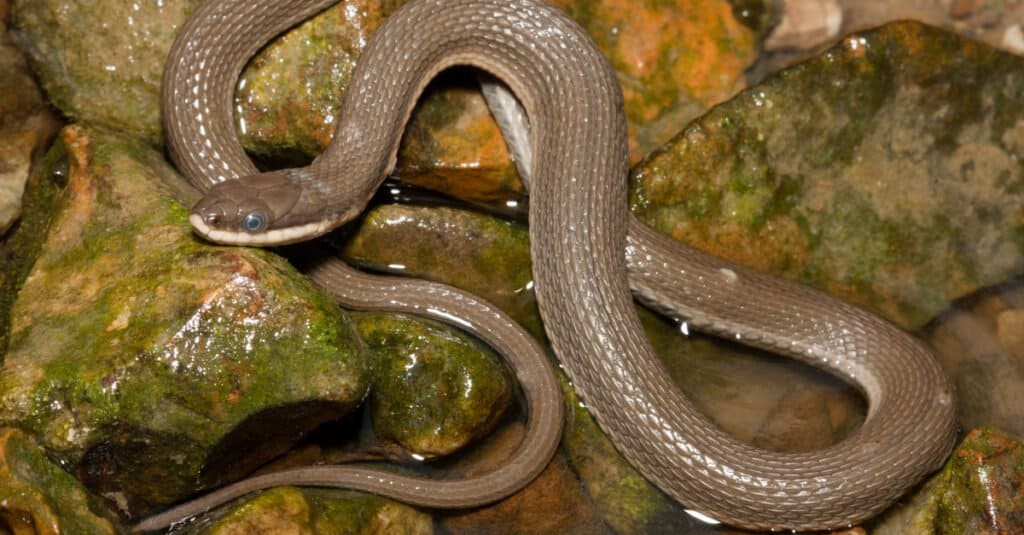
Queen snakes live along streams and hunt mostly crayfish.
©Nathan A Shepard/Shutterstock.com
Copperbelly Water Snake (Nerodia erythrogaster neglecta)
Copperbelly water snakes have solid, dark-colored bodies with bright orange-red bellies. They also have a distinctive red-orange marking around their mouths that helps them stand out when compared to other snake species. These non-venomous snakes can grow quite large, sometimes reaching up to 5 feet in length. The snake is protected in Michigan, as its population has been in decline. Today, copperbelly snakes are found in isolated areas near the Indiana border.
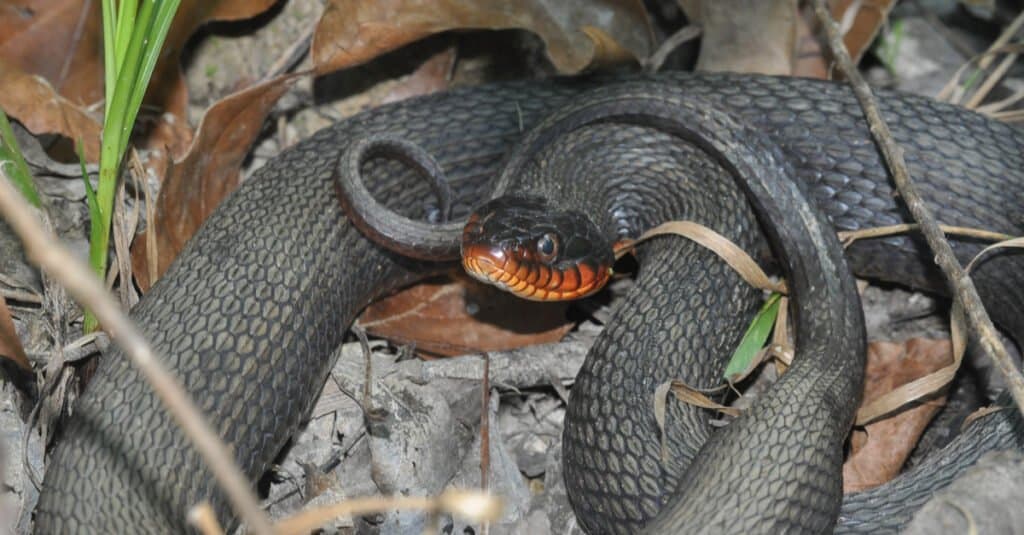
The copperbelly water snake has a distinctive red-orange coloring around its mouth.
©Mike Wilhelm/Shutterstock.com
Northern Water Snake (Nerodia sipedon)
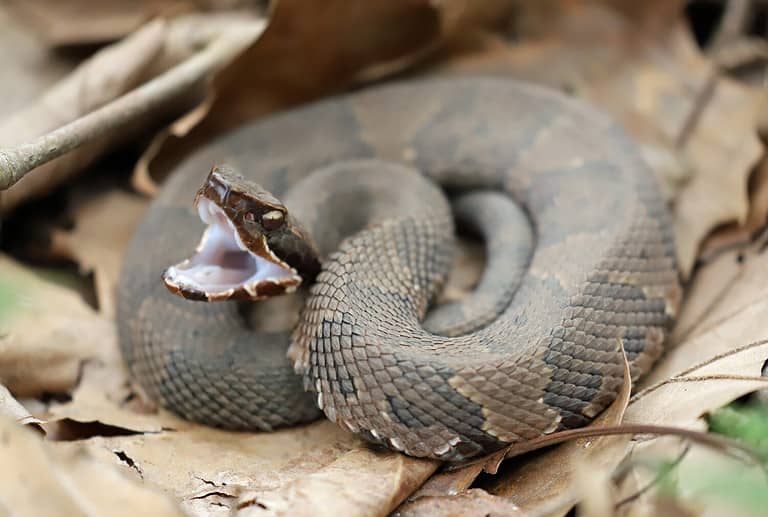
Northern water snakes have a much broader distribution in Michigan when compared to the copperbelly water snake. These snakes can be found throughout the state. They are often confused with cottonmouth snakes, but are non-venomous. These snakes can be tan, brown, gray, or reddish-colored with red, dark brown, or black crossbands on their necks, as well as blotches on their backs and sides. They can reach up to about 5 feet in length and are often found basking in the sun near water sources.
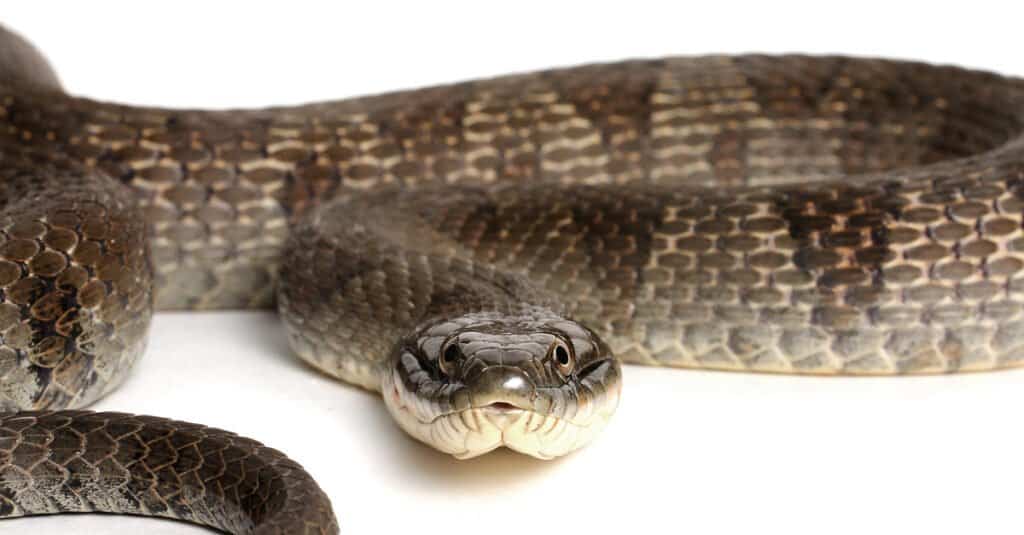
Northern water snakes are found in both the Upper and Lower Peninsula
©Michiel de Wit/Shutterstock.com
Kirtland’s Snake (Clonophis kirtlandii)
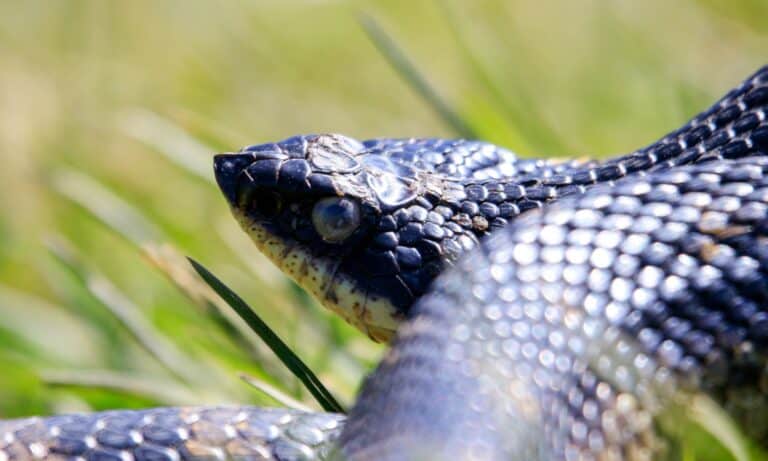
Kirtland’s snake is a small, non-venomous snake that measures 14 to 18 inches in length. This snake likes water, which can bring it into contact with boaters, swimmers, and hikers throughout Michigan. Kirtland’s snake is listed as a threatened or endangered species of snake across the states where it appears, including being listed as endangered in Michigan. Kirtland’s snake has a dark brown or black body and dark markings which make it look intimidating. However, like most of the snakes in Michigan, it poses no threat to humans at all. Kirtland’s snakes are found in the southern part of the state.
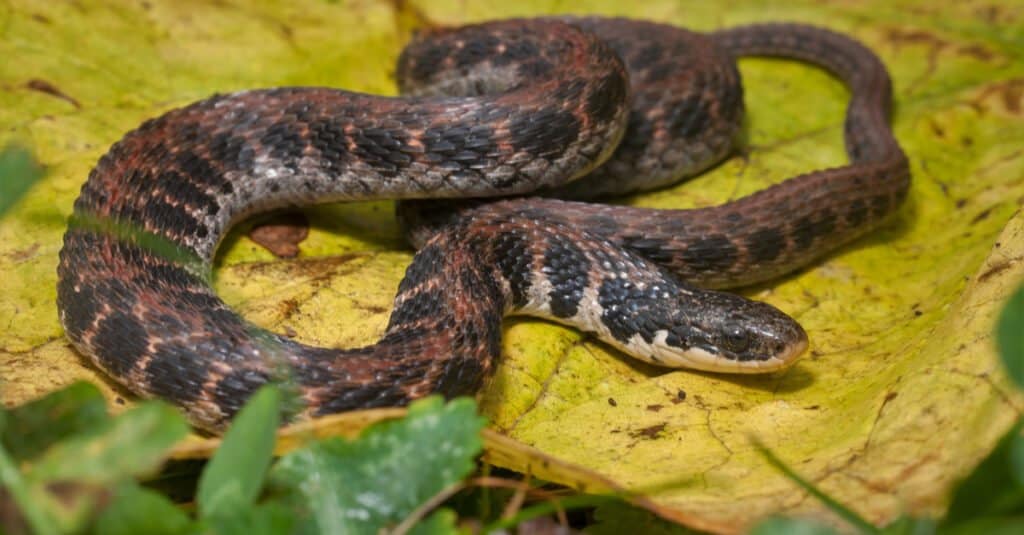
Kirtland’s snake is a threatened snake in almost every state where it appears, including in Michigan.
©Mike Wilhelm/Shutterstock.com
Northern Ribbon Snake (Thamnophis saurita septentrionalis)
The northern ribbon snake is a highly aquatic non-venomous snake. It is a good swimmer and is frequently found near the edges of shallow lakes, streams, ponds, marshes, and bogs. The northern ribbon snake is black or dark brown with bright-yellow, white, or tan stripes on its back and sides. Northern ribbon snakes are relatively slender and usually measure around 16–36 inches in length. They eat mostly worms and small insects, but they have been known to eat frogs and fish too. Chances are high that a northern ribbon snake will immediately flee if humans come around, so you will probably never get the chance to get close to this tiny snake.
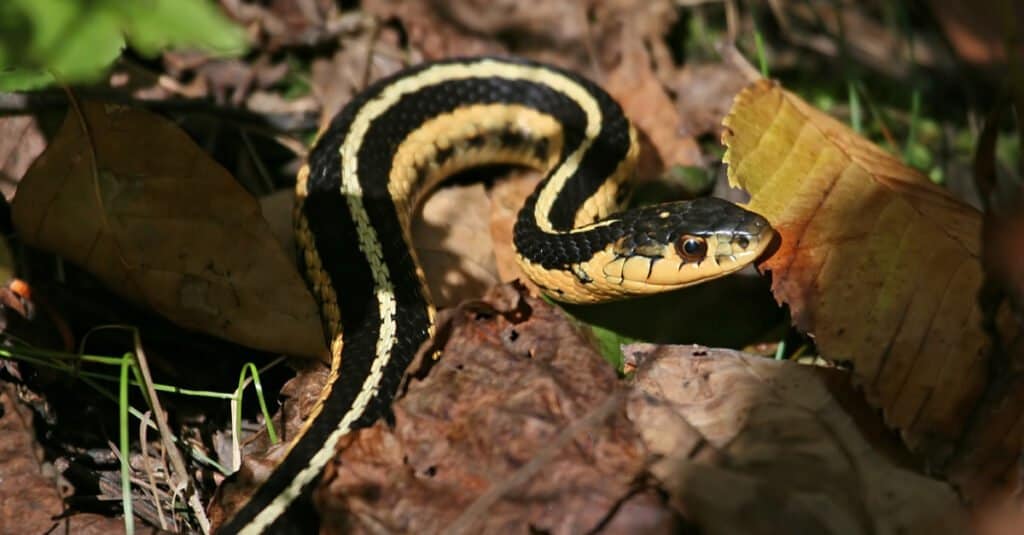
Similar in appearance to garter snakes, the northern ribbon snake is common in Michigan.
©John Czenke/Shutterstock.com
Butler’s Garter Snake (Thamnophis butleri)
Butler’s garter snakes are small snakes measuring only around 15-20 inches in length. They are found primarily in Michigan’s southern lower peninsula. These snakes have a strong preference for moist environments, including open grassy areas, marshes, and wet prairies. They are olive-brown to black with two rows of dark spots, three yellow-to-orange longitudinal stripes, and a pale green or yellowish belly. These non-venomous snakes spend their time either underground or hiding beneath rocks and logs. They feed on leeches, small frogs, salamanders, and earthworms.
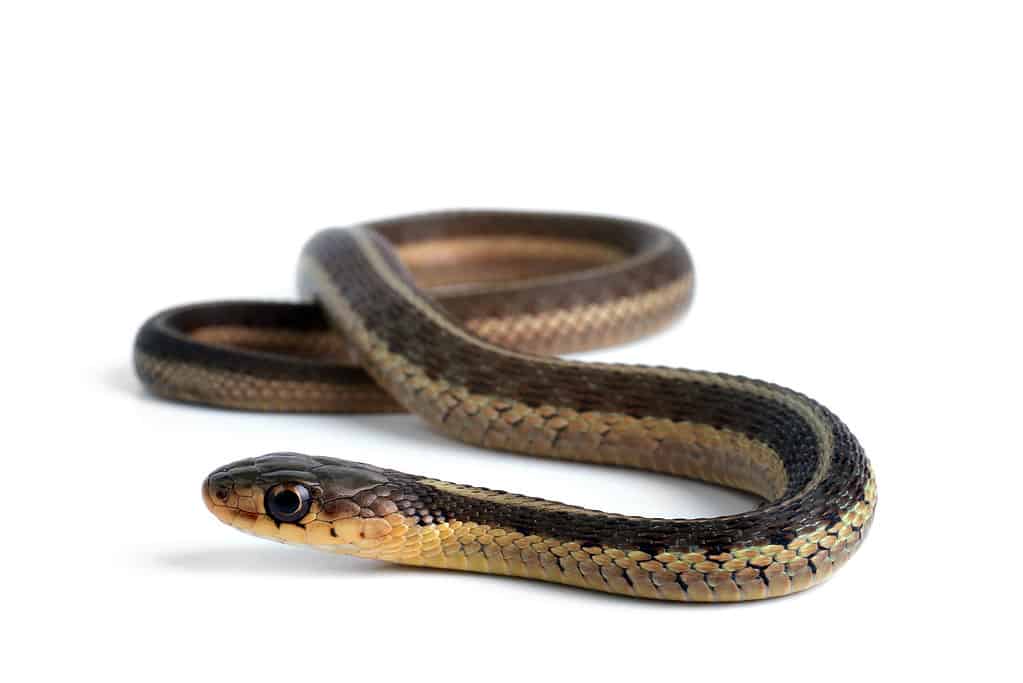
Butler’s garter snakes only measure around 15-20 inches in length.
©Michiel de Wit/Shutterstock.com
DeKay’s Brown Snake (Storeria dekayi)
DeKay’s brown snakes, also known as simply brown snakes, are small and slender, typically measuring between 9 and 13 inches. They are gray, tan, or brown with a faint stripe down the middle of the back. They also have a checkerboard pattern on either side of the back stripe and a dark spot under each eye. These non-venomous snakes favor moist habitats, including wetlands and woodlands throughout the state. They are often found hidden under rocks, logs, or leaf litter. Brown snakes primarily feed on snails, slugs, and earthworms.
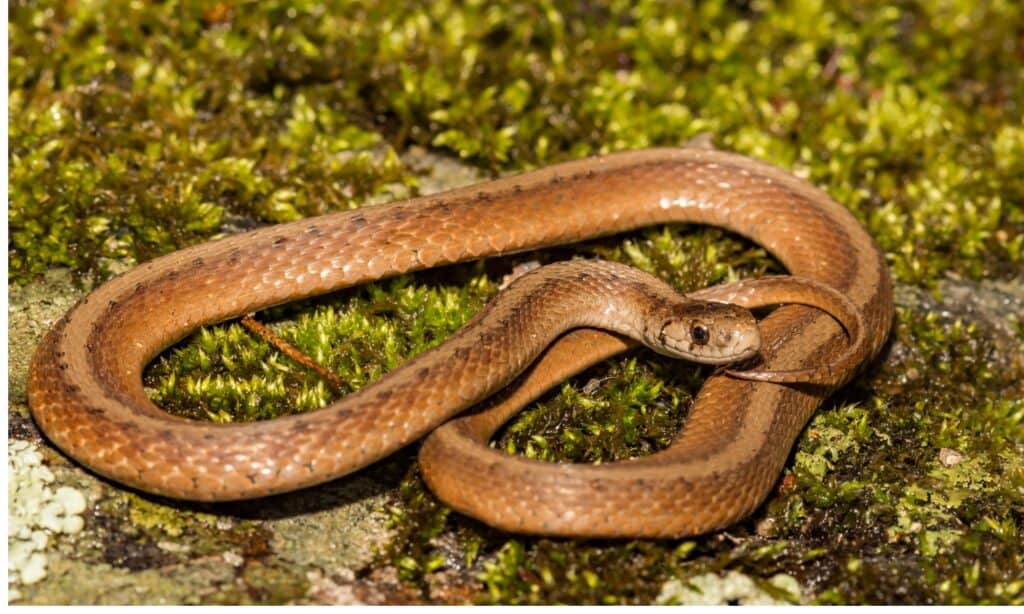
DeKay’s brown snakes favor a moist environment.
©iStock.com/JasonOndreicka
Eastern Massasauga (Sistrurus catenatus)
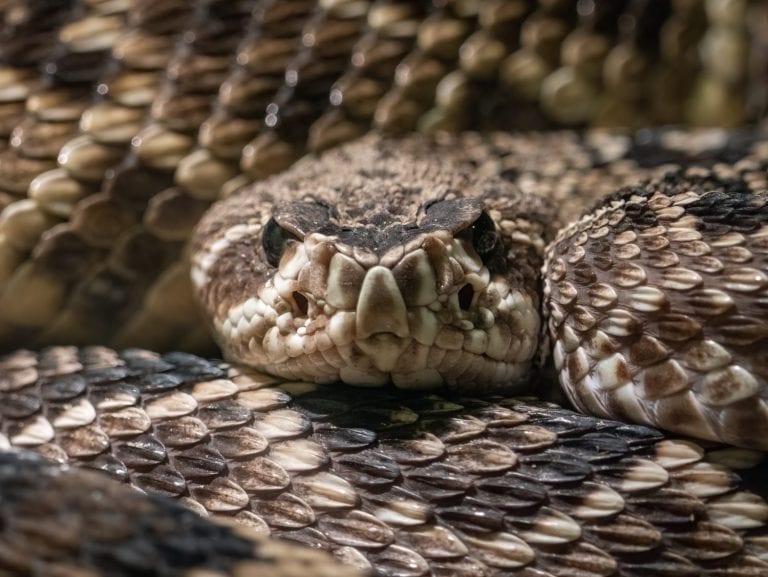
The eastern massasauga rattlesnake is the only venomous snake in Michigan. They live in a variety of wetland habitats, as well as their associated uplands. In southern Michigan, they are found in open wetlands, such as prairie fens, while in northern Michigan, they inhabit open wetlands and cedar swamps. Like most rattlesnakes, the eastern massasauga has a heavy body and is fairly wide. However, it is one of the smallest species of rattlesnake and usually doesn’t grow longer than 2 to 3 feet. It will use its rattle to let you know that you are getting too close before it strikes. However, this rattlesnake will almost always flee instead of attacking. If bitten by a massasauga, seek immediate medical attention.
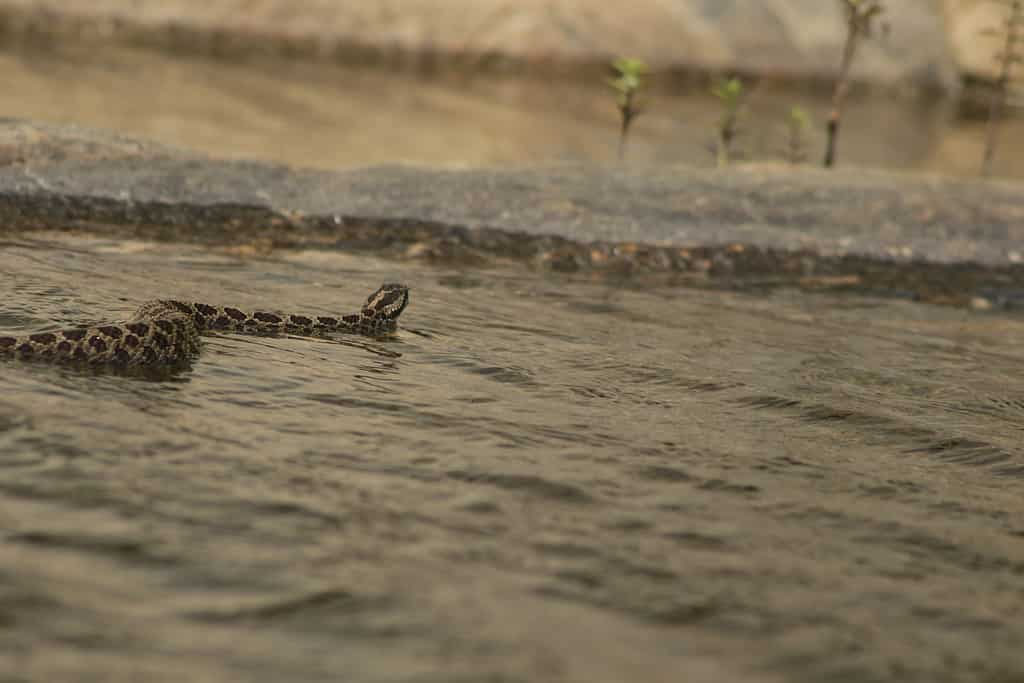
Eastern massasauga rattlesnakes enjoy wetter habitats that most rattlesnakes.
©mynewturtle/Shutterstock.com