
Quick Take
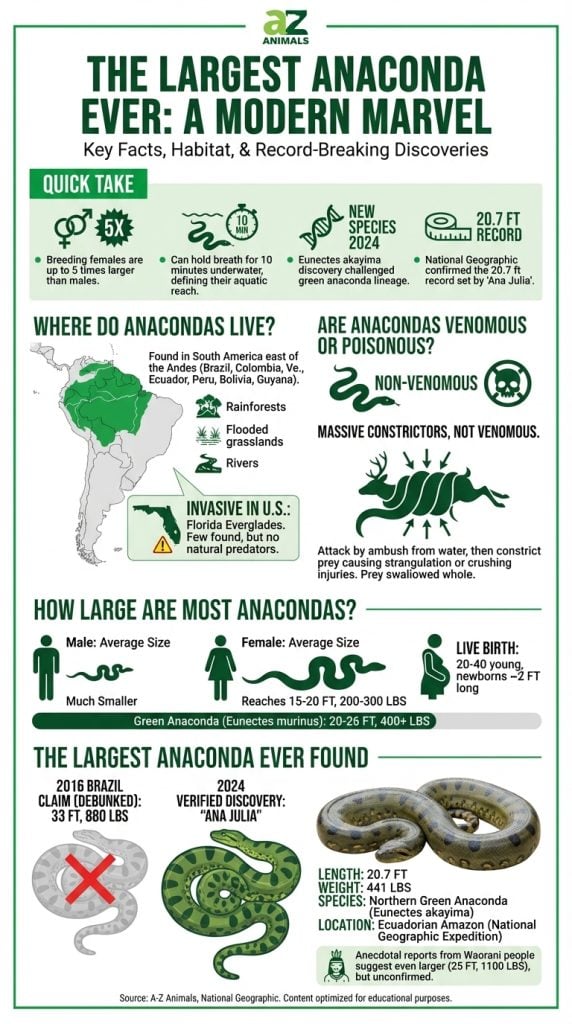
- Reaching a size 5 times larger than males is a biological benchmark for breeding females.
- Holding breath for 10 minutes underwater dictates the specific aquatic reach of the green anaconda.
- The 2024 identification of Eunectes akayima challenged previous scientific certainties regarding green anaconda lineage.
- A National Geographic expedition was essential to confirm the 20.7-foot record set by Ana Julia.
Whether they make an appearance on the silver screen or on the news, anacondas are famously dangerous reptiles. They’re excessively long, thick snakes with eyes situated on the top of their heads to help them scope out prey while remaining underwater. These snakes are known for killing their prey by constriction rather than by venom. They strike from the water to capture animals such as deer, caimans, capybaras, and other prey. Today, we’re going to discover the biggest anaconda ever and show you why that snake was truly a modern-day marvel.
Forget everything you knew about the Amazon’s apex predator—a newly discovered 20.7-foot giant has officially shattered the record books.
©
Where Do Anacondas Live?
Anacondas are found in South America east of the Andes Mountains, specifically the Amazon and Orinoco River basins. This includes the countries of Brazil, Colombia, Venezuela, Ecuador, Peru, Bolivia, and Guyana. Anacondas are primarily aquatic animals and are often found in slow-moving rivers, swamps, and marshes. They are able to hold their breath for up to 10 minutes underwater, making them well-adapted to these watery habitats.
In addition to their aquatic habitats, anacondas are also found in the dense, humid rainforests that make up much of the Amazon River basin. Here, they hunt on land and in the trees, taking advantage of the abundant prey found in these environments. The Orinoco River basin has a mix of different ecosystems, including rainforests, swamps, wetlands, and flooded grasslands.
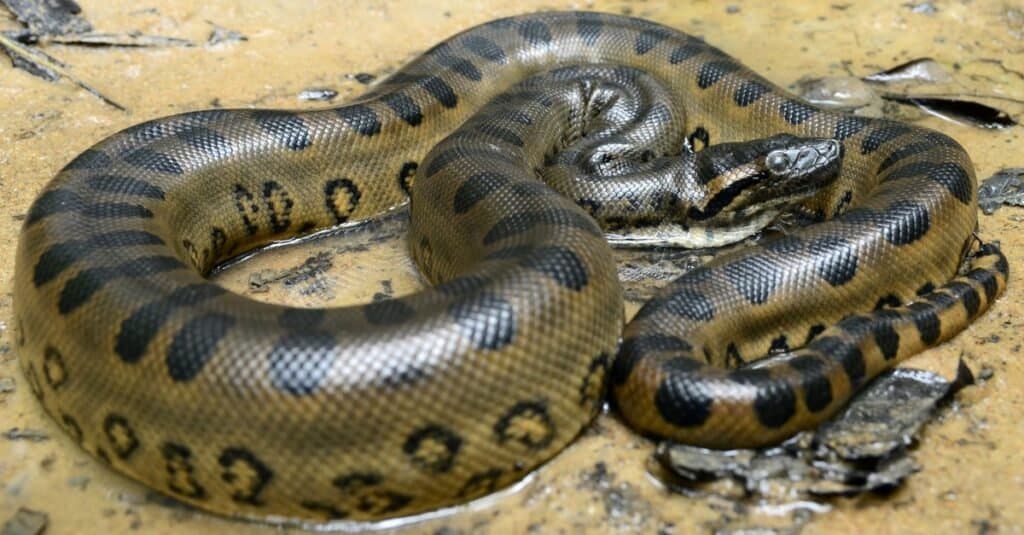
The green anaconda is especially partial to flooded grasslands.
©Patrick K. Campbell/Shutterstock.com
However, South America is not the only place where anacondas can be found. Green anacondas have also been discovered in the United States, specifically in the Florida Everglades, where they are considered an invasive species. Fortunately, only a few have been found so far, but they could become as problematic as the Burmese python if their population grows. These massive snakes have few natural predators in this area, allowing them to flourish. Human intervention is the only means of keeping these animals in check. It is currently illegal to import green anacondas and several other anaconda species into the U.S.
Are Anacondas Venomous or Poisonous?
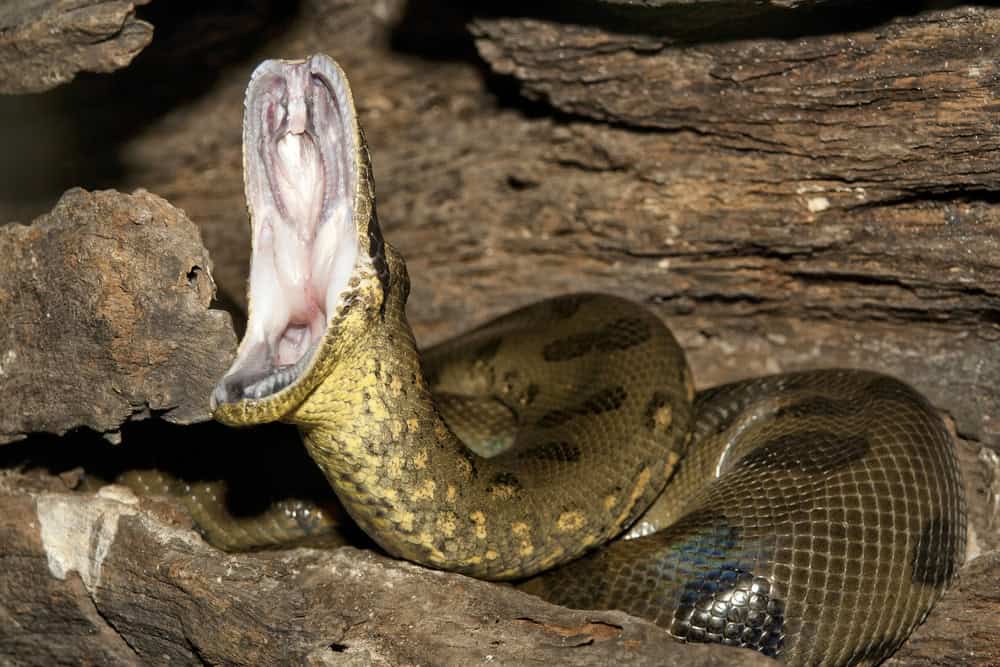
Anacondas are not venomous or poisonous snakes, but they are still very dangerous. Their method of attack is not unique, but it is deadly. Anacondas are constrictors that belong to the boa family. They often wait just below the water with the uppermost part of their heads above the water line. When they see the right type of prey come by, they lunge. The snakes use their teeth to hold their prey and begin the process of wrapping around it.
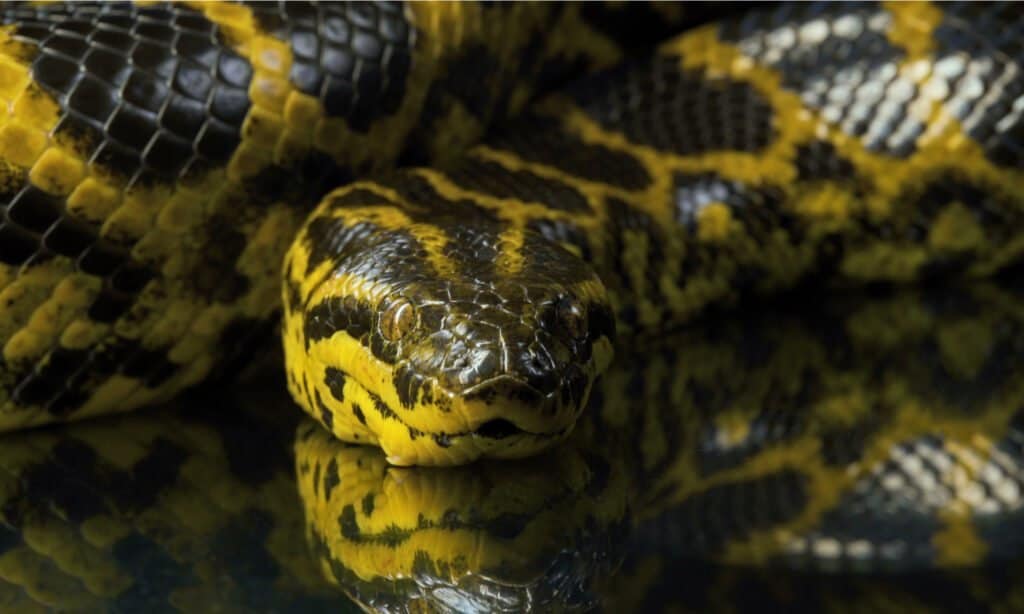
Anacondas are massive, deadly constrictors
©Chris Tefme/Shutterstock.com
Once they have subdued the prey’s attempts to escape, they constrict tighter and tighter until the animal is dead. Constriction is deadly on multiple levels, causing either strangulation or crushing injuries, including organ failure, in their prey. Either way, the anaconda is difficult to fend off, and the dead prey is swallowed whole.
How Large Are Most Anacondas?
The green anaconda (Eunectes murinus) is not only the largest anaconda species, it is also the largest snake in the world if both length and weight are considered. They can reach up to 12 inches in diameter, grow 20-26 feet in length, and weigh more than 400 pounds, with unverified reports of even larger individuals. The average green anaconda can reach about 15-20 feet in length and weigh between 200-300 pounds.
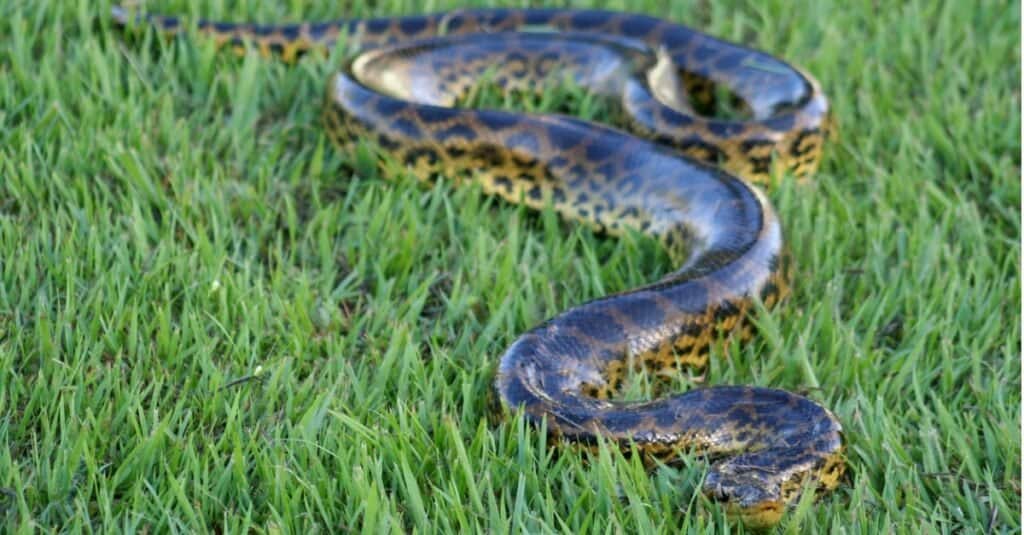
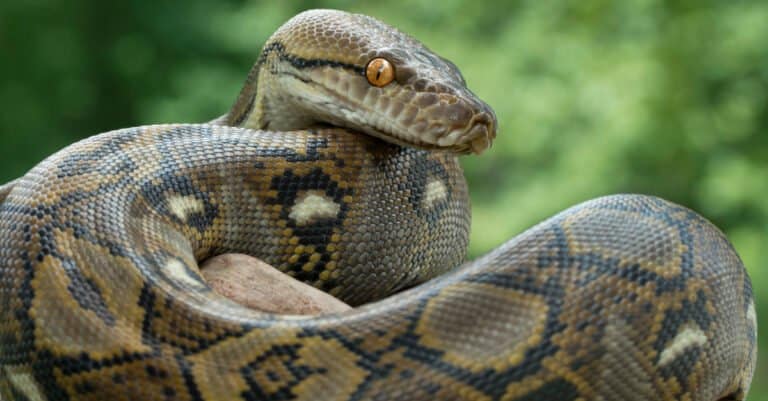
Anacondas can grow to around 20 feet on average.
©iStock.com/Schumaher
Breeding-age females are said to be at least 5 times larger than breeding-age males. They spend most of their lives alone, except during mating, which takes place every other year in the dry season from March through May. Anacondas give birth to 20-40 live young in the water, with litter size based on the size of the mother. Even newborn anacondas are about 2 feet long.
The Largest Anaconda Ever Found
In 2016, there were claims that the largest anaconda ever found had been discovered at a construction site in Brazil. This snake was said to have been 33 feet long, 3 feet across at its widest part, and weigh about 880 pounds. However, there was no evidence to back up these claims, and the story has since been widely debunked.
A 2024 study from researchers at New Mexico Highlands University uncovered what scientists say is a new species of green anaconda, the northern green anaconda. After a discovery by researchers on a National Geographic expedition, the northern green anaconda (Eunectes akayima) is believed to be at least as long, if not longer, than its southern cousins.
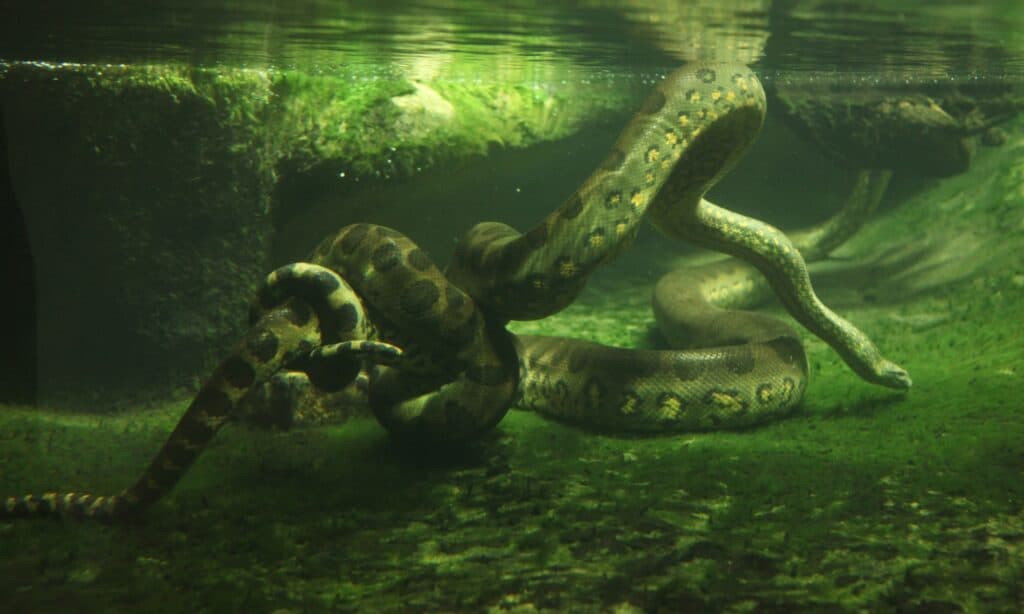
The largest anaconda ever found in the wild was discovered in the Ecuadorian Amazon.
©Vladimir Wrangel/Shutterstock.com
Scientists on the expedition revealed what is believed to be the largest scientifically verified anaconda ever found in the wild. The northern green anaconda, Ana Julia, was located in the Amazon River in Ecuador. This snake was around 20.7 feet long and weighed 441 pounds. Anecdotal reports from the Waorani people in the region describe anacondas nearly 25 feet long and weighing over 1,100 pounds, but these have not been confirmed. However, this suggests that even larger individuals may still be undiscovered in the vast, murky waters of the Amazon and Orinoco River basins.