
Quick Take
- One harmless snake looks nearly identical to a venomous one, and mixing them up is easy.
- A snake that eats venomous snakes for lunch might be living near your garage.
- Hundreds of bites happen here every year, yet one date stands out as the last time it turned deadly.
- Some of Mississippi's most feared snakes are vanishing, and the reasons may surprise you.
Mississippi is home to 55 snake species, of which six are venomous. Snakes are found throughout the state in a variety of habitats in which prey is abundant, including forests, creeks, rivers, and swamps. Although Mississippi records more than 100 snake bites annually, these bites are rarely fatal. The most recent fatality was recorded in June 2000, when an 80-year-old man died after being bitten by a rattlesnake on his farm. Continue reading to learn about snakes in Mississippi.
Midwestern Wormsnake
Midwestern wormsnakes (Carphophis amoenus helenae) are so small that they are easy to overlook. They rarely grow to more than a foot long, with most of them about 7 to 11 inches long. These snakes typically are a plain brown with a contrasting, typically pink, belly.
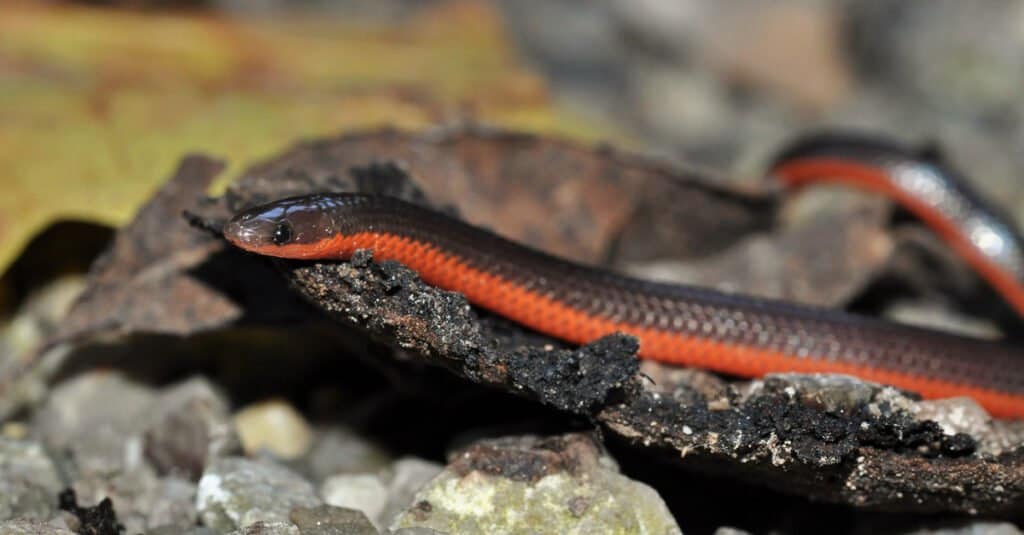
Worm snakes are small and prefer to avoid contact with humans.
©Mike Wilhelm/Shutterstock.com
Midwestern wormsnakes are typically found in wooded areas near streams and lakes, but they also sometimes live in the rocky areas bordering grasslands. These small snakes are harmless to humans. They dig under the dirt to find earthworms and other prey and they like to stay hidden. If you do happen to see one, it will likely move along as quickly as possible.
Northern Scarlet Snake
The northern scarlet snake (Cemophora coccinea) has wide bands of red scales on its back. Each wide red band is bordered on either side by narrow bands of black and yellow. The northern scarlet snake has a solid light-colored belly.
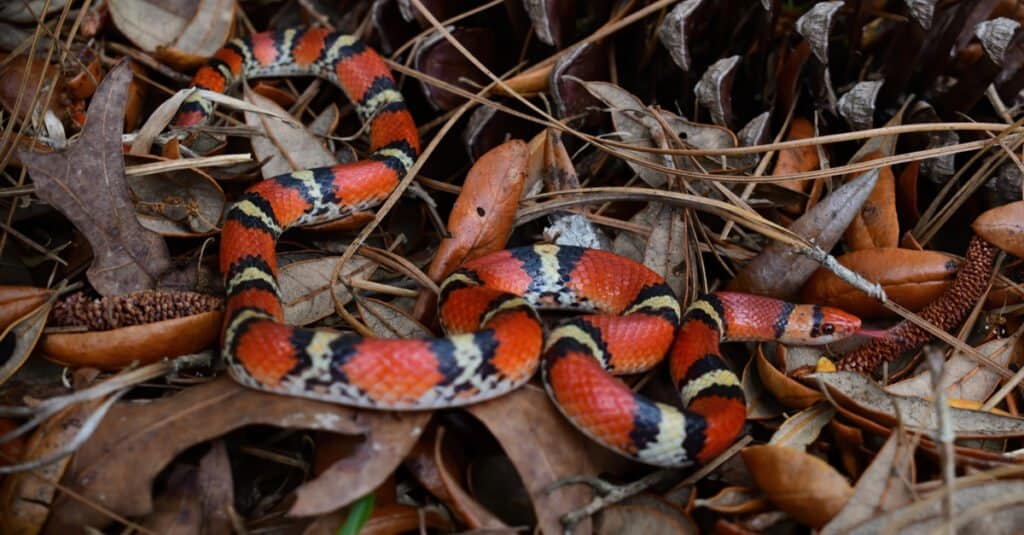
Scarlet snakes are nonvenomous snakes.
©Chase D'animulls/Shutterstock.com
Northern scarlet snakes burrow into soft sandy soil, but they can also be found in trash piles, under rocks, under dirt piles, under mulch, and in other areas where they can hide. Because northern scarlet snakes burrow in sandy soil, you may find them in your garden or near your garage in a suburban area, but don’t worry: they’re not venomous.
Eastern Black Kingsnake
The eastern black kingsnake (Lampropeltis nigra) is a nonvenomous snake with black scales on top and a pale belly below. Black kingsnakes are beneficial to have around. In addition to eating vermin and rodents, they prey on rattlesnakes and other venomous snakes, whose venom does not affect them.
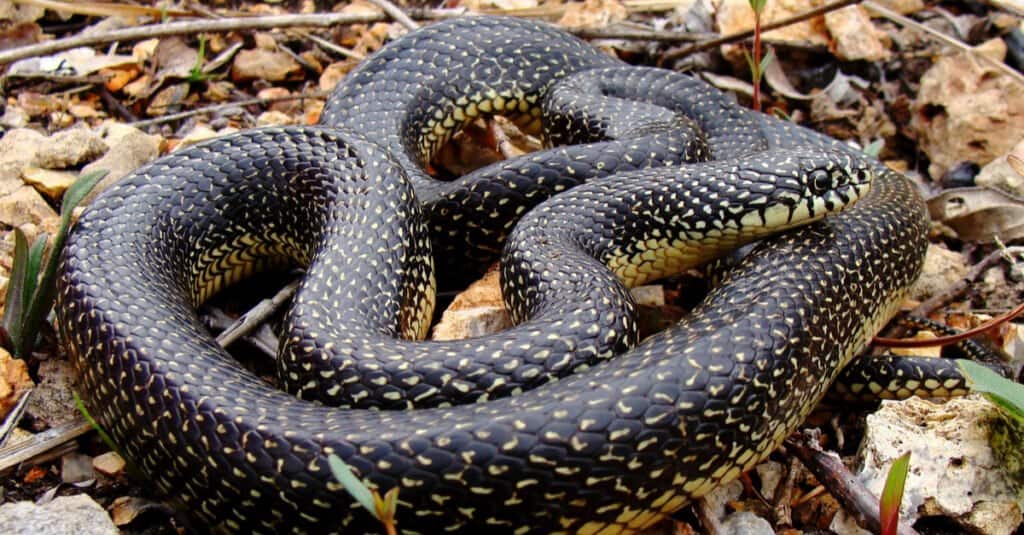
Black kingsnakes are rather large snakes that prey on other snakes.
©Matt Jeppson/Shutterstock.com
Gulf Saltmarsh Snake
Gulf saltmarsh snakes (Nerodia clarkii clarkii) are found near the Gulf waters and in other salt marshes or swampy areas in Mississippi. They also sometimes live on barrier islands. These unique snakes are generally only about 15 to 20 inches long. They are gray with light stripes.

Gulf saltmarsh snakes are most commonly found in aquatic environments near the Gulf Coast
©Joe Farah/Shutterstock.com
Gulf saltmarsh snakes are non-threatening and will ignore people most of the time. However, if you try to handle one, it may strike out or bite you.
Delta Glossy Swamp Snake
The delta glossy swamp snake (Liodytes rigida deltae) is also called the crayfish snake, since it primarily eats crayfish. This snake has a dull, mud-colored base that blends into the swampy marshlands where delta glossy swamp snakes are found. Delta glossy swamp snakes are small and tend to be about 16 inches long, although they can grow to about 2.5 feet.

Delta glossy swamp snakes live in marshlands across the Gulf Coast.
©Rusty Dodson/Shutterstock.com
Southern Copperhead
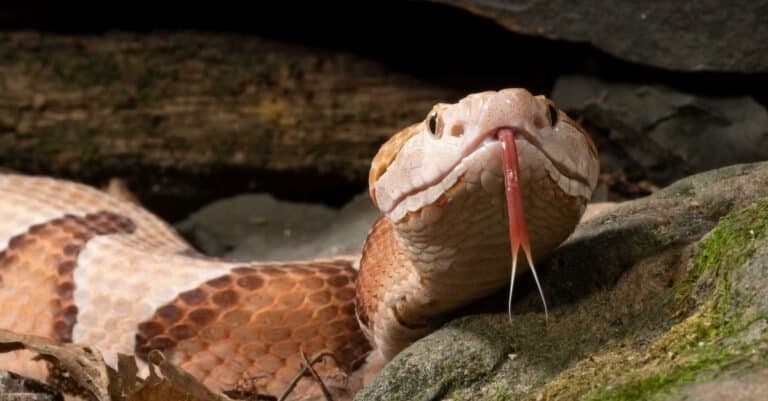
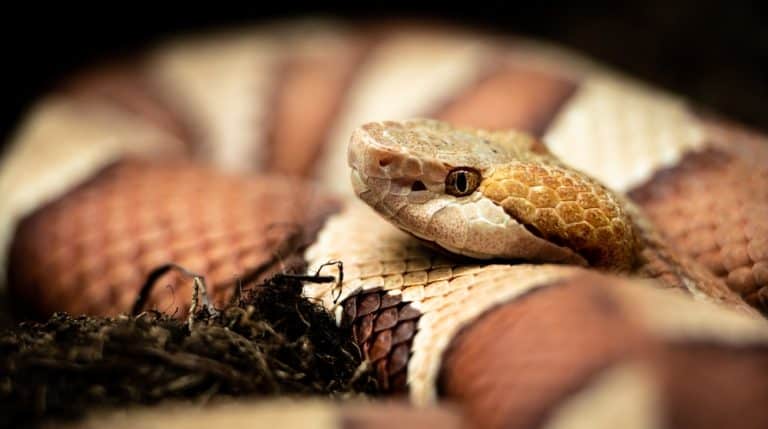
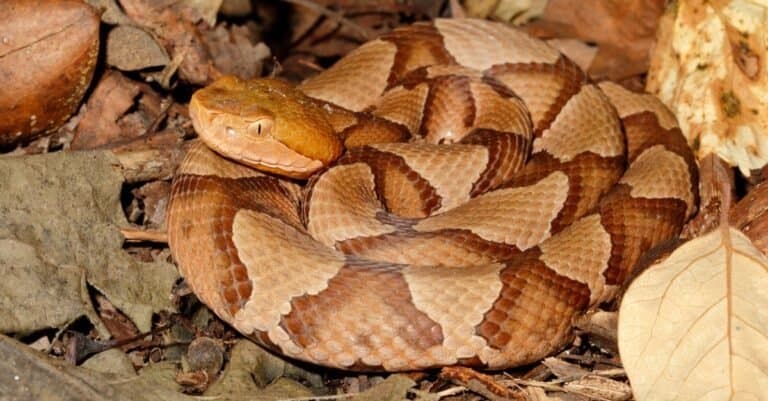
The southern copperhead (Agkistrodon contortrix contortrix) hides near the base of trees, in piles of brush, or next to large rocks. Their unique color patterns have evolved as camouflage. Copperheads are venomous. They would rather flee than fight, but if you surprise one, or get close, it might feel threatened and strike. Southern Copperheads are found throughout Mississippi, except for a small portion of the Gulf Coast.
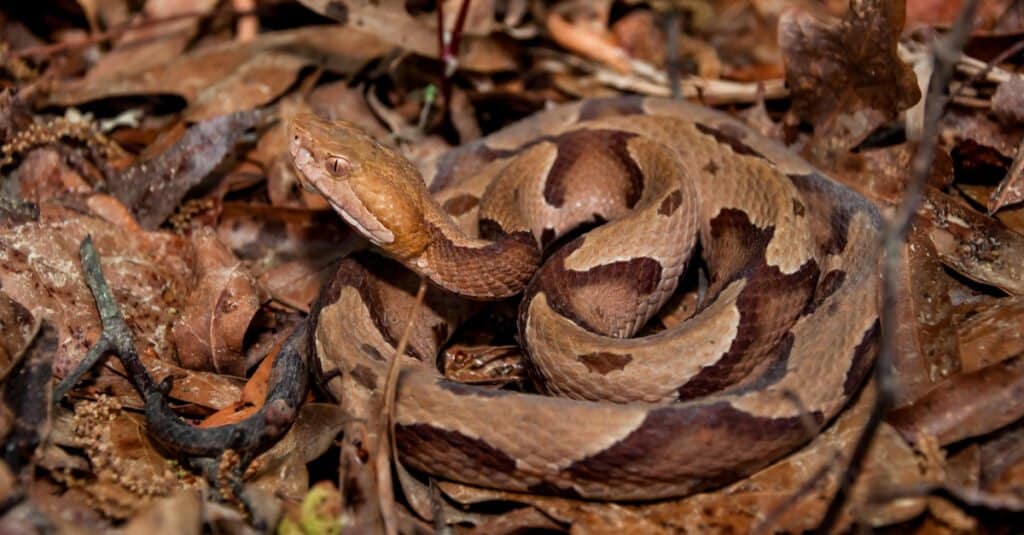
Southern copperheads blend in with their environment.
©Jay Ondreicka/Shutterstock.com
Cottonmouth
Cottonmouths (Agkistrodon piscivorus), also known as water moccasins, are primarily aquatic and are found in salt marshes, swamps, and other low-lying wet environments. Cottonmouths have dark bands or dark scales, but the insides of their mouths are white. These snakes have potent venom and can be deadly, though no fatalities from cottonmouth bites have been recorded in Mississippi in the 21st century. If startled, cottonmouths will show their white mouth.
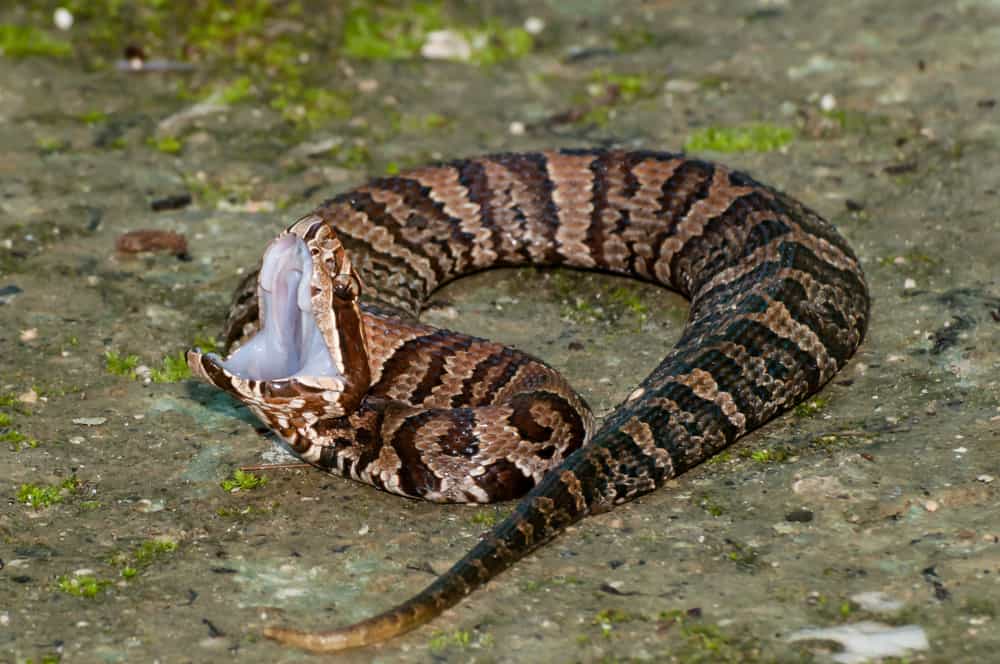
Cottonmouth snakes are primarily aquatic snakes.
©Jay Ondreicka/Shutterstock.com
Eastern Coral Snake
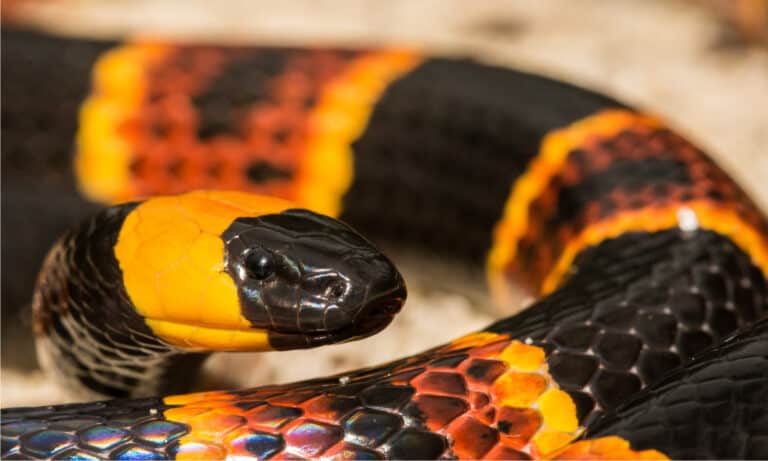
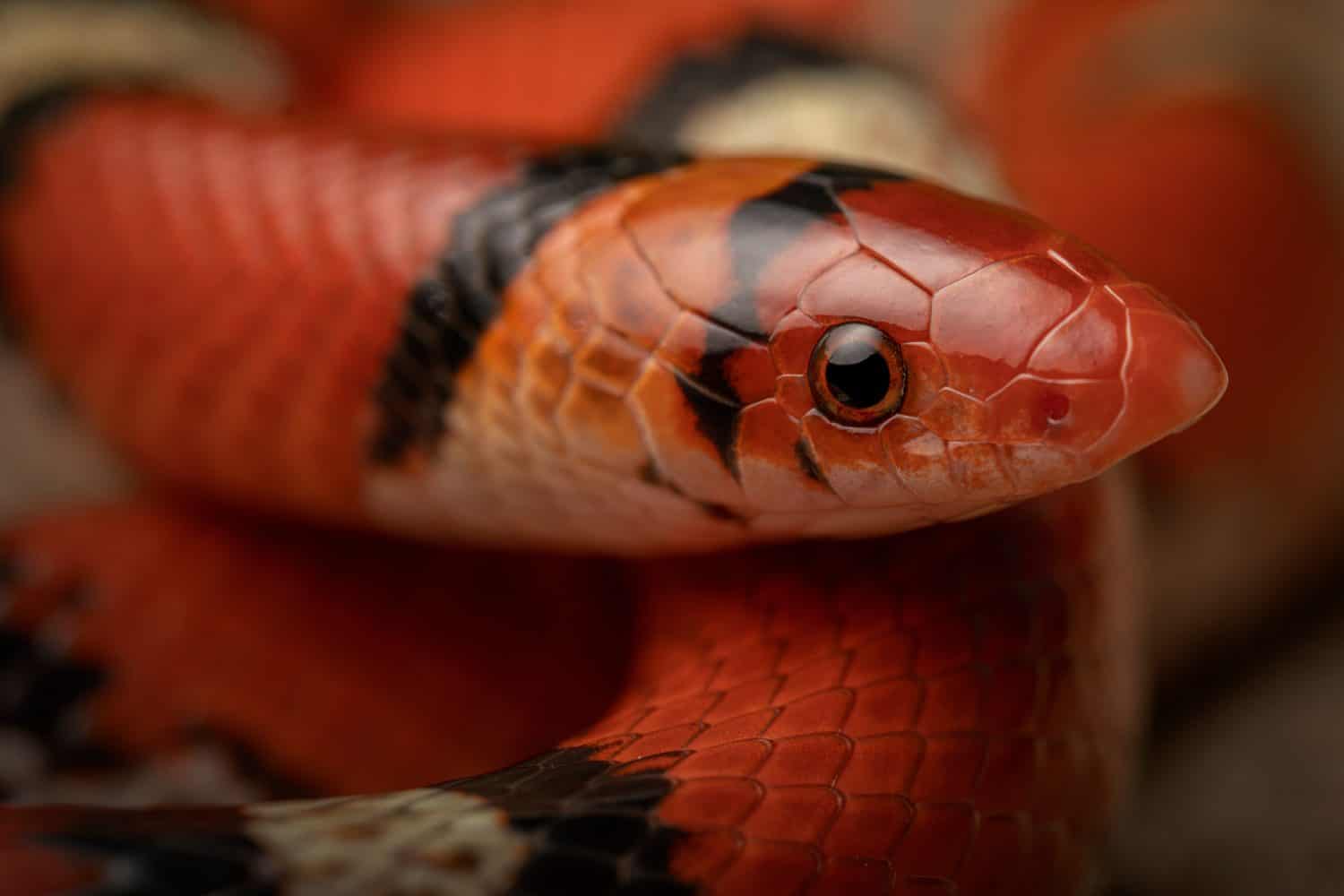
The eastern coral snake (Micrurus fulvius) is recognized for the vivid stripes that cover its body and for the potency of its venom. However, the eastern coral snake’s stripes are similar to those of kingsnakes, making it easy to confuse the two species.
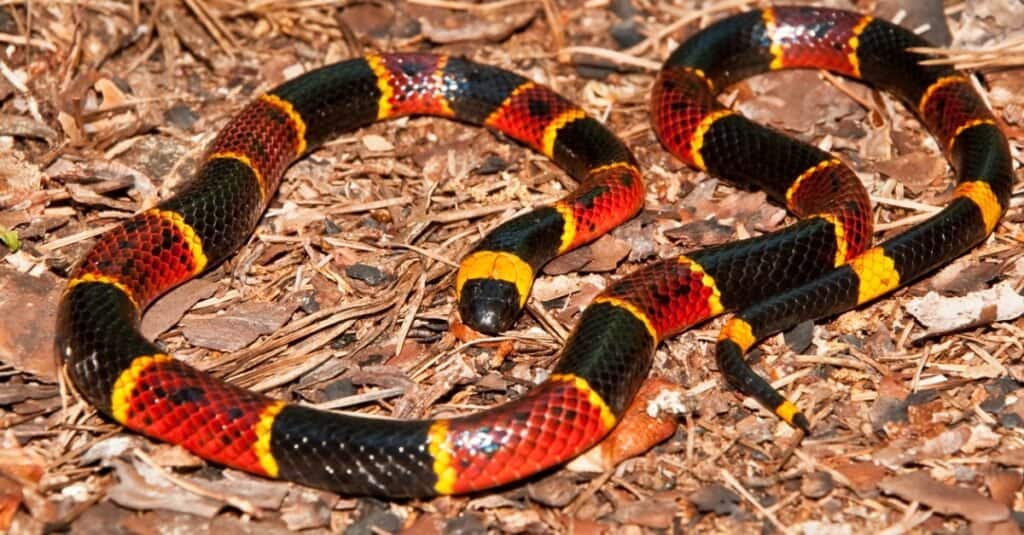
Coral snakes are brightly colored and have distinctive bands
©iStock.com/JasonOndreicka
Eastern coral snakes live in sandy soil, and in Mississippi, they can be found on sandy ridges.
Western Pygmy Rattlesnake
The western pygmy rattlesnake (Sistrurus miliarius streckeri) typically has a gray body with blotches of color like black or yellow. Like other rattlesnakes, it has a heavy and wide body. But unlike other rattlesnakes, the western pygmy rattlesnake is usually under two feet long.
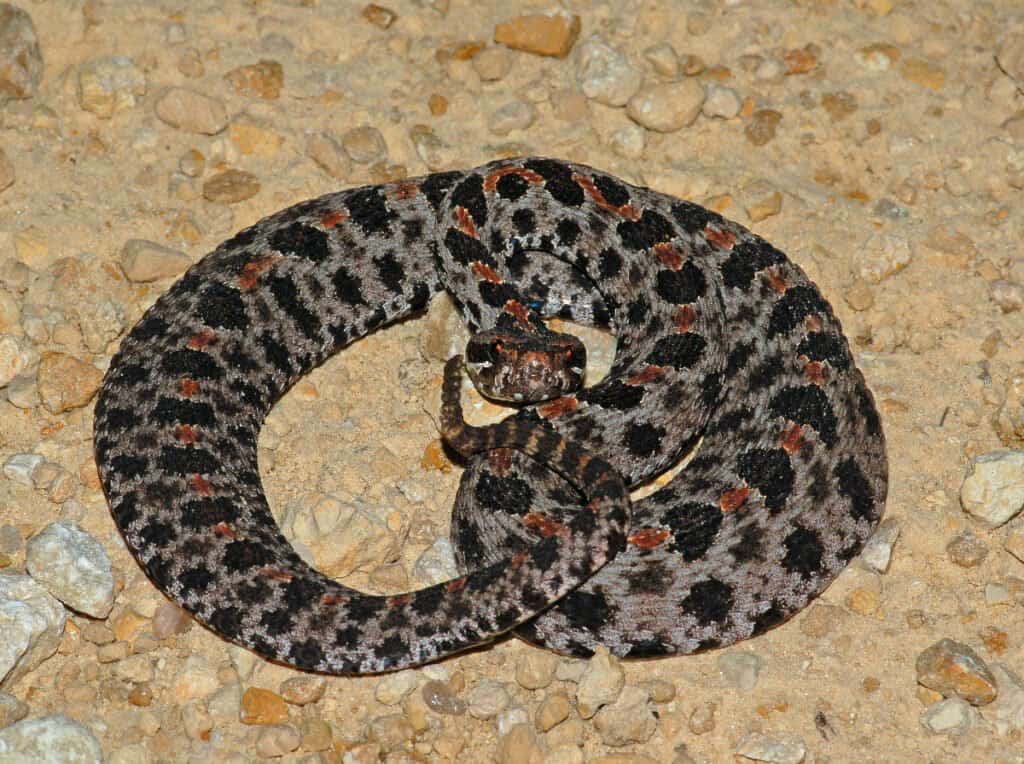
Pygmy rattlesnakes can be found across most of Mississippi aside from the Mississippi river basin.
©Gerald A. DeBoer/Shutterstock.com
Generally, pygmy rattlesnakes avoid people and aren’t aggressive. But any snake can become aggressive if it feels threatened, so it’s best to avoid any snake that is rattling or raising its head and puffing up. Pygmy rattlesnakes are found across most of the state, although records are lacking from the Delta.
Timber Rattlesnake
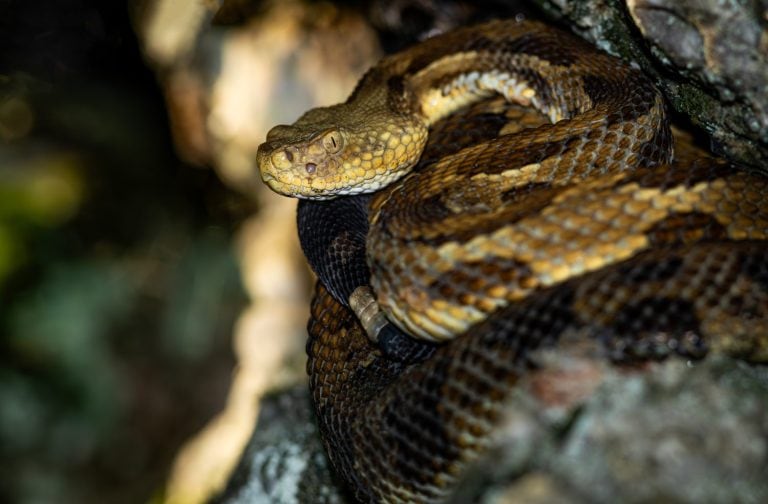
Timber rattlesnakes (Crotalus horridus) are two to three times longer than pygmy rattlesnakes. These rattlesnakes can be found across the majority of Mississippi but are not commonly found along the Gulf Coast. Their populations are smaller than they once were.
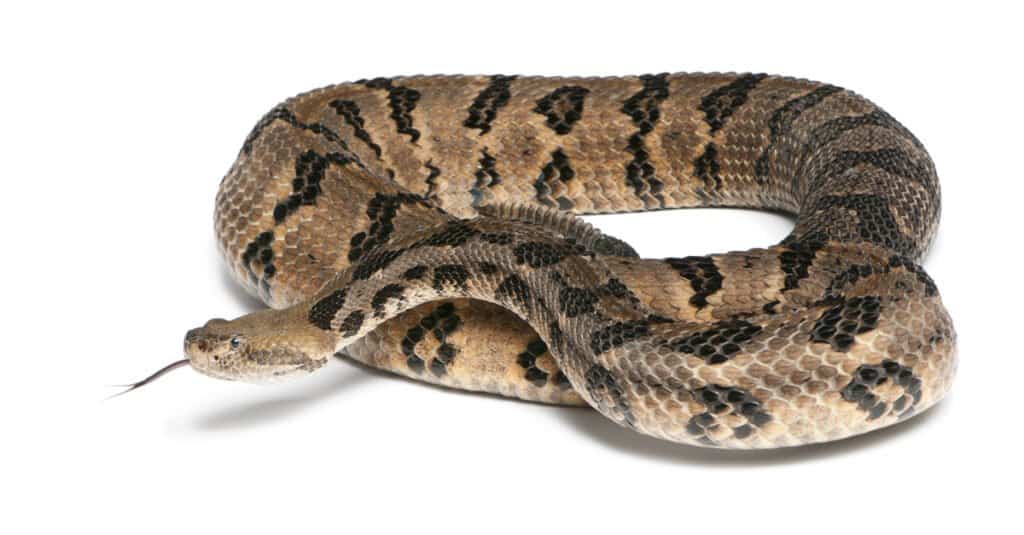
Timber Rattlesnakes are not as aggressive as other venomous snakes found in Mississippi.
©Eric Isselee/Shutterstock.com
Eastern Diamondback Rattlesnake
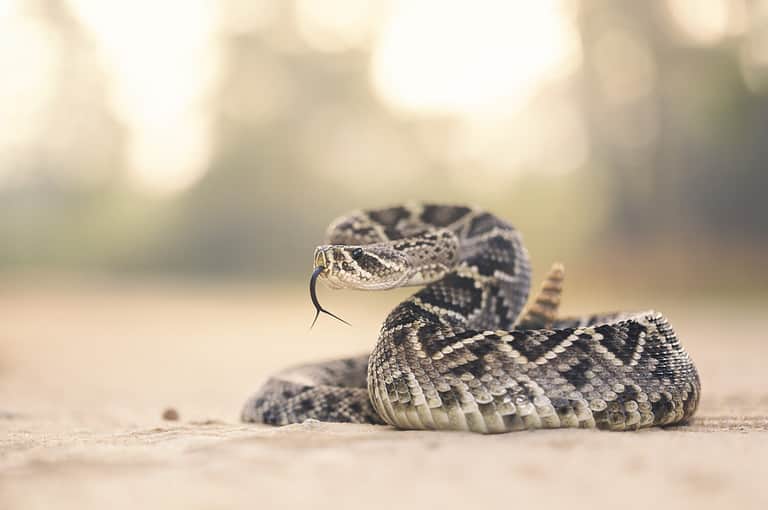
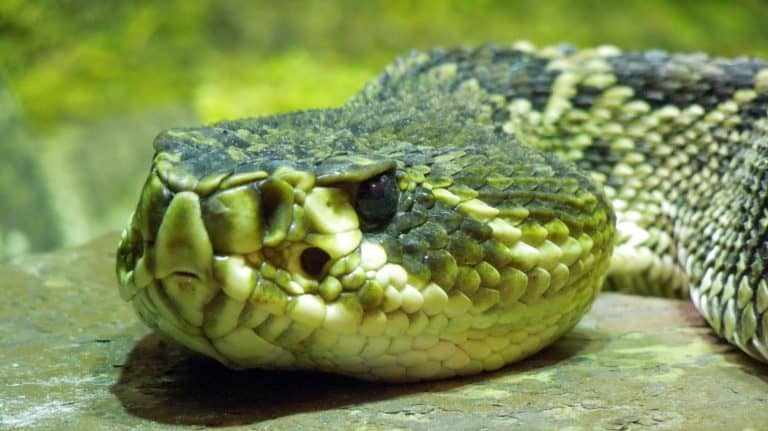
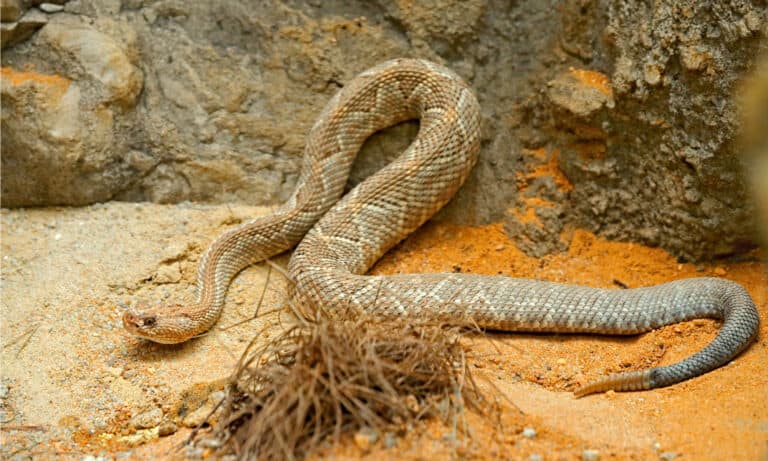
The eastern diamondback rattlesnake (Crotalus adamanteus) isn’t just the largest venomous snake in Mississippi; it’s the largest rattlesnake in North America. In Mississippi, eastern diamondback rattlesnakes are found exclusively in the southern part of the state, near the Gulf Coast. These snakes blend in well with their environment, but will generally make their presence known before striking. Like the timber rattlesnake, they’re increasingly rare due to habitat loss and hunting.
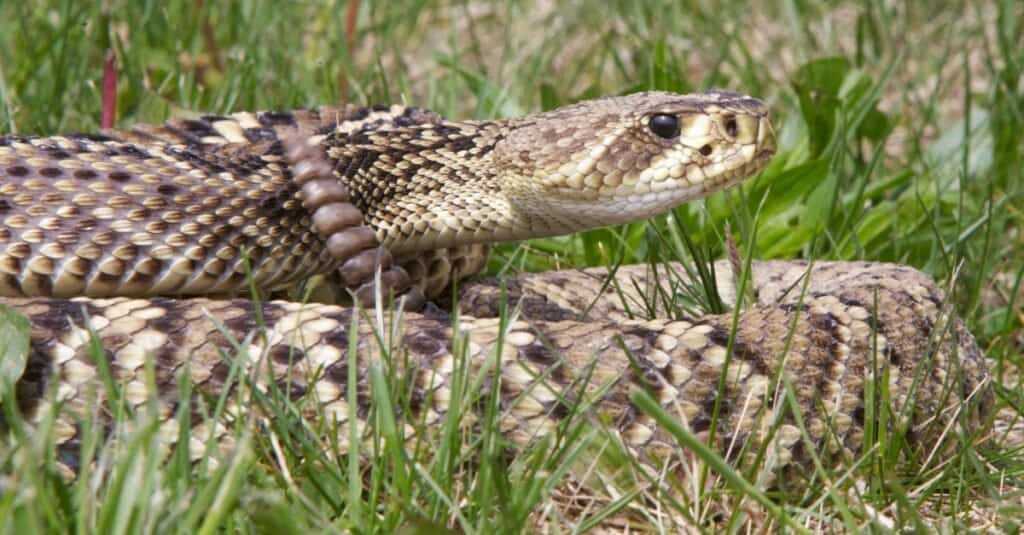
The Eastern diamondback rattlesnake is the largest venomous snake in Mississippi.
©iStock.com/NajaShots
The Complete List of Snakes In Mississippi
There are many snakes in Mississippi, so you probably won’t be able to learn to identify them all. In general, you should focus on learning how to spot the venomous snakes in Mississippi. That way you can keep yourself safe. However, if you’re in doubt about what type of snake you see when you’re out and come across a snake, just stop, move slowly, and back up until you’re out of the snake’s range.
A full list of snakes in Mississippi:
- Southern Copperhead
- Western Cottonmouth
- Northern Cottonmouth
- Eastern Diamondback Rattlesnake
- Timber Rattlesnake
- Eastern Coral Snake
- Dusky Pygmy Rattlesnake
- Western Pygmy Rattlesnake
- Midwest Worm Snake
- Northern Scarlet Snake
- Black-masked Racer
- Southern Black Racer
- Mississippi Ring-necked Snake
- Western Mud Snake
- Common Rainbow Snake
- Rough Earth Snake
- Eastern Hognose Snake
- Southern Hognose Snake
- Prairie Kingsnake
- Mole Kingsnake
- Speckled Kingsnake
- Black Kingsnake
- Delta Glossy Swamp Snake
- Gulf Glossy Swamp Snake
- Eastern Coachwhip Snake
- Gulf Saltmarsh Snake
- Mississippi Green Water Snake
- Yellow-bellied Water Snake
- Broad Banded Water Snake
- Banded Water Snake
- Diamond-backed Water Snake
- Midland Water Snake
- Rough Green Snake
- Corn Snake
- Black Rat Snake
- Gray Rat Snake
- Black Pine Snake
- Graham’s Crayfish Snake
- Queen Snake
- Pine Woods Snake
- Midland Brown Snake
- Florida Red-bellied Snake
- Northern Red-bellied Snake
- Southeastern Crowned Snake
- Western Ribbon Snake
- Eastern Ribbon Snake
- Eastern Garter Snake
- Western Smooth Earth Snake
- Eastern Smooth Earth Snake