
Some of the largest snakes in North Carolina are completely harmless to humans, but not all of them are. There are more than 20 species of snakes living in and around Charlotte, and most of them are small and harmless. However, not all of them are small. Here, we’ll learn about the five largest snakes near Charlotte, North Carolina. We’ll take a look at the appearance and behavior of each, as well as their distribution and what kinds of habitats they prefer. Read on to learn more!
#5 Eastern Kingsnake
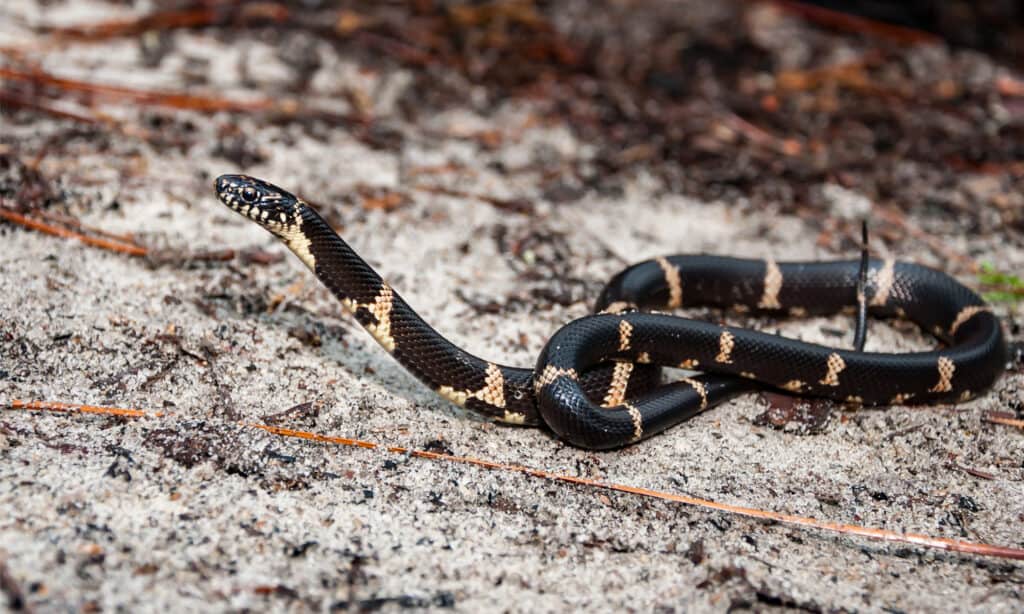
The eastern kingsnake has a wide distribution throughout the southeastern United States.
©iStock.com/JasonOndreicka
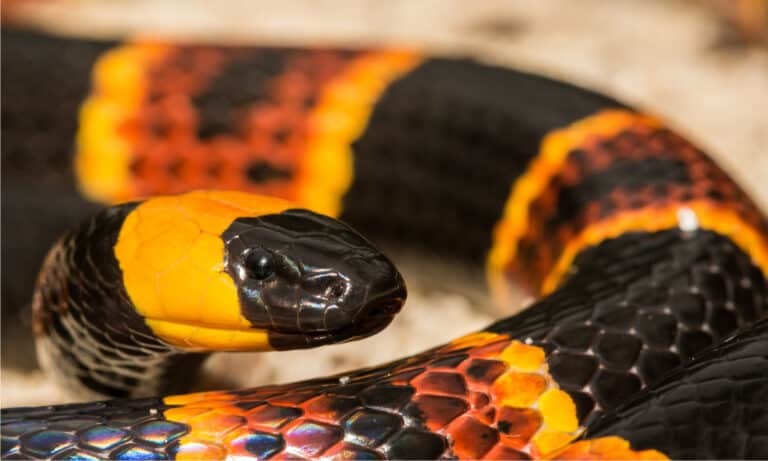
Eastern kingsnakes are one of the largest snakes near Charlotte, North Carolina. They grow to a maximum length of four feet. Kingsnakes have medium-heavy bodies with heads not much wider than their necks. Their most characteristic feature is the thin, tan banding that runs up the sides of their body and across their backs. Kingsnakes also have small, yellow eyes. Their bellies are mottled tan and black.
The range of the eastern kingsnake includes all of North Carolina. These snakes don’t climb trees or swim, but they do like hanging out near sources of water. Eastern kingsnakes are habitat generalists who can thrive just about anywhere, as long as there is adequate cover and plenty of prey. They constrict their prey, which may include turtle eggs, smaller snakes and lizards, rodents, and birds. But, most interestingly, kingsnakes frequently eat venomous snakes like cottonmouths, rattlesnakes, and copperheads.
#4 Timber Rattlesnake
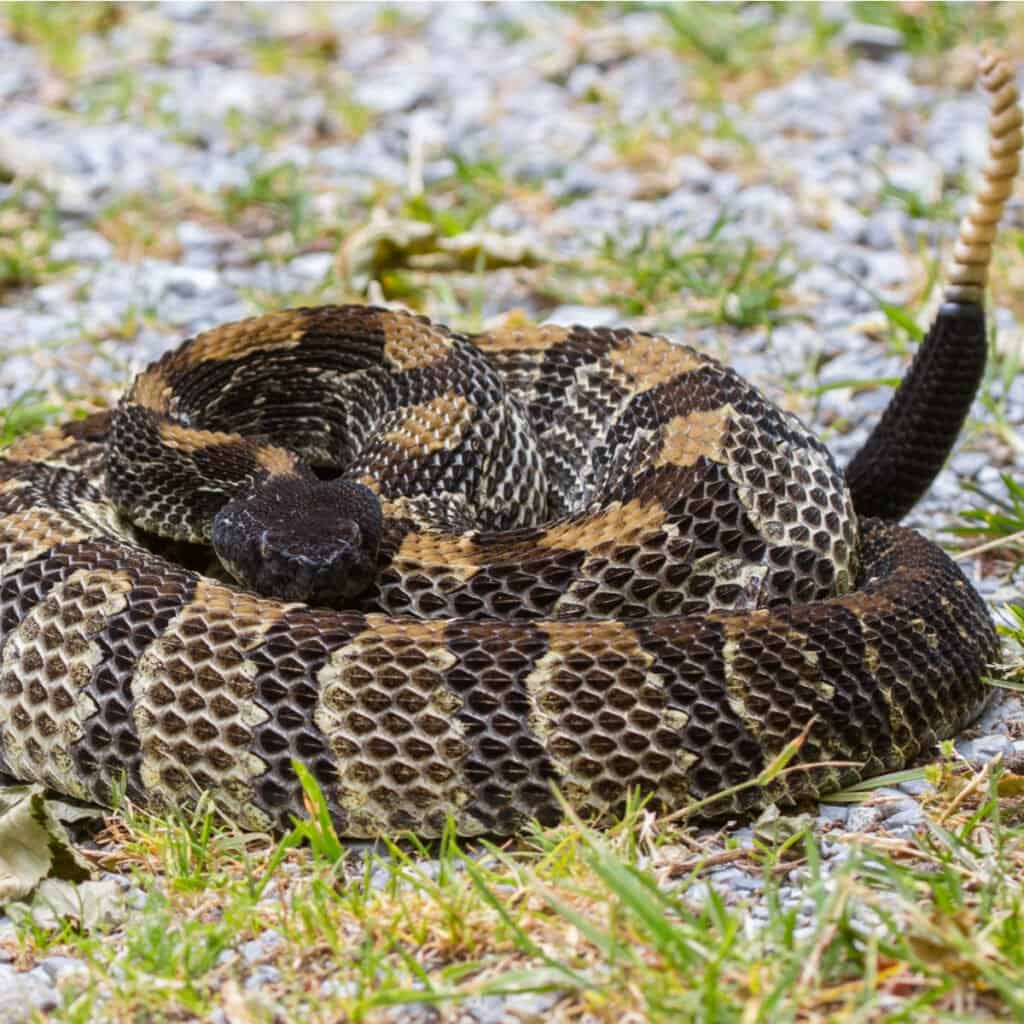
The timber rattlesnake is common throughout much of the eastern United States.
©Frode Jacobsen/Shutterstock.com
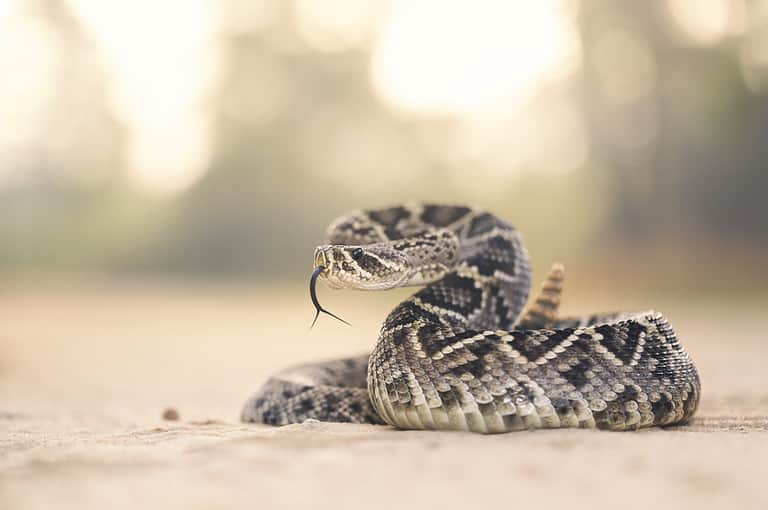
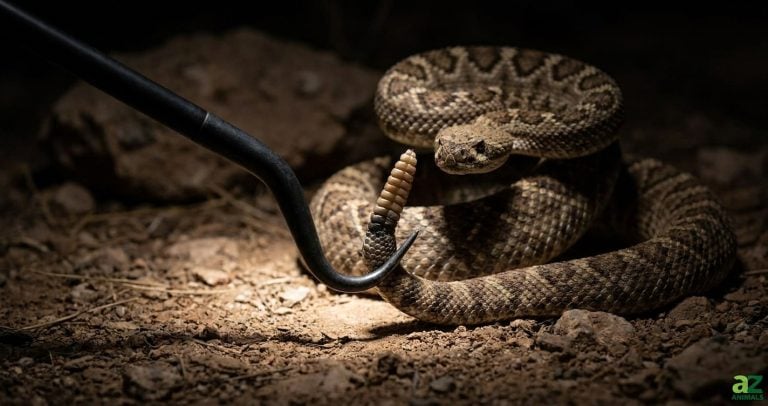
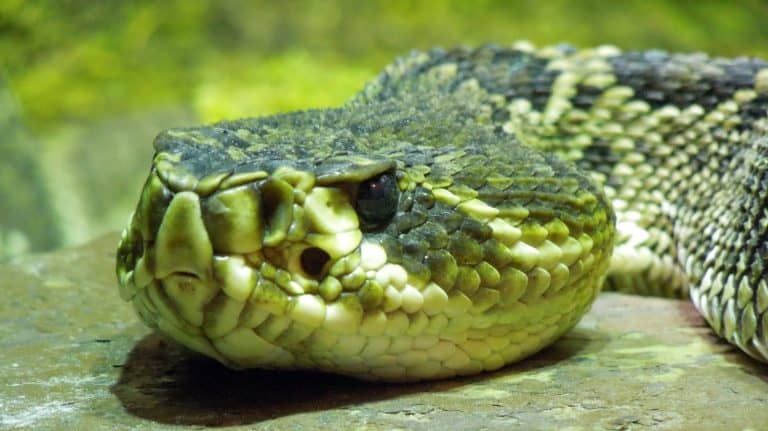
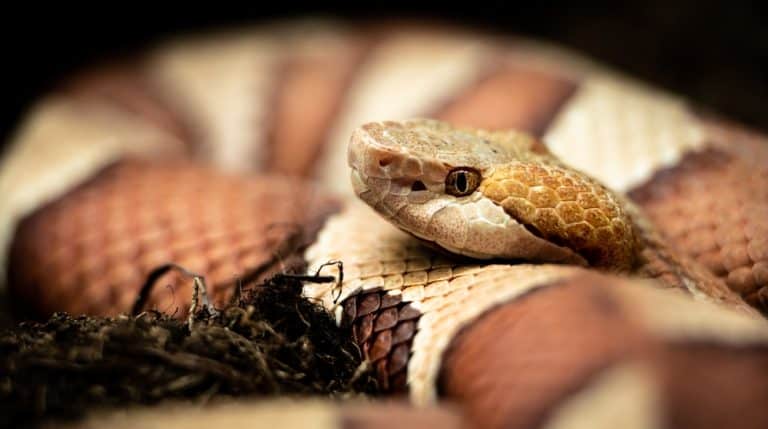
Timber rattlesnakes grow up to six feet long, with heavy bodies. They’re also known as canebrake rattlesnakes. Timber rattlers have pale, tan bodies with narrow, hexagonal, dark brown bands. Their heads are wide and triangular, a hallmark of the pit viper family. In addition to their rattles, these snakes also have vertically elliptical eyes, large fangs, heat-sensing pits, and venom glands just behind the eyes.
Timber rattlesnakes are one of the largest snakes near Charlotte, North Carolina. These terrestrial snakes are habitat generalists and live primarily in rural areas. You’re not likely to find a timber rattlesnake in suburban settings.
#3 Northern Water Snake
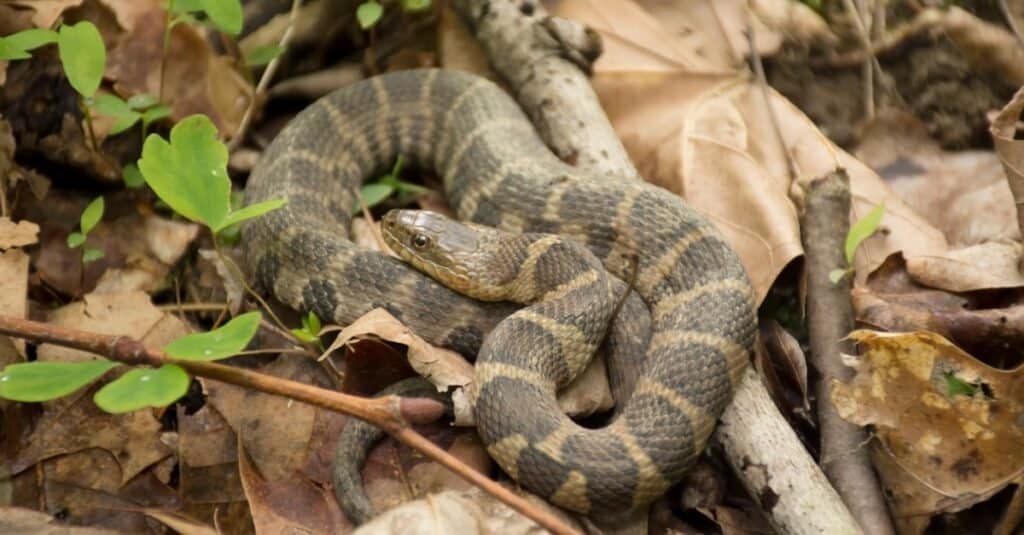
The northern water snake does not live in the coastal parts of the southeastern United States.
©iStock.com/IcemanJ
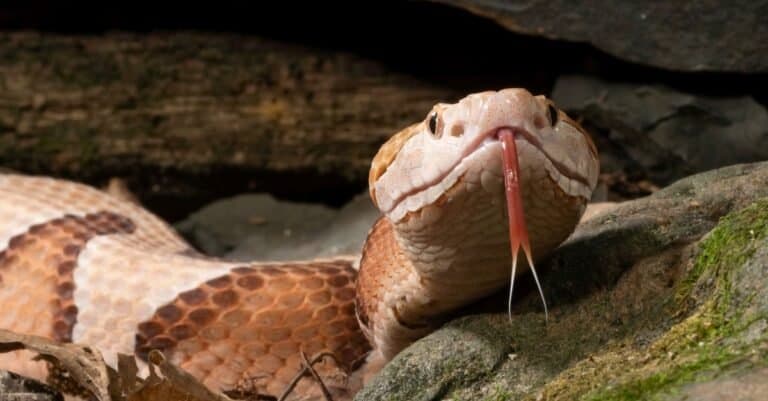
The northern water snake is one of the largest snakes near Charlotte, North Carolina. They grow to a maximum length of 4.5 feet and have heavy bodies. Northern water snakes are similar in appearance to cottonmouths, though they lack both the white mouth and the vertically elliptical pupils of the cottonmouth. They range in color from dusky gray to dark brown, and have irregular splotches covering their bodies. Their heads are slightly wider than their necks, and have a slight triangular shape.
As their name suggests, northern water snakes are at home in the water. These snakes are semi-aquatic and live near sources of permanent water, like rivers, lakes and swamplands. They eat fish, frogs and small mammals. In North Carolina, they are absent from the southeastern quarter of the state. Northern water snakes are often seen basking on tree limbs overhanging the water.
#2 Black Racer
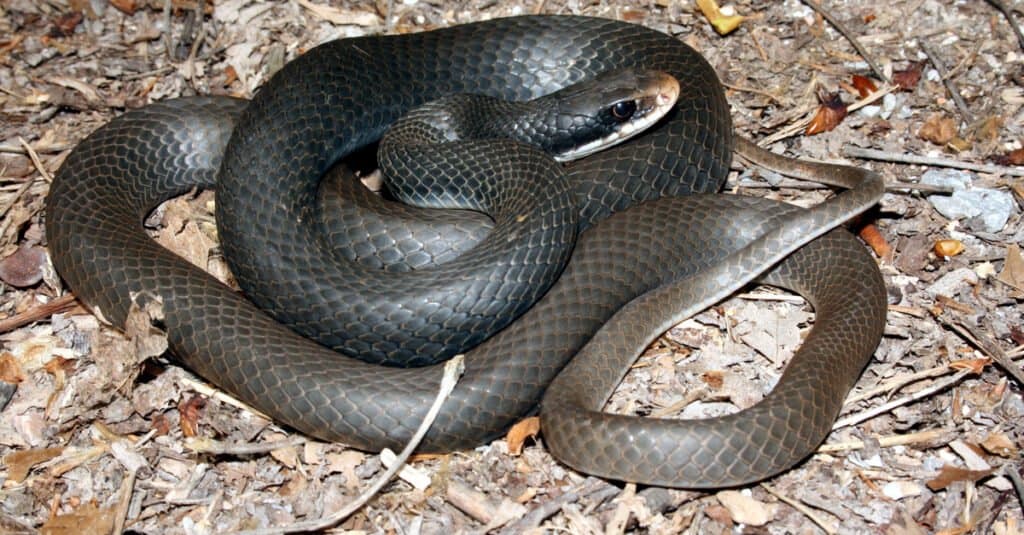
The black racer has a very wide distribution, and they live throughout almost all of the eastern United States.
©Psychotic Nature/Shutterstock.com
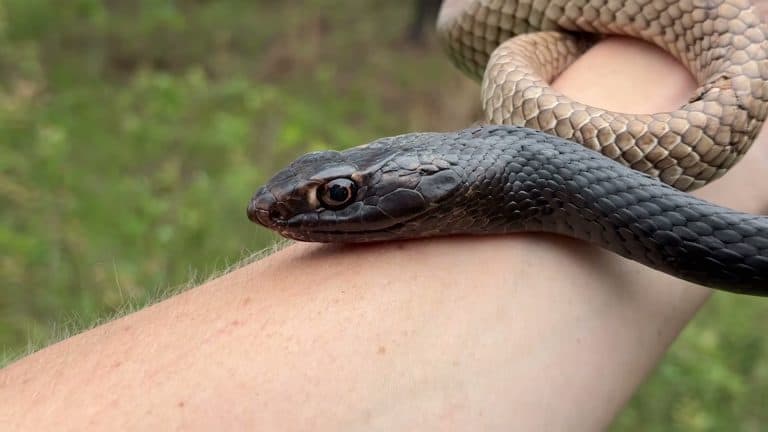
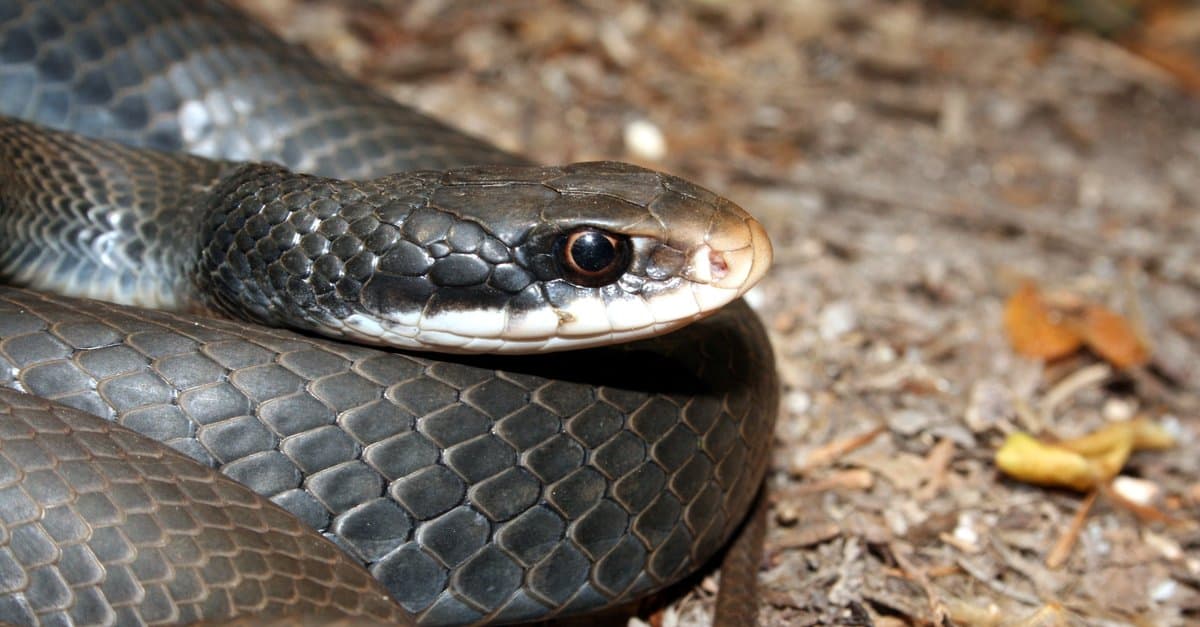
Black racer snakes may be thin, but they’re one of the largest snakes near Charlotte, North Carolina. These light-bodied snakes reach up to six feet long. They have shiny black scales and narrow heads with round pupils. Their bellies are dark, but they have white scales on their throats and chins. Juvenile black racers are light gray with brown splotches and bright red eyes. Black racers are often confused with other snakes, like rat snakes or hognose snakes.
Black racer snakes live throughout North Carolina, but aren’t typically found in urban settings. These snakes can thrive in a wide variety of habitats and will eat everything from insects and frogs to mice and birds. They’re not venomous and present no threat to humans. Unlike some species of snakes in the southeast, black racers only come out during the day. Black racer snakes live near water but don’t typically live or hunt in aquatic settings.
#1 Eastern Rat Snake
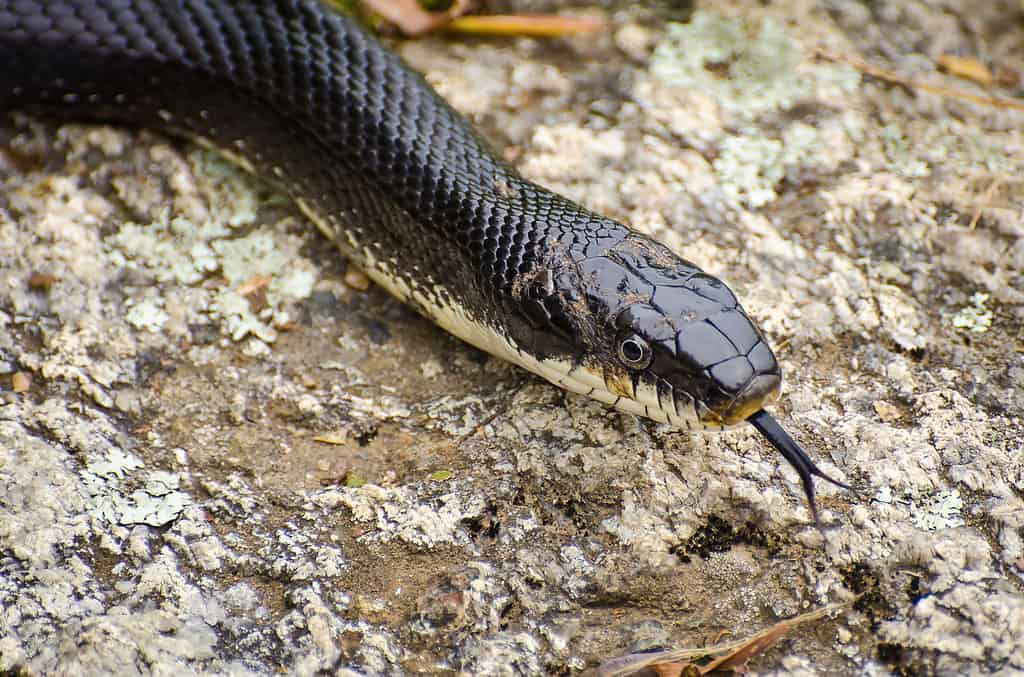
Despite its large size, the eastern rat snake poses no threat to humans.
©iStock.com/RCKeller
The largest snake near Charlotte, North Carolina is the eastern rat snake. Eastern rat snakes can reach seven feet long, and adults are almost entirely black. They also have pale, white bellies and chins, and dark sides and back. Their heads are wider than their bodies but are not triangular in shape like the timber rattlesnake’s head. These snakes are not venomous and have round pupils and no heat-sensing pits.
Eastern rat snakes don’t shy away from the suburbs. In fact, these snakes may actually come into outbuildings, like sheds or garages, to hunt for rodents like mice and rats. They also eat frogs, toads, birds, and other small creatures. As they lack venom, eastern rat snakes rely on constricting their prey to death. They live as far north as Connecticut and as far south as South Carolina.