
Snakes need a warm environment to maintain a normal body temperature. So, snakes living in temperate climates must find shelter from the cold for the winter season. While snakes are known as solitary animals, many of them live in groups over the winter. This group behavior is just one of the many interesting things about these reptiles.
So, what is a group of snakes called? How many snakes or serpents gather in a group at one time? Do snakes hibernate in groups? Learn the answer to all of these questions, along with a few more surprising facts about snakes.
Collective Nouns for a Group of Snakes
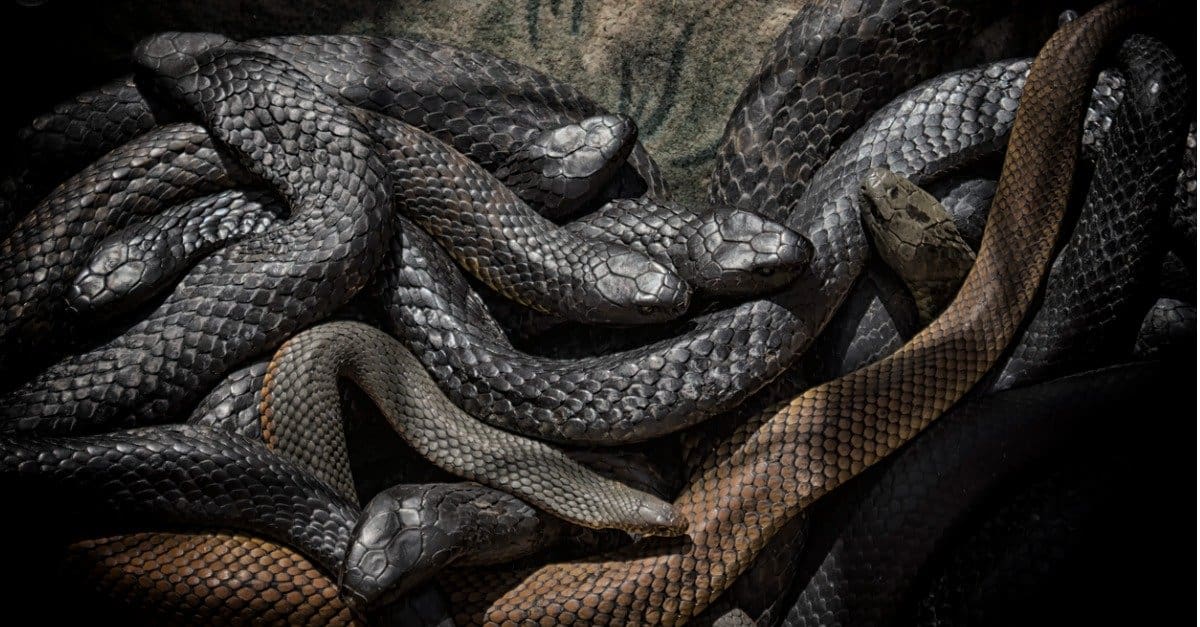
A group of snakes is commonly called a den, pit, or nest. However, there are a few other collective nouns for a group of snakes, including a knot of snakes, a bed of snakes, and even a slither of snakes. A group of cobras is sometimes called a quiver.
How Many Serpents Are in a Snake Den?
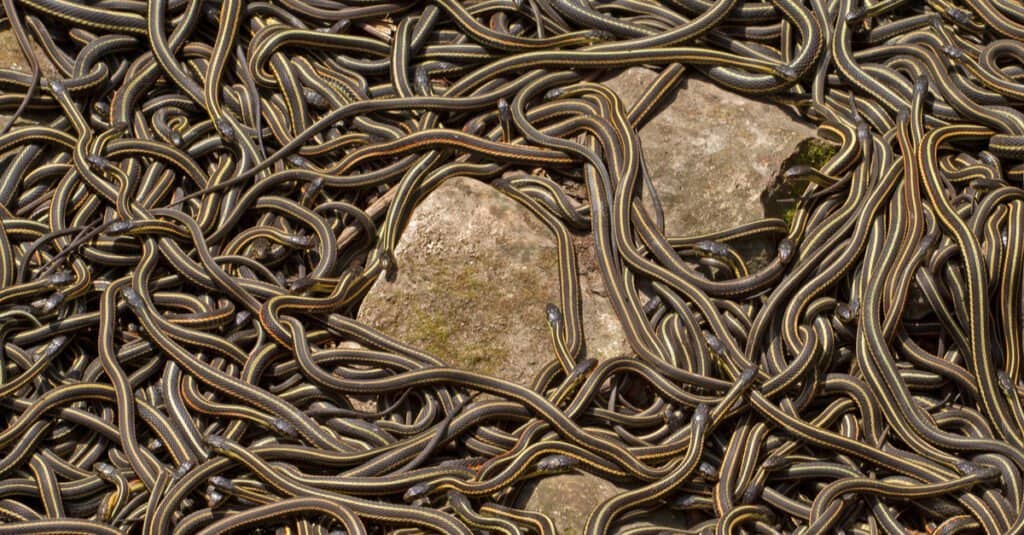
Thousands of garter snakes may share a den during cold weather.
©Jukka Palm/Shutterstock.com
A snake den may contain dozens to thousands of serpents. The garter snake spends the winter in a group with other garter snakes. A garter snake den can contain thousands, and in some locations, such as the Narcisse Snake Dens in Manitoba, Canada, tens of thousands of garter snakes may gather together at one time. Alternatively, a rattlesnake den may only have around 20 snakes in it.
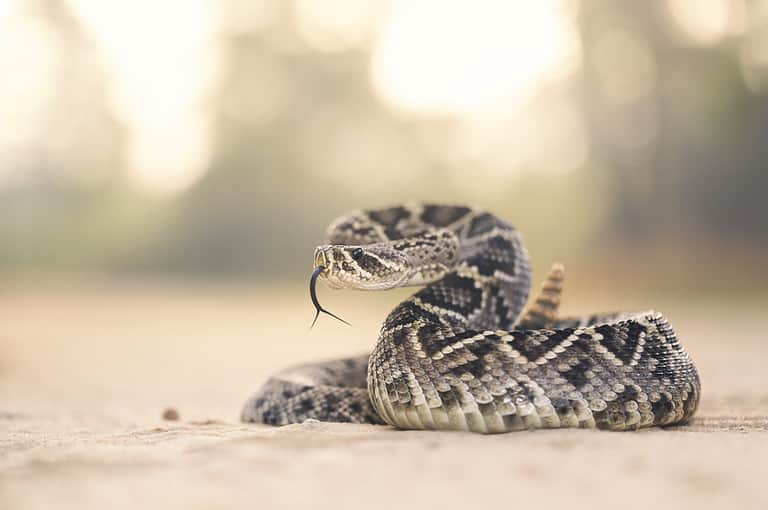
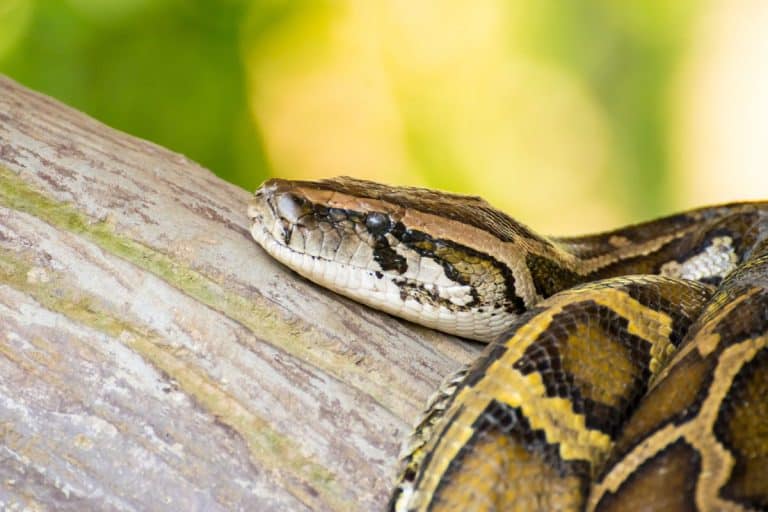
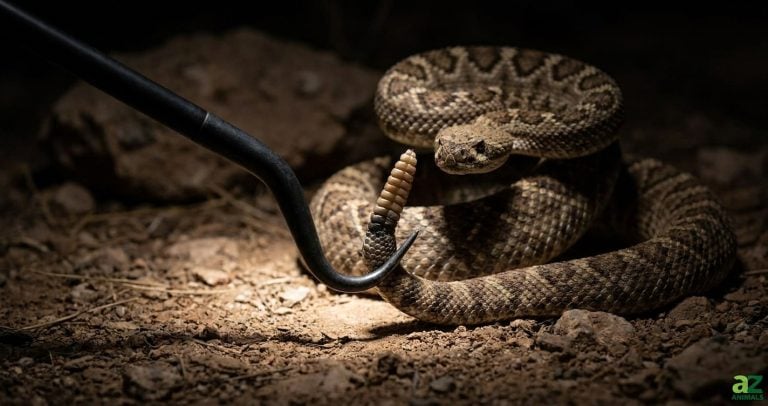
Some snakes stay in a group with other types of serpents and even other reptiles. The black rat snake has been found in a den with racer snakes, bull snakes, and timber rattlesnakes. If venomous and non-venomous snakes share the same habitat, they could end up in the same den. For instance, a non-venomous snake such as the Western racer may share a den with a venomous rattlesnake. The Western diamondback rattlesnake has been found in dens with desert tortoises and even gila monsters. Any animal inside the space adds warmth, even if it’s another type of reptile.
When it comes to snakes, the word “den” is not always used collectively. Sometimes it is a noun used to describe a place. Some types of snakes move into individual dens and stay there alone. Two examples are the tiger rattlesnake and the black-tailed rattlesnake. Both of these snakes are solitary and spend their winter months alone.
When Do Snakes Go Into a Den?
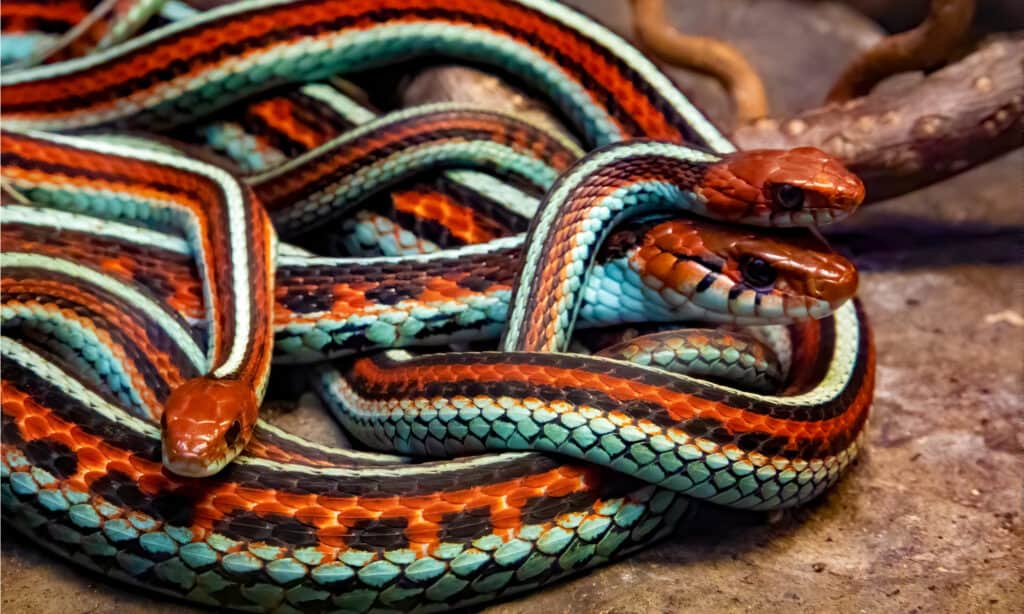
When temperatures begin to drop and there is less sunlight, snakes prepare to move into their dens.
©spatuletail/Shutterstock.com
Snakes living in more temperate climates retire to a den to escape cold temperatures in the wintertime. These reptiles are ectothermic. That means they cannot regulate their own body temperatures, and they rely on external sources for heat. When the temperature outdoors decreases and there is less sunlight, a snake cannot maintain its core body temperature, and it could freeze. Snakes living in tropical climates rarely retire into a den because the temperatures always stay warm enough for them to function.
Unlike bears and other mammals, these reptiles don’t go into hibernation. Snakes go into something called brumation. In the late fall, a snake starts eating less rather than more, as mammals that hibernate do. This is because the snake’s digestive process slows down during brumation. A snake that goes into brumation with undigested food will die because the food will rot in its stomach.
When a snake is in brumation, its metabolism is very slow. Though it doesn’t eat, a snake does need to drink water during that time. This is why many serpents overwinter near a stream or creek so they have access to water. A snake needs to conserve its energy during winter so it will be ready to reproduce when it emerges in the spring.
One major difference between brumation and hibernation is that snakes in brumation don’t go to sleep. They sometimes rest and move around within the space, but aren’t as active as they are during the warm weather months. So, if you happened upon a snake den, you might not find all of the occupants sleeping.
Is a Snake Den the Same as a Snake Pit or a Snake Nest?
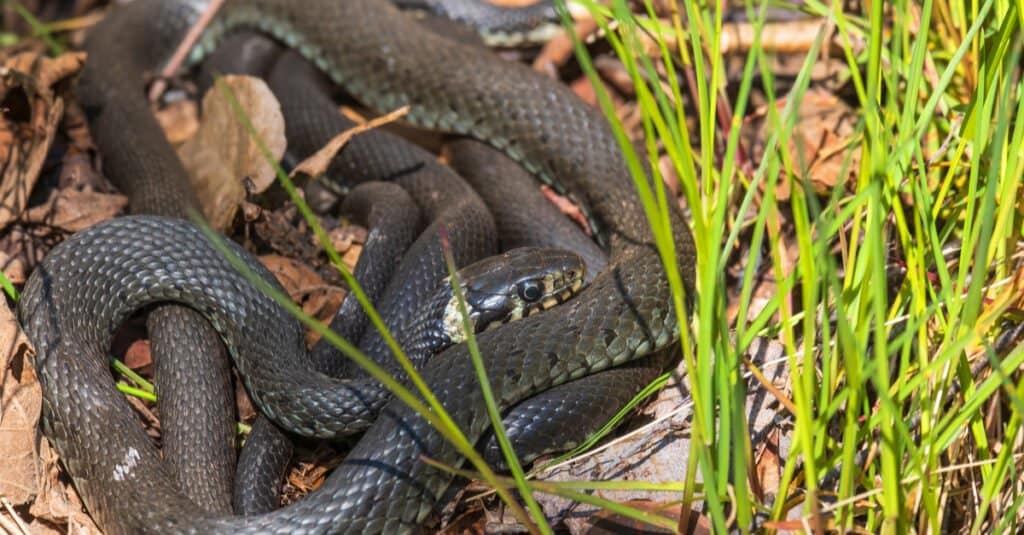
Sometimes venomous and non-venomous snakes will share a den.
©TTphoto/Shutterstock.com
The phrase “snake pit” sounds like exactly what it is: a hole filled with snakes. Some may call a den that is deep underground a “pit,” however, it is still typically referred to as a den. The term “snake pit” is generally used metaphorically to describe complicated and dangerous situations. It is sometimes depicted in stories and films as a form of punishment.
“Snake nest” is sometimes used to describe a large group of snakes in one area. A person may report finding a snake nest in their backyard, which likely means they found a group of snakes together. If this happens during the warm months of the year, the snakes aren’t in brumation, so it’s definitely not a snake den.
However, a snake nest is more appropriately used to describe the place where a female snake lays her eggs. Though most female snakes don’t stay with their eggs, some do remain to guard the nest. A female king cobra makes a nest of leaves, twigs, and brush. Then, she coils near or around her eggs to guard them against predators until they hatch. This is an example of a true snake nest.