
There are 46 different snake species in Oklahoma, with seven of them being venomous. From the large western diamondback rattlesnakes that can reach seven feet long to the tiny earthworm-like blind snake, there are a variety of snakes living throughout the state. Some prefer sandy soil, others hide in the forests, and still others live in and around lakes, rivers, and streams. Snakes are cold-blooded, so they have to maintain their body temperature by changing their environment. In the winter in Oklahoma, when the average high is below 58°F, most snakes will hibernate (brumate) to stay warm enough. As you can imagine, when they wake up and need to find food and want to mate, they can come out in numbers. So when do snakes come out in Oklahoma?
When Do Snakes Come Out in Oklahoma?
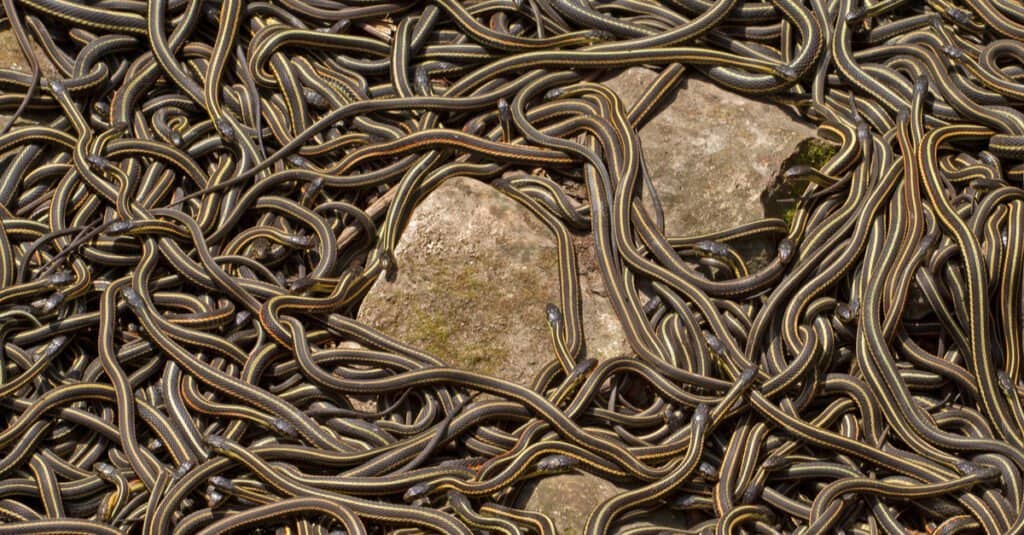
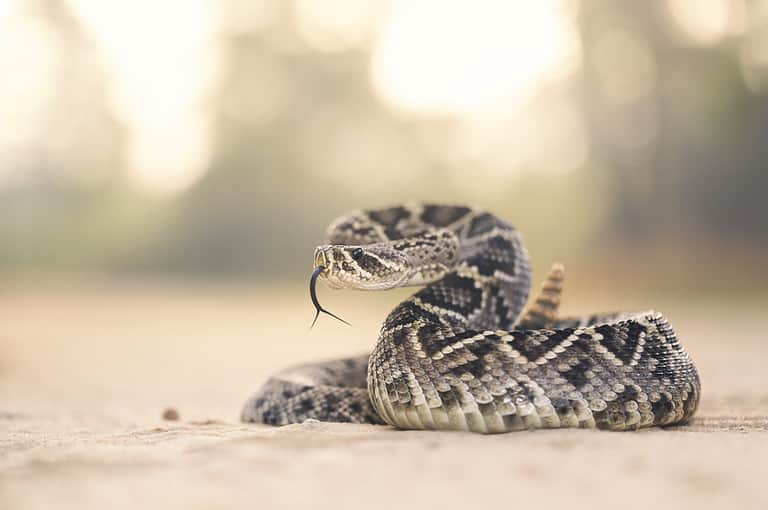
In Oklahoma, snakes come out in April and are most active until October.
©Jukka Palm/Shutterstock.com
Snakes come out in Oklahoma in April and are most active until October. The winter in Oklahoma is usually three months long. Winter usually settles in around Thanksgiving, in late November, and lasts until the end of February.
The average temperature in winter during the day is in the mid-40s to low 50s. At night, the temperature drops to the 20s and 30s. Winters are colder in the northern part of the state and a bit milder in the southern regions. January is the coldest month, with the temperature dipping below freezing on some nights. The average temperature at night is 26 degrees.
Contrary to what many people think, snakes don’t hibernate like bears; they brumate, which is similar but a little different. Snakes will go into a dormant state where they don’t need to consume as many calories, but they are not completely asleep like bears and other mammals. They will come out on warmer days to bask in the sun and find water since they need to replenish their water to avoid dehydration.
When temperatures begin to rise in March and into April, the snakes begin the process of coming out of their dens and becoming more active. Besides the change in weather that alerts the snakes, hormonal changes get the snakes ready to mate in the spring.
Are There Really Large Snake Dens?
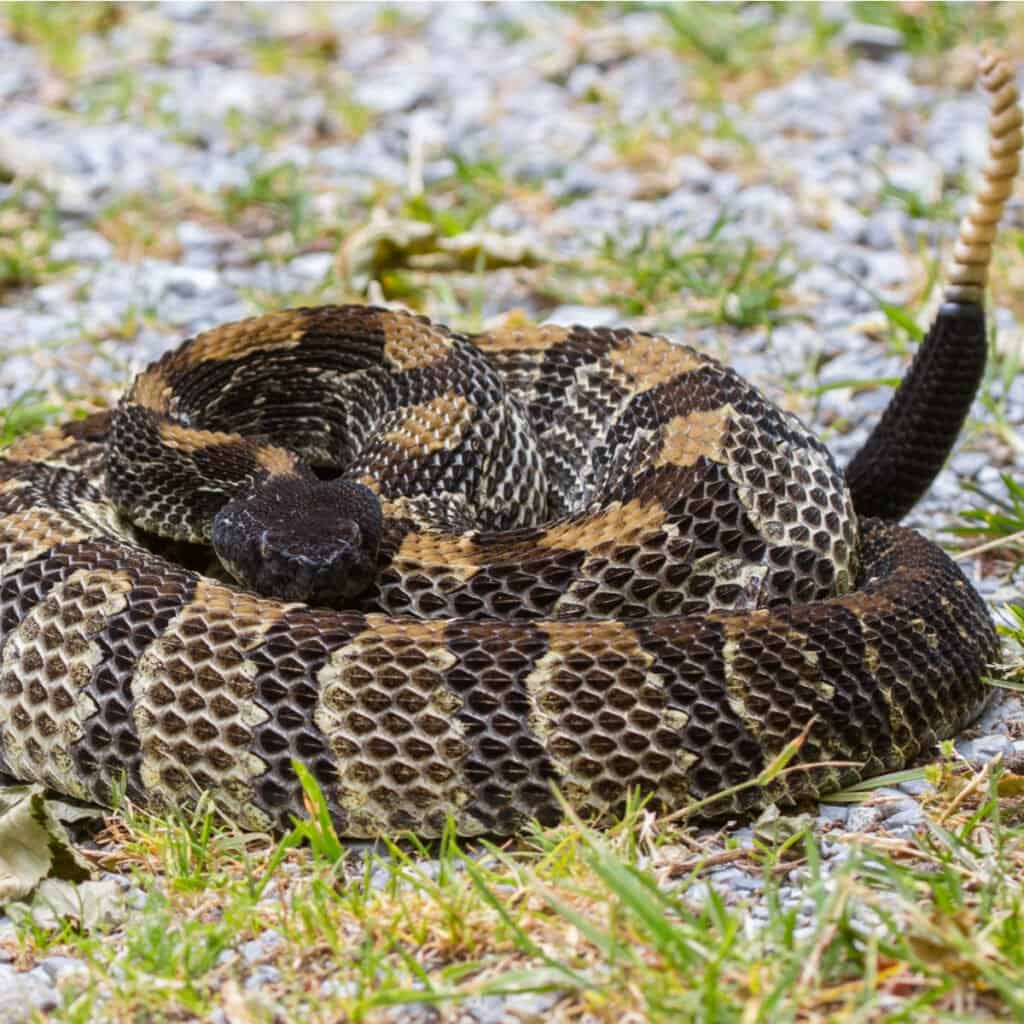
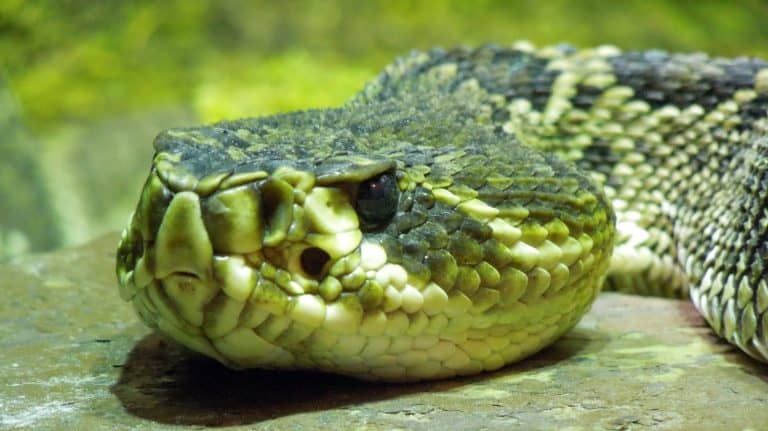
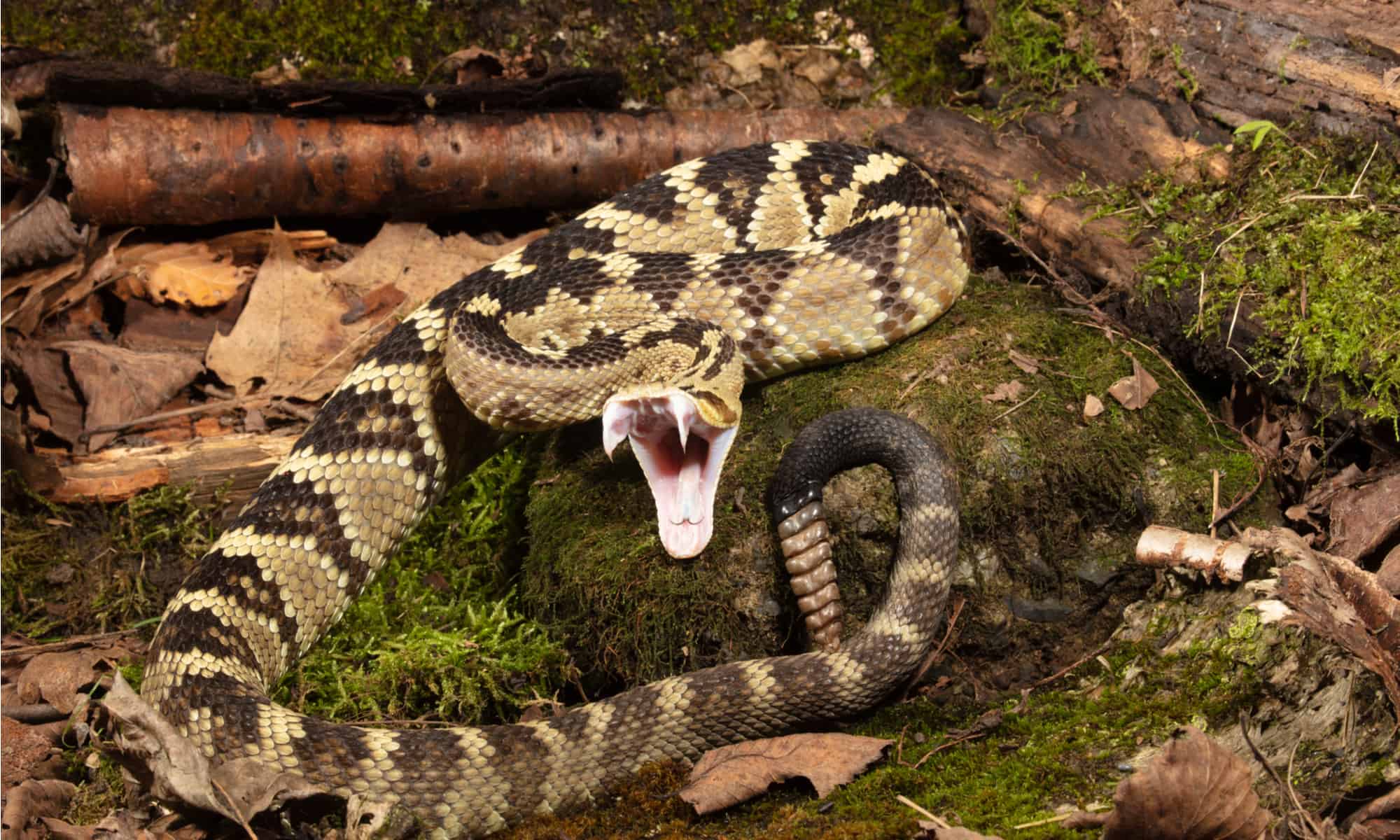
Timber rattlesnakes will return to the same den every year, where you can find hundreds of them huddled together.
©Frode Jacobsen/Shutterstock.com
When snakes settle down for the winter, it’s not uncommon for large groups of snakes to brumate together in a communal den. Some rattlesnakes will den together in large dens consisting of hundreds of snakes. Western rattlesnakes will den together in large groups, with an occasional western racer snake joining the group. Timber rattlesnakes will also often den in the same place year after year. However, although snakes may den together when they come out, they split up and spread out, getting ready to find the best mating ground.
Where Can You Find Snakes in Oklahoma?
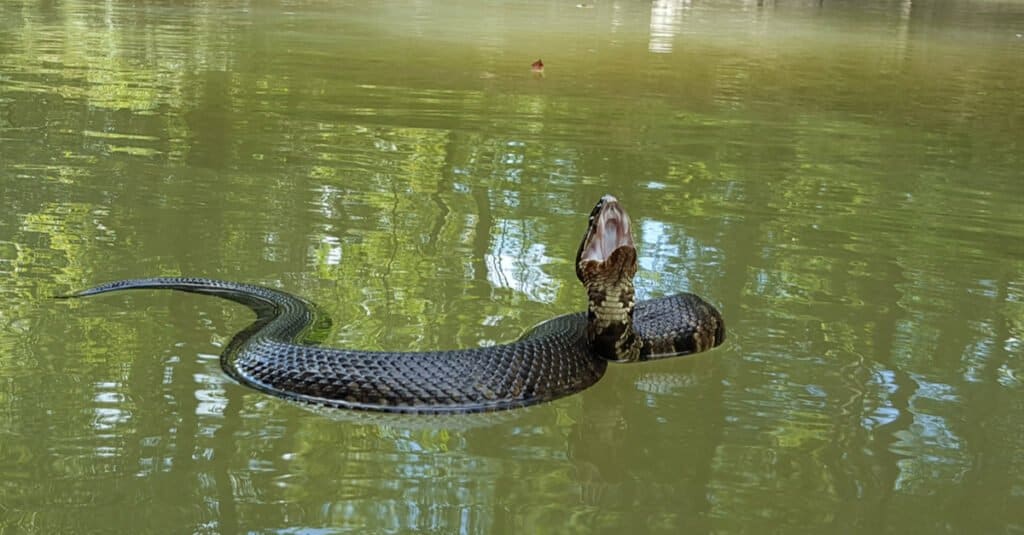
Cottonmouths are one of the largest snakes in Oklahoma, with a thick muscular body.
©Seth LaGrange/Shutterstock.com
Snakes are found in every county in Oklahoma. Some of the most dangerous snakes, such as the cottonmouths and copperheads, are usually found in moist areas or wetlands. In southern and western Oklahoma, you should be careful when hiking near rocky ridges where snakes like to hide. Also, garter snakes, rat snakes, and bull snakes may find their way into your backyard. However, if you keep your grass trimmed and clear any leaf piles, then they are less likely to stick around.
What Kind of Snakes Live in Oklahoma?
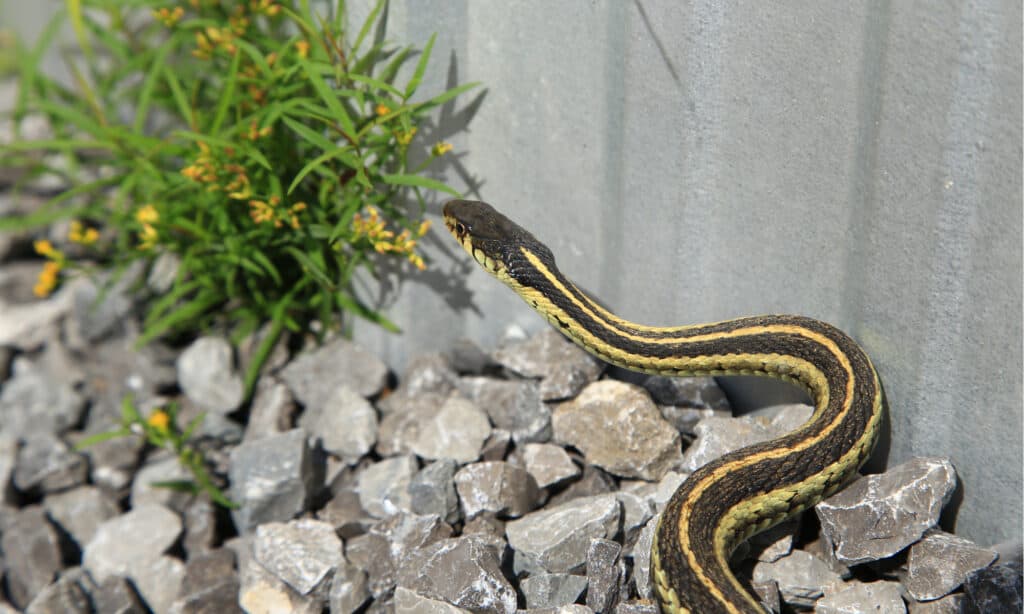
Garter snakes are the most common snake in Oklahoma. You may even find one in your backyard or garden.
©Alexander Gold/Shutterstock.com
There are 46 different snake species in Oklahoma. Garter snakes are the most common snakes in Oklahoma and one of the most common that you may run into. They are very adaptable and can live in a variety of habitats.
Non-Venomous Snakes
There are 39 species of non-venomous snakes in Oklahoma. Some of them are:
- Garter Snakes: Found all over North America, they are pretty adaptable in their choice of habitat but are never found far from water.
- Kingsnakes: Like garter snakes, these reptiles are also adaptable with regard to their habitat. Found all over the United States, they can be immune to rattlesnake venom and dine on copperheads, rattlesnakes, and cottonmouths.
- Water Snakes: They include broad-banded watersnakes, heavy-bodied plain-bellied watersnakes, and cottonmouth lookalikes, i.e., northern watersnakes.
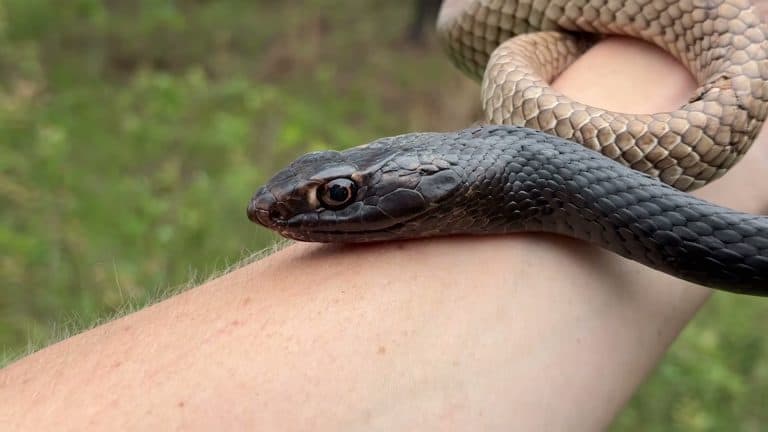
- Racers: They include the eastern yellow-bellied racer found throughout the state with the exception of its southeastern regions and the southern black racer found in the east of Oklahoma.
- Bullsnake: This gopher snake subspecies enjoys eating rodents and can generally be found in the Great Plains region.
Venomous Snakes
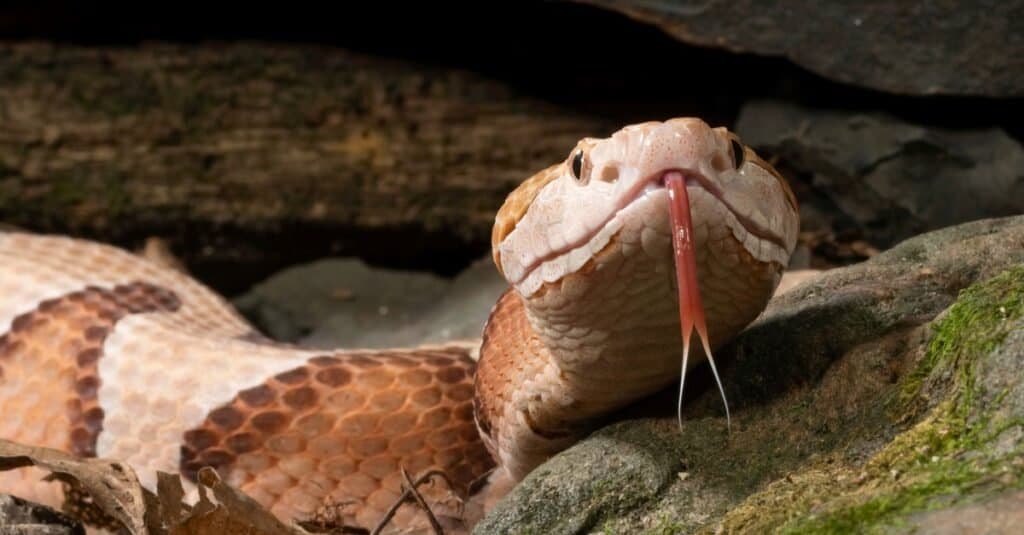
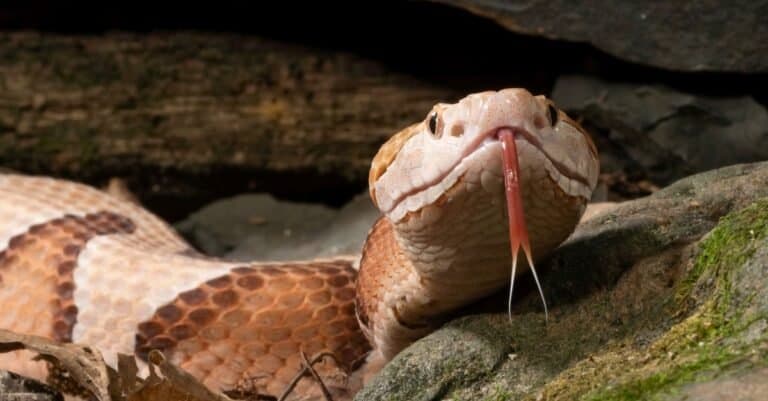
Copperheads prefer to live in swampy lowlands and can blend in with their environment
©Joe McDonald/Shutterstock.com
There are seven species of venomous snakes in Oklahoma. They are:
- Northern Cottonmouths (Water Moccasin): Featuring heavy bodies and dark scales with pale underbellies, these snakes are named for the interior of their mouths, which is white. They are venomous and are typically found close to water.
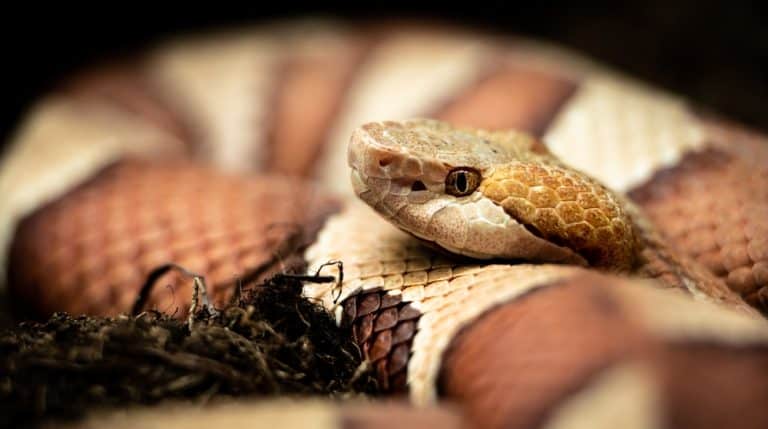
- Copperheads: Notable for their hourglass markings and coppery red scales, these snakes rely on their ability to blend in with their surroundings. They can be found in swampy lowlands.
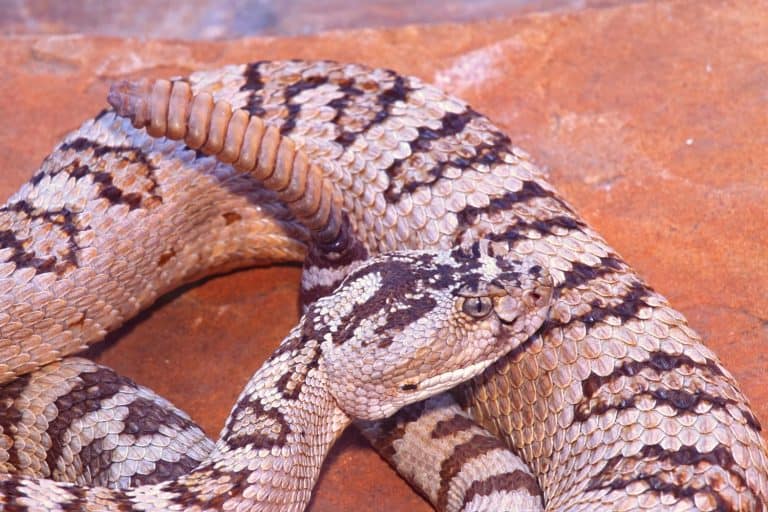
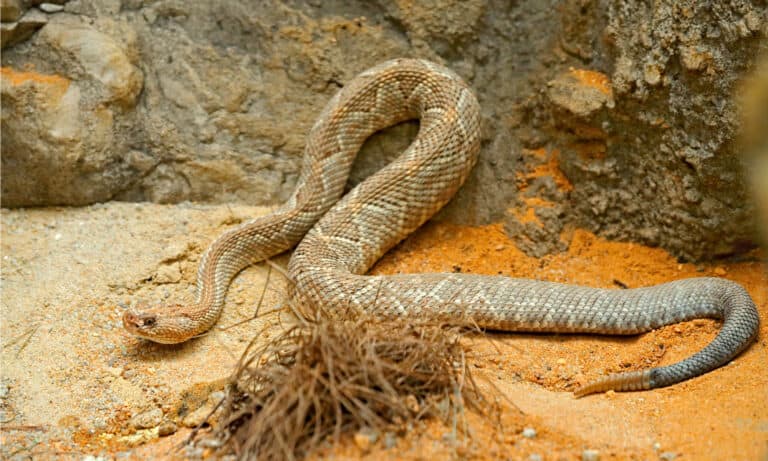
- Prairie Rattlesnake: Approximately three to four feet long, has a light brownish or gray ground color and brown blotches.
- Western Massasauga Rattlesnake: 14 to 36 inches long, has a light or tan-gray ground color, overlaid with dark brown blotches.
- Timber Rattlesnake: Large, heavy-bodied snakes, with dark brown bodies and black markings.
- Western Diamond-Backed Rattlesnake: Large snakes at four to five feet long, typically have a brownish ground color and dark brown diamond-shaped markings.
- Pygmy Rattlesnake: Fairly small at 16 to 24 inches long. Has a light brown ground color, with dark brown to black blotches.
How Can You Tell the Difference Between a Venomous and a Non-Venomous Snake?
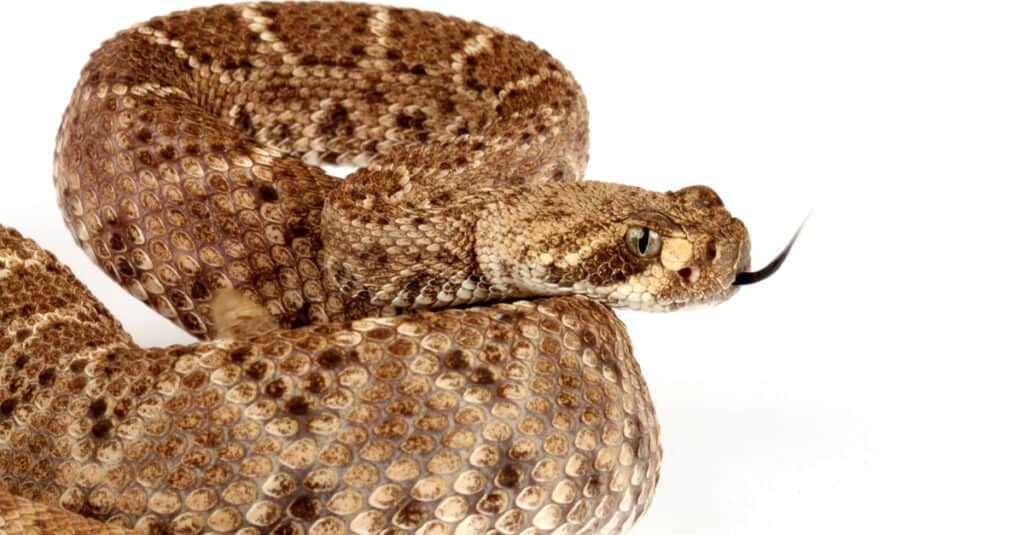
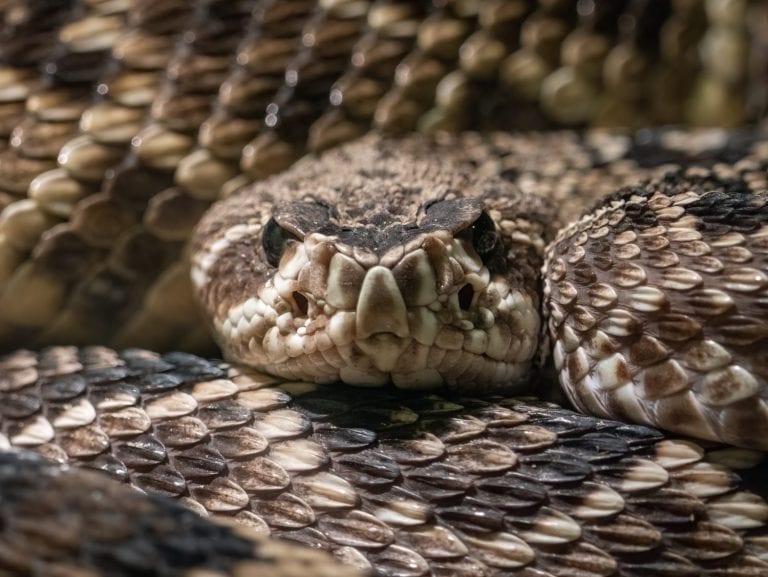
Pit vipers have an opening on their head that serves as an infrared sensor.
©Audrey Snider-Bell/Shutterstock.com
Cottonmouths, copperheads, and rattlesnakes are all pit vipers, so they have some common traits. Pit vipers all have small openings on their heads — pits, which are heat-sensing organs that help them detect prey. Pit vipers also have vertical pupils similar to cats, and they all have fangs. The fangs can fold up to the roof of their mouth and be ready in a split second if they need to defend themselves or snag a scurrying mouse. For rattlesnakes, look for a triangle head and a rattle at the end of the tail. If you are comparing cottonmouths to other water snakes, cottonmouths are more thick-bodied down to their tail and they swim on top of the water with their heads up.
How Common Are Snake Bites in Oklahoma?
People do get bitten by snakes in Oklahoma. According to the Oklahoma Center for Poison & Drug Information, there are around 300 bites each year. Both venomous and non-venomous snakes can bite, with the venomous ones requiring immediate medical attention. If you are not sure what kind of snake bit you, seek medical attention as a precaution. Sometimes, venomous snakes will deliver a “dry bite,” where they bite but don’t release venom, which is painful but not as serious.