

S
Species Profile

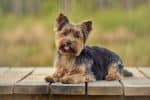
Snorkie

Canis lupus familiaris

Small dog, big whiskers, bigger attitude
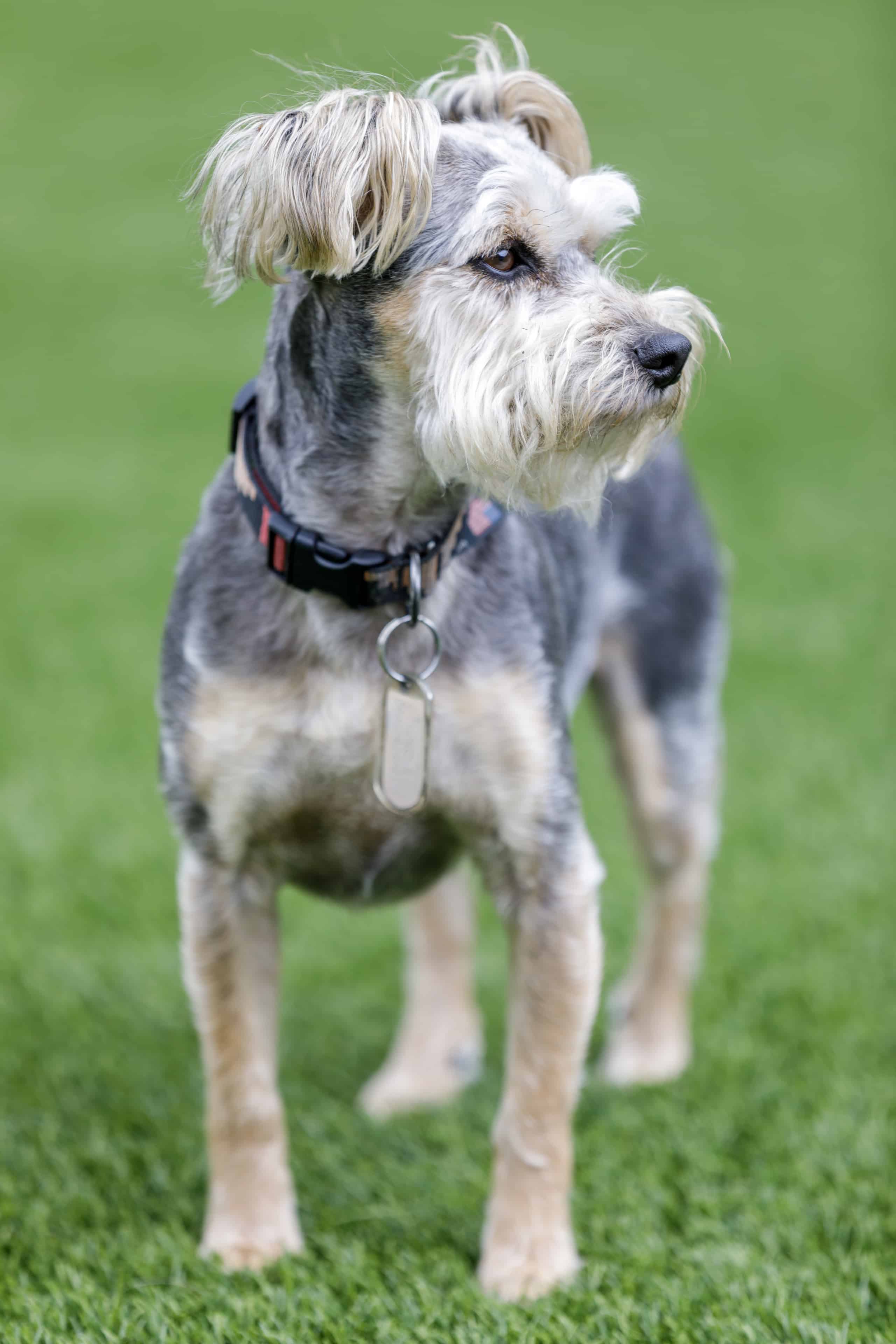
Kristin Chiasson/Shutterstock.com

Snorkie Distribution

Domesticated Species

Found Worldwide

Snorkie (Canis lupus familiaris) is a human-kept companion dog with no natural wild range. Its distribution follows people: pets live in homes, with breeders, and in rescue networks. Snorkies can be kept in most towns and cities where small dogs are allowed and vet care is available.

Size Comparison

Human 5'8"
Snorkie 10 in

Snorkie stands at 15% of average human height.

At a Glance

Domesticated
Diet Omnivore
Activity Diurnal+
Lifespan 12 years
Weight 7 lbs
Status Not Evaluated
Did You Know?

"Snorkie" is a modern designer-mix name for Yorkshire Terrier × (usually Miniature) Schnauzer.

Scientific Classification

A small companion dog crossbreed (designer mix) produced by crossing a Yorkshire Terrier with a Schnauzer (most often the Miniature Schnauzer). As a crossbreed, appearance and temperament can vary by lineage and generation (e.g., F1 vs. multigenerational).

Kingdom
Animalia
Phylum
Chordata
Class
Mammalia
Order
Carnivora
Family
Canidae
Genus
Canis
Species
lupus

Distinguishing Features

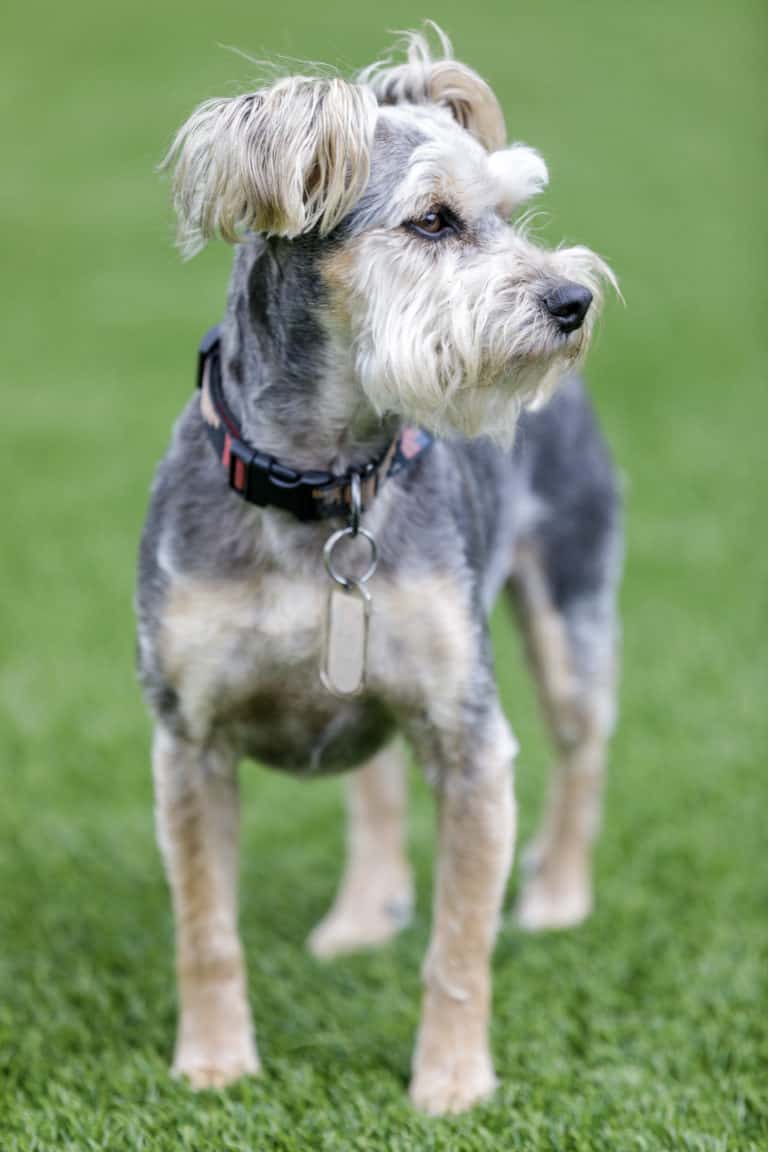
  • Small size; terrier-like build
  • Coat may be silky/wiry or a mix; often low-shedding depending on inheritance
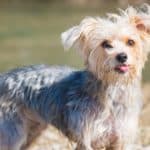
  • Commonly shows Yorkie-like facial features with Schnauzer-like beard/eyebrows
  • Color varies (e.g., black/tan, salt-and-pepper, mixed patterns)

Physical Measurements

Height
9 in (7 in – 12 in)
Length
1 ft 8 in (1 ft 4 in – 1 ft 12 in)
Weight
10 lbs (6 lbs – 15 lbs)
Tail Length
6 in (4 in – 7 in)
Top Speed
17 mph
running

Appearance

Primary Colors
Secondary Colors
Skin Type Domestic dog skin with moderate sensitivity; prone to dryness or allergic dermatitis in some individuals, especially with frequent bathing or environmental allergies.
Distinctive Features
  • Designer crossbreed: Yorkshire Terrier × (typically Miniature) Schnauzer; not a standardized kennel-club breed, so appearance varies widely.
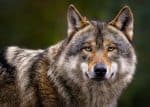
  • Small companion-dog build vs the base species (gray wolf): markedly smaller body, shorter muzzle, and neotenic facial proportions typical of toy/companion dogs.
  • Coat can be silky (Yorkie-like), wiry (Schnauzer-like), or mixed; often low-shedding but not reliably hypoallergenic.
  • Facial furnishings may include Schnauzer-style beard and eyebrows; expression tends to be alert and terrier-like.
  • Ears may be erect, semi-erect, or folded; tail carriage varies from terrier-high to more neutral.
  • Common health concerns to watch: dental crowding/periodontal disease, patellar luxation, tracheal collapse, and allergic skin/ear issues.
  • Line-associated risks can include Legg-Calvé-Perthes (toy lines), portosystemic shunt (Yorkie lines), and Schnauzer-associated hyperlipidemia/urinary stones in some individuals.
  • Care requirements: routine professional grooming/hand-stripping or clipping depending on coat; frequent brushing to prevent mats, especially around beard and legs.
  • Care requirements: regular dental home care (brushing) and veterinary cleanings due to small-breed dental risk.
  • Care requirements: moderate daily exercise and mental enrichment; early socialization to reduce barking/reactivity common in terrier-type mixes.
  • Cold sensitivity is possible in finer-coated individuals; may benefit from a coat in cool weather.

Sexual Dimorphism

Sexual dimorphism is mild. Males are typically slightly taller/heavier with a broader chest and head, while females often appear finer-boned; individual variation and neuter status can outweigh sex differences.

♂
  • Slightly larger overall size on average
  • Broader skull and chest; more muscular neck/shoulders
  • May develop more pronounced facial furnishings with maturity
♀
  • Slightly smaller, finer-boned build on average
  • Narrower head and chest; lighter overall frame
  • Coat and furnishings often appear softer if more Yorkie-influenced

Did You Know?

"Snorkie" is a modern designer-mix name for Yorkshire Terrier × (usually Miniature) Schnauzer.

As a crossbreed, Snorkies can inherit either a silky Yorkie coat, a wiry Schnauzer coat, or a mix-grooming needs vary a lot.

Many Snorkies keep the Schnauzer-style "beard/eyebrows" alongside Yorkie-like coloring patterns.

They often blend two classic vermin-hunting lineages (terrier + ratting Schnauzer) into a companion-sized dog.

Some individuals shed relatively little, but "hypoallergenic" isn't guaranteed-coat type and dander vary by dog.

Because both parent breeds are small and bright, Snorkies often excel at trick training when rewarded with play/food.

Unique Adaptations

  • Domestic-dog traits vs. the base species (gray wolf): Snorkies are bred for companionship, tolerance of human homes, and responsiveness to human cues rather than pack hunting.
  • Compact body size and "urban fitness": small size makes them well-suited to apartment living, travel, and short daily exercise blocks.
  • Coat variability as a "human-selected toolkit": they may inherit a softer Yorkie coat, a harsher Schnauzer coat, or an intermediate texture-affecting insulation, matting, and grooming frequency.
  • High social attentiveness common in companion dogs: many learn routines quickly and orient to faces/voices more than working-line canids.
  • Low prey-size mismatch: their small stature typically reduces risk around indoor spaces but increases vulnerability to rough handling, stairs, and larger dogs (a care consideration).

Interesting Behaviors

  • "Alarm-bell" alertness: quick to notice new sounds/visitors and may bark if not trained for quiet cues.
  • Terrier-style digging or "nesting" in blankets, reflecting ancestral earth-dog instincts.
  • Chase-and-pounce play: toy chasing can look like miniature prey drive from their ratting/terrier roots.
  • "Velcro" companion behavior-many prefer staying close to their person and may follow from room to room.
  • Selective listening: intelligent but can be stubborn; short, upbeat training sessions typically work best.
  • Beard wiping: if they inherit facial furnishings, they may rub their muzzle after eating/drinking, and the beard can trap water/food.

Cultural Significance

The Snorkie (Canis lupus familiaris) is a designer crossbreed from the Yorkshire Terrier (Victorian England, a rat hunter turned lapdog) and Schnauzer (Germany, a bearded stable guardian and vermin hunter). Popular as city family pets and on social media, they show crossbreeds can be varied, not all the same.

Myths & Legends

Yorkshire's "mill and mine ratter" origin story: accounts from 19th-century northern England describe small terriers kept by workers to control rats in mills, workshops, and crowded housing-later becoming prized companions in Victorian society.

A common story says Scottish workers brought small terriers into Yorkshire, where they were bred into the Yorkshire Terrier. This tale is often called the breed's "journey south."

The Schnauzer's name tale: the breed's identity is tied to its distinctive snout and muzzle, often recounted as a bearded, whiskered dog recognized by its face as much as its work.

Stable-guardian anecdotes from Bavaria: traditional stories describe bearded dogs kept around stables and farms to dispatch vermin and raise the alarm-an old-world working reputation that still colors how Schnauzer mixes are perceived.

Victorian lapdog lore: Yorkies are frequently associated with period anecdotes of being carried in ladies' arms or pockets as fashionable companions-stories that helped cement the tiny terrier's "big status in a small body" image.

Conservation Status

NE Not Evaluated

Has not yet been evaluated against the criteria.

Population Stable

Life Cycle

Birth 3 pups
Lifespan 12 years

Lifespan

In the Wild
10–15 years
In Captivity
10–18 years

Reproduction

Mating System Monogamy
Social Structure Managed Domestic
Breeding Pattern Serial
Fertilization Managed Selective
Birth Type Managed_selective

Behavior & Ecology

Social Pack Group: 3
Activity Diurnal, Crepuscular, Cathemeral
Diet Omnivore Meat-forward small-breed diet (often poultry-based kibble or gently cooked chicken/turkey)

Temperament

Species context: domestic dogs are highly social, cooperative scavengers shaped for human-directed bonding.
Breed distinction: Snorkie is a small companion cross (Yorkshire Terrier x Miniature Schnauzer), typically more people-focused than primitive/working lines.
HUBS: commonly affectionate, alert, and playful; variation by F1 vs multigenerational crosses and parent temperaments.
Often confident for size; may show terrier-like boldness and prey-chase toward small animals.
Can be reserved with strangers; benefits from early, positive social exposure to reduce reactivity.
Moderate exercise needs; prefers multiple short walks and indoor play over long endurance activity.
High need for attention and mental enrichment; boredom may produce nuisance barking or destructiveness.
Trainability: usually bright and food-motivated; may be stubborn-best with short, consistent sessions and rewards.
Health tendencies to monitor (crossbreed variability): dental disease in small dogs; possible patellar luxation; possible allergies/skin issues; eye problems may occur.
Care requirements: regular grooming/brushing (coat varies), routine ear checks, and dental care; avoid rough handling due to small size.

Communication

alert barking
yips/high-pitched barks
whining
growling
play grunts
howling Occasional, individual-dependent
tail carriage and wag style signaling arousal or friendliness
ear and eyebrow positioning Notable in Schnauzer-influenced faces
direct gaze/averted gaze for attention or appeasement
pawing, nudging, and leaning to solicit contact
play bow and bouncy approach to initiate interaction
scent investigation and light marking during walks
lip-licking, yawning, and turning away as stress signals

Habitat

Biomes:
Temperate Forest Boreal Forest (Taiga) Tundra Alpine Temperate Grassland Mediterranean Desert Hot Desert Cold Savanna Tropical Dry Forest Tropical Rainforest Wetland Freshwater Marine +8
Terrain:
Plains Hilly Valley Plateau Mountainous Coastal Island +1
Elevation: Up to 16404 ft 3 in

Ecological Role

Domestic companion omnivore (human-associated canid) with minimal natural predation role; may act as incidental micro-predator in home environments.

companionship and mental-health support for humans alert/guard barking that can deter intruders incidental household pest deterrence (e.g., discouraging rodents) participation in therapy/assistance and social facilitation when trained

Diet Details

Main Prey:
Small rodents Small birds and eggs Insects and other small invertebrates
Other Foods:
Berries and other fruits Dog-safe vegetables Grasses Starches and grains

Human Interaction

Domestication Status

Domesticated

Snorkie (Canis lupus familiaris) is a modern designer cross of a Yorkshire Terrier and usually a Miniature Schnauzer. They are small companion dogs, lively, watchful, and very attached to owners. Coats range wiry to silky and may shed less but not truly hypoallergenic. They need regular grooming, vet care, training, and may bark or chase prey.

Danger Level

Low
  • Minor bite/scratch risk typical of small dogs, especially if poorly socialized or handled roughly
  • Nuisance barking and reactivity toward strangers/dogs in some lines
  • Zoonotic risks common to pet dogs if hygiene/prevention lapses (e.g., intestinal parasites, ringworm), mitigated by routine veterinary care
  • Trip hazard underfoot due to small size

As a Pet

Suitable as Pet

Legality: Snorkies (Canis lupus familiaris) are usually legal where dogs are allowed but must follow local leash laws, licenses, shots (rabies), microchips, and home/HOA rules. Breed bans rarely target them, but some rules limit barking, size, or number of pets.

Care Level: Moderate

Purchase Cost: $300 - $2,000
Lifetime Cost: $15,000 - $35,000

Economic Value

Uses:
Companion animal / pet industry Breeding and puppy sales (designer crossbreeds) Veterinary services (preventive care, dentistry, chronic condition management) Grooming and coat care services Training and behavior services Pet boarding/daycare and travel services Pet insurance and pharmaceuticals
Products:
  • puppy acquisition/adoption fees
  • spay/neuter, vaccinations, parasite prevention
  • professional grooming (clip, bath, ear cleaning, nail trims)
  • dental cleanings and dental home-care products
  • small-breed diets; prescription diets if pancreatitis/hyperlipidemia issues arise
  • training classes (house-training, barking control, socialization)
  • crates, carriers, harnesses, enrichment toys

Relationships

Ecological Equivalents 7

Animals that fill a similar ecological role in their ecosystem

Yorkshire Terrier
Yorkshire Terrier Canis lupus familiaris Shares the small companion/terrier role and Snorkie traits—compact size, alertness, strong bonding, and bold confidence. Yorkshire Terrier influence yields a silkier coat, increased barking, and toy-breed health risks such as dental crowding, patellar luxation, and tracheal sensitivity.
Miniature Schnauzer Canis lupus familiaris Shares a companion and guardian role, is easier to train, and has a sturdy, terrier-like build. Schnauzer influence can result in a wiry coat with a beard, increased watchdog behavior, greater grooming needs, susceptibility to skin allergies, and an increased risk of hyperlipidemia and pancreatitis.
Morkie
Morkie Canis lupus familiaris Similar designer toy companion. Small, apartment-friendly, requires frequent grooming, and shares toy-dog health care needs like dental work and patella checks. Snorkies match size and energy but may be more of a watchdog if Schnauzer traits are expressed.
Schnoodle
Schnoodle Canis lupus familiaris Overlapping niche as a small companion mix with variable coat types. Like Snorkies, appearance and temperament can vary by generation (F1 vs. multigenerational). Both often require structured training and regular grooming to prevent matting and manage differences in coat texture.
Cairn Terrier
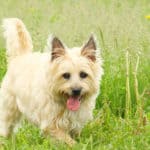
Cairn Terrier Canis lupus familiaris Occupies a similar small, hardy terrier niche with alertness and prey-drive tendencies. Helps explain why Snorkies may retain an instinct to chase small animals despite being primarily companion dogs.
Toy Poodle
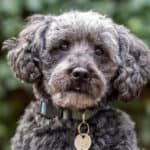
Toy Poodle Canis lupus familiaris Similar small companion niche with high intelligence and intensive grooming requirements. Serves as an ecological parallel for care needs: requires consistent training and mental enrichment to prevent nuisance barking and anxiety behaviors, and routine coat and dental maintenance.
Shih Tzu
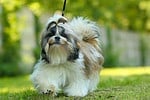
Shih Tzu Canis lupus familiaris Similar small companion niche and suitability for apartment living. Useful contrast for care: Snorkies are often more active and alert than many brachycephalic companion breeds, but they share needs for dental hygiene, weight control, and regular grooming.

A Snorkie, also sometimes referred to as the Schnerrier, is a result of breeding a Yorkshire Terrier and a Miniature Schnauzer. The history of the Snorkie is unknown, but both of its parent breeds originate from Europe. The Yorkshire Terrier, originating from England, was bred by local mill owners to be a ratter to hunt vermin and was introduced to the U.S. in 1872. The Miniature Schnauzer, originating from Germany, was also bred by farmers to be a ratter and a guard dog in the mid-to-late 19th century. However, there are photos dating back to the 15th century that portray dogs similar to the Schnauzer, which shows that they may have an older history than originally thought.

Snorkies have a friendly, loyal temperament and greatly enjoy following their owner around the house and yard. Not surprisingly, they were bred to be companions. This crossbreed claims the most appealing characteristics of its purebred parents. This breed falls into the hybrid group of dogs.

Mix

There is one type of Snorkie mix. It’s called a Snorkie Poo. This is when Snorkies are bred with either miniature or toy poodles and produce adorable Snorkie Poo puppies.

3 Pros And Cons Of Owning A Snorkie

Pros!Cons!
Apartment-friendly
A Snorkie is a small dog, making it an appropriate pet for someone living in an apartment.
Questionable with children
This canine can sometimes be sensitive to the loud, rough activities of young children. Because of their small size, they can feel threatened and may nip at kids.
A fun companion
This hybrid pooch loves to play fetch, chase, and other games with its family.
Some barking activity
A Snorkie that’s not properly socialized may bark excessively. Training can help a Snorkie learn to bark less.
A long life
The lifespan of a Snorkie is 12 to 15 years, so they are usually a part of the family for a long time.
May be difficult to train
This is an intelligent little dog, but it can be stubborn during obedience training.

Size And Weight

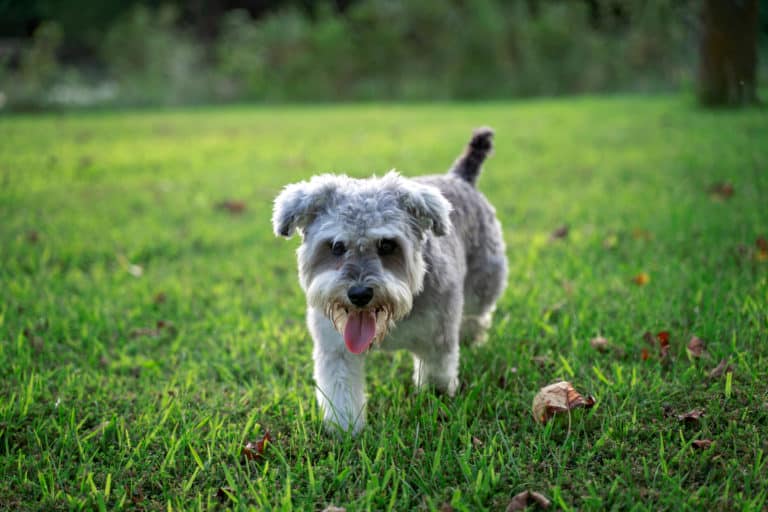
Snorkies are beautiful dogs

The Snorkie is fully grown at 12 months of age.

A Snorkie male can grow to be 12 inches tall from head to toe, while a female grows to be 11 inches in height. Male Snorkies can weigh as much as 12 pounds full-grown, whereas females weigh up to 11 pounds. At 7 weeks old, a Snorkie typically weighs between 1.5 and 2.5 pounds, depending on the size of its parents. These dogs are fully grown at 12 months old.

Common Health Issues

Snorkies have some common health issues, including cataracts. Cataracts take the form of cloudiness in one or both of the dog’s eyes. They can cause partial or even total blindness. Surgery is a treatment for cataracts in a Snorkie.

Another health issue of this hybrid is diabetes. A dog with diabetes has a high level of glucose in its blood. Diabetes can cause damage to the organs. Though there isn’t a cure for diabetes, the condition can be managed with a proper diet and medication. Some signs of diabetes include excessive thirst, weight loss, or an increase in appetite.

A third common health issue is allergies. These dogs can be allergic to environmental elements such as pollen or dust. They can also be allergic to foods. Fortunately, allergies can be managed with medication.

Temperament And Behavior
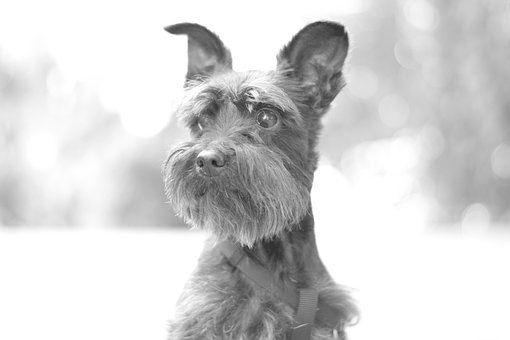
A regal Snorkie in black and white

Snorkies are extremely loyal and playful companions.

Loyalty is one of the most significant traits of a Snorkie. This companion dog likes to monitor the whereabouts of its owner at all times. Snorkies have a playful personality. They enjoy running around and playing with family members as well as with other dogs in the household.

A socialized Snorkie is likely to have appropriate behavior with kids. However, this dog is small and has a reputation for being sensitive around children. A Snorkie is tiny in size and is always worried about being stepped on or otherwise injured by young children who may be unsteady on their feet.

How To Take Care Of A Snorkie

Learning about the dietary, grooming, exercise, and healthcare needs of a Snorkie allows an owner to take stellar care of this pet. Not surprisingly, a Snorkie puppy and an adult dog need different diets. Snorkies need to be brushed and clipped on a regular schedule. They can be hard to train, so you need to be patient and persistent.

The Best Dog Food For Snorkies
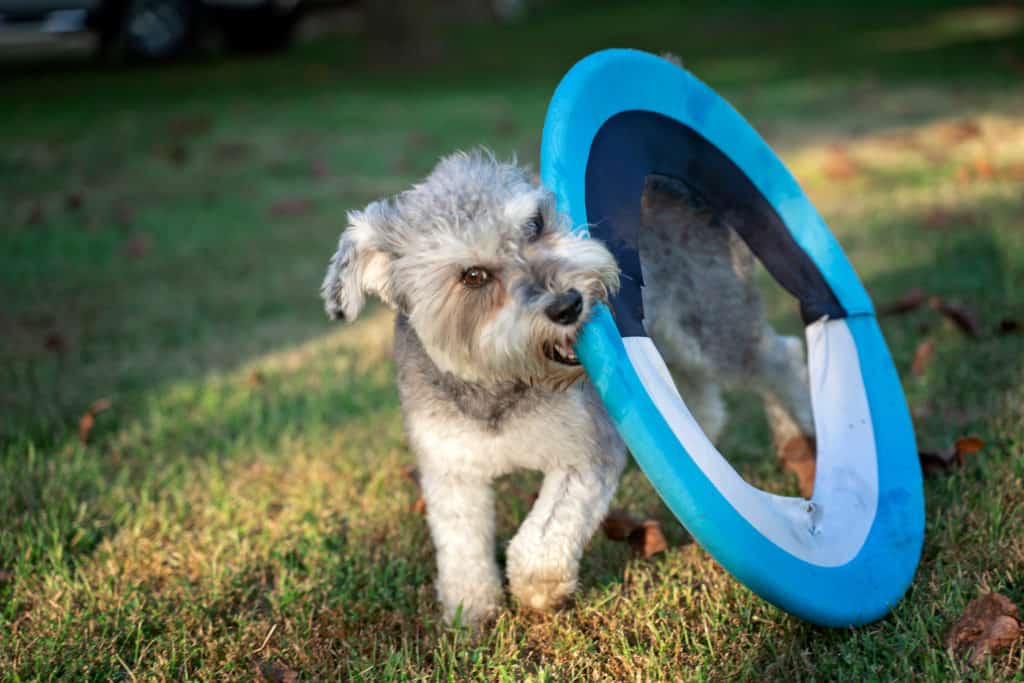
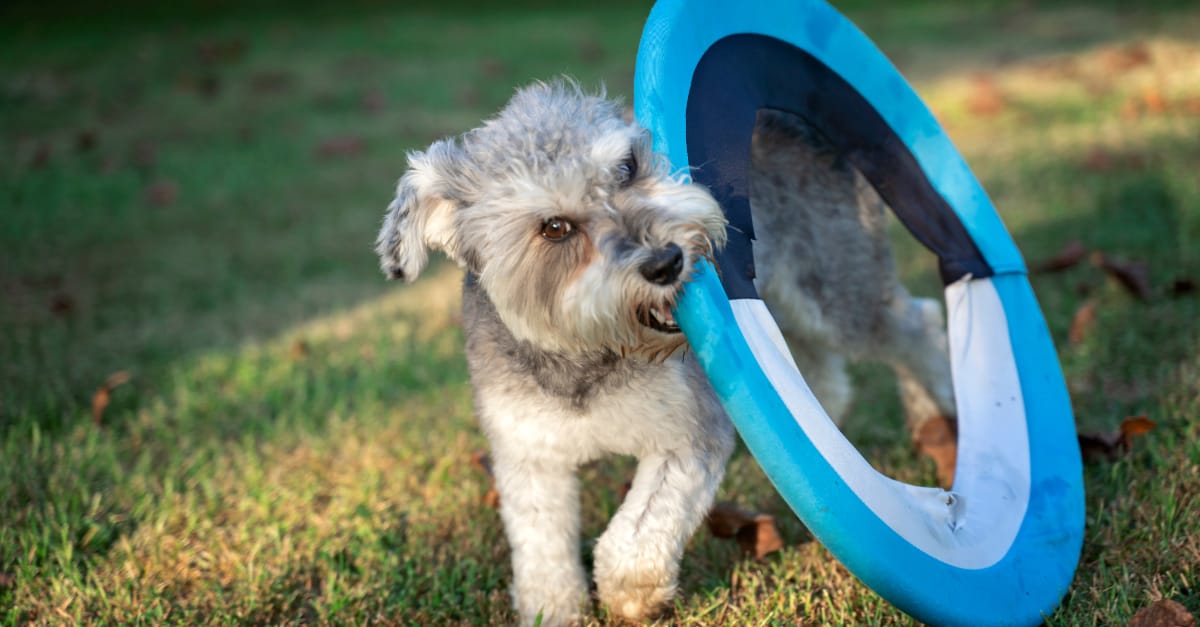
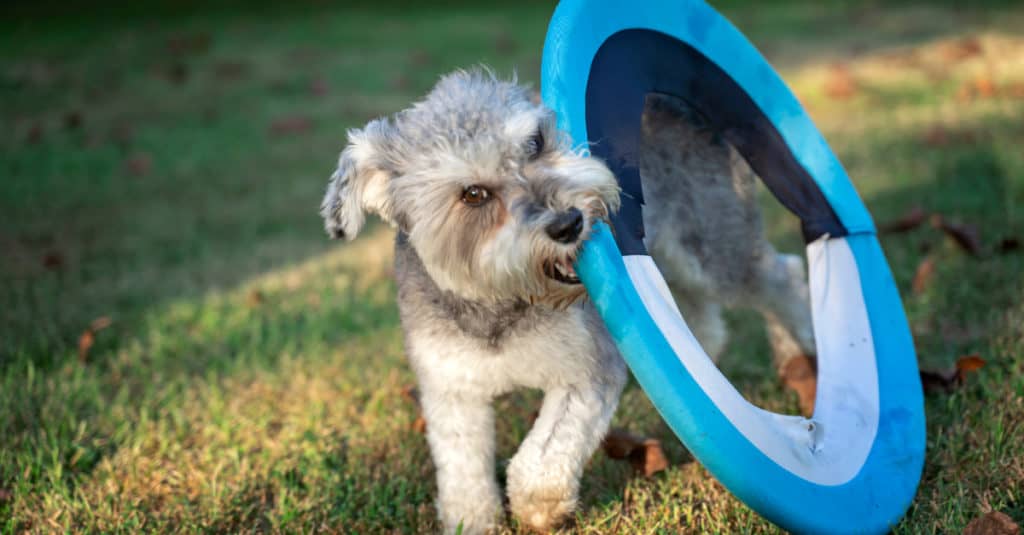
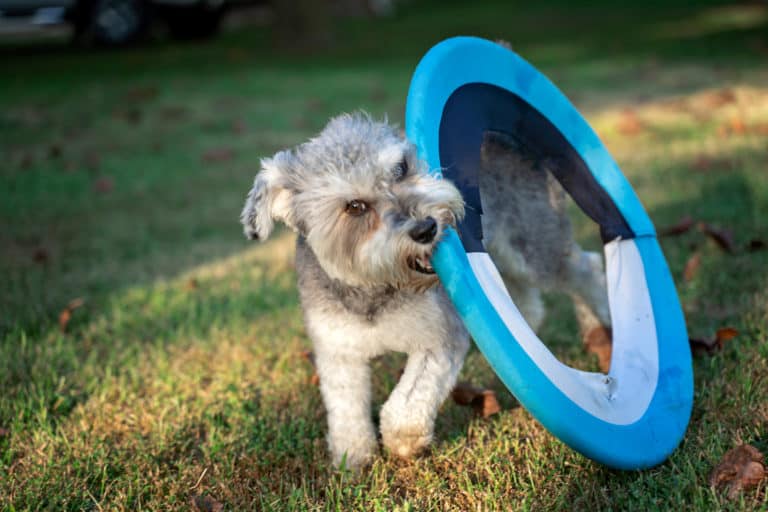
Snorkies love to play with toys

Snorkies may suffer from food allergies, so a limited-ingredient food diet may be the best choice.

The diet an owner feeds to a Snorkie puppy or adult dog can help to prevent various health issues. Look at the different considerations in choosing food for puppies and adult dogs:

Snorkie puppy food: DHA in the form of high-quality fish oil supports a puppy’s eye and brain development. Protein helps muscle and joint development. Vitamins C and E contribute to a healthy immune system, which can fend off allergies. Fat gives a puppy energy to explore and play. Omega-3 and 6 fatty acids support the growth of a healthy coat.

Snorkie adult dog food: Adult Snorkies need protein such as lean chicken or pork to maintain strong muscles, joints, and cartilage. Prebiotic fiber helps with proper digestion for this small dog. Vitamin A is valuable for maintaining the eye health of this dog prone to cataracts. Omega-6 supports a healthy coat, and calcium contributes to strong teeth and bones. Feeding an adult Snorkie a diet containing limited fat gives it the energy it needs without adding excess weight to its tiny frame.

Maintenance And Grooming
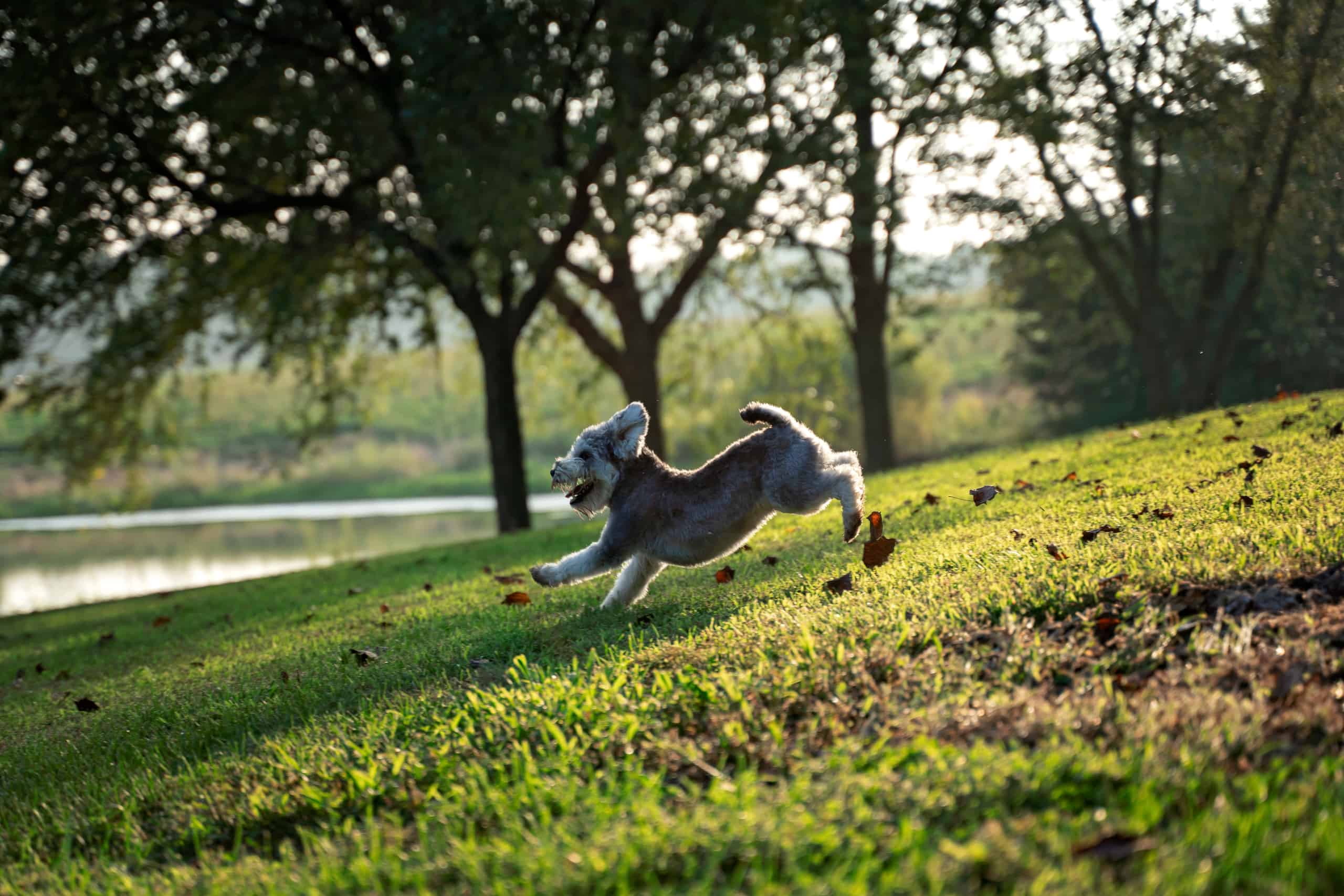
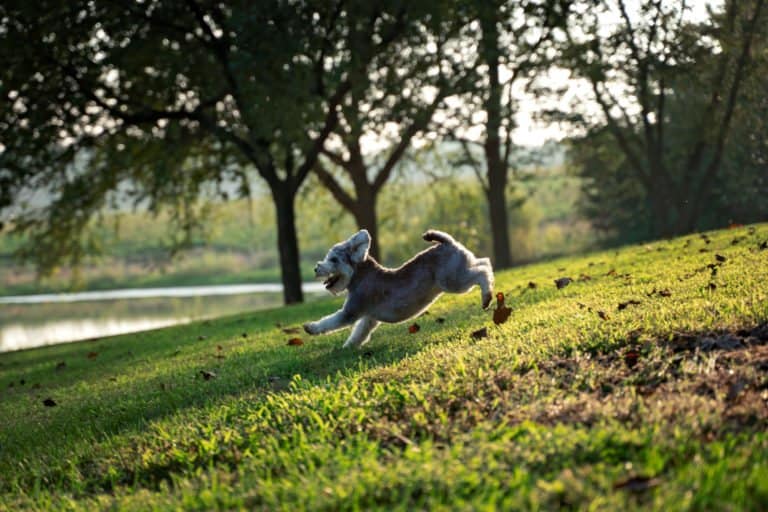
A Snorkie running as fast as he can

Snorkies may shed a low amount, but they aren’t classified as hypoallergenic.

Snorkies shed a low amount of hair. Though sometimes Yorkshire Terriers and Miniature Schnauzers are categorized as hypoallergenic, they do shed some hair, just like their hybrid puppies. None of the three dog breeds meets the strict definition of hypoallergenic.

Though Snorkies are low shedders, they do require some grooming. They need daily brushing to remove mats and tangles from their silky gray, black, tan, white, or silver coat. A slicker brush is an excellent grooming tool for this dog.

They also need to have the underside of their ears cleaned once each week. This can be done with a soft cloth and some warm water.

Some professional groomers specialize in giving haircuts to Snorkies to keep their hair short and more manageable for owners. These haircuts should be given about once every two or three months.

The allergies this hybrid is prone to often show up in the form of red or dry patches on its skin. A veterinarian can help an owner pin down the type of allergies their dog has and advise treatment.

Training

A Snorkie is a product of breeding two intelligent dogs. However, sometimes Snorkies can be stubborn during training. Keeping training sessions short and using desirable treats can help this unique dog better absorb the day’s lesson.

Exercise

A Snorkie needs around 30 minutes of exercise each day. A walk in the neighborhood or a visit to the dog park are both good ways to give this dog some quality exercise. Playing games of fetch or chase in the backyard is another great way to get this little dog moving!

This breed is a good choice for someone who lives in an apartment. Its small size allows it to be comfortable living in an apartment setting.

Puppies
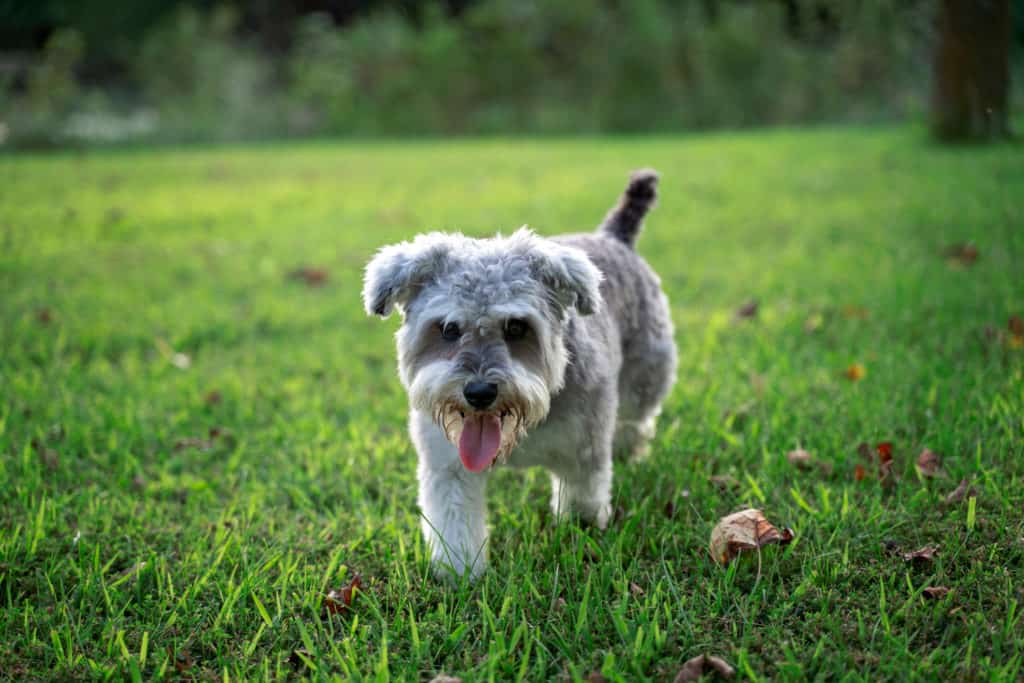
A Snorkie is a result of breeding a Yorkshire Terrier and a Miniature Schnauzer.

Snorkie adults only grow to be a maximum of 12 pounds, so it’s no surprise that Snorkie puppies are very tiny. Furthermore, if someone has a teacup Snorkie puppy, it’s going to be even smaller than a standard Snorkie puppy. Teacup varieties of this dog usually weigh no more than 7 pounds. Some say they can fit into a teacup.

These small hybrid puppies need an enclosed place where they can explore and stretch their legs while remaining safe from cars, larger dogs, etc.

Snorkies And Children

Normally, socialized Snorkies are good with children. But it’s important for Snorkie owners to know these little dogs can be very sensitive to the rough or loud activities of kids. If this dog feels it’s in danger of being stepped on or hurt, it may nip or bite as a way to protect itself. This is especially true with teacup Snorkies.

Dogs Similar To The Snorkie

Other breeds similar to the Snorkie include the Schnoodle, Yorkie Poo, and Silky Terrier.

  • Schnoodle: Schnoodles and Snorkies are both intelligent dogs with friendly temperaments. However, a Schnoodle is more energetic and needs more exercise than a Snorkie.
  • Yorkie Poo: Like a Snorkie, a Yorkie Poo has a coat that can be a combination of brown, black, white, gray, or tan. They are both intelligent dogs, but Yorkie Poos tend to bark more than Snorkies.
  • Silky Terrier: Silky Terriers and Snorkies share the same silky hair that can be any combination of black, gray, tan, or silver. One difference between the two is that Silky Terriers are more energetic than Snorkies.
View all 391 animals that start with S

Sources

  1. PetMD.com / Accessed April 19, 2021
Melissa Bauernfeind

About the Author

Melissa Bauernfeind

Melissa Bauernfeind was born in NYC and got her degree in Journalism from Boston University. She lived in San Diego for 10 years and is now back in NYC. She loves adventure and traveling the world with her husband but always misses her favorite little man, "P", half Chihuahua/half Jack Russell, all trouble. She got dive-certified so she could dive with the Great White Sharks someday and is hoping to swim with the Orcas as well.
Connect:

Thank you for reading! Have some feedback for us?


Snorkie FAQs (Frequently Asked Questions)

A Snorkie is a crossbreed also known as a hybrid dog. It’s the result of breeding a Yorkshire Terrier and a Miniature Schnauzer. These are small dogs known for their affectionate, loyal temperament. They were bred to be companions and like nothing more than following their owner around all day long!