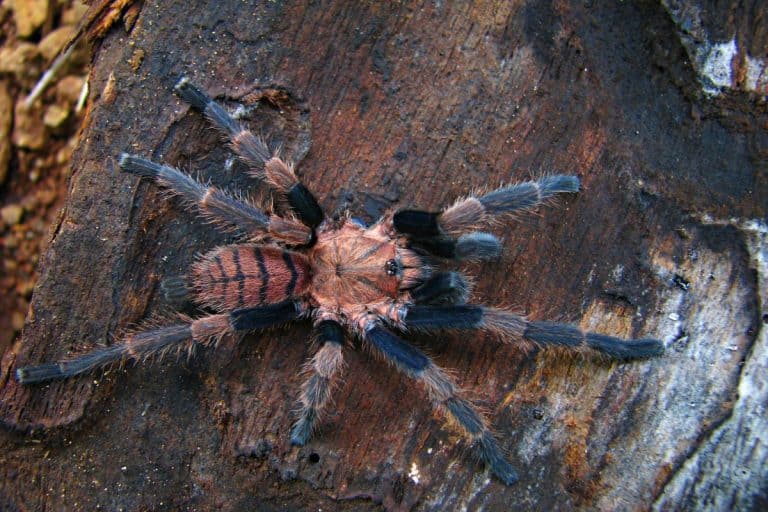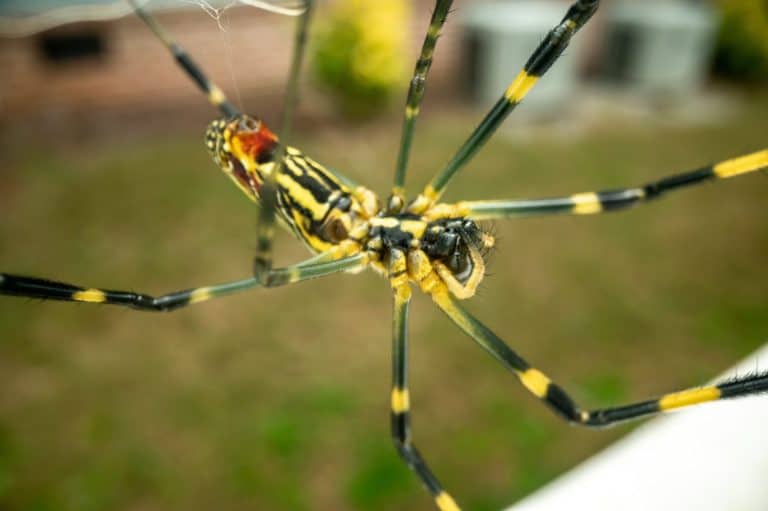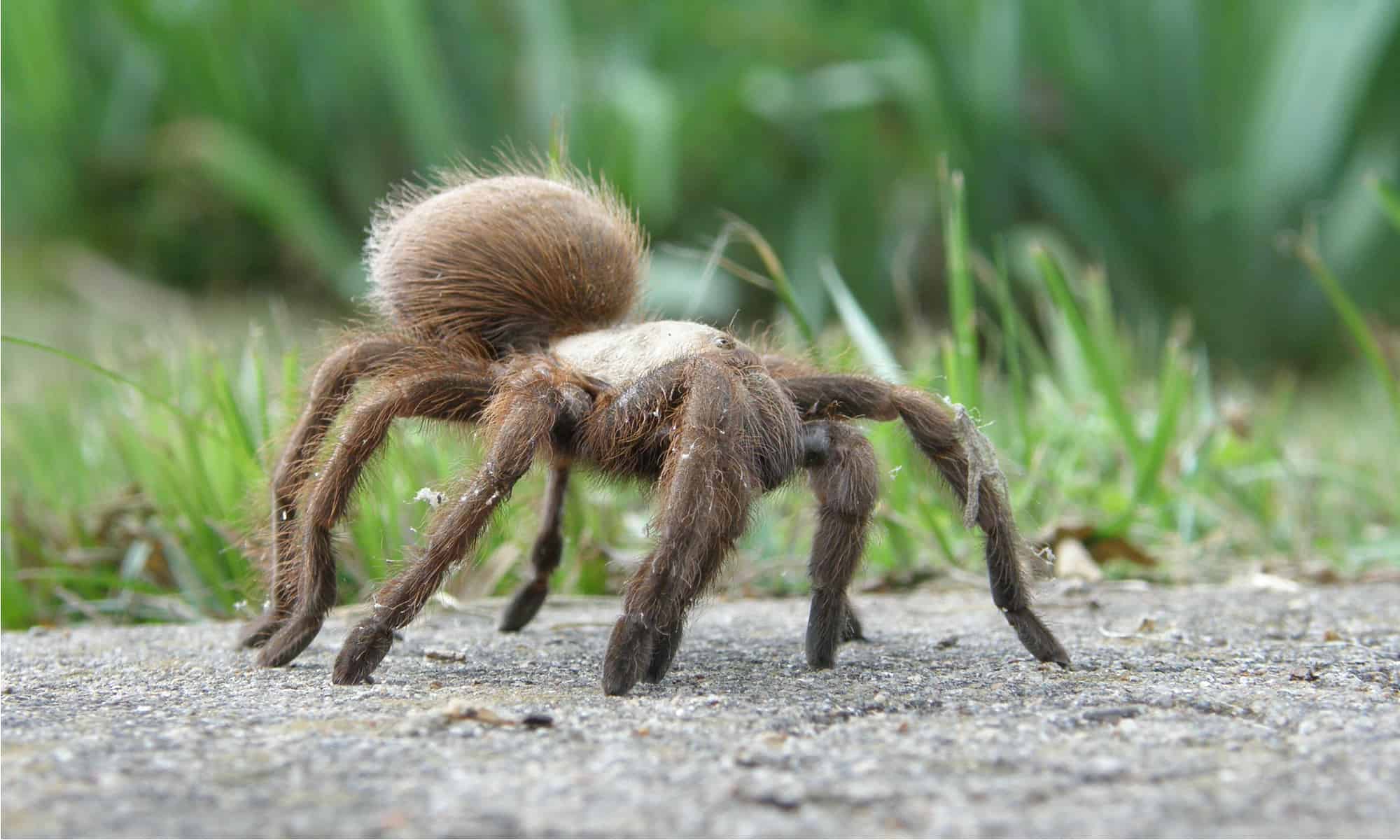

Oklahoma hosts a wide diversity of spider species, ranging from common and harmless house spiders to the state’s only two spiders considered medically significant to humans: the brown recluse (Loxosceles reclusa) and the black widow (Latrodectus). The state’s varied habitats, from prairie to forest, provide homes for many different types of spiders, from the tiny jumping spiders (Salticidae) that measure less than 0.25 inches to species that are twenty times larger. Continue reading to learn about the five biggest spiders in Oklahoma.
5. Long-Bodied Cellar Spider
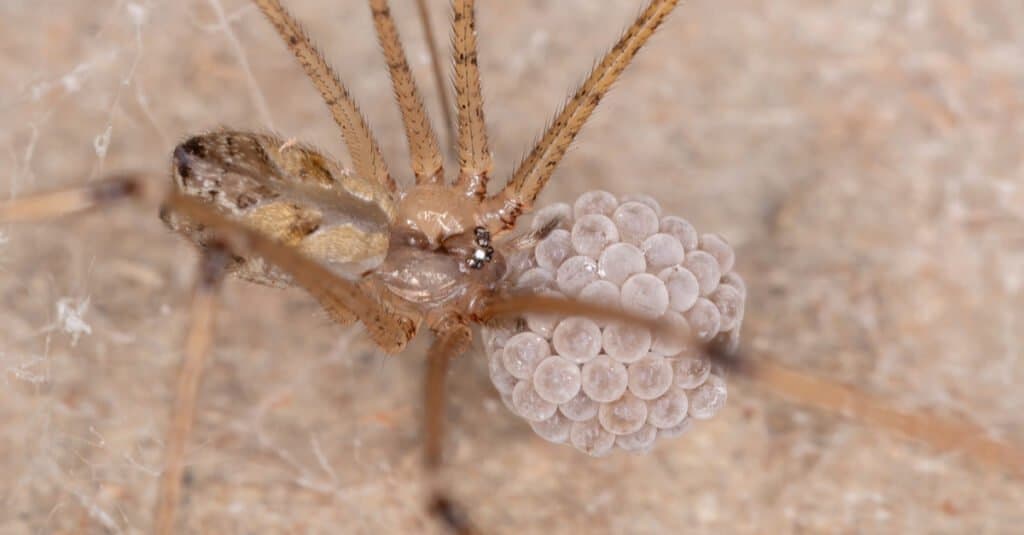
Cellar spiders may look scary, but they’re harmless.
©iStock.com/ViniSouza128
| Scientific Name | Leg Span | Danger to Humans |
|---|---|---|
| Pholcus phalangioides | 1-2 inches | A bite may cause a mild burning sensation. |
The long-bodied cellar spider is very common in many parts of the United States. You can find this species in dark recesses where it is most likely to be left alone. That includes cellars, warehouses, attics, garages, and outbuildings.
The spider has a small cephalothorax and a large, bulbous, and cylindrical abdomen. It is often tan, grayish brown, or brown with a dark mark on the carapace. Its long legs, its habit of making its web vibrate when threats are near, and its common name make people afraid of it.
Cellar spiders are often called daddy longlegs, but that name is also used for harvestman arachnids, which are a different group. An urban legend suggests that daddy longlegs are a dangerous species whose mouth is too small to bite human flesh. Cellar spiders can bite, but they’re not dangerous. Their bite causes a momentary burning sensation at the site that fades quickly and does not typically require care.
4. American Nursery Web Spider
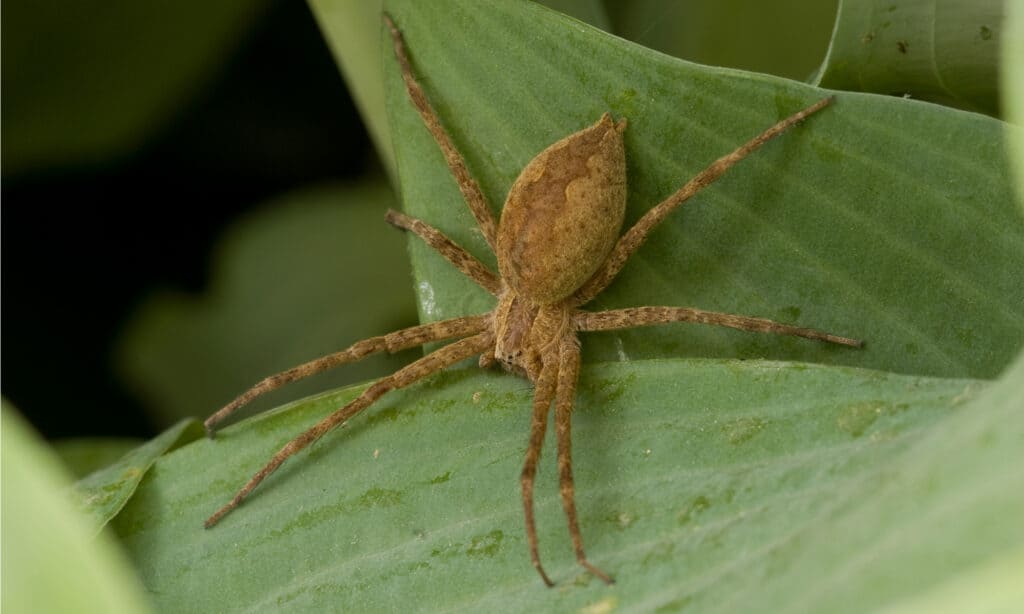
Female American nursery web spiders will attempt to eat their mates.
©SDeming/Shutterstock.com
| Scientific Name | Leg Span | Danger to Humans |
|---|---|---|
| Pisaurina mira | 1-3 inches | Has a bite that is mostly harmless to humans, with pain and swelling common. |
The American nursery web spider has a unique name. This name comes from its instinctual building of a webby nursery when its eggs are ready to hatch. It is not the only spider that does this, though.
American nursery web spiders live in tall grass or other vegetation, such as bushes and trees.
These spiders are easy to identify: they’re brown or reddish-brown with a darker brown stripe down the center of their entire body. In some cases, there is another darker brown mark inside the brown stripe. The pattern may be outlined by a thin white line along the sides.
A bite from this spider isn’t very serious; it typically results in mild pain and localized swelling that is short-lived.
3. Carolina Wolf Spider
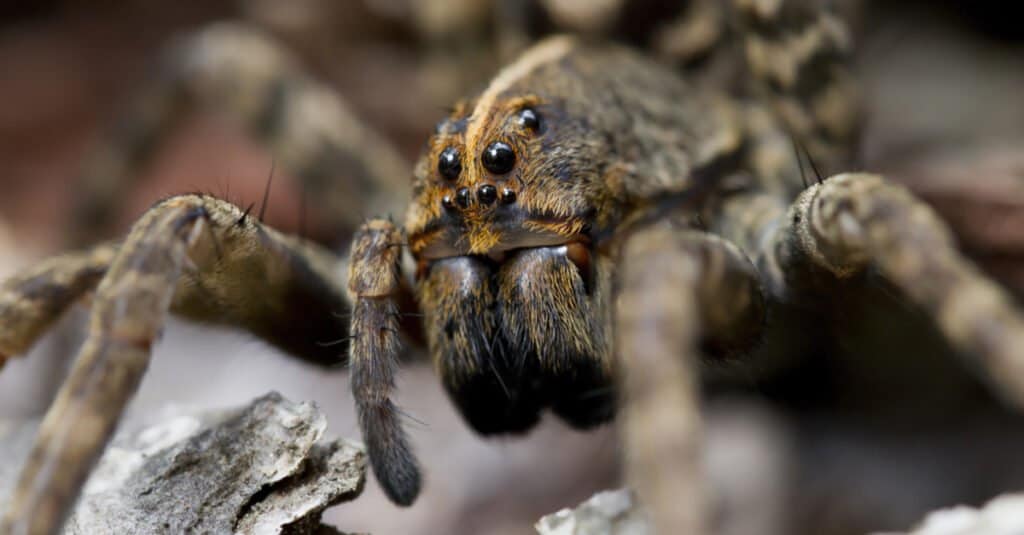
The Carolina wolf spider is the biggest member of its genus.
©Will E. Davis/Shutterstock.com
| Scientific Name | Leg Span | Danger to Humans |
|---|---|---|
| Hogna carolinensis | 2- 4 inches | The bite from this spider causes local pain and swelling. |
The Carolina wolf spider is the largest member of its genus in the United States, with a leg span approaching 4 inches in length, including its leg span. It is a wandering hunter that will lie in wait under the cover of tall grass, logs, rocks, and other things until prey walks by.
These spiders don’t wait to catch their prey with a web. They pounce on them and kill them quickly. They are fast and large, a combination that can be startling. Carolina wolf spiders are usually brown with two dark stripes running from behind their highest eyes down their carapaces.
The outer edge and middle of the carapace are much lighter, but the spider also has dark patterns on its abdomen. Males may have orange coloring on the sides of the abdomen, though not all do.
A Carolina wolf spider’s bite may cause mild pain and swelling, but these symptoms usually subside quickly without medical intervention. However, some people are allergic to wolf spider venom and may require medical attention.
2. Dark Fishing Spider
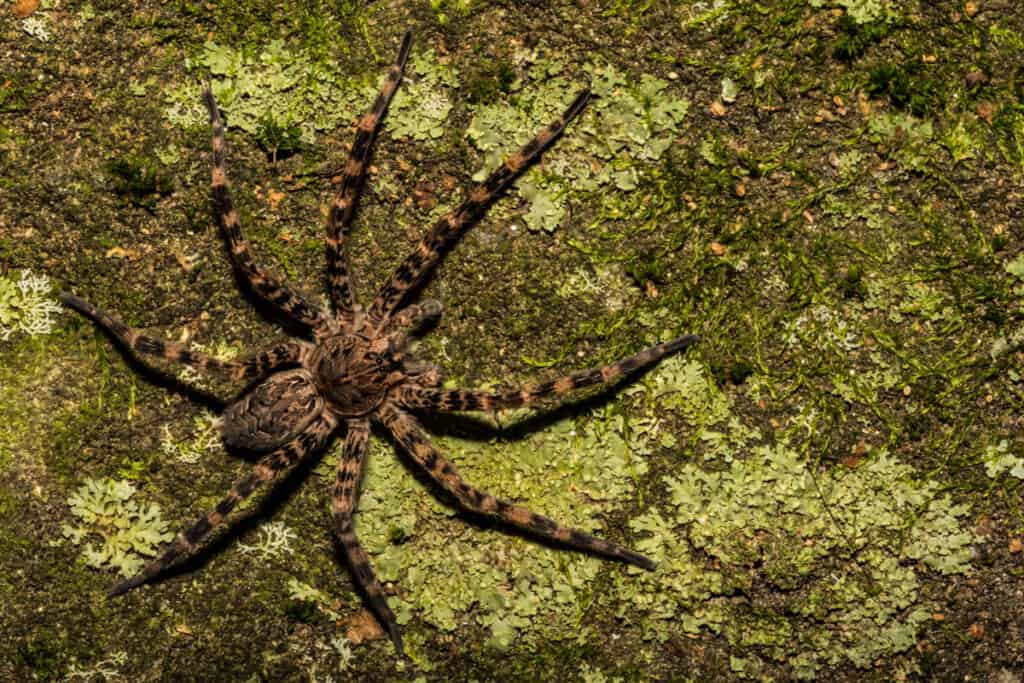
The dark fishing spider is one of the largest spiders in Oklahoma.
©iStock.com/JasonOndreicka
| Scientific Name | Leg Span | Danger to Humans |
|---|---|---|
| Dolomedes tenebrosus | up to 3.5 inches | Can bite humans and cause a reaction similar to a bee sting. |
The dark fishing spider is tied as one of the biggest spiders in Oklahoma. t’s often mistaken for other spiders due to its size and the fact that it doesn’t stay near water like other members of the Dolomedes genus. This spider is very large, with a leg span that measures over 4 inches and a body length that can exceed one inch.
Dark fishing spiders are often seen resting on trees near sources of water or walking along the ground. Their coloration is best described as mottled black and brown across their body. However, they have noticeable, dark, W-shaped patterns on their abdomens.
Dark fishing spiders are skittish, making their bites, which are reminiscent of a bee sting, practically unheard of.
1. Texas Brown Tarantula
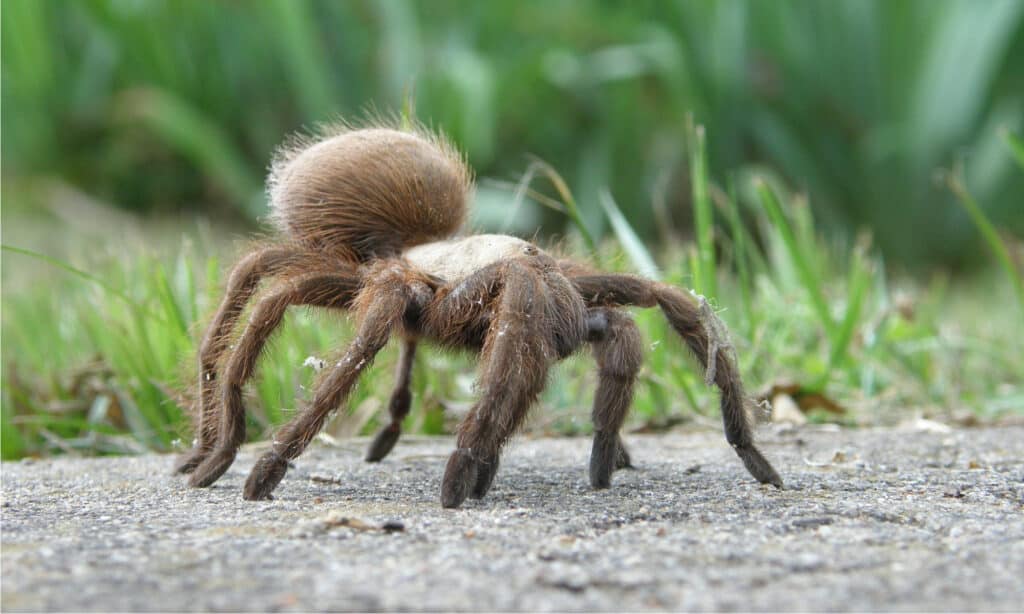
Texas brown tarantulas have long fangs and can deliver a powerful bite.
©texas brown tarantula/Shutterstock.com
| Scientific Name | Leg Span | Danger to Humans |
|---|---|---|
| Aphonopelma hentzi | up to 4 inches | Delivers a painful bite that leaves puncture wounds, swelling, and possible infection |
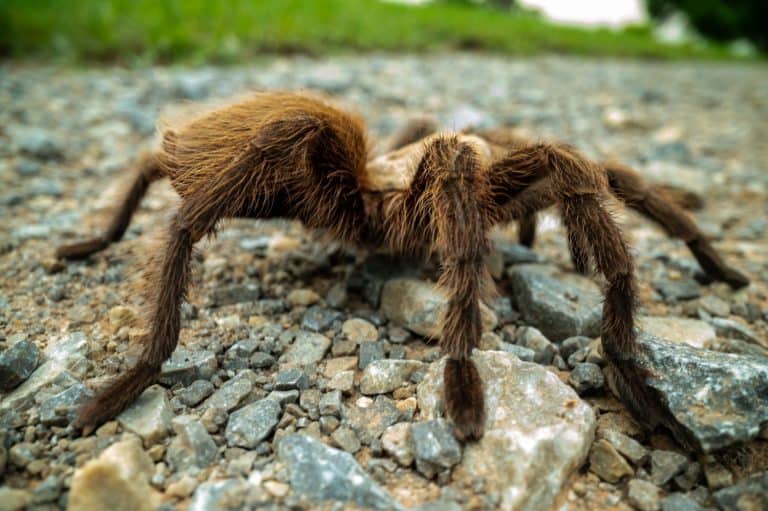
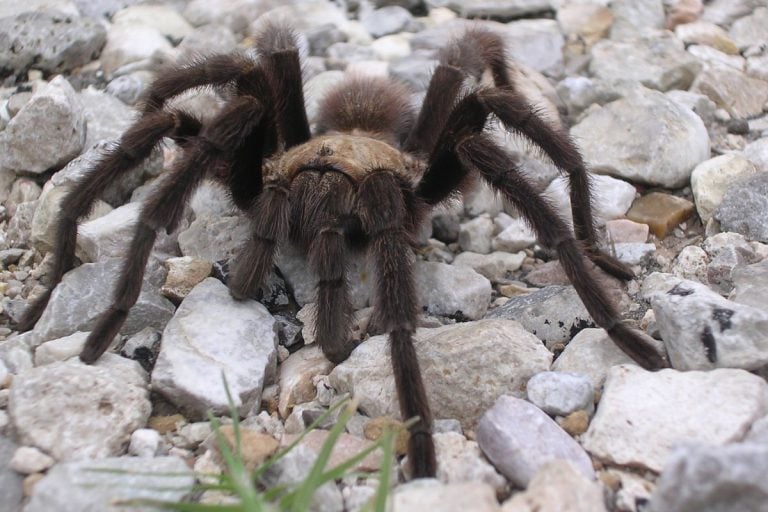
The Texas brown tarantula is the biggest spider in Oklahoma.
The Texas brown tarantula has a brown carapace with reddish-brown hairs and a darker brown abdomen and legs. The legs can be very dark brown on the femur and may have light banding on them. These spiders are hairy on the abdomen and legs, but the hair is shorter on the carapace. They hide under rocks, logs, and other forms of cover to ambush their prey.
Texas brown tarantulas are dangerous to the insects and other creatures they hunt, but not harmful to humans. The bite will hurt, the area will swell, and the resulting puncture wounds could become infected. However, the bite is not fatal.