
Despite being the smallest state, Rhode Island supports a wide variety of wildlife. Its forests, wetlands, and coastal waters are home to a diverse array of animals, including white tail deer, beavers, river otters, and spiders. The state is home to approximately 21 spider species, with at least five having legspans of over three inches. Continue reading to learn about five of the biggest spiders in Rhode Island, including what they look like, where they’re found, and whether their bite is considered medically significant to humans.
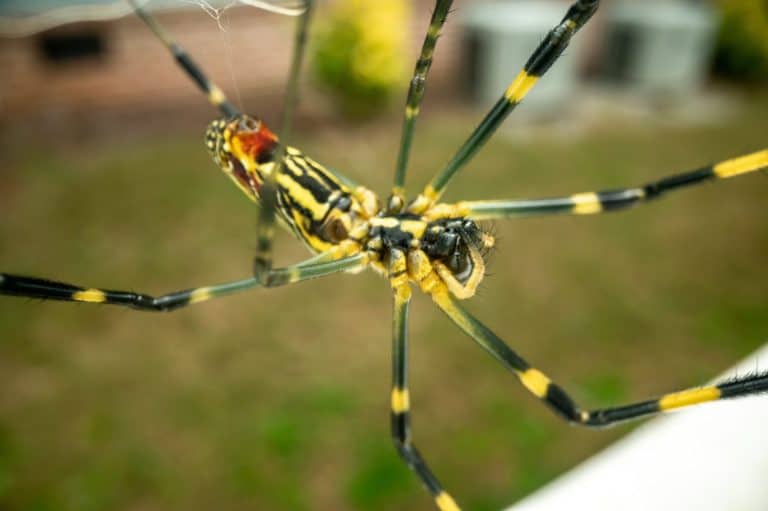
5. Black and Yellow Garden Spider
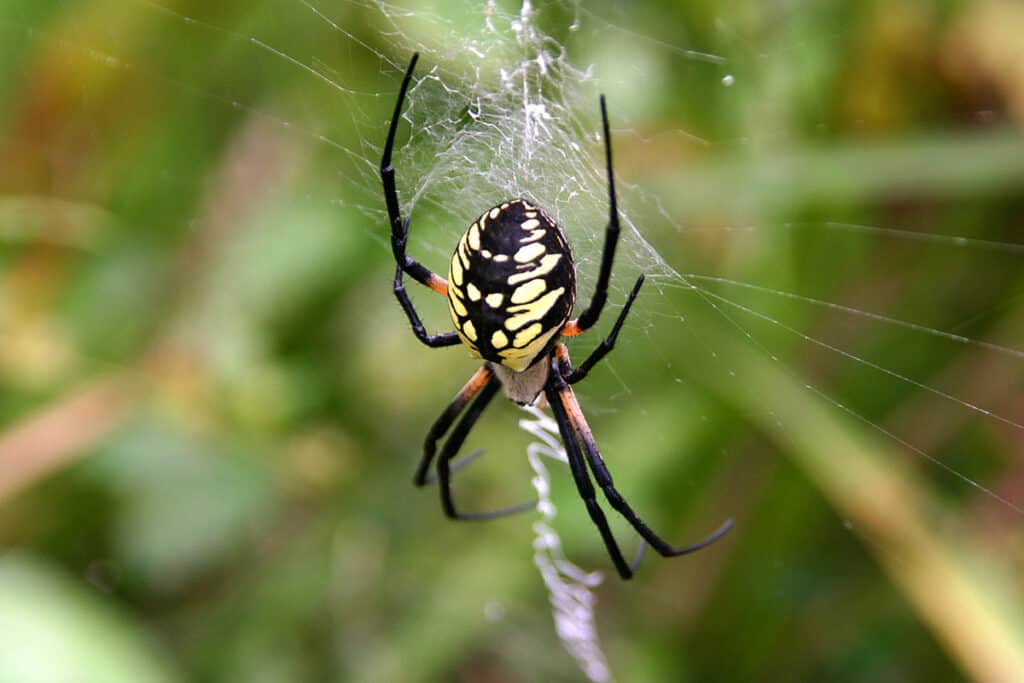
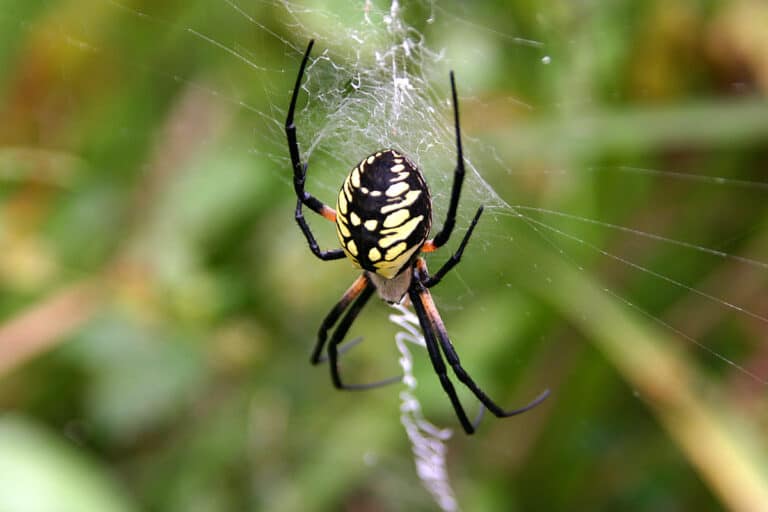
The black and yellow garden spider is a common sight throughout much of the United States.
©iStock.com/AwakenedEye
| Scientific Name | Legspan | Danger to Humans |
|---|---|---|
| Argiope aurantia | 0.2-3 inches | Rarely bites humans, but its bite may cause pain and swelling. |
The black and yellow garden spider is a beautiful arachnid with patterns of vivid yellow and black on its body. The cephalothorax is often gray, but the abdomen is black with yellow markings along the outside. It may have gray patterns on the abdomen along with yellow and black, too.
The legs of black and yellow garden spiders are usually light brown near the body and then banded black and brown down their length. These spiders are often listed as growing 1.1 inches, but that’s just their body length. Their legs are quite long, giving them a total length of about 3 inches.
Black and yellow garden spiders are typically found in gardens. They are known for making massive webs that can measure several feet across. Their webs have a thick, zig-zag line in the center called the stabilimentum. The purpose of the stabilimentum is a topic of ongoing research, with current theories suggesting it primarily serves to warn birds of the web’s presence, acts as a camouflage for the spider, or attracts insects.
Black and yellow garden spiders are not aggressive and will not bite unless they feel threatened. Their bite causes mild symptoms, such as minimal pain, redness, and swelling around the bite site. Their venom is harmless to humans.
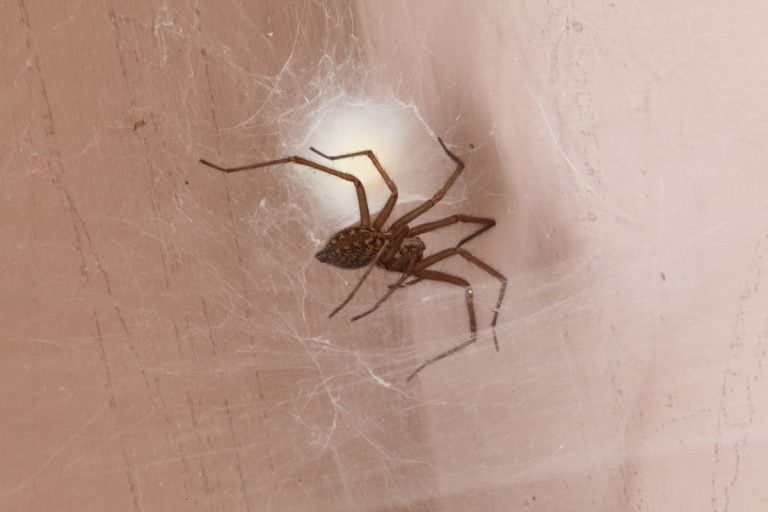
4. American Nursery Web Spider
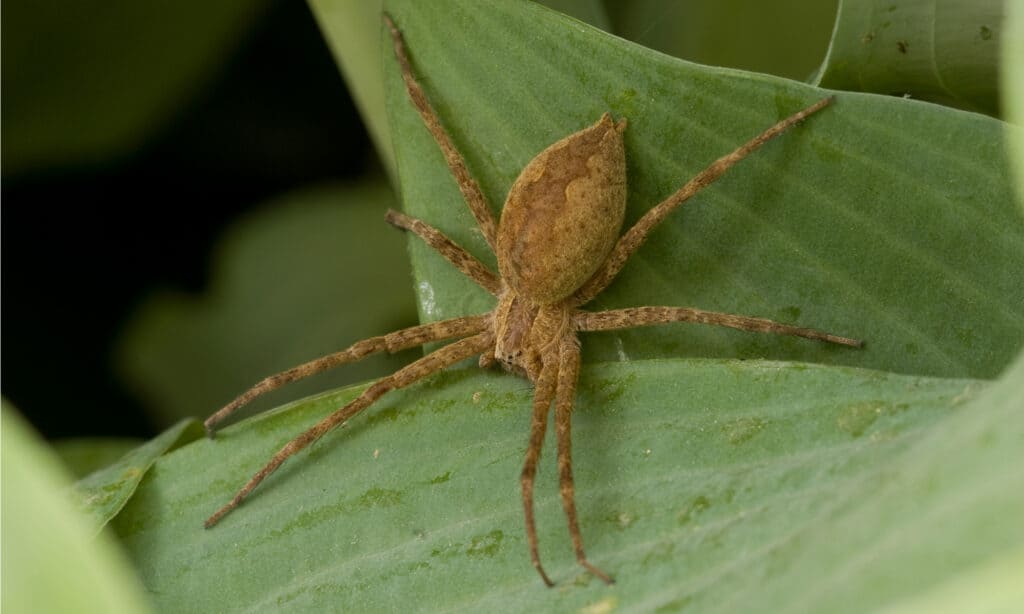
Male American nursery web spiders will tie females’ legs during mating to avoid being eaten afterward.
©SDeming/Shutterstock.com
| Scientific Name | Legspan | Danger to Humans |
|---|---|---|
| Pisaurina mira | 1-3 inches | Bite is harmless to humans, with pain and swelling common. |
The American nursery web spider gets its name from its habit of building a nursery made from its web to house its eggs.
American nursery web spiders often have a dark stripe going down the middle of their bodies and legs that alternates between brown, light brown, and tan in ill-defined bands.
American nursery web spiders prefer habitats with tall grass, shrubs, and wooded areas, particularly in the transitional zones between forests and fields. They are commonly found in meadows, along wooded edges, and in gardens.
The American nursery web spider’s bite is not medically significant, though it may cause mild, localized symptoms like pain, itching, or swelling. These spiders are not aggressive and only bite in self-defense when they feel threatened.
3. Carolina Wolf Spider
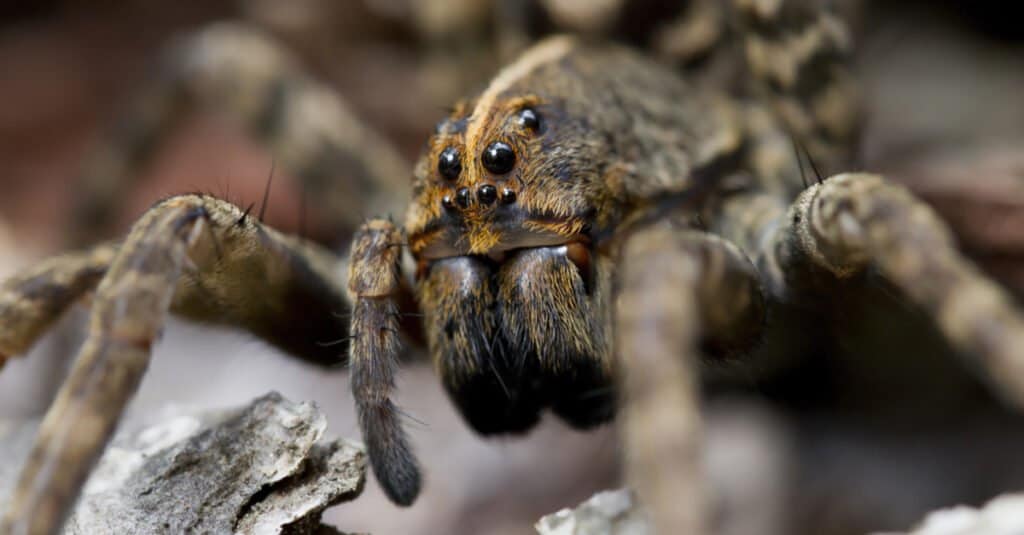
The wolf spider is one of the largest spiders in the U.S.
©Will E. Davis/Shutterstock.com
| Scientific Name | Legspan | Danger to Humans |
|---|---|---|
| Hogna carolinensis | 2-4 inches | The bite causes local pain and swelling. |
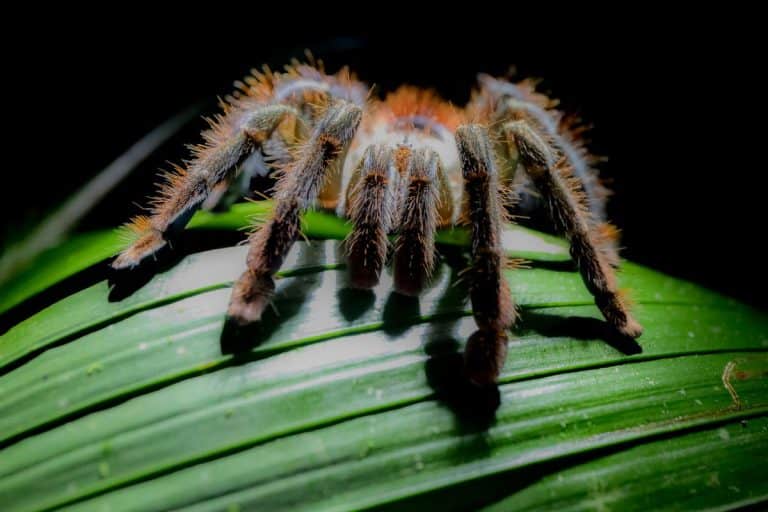
The Carolina wolf spider is the largest wolf spider in the U.S., with a legspan that can approach 4 inches. Its body can measure over an inch long, making it easy to see the mouthparts and large eyes.
Carolina wolf spiders are black, brown, and gray, making them difficult to spot in the woods and burrows in which they live. Wolf spiders often have light markings around the outside of their cephalothorax, along with a light stripe running down the middle of their bodies.
Carolina wolf spiders are not considered dangerous. Their bite may cause mild pain and swelling, but these symptoms should subside on their own without medical attention.
2. Dark Fishing Spider
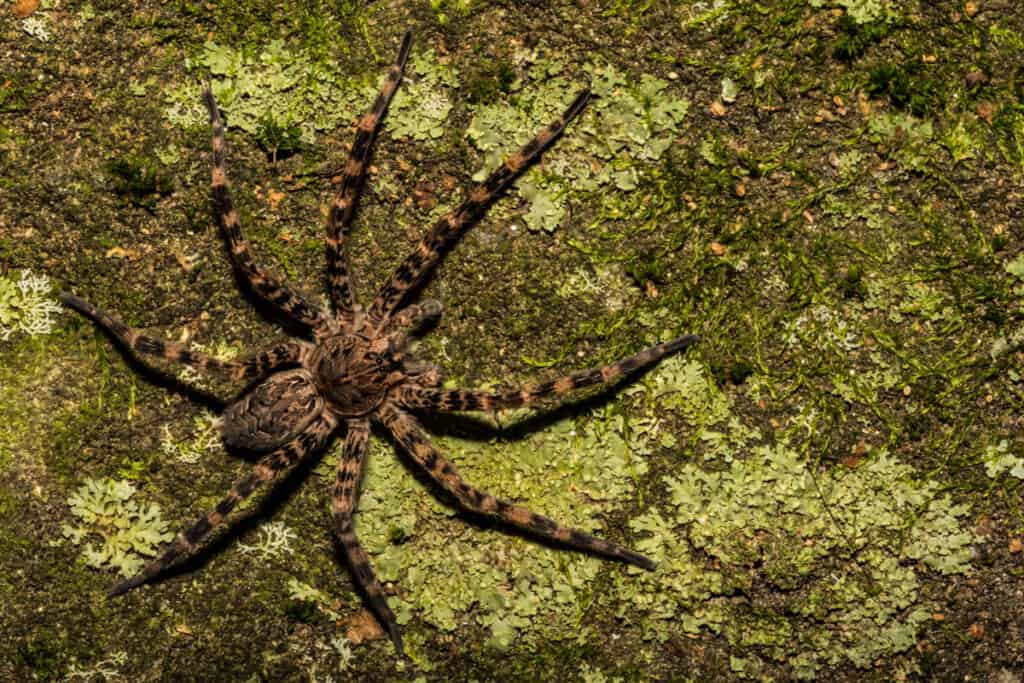
The dark fishing spider is not found near water as often as other members of its genus.
©iStock.com/JasonOndreicka
| Scientific Name | Legspan | Danger to Humans |
|---|---|---|
| Dolomedes tenebrosus | 3.5-4.5 inches | Causes a reaction similar to a bee sting. |
While dark fishing spiders can be found near water, they are more terrestrial than other fishing spiders and are commonly found in wooded areas. They can be found on trees, rocks, and other vegetation and will also stray into dry wooded areas, sometimes even entering homes, especially basements.
Dark fishing spiders are usually brown, tan, and black, with dark patterns on the body. Their legs have light and dark chevrons running down the upper part of their legs. This pattern transitions into color bands on the latter portions of the legs.
Despite reaching a size of 4.5 inches, the dark fishing spider is not dangerous to humans. The pain inflicted by a dark fishing spider’s bite is similar to a bee sting.
1. Huntsman Spider
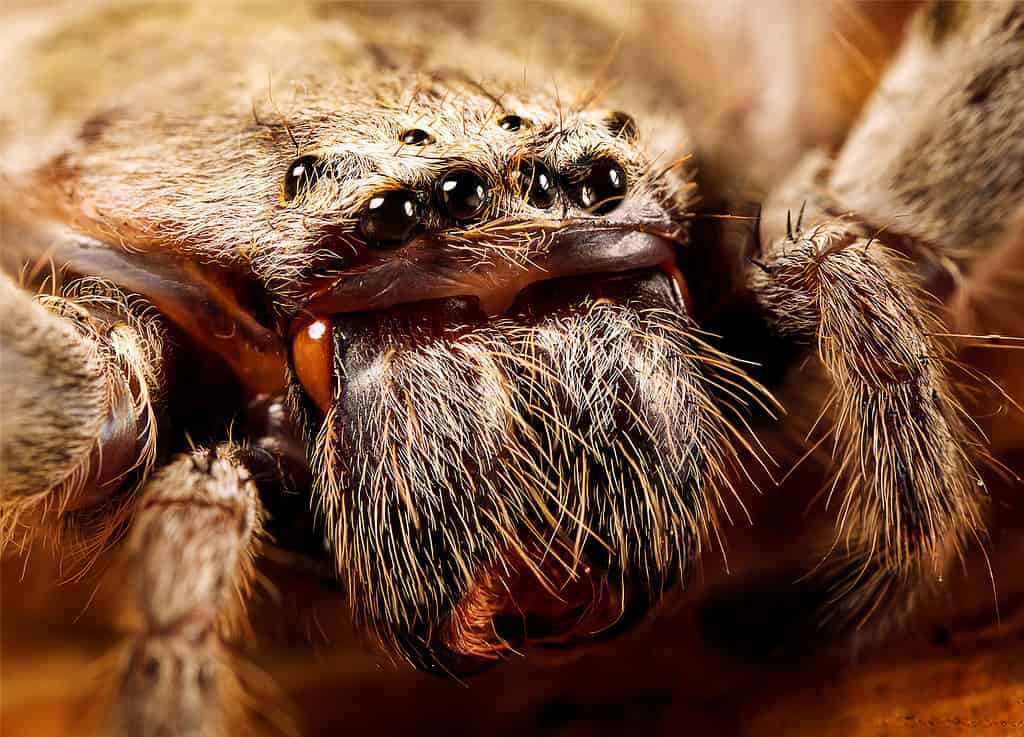
The huntsman spider is fearsome in looks and behavior.
©Paul Looyen/Shutterstock.com
| Scientific Name | Legspan | Danger to Humans |
|---|---|---|
| Heteropoda venatoria | 3-5 inches | Typically results in pain, redness, swelling at the site, and two visible fang marks. |
Call it the cane spider, the crab spider, or the huntsman spider, this spideris big no matter what it’s called. In fact, it’s arguably the biggest spider in Rhode Island.
Huntsman spiders are typically gray or brown, often with mottled patterns, and some have banded legs or underside markings. The outer portion of their cephalothorax is a light band with a dark middle, but these spiders also have a light area behind their eyes and a dark stripe on the abdomen.
A huntsman spider bite typically results in pain, redness, swelling at the site, and two visible fang marks. Usually not medically serious, the bite can cause localized pain that lasts for a while, and in rare cases, headaches or nausea may occur. However, huntsman spiders are not aggressive and will typically flee or try to hide rather than bite.