
New Mexico is often overlooked when it comes to states with amazing plants and animals. A desert state, much of its land is dominated by semi-arid and arid climates. However, of over 50,000 recorded spider species, 1,000 are found in New Mexico. These arachnids span an array of sizes, from the 0.07-inch Oecobius nevus to species with leg spans of several inches. New Mexico’s arachnid population contains beneficial and potentially dangerous species. Continue reading to learn about the five biggest spiders in New Mexico.
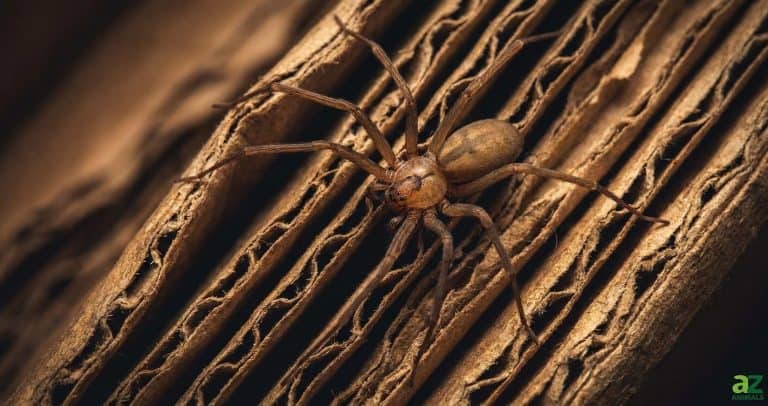
5. Hobo Spider
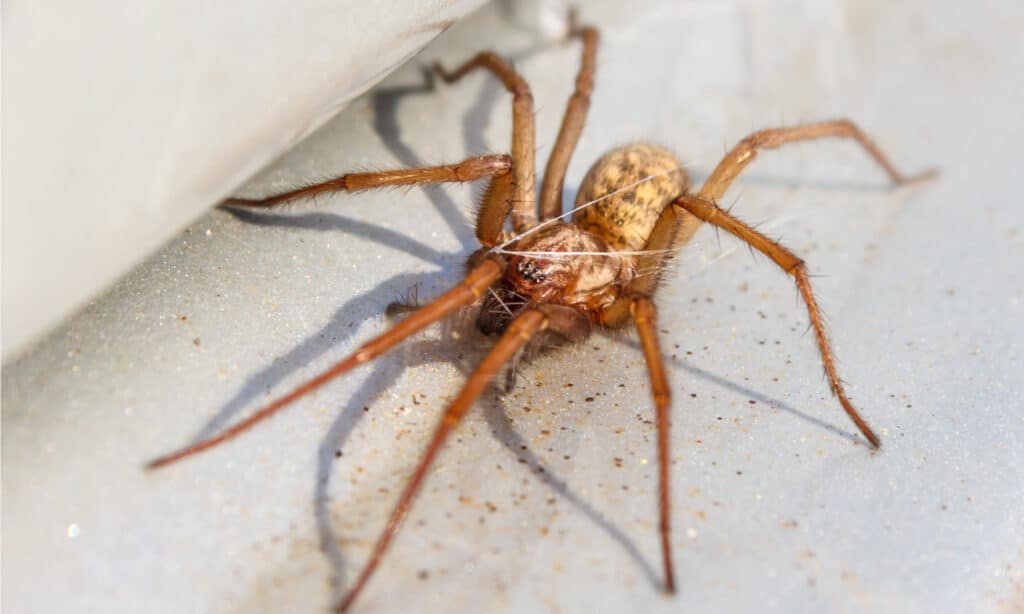
The hobo spider has a bad reputation that is apparently unearned.
©Andrew Balcombe/Shutterstock.com
| Scientific Name | Size | Danger to Humans |
|---|---|---|
| Eratigena agrestis | 1-2.5 inches | May cause mild pain, headache, nausea, and tiredness. |
The hobo spider is a funnel web builder that spins nets in fields. This species builds a funnel-shaped web and waits in the back for a disturbance. When it detects the presence of an insect, the hobo spider darts toward the opening to bite the trapped insect, injecting it with venom to immobilize it. After subduing its prey, the hobo spider drags it into its web’s retreat for consumption.
Hobo spiders are usually black, brown, and tan. Often, the abdomen is darker than the cephalothorax and features a light stripe that runs down it. This species is often spotted both indoors and outdoors, especially near man-made structures.
Despite past fears and mischaracterizations, current evidence suggests the hobo spider’s venom is not dangerous to humans. Bites typically cause a small, temporary, non-necrotic skin reaction, with redness and swelling being the most consistent symptoms.
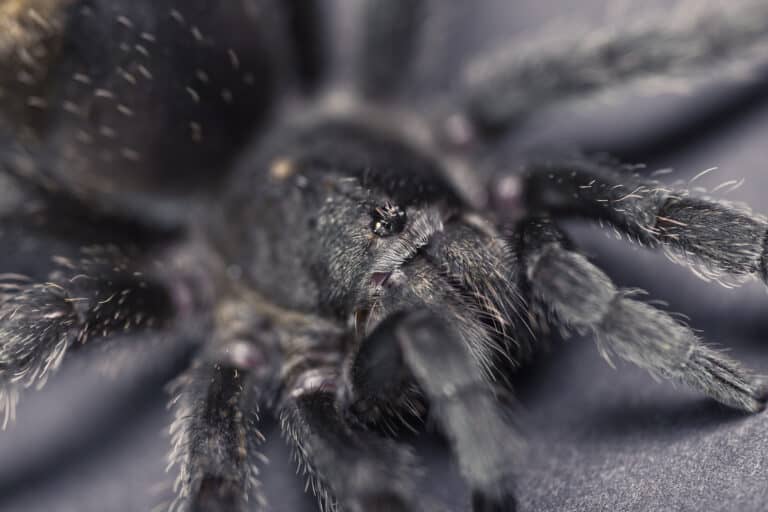
4. Carolina Wolf Spider
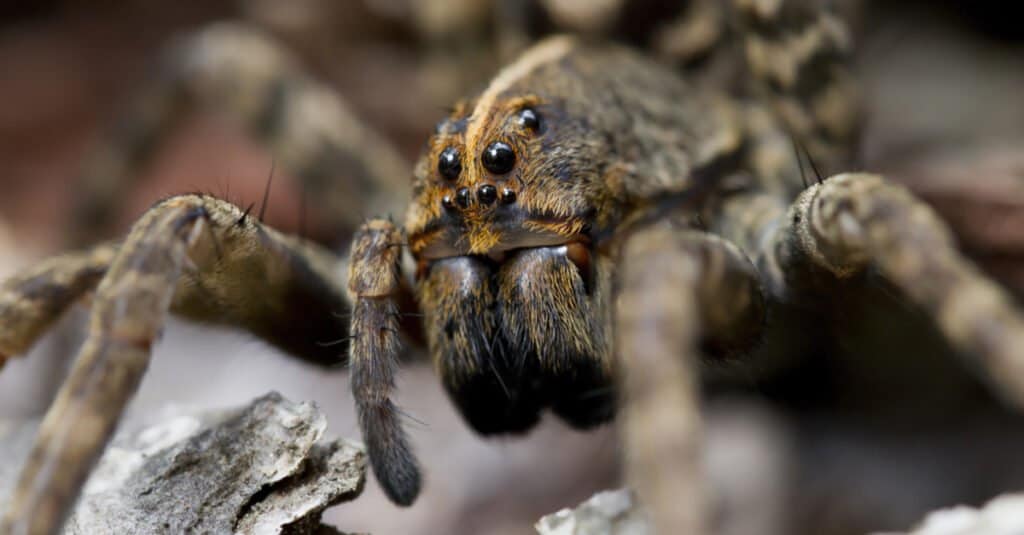
This wolf spider can reach nearly 4 inches long with its legs extended.
©Will E. Davis/Shutterstock.com
| Scientific Name | Size | Danger to Humans |
|---|---|---|
| Hogna carolinensis | 2-4 inches | The bite causes local pain and swelling. |
The Carolina wolf spider is a large spider with a 4-inch leg span. Wolf spiders are sometimes mistaken for tarantulas because of their bulbous abdomens and hair. Like tarantulas, wolf spiders carry their young on their backs, making their abdomens appear abnormally large.
These spiders vary in color, but they are usually dark gray and black. However, they may also be white and tan. Light-colored Carolina wolf spiders may have a black mark on their cephalothorax and a darker abdomen with a light color running down the middle.
Not especially aggressive, wolf spiders may bite if they’re startled. Their bites cause mild pain and swelling, but the effects subside quickly.
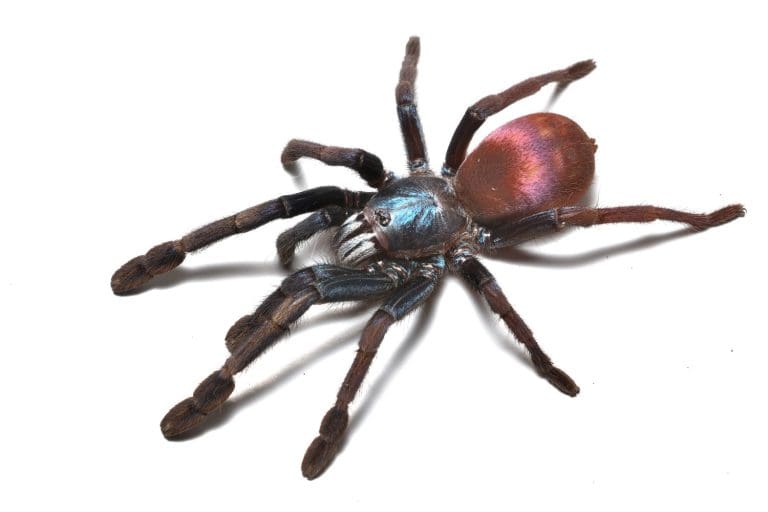
3. Tucson Bronze Tarantula
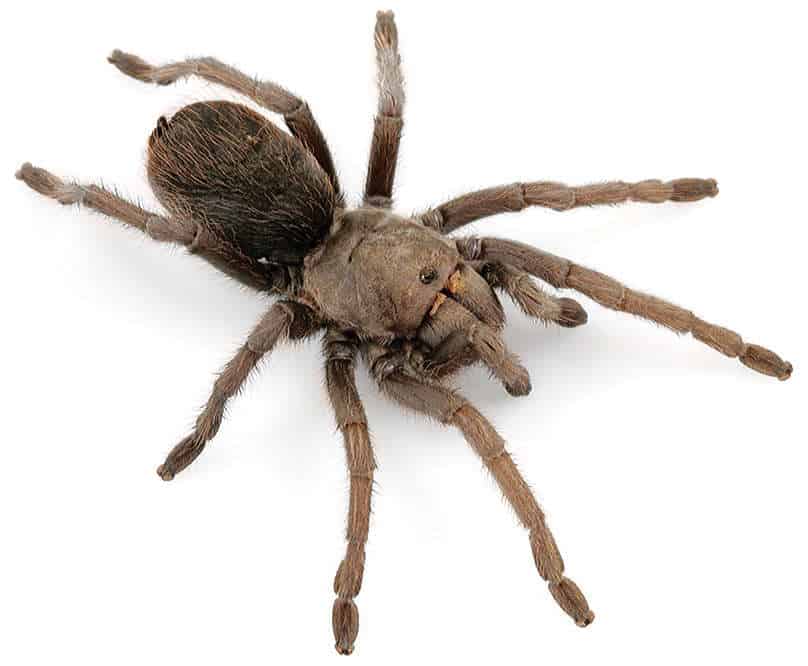
Female Tucson bronze tarantulas can live up to 15 years.
©Chris A. Hamilton, Brent E. Hendrixson, and Jason E. Bond / CC BY 4.0 – Original / License
| Scientific Name | Size | Danger to Humans |
|---|---|---|
| Aphonopelma vorhiesi | 3-5 inches | A bite may cause pain at the site, but not very harmful. |
Found in the arid and semi-arid regions of Southern Arizona, Southern New Mexico, and Northwestern Mexico, the Tucson bronze tarantula can have a leg span of 5 inches. They are burrowers that stay hidden throughout most of their lives, especially during the day.
As their name suggests, these tarantulas have bronze hairs jutting out from their abdomen, but they are mostly black or tan on the rest of their bodies. They are not easy to spot, especially at night.
Tucson bronze tarantulas eat large insects such as crickets, grasshoppers, and beetles. They will also consume small invertebrates, including other spiders, as well as small vertebrates like lizards, toads, and mice.
The bite of the Tucson bronze taranatula is painful but not harmful.
2. Giant Crab Spider
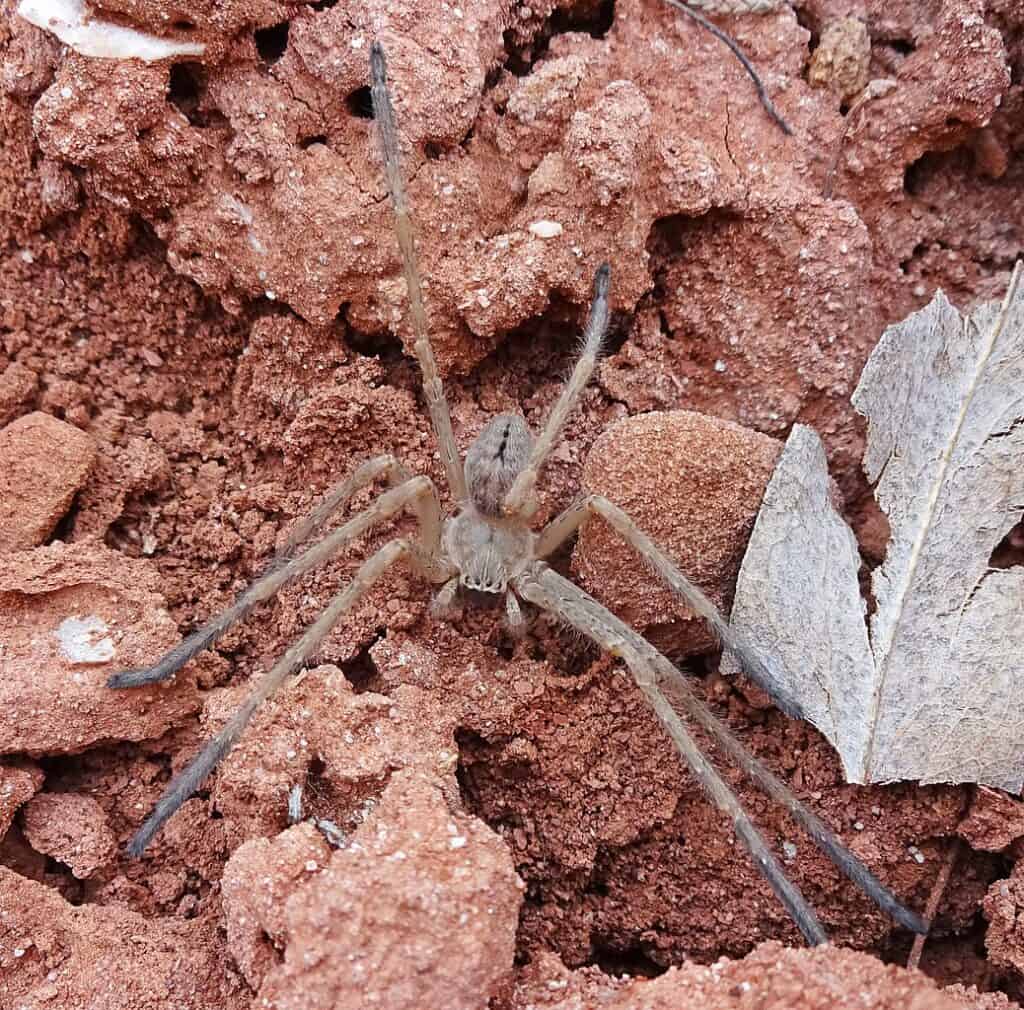
The giant crab spider is known for its long legs.
| Scientific Name | Size | Danger to Humans |
|---|---|---|
| Olios giganteus | 3-4 inches, perhaps up to 6 inches | Delivers a painful bite, but it doesn’t do lasting harm. |
The giant crab spider, also called a huntsman spider, measures between 3 and 4 inches, though many sources report that this species can have leg spans of up to 5 inches.
These desert spiders blend into their surroundings. They are mostly tan with dark brown and black, especially on the legs. Their abdomen and cephalothorax are tan, often featuring a black line running down the middle.
A bite from one of these large, fast-moving, non-aggressive spiders, while not deadly, can be painful, causing localized swelling and redness.
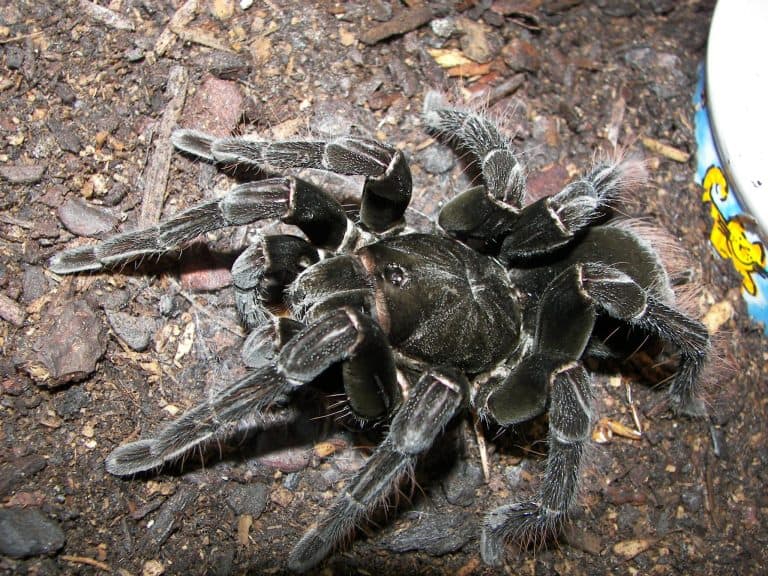
1. Chiricahuan Grey Tarantula
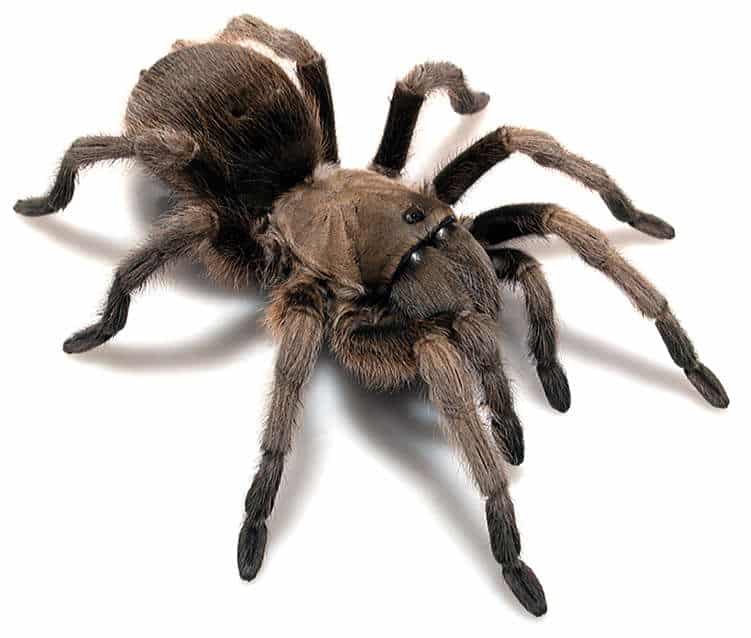
The Chiricahuan grey tarantula can measure up to six inches long.
©Chris A. Hamilton, Brent E. Hendrixson, and Jason E. Bond / CC BY 4.0 – Original / License
| Scientific Name | Size | Danger to Humans |
|---|---|---|
| Aphonopelma chiricahua | 4-6 inches | May cause pain and swelling, but not that harmful to humans. |
The Chiricahuan grey tarantula is either the largest spider in New Mexico or tied for that record. This species can get very large, measuring up to 6 inches.
As its name suggests, the spider is grey. This hairy spider has a black body, grey hair on most of its legs and cephalothorax, and reddish-orange hairs on its abdomen.
Although this spider is imposing, it’s not dangerous to humans. Its bite will cause swelling and pain, but it doesn’t inflict lasting harm. Chances are good that you won’t see this spider. It often burrows during the day and hunts at night.