

S
Species Profile

Standard Schnauzer

Canis lupus familiaris

Bearded German all-rounder
iStock.com/Voltgroup

Standard Schnauzer Distribution

Click a location to explore more animals from that region

Origin Location

This map shows the native origin of the Standard Schnauzer. As a domesticated species, they are now found worldwide.

Loading map...

Found in 1 country

Size Comparison

Human 5'8"
Standard Schnauzer 1 ft 7 in

Standard Schnauzer stands at 28% of average human height.

Standard Schnauzer

At a Glance

Domesticated
Also Known As Schnauzer, Mittelschnauzer, Medium Schnauzer, Wire‑haired Pinscher, Wire‑haired Schnauzer
Diet Omnivore
Activity Diurnal+
Lifespan 5 years
Weight 20 lbs
Status Not Evaluated
Did You Know?

The Standard Schnauzer is the "original" schnauzer size; Miniature and Giant Schnauzers were developed later from related stock.

Scientific Classification

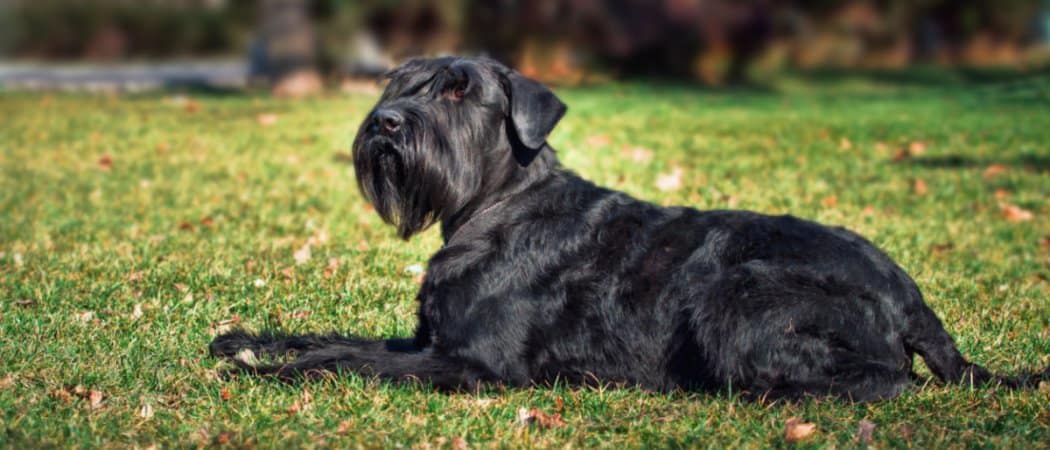
The Standard Schnauzer is a medium-sized domestic dog breed originating in Germany, known for its wiry coat, characteristic beard and eyebrows, and versatility as a companion and working dog.

Kingdom
Animalia
Phylum
Chordata
Class
Mammalia
Order
Carnivora
Family
Canidae
Genus
Canis
Species
Canis lupus

Distinguishing Features

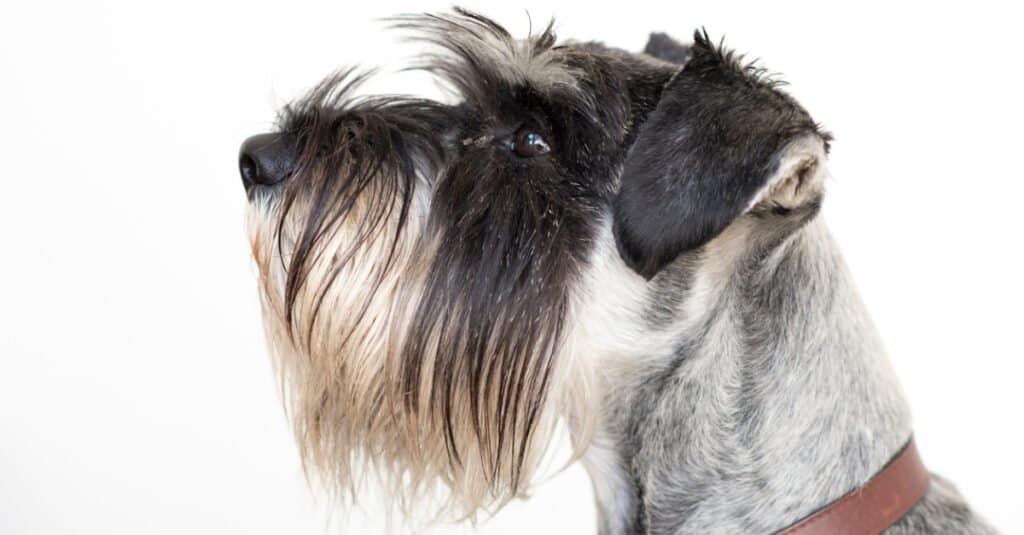
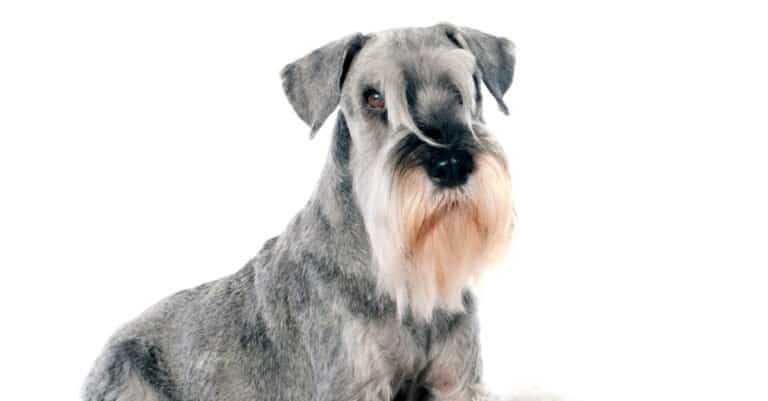
  • Medium-sized, square-built dog with wiry (hard) coat
  • Distinctive facial furnishings: beard and prominent eyebrows
  • Traditionally shown in salt-and-pepper or solid black coats
  • Often has a strong, alert terrier-like expression and carriage

Physical Measurements

Males and females differ in size

Height
♂ 1 ft 7 in (1 ft 7 in – 1 ft 8 in)
♀ 1 ft 6 in (1 ft 5 in – 1 ft 7 in)
Length
♂ 2 ft 4 in (2 ft 2 in – 2 ft 7 in)
♀ 2 ft 4 in (2 ft 1 in – 2 ft 7 in)
Weight
♂ 40 lbs (35 lbs – 44 lbs)
♀ 35 lbs (31 lbs – 40 lbs)
Tail Length
♂ 7 in (6 in – 8 in)
♀ 7 in (6 in – 9 in)
Top Speed
25 mph
running

Appearance

Primary Colors
Secondary Colors
Skin Type Domestic dog skin with moderate pigmentation; typically taut under a harsh double coat, can be irritation-prone if clipped too short or over-bathed.
Distinctive Features
  • Domestic dog breed (Standard Schnauzer), medium-sized and square-built; distinct from Miniature/Giant primarily by size.
  • Harsh, wiry outer coat with dense undercoat; low-shedding but high-grooming-maintenance texture.
  • Characteristic facial furnishings: pronounced beard, mustache, and strong arched eyebrows.
  • Head is rectangular with strong muzzle; expressive eyebrows accentuate a keen look.
  • Common show trims emphasize leg furnishings and beard; pet trims often shorter but still wiry.
  • Tail often carried upright; docking/cropping may be seen where legal (not universal).
  • Bred in Germany as a versatile working/companion dog (ratting, guarding, general farm work).
  • Care: regular brushing and combing (especially beard/legs), routine ear/teeth cleaning; professional grooming every ~6-10 weeks; hand-stripping preserves harsh texture and color better than clipping.
  • Exercise needs: athletic, requires daily brisk walks and mental work (training, scent games).
  • Health considerations seen in the breed: hip dysplasia; eye disease (e.g., cataracts/PRA); hypothyroidism; skin follicular issues such as comedo syndrome (notably in some black dogs).

Sexual Dimorphism

Males are typically slightly taller and heavier with broader head and chest. Females tend to be a bit lighter-boned with a more refined outline, while coat type and signature furnishings remain similar in both sexes.

♂
  • Slightly larger overall size and weight within breed range.
  • Broader skull, heavier muzzle, and more pronounced forechest.
  • Often thicker neck and more muscular build.
♀
  • Slightly smaller, more streamlined frame within breed range.
  • Finer head and lighter bone structure.
  • Often a more tucked-up, refined silhouette while still square-proportioned.

Did You Know?

The Standard Schnauzer is the "original" schnauzer size; Miniature and Giant Schnauzers were developed later from related stock.

The breed name is derived from a German word meaning "snout" or "muzzle," referencing the distinctive bearded face.

Traditional colors are salt-and-pepper and solid black; the coat texture is characteristically harsh and wiry.

Historically, they worked as stable dogs, ratters, and guard dogs around farms and market towns in Germany.

Their iconic eyebrows and beard aren't just style-facial furnishings help shield the face when working in brush or confronting vermin.

They're part of the working-dog tradition that also produced several German utility breeds; versatility was selected over extreme specialization.

When properly hand-stripped, the coat can shed less than many breeds, but it requires regular grooming to maintain texture and skin health.

Unique Adaptations

  • Wiry double coat (breed-selected): the harsh outer coat helps resist dirt and minor abrasions; the undercoat provides insulation-useful for an all-weather farm/stable dog.
  • Protective facial furnishings: beard and eyebrows can reduce debris to the eyes and muzzle during brush work and confrontations with vermin.
  • Athletic, medium build: compared with the base species (gray wolf) and with other schnauzer sizes, the Standard is sized for agility and endurance in close human environments (stables, yards) rather than long-distance wild hunting.
  • Trainability plus suspicion of strangers: a human-directed working temperament-biddable with family yet naturally vigilant-reflects selection for utility and property awareness.
  • Efficient trotting gait: like many dogs, they can cover ground with an economical trot; in Standards this supports sustained activity (patrol, errands) around farms or towns.

Interesting Behaviors

  • Alert "watchdog" scanning: Standards often position themselves to monitor doors/windows and track new sounds, reflecting their guardian-stable role.
  • Mouthy play and "grabbing" toys: many enjoy carrying objects and can be enthusiastic tuggers; early training channels this into appropriate games.
  • Dig-and-investigate tendencies: some will dig or nose into corners-an echo of ratter instincts-so providing legal digging outlets can help.
  • High engagement with people: they commonly prefer working "with" their handler (training, scent games) rather than free-running alone.
  • Expressive "eyebrow" signaling: the pronounced brows accentuate head tilts and facial expressions, which owners often interpret as strong communicative intent.
  • Terrier-like persistence: once focused on a task (finding a scent, barking at a disturbance), they may need structured cues to disengage.

Cultural Significance

The Standard Schnauzer (Canis lupus familiaris) was developed in Germany as a working 'stable dog' that guarded property, hunted vermin, and lived with people. Its bearded, salt-and-pepper look is the classic medium German utility dog, separate from Miniature and Giant relatives.

Myths & Legends

In German-speaking areas, the bearded stable dog (Standard Schnauzer) was linked to stories of a hardworking home protector; tales say it watched the yard gate at night and chased rats from the barn by day.

The name is tied to folk naming traditions: it is often explained as coming from a German word meaning "snout" or "muzzle," linked to the breed's bearded, whiskered face in local lore.

In 19th-century southern Germany, stories say the Standard Schnauzer rose in market towns as a versatile dog guarding carts, traveling with merchants, and a steady stable companion — a 'one dog for every job' legend.

In European dog folklore (and for Canis lupus familiaris), watchful household dogs are seen as guards at doorways and stables, warning families of danger; the Standard Schnauzer fits this old watchdog role.

Conservation Status

NE Not Evaluated

Has not yet been evaluated against the criteria.

Population Stable

Life Cycle

Birth 6 pups
Lifespan 5 years

Lifespan

In the Wild
2–12 years
In Captivity
12–15 years

Reproduction

Mating System Polygynandry
Social Structure Managed Domestic
Breeding Pattern Serial
Fertilization Managed Selective
Birth Type Internal_fertilization

Like other domestic dogs, Standard Schnauzers breed via human-managed pairings rather than stable wild-type bonds; individuals may mate with multiple partners across seasons. Breeders typically select studs/dams based on temperament, working traits, and health screening (e.g., hip and eye concerns).

Behavior & Ecology

Social Pack Group: 3
Activity Diurnal, Crepuscular, Cathemeral
Diet Omnivore Animal-protein-rich foods (e.g., meat-based meals/treats such as beef, chicken, or fish), often used as high-value rewards in training.

Temperament

Breed vs. base species: selectively bred for human-directed work; less reliant on wild pack hunting behaviors
Alert, watchful, and territorially inclined; strong watchdog tendency with quick reactivity to novel stimuli
Highly intelligent and problem-solving; benefits from consistent rules and varied training to prevent boredom
Confident, spirited, and persistent; may be stubborn without clear reinforcement and boundaries
Usually affectionate with family; can be reserved with strangers, requiring early socialization for stability
Dog-to-dog: can be assertive, especially same-sex; best outcomes with controlled introductions and management
Prey/rodent interest is common; supervise around small pets and reinforce recall and impulse control
Care: needs daily mental enrichment plus brisk exercise; excels at obedience, scent work, agility, tracking
Care: wiry coat needs regular brushing and hand-stripping or clipping; beard/eyebrows need cleaning
Health concerns seen in the breed: hip dysplasia, eye disorders (e.g., cataracts/PRA), hypothyroidism, skin/allergy issues

Communication

Sharp alert bark for strangers or environmental changes
Sustained barking when frustrated, under-stimulated, or guarding territory
Low growl or grumble during boundary-setting with dogs or people
Whines or short yips for attention, anticipation, or separation stress
Intense staring and forward-leaning posture to assess threats; escalates if not redirected
Scent marking and investigative sniffing; common in intact males and confident individuals
High tail carriage, hackles, and body blocking to control space near family members
Pawing, nudging, and bringing objects to solicit play/training; thrives on interactive engagement
Ear set, eyebrow movement, and beard-directed facial expressions provide clear social signals to handlers

Habitat

Biomes:
Temperate Forest Temperate Grassland Boreal Forest (Taiga) Tundra Alpine Mediterranean Desert Hot Desert Cold Wetland +3
Terrain:
Plains Hilly Mountainous Coastal Island
Elevation: Up to 16404 ft 3 in

Ecological Role

Domestic omnivorous mesopredator/scavenger associated with human settlements; in the Standard Schnauzer, historically emphasized as a farm guardian and ratting/vermint-control working dog rather than a wild-canid hunter.

Vermin (rodent) population suppression in human environments Deterrence of some nuisance wildlife via territorial barking/presence Nutrient cycling at household scale through consumption of human-provided food and scraps (though deliberate scavenging should be managed) Support of human well-being as a companion/working animal (indirect social ecosystem service)

Diet Details

Main Prey:
Small rodents Rabbits and hares Birds and eggs Insects and other invertebrates Carrion and animal scraps
Other Foods:
Starchy plant foods Vegetables Fruits Edible plant matter

Human Interaction

Domestication Status

Domesticated

The Standard Schnauzer (Canis lupus familiaris) was developed in Germany (Bavaria/Württemberg) as a farm dog for ratting, guarding, and helping merchants. Compared to the gray wolf (Canis lupus), it was bred to be calm around people, focused on its handler, medium-sized, watchful, with a strong vermin drive and harsh wiry coat. It is the base for Miniature and Giant Schnauzers.

Danger Level

Low
  • Defensive barking and potential nipping/biting if under-socialized, mishandled, or threatened
  • Higher risk with poor training around children due to energetic, mouthy play and strong boundaries
  • Prey drive may cause chasing behavior (risk of knocks/falls) and conflict with small pets
  • Guarding/territorial tendencies can lead to reactive behavior toward strangers or other dogs without proper socialization

As a Pet

Suitable as Pet

Legality: Standard Schnauzer (Canis lupus familiaris) is generally legal as a pet where dogs are allowed, but owners must follow local rules: licensing, leash laws, rabies vaccination, and breeding rules. Rarely targeted by breed-specific bans.

Care Level: Moderate

Purchase Cost: $800 - $2,500
Lifetime Cost: $18,000 - $45,000

Economic Value

Uses:
Companion animal Working/service roles Sport/competition Breeding and showing Pet services market
Products:
  • family companionship and home deterrence/alerting
  • performance venues (obedience, agility, rally, tracking, scent work, barn hunt/ratting-style sports)
  • working roles (watchdog, general farm utility historically; modern role adaptation varies)
  • show-ring participation (grooming-intensive presentation)
  • economic activity for grooming (hand-stripping/clipping), training, veterinary care, boarding, and supplies

Relationships

Ecological Equivalents 5

Animals that fill a similar ecological role in their ecosystem

German Pinscher
German Pinscher Canis lupus familiaris Shares a similar origin region (Germany) and a historical farm-yard role as a watchdog and vermin controller. Compared to many pinschers, Standard Schnauzers are typically more wiry-coated and require routine coat maintenance (hand-stripping or clipping) to manage the harsh outer coat and characteristic beard and eyebrows.
Airedale Terrier
Airedale Terrier Canis lupus familiaris Comparable medium-to-large, versatile working/companion niche: alert watchdog and active family dog. Both tend to be energetic and benefit from structured exercise and training. Standard Schnauzers often have a strong guarding instinct and can be more reserved with strangers without early socialization.
Border Terrier
Border Terrier Canis lupus familiaris Shares a vermin-hunting background and a 'robust, game' temperament. Standard Schnauzers occupy a similar ratting/farm-dog niche but at a larger size with a greater watchdog presence; both benefit from secure fencing due to prey drive.
Miniature Schnauzer Canis lupus familiaris Closest functional analogue: schnauzer-type ratters. Standard Schnauzers are the medium, original schnauzer size — generally more physically capable for all-purpose work; both share grooming needs, but the Standard's coat often requires more deliberate maintenance to maintain its harsh texture.
Rat Terrier
Rat Terrier Canis lupus familiaris Convergent niche as a dedicated vermin-control dog. Standard Schnauzers often combine vermin drive with stronger territorial/watch traits. In terms of care, Standards commonly require regular mental stimulation (training games, scent work) and coat/beard maintenance to remove food and water debris and prevent skin irritation.

The Standard Schnauzer is an intelligent, incredibly loyal dog. The history of this dog goes back to the 15th-century Germany. At that time, it was known as a wire-haired pinscher. Many German farmers kept pinschers to drive out mice, rats, and other pests on the property. In 1879, the name ‘wire-haired pinscher’ was dropped in favor of ‘Standard Schnauzer.’ In short, this dog became an official breed, as opposed to simply having a name referring to its coat’s appearance. It belongs to the working group.

This dog is popular due to its combination of favorable qualities. It’s playful, friendly, smart, easy to train, and gets along well with other pets.

3 Pros And Cons Of Owning A Standard Schnauzer

Pros!Cons!
Easily trainable: These dogs are alert and ready to learn obedience lessons to please their owner.Grooming attention required: Though this dog has minimal shedding, it should be groomed daily.
Low shedding: Their double coat experiences minimal shedding.Wary of unfamiliar people: This dog is very loyal, which means it is sometimes wary of unfamiliar people.
Good with young children: These dogs are playful and tolerant of children.Potential barking issue: If this dog is not properly socialized, it may bark a lot.
Profile of Standard Schnauzer

This breed has minimal shedding.

Size And Weight

Standard Schnauzers are dogs of medium size with a double coat of wiry hair. A male can be 19.5 inches tall at the shoulder, while a female can be 18.5 inches in height. Males can be as heavy as 50 pounds, whereas females can be 45 pounds, full-grown. At eight weeks old, puppies weigh nine to ten pounds. They’re full-grown at one year old.

Standard Schnauzer Vs Miniature Schnauzer

A Standard Schnauzer and a Miniature Schnauzer have some similarities as well as several differences. One similarity is that they both need at least an hour of exercise each day to keep healthy. In terms of grooming, they both need to be brushed daily. Both the Standard and the Miniature Schnauzer are intelligent dogs with loyal temperaments. The history of both started in Germany.

The main difference between these two dogs relates to their size. A Miniature Schnauzer weighs less and is shorter than a Standard Schnauzer. Also, a Miniature Schnauzer has a somewhat shorter lifespan. Its lifespan is 12-15 years, whereas a Standard Schnauzer’s lifespan is 13-16 years. A Miniature Schnauzer doesn’t have the strong hunting instinct of Standard Schnauzers. Miniature Schnauzers are less inclined to go outside in search of rodents to chase. A Standard Schnauzer likes all family members equally. Alternatively, Miniature Schnauzers have a tendency to choose one family member to follow around.

Common Health Issues
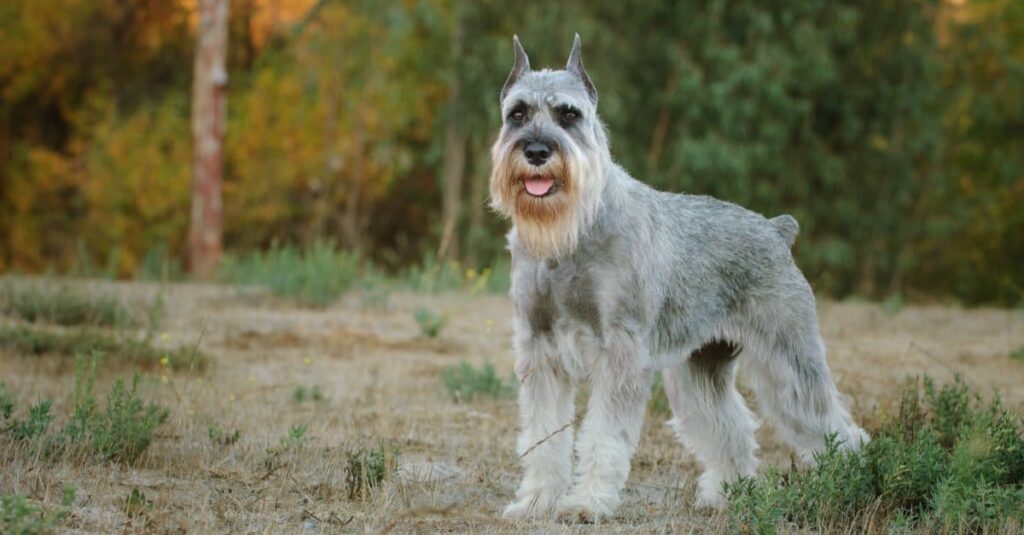
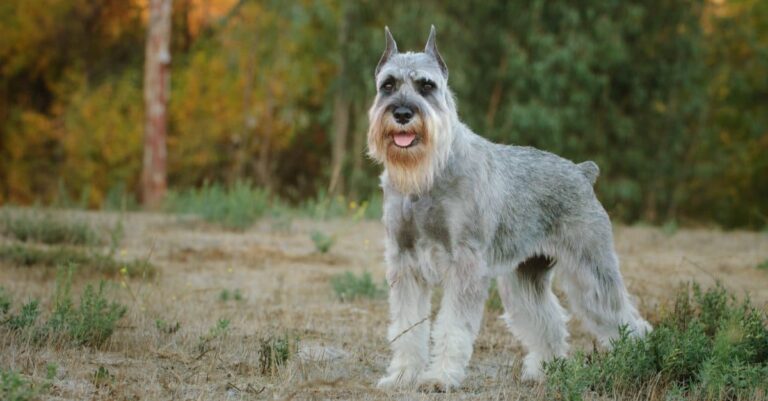
silver standard schnauzer standing in front of woods

The Standard Schnauzer, originally called the Wire-Haired Pinscher, may develop hip dysplasia.

The Standard Schnauzer has a few common health issues to think about. Hip dysplasia is a health issue many Standard Schnauzers deal with. Due to a malfunctioning hip joint, a Schnauzer may limp, hop, or avoid going up a set of stairs. Some dogs with hip dysplasia get better with the help of physical therapy, while others need surgery. Cataracts are also a common health issue in Standard Schnauzers. A cataract takes the form of cloudiness over one or both of a dog’s eyes. They can eventually cause blindness. Fortunately, surgery is an effective way to treat them.

Bladder stones are another health issue for this breed. Older dogs are especially prone to this condition. The stones are made of calcium or struvite and form inside a dog’s bladder. Generally, these stones appear as a result of an infection. A Standard Schnauzer with bladder stones may have trouble urinating. A reliable veterinarian can diagnose the issue by taking an X-ray of the dog’s bladder. Sometimes the stones can be flushed out, while in other cases, surgery is necessary to remove them. A special diet can sometimes prevent this condition.

Common health issues for Standard Schnauzers are:

  • Hip dysplasia
  • Cataracts
  • Bladder stones

Temperament And Behavior
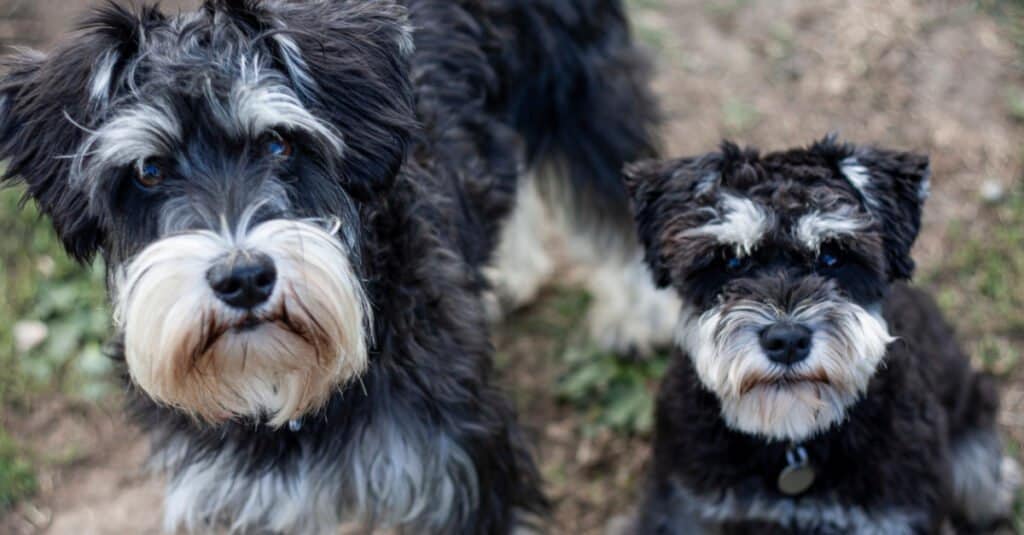
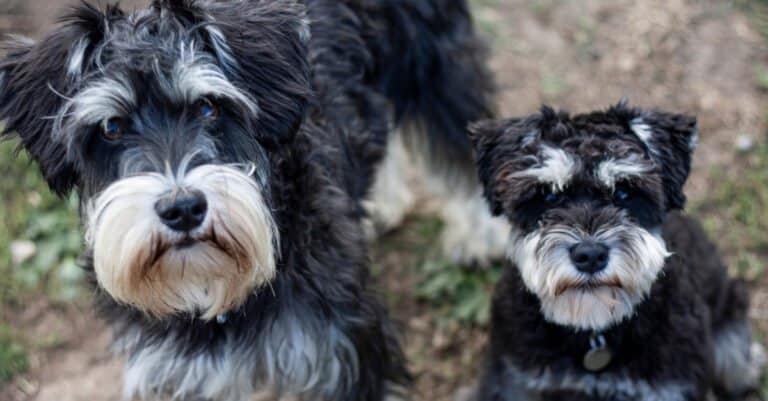
Standard Schnauzer Duo

Standard Schnauzers are very loyal and can be suspicious of unfamiliar guests.

A Standard Schnauzer has laser focus when searching for a mouse or other rodent in the yard. This same dog can exhibit a playful, affectionate personality while running, jumping, and chasing the kids in a household. In short, whether working or playing, a Standard Schnauzer puts its whole heart into the activity.

One of the most significant traits of this breed is loyalty. In fact, it is so loyal to its family, this dog can be very suspicious of unfamiliar guests. But a Standard Schnauzer’s behavior usually changes as it gradually warms up to the person. These dogs have inquisitive eyes that always seem to be taking in their surroundings.

How To Take Care Of Standard Schnauzers

Learning about the dietary, health, exercise, and grooming needs of a Standard Schnauzer can help an owner to care for it throughout their entire life. Whether someone is looking for a Standard Schnauzer puppy from reputable breeders or wants to go to a rescue organization in search of an adult dog, knowing as much as possible is always an advantage.

The Best Dog Food For Standard Schnauzers
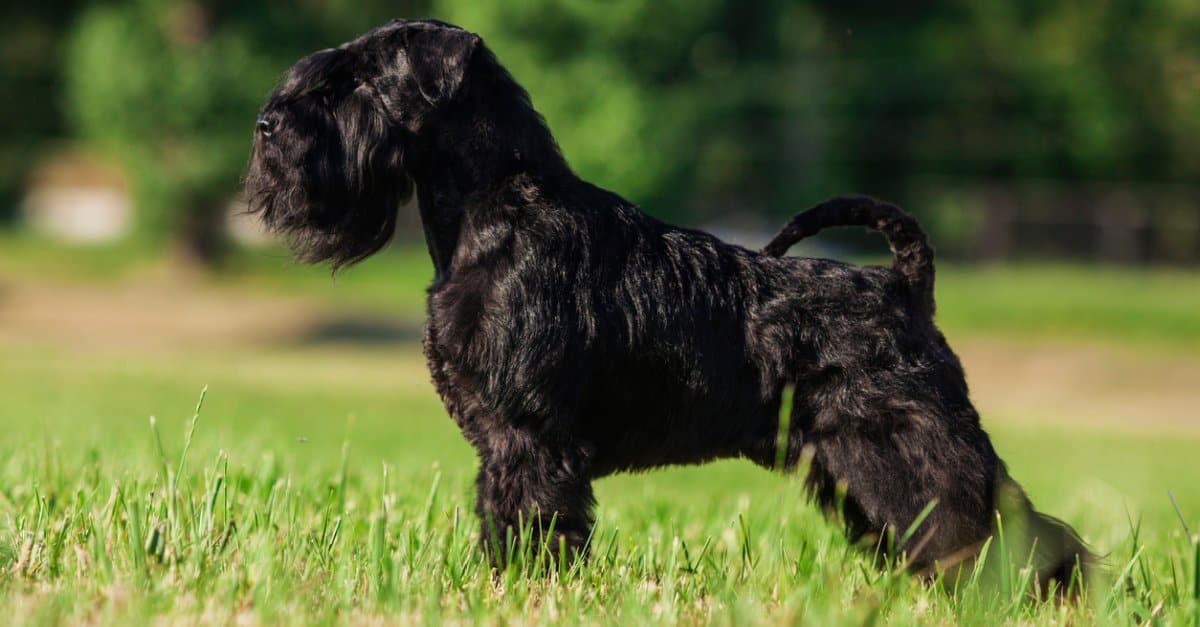
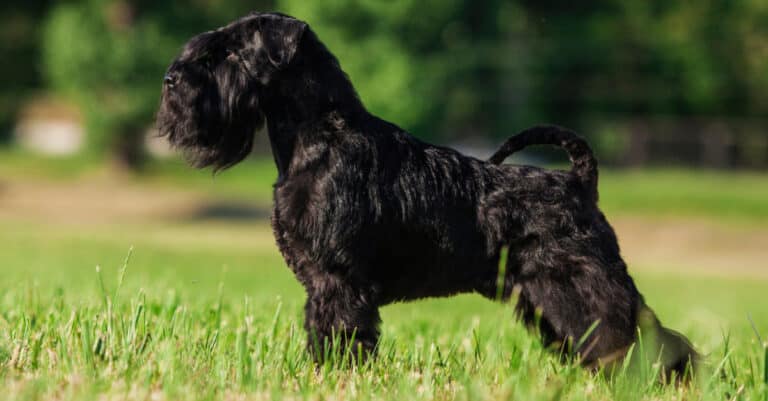
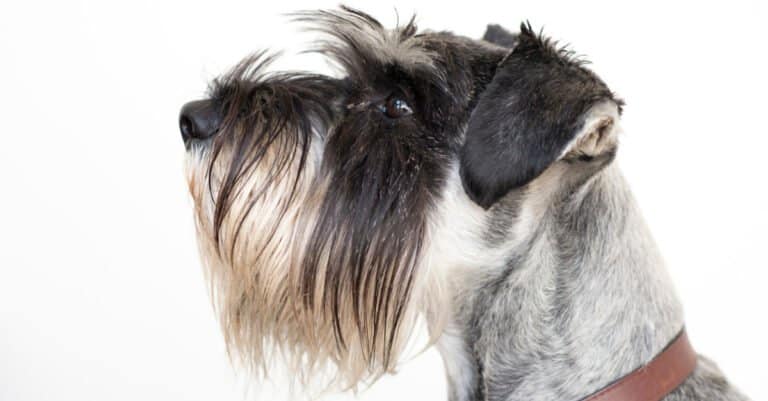
Side View of Standard Schnauzer

Lean protein is essential and helps to maintain this breed’s shiny coat.

Standard Schnauzer puppies and adult dogs have different nutritional needs. It’s a good idea for an owner to take a close look at the nutrients needed to keep puppies and adult dogs healthy.

Standard Schnauzer puppy food: Protein in the form of lamb, chicken, or salmon helps build powerful muscles and healthy tissue in this lively puppy. Fat supplies a puppy with the nourishment it requires to explore its environment. Calcium lends to the development of bones, teeth, and nails. Vitamin C and E build up a puppy’s immune system so it can fight off illness. Fiber, along with plenty of clean water, is important for a puppy’s digestive system. Omega-3 fatty acids have a direct effect on the development of a puppy’s brain and vision.

Standard Schnauzer adult dog food: Lean protein is vital for the health of a growing dog’s muscles and helps to maintain a shiny coat. Fat is essential in an adult dog’s diet, but in smaller amounts as compared to a puppy’s. Vitamin A contributes to healthy eyes and strong vision, which is especially beneficial for a breed that suffers from cataracts. Vitamin C is an antioxidant that can decrease inflammation.

Maintenance And Grooming
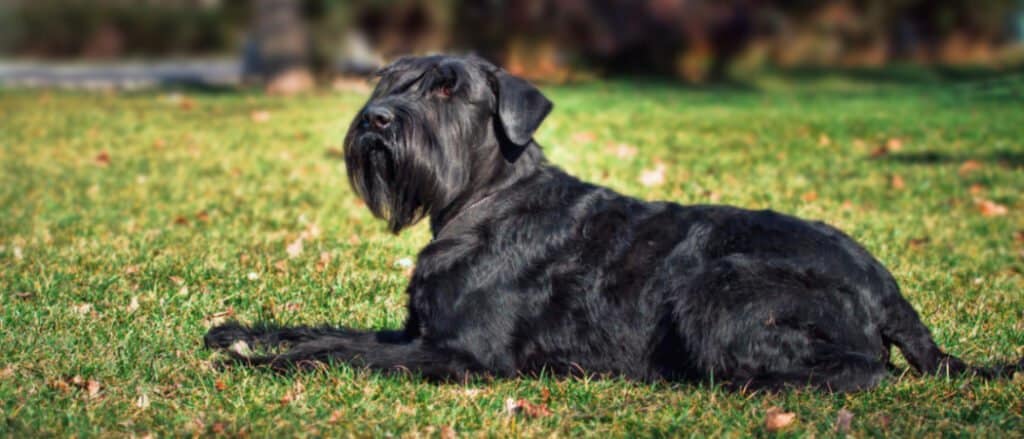
Standard Schnauzer

Standard Schnauzer is prone to a skin condition that can appear as black, wart-like bumps.

How much does a Standard Schnauzer shed? This dog experiences minimal shedding. That’s why it’s especially popular in households with family members who suffer from allergies.

Standard Schnauzers have a double coat of hair that needs to be brushed once per day. A slicker brush can get rid of tangles stuck in this dog’s wiry coat. Start at the dog’s head and brush with the flow of its hair. When you find a tangle, use your fingers to gently separate it into small sections and work through each one using the slicker brush.

Taking a Standard Schnauzer to a professional groomer twice a year (or more) can keep its coat in excellent condition. A groomer can hand-strip the dog’s coat to remove dead hair and enhance their salt and pepper coloration.

This breed is prone to a skin condition called Schnauzer Comedo Syndrome. This condition appears as black, wart-like bumps. These harmless bumps may appear and disappear throughout the dog’s life.

Training

The intelligence of this dog makes it relatively easy to obedience train. They’re alert and eager to have a task to tackle!

Exercise

Standard Schnauzers are energetic dogs that need exercise to maintain their physical, mental, and emotional health. They need at least 60 minutes of running exercise each day. A jog in a nearby woods or field, a game of chase in the backyard, or some time spent at the dog park are all good possibilities. As a note, this breed or a mix that includes this breed is likely to become destructive if not given exercise each day.

This dog is not a favorable choice for someone who lives in an apartment. They need a large backyard where they can stretch their legs and find something fun to do.

Puppies

Socializing Standard Schnauzer puppies is important. Doing this early on can prevent this breed or a mix of this breed from barking too much.
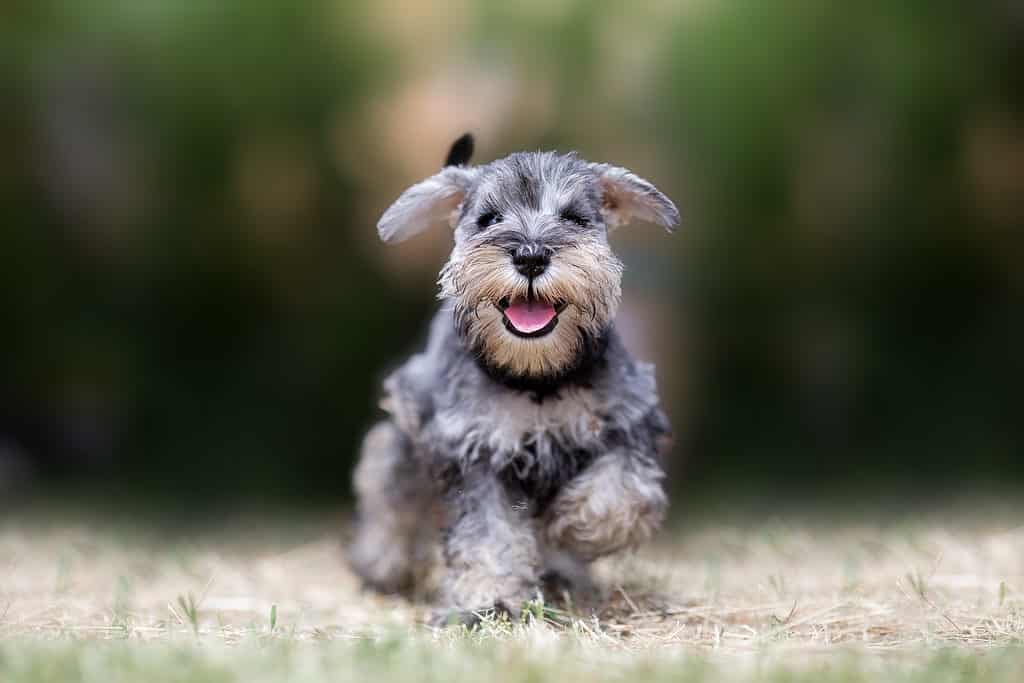
schnauzer

Standard Schnauzer pups should be socialized early on to ensure it doesn’t bark constantly as adults.

Standard Schnauzer And Children

These dogs are known to do well with children. They are playful and have a gentle temperament suited to interacting with kids.

Dogs Similar To Standard Schnauzer

Canines with similarities to the Standard Schnauzer include the Standard Poodle, the Airedale Terrier, and the Irish Terrier.

  • Standard Poodle: Standard Poodles are intelligent with a playful temperament, just like Standard Schnauzers, but Standard Poodles tend to weigh more than Standard Schnauzers.
  • Airedale Terrier: Like Standard Schnauzers, these dogs have a lively nature combined with a friendly temperament. However, when it comes to size, Airedale Terriers are larger.
  • Irish Terrier: Irish Terriers are brave and smart like Standard Schnauzers. But they are a smaller size than Standard Schnauzers and usually have a coat of red or wheaten hair.

Famous Standard Schnauzers

Some famous individuals in recent history have owned Standard Schnauzers or a mix of this breed. These individuals include:

  • President Kennedy owned a Schnauzer mix named Wolf
  • Actress Doris Day owned a Standard Schnauzer named Charlie
  • 1940s Actor Errol Flynn owned a Standard Schnauzer named Arno
View all 391 animals that start with S

Sources

  1. Wikipedia / Accessed August 20, 2021
  2. Eastside Animal Hospital / Accessed August 20, 2021
  3. Wikipedia / Accessed August 20, 2021
  4. The Honest Kitchen / Accessed August 20, 2021
  5. The Schnauzer Collective / Accessed August 20, 2021
Melissa Bauernfeind

About the Author

Melissa Bauernfeind

Melissa Bauernfeind was born in NYC and got her degree in Journalism from Boston University. She lived in San Diego for 10 years and is now back in NYC. She loves adventure and traveling the world with her husband but always misses her favorite little man, "P", half Chihuahua/half Jack Russell, all trouble. She got dive-certified so she could dive with the Great White Sharks someday and is hoping to swim with the Orcas as well.
Connect:

Thank you for reading! Have some feedback for us?


Standard Schnauzer FAQs (Frequently Asked Questions)

Yes. These friendly dogs are good with both children and adults.