
Quick Take
- The price gap between a beginner tarantula and a collector's species is jaw-dropping, and it redefines what "affordable pet" really means. See the price breakdown →
- Wild-caught tarantulas look like a deal, though most first-time owners only discover the hidden cost after the purchase. Captive-bred vs. wild-caught →
- Feeding a tarantula is far cheaper than you'd expect, and one simple habit can cut that cost even further. Explore feeding costs →
Pet tarantulas require relatively little care when compared to other pets. They can be quite cheap to care for, but you should still plan for their expenses and ensure you can care for them properly before adopting. Male tarantulas can live 10 years or more, but females have much longer lifespans, with some living into their 30s. Below, we’ll go over common expenses for pet tarantulas, including adoption fees, start-up costs, and recurring costs. Also check out our guide to tarantula husbandry to learn how to care for your new pet.
How Much Does a Pet Tarantula Cost?
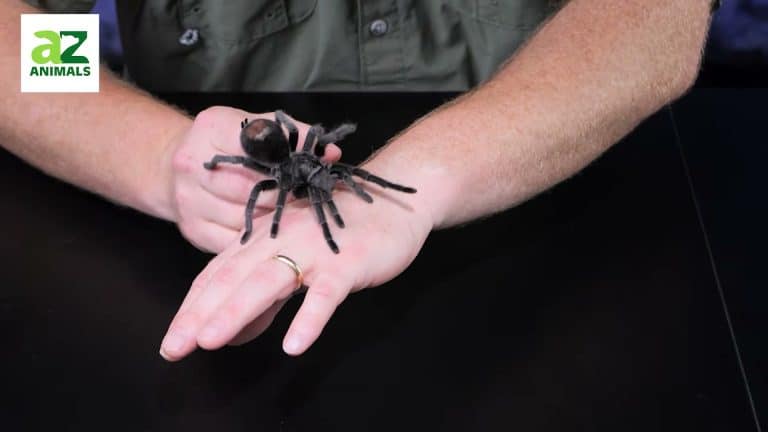
Pet tarantula prices range from around $25 for common species to $3,000+ for rare species like the Mexican Jade Fuego Tarantula. Typically, only collectors purchase these ultra-rare arachnids. There are a number of good starter species in the $25 to $100 range. Terrestrial tarantulas such as the curly hair tarantula (Tliltocatl albopilosus), Brazilian black tarantula (Grammostola pulchra), chaco golden knee tarantula (Grammostola pulchripes), and the Mexican red knee tarantula (Brachypelma hamorii) are a few species that are good for beginners.
Wild-caught adult tarantulas are sometimes illegally trafficked, and they often have health issues that captive-bred spiders do not. Removing tarantulas from their habitat can also affect biodiversity in local populations. Therefore, it is best to purchase a captive-bred tarantula from a reputable seller. Spiderlings are also generally cheaper, but they can be difficult to raise and may die before adulthood. If you decide on a spiderling, it’s important to do your research and ensure you can provide proper care for your spiderling before adoption.
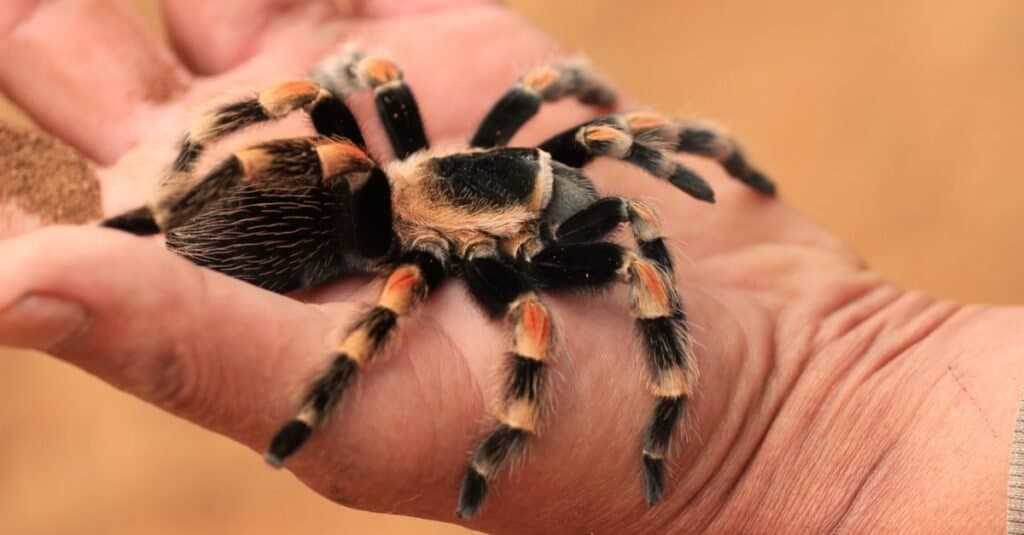
The Mexican red knee tarantula, Brachypelma hamorii, is commonly recommended for a new tarantula owner.
©Vladimira Pufflerova/Shutterstock.com
If you adopt your tarantula from a rehoming situation, their enclosure and other supplies may be included in the purchase price, which will probably be lower than retail price. A rehomed tarantula is also likely to be older and easier to care for. Of course, you should always do your own research to ensure you provide appropriate care for your new pet, regardless of age.
Tarantula Supply Costs
Most start-up costs are one-time purchases that will last throughout your tarantula’s lifetime. Of course, you can set up a very simple enclosure or a very elaborate one, and your costs will reflect that choice. Here are a few common expenses and their average costs.
| Supplies | Cost |
|---|---|
| Aquarium | $40-$150 depending on the size and materials |
| Substrate | $10-$15 |
| Accessories (plants, logs, and rocks for climbing and hiding) | $10-$20+ per item |
| Shallow water dish | $2-$5 |
| Spray bottle | $1-$5 |
| Heating pad (optional) | $10-$20 |
Most species of tarantula don’t need heat lamps but should be kept at temperatures between 70°-80° Fahrenheit. Terrestrial and burrowing tarantulas generally require 4 to 6 inches of substrate that retains moisture and is burrowing-friendly. However, if you have a desert species, they require drier substrate and less humidity. Remember that you will also need to replace their substrate occasionally, though very infrequently. Most owners recommend partial substrate changes once or twice a year, along with spot cleaning to remove mold or other debris.
Aquarium size will vary depending on your tarantula’s size and native habitat. You can buy a smaller set-up for spiderlings and expand as they grow, but this will be more expensive long-term than purchasing a set-up suited for them in adulthood. Most tarantulas do well in enclosures of 5 to 10 gallons, with larger species requiring 20 gallons or more — and enclosure dimensions are generally a more reliable guide than volume alone. However, if you choose an arboreal species for your first tarantula, you will need a tank that has taller sides. Never use commercial cleaners on your tarantula’s enclosure; hot water and paper towels are sufficient for most cleaning.
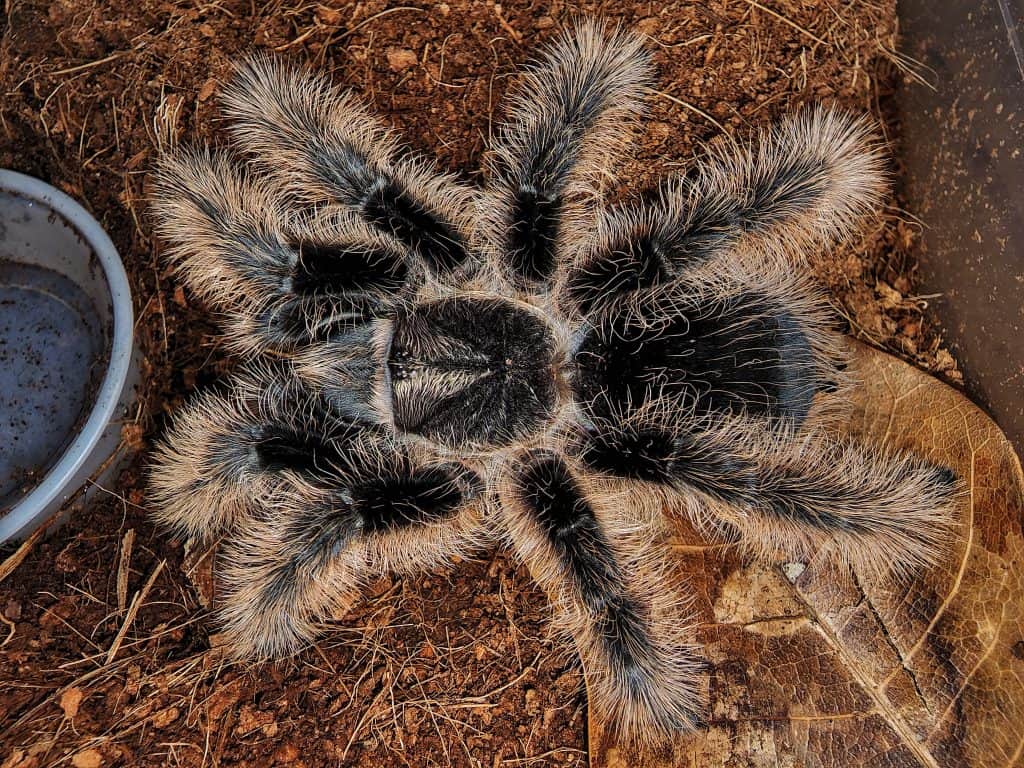
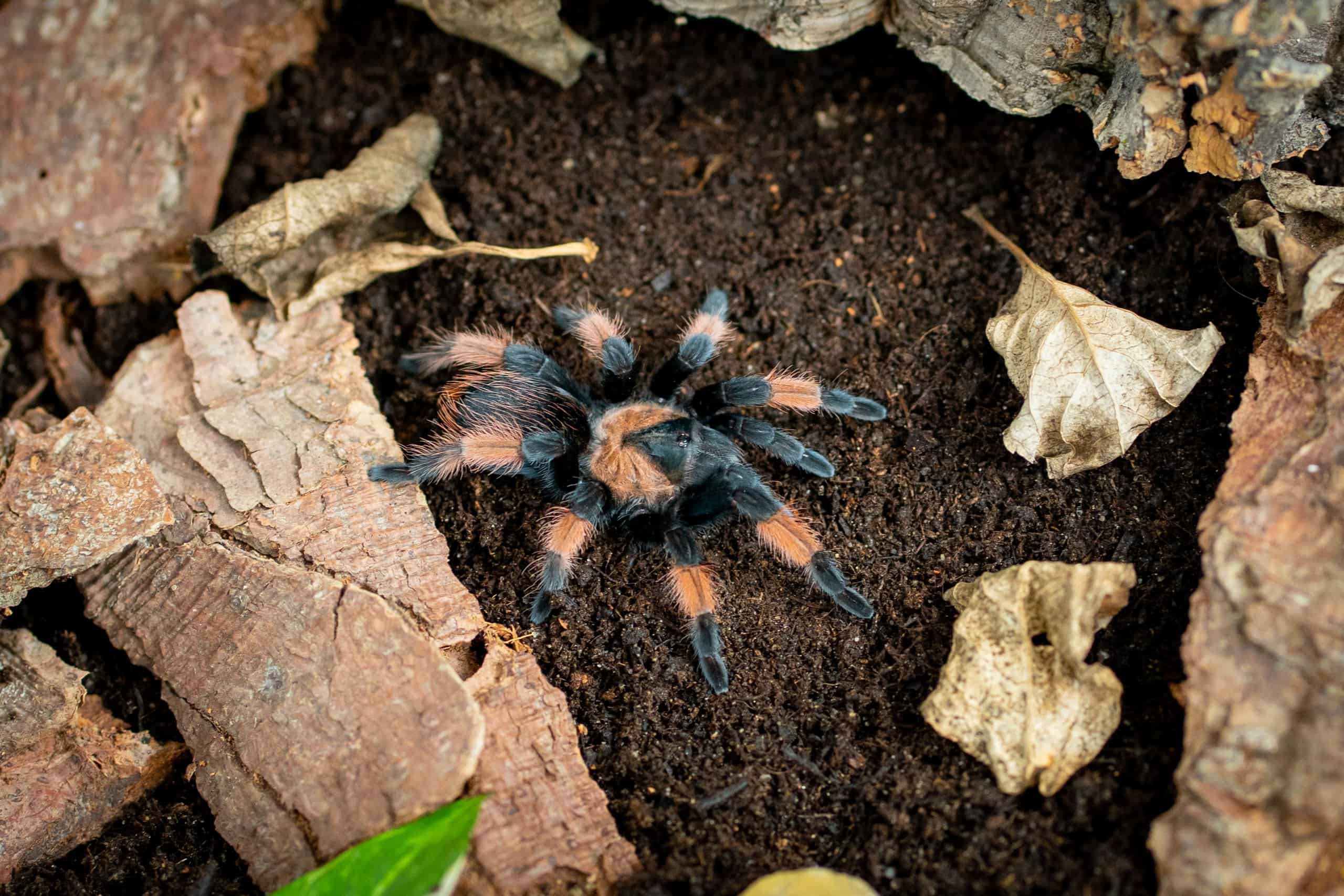
Tliltocatl albopilosus, the curly hair tarantula, is a popular pet for beginners due to its docile temperament.
Feeding a Tarantula
Feeding a pet tarantula costs around $5-$10 a month. Crickets and dubia roaches are the cheapest and most common tarantula food, but they can eat a variety of insects. Breeding your own crickets can make feeding your tarantula even cheaper.
Spiderlings will need to eat prey that is smaller than themselves, so you may need to offer small insects at first before working up to full-size crickets. Always remove live insects within 24 hours to prevent the insects from biting your spider or causing it stress.
Do Tarantulas Need Veterinary Care?
Most veterinarians don’t have the expertise to treat spiders. However, some veterinary specialists care for invertebrates. Before adopting your tarantula, research specialists in your area. It’s important to know how far you’ll have to travel for veterinary care or if there are specialists around you at all. If there are no veterinarians who will see tarantulas nearby, you’ll need to decide whether this is a dealbreaker when it comes to adoption.
Tarantulas can have parasites, problems molting, or other illnesses that require veterinary care. However, most people do not bring their tarantula to the vet due to a lack of access. While pet insurance and veterinary care for tarantulas can be difficult to find, some exotic pet insurers and specialist veterinary practices do cater to invertebrates including tarantulas, particularly in certain markets. Regardless, it’s important to have a fund set aside for your tarantula’s care if you do plan to bring them to the vet when needed.