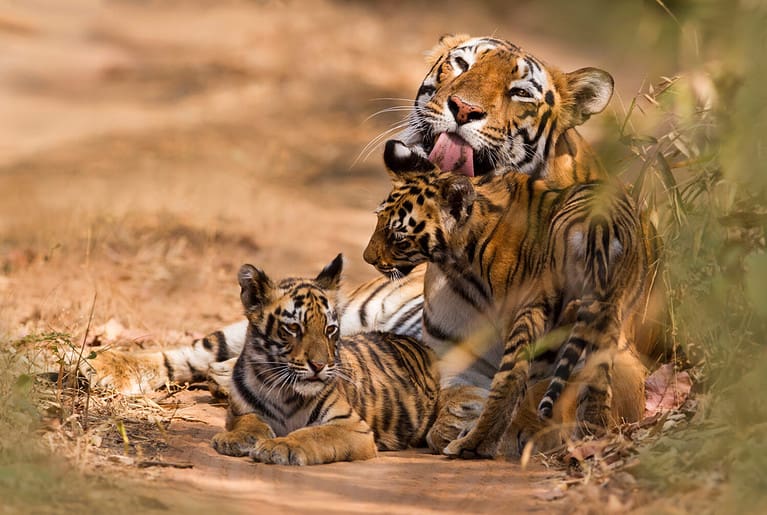

The largest wild cat species in the world is the tiger (Panthera tigris). However, it’s not just their size that captivates people; it’s their solitary nature and their attractive appearance, with their orange-brown fur and vertical black stripes. Unfortunately, this majestic species is in trouble. Three subspecies are already extinct, while the six extant subspecies are all classified as Endangered, or even Critically Endangered, by the IUCN due to poaching and habitat loss. Keep reading to learn more about the largest wild cat breed in the world.
The Largest Wild Cat and Its Subspecies
As mentioned above, the largest wild cat breed is the tiger. However, there are six subspecies that vary in size, and some lions may be larger than smaller tiger species. Tigers only live in Asia. The following six subspecies can be found scattered across Bangladesh, Bhutan, China, India, Indonesia, Malaysia, Myanmar, Nepal, Russia, and Thailand.
Siberian, or Amur, Tiger (Panthera tigris altaica)
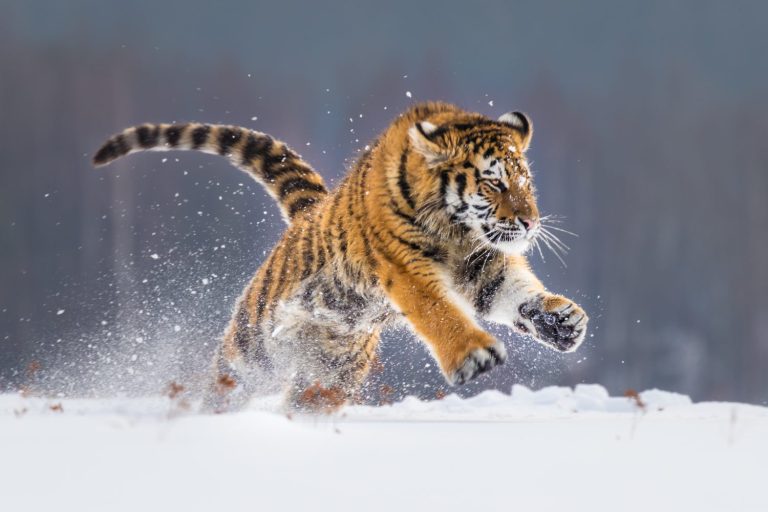
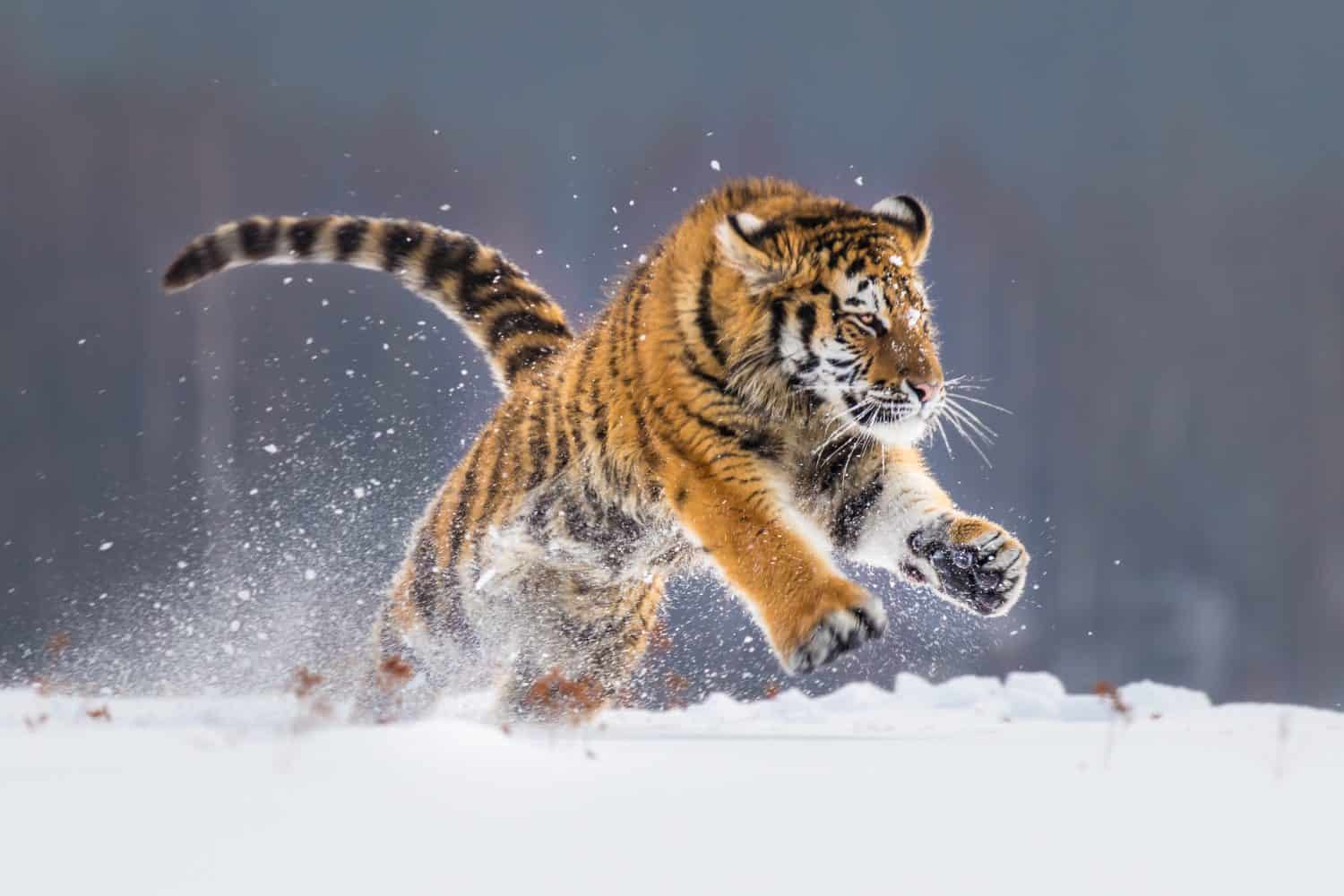
The Siberian, or Amur, tiger inhabits the snowy mountain forests of Eastern Russia, with small numbers of individuals possibly ranging into China and North Korea. Their name was changed to the Amur tiger in because they were no longer found in Siberia, but the Amur River Valley reflects their current habitat. They are classified as Endangered by the IUCN. Experts estimate that there are around 450 Amur tigers left in the wild.
These cats can measure over 10 feet long. Adult males can weigh up to 675 pounds, while female Siberian tigers are smaller, only weighing around 400 pounds. Amur tigers need extra fat to keep them warm and help them outlast the freezing winters, and they have a thick, long coat that keeps them warm in the deep snow. All tigers’ color patterns are unique, just like a human fingerprint, but Amur tigers have lighter orange coats with fewer, paler stripes than other subspecies. In addition, they have a prominent, white, mane-like ruff to help protect their necks from the cold.
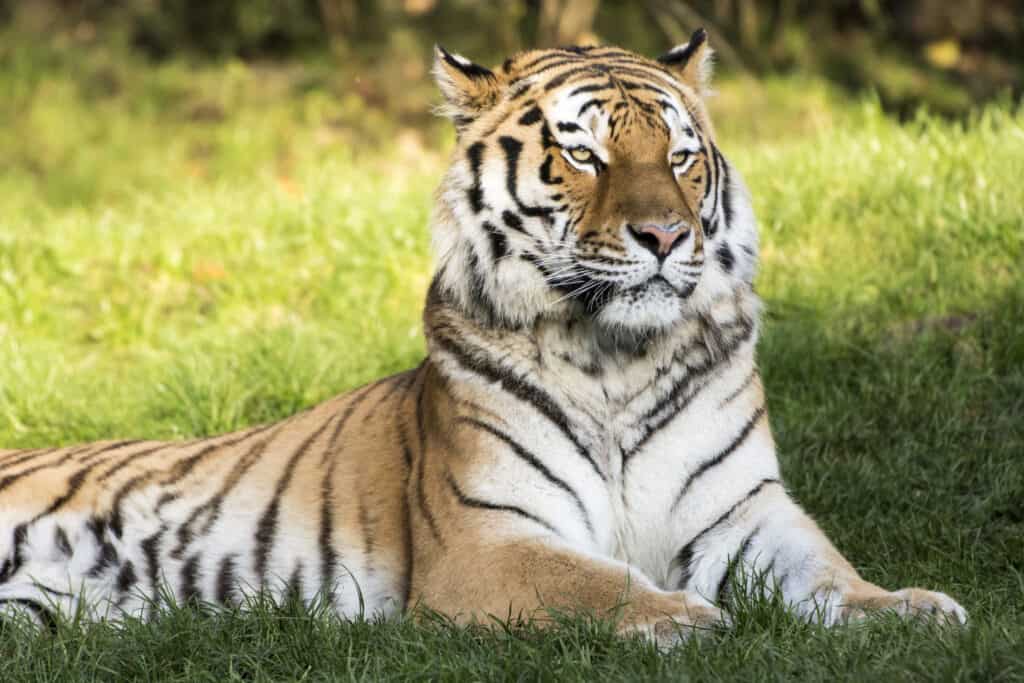
Amur tigers are the largest cats in the world, weighing up to 675 pounds.
©Gerckens-Photo-Hamburg/Shutterstock.com
Bengal Tiger (Panthera tigris tigris)
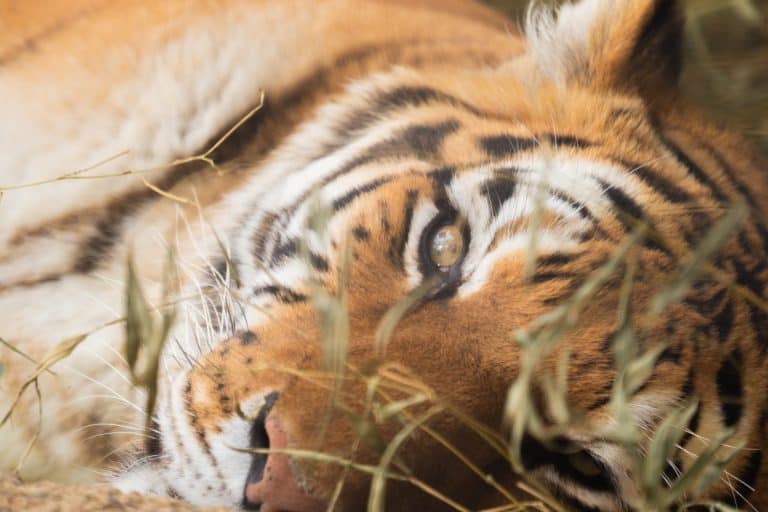
Bengal tigers also go by the name Royal Bengal or Bengali tiger. They are the second largest subspecies of tiger, with adult males weighing around 440-570 pounds and reaching a length of 9 feet, including the tail. Female Bengals are significantly smaller, weighing 240-400 pounds and measuring up to 8 feet in length. They are currently classified as Endangered.
These magnificent giants occur in India, Bangladesh, Bhutan, Nepal, southern Tibet, and Myanmar. Their primary habitat is tropical forests, but they also occur in grasslands near water sources. Up to 70% of the remaining tigers in the wild are Bengal tigers that inhabit India. The Indian Government estimates there are around 3,682 wild Bengal tigers. Their coats vary in color, with the most common being vibrant reddish-orange with dark stripes. Their bellies, chests, and inner limbs are white. Bengals are exceptionally powerful cats capable of carrying prey almost twice their own size over long distances.
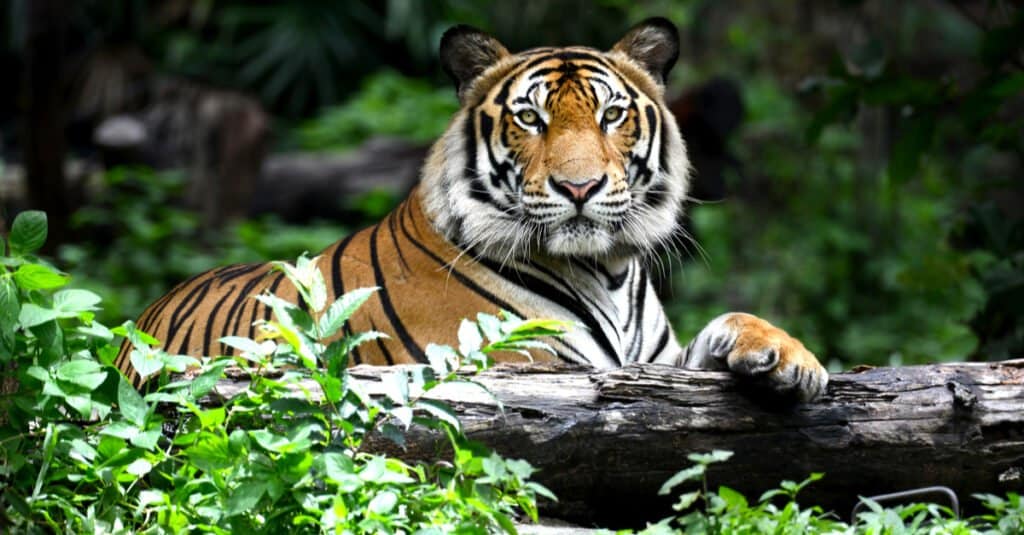
Up to 70% of the remaining tigers in the wild are Bengal tigers.
©dangdumrong/Shutterstock.com
Indochinese Tiger (Panthera tigris corbetti)
The Indochinese tiger is named after the region where it is found, the Indochina region of Asia. Their largest populations occur in Thailand, Vietnam, and Myanmar. They are classified as Critically Endangered, with an estimated 250 individuals left in the wild.
Indochinese tigers are smaller and leaner than the Bengal tiger, with males weighing between 331 and 430 pounds and measuring 8.3 to 9.3 feet in length. Females weigh around 220 to 290 pounds and are approximately 7.6 to 8.3 feet long. They are darker than Bengal tigers, with dark orange or golden orange coats. They also have thinner stripes and white underbellies.
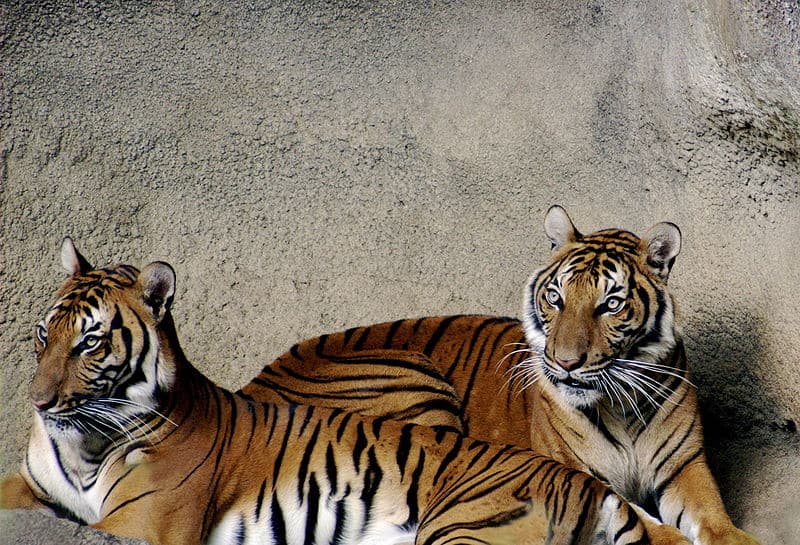
Indochinese tigers are critically endangered.
©Kabir Bakie / Creative Commons – Original
South China Tiger (Panthera tigris amoyensis)
The South China tiger is functionally extinct in the wild. They are so rare that only 30 to 40 individuals are left, and they are all in zoos. In fact, there hasn’t been a South China tiger spotted in the wild since the 1970s. In the 1970s, the Chinese government cleared swaths of forest for commercial purposes. Workers encountered the tigers and declared them pests, which they then began to exterminate. Devastatingly, their population size dropped from 4,000 to 40 in under a decade.
However, China has now established the South China tiger as a protected class. In addition, zoos in China and South Africa have set up breeding programs for the South China tiger and plan to release individuals back into the wild. They are smaller and stockier than other tigers, with males weighing between 287 and 386 pounds, and measuring approximately 7.6 to 8.7 feet long. Females weigh around 220 to 254 pounds and are approximately 7.3 to 7.8 feet in length. They have reddish-orange to yellowish coats with more numerous stripes than other subspecies. They also have more white on their faces, the underside of their limbs, paws, and bellies.
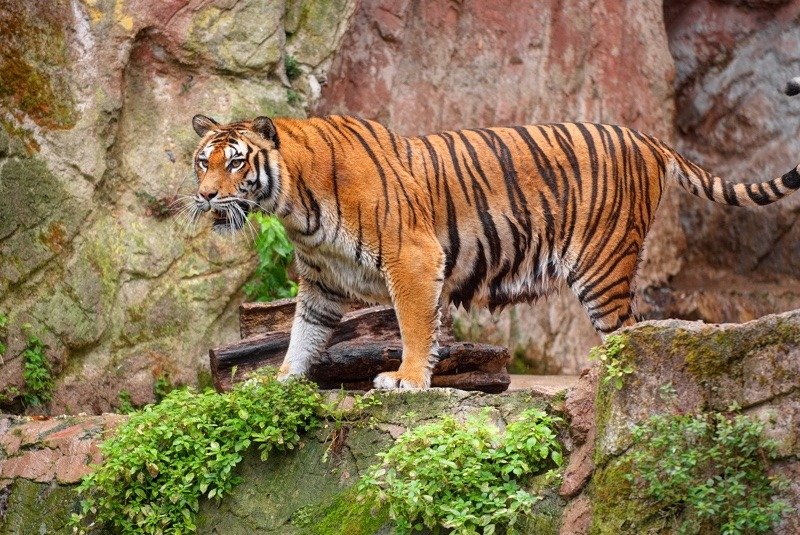
Male South China tigers weigh between 287 to 386 pounds.
©Mikhail Leonov/Shutterstock.com
Malayan Tiger (Panthera tigris jacksoni)
The Malayan tiger is found only on Peninsular Malaysia and the southern tip of Thailand. These tigers are Critically Endangered, with fewer than 200 mature adults left in the wild. Malaysian authorities are working with conservation groups to reduce snaring by over 90% in key habitats, increase forest patrols, and use camera traps to monitor breeding.
Malayan tigers are slightly smaller than South China tigers. Males weigh between 220 to 370 pounds and measure 6.3 to 8.5 feet long. Females weigh around 170 to 250 pounds and reach lengths of 5.8 to 7.8 feet. These tigers have dark reddish-orange coats with numerous narrow black stripes and white undersides. They also have white patches on their cheeks and muzzles.
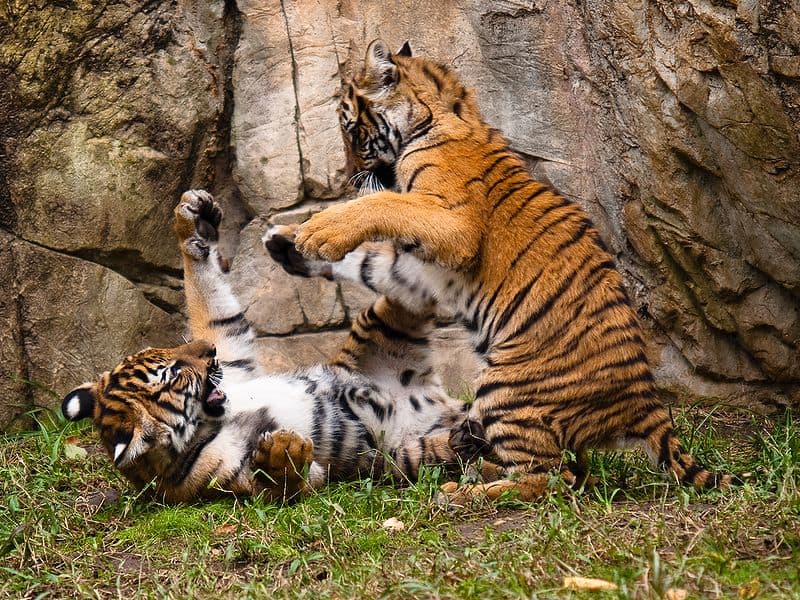
Malayan tigers are slightly smaller than South China tigers.
©Malcolm, CC BY-SA 2.0, via Wikimedia Commons – Original / License
Sumatran Tiger (Panthera tigris sumatrae)
Sumatran tigers are extremely rare and only found on Sumatra, one of Indonesia’s islands. Two other species of tigers that shared their habitat are now extinct: the Bali and Javan tigers. They are Critically Endangered, with an estimated 370 individuals left in the wild.
While Sumatran tigers have very similar genetic ties to other populations of tigers, these big cats have evolved differently. They are smaller than other tigers, with more compact bodies and shorter legs, with males weighing around 220 to 310 pounds and measuring approximately 7.3 to 8.3 feet long. Females weigh between 165 and 243 pounds and can reach lengths of 7.0 to 7.6 feet. They have darker orange coats with narrow, closely spaced black stripes. Males also have a long, white ruff on their faces.
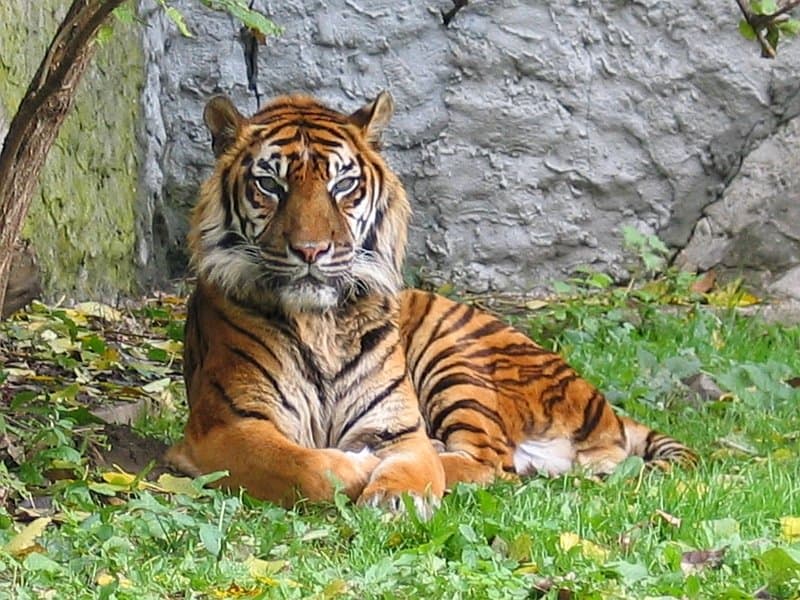
The Sumatran Tiger is the only surviving tiger species in Indonesia.
©Monka Betley, CC BY-SA 3.0, via Wikimedia Commons – Original / License