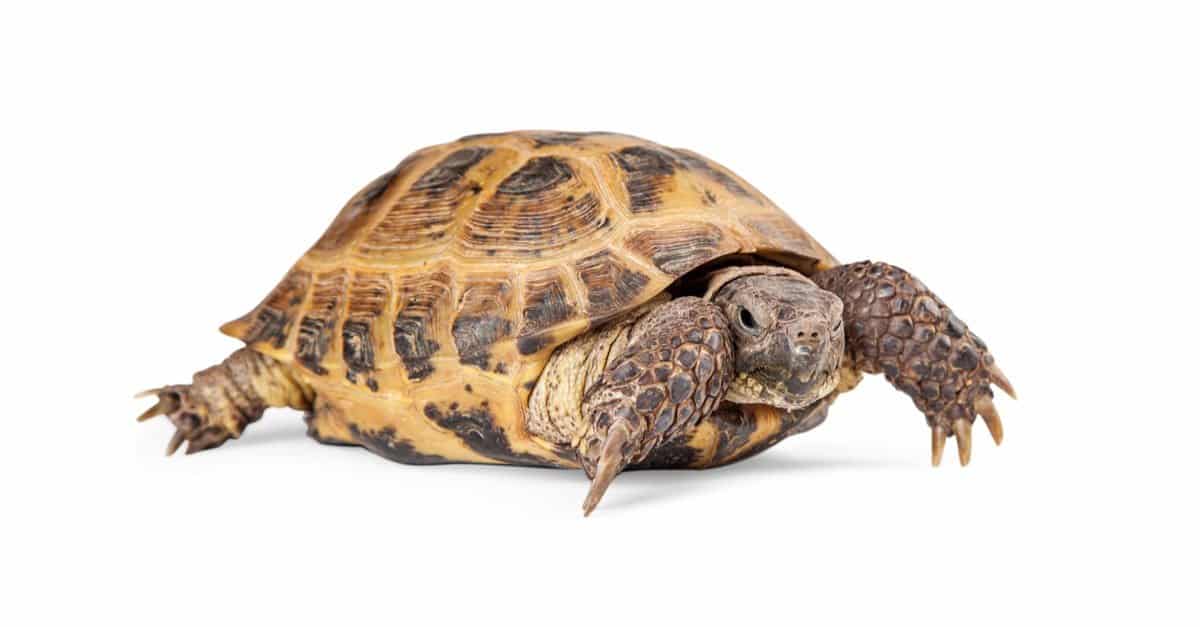

Tortoises are one of the longest-living animals on land, sometimes living more than 200 years. These magnificent animals frequently outlive their human caretakers and are known for their slow and steady approach to life. Jonathan, a Seychelles giant tortoise (Aldabrachelys gigantea hololissa), is the oldest known living land animal and is estimated to be around 193 years old as of 2025. He lives on the island of Saint Helena, in the South Atlantic. The Russian tortoise (Testudo horsfieldii), has a much shorter lifespan. Continue reading to discover how long Russian tortoises live, along with other fascinating information about these slow-moving reptiles.
Russian Tortoise Life Expectancy
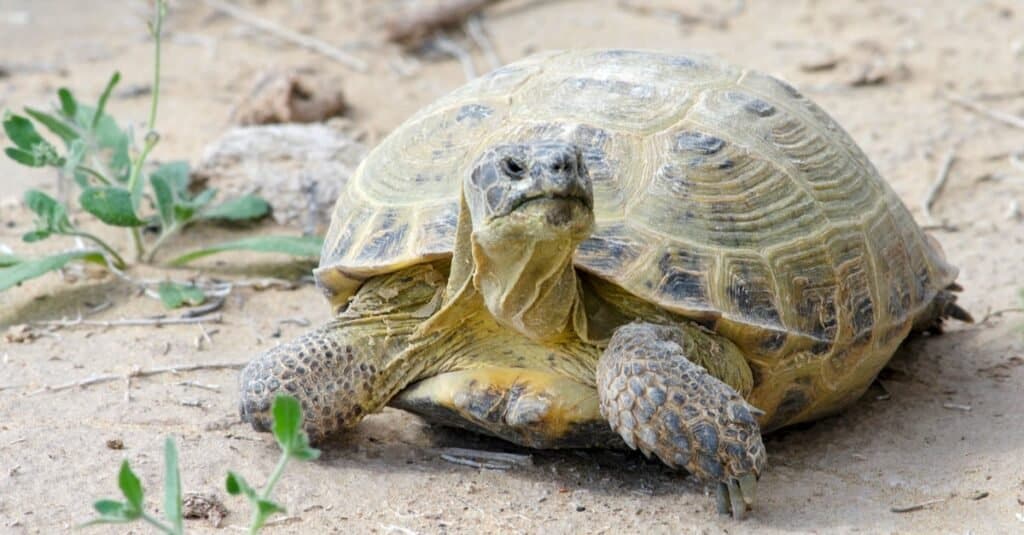
Russian tortoises are a smaller species. Females typically measure between six and 10 inches, while males are usually five to eight inches long.
©Kirill Skorobogatko/Shutterstock.com
Russian tortoises can live between 40 and 60 years in captivity with proper care. In the wild, their life expectancy is shorter due to environmental challenges and predation. While some sources suggest that Russian tortoises can occasionally live up to 60 years or more in captivity with excellent care.
Tortoise Lifespan Explained
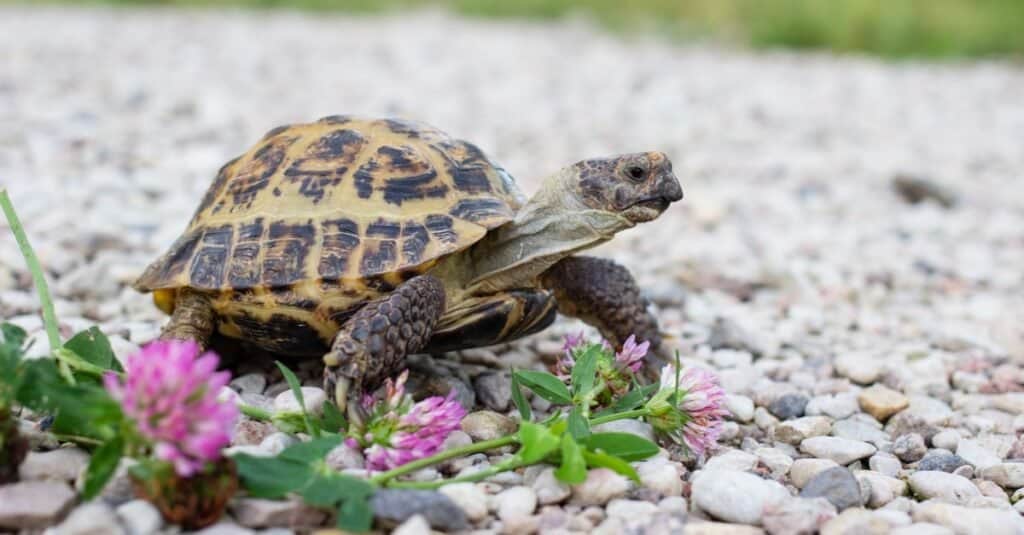
Tortoise cells respond to stress in ways that may help prevent disease.
©Elena M. Tarasova/Shutterstock.com
Tortoises live longer than many other animal species due to their slow metabolisms. Animals that are less active with slower metabolisms tend to live longer than those that are exceptionally active with faster metabolisms. Galapagos tortoises are known for their impressive lifespan, typically living for over 100 years. Some individuals have been recorded to live for over 150 years, with the oldest, Old Tom, living to be 176 years old. The average lifespan of the aforementioned Seychelles giant tortoise is typically 80–120 years, though some individuals, like Jonathan, may live longer. Other long-lived tortoises include the Aldabra giant tortoise (Aldabrachelys gigantea) and the African spurred tortoise (Centrochelys sulcata).
Tortoises have evolved genetic traits that contribute to their long lifespan. These traits include gene variants related to DNA repair, immunity, and cancer suppression. Specifically, tortoises have extra copies of genes that may help them age well and evade cancer.
Development and Life Cycle
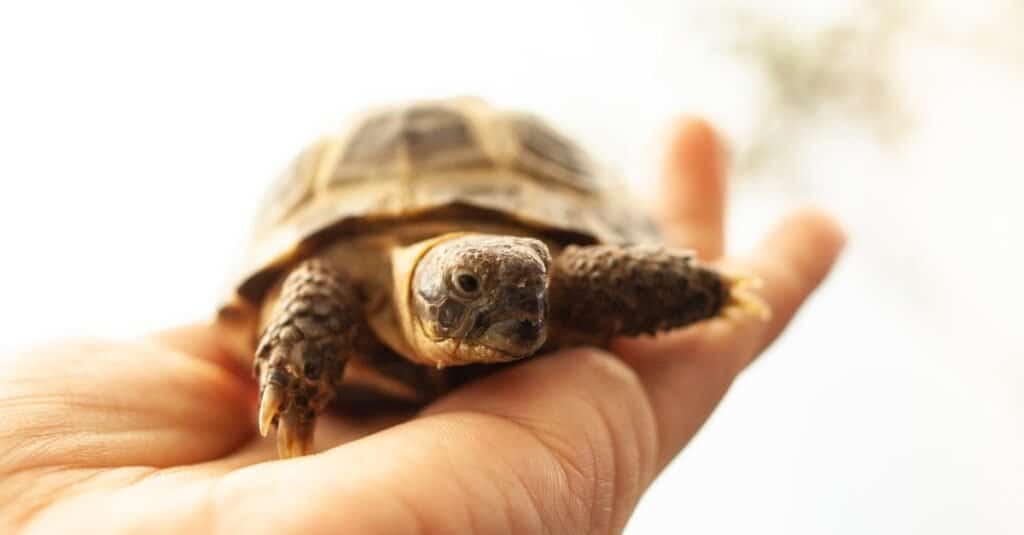
Not only are Russian tortoises slow-moving, they’re also slow growing.
©KOTORICHIKAPHOTO/Shutterstock.com
Russian tortoises are about one inch long when they first hatch from eggs. They continue to grow until they are between five and 10 inches long. Russian tortoises grow very slowly. It can take 20 to 30 years for a Russian tortoise to reach full size.
A female Russian tortoise typically reaches sexual maturity around 10 years of age and will begin to lay eggs once she is about 6 inches long. A Russian tortoise clutch will contain between two and six eggs. She will deposit the eggs in a shallow nest, and then leave. Eggs typically hatch between 8 and 12 weeks. Baby Russian tortoises are born with the necessary instincts to find food and navigate their environment. However, they are small, vulnerable, and prone to predation. The survival rate for Russian tortoise babies in the wild is quite low, with estimates suggesting that only around 5% reach adulthood.