











W
Species Profile

Westiepoo

Canis lupus familiaris

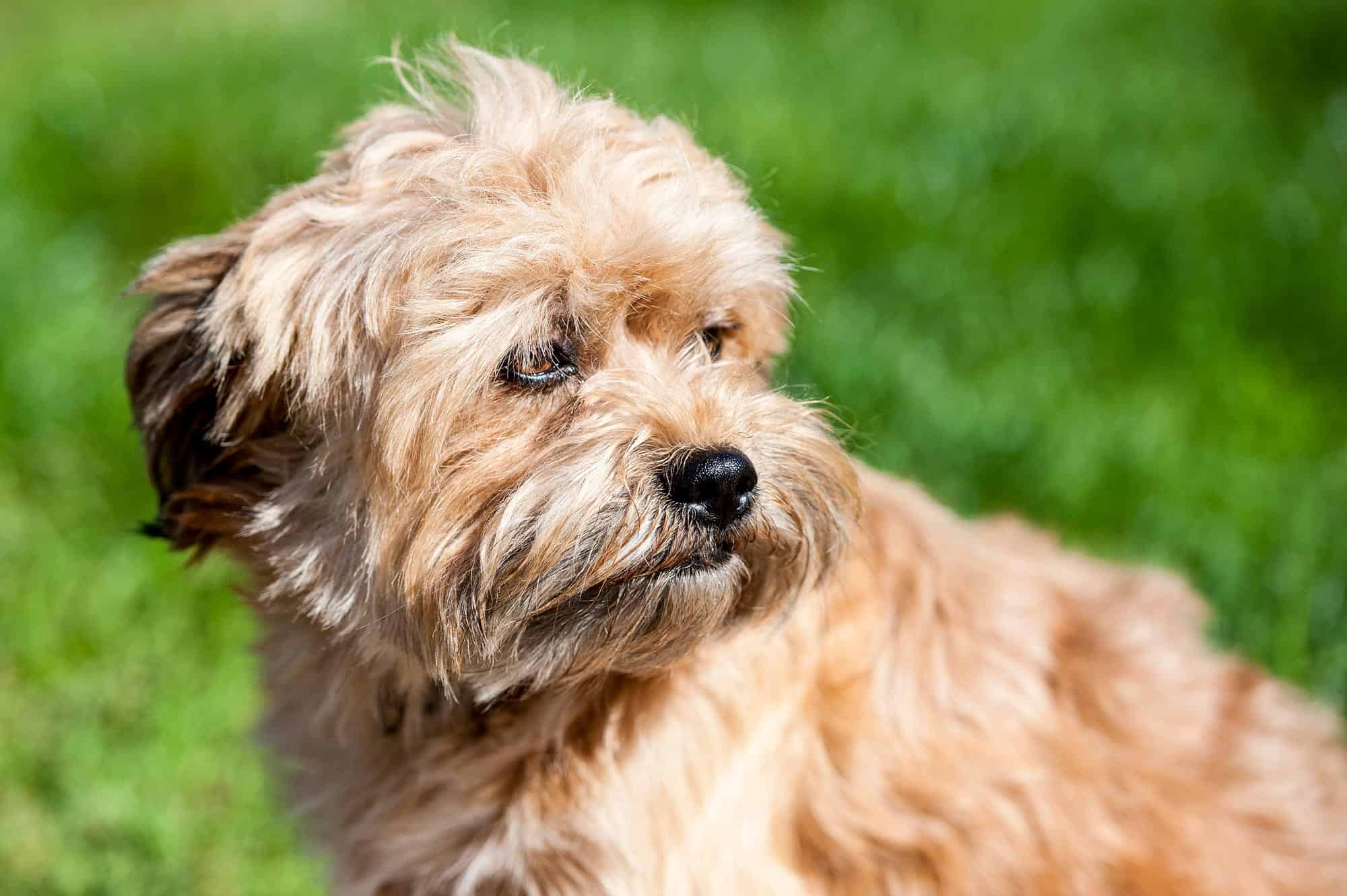
Big personality, fluffy curls.
iStock.com/11AFotografie

Westiepoo Distribution

Click a location to explore more animals from that region

Origin Location

This map shows the native origin of the Westiepoo. As a domesticated species, they are now found worldwide.

Loading map...

Found in 1 state/province

Size Comparison

Human 5'8"
Westiepoo 1 ft 1 in

Westiepoo stands at 19% of average human height.

Animal, Beauty, Brown, Color Image, Cute

At a Glance

Domesticated
Also Known As Westie-Poo, Westie Poo, Westiepoo
Diet Omnivore
Activity Diurnal+
Lifespan 13 years
Weight 13 lbs
Status Not Evaluated
Did You Know?

Westiepoos vary widely in size because the Poodle parent is often Toy or Miniature.

Scientific Classification

The Westiepoo is a companion dog cross between a West Highland White Terrier and a Poodle (often Toy or Miniature). It typically combines a terrier’s alert temperament with poodle-influenced coat traits, with wide variation in size, coat curl, and shedding depending on parentage.

Kingdom
Animalia
Phylum
Chordata
Class
Mammalia
Order
Carnivora
Family
Canidae
Genus
Canis
Species
lupus

Distinguishing Features

  • Westie-like terrier face and alert expression
  • Coat may be curly/wavy; often low-shedding
  • Small-to-medium size, variable by poodle parent
  • Compact, sturdy build with lively gait

Physical Measurements

Males and females differ in size

Height
1 ft 1 in (10 in – 1 ft 4 in)
11 in (9 in – 1 ft 1 in)
Length
1 ft 10 in (1 ft 6 in – 2 ft 2 in)
Weight
21 lbs (9 lbs – 31 lbs)
18 lbs (11 lbs – 24 lbs)
Tail Length
6 in (4 in – 7 in)
6 in (4 in – 7 in)
Top Speed
20 mph
running

Appearance

Primary Colors
Secondary Colors
Skin Type Wavy-curly coat
Distinctive Features
  • Compact companion build; smaller than typical base domestic dog.
  • Coat varies from wiry-wavy to tight curls; shedding unpredictable.
  • Soft facial furnishings with "teddy-bear" look; pronounced muzzle hair.
  • Triangular terrier-like ears or semi-floppy ears; high individual variability.
  • Tail typically carried up; may be plumed with curlier coats.
  • Dark, round-to-oval eyes; tear staining may show on pale coats.
  • Regular brushing and professional grooming helps prevent matting and debris.
  • Prone to ear wax buildup; routine ear drying/cleaning often needed.
  • Skin can be allergy-prone; monitor for itchiness, redness, hot spots.
  • Dental crowding possible in smaller dogs; daily tooth care recommended.

Sexual Dimorphism

Sexual dimorphism is mild; males are usually slightly taller, heavier, and broader-headed. Females tend to be a bit lighter-framed with finer facial features, though coat type and size vary widely by parentage.

  • Slightly broader skull and muzzle; thicker neck ruff appearance.
  • Slightly narrower head; lighter bone and overall frame.

Did You Know?

Westiepoos vary widely in size because the Poodle parent is often Toy or Miniature.

Coat types range from wiry waves to tight curls, so shedding and grooming needs differ by littermate.

Many inherit the Westie's "big-dog" confidence in a small body and the Poodle's quick learning.

Like all domestic dogs (Canis lupus familiaris), they're specialized for reading human cues far beyond wild canids.

Common "telltales" include terrier alert barking plus Poodle-style focus during training games.

Their faces can look Westie-square, Poodle-fine, or anywhere between-mix genetics makes looks unpredictable.

Unique Adaptations

  • Companion-dog sociability: compared with wolves, Westiepoos are tuned to human gestures, schedules, and shared living spaces.
  • Coat variability can reduce loose shedding in some individuals, but matting risk rises with curlier coats.
  • Small-body agility helps them turn quickly and navigate tight indoor spaces, suiting apartment life with daily exercise.
  • High problem-solving drive supports enrichment puzzles, scent games, and trick training to prevent boredom behaviors.
  • Facial hair/ear furnishings in curlier coats can trap moisture, making proactive ear and eye-area care important.

Interesting Behaviors

  • Terrier-style "investigation walks," stopping to sniff holes and edges, then darting forward in short bursts.
  • Often repeats previously rewarded tricks (such as sit or spin) to solicit treats or attention (operant conditioning).
  • Alert barking at door sounds, then quickly switching to friendly greetings once visitors are introduced.
  • Play-prey sequence: quick chase and pounce on toys, sometimes followed by proud "show-and-tell" carrying.
  • People-shadowing indoors, choosing spots with a view of family activity and following room-to-room.
  • Digging or "nesting" in blankets, especially if the Westie side is strong.

Cultural Significance

Westiepoos reflect modern "designer crossbreed" culture-pairing Scottish Westie character with Poodle trainability. They're popular as affectionate companions, often chosen by allergy-aware homes, though no mix guarantees a hypoallergenic coat.

Myths & Legends

A West Highland legend credits Colonel Edward Malcolm selecting white terriers after a hunting accident, making pale dogs easier to distinguish from foxes.

Breed lore says Colonel Malcolm began breeding only white terriers after mistaking a darker dog for a fox during a hunt.

Westies became cultural icons through the long-running "Black & White" Scotch whisky advertisements featuring a black Scottie and a white Westie.

Edinburgh's Greyfriars Bobby tale-of a loyal little dog keeping vigil at a grave-fuels Scottish traditions about canine devotion and steadfastness.

In Saint Roch traditions, a dog brings bread and licks wounds to aid the plague-stricken saint, a recurring European symbol of canine help and healing.

Conservation Status

NE Not Evaluated

Has not yet been evaluated against the criteria.

Population Stable

Life Cycle

Birth 4 pups
Lifespan 13 years

Lifespan

In the Wild
12–15 years
In Captivity
10–17 years

Reproduction

Mating System Polygyny
Social Structure Managed Domestic
Breeding Season Non-seasonal; estrus cycles year-round (often twice yearly)
Breeding Pattern Serial
Fertilization Managed Selective
Birth Type Internal_fertilization

In managed domestic breeding, Westiepoos are produced by planned stud-bitch matings, sometimes a single sire covering multiple dams. Pairing is serial per heat; dams nurse while humans provide care. Grooming is frequent; screen for patellar luxation, allergies, dental disease.

Behavior & Ecology

Social Pack Group: 3
Activity Diurnal, Crepuscular
Diet Omnivore chicken

Temperament

Human-focused
Affectionate
Alert
Playful
Curious
Trainable
Stubborn
Barky
Prey-driven
Stranger-wary
Separation-prone
Grooming-intensive
Allergy-prone
Ear-infection-prone
Dental-prone
Patella-risk

Communication

alert barks
yappy barks
whines
growls
play grunts
tail and ear postures
poodle-like eye contact
pawing for attention
toy presenting
scent marking
face licking
mouthy play nips
doorway guarding stance

Habitat

Biomes:
Temperate Forest Temperate Grassland Mediterranean Temperate Rainforest Boreal Forest (Taiga) Tundra Alpine Desert Hot Desert Cold Savanna Tropical Dry Forest Tropical Rainforest Freshwater Wetland Marine +9
Terrain:
Plains Coastal Hilly Mountainous Valley
Elevation: Up to 18044 ft 8 in

Ecological Role

Domestic companion and human-associated mesopredator

companionship pest deterrence alarm barking

Diet Details

Main Prey:
Rodents Small birds Rabbit
Other Foods:
Berries Apple Carrot Pumpkin Grasses

Human Interaction

Domestication Status

Domesticated

Dogs (Canis lupus familiaris) were domesticated from wolves 15,000-30,000+ years ago for hunting, guarding, and companionship. The Westiepoo is a modern companion cross (Westie × Toy/Mini Poodle) selected for temperament and coat variation.

Danger Level

Low
  • Nips if mishandled
  • Terrier reactivity toward strangers
  • Resource guarding without training
  • Barking/alerting in close housing

As a Pet

Suitable as Pet

Legality: Generally legal; follow local licensing, leash, and breeding rules.

Care Level: Moderate

Purchase Cost: $300 - $2,500
Lifetime Cost: $15,000 - $40,000

Economic Value

Uses:
Companionship Breeding Grooming Training Therapy Rescue
Products:
  • services
  • stud fees
  • adoption

Quick Take

  • Reaching a height of 17 inches requires a specific development timeline within 12 months.
  • The hormonal imbalance of Addison’s disease triggers vomiting and thirst, requiring laboratory analysis.
  • While labeled hypoallergenic, these hybrids actually produce shedding that contradicts standard breed assumptions.
  • Consistent ear cleaning is required during the grooming routine to prevent ear infections.

Westiepoos are social, intelligent dogs that are full of curiosity. They result from breeding a West Highland White terrier with a miniature poodle. These dogs date back to the 1970s. They are believed to have originated in the United States. Westiepoos belong to the hybrid group.

These small, playful dogs are popular with families. They are loyal and protective of their loved ones.

An infographic titled 'Westiepoo: The Playful Hybrid' featuring an illustration of a white fluffy puppy surrounded by data charts on health, origin, and care instructions.
They look like perfect teddy bears, but the Westiepoo hides a 'hypoallergenic' secret and a high-stakes health profile every owner needs to see. © A-Z Animals

Evolution

The westiepoo is one of the newer “designer dogs” that became all the rage after the cross of a golden retriever and a standard poodle in 1969. The poodle’s low-shedding fur was a desirable trait — especially to people with allergies — leading to the creation of dozens of “doodle” breeds. The westiepoo is one of those doodles — the result of a West Highland terrier and a miniature poodle.

3 Pros and Cons of Owning a Westiepoo

ProsPros
A friendly nature: These dogs love to be around their owners. They love to cuddle on the couch, go on walks, and otherwise spend time with the family!Somewhat difficult to train:
They can have an independent streak, making training somewhat difficult.
An easy grooming routine:
They don’t require an elaborate grooming routine. They need to be brushed just once or twice a week to keep their coat looking healthy.
Separation anxiety: They can experience separation anxiety if left alone for too long. They can become destructive by chewing on various items in a household.
A low shedder: Though these dogs are considered hypoallergenic, they do shed a small amount of hair.Can bark a lot if not socialized:
Those that haven’t been socialized have a tendency to bark a lot.
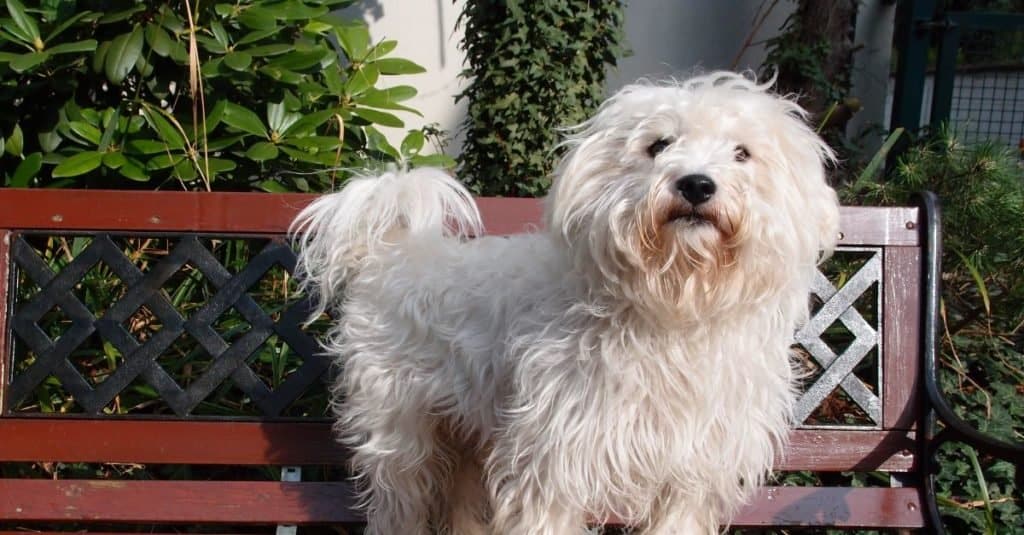
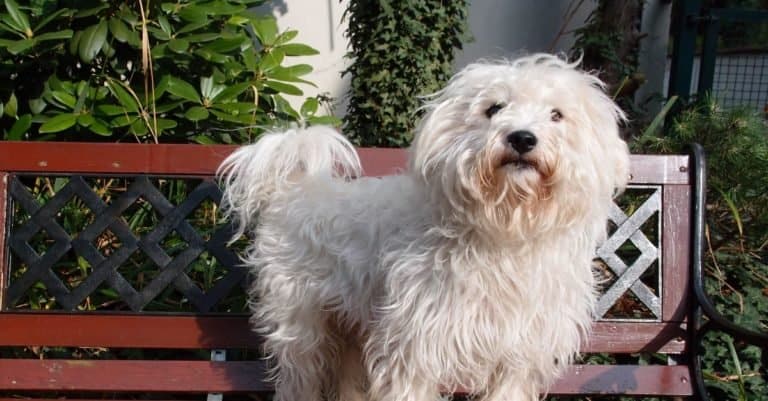
White westiepoo standing on a bench

Westiepoos don’t require an elaborate grooming routine – just brushing once or twice a week to keep their coat looking healthy.

Size and Weight

Westiepoos are small to medium-sized dogs that can achieve a height of 17 inches from the top of their head to their feet. They typically weigh between 20 and 30 pounds, though some may reach up to 35 pounds in rare cases. At 7 weeks old, a Westiepoo typically weighs between 3 and 6 pounds. They are fully grown between the ages of 8 and 12 months.

Common Health Issues

Westiepoos are prone to a few health issues. One is Patellar luxation. Patellar luxation happens when the dog’s kneecap slips out of place. Limping or an unsteady stride are symptoms of this condition. Some dogs need surgery to correct a severe case of patellar luxation.

Another common health issue is hip dysplasia. Hip dysplasia is essentially the dislocation of the hip joint. Once again, limping or a limited range of motion are symptoms of this condition.

Addison’s disease is the third common health issue in this dog. It is a hormonal imbalance. Vomiting, diarrhea, and an overwhelming thirst can all be symptoms of this disease. A veterinarian has to conduct bloodwork and urine analysis to detect Addison’s disease. Fortunately, some medications can treat this condition.

Temperament and Behavior
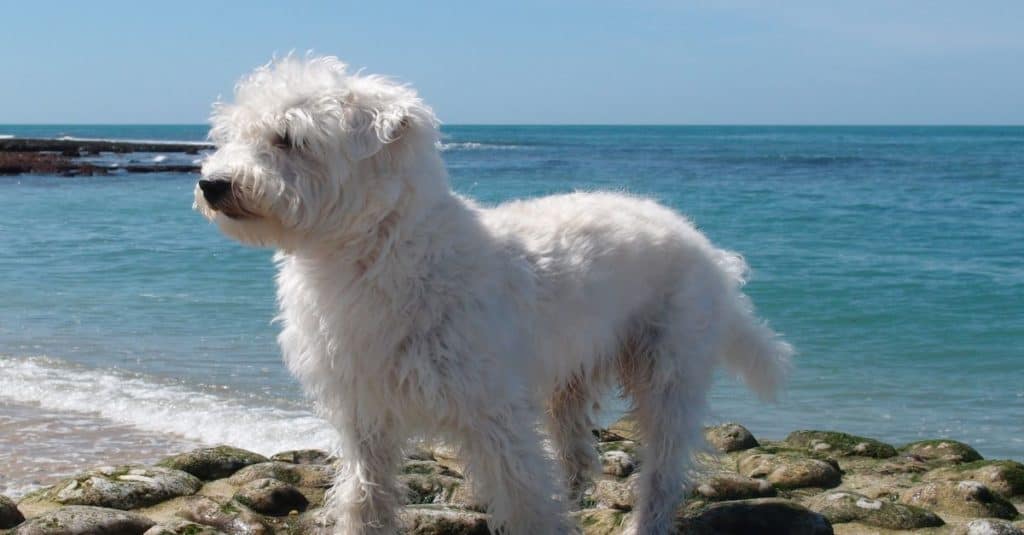
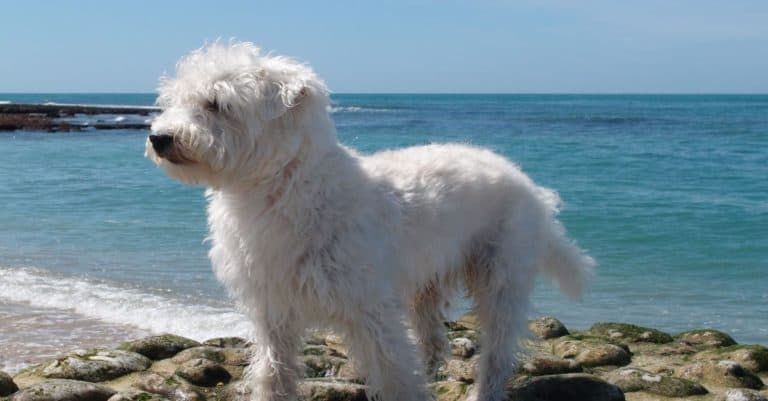
Westiepoo standing near the ocean

Westiepoos can experience separation anxiety if left alone for too long.

The affectionate temperament of Westiepoos makes them great dogs for families with older children. These dogs have playful personalities and like to be where the action is. One of the most prominent traits of this dog is its devotion to its owner. Even though its size wouldn’t intimidate anyone, this pup will bark when a stranger comes to the door. So, a Westiepoo can serve as a watchdog in a household.

The adaptability of this dog means it’s just as happy cuddling on the sofa next to its owner as it is playing chase in the backyard with the kids.

How to Take Care of Westiepoo

An owner who learns about the various needs of their new Westiepoo is going to be able to take excellent care of this pet. Whether it’s a puppy or an adult dog, learning about its diet, exercise needs, grooming routines, and common health issues can help an owner to give their Westiepoo a happy life.

The Best Dog Food

Westiepoo puppies and adults need different components in their diet. Check out some factors to keep in mind:

Westiepoo puppy food: High-quality protein is essential for building a puppy’s healthy muscles, tendons, and cartilage. DHA in the form of fish oil is an ingredient that supports healthy brain and vision development. Fat provides active puppies with the energy they need to run, jump, and otherwise explore their environment. Calcium contributes to strong bones, which can build up a puppy’s defenses against Patellar luxation and hip dysplasia. Vitamins C and E support a puppy’s developing immune system.

Westiepoo adult dog food: Adults need protein in their diet to maintain strong muscles and tendons. Glucosamine also supports healthy cartilage. Adult dogs need Omega-3 fish oil to support the health of their joints. This can contribute to preventing Patellar luxation and hip dysplasia. A limited amount of fat in an adult’s diet gives it the energy it needs to remain active while not adding needless pounds.

Both puppies and dogs should have access to fresh water at all times. Water helps a dog to stay hydrated as well as digest its food.

Maintenance and Grooming

How much does a Westiepoo shed? Although many believe these dogs are hypoallergenic, they do shed. However, they shed very little, so they are categorized as low shedders.

One of the benefits of buying this hybrid or getting one from a rescue organization is that they don’t require much grooming. Their grooming routine includes brushing them once or twice each week. This keeps their coat in good condition and removes mats and tangles.

A slicker brush with plastic coverings on the bristles is a useful grooming tool for this dog. It reaches into the coat to remove tangles without hurting the dog’s sensitive skin. Start at the dog’s head and move with the brush toward its tail, following the natural flow of its hair.

Another step in this dog’s grooming routine is cleaning its ears. This can be done with a specially designed ear-cleaning solution and a soft cloth. Cleaning this dog’s ears can help to prevent ear infections.

Westiepoos are vulnerable to epidermal dysplasia just as West Highland White terriers are. Epidermal dysplasia is a condition resulting from abnormal skin cells. Hair loss, redness, and greasy hair are all signs of this condition. Fortunately, it can be treated with antifungals or antibiotics from a veterinarian.

Training

Both West Highland White terriers and poodles are intelligent dogs. So, it’s no surprise that Westiepoos are smart as well. Intelligence does make obedience training sessions a little easier. However, a stubborn streak in this hybrid breed can be a stumbling block. So, it’s best to keep training sessions short and give these dogs a lot of praise and treats to reinforce lessons. The fewer distractions in the training area, the better.

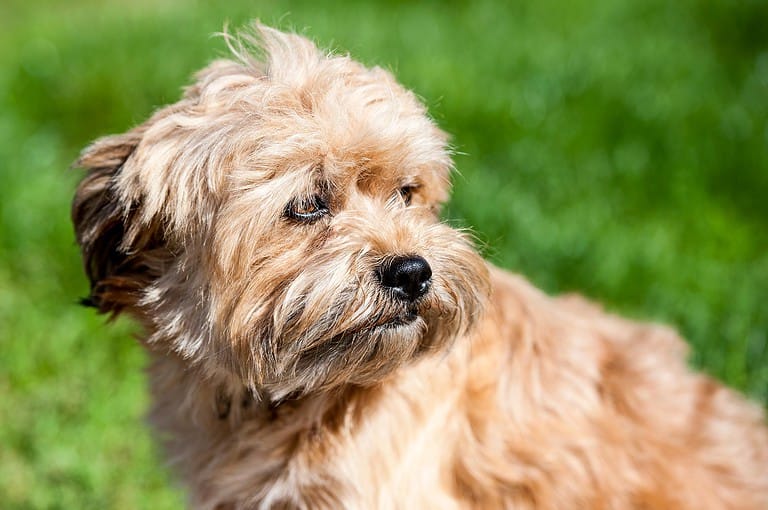
tan westiepoo puppy

Though these dogs are considered hypoallergenic, Westiepoos do shed a small amount of hair.

Exercise

These dogs need about 30 minutes of exercise per day. They have a lot of energy that needs to be burned off!

Exercise for these dogs can take the form of walking in the neighborhood, playing fetch in the backyard, or walking a trail in the woods. They get along with other dogs, so taking a Westiepoo to a dog park is a good idea as long as the other dogs are similar in size.

These dogs are suitable for apartment living. As long as the owner takes the dog out for exercise for at least 30 minutes a day, living in an apartment is appropriate for this hybrid breed.

Puppies

Westiepoo puppies are energetic and anxious to explore their environment. So, providing a safe area for these small dogs to stretch their legs and move around is important.

Children and Westiepoos

These dogs do have a reputation for being good with older children. They are less suitable for a family with young children. This is because young children can sometimes treat small dogs like this one in a harsh or rough way without realizing it. A Westiepoo may respond in a negative way, thinking it is in danger of being injured.

Dogs Similar to Westiepoos

Some dogs that are similar to Westiepoos include the Cairn terrier, the Scottish terrier, and the Skye terrier.
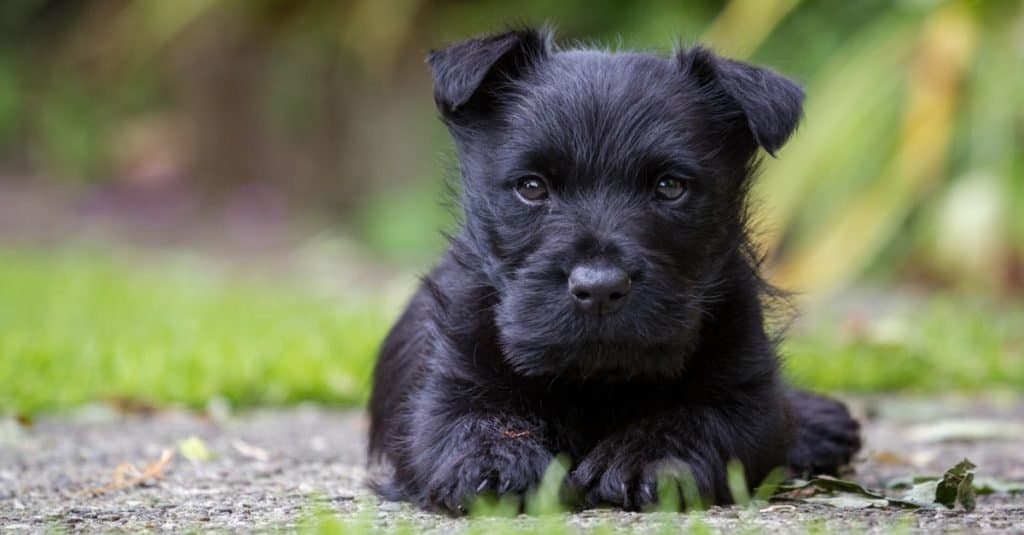
Scottish terrier puppy with grass background

Scottish terriers are similar to Westiepoos.

  • Cairn terrier: Cairn terriers are energetic, smart, and playful like Westiepoos. But Westiepoos are larger in size and weigh more than the Cairn terrier.
  • Scottish terrier: Like the Westiepoo, the Scottish terrier is intelligent with a stubborn streak. One big difference is that while most Scottish terriers are black, Westiepoos can come in a variety of colors, including white, cream, black, and apricot.
  • Skye terrier: Skye terriers and Westiepoos are approximately the same size and are both friendly. However, a Skye terrier has a much longer coat requiring more grooming attention.
View all 442 animals that start with W

Sources

  1. Dogzone / Accessed March 9, 2021
  2. The Happy Puppy site / Accessed March 9, 2021
Ashley Haugen

About the Author

Ashley Haugen

Ashley Haugen is the editor of A-Z Animals. She's a lifelong animal lover with an affinity for dogs, cows and chickens. When she's not immersed in A-Z-Animals.com (her favorite editorial job of her 25-year career), she can be found on the hiking trails of Middle Tennessee or hanging out with her family, both human and furry.
Connect:

Thank you for reading! Have some feedback for us?


Westiepoo FAQs (Frequently Asked Questions)

A Westiepoo is a cross between a West Highland White terrier and a miniature poodle. They originated in the 1970s in the United States. This dog belongs to the hybrid group.

Though they are thought to be hypoallergenic, they do shed a low level of hair. These dogs are smart and affectionate with a playful nature.