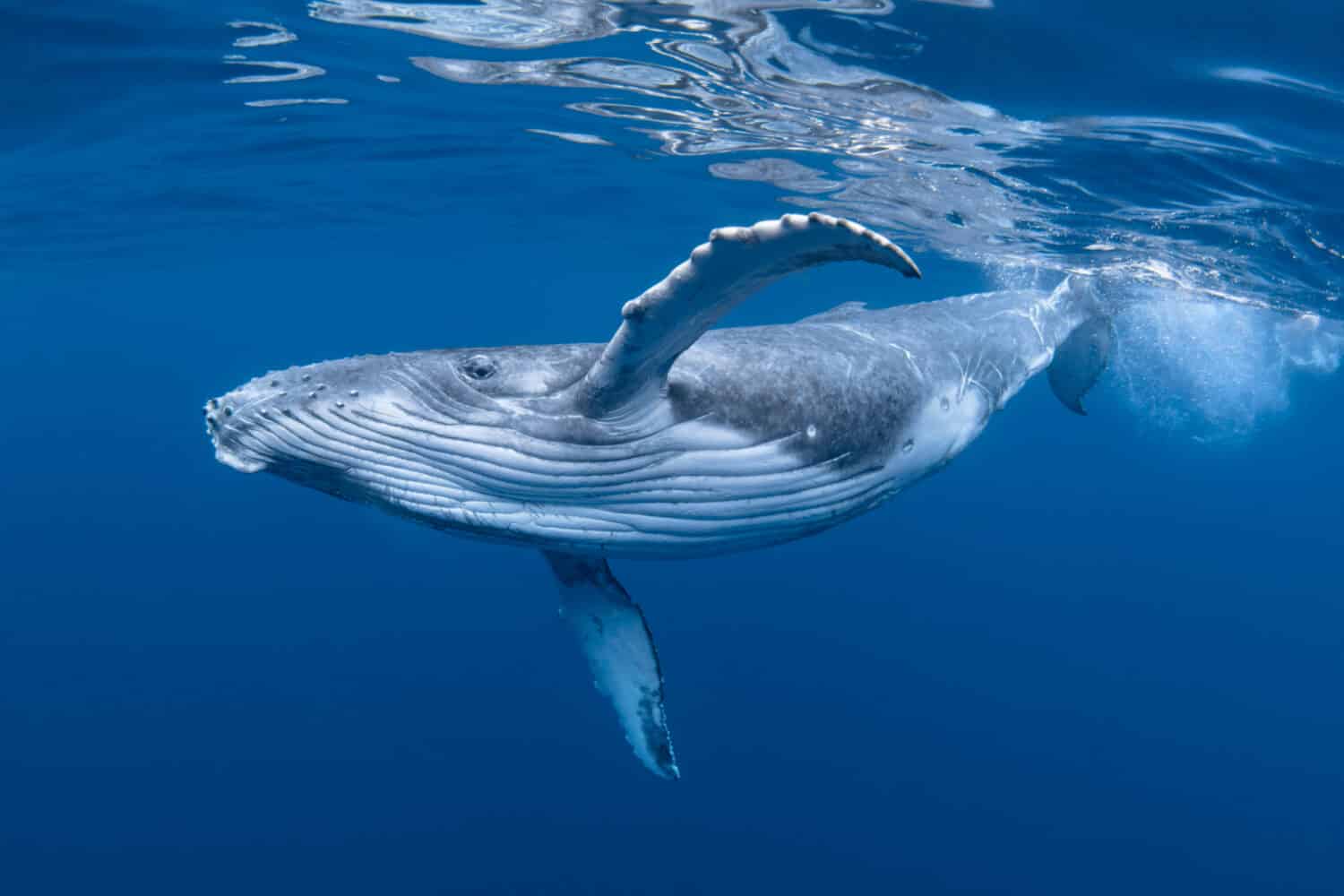

Whales travel through the ocean, lunging, leaping, and playing, with grace and swiftness that belie their huge size. The secret to their incredible lifestyle, besides their well-adapted skeletal and muscular structure, is a unique respiratory system specialized for deep-sea diving. In the course of its evolution, this respiratory system has had to overcome the challenges of mammalian anatomy. Like any other mammal, whales need oxygenated air to survive. This leaves them vulnerable to suffocation if they don’t return to the surface in time. Fortunately, they have evolved several extreme adaptations to survive the long and difficult journey beneath the surface. Read on to learn how long whales can hold their breath.
How Do Whales Breathe?
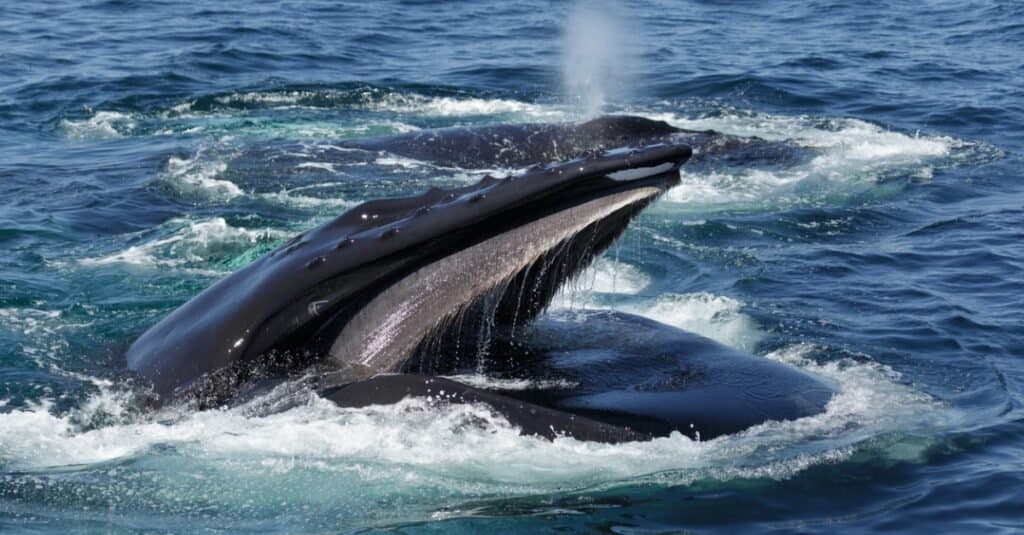
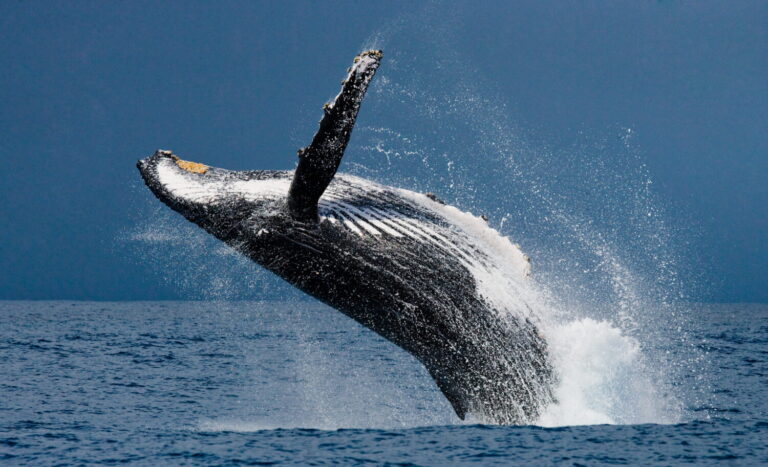
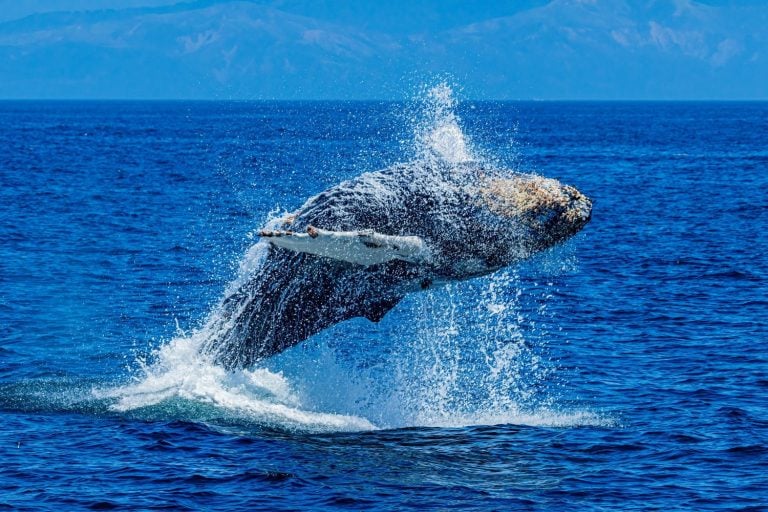
The spout of water that is seen arising from a whale’s blowhole doesn’t come from the lungs.
©iStock.com/stephenallen75
The most important feature of any cetacean’s respiratory system is the blowhole located at the top of the head. The blowhole remains closed by default to prevent water from entering the body. After returning to the surface, the whale opens up its blowhole by contracting a small muscular flap. It then exhales stale air from its body in a towering gust of pressurized air. The spout of water you see coming from the blowhole does not originate from the lungs. Instead, the forceful exhalation pushes water sitting on the whale’s body upward, creating a fine mist. This action clears water away from the blowhole, allowing the whale to inhale air without risking water entering its lungs.
Once the stale air has been expelled from the body, the whale will take in a series of quick breaths to replenish its oxygen. Most species only resurface for a few moments before they relax the muscles around the blowhole once again and then dive back beneath the surface. To keep water out of their lungs when they’re eating, cetaceans generally do not breathe through their mouths. However, scientists have found that some dolphins with damaged blowholes can learn to breathe through the mouth as a last resort.
How Long Can a Whale Hold Its Breath?
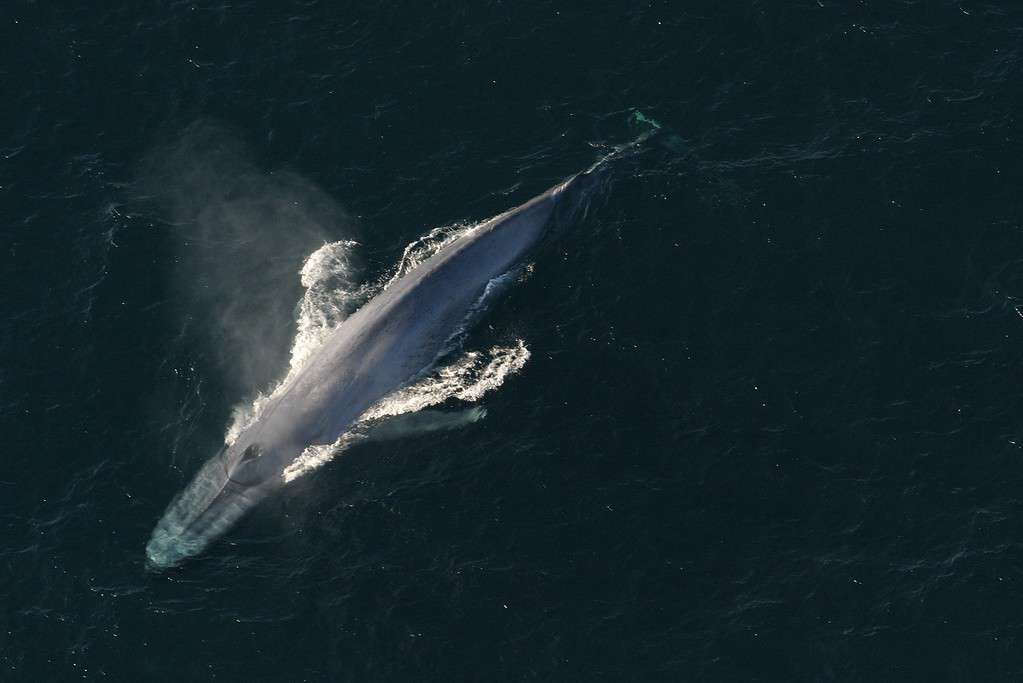
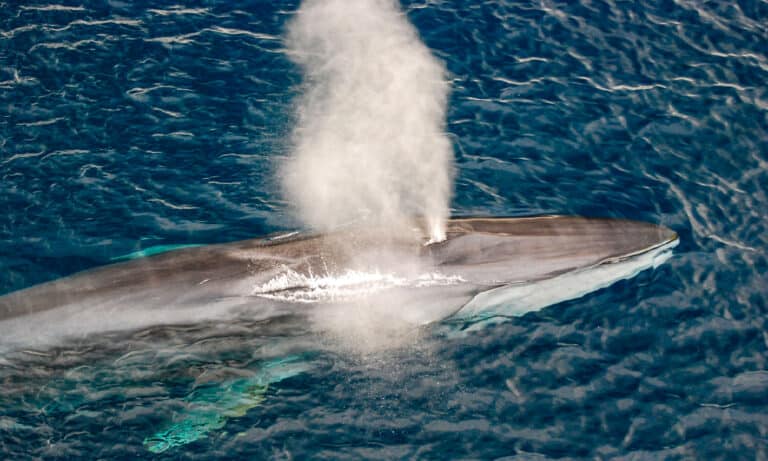
The blue whale, the largest animal to ever live, is believed to be able to hold its breath as long as 60 minutes.
©NOAA Photo Library / CC BY 2.0, Flickr – Original / License
The answer depends on both the species and the individual whale. Dive times vary widely, ranging from just a few minutes to over three hours. Below, we discuss the dive times for some of the most well-known whales.
Sperm Whale
One of the most impressive of all the cetacean divers is the sperm whale. It can hold its breath for around 90 minutes while diving down to depths of more than 3,000 feet to feast upon a favorite meal — giant squid.
Blue Whale
The blue whale, the largest animal to have ever existed, can typically hold its breath for around 15 to 30 minutes. However, some sources note it can hold its breath for up to 60 minutes. The deepest dive ever recorded from a blue whale was around 1,000 feet.
Humpback Whale
The humpback whale is believed to be able to hold its breath up to 45 minutes at a time, but other sources have suggested the time is closer to 20 to 30 minutes. This suggests that dive times may also depend on an animal’s foraging habits in certain regions. The typical foraging trip lasts an average of about 4 to 6 minutes. It comes up to the surface, takes 6 to 8 quick breaths, and then dives back down. The deepest humpback whale dive ever recorded was more than 2,000 feet.
Killer Whale
The killer whale does much of its hunting near the surface. This is reflected in its respiratory capacity: it can only hold its breath for an average of about 15 minutes. However, when prey isn’t that easy to find near the surface, the killer whale does have the ability to dive several hundred feet below the surface in search of suitable prey. It will surface about every 3 to 5 minutes while traveling long distances. Killer whales have also been found to take just one breath between dives.
How Do Humans Compare?
Humans, in comparison, have much weaker breathing capacity. The average person can only hold their breath for a few minutes at a time. The longest human dive ever recorded, involving years of extensive training, was set by Croatian diver Budimir Sobat in 2021. He held his breath for an astonishing 24 minutes and 37 seconds.
The Record for the Longest Whale Dive
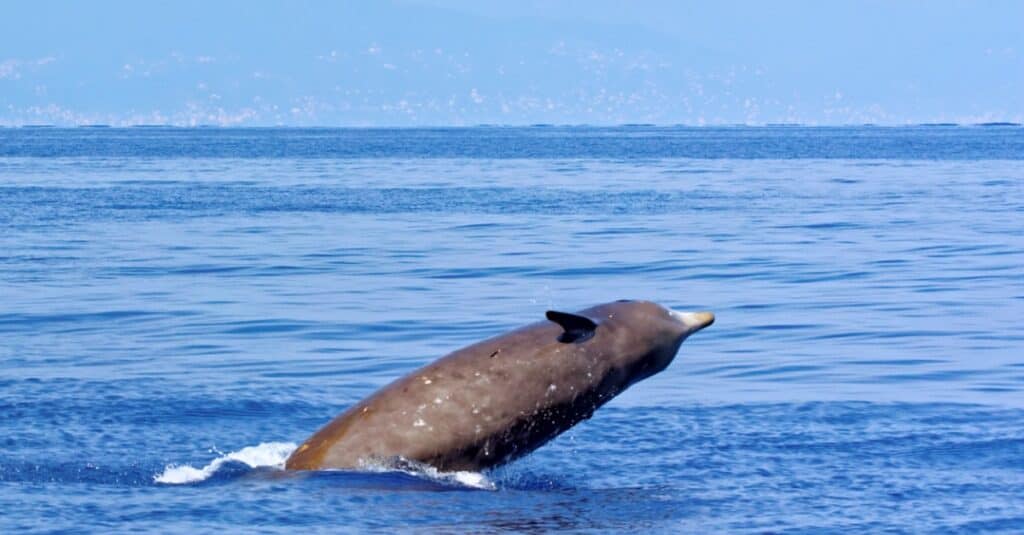
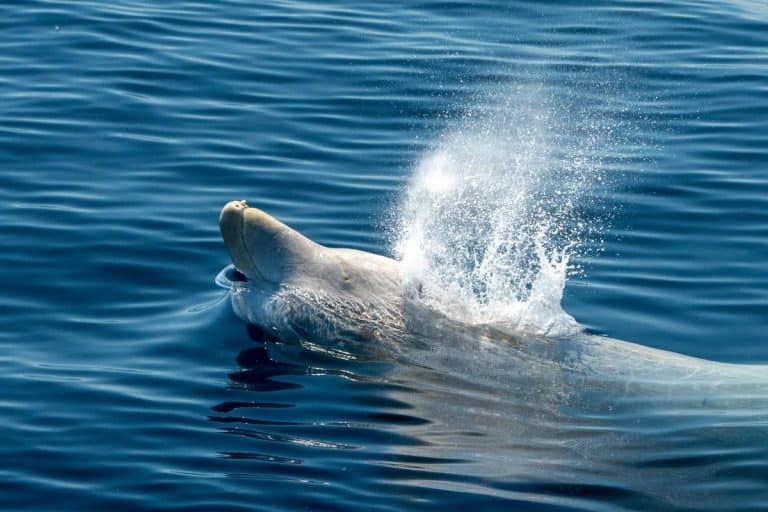
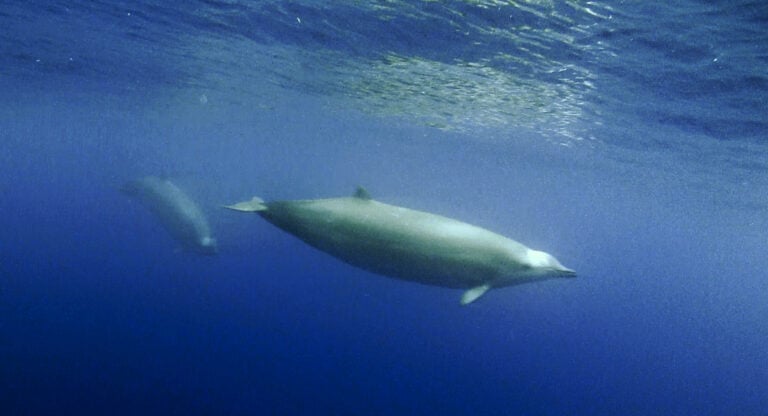
The Cuvier’s beaked whale can reach depths of nearly 10,000 feet.
©iStock.com/HeitiPaves
Cuvier’s beaked whale, a deep-ocean species that can grow up to 23 feet long and weigh up to 6,800 pounds, holds the record for the longest dive ever recorded. It is capable of reaching depths of nearly 10,000 feet, which is just under 2 miles. A 2020 study revealed that a Cuvier’s whale had been recorded diving for 3 hours and 42 minutes.
However, some even longer dives were initially excluded from the data due to interference from Naval sonar, suggesting that these whales may be capable of diving for even longer periods. It’s estimated that they spend around 90% of the time beneath the surface — perhaps more than any other mammal. This behavior seems to push the limits of what whales can endure, and the reasons for it are not entirely clear.
How Do Whales Hold Their Breath?
The secret to whales’ breathing capacity lies in the efficiency of their entire respiratory system. This starts from the moment of their first breath. While humans can only absorb about 5% oxygen with each breath, whales can absorb up to 90%, which allows them to derive more power with each breath taken.
Contrary to what some people believe, whales do not have larger lungs, at least in relation to their total body size. In fact, their lungs are actually smaller in relation to their bodies than many terrestrial mammals. Instead, they rely on incredible adaptations to survive deep dives. For instance, the volume of blood coursing through their veins is massive. It is perhaps three times greater than that of a terrestrial mammal of similar size. Their blood also contains twice the level of oxygen-carrying hemoglobin compared to other mammals. This means their blood is particularly oxygen-rich, allowing it to supply their cells with the oxygen they need.
When whales dive, their bodies automatically redirect blood flow to vital central organs such as the brain and muscles, and away from organs they are not using at the moment, including the kidneys and liver. With only the most vital organs still functioning, whales can slow their heart rates to around four to eight beats per minute — just enough to stay alive. The blue whale provides a particularly extreme example: it can reportedly reduce its heart rate to about two beats per minute.
What Happens If They Run Out of Oxygen?
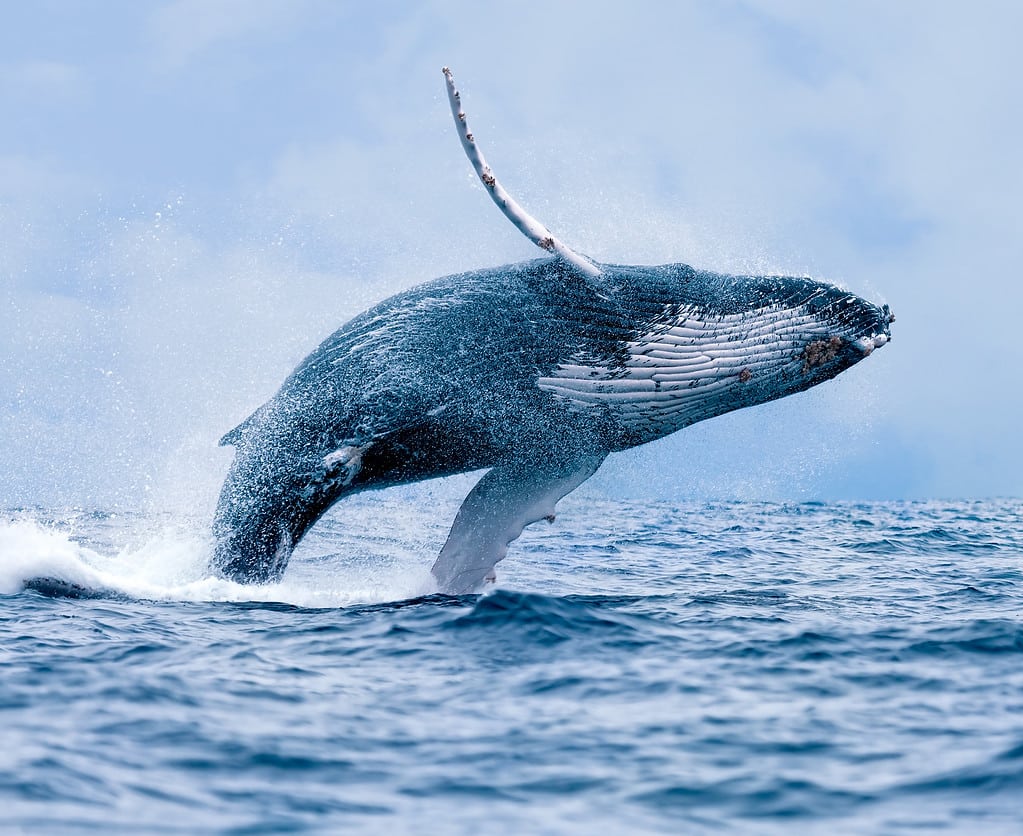
Contrary to popular belief, whales do not have larger lungs relative to their body size.
©PaulWolf/iStock via Getty Images
Finally, if all else fails and it is running out of oxygen stores, a whale can switch to anaerobic respiration, which conserves precious oxygen. However, this causes lactic acid to build up quickly, which tires the muscles. This is normally an option of last resort; previous research on marine mammals has shown they have already completed about 95% of their dive before switching to anaerobic respiration.
One notable exception is the Cuvier’s beaked whale, which can reportedly stay underwater for at least another hour after anaerobic respiration begins, without experiencing apparent muscle fatigue. This suggests there is something unique occurring within the beaked whale’s metabolism that scientists do not yet understand.
One important issue that any deep-sea diver must contend with, whether human or whale, is tissue damage. Small differences in pressure between gas-filled air cavities, like lungs, inside the body and the surrounding water can cause the tissue to rupture. This is known in the scientific jargon as barotrauma.
To withstand the pressure of a deep dive, it’s believed that some whales have extra veins lining the insides of these gas-filled cavities. When the whale reaches exceptional depths, the veins expand outward to fill the extra space inside the cavity. At the same time, the lungs collapse to prevent any damage. Since they have so much oxygen circulating in their blood, they do not need to use their lungs again until they reach the surface.
How Do Whales Sleep?
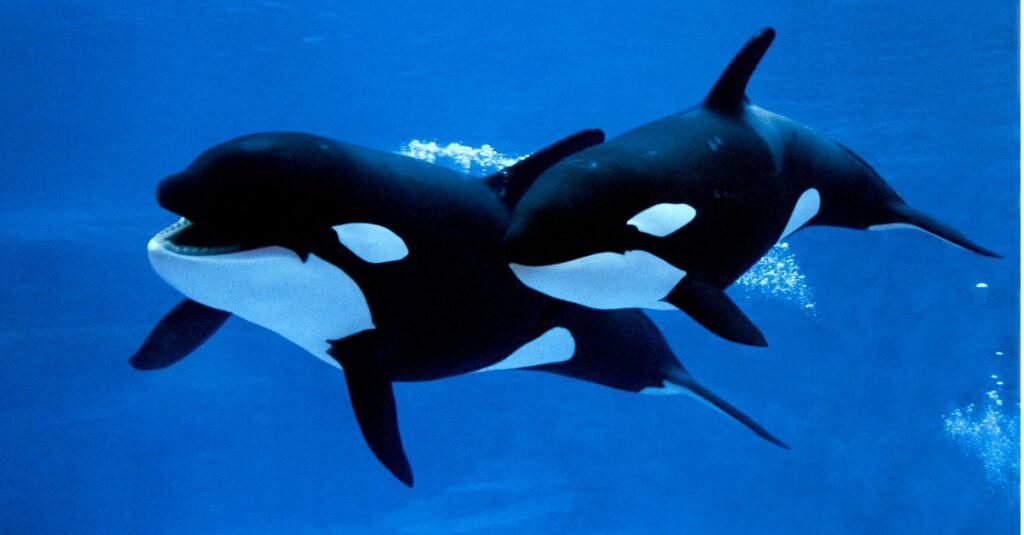
Whales sleep either horizontally or vertically.
©slowmotiongli/Shutterstock.com
Cetaceans generally have two strategies for sleeping. They will either rest horizontally or vertically in the water, or they will catch a bit of sleep while swimming next to another individual. Both methods involve sleep states that are more akin to napping.
In this state, much of their brain remains alert and active. While breathing itself is involuntary, whales must remain conscious enough to control the blowhole, as it requires voluntary muscle movement. This suggests they do not sleep in the same way humans do.