
Quick Take
- Voles are small rodents that are also called field mice.
- Numerous species of voles are found throughout the Northern Hemisphere.
- Vole pups grow up fast, with some having their first litter in a matter of weeks after they are born.
Voles are rodents from the subfamily Arvicolinae that are also called field mice. There are between 140 and 150 recognized species of voles found across the Northern Hemisphere. Voles are small, stout-bodied rodents that have blunt noses, small ears, and short tails. They are largely herbivorous and use their razor-sharp teeth to grind up fibrous plant materials. Continue reading to learn everything you need to know about what voles eat.
What Do Voles Eat?
Voles are opportunistic omnivores that primarily eat plants, grasses, fruits, seeds, and occasionally carrion. While their diet is mostly plant-based, they may consume animal protein—such as insects, snails, or the carcasses of small animals, including other voles—during times of high reproductive demand or when plant food is scarce.
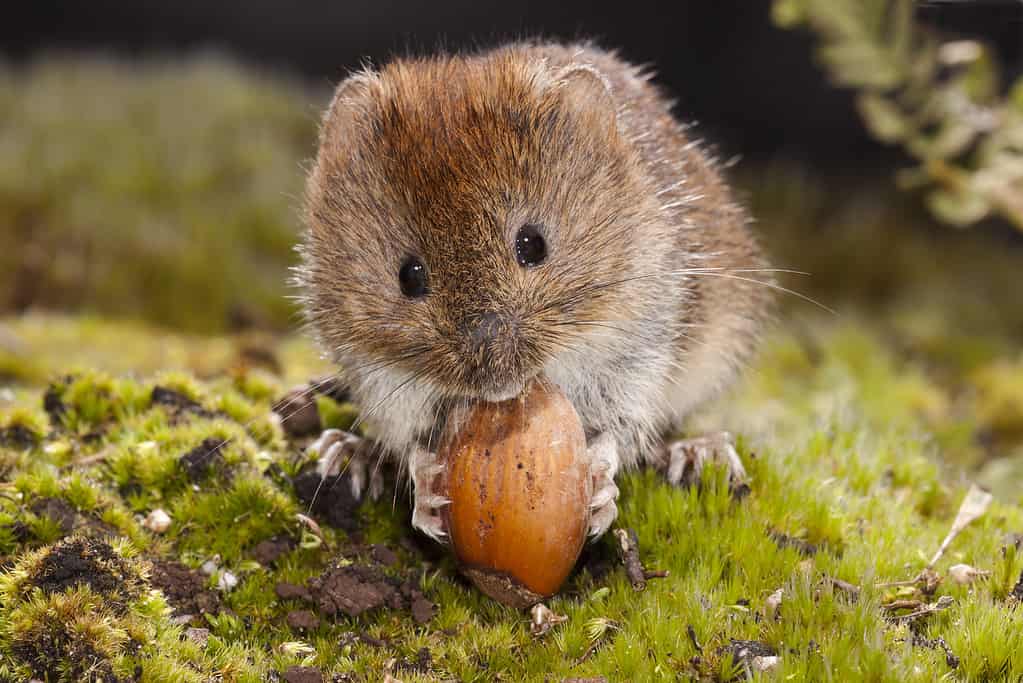
A small brown vole can be seen intently enjoying a nut on the forest floor.
©iStock.com/AGAMI stock
Voles will eat many foods, including:
- Almonds
- Apples
- Beets
- Carrion (from other small mammals)
- Carrots
- Chickweed
- Clover
- Corn
- Dandelion
- Grass
- insects
- Nuts
- Oats
- Potatoes
- Plant root bulbs
- Sedges
- Seeds
- Shrub bark
- snails
- Tree bark
- Turnips
Voles are highly adaptable herbivores, thriving on a wide diet that allows them to survive in many environments. Unfortunately, this makes them destructive pests near human homes, as they frequently consume lawns, ornamental plants, and root crops.
Voles are destructive garden pests that thrive by rapidly reproducing and feeding on plant roots and tubers. By eating roots and chewing the base of plants, they cause vegetation to collapse, while their fast breeding cycle ensures constant, widespread damage.
What do Vole Pups Eat?
Vole pups are born helpless and feed on their mother’s milk, but they grow quickly and begin eating solid food, primarily grasses, roots, seeds, and bark, at a very young age. Female voles mature rapidly and can produce their first litter as early as 3 to 5 weeks of age, depending on the species. They start breeding immediately upon reaching maturity, with spring-born females often producing their first litter by late spring or early summer.
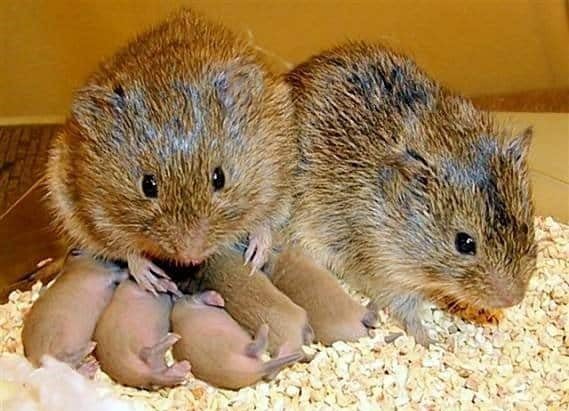
Vole pups feed on their mother’s milk initially.
How Do Voles Find Their Food?
Voles find their food primarily by creating extensive networks of surface runways and shallow underground burrows, allowing them to locate roots, tubers, and bark.
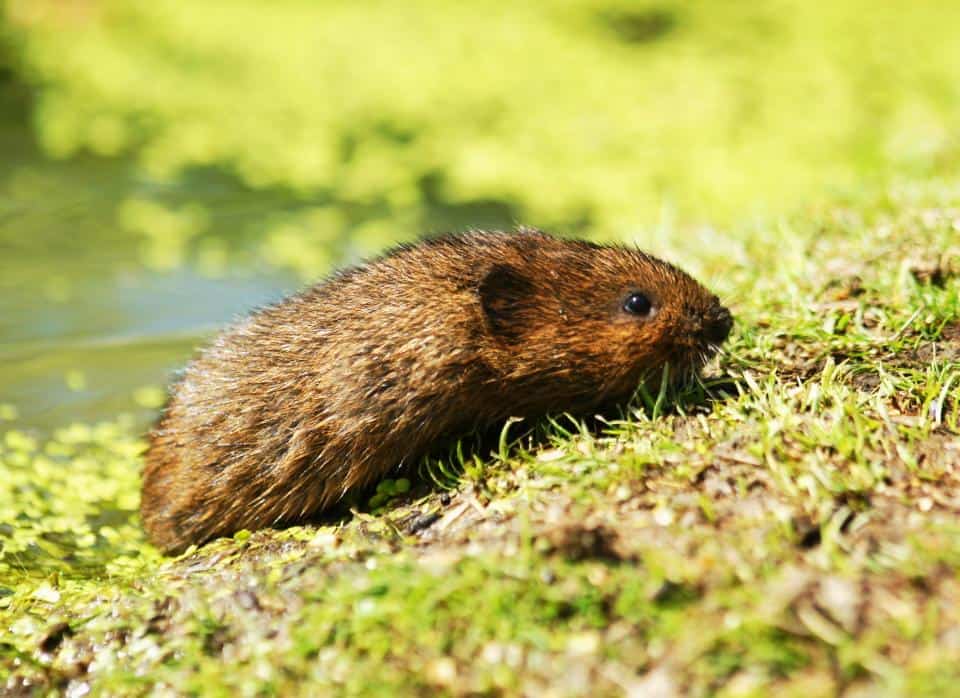
Voles smell their food and then dig for it or eat it with their strong teeth.
©Peter Trimming / Flickr – Original
They are highly active, foraging day and night year-round, and use a keen sense of smell to detect food within their habitat, which is usually no more than a quarter-acre. Voles create 1- to 2-inch wide trails in grass, often cutting vegetation to ground level while foraging, which allows them to travel and find food while staying hidden from predators.
What Do Voles Eat in Winter?
During winter, voles maintain high activity under snow cover, creating subnivean (under-snow) tunnels, where they graze on grass and gnaw on the bark of trees and shrubs. They store food for the winter in underground chambers or under protective covers like logs or stumps, allowing them to access food even when forage is unavailable.
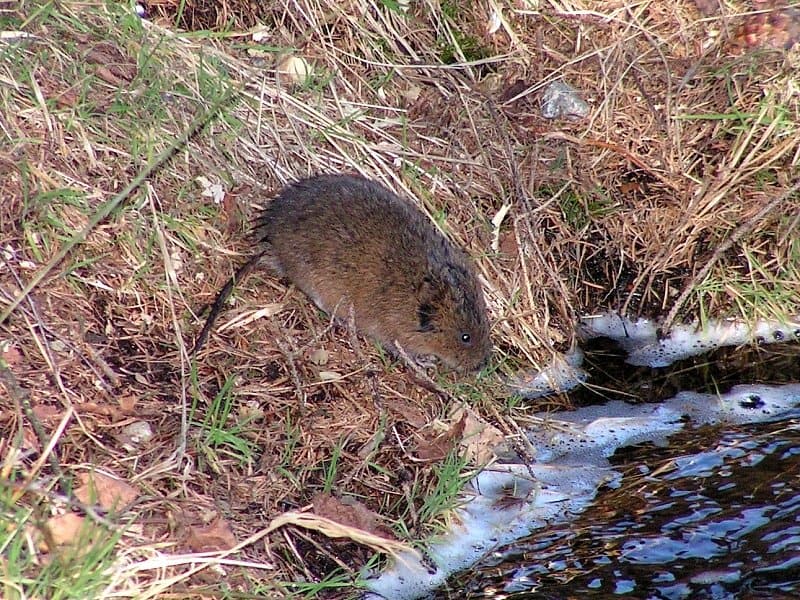
Voles eat more bark and roots in the winter.
©Rabensteiner – Public Domain
However, research has shown that many voles do not store an adequate amount of food to spend the entire winter in their burrow. They need to frequently find bark, roots, seeds, and even carrion to help them stay well-fed.
Some voles simply do not live long enough to survive winter. Voles have an average lifespan of 3–6 months in the wild, though some may live up to 16 months; many do not survive through an entire winter.
How Much Do Voles Eat?
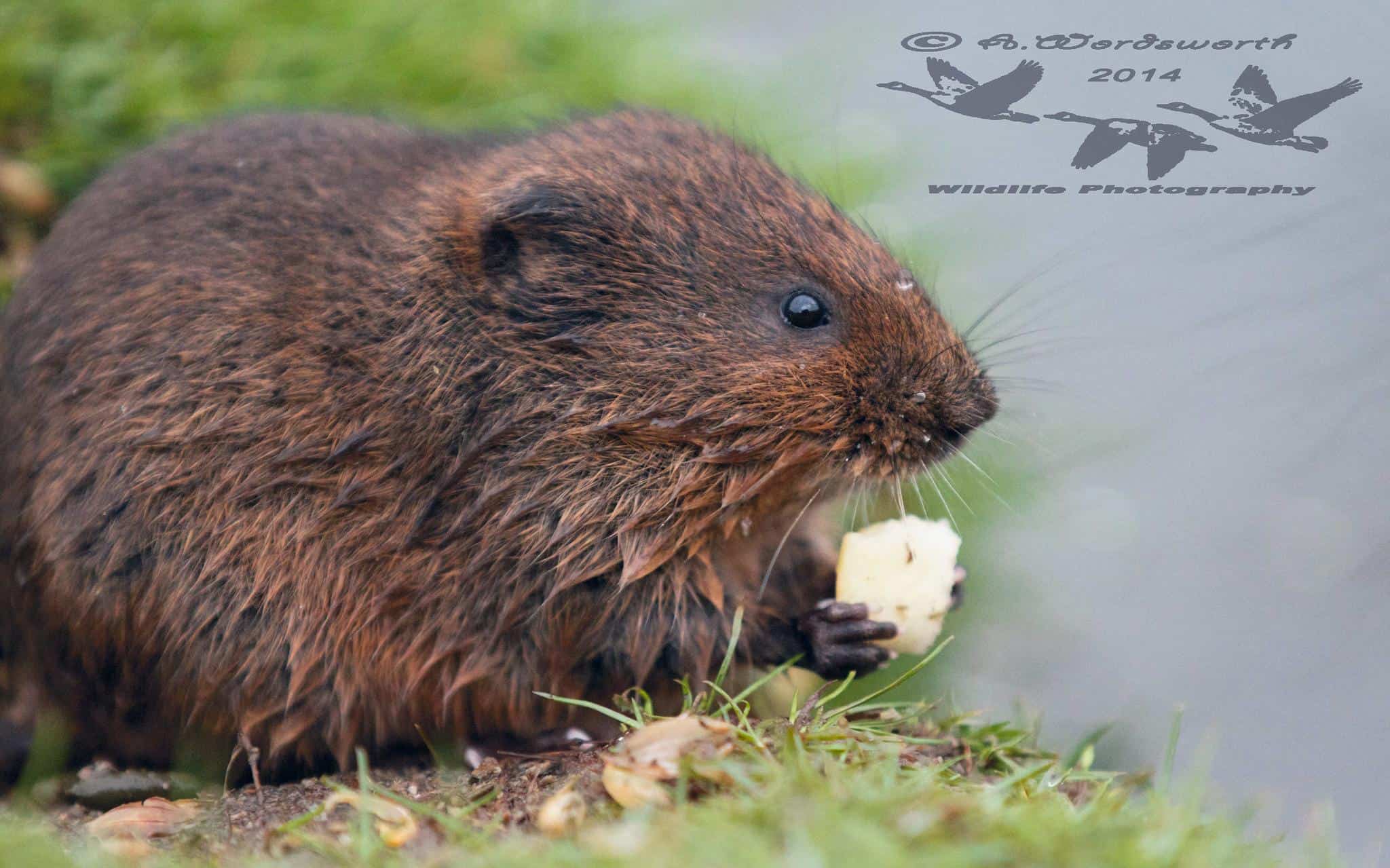
Voles consume an amount of food equivalent to roughly 60% to 80% of their body weight every 24 hours. Due to a high metabolism, these small rodents eat continuously, consuming roots, bark, seeds, and plants, with some species, such as water voles, requiring 80% of their weight in daily food.
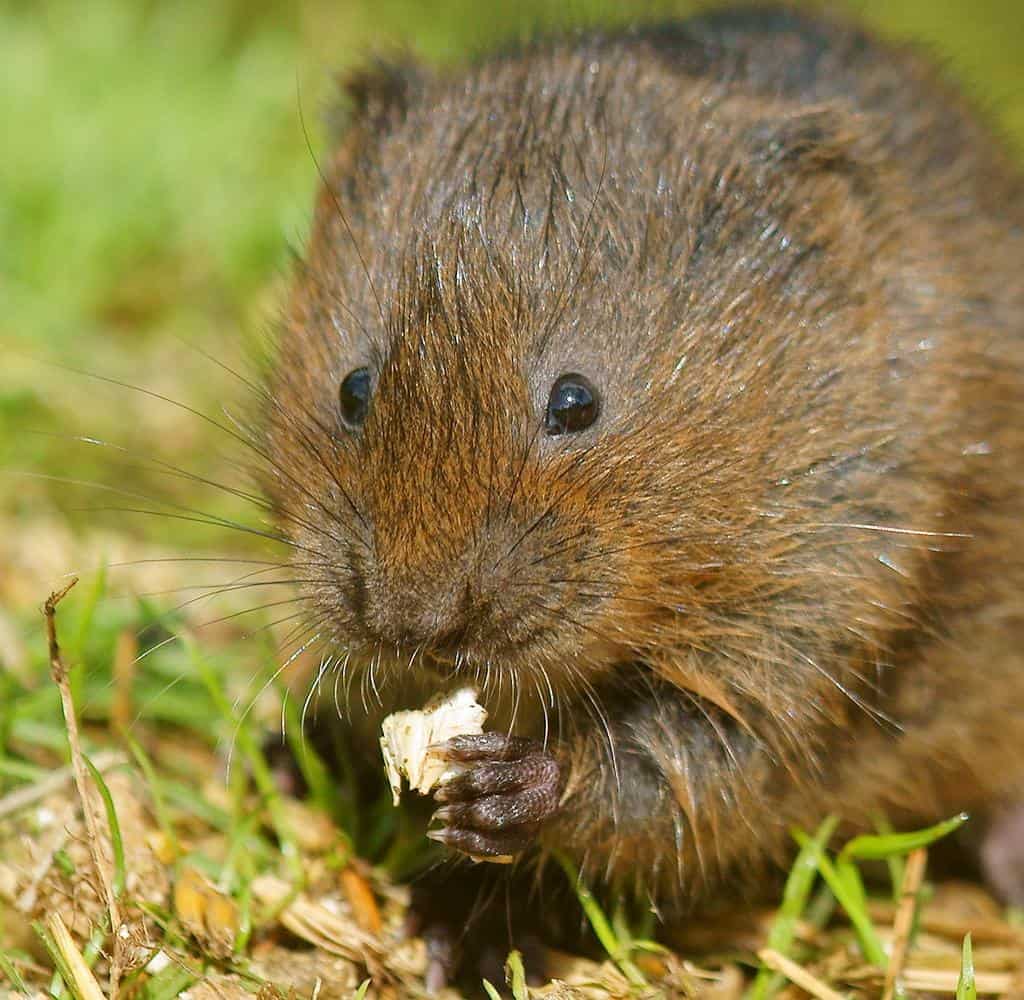
Voles can eat 60% of their body weight or more each day.
©Peter Trimming / Flickr – Original
Despite their small size, voles pose a major threat to agriculture and landscaping, causing extensive damage to crops, fruit trees, and forage areas. Their high-density population cycles necessitate a focus on population management to mitigate significant ecological damage and economic loss.
Considering that voles can produce up to five or six litters per year, with each litter typically containing three to six pups, though litter sizes can range from one to eleven depending on the species, the density of voles in an acre of land can range from a few dozen to a few hundred rodents.
What Predators Eat Voles?
Voles are very small rodents that are very appetizing to numerous creatures. Partly due to their high distribution but mostly because they have few defenses, voles are a common victim of predators.
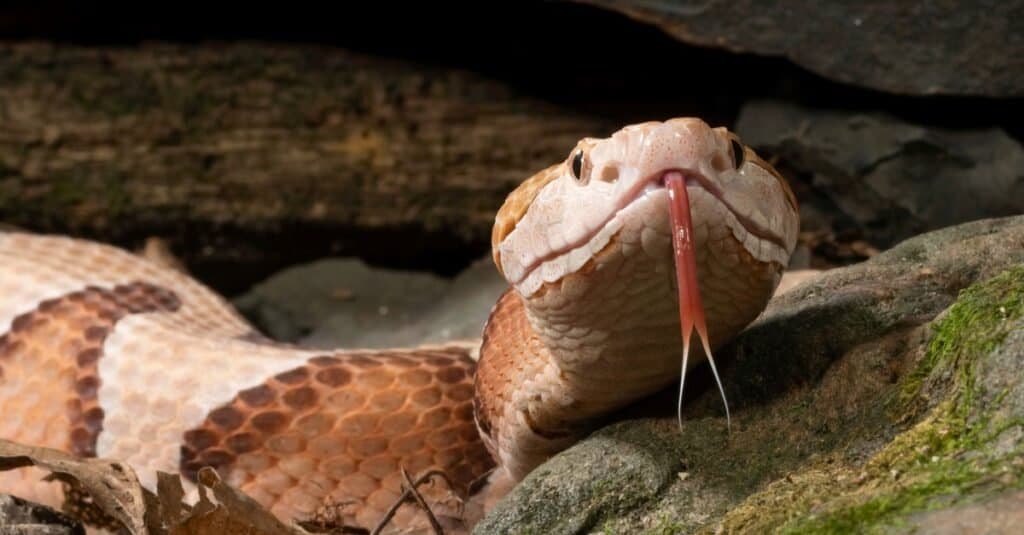
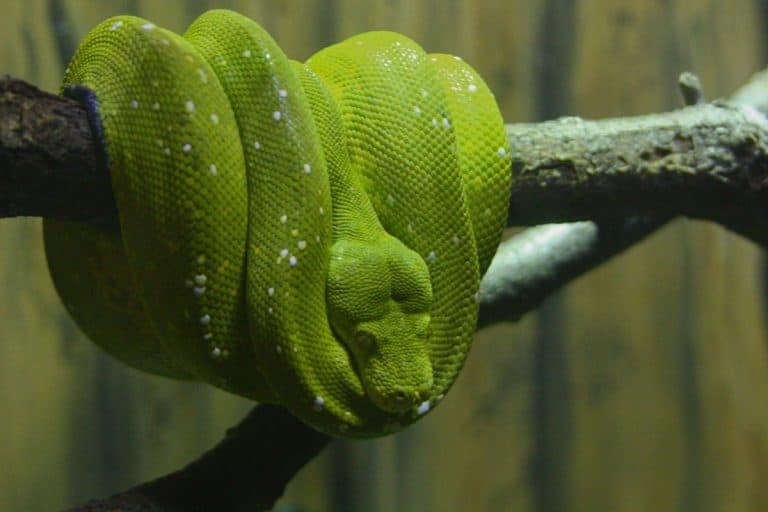
Snakes can hunt voles down in their burrow.
©Joe McDonald/Shutterstock.com
Voles are very small rodents that are very appetizing to numerous creatures. Due to their widespread distribution and lack of effective defenses, voles are a common prey for numerous predators.
Besides burrowing, they cannot fight back against larger, more aggressive creatures.
Common vole predators include:
- Badgers
- Bobcats
- Coyotes
- Domestic cats
- Domestic dogs
- Falcons
- Foxes
- Hawks
- Kestrels
- Owls
- Snakes
- Weasels
- Wolves