
Quick Take
- One animal on this list has nothing to do with fangs or claws, and yet it is arguably the most dangerous creature in New Jersey's waterways. Meet the real danger →
- Timber rattlesnakes are venomous and terrifying on land, yet most people have no idea what they're capable of in the water. See their swimming ability →
- One of these animals is widely considered harmless and even adorable, but corner one near its young and you'll think twice about that reputation. Learn about river otters →
- A snake you've probably already seen in New Jersey's lakes is frequently mistaken for a venomous species, and that confusion can put you at real risk. See the mistaken identity →
New Jersey is well-known for many things, including the Statue of Liberty. While Lady Liberty is located in New York, you can get an amazing view of her from Jersey City. New Jersey is known as the garden state because of all the cranberries, tomatoes, and blueberries it produces. The state also offers visitors many beautiful lakes and rivers to choose from. Some of these lakes include Lake Carnegie, Farrington Lake, Lake Atsion, Monksville Reservoir, Lake Hopatcong, Round Valley Lake, Manasquan Lake, Mercer Lake, Green Pond, Ramapo Lake, Deal Lake, Mohawk Lake, and Merrill Creek Reservoir. However, some of the most dangerous animals in New Jersey lurk in these lakes and rivers.
1. Timber Rattlesnakes
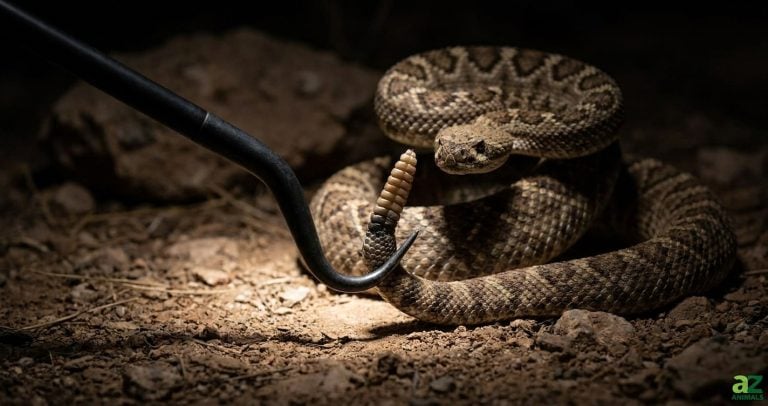
The timber rattlesnake, (Crotalus horridus) is a pit viper that occurs in the eastern half of the United States. They are gray with a stripe down their back that can be yellow, orange, pinkish, black, or brown, and they often have a pinkish tint. These venomous snakes have large, heavy bodies and typically measure up to 5 feet long, although some individuals may exceed this length. Timber rattlesnakes are good climbers and swimmers, often swimming across lakes, rivers, streams, and other waterways to hunt or move between areas. They can be found in forests and rocky, wooded areas along the Kittatinny Ridge and in the Highlands region of northern New Jersey. In southern New Jersey, they live in swamps and pine oak forests in the Pine Barrens.
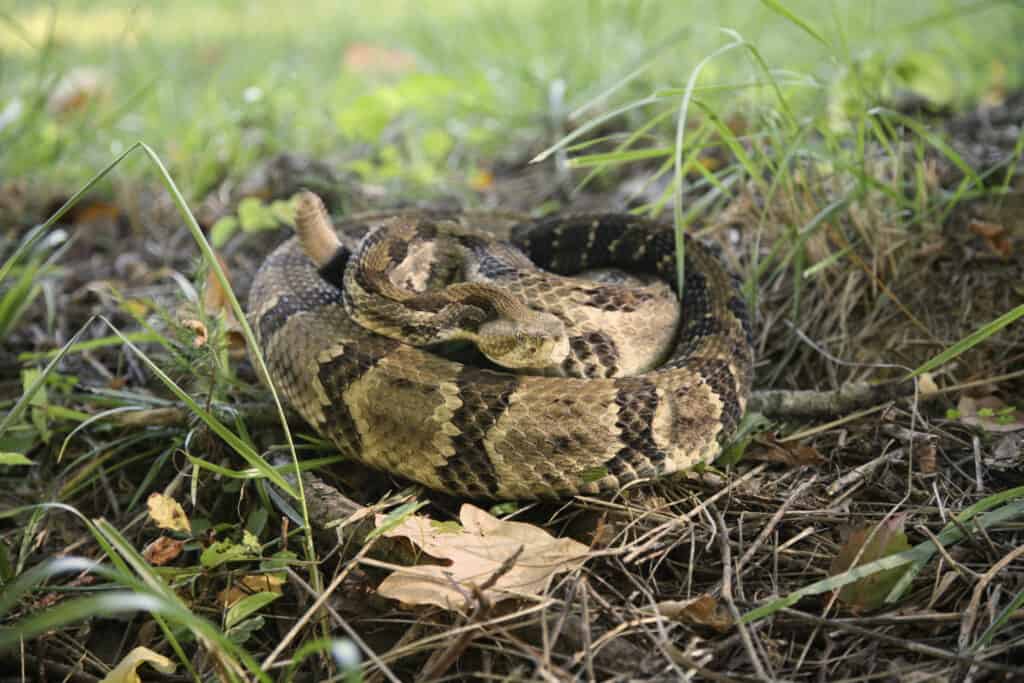
Timber rattlesnakes can reach over 5 feet long.
©iStock.com/NajaShots
2. Northern Copperheads
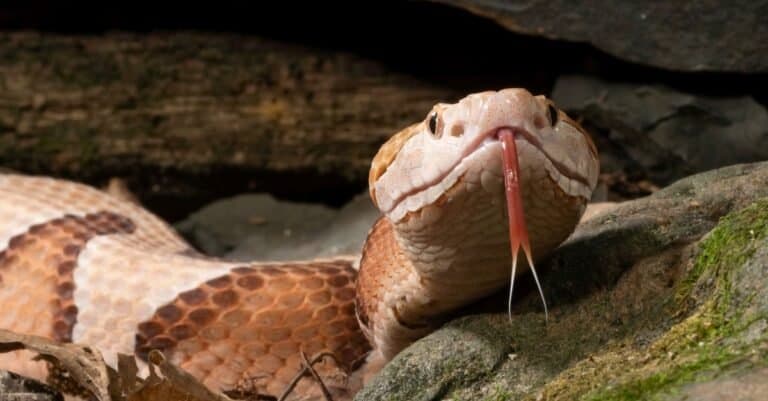
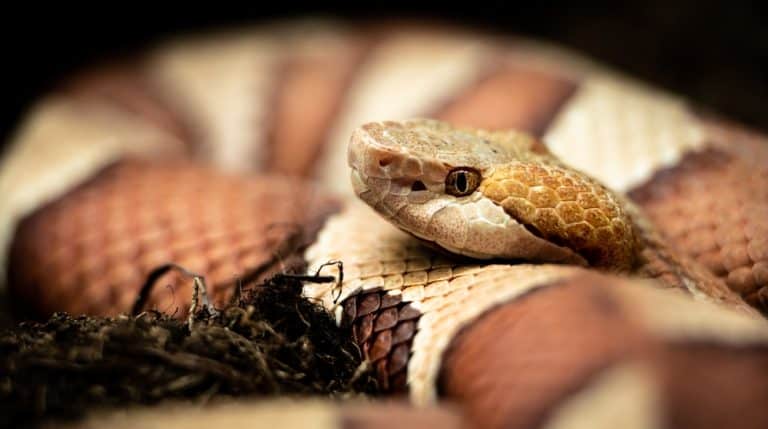
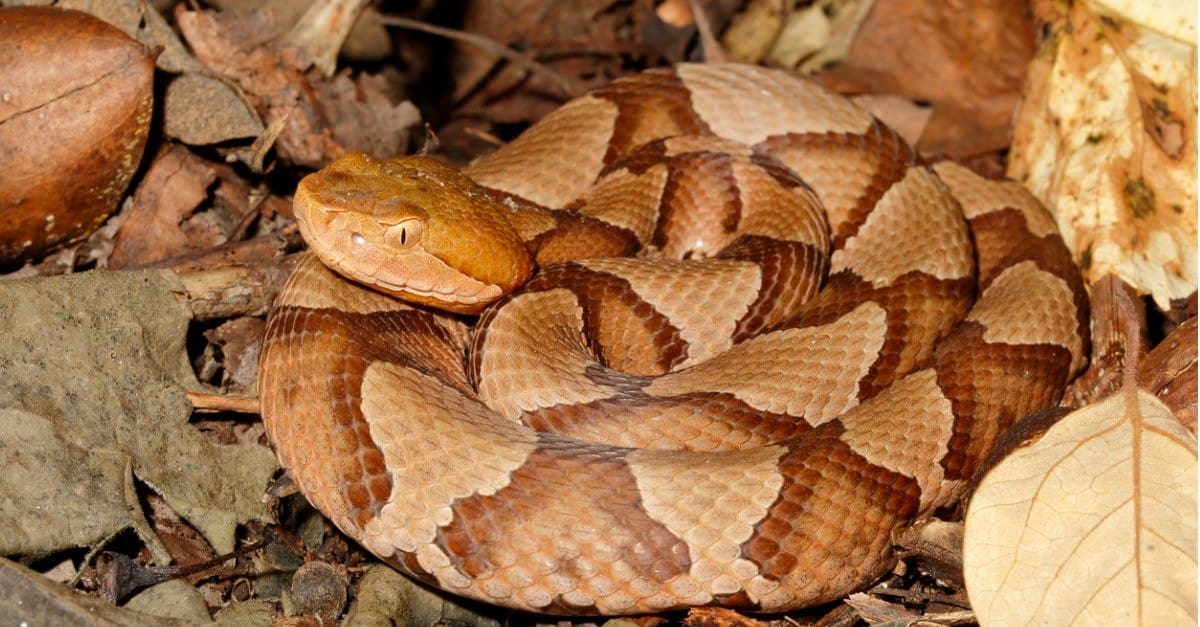
The northern copperhead (Agkistrodon contortrix mokasen) is found in the eastern United States. They are venomous snakes that belong to the pit viper family. Copperheads are sturdy snakes with keeled scales. Their heads are copper-colored yet unmarked, and they have a reddish-brown body with brown crossbands. These snakes typically average 24-36 inches in length, with a maximum of 53 inches. These snakes are both good swimmers and good climbers. Although they favor drier areas, they will enter the water to swim to other areas, hunt, or cool down. They primarily inhabit rocky areas, forests, hillsides, and wetlands of northern New Jersey and have been observed in the Delaware Water Gap National Recreation Area, Sourland Mountain Preserve, Palisades Interstate Park, and Ramapo Mountain State Forest.
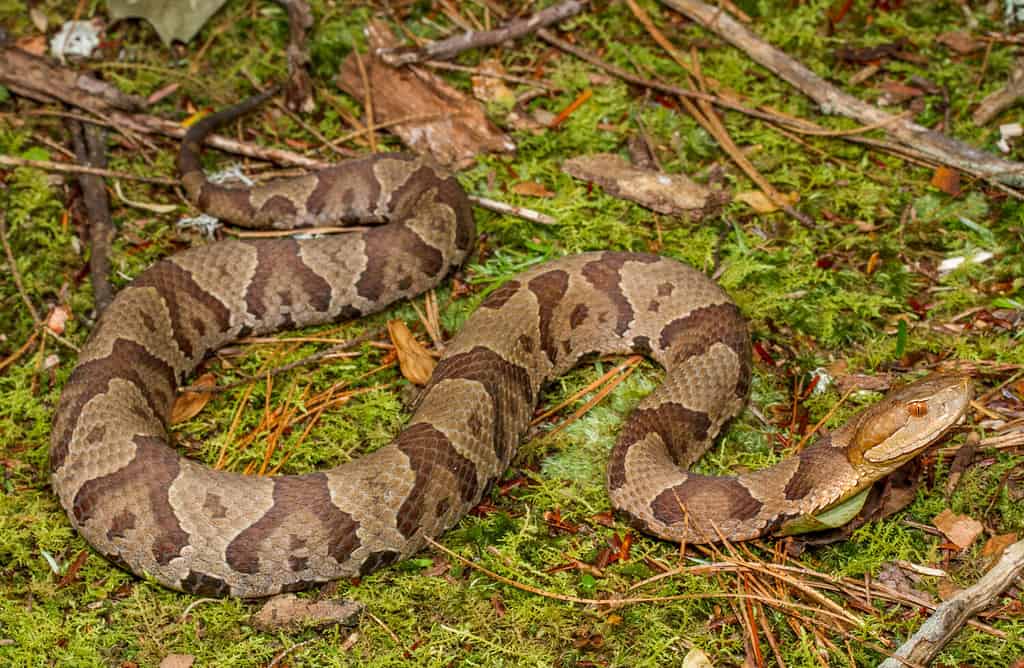
Northern copperheads prefer drier areas but they are good swimmers and climbers.
©JacobLoyacano/Shutterstock.com
3. Mosquitoes
Mosquitoes are one of the most dangerous animals in New Jersey because of the viral diseases they can spread, including Dengue, Zika, Chikungunya, West Nile, yellow fever, and malaria. There are about 170 species of mosquitoes in North America, but the primary disease-carrying mosquitoes in New Jersey are the Asian tiger mosquito (Aedes albopictus), northern house mosquito (Culex pipiens), and the inland floodwater mosquito (Aedes vexans). These pests survive on blood and plant nectar, though only females target humans; males survive exclusively on plant nectar. Mosquitoes are considered summer pests and are most active at night. They will breed in moist, soft soil and stagnant water.
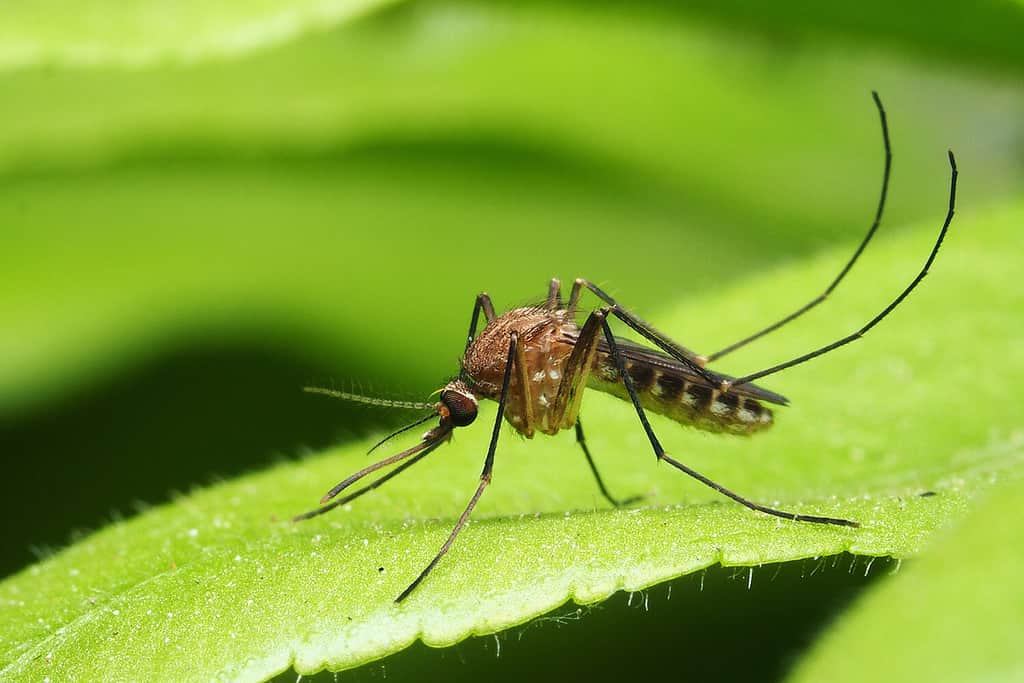
Only female mosquitoes target humans. Males survive on plant nectar.
©jiade/Shutterstock.com
4. North American River Otters
North American river otters (Lontra canadensis) are generally not dangerous to humans and typically avoid them. However, they are territorial predators and may attack if they are protecting their mates or young. Otters have sharp canines and a powerful bite, so they can also cause serious injuries if they feel threatened or cornered. Otters live throughout the waterways of New Jersey, but they favor watersheds with active beaver colonies. Beaver dams create deep ponds with abundant food sources for otters. North American river otters average around 4 feet long, including the tail, and they can weigh up to 33 pounds.
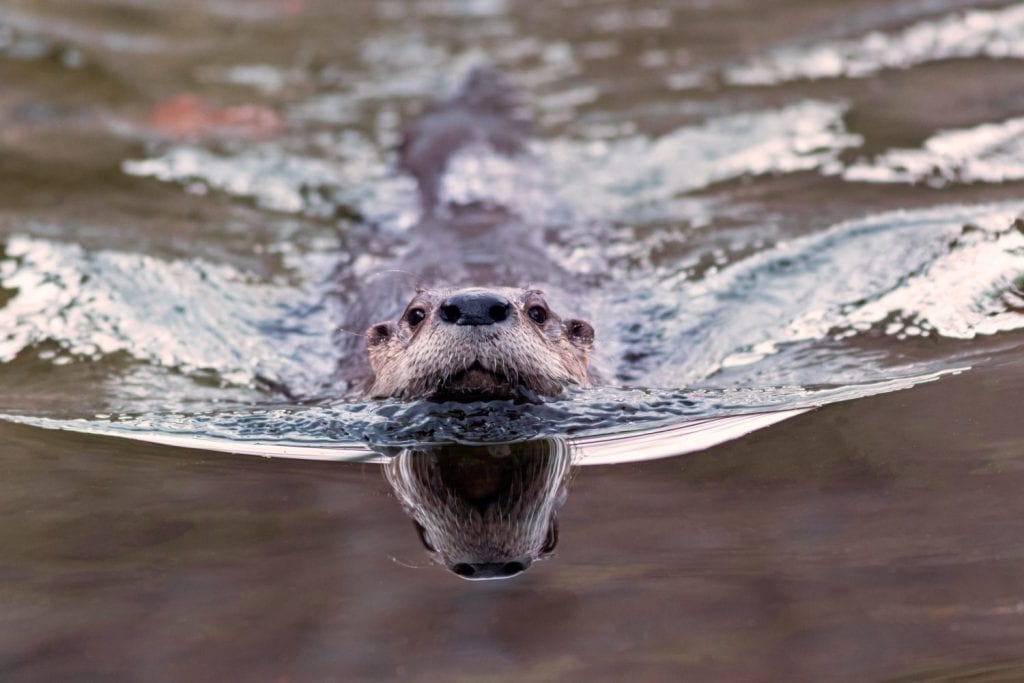
North American river waters average around 4 feet in length, including the tail.
©Rabbitti/Shutterstock.com
5. Common Snapping Turtle
Common snapping turtles (Chelydra serpentina) prefer to avoid conflict with humans and rarely bite in the water, but they can be defensive and dangerous if they feel threatened, especially on land. Their powerful jaws can cause significant injuries. In the wild, the carapace of the common snapping turtle can measure up to 20 inches and they generally reach up to 35 pounds, although some males may grow larger, with exceptional individuals weighing as much as 75 pounds. These turtles can be found in wetlands and freshwater lakes, ponds, and marshes throughout the state. They prefer shallow, slow-moving water with soft bottoms.
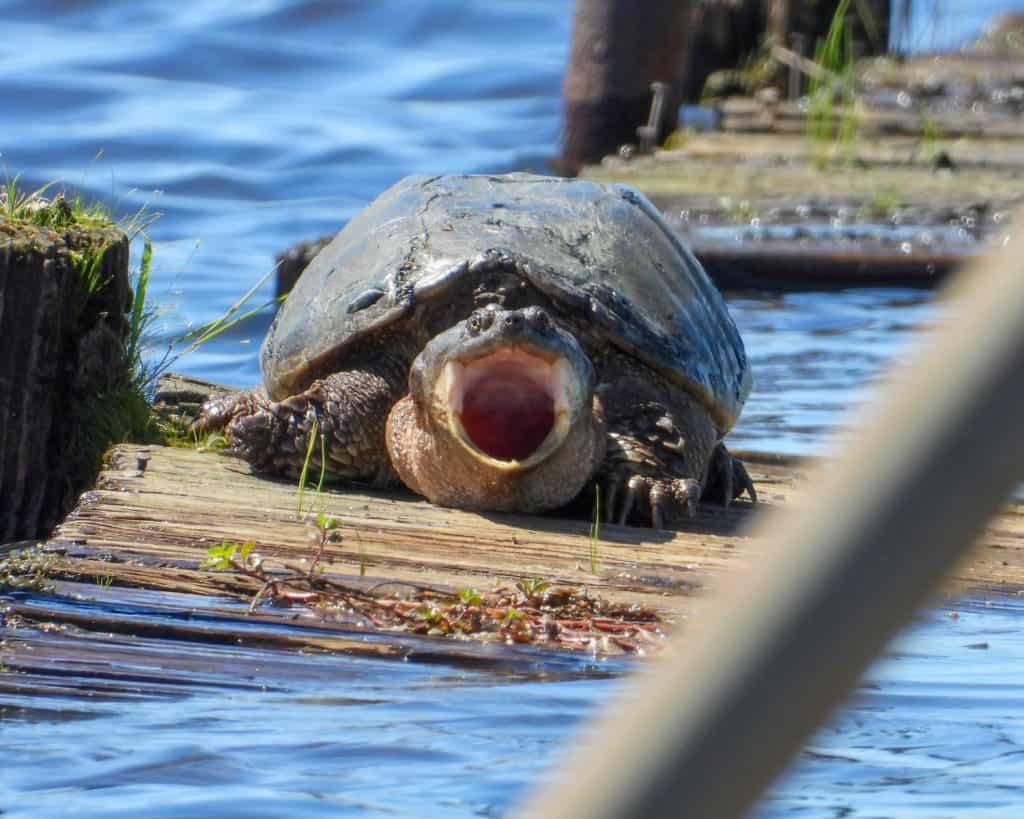
Common snapping turtles are highly defensive and aggressive on land, but they are docile in the water.
©Brian Woolman/Shutterstock.com
6. Northern Water Snake
Although the northern water snake (Nerodia sipedon) is not venomous, it has a painful bite and will strike if provoked or threatened. These snakes are common throughout New Jersey’s waterways, inhabiting freshwater lakes, streams, ponds, marshes, bogs, and swamps. They are often seen basking on rocks and logs along stream banks. These snakes can measure 22 to 53 inches long. Northern water snakes are brown or gray with dark brown, reddish, or black banding on their necks and backs. Older snakes are more uniform in color, as their patterns fade with age. They are frequently misidentified as the northern copperhead.
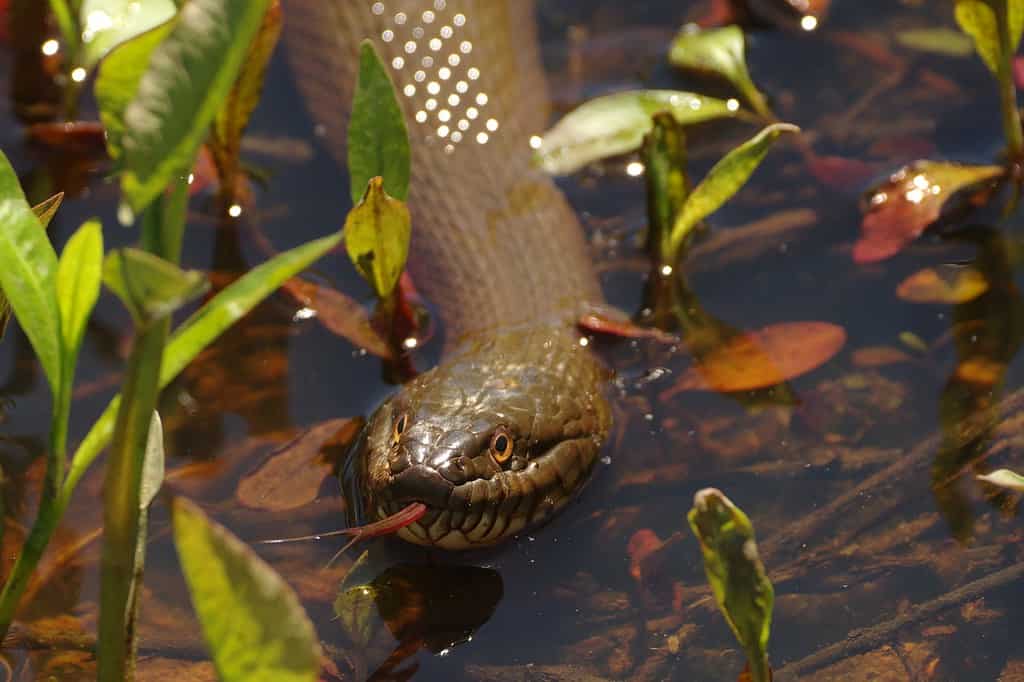
Older water snakes are typically a uniform color, as their patterns fade as they age.
©Philip Yabut/Shutterstock.com