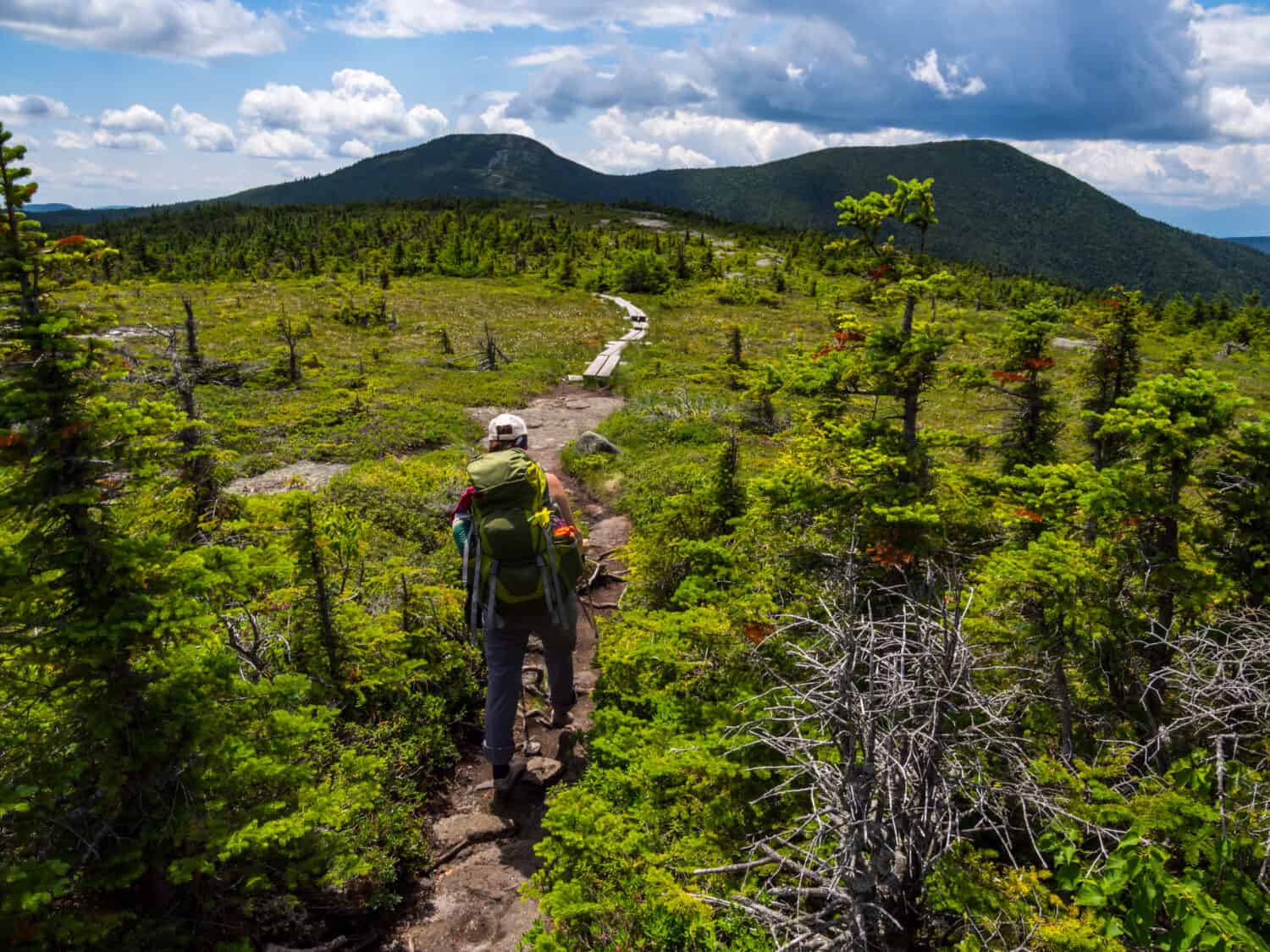

Stretching from Georgia to Maine, the Appalachian Trail (AT) is the longest hiking-only footpath in the world. It’s 2,197 forested miles that pass through 14 states and receive over 3 million visitors per year. Out of that 3 million, over 3,000 hikers attempt to complete the entire path from its start in Springer Mountain, Georgia, to where the trail ends, at Katahdin, Maine. Hiking the entire trail can take five to seven months and has to be completed before winter sets in, making it impassable. Along the way, hikers will see a variety of wildlife that lives in the eastern United States. In addition to black bears, raccoons, foxes, birds, insects, porcupines, wild ponies, and a lot more, many snake species make their homes along the trail. Most are completely harmless, although some are venomous and will attack if threatened.
Below, we’ve rounded up some of the various snake types you’re likely to spot along the Appalachian Trail, as well as tips on how to avoid a dangerous encounter and what to do if you are bitten. Note: This may not be a comprehensive list of every snake seen on the trail. We’ve included the snakes you may encounter with medically significant venom, along with some of the most commonly found nonvenomous snakes along the trail. In no particular order, see the following snakes hikers may spot along the Appalachian Trail.
1. Cottonmouth

The venomous cottonmouth is native to the southeastern U.S.
©Jason Patrick Ross/Shutterstock.com
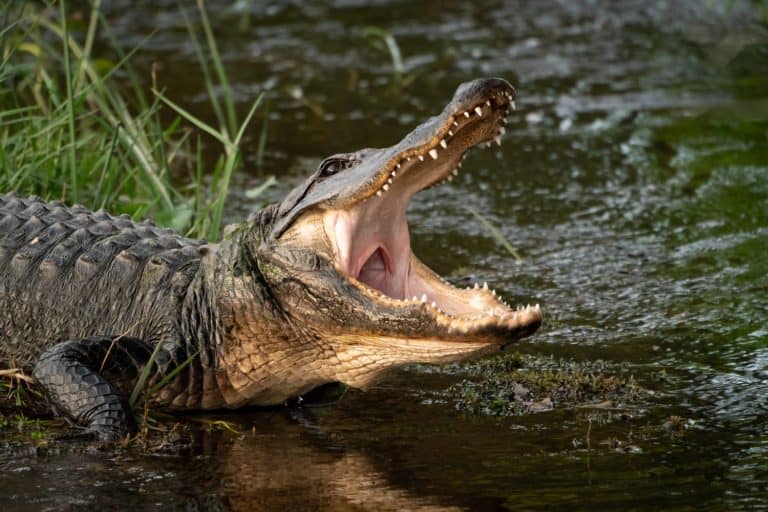
You likely won’t spot a venomous cottonmouth snake (Agkistrodon piscivorus) on the Appalachian Trail, but it is possible. Their range extends to several states the trail runs through: Georgia, South Carolina, North Carolina, and Virginia. Note that the trail is slightly beyond their range, but it’s so close that it is possible one could make the trek over. Cottonmouths, also known as water moccasins, are semi-aquatic. You typically will find these snakes in swamps, lakes, streams, ditches, and ponds. You will know you’ve seen a cottonmouth by the white color of the insides of its mouth. It opens its mouth as a warning before it strikes.
Cottonmouths are venomous pit vipers. Although they are hunters of small mammals, reptiles, fish, birds, and amphibians, they are shy around humans. Cottonmouths will try to flee if possible, only attacking if they feel cornered. If you are unfortunate enough to get bitten by a cottonmouth, you should seek medical treatment immediately. A dose of antivenom could not only prevent irreversible damage from the toxins but could also save your life.
2. Timber Rattlesnake
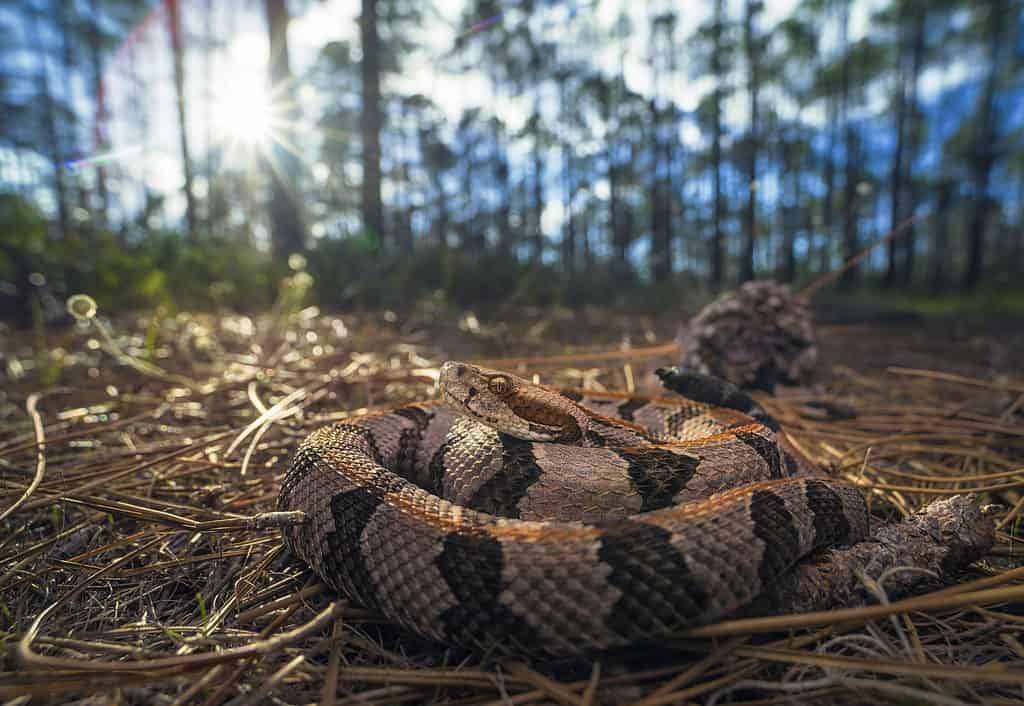
Timber rattlesnakes help to keep rodent populations under control.
©Kristian Bell/Shutterstock.com
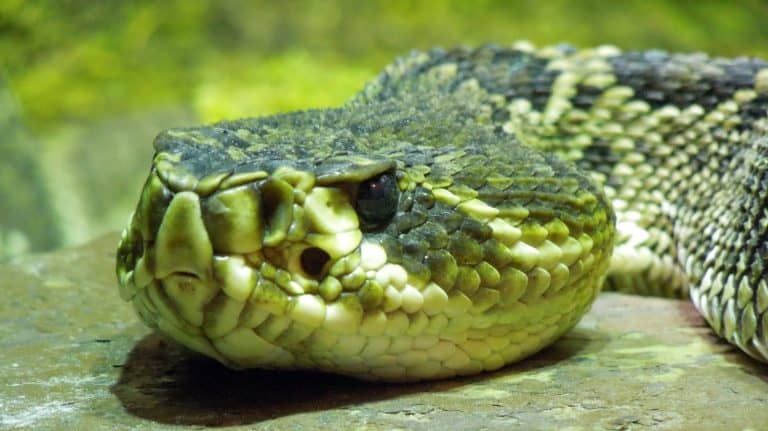
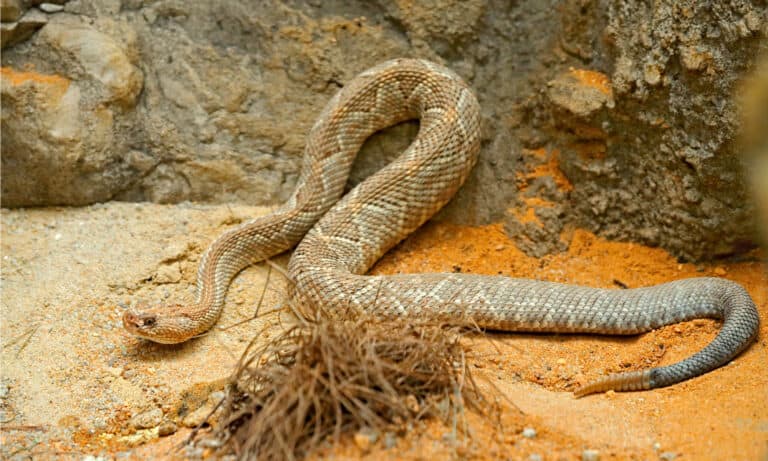
You are much more likely to see a timber rattlesnake (Crotalus horridus) along the Appalachian Trail than a cottonmouth snake. Timber rattlesnakes live in most of the eastern half of the United States. The timber rattlesnake lives in every state along the Appalachian Trail except for Maine.
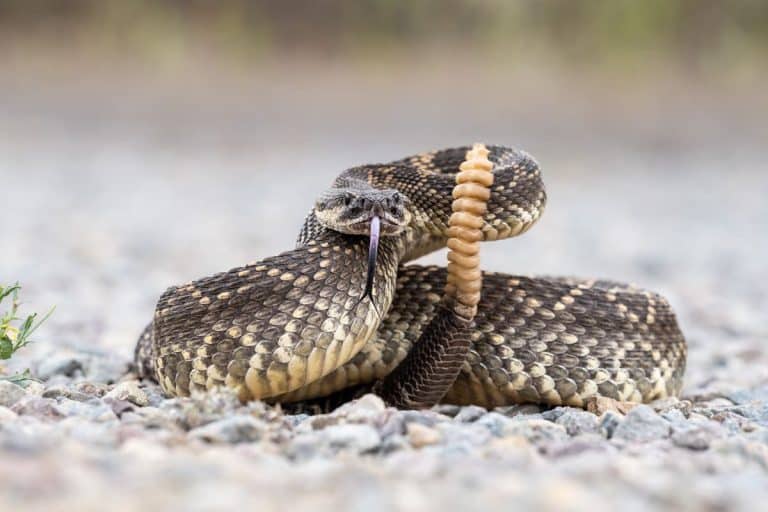
Timber rattlesnakes live in a variety of habitats, including forests, mountains, hills, river floodplains, and agricultural fields. You can identify a timber rattlesnake by its rattling tail, and you will often hear them before you see them. These pit vipers hunt a variety of animals, including birds, small mammals, and amphibians. They are ambush predators and sit silently and motionless, waiting for their prey. Because of this behavior, you may walk right past them as they hide in tall grass or under rocks, never knowing how closely you passed by.
If you see a timber rattlesnake, give it space, back up out of its area, or let it move on before you continue. They are docile snakes and won’t bite a human unless provoked or cornered. However, it is possible to accidentally step near or on one before seeing it. Even if a timber rattlesnake bites a human, it often won’t inject venom, saving it for their prey. However, if it does release venom, the venom is highly toxic and requires antivenom to prevent damage. If you are bitten by a timber rattlesnake, seek medical attention immediately to assess if you need a shot of antivenom.
3. Copperhead
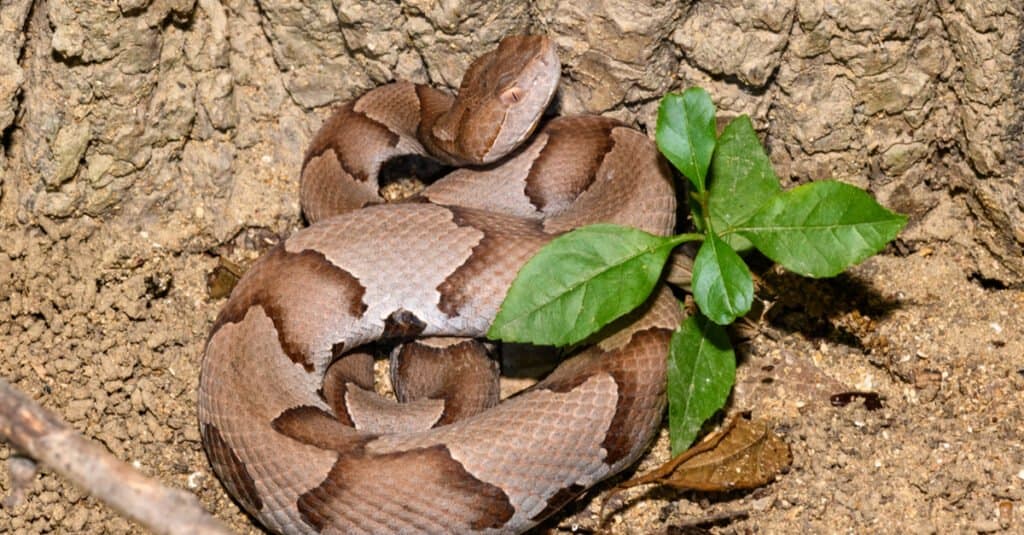
Eastern copperhead snakes (Agkistrodon contortrix) are excellent at camofllouge, making it easy to step on one by mistake.
©Jeff W. Jarrett/Shutterstock.com
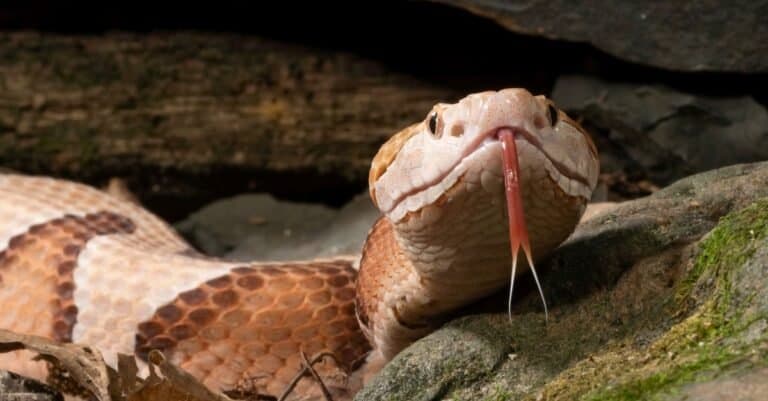
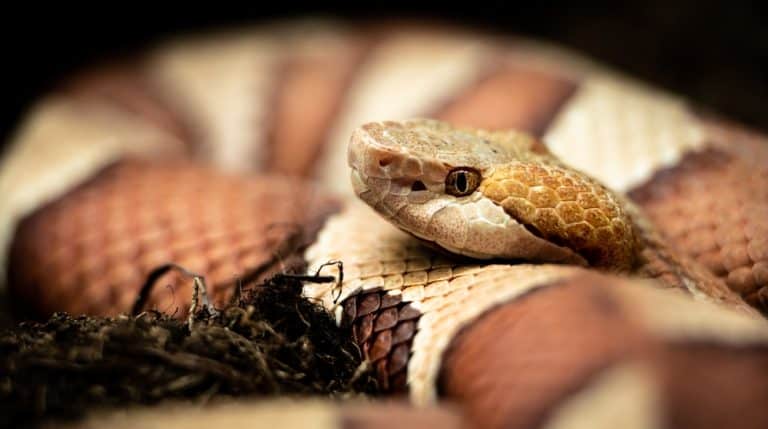
Another venomous snake to watch out for on the Appalachian Trail is the copperhead (Agkistrodon contortrix.) Copperheads are located in much of the eastern U.S. and live in every state along the Appalachian Trail except New Hampshire, Vermont, and Maine. Note, there were previously thought to be five subspecies of copperhead, but today there are only two recognized subspecies of copperhead: the eastern copperhead and the broad-banded copperhead. The eastern copperhead is the one you may encounter on the AT, while the broad-banded can be found in the southwest.
Like timber rattlesnakes, copperheads are pit vipers and ambush their prey. Copperheads eat a varied diet including other reptiles, birds, small mammals, and insects. The snakes camouflage themselves into their environment and jump out at the unsuspecting animal. Because of this behavior, an unsuspecting hiker can easily step near a copperhead without realizing it until it’s too late.
Although copperheads aren’t usually interested in biting people, they will attack if they feel threatened. Unlike rattlesnakes that give a telltale shake of their tail, or cottonmouths that rear back to show the white inside of their mouth, copperheads can strike without warning. Copperhead bites require immediate medical attention, although their toxin is generally not fatal.
4. Common Garter Snake
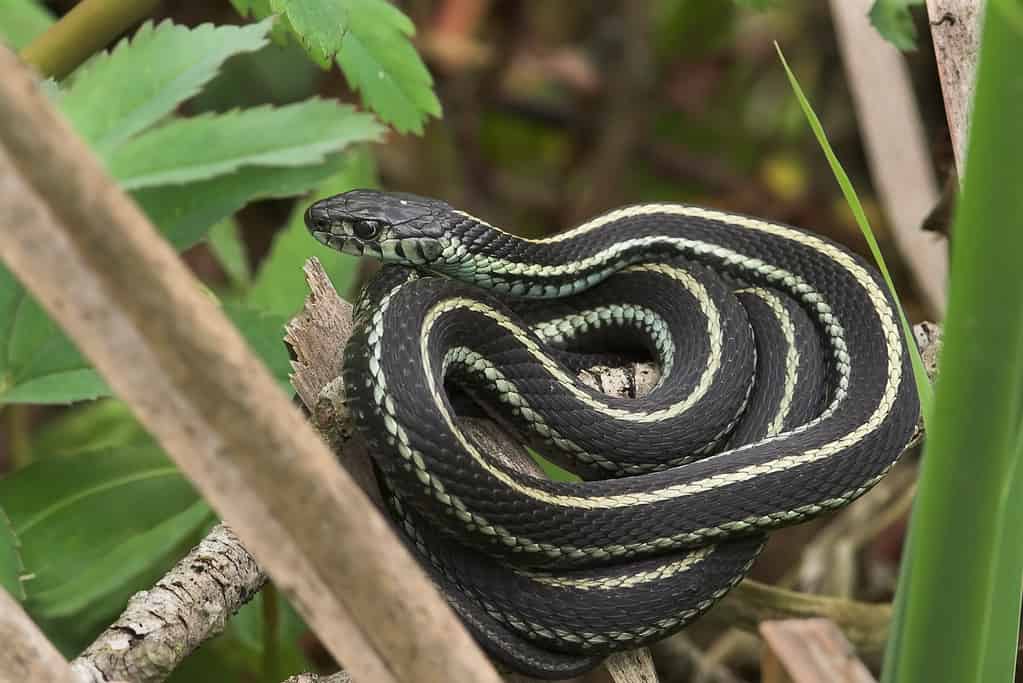
The garter snake is found throughout North America.
©iStock.com/rkhalil
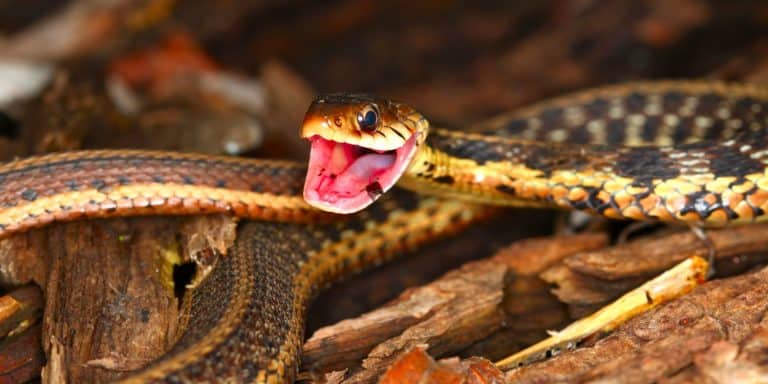
You are very likely to encounter the common garter snake (Thamnophis sirtalis) along the Appalachian Trail. These harmless snakes are commonly found throughout North America. Garter snakes can be spotted in every state along the AT. You may also see the eastern garter snake (Thamnophis sirtalis sirtalis) on the trail. This is a subspecies of the common garter snake.
Garter snakes enjoy a variety of habitats, including meadows, forests, gardens, and areas near water. These helpful predators feast on a variety of insects, including pests like slugs and snails, and are considered beneficial to the garden. If you see a garter snake along the AT, it’s best to leave it alone. Although they do actually possess venom, it’s not strong enough to be considered medically significant for humans. They are nonaggressive and will try to stay hidden or flee when they see people.
5. Eastern Ratsnake
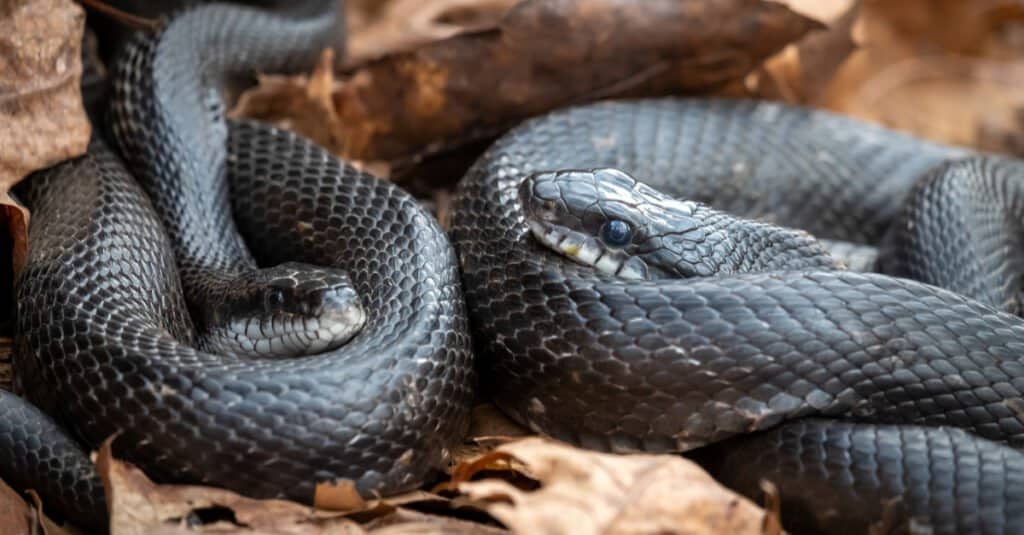
Eastern ratsnakes have shiny black scales and can grow up to seven feet long.
©samray/Shutterstock.com
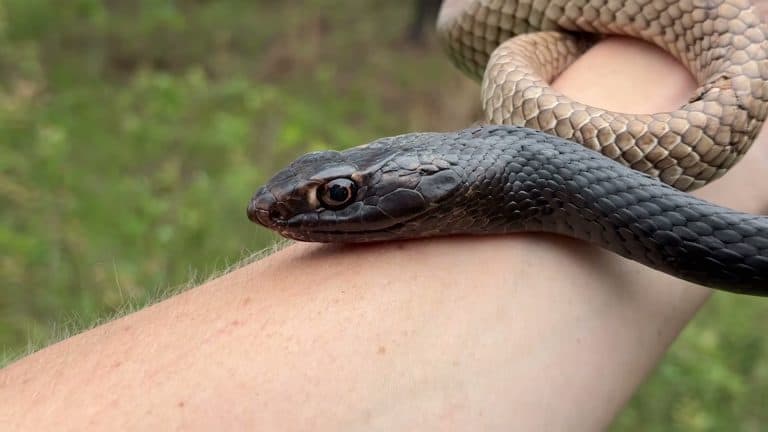
The eastern ratsnake (Pantherophis alleghaniensis) is also known as the black rat snake, or sometimes called a chicken snake for its habit of eating farm chickens. They are constrictor snakes, meaning they constrict their prey rather than using venom. Eastern ratsnakes are common in the east and can be found along the Appalachian Trail from Georgia to Maine, but are most common on the southern portion of the trail.
Eastern ratsnakes are nonvenomous, but will bite to defend themselves. They are not aggressive and are much more likely to flee rather than fight when they encounter a person or pet. If you see an eastern ratsnake along the trail, keep your distance and let it pass by. Though they don’t have venom, their bites are full of bacteria and still require medical attention.
6. Eastern Hognose Snake
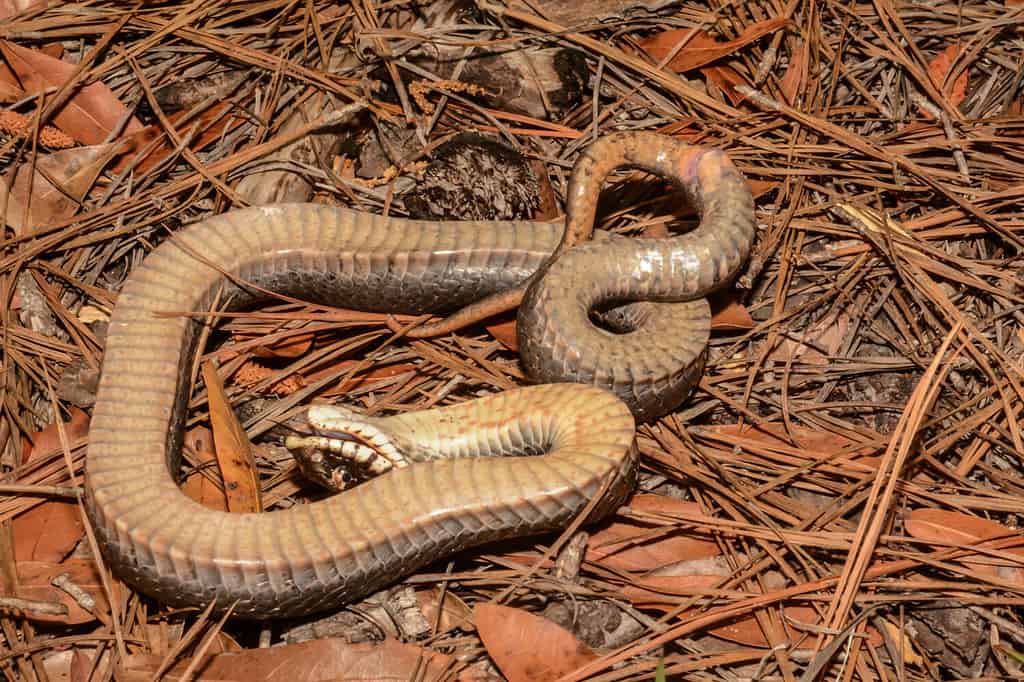
Eastern hognose snakes would rather play dead than fight to defend themselves.
©Jay Ondreicka/Shutterstock.com
The eastern hognose snake (Heterodon platirhinos) lives along the Appalachian Trail from Georgia on up through parts of New England. You are much less likely to encounter them in New Hampshire and Vermont, and they aren’t present in Maine. However, they may be common in the more southern portion of the trail.
Also known as the puff adder or black adder, this snake feeds on amphibians, small mammals, birds, and insects. Interestingly, they seem to prefer toads and are resistant to the toxins that toads produce. They have a mild venom, which works on small animals, but is not medically significant to humans. If you see an eastern hognose on the AT, be sure to keep your distance. They are not aggressive and are rarely known to bite people.
7. Eastern Milk Snake
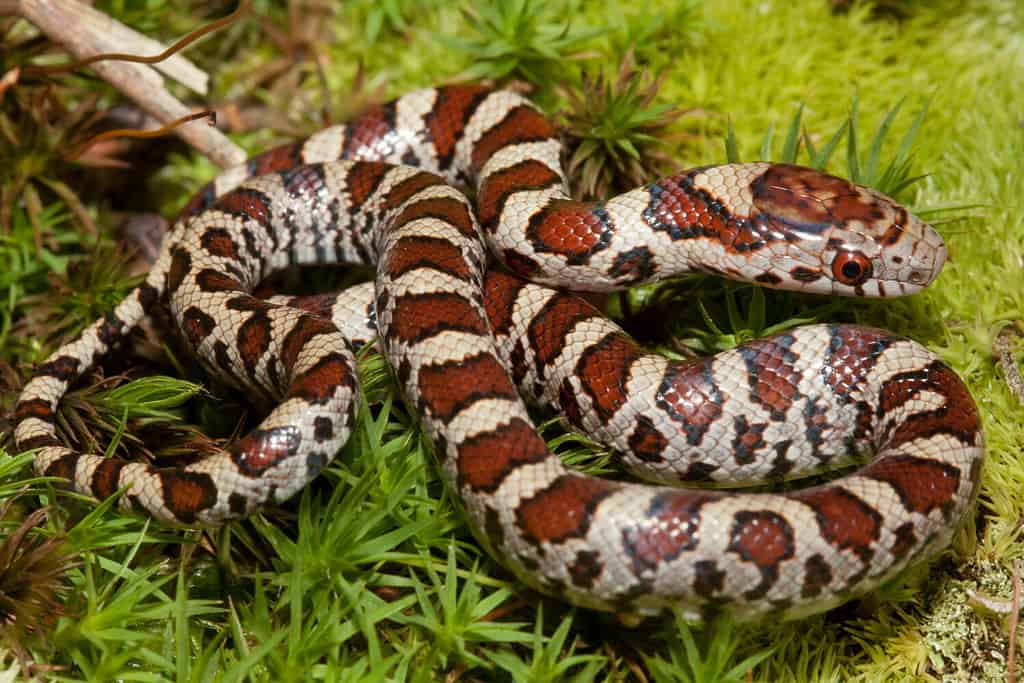
The colorful milksnake is sometimes mistaken for a coral snake or copperhead.
©Nathan A Shepard/Shutterstock.com
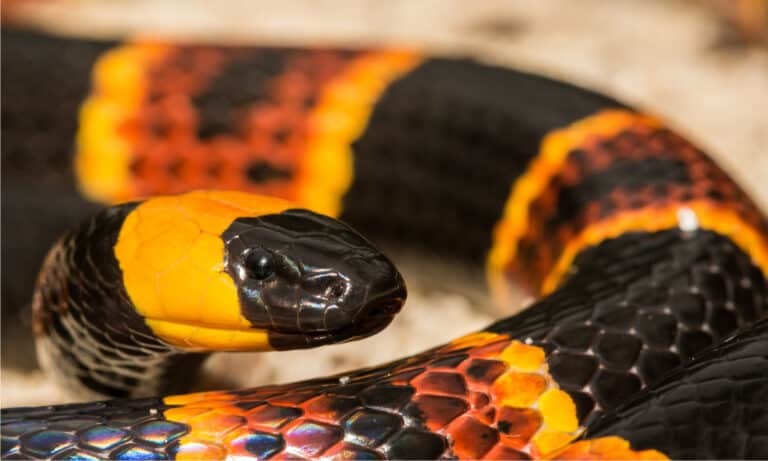
The harmless eastern milksnake (Lampropeltis triangulum) is sometimes mistaken for the venomous copperhead. You might see an eastern milksnake in any state along the Appalachian Trail, although mainly north of South Carolina. However, these snakes may be hard to spot due to their habit of hiding under rocks and logs and burrowing underground.
Eastern milksnakes hatch in bright colors, but turn darker as they age. Their appearance can also vary based on geography. They are beneficial at controlling pests and eat a varied diet, including rodents, amphibians, other snakes, insects, fish, and birds.
The nonvenomous milksnake will likely flee when it spots a human, but if threatened, it will shake its tail (like a rattlesnake), striking and hissing. If you are lucky enough to encounter this elusive snake, it’s best to leave it alone.
8. Northern Ringneck
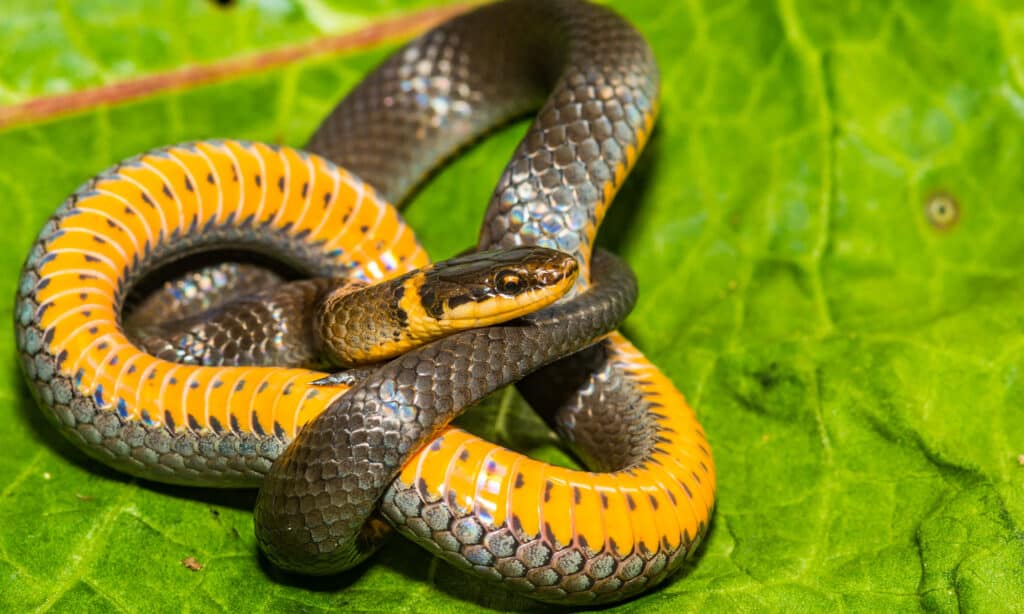
The northern ringneck snake eats a diet of salamanders, earthworms, frogs, lizards, insects, and other small creatures.
©Jay Ondreicka/Shutterstock.com
Northern ringnecks (Diadophis punctatus edwardsii) are small snakes, only reaching about 15 inches in length. They are a subspecies of ringnecks and are members of the Colubridae family. Northern ringnecks live along the Appalachian Trail, but they are excellent hiders and may be hard to spot. They live in forests and often hide under rocks, logs, or other debris.
Northern ringnecks live along the entire AT in every state from Georgia to Maine. Another subspecies of ringneck, the southern ringneck (Diadophis punctatus punctatus), can be found a little south of the trail, but its range doesn’t quite reach the AT. These are harmless snakes and will rarely bite even when handled. Their venom is mild to humans and not considered medically significant. These beneficial predators help maintain their ecosystem and should be left alone when encountered.
9. Brown Water Snake
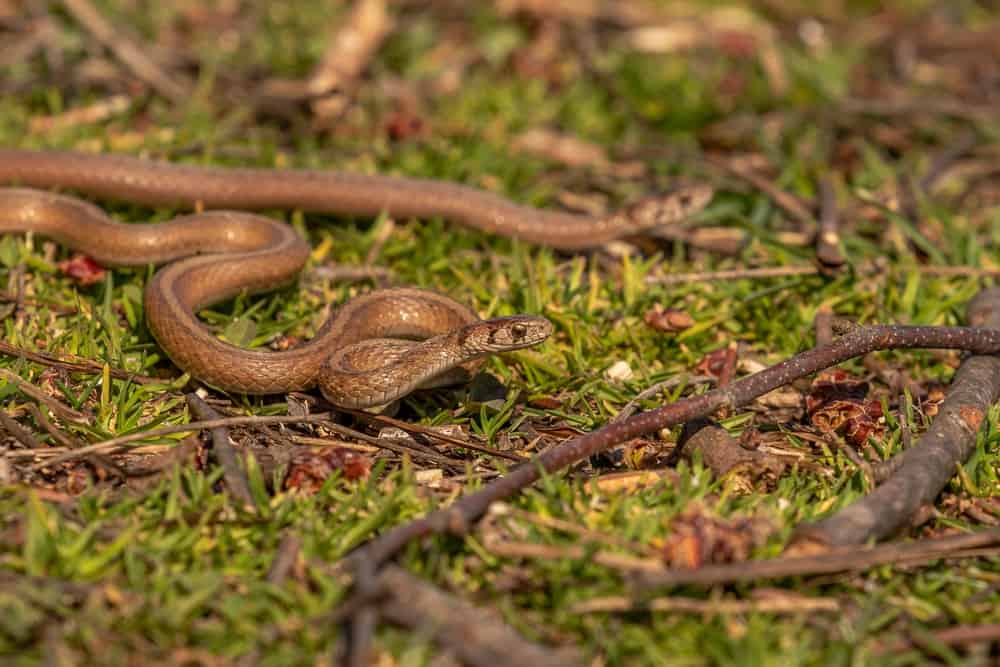
Juvenile brown water snakes have a similar appearance and coloration to the adults.
©Judith Lee/Shutterstock.com
You likely won’t encounter a brown water snake (Nerodia taxispilota) on the Appalachian Trail outside of Georgia. Although their range extends from Florida to Virginia, it’s mainly near the coast, too far east of the AT for an appearance. These semi-aquatic snakes live around flowing water, including rivers, streams, and canals. They are strong swimmers and eat a diet of fish, including small catfish.
The bite from a brown water snake is not venomous to humans, but it will likely be painful. The snakes can grow to five feet long, and despite their size, are not aggressive and would rather flee from humans than attack. However, they won’t hesitate to bite when cornered. According to the Florida Museum of Natural History, “Virtually all bites occur when the snakes are intentionally molested.” If you see a brown water snake on your AT hike, like the other snakes on our list, leave it alone and give it plenty of space.