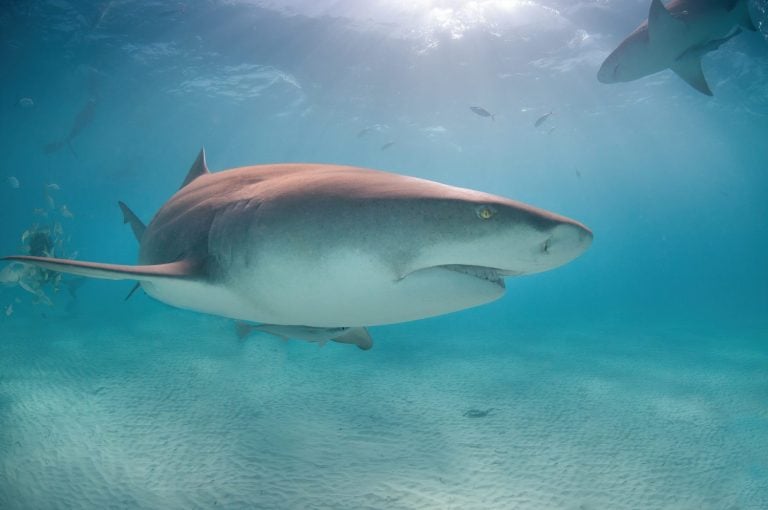

Sharks swim through coastal waters all around the United States, from the warm Atlantic and Gulf of Mexico to the cooler Pacific coastline and even parts of Alaska. Species like bull sharks, blacktip sharks, hammerheads, tiger sharks, and great white sharks are regularly seen near popular swimming and fishing areas, especially during warmer months when prey is plentiful and water temperatures are higher. While shark encounters tend to receive tons of media attention, the vast majority of sharks are not aggressive toward humans and are important in maintaining healthy marine ecosystems. They regulate fish populations and balance food chains.
Sharks are primarily attracted to areas with plenty of food sources, which often leads them closer to shore. Schools of fish, migrating baitfish, seals, and sea lions naturally attract larger predatory sharks, particularly great whites along the Pacific coast. Murky water, strong currents, and low-light conditions can also increase the likelihood of a shark approaching unfamiliar shapes, including surfers or swimmers, though actual attacks are rare. Additionally, fishing activity, discarded bait, and splashing can also notoriously attract sharks. But few people realize color also plays a role in catching the attention of these large fish.
Here, we explore five colors that tend to stand out to sharks, along with practical tips for enjoying the ocean responsibly and respectfully.
Shark’s Color Vision
©iStock.com/Velvetfish
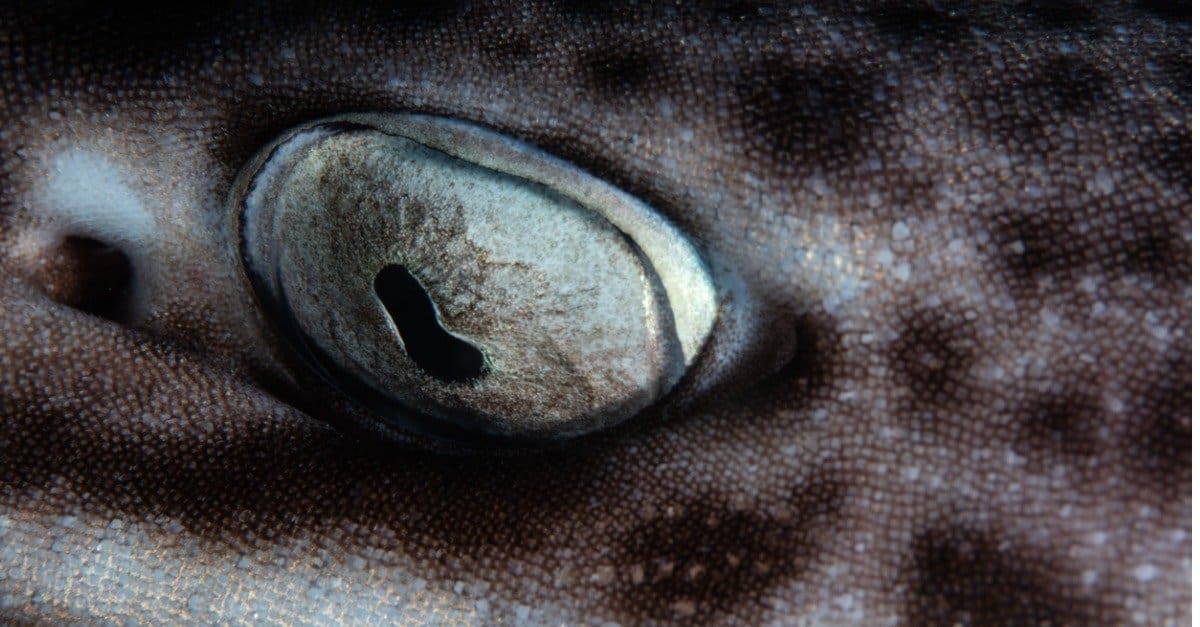
Sharks navigate their watery world with an interesting mix of sensory tools. Their eyes share similarities with ours regarding vision, including components like the pupil, iris, and retina. Yet, a unique feature called the tapetum lucidum sets them apart. This reflective layer, positioned behind the retina, doubles the light exposure, significantly enhancing their vision in dim waters.
Vital to understanding shark vision is the distinction between rods and cones. Rods, which sharks possess in abundance, detect light and darkness, while cones discern colors. However, most sharks have a limited number of cones. Research on various shark species found that many either lack cones altogether or have just a single type, a long-wavelength sensitive cone.
Shark’s Color Vision (cont.)
©Martin Prochazkacz/Shutterstock.com
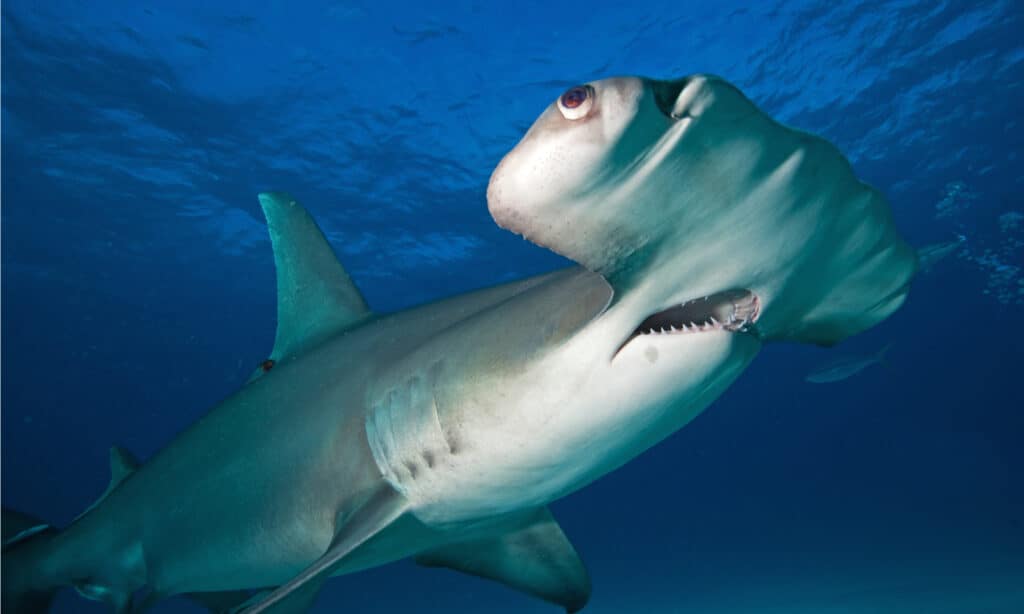
What does this mean? Sharks with no cones can’t differentiate colors, and those with only the long-wavelength cones see a minimal spectrum. In essence, many sharks are likely colorblind, leaning heavily on their ability to detect contrasts.
This heightened sensitivity to contrast, rather than a range of colors, is crucial for their survival, allowing them to spot prey and navigate murky ocean depths efficiently.
Yellow
©LuckyStep/Shutterstock.com
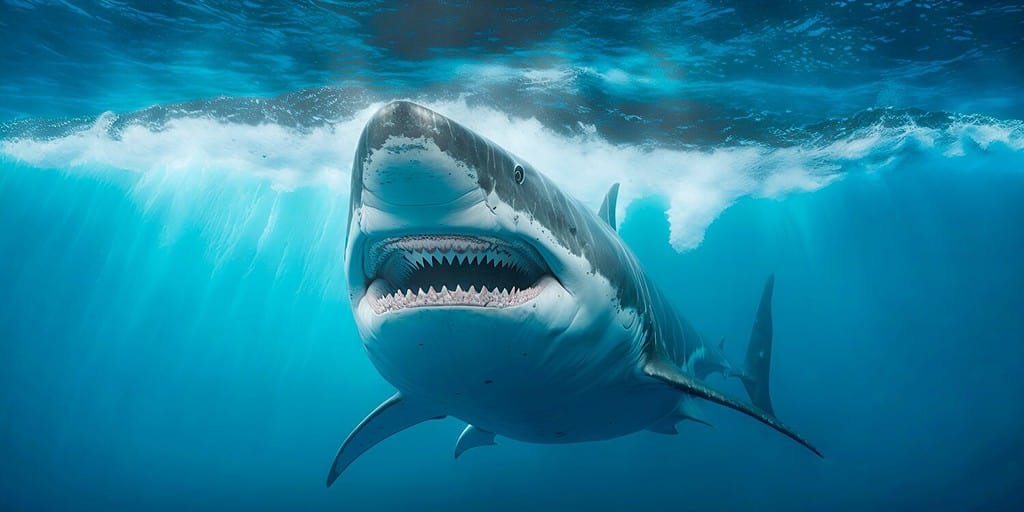
The color yellow, dubbed “yum-yum-yellow” among marine enthusiasts, has a reputation for attracting sharks, notably the formidable Great White. Why is this seemingly cheerful color so captivating to these apex predators? Considering the previously discussed color vision of sharks, their attraction to yellow isn’t about the color itself but the contrast it creates in the marine environment.
In the blue-green backdrop of the ocean, vibrant yellow stands out starkly, providing a high-contrast target. This makes it easily distinguishable even for sharks that can’t discern the full spectrum of colors. Many of the natural prey items of sharks, such as certain fish species, have lighter underbellies or reflective scales.
The bright yellow mimics these prey’s appearance or reflectiveness, oftentimes drawing the shark’s attention.
Red

©Vladimir Wrangel/Shutterstock.com
At first glance, one might assume that the deep blue oceans would mask the vibrancy of red, rendering it invisible to marine life. While this is partly true, as red light is absorbed quickly in water and the color appears muted or even black at depth, its effects on attracting sharks differ.
In water depth, red is the first color to be filtered out, disappearing beyond 15-20 feet, and turning into a murky gray or black. This means in deeper waters, red doesn’t stand out as the vibrant hue we perceive on land; rather, it contrasts sharply with the surrounding water, especially against a blue-green ocean background.
Orange

©Alessandro De Maddalena/ via Getty Images
Due to its rarity underwater, orange acts as a signal to a shark. It contrasts sharply with the surrounding environment, making it easy for sharks to spot. Their attraction to orange isn’t the color but its standout nature against the typical aquatic backdrop. While many colors fade or morph with depth, orange remains relatively consistent. It retains visibility even as one descends further. This constant visibility makes objects or individuals sporting the color particularly noticeable.
All About Contrast

©Leszek Glasner/Shutterstock.com
Ultimately, which colors attract sharks comes down to the “color” of the surrounding water. What colorblind sharks are excellent at detecting is contrast. So, donning your black swimsuit in lightly turquoise Caribbean waters will make you stand out. Likewise, wearing bright colors in deeper, darker waters is also a no-no. When choosing appropriately swimwear, think more about the shade of the water than your favorite summer hue.
What Else Attracts Sharks?

©solarseven/Shutterstock.com
Unfortunately, colorful bathing suites aren’t the only factors to consider when it comes to attracting sharks. To play it safe in ocean waters, you should also avoid the following:
Metallics
©Carlos Grillo/ via Getty Images
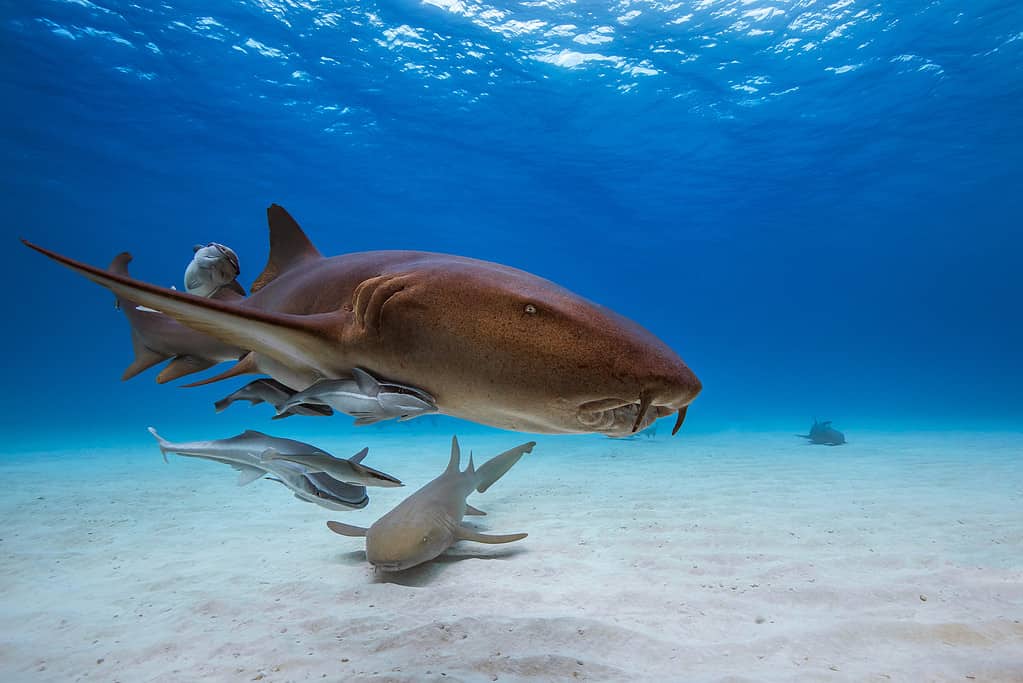
The gleaming appearance of metallics stands out against the muted backdrop of the sea. With their heightened sensory perception, these creatures quickly notice the irregular flashes and reflections created by metallic surfaces. Like certain fish species, natural prey have scales that can reflect light, mimicking a metallic sheen.
Thus, to sharks, anything with a metallic gleam might resemble potential prey or at least be worthy of investigation. This association can be powerful in murky waters or during times of day when light penetration is reduced, making contrasts even more crucial.
Reflective Materials

©Alessandro De Maddalena/Shutterstock.com
Similar to metallics, reflective materials possess a distinct allure in the aquatic realm. They play with light, bending and bouncing it in different directions. Sharks, with their keen emphasis on contrasts and movements, are especially attuned to these unpredictable light patterns.
These intermittent reflections become even more pronounced in the ever-shifting light dynamics of underwater environments, especially in murkier waters. They can simulate the erratic movements of wounded or smaller prey, triggering the predatory instincts of sharks. For this reason, it’s advised that people refrain from wearing shiny jewelry when swimming in areas that sharks may frequent.
Blood and Bait
©iStock.com/USO
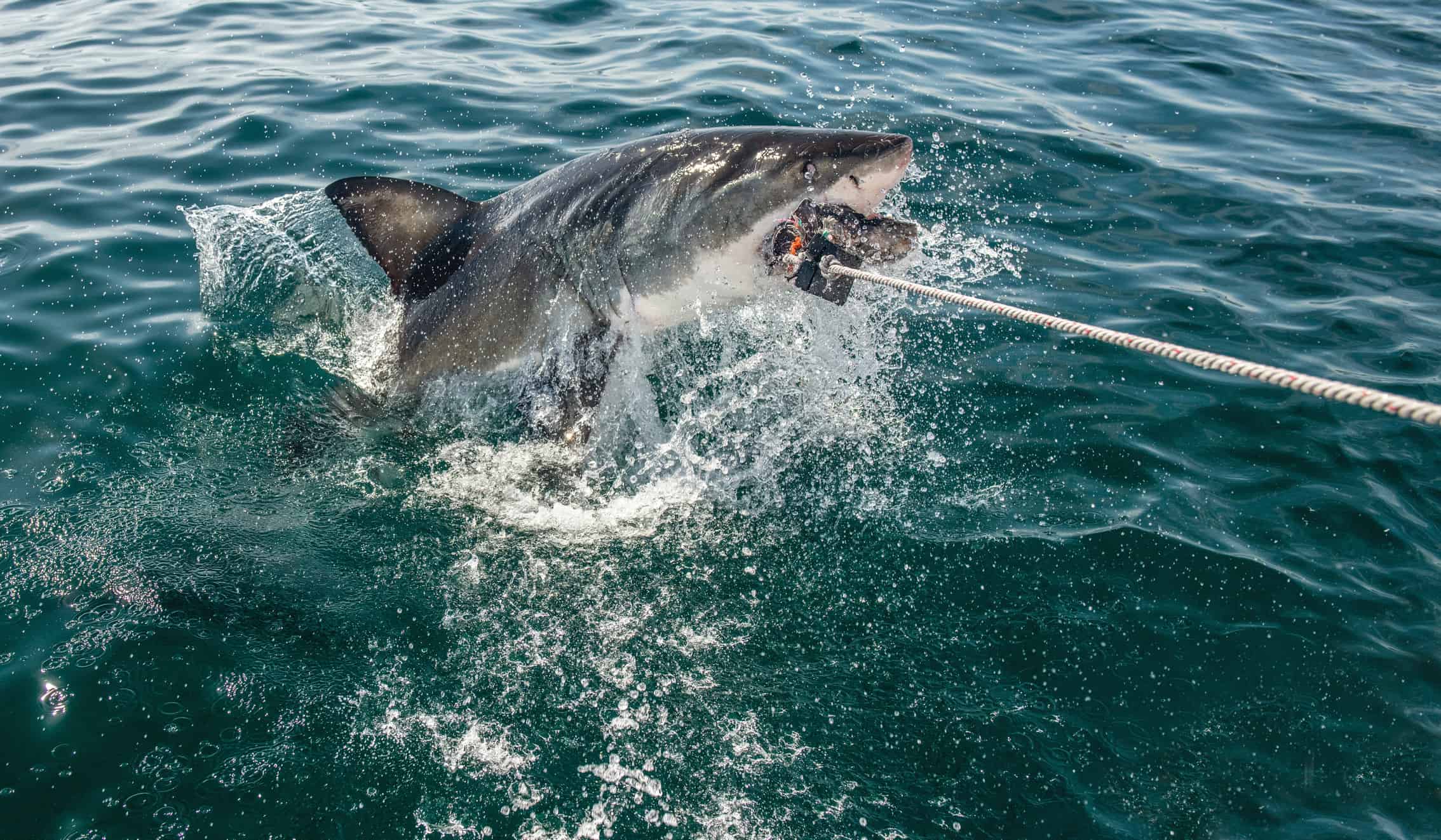
Not to be Captain Obvious, but it should come as no surprise that blood attracts sharks. As far as blood goes, sharks are most attracted to blood from fish and marine animals that they typically prey on. They are not as drawn by human blood, though a human bleeding in the water can be a problem. This is because they are particularly drawn to odors from wounded prey. This is also why they are attracted to bait.
Sound
©Martin Prochazkacz/Shutterstock.com
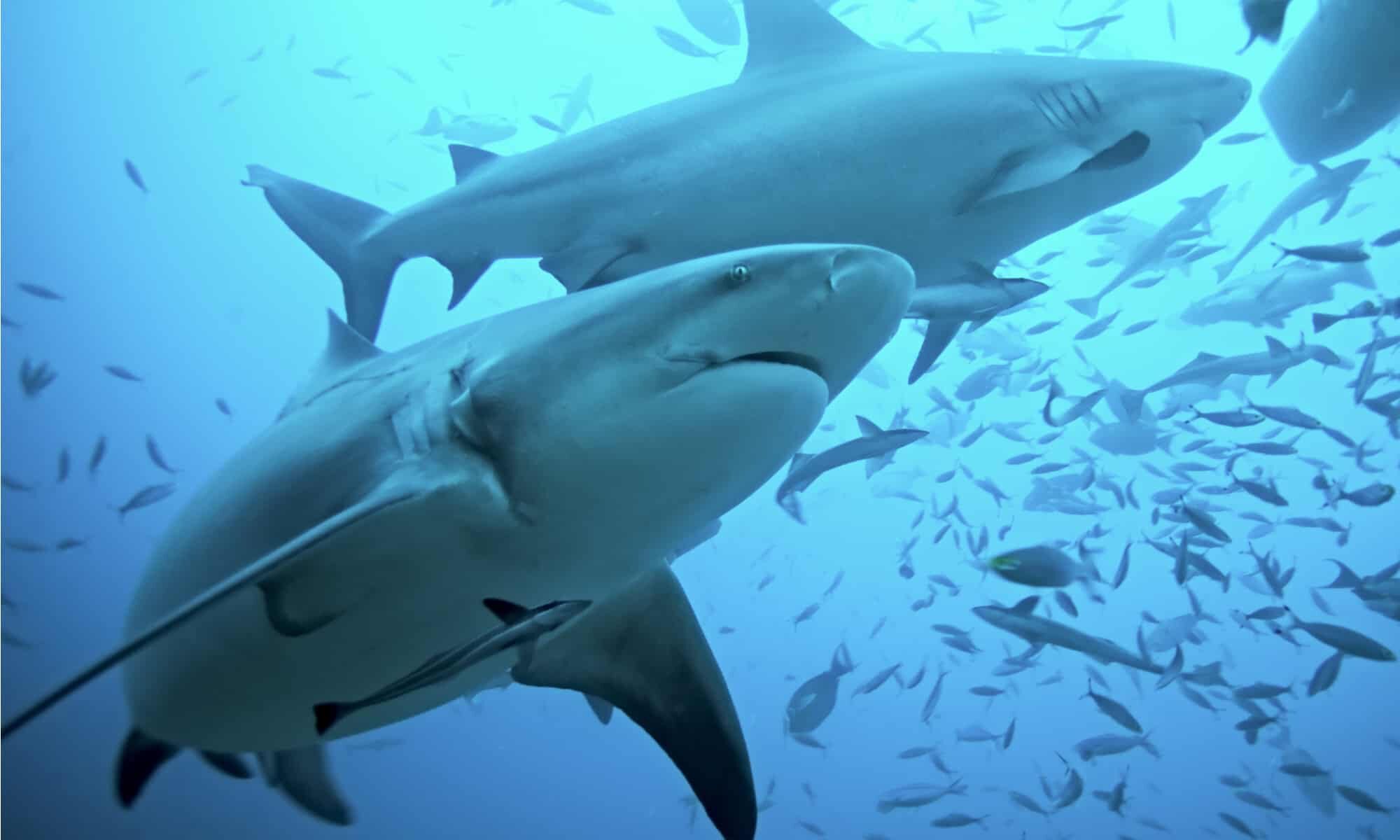
One of the chief things that can attract a shark is sound, even more than smell or sight. When they detect irregular sounds, such as the splashing of a swimmer or a wounded fish, they can hear it from a long distance away.
Rapid Body Movements

©Willyam Bradberry/Shutterstock.com
If you are swimming in the ocean, you may want to keep your movements to a minimum. Sharks can be drawn by excessive splashing.
Areas in the U.S. with the Most Sharks

©National Oceanic and Atmospheric Administration (NOAA) / Public Domain CC0 - Original / License
The areas of the U.S. with the most shark activity are primarily along the Atlantic coast, particularly in the waters off Florida. The state of Florida, especially the region around New Smyrna Beach, is known for having the highest number of shark encounters.
Other hotspots include the Carolinas, particularly North Carolina’s Outer Banks, and the waters off Long Island in New York. Additionally, the Pacific coast, particularly Southern California, also sees significant shark activity, especially around the beaches of San Diego and Los Angeles counties. Hawaii, with its tropical waters, is another area with frequent shark sightings and encounters. These regions are known for their warm waters, abundant marine life, and favorable conditions that attract various shark species.