As the days shorten and the mornings feel a bit chillier, you may notice some uninvited guests in your home! Fall is the season when spiders are spotted more often inside human dwellings, and a proliferation of spider webs is a telltale sign that they are there. For some people, this is a deeply uncomfortable or even scary experience. So, what is going on at this time of year to make spiders invade our homes? Which types of spiders are they, and can we do anything about it? Read on for the answers.
What You Need to Know About Spiders
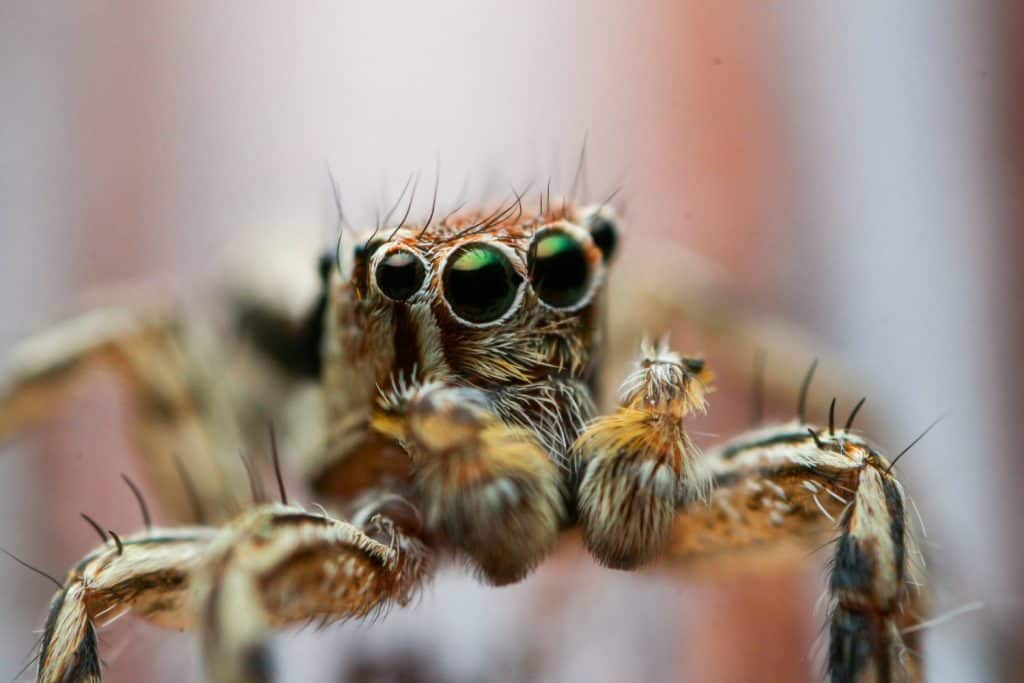
Spiders like the warmth of human homes.
©Tegar Satria Wibawa/Shutterstock.com
To understand why spiders are rushing into your home, you need to appreciate how they live. Spiders are a type of arthropod with eight limbs, no antennae, and spinnerets that produce silk. Most of them have fangs that they can use to inject venom into prey (small insects) before consuming them.
Many spiders hunt actively, but others rely on their webs to trap prey, and these are what you are seeing right now in the corners of your rooms. Outside, their habitats depend on the species, but many are found in wooded areas, under rocks, in woodpiles, and in grassy areas and forests. Spiders reproduce sexually, so they need to find a mate, and this can involve elaborate courtship rituals. Females lay their eggs in egg sacs where the baby spiders develop.
Why Do Spiders Come Into Homes in the Fall
There are several reasons for the spider invasion of human homes in the fall. On the whole, spiders change their location due to changes in temperature, humidity, prey availability, and the drive to find a mate. A combination of all of these compels spiders to find a way into houses.
Finding a Mate
If you are a male spider, falling temperatures mean one thing. It is time to find a mate. Mating season varies between spider species, but for many of them, it is generally between late August and November. The males become more active, leave their outdoor hiding spots, and roam around looking for a receptive female. That includes roaming into your house.
Shelter From the Cold
As temperatures drop, the outdoor lifestyle becomes less appealing to spiders. Some, but not all, species prefer the warmer and more stable temperatures inside houses. They seek quiet corners where they can enjoy the warmth without being disturbed.
To Find Prey
Spiders primarily feed on insects, so in the summer, there is plenty of food for them outdoors. As the weather gets colder, however, the insect population drops. The insects that spiders prey on appreciate the warmth and shelter that our homes offer. The spiders follow them!
Spiders You May Spot in Your Home
The different spider species that may enter your home vary by geographical location. There may be many different species building webs in your home right now. However, here is just a small selection of some of the common culprits.
American House Spider
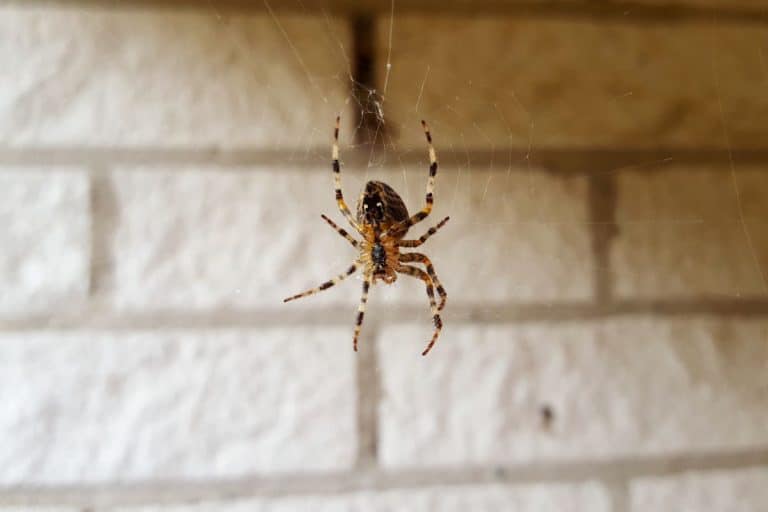
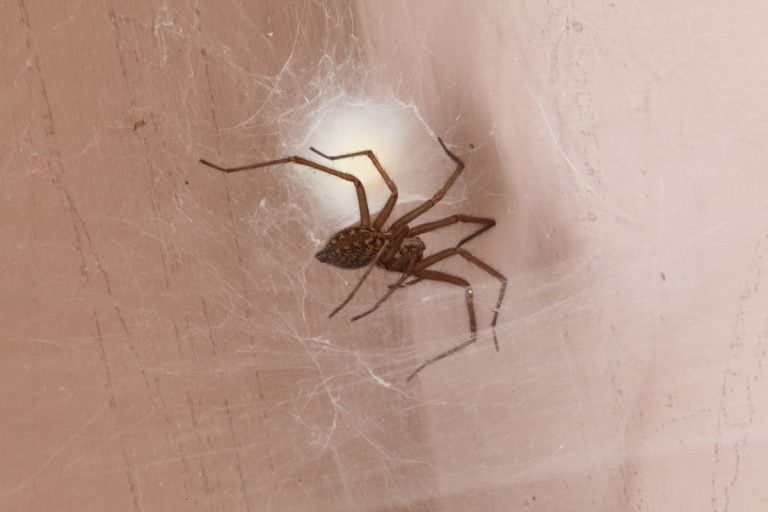
As their name suggests, these are some of the most common spiders in American houses, and they are found throughout the US. They are small (1/8 to 5/16 inches) and have a dull brown color with dark marks on their abdomen. Males have yellow legs, while females have orange legs. American house spiders are responsible for the dust-covered cobwebs in the corners of your rooms. They can bite, but their venom will not harm you.
Cellar Spiders
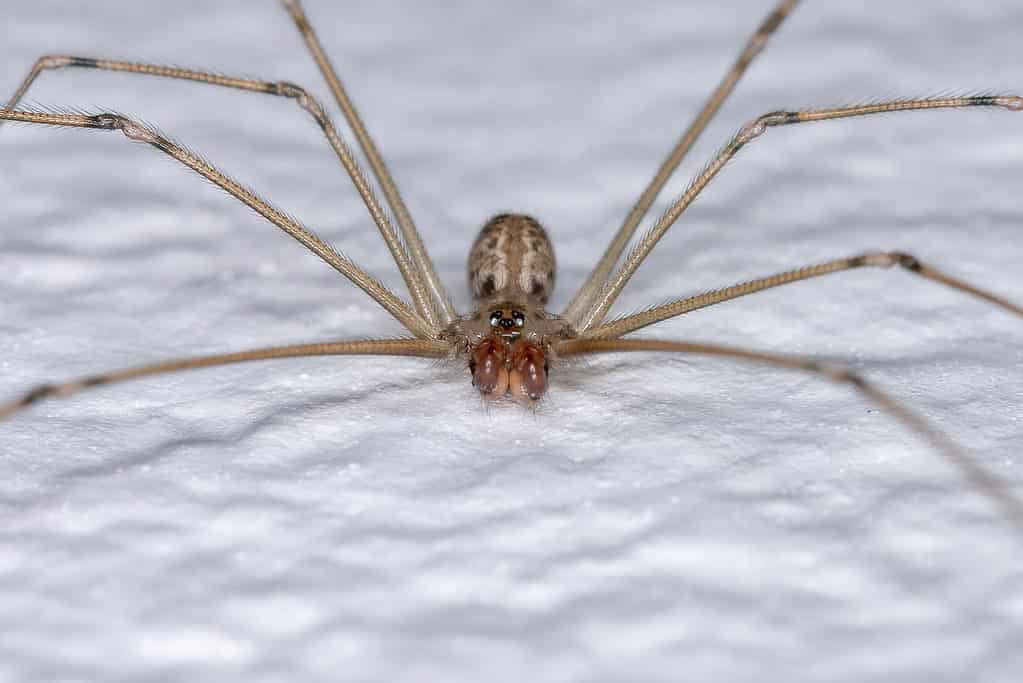
Cellar spiders have small bodies.
©Vinicius R. Souza/Shutterstock.com
Another spider found throughout the US is the cellar spider. They have a small gray body and very long legs. Overall, they measure 1 3/4 to 1 15/16 inches, with most of that length coming from their legs. These spiders mainly lurk in dark, moist areas where they are unlikely to be disturbed—hence their name. They spin loose and messy webs that are normally found in the corners of the ceiling. Their mouthparts are not well-adapted to biting humans, and bites are extremely rare and harmless.
Jumping Spider
There are several species of jumping spiders in the US. Some can leap six inches in the air despite only measuring 1/8 to 3/4 of an inch! They live outside in woodpiles and plants and may enter houses either by walking in or by being accidentally carried inside on logs or other items. These spiders actively hunt prey during the day and do not spin the usual webs that you associate with cobwebs. That said, they do spin silk and use it to anchor themselves to vertical surfaces in houses. It is unusual for them to bite, but if they do, it will be no more serious than a mosquito bite.
Hobo (Funnel Web) Spider
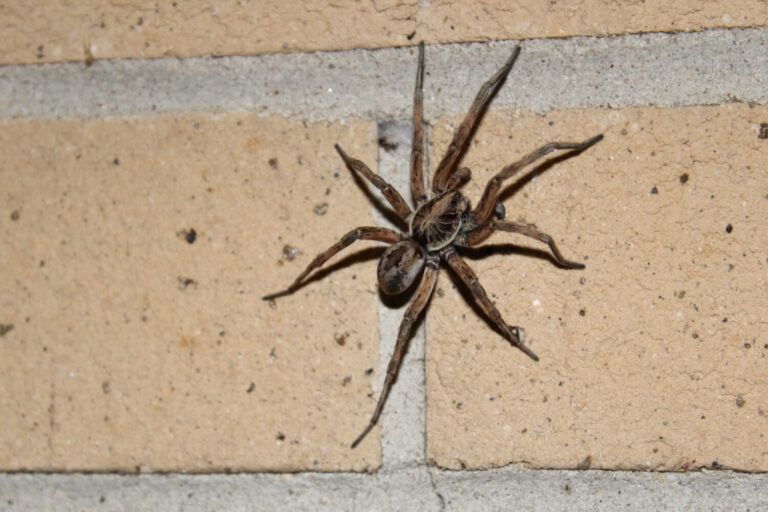
Hobo spiders weave their webs in the shape of a funnel (typically in cracks) where they hide and wait for prey. Outside, they live in woodpiles and sheds, but in the fall, they enter houses. Once inside, they cannot climb walls, so you will mostly find them at ground level. It is also common to find them in bathtubs or sinks because they cannot climb out. Because they have quite large bodies (1/5 to 3/4 of an inch), long legs, and can run quite fast, they tend to freak people out! On the whole, these spiders are not aggressive and are unlikely to bite. If they do, their venom is not considered medically significant to humans.
Brown Recluse Spider
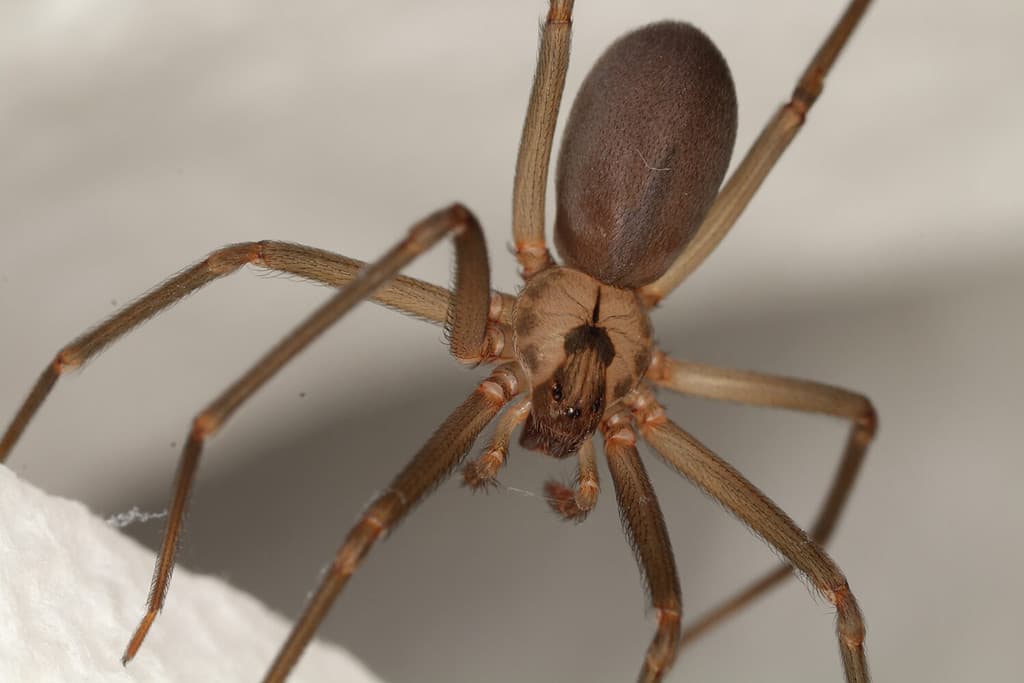
Brown recluse spiders hide away from humans.
©Nick626/Shutterstock.com
These spiders belong to the genus Loxosceles, which is classified in the family Sicariidae (previously Loxoscelidae in older sources). They have brown bodies with a distinctive darker pattern on their back in the shape of a violin. You are most likely to spot them in the midwestern and southern United States. Most of the time, they live outdoors, but when they enter houses, they will be in storage areas and other seldom-disturbed hiding areas.
Brown recluse spiders construct irregular webs in dry, undisturbed areas and have a particular liking for cardboard! The webs include a shelter where the spider hangs out. If you disturb them, they could bite you. It is also perfectly possible to live in a house with them and never know that they are there. Most bites are minor and heal without serious complications, but in rare cases, they can cause skin necrosis or systemic symptoms such as fever, nausea, and vomiting. Severe reactions are uncommon, but children and the elderly may be more susceptible to complications.
What You Can Do About Spider Webs
Even fans of spiders often admit that a lot of cobwebs do not look great in their home. They attract dust and dirt and give homes an uncared-for vibe. Fresh webs are usually clean, so if you want to leave them in place to encourage the spiders to remove insects from your living space, go ahead. If you are not a fan of spiders, you can remove them. Webs that are torn and dirty are likely abandoned and can be removed with a duster or vacuum.
Preventing Spiders From Entering Your Home
It will be impossible to completely stop spiders from entering your home this fall. However, there are a few things that you can do to discourage them and reduce the chances of an infestation.
- Seal cracks and gaps around windows, doors, and utility entry points.
- Install screens on windows, doors, vents, and chimneys.
- Clear away clutter so that you can regularly clean dark and undisturbed areas.
- Reduce outdoor lighting, which can attract insects and the spiders that feed on them.
- Keep trees and shrubs in your yard trimmed, and rake the leaves.
- Use substances that repel spiders, such as peppermint and lavender essential oil or eucalyptus oil.
If you are concerned that you have a spider infestation (an excessive number of spiders), consult a professional pest control service.