
Quick Take
- The volume of traffic noise needed to diminish birdsong's stress-relief is far lower than most people assume, and this effect goes beyond how you feel to change how your body actually responds. See the physiological effects →
- There's a specific psychological mechanism behind why birdsong calms you, and understanding it reveals exactly why a single passing car can undo the effect so quickly. Explore the psychology behind it →
- Bird diversity in your environment matters more to your mental health than most nature studies let on, though perhaps not for the reason you would expect. See the diversity findings →
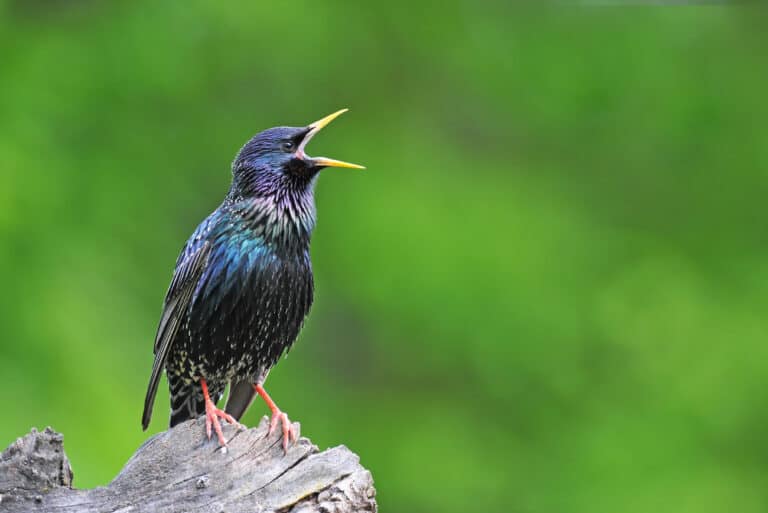
Many of us have likely sat on our back porch, relaxing and listening to the birds sing. There’s something so calming about hearing these peaceful animals chirp, whistle, and trill. And these soothing sounds might even be beneficial to our mental health. That’s right; scientific data suggests a few notes from a robin or the repetitive call of a blackbird can suddenly make much of your stress and anxiety melt away.
This is according to new research from the University of Surrey. Experts there wanted to learn more about this phenomenon. However, they were a bit shocked to find that even relatively low levels of traffic noise can greatly weaken many of the psychological benefits that singing birds create. Let’s take a closer look at the mood-enhancing benefits of birdsong and how traffic noise may be diminishing these effects.
Continue reading
The Mood Benefits of Birdsong
Most people find the sounds of birds chirping pleasant, in part because birds are part of nature. Natural environments can provide a break from the demands of life and our internal anxiety. It’s a reminder of the living world around us and that we’re not the center of the universe.
Whether you’re sitting on a park bench during a lunch break or hiking through the woods, birdsong creates an immersive experience that brings us into the present moment and connects us with nature in an emotional way. Birdsong can also distract us from stressful thoughts. This idea is based on the psychological concept of “soft fascination,” where birdsong captures our attention without requiring intense mental effort, giving us a mental break without the need for sustained concentration.
Unfortunately, if you’re listening to a lovely bird sing, a sudden car driving by can ruin the experience. You don’t need to be next to a freeway for the sound of a vehicle to dampen a bird’s beautiful tune. That’s why this research and the recommendations that came out of it are so important.
The Research into Birdsong and Traffic Noises

The droning sound of traffic can rob us of the joyful sounds of nature.
©Bits And Splits/Shutterstock.com
In order to learn how the sound of traffic can minimize a birdsong’s mood benefits, the experts at the University of Surrey went to work. The researchers created nine simulated soundscapes containing natural sounds and traffic noise. The soundscapes varied in their acoustic characteristics, including their complexity and amplitude, allowing the researchers to examine how different combinations of sounds influenced people’s responses. They recruited 1,500 participants for the study.
Rather than sending everyone outside to different parks and trying to account for weather, location, time of day, and countless other variables, researchers gave participants controlled auditory experiences. Participants listened to the simulated soundscapes and then answered questions about how they felt. More specifically, they were asked whether they felt more relaxed and less stressed.
The controlled auditory experience was important because it allowed researchers to isolate the effects of sound from other environmental factors. If someone went to a park and felt better after 30 minutes, their relief could be due to many factors, such as hearing birds, seeing children at play, or simply being outdoors. The researchers wanted to isolate birdsong specifically to test whether it could offer any mental health benefits.
Adding Traffic to the Scenario
The experiment started with the gentle sounds of birdsong. Then, they introduced light traffic sounds. From there, the results were clear.
In addition to asking participants how they felt after traffic noise was introduced, researchers also measured their heart rates. Specifically, the researchers examined heart rate variability, commonly abbreviated as HRV. Heart rate variability refers to the natural variation in the amount of time between individual heartbeats. The body’s autonomic nervous system influences it, and it can provide information about how the body responds to different situations.
In this experiment, heart-rate variability was significantly lower when participants listened to natural soundscapes that included traffic noise. Researchers interpreted this pattern as indicating a greater physiological stress response.
When the volume of traffic noise increased, participants became more agitated, likely due to overstimulation. With the addition of engines, tires, horns, and other urban sounds, the overall soundscape becomes much more demanding and stressful.
Other Variables
While testing birdsong’s mood benefits, researchers also found other variables of interest. For example, when there was greater bird diversity, participants felt even more at ease. There were also noticeable differences among age groups. Younger participants reported greater feelings of well-being after listening to the soundscapes than older participants. The researchers suggested that hearing ability could be one possible explanation.
What Cities Can Do with This Information

A well-structured city park can do wonders for our mental health and love of nature.
©John_T/Shutterstock.com
This research can be valuable for city planners and officials. Taking advantage of the natural mood benefits of birdsong could lead to happier citizens, and that benefits everyone.
It’s important to note that the participants in the study listened to pre-made recordings, not actual birds in the wild. So, the research is not 100% conclusive in terms of translating to the real world. Still, city officials can take steps to make the sounds of nature more prominent. One idea is to lower speed limits on roads near parks so cars aren’t as loud.
Another option is to increase the density of ground-level vegetation around park boundaries. The structure and placement of vegetation are important; a thick layer of shrubs and ground-level plants along busy roads can help create a more natural acoustic environment deeper inside the park. This would help ensure that people in the park can fully experience the benefits of nature.
Protecting the Birds Is Also Important
In addition to making it easier to hear birds in the wild, cities should also help protect local bird populations. Birds sing for communication, territory, courtship, and other natural behaviors. Therefore, urban environments that support healthy bird populations are especially valuable. Happy birds will keep singing, and we will keep reaping the benefits.
Listen the Next Time You Hear Birds
If you take only one thing from this study, let it be the importance of stopping to listen to the natural world around you. Make time to escape the hustle and bustle of urban life whenever possible. You’ll be amazed at how being in a quieter place with just the birds singing can put you at ease. Birds have much to say, and while we may not understand their language, their songs can touch our souls in ways we may never fully comprehend.